

Antique Small Skull Specimen | Anatomical Osteological Display | Circa Late 19th – Mid 20th Century
Couldn't load pickup availability


Antique Small Skull Specimen | Anatomical Osteological Display | Circa Late 19th – Mid 20th Century
Description
More
Less
Historical Context & Origin
Region: Likely Europe or North America
Material: Bone
Period: Likely Late 19th–Mid 20th Century
Description
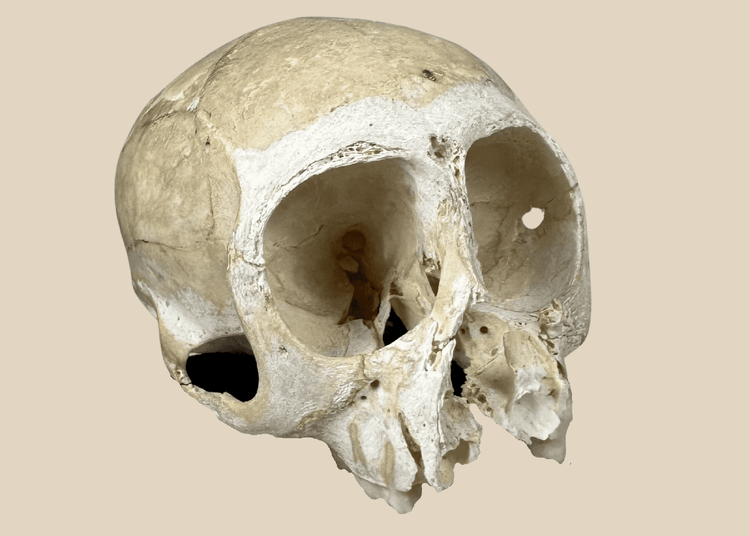
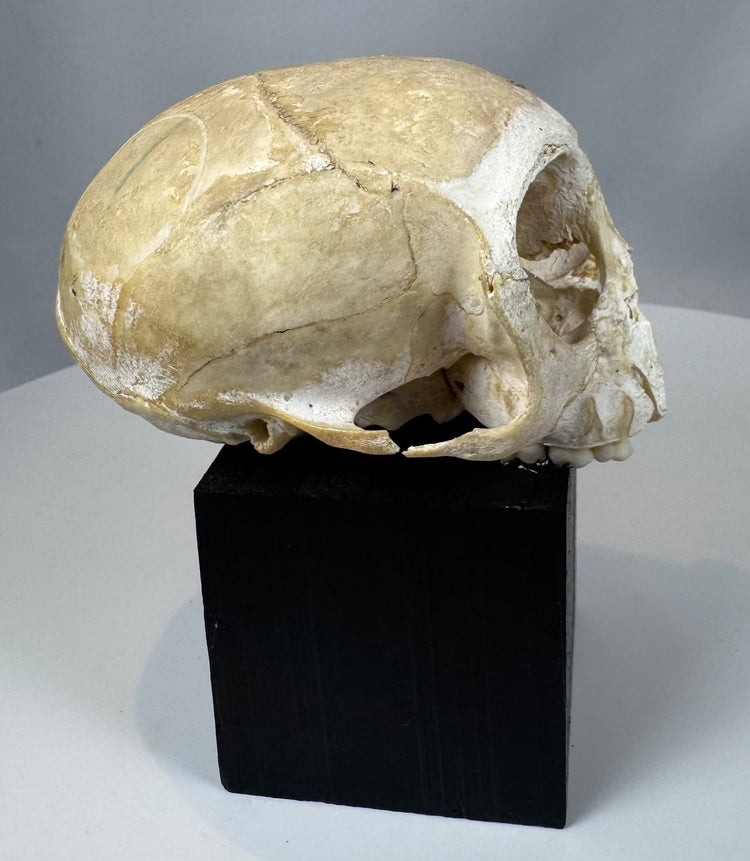
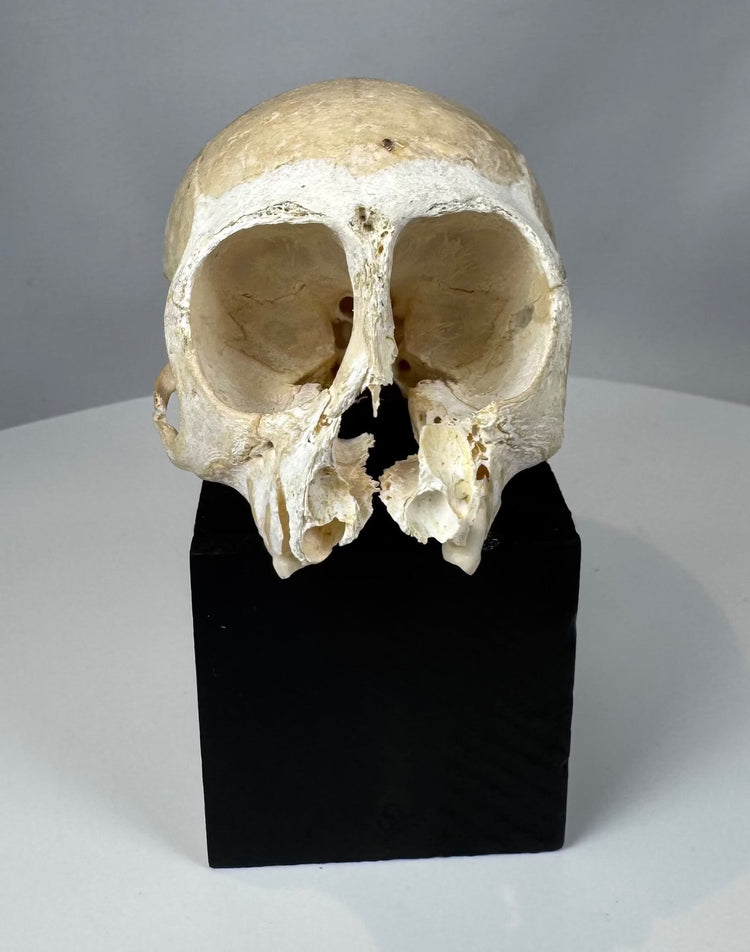
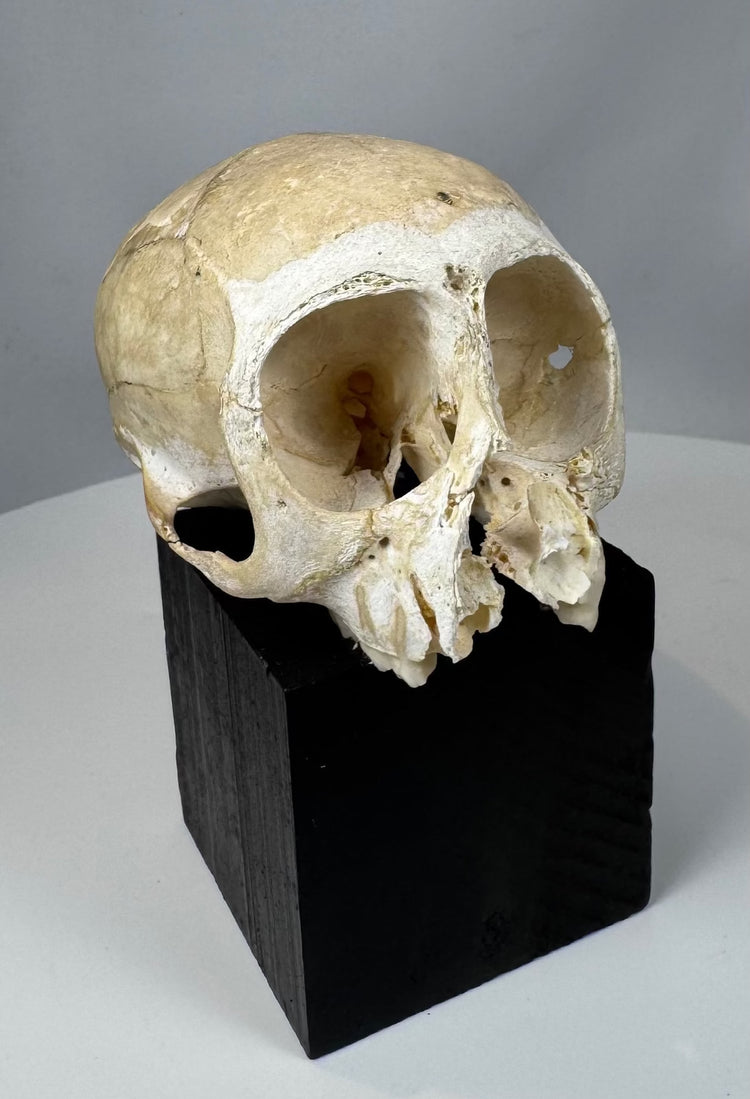
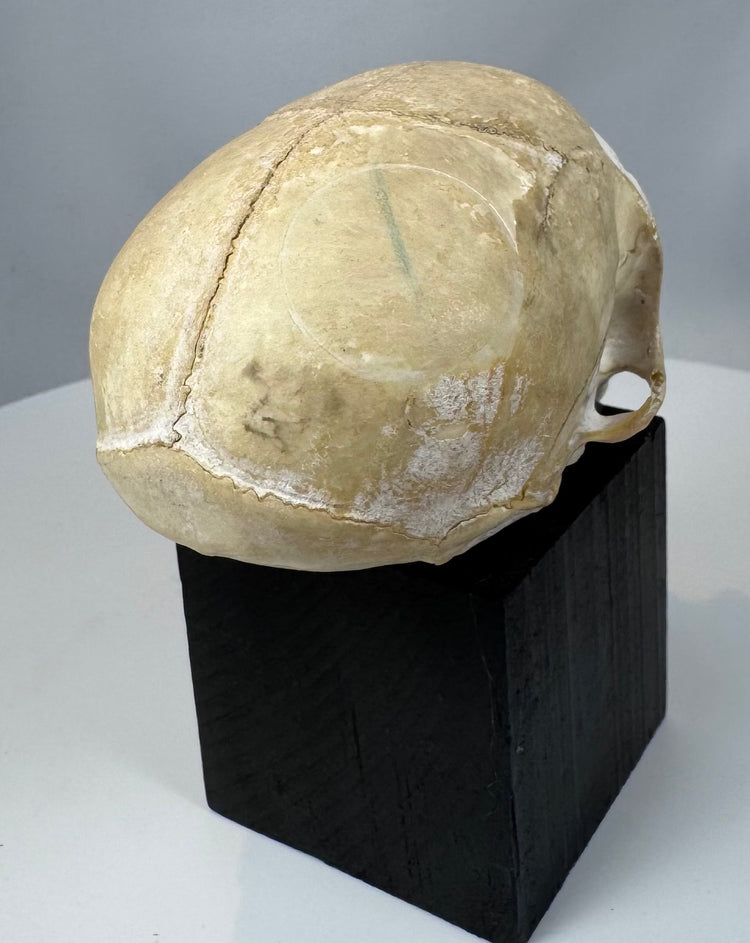
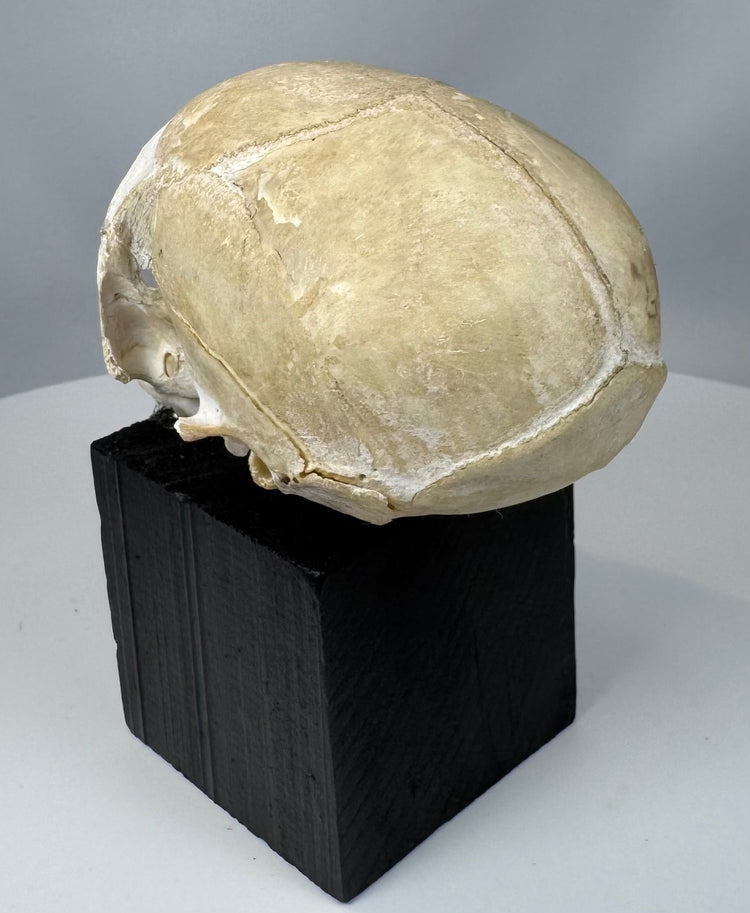
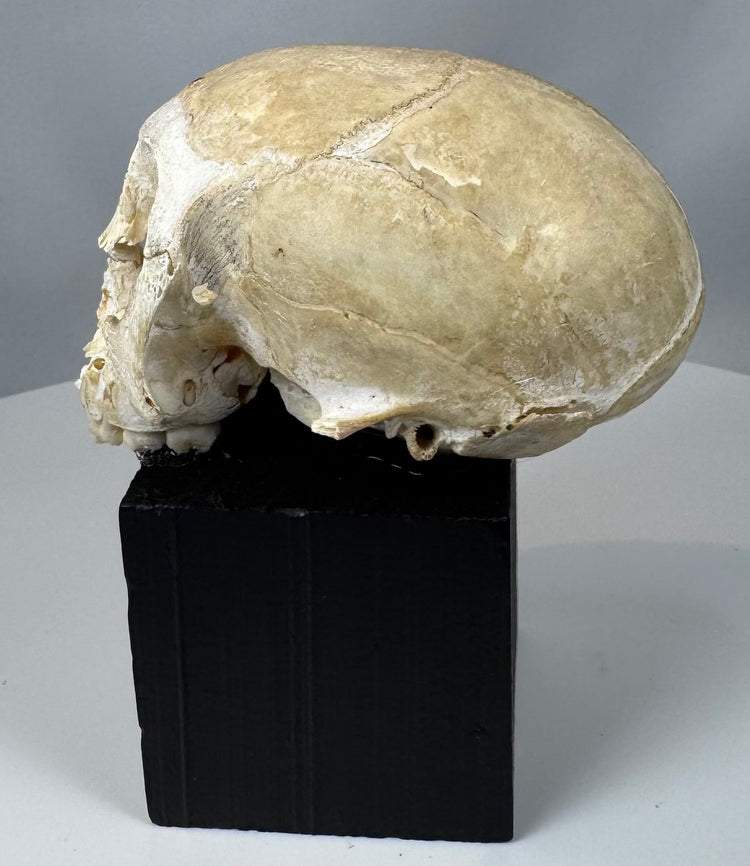
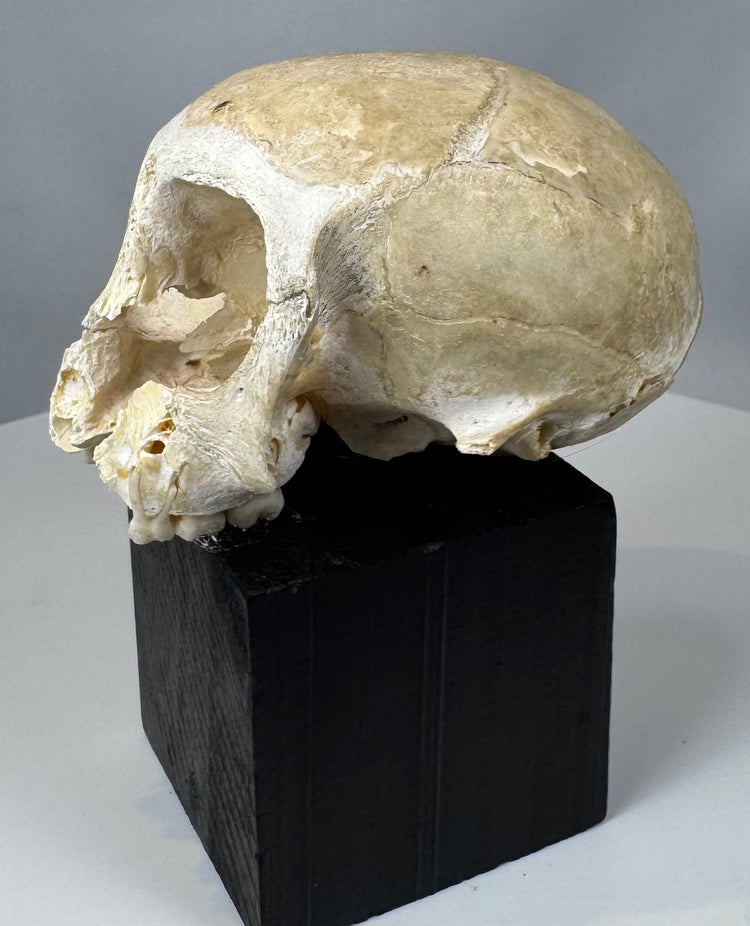
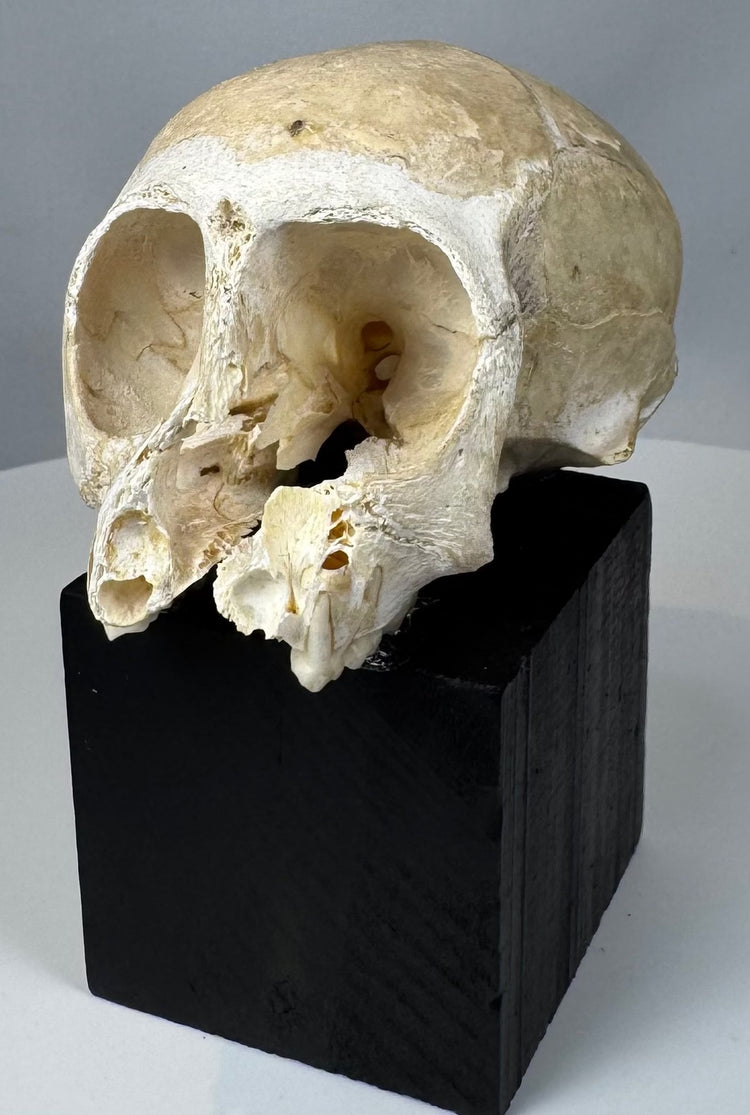
This unusual small osteological specimen represents a preserved primate skull, likely from a small monkey species, mounted on a later custom black display base. The specimen displays a highly compact cranial form with large orbital cavities, delicate facial structure, and partially preserved dentition characteristic of small primates used historically in anatomical study, natural history collections, and educational displays.
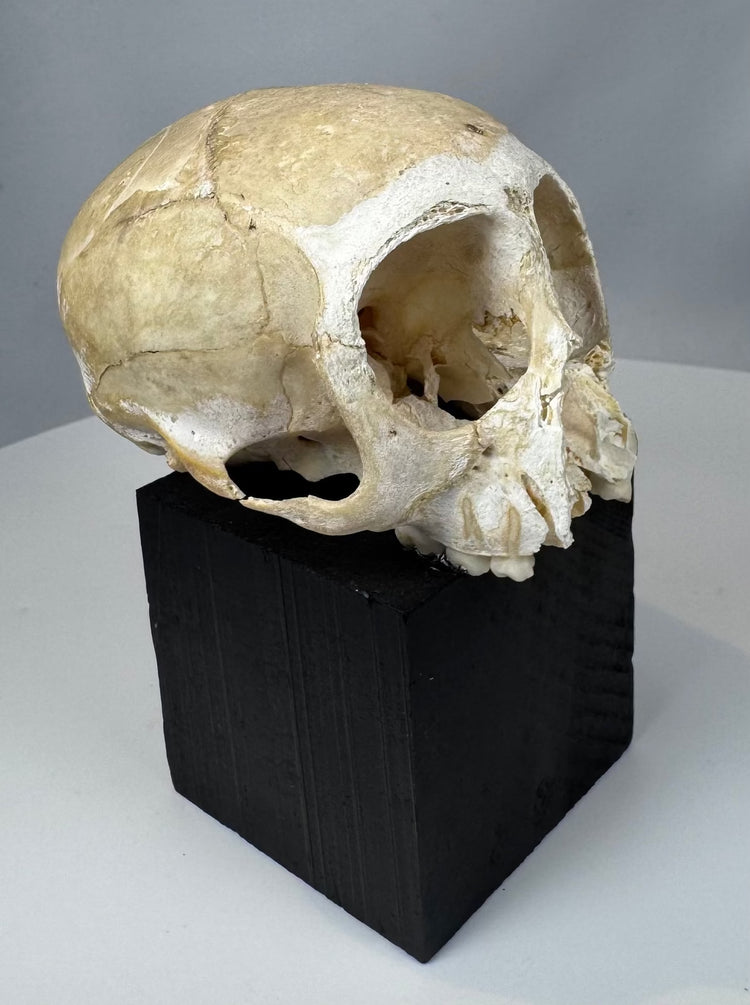
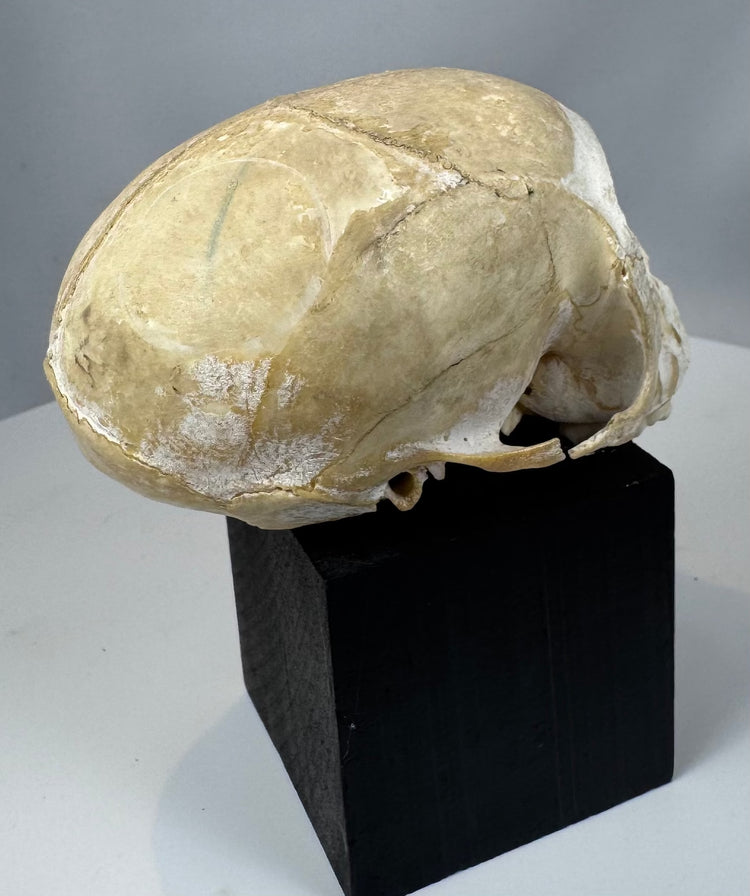
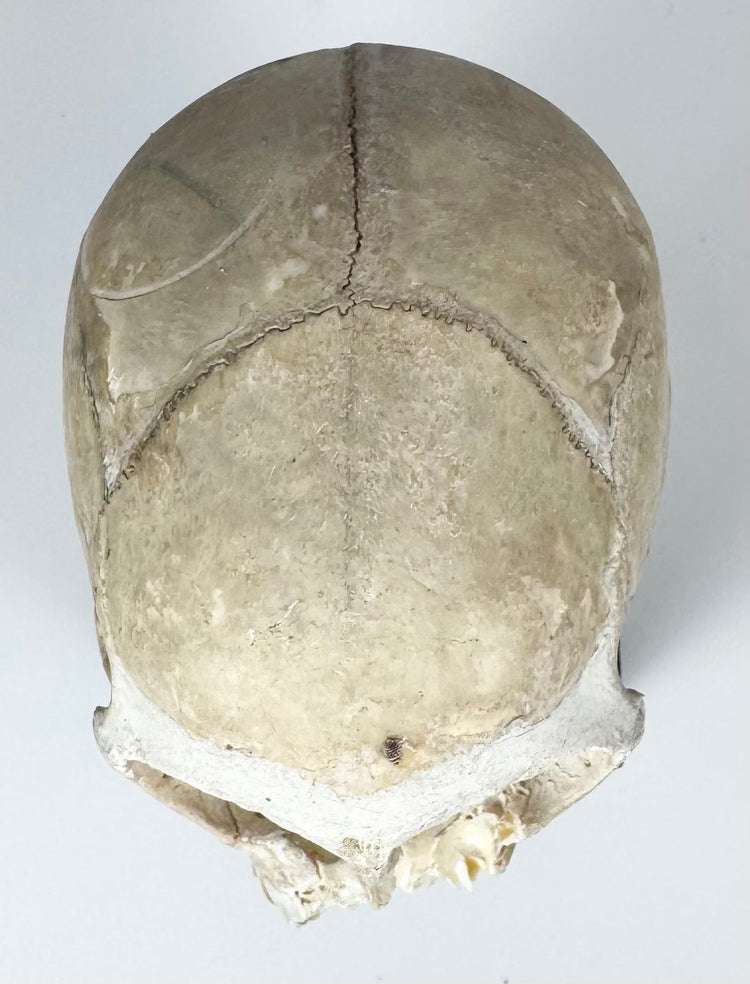
The skull exhibits pronounced cranial sutures throughout the parietal and occipital regions, along with surviving molars and visible internal sinus and cranial cavity structures. Areas of loss to the facial bones and maxillary region expose intricate internal anatomical details, enhancing the specimen’s visual and scientific interest.
Its aged cream-toned surface displays natural patination, mineral staining, and areas of stabilization consistent with long-term preservation and handling. Mounted atop a minimalist black wooden display block, the specimen possesses a striking cabinet-of-curiosities presentation suitable for collectors of anatomical artifacts, osteology, natural history, and historical scientific objects.
The small scale and distinctive morphology give the piece an especially compelling display presence while retaining strong educational and anatomical appeal.
Features
- Authentic small primate osteological specimen
- Mounted on a custom black display base
- Visible cranial sutures and preserved dentition
- Naturally aged bone surface and patina
- Intricate anatomical structure throughout
- Strong cabinet-of-curiosities presentation
- Suitable for anatomical, natural history, and osteology collections
Cultural Significance
Animal osteological specimens have long been utilized in comparative anatomy, medical education, zoological study, and natural history collections. Small primate skulls were historically studied to better understand skeletal development, cranial morphology, and evolutionary relationships between species. Today, preserved osteological specimens remain highly sought after by collectors interested in scientific history, anatomical art, and curiosity displays.
Condition
Displays age-related wear, discoloration, stabilization residue, and multiple areas of loss consistent with age and handling. Significant losses present to the facial and nasal regions with visible cracking throughout the cranial sutures. Several teeth remain intact. Surface irregularities, mineral staining, and preservation wear visible throughout. Mounted securely on a later custom display base. Overall structurally stable with strong visual and anatomical presentation.
Dimensions (Approximate)
Length: 3.25 in
Width: 2.75 in
Height: 2.25 in
Measurements exclude the display base
Age (Approximate)
75–150 years old
Provenance
From a private collection in Anaheim, California, USA, specializing in osteological artifacts and anatomical specimens.
Learn More
Learn more on the scientific and educational importance of non-human primate skull studies and museum osteology
Browse our curated Oddities & Curiosities Collection
Description
Historical Context & Origin
Region: Likely Europe or North America
Material: Bone
Period: Likely Late 19th–Mid 20th Century
Description
This unusual small osteological specimen represents a preserved primate skull, likely from a small monkey species, mounted on a later custom black display base. The specimen displays a highly compact cranial form with large orbital cavities, delicate facial structure, and partially preserved dentition characteristic of small primates used historically in anatomical study, natural history collections, and educational displays.
The skull exhibits pronounced cranial sutures throughout the parietal and occipital regions, along with surviving molars and visible internal sinus and cranial cavity structures. Areas of loss to the facial bones and maxillary region expose intricate internal anatomical details, enhancing the specimen’s visual and scientific interest.
Its aged cream-toned surface displays natural patination, mineral staining, and areas of stabilization consistent with long-term preservation and handling. Mounted atop a minimalist black wooden display block, the specimen possesses a striking cabinet-of-curiosities presentation suitable for collectors of anatomical artifacts, osteology, natural history, and historical scientific objects.
The small scale and distinctive morphology give the piece an especially compelling display presence while retaining strong educational and anatomical appeal.
Features
- Authentic small primate osteological specimen
- Mounted on a custom black display base
- Visible cranial sutures and preserved dentition
- Naturally aged bone surface and patina
- Intricate anatomical structure throughout
- Strong cabinet-of-curiosities presentation
- Suitable for anatomical, natural history, and osteology collections
Cultural Significance
Animal osteological specimens have long been utilized in comparative anatomy, medical education, zoological study, and natural history collections. Small primate skulls were historically studied to better understand skeletal development, cranial morphology, and evolutionary relationships between species. Today, preserved osteological specimens remain highly sought after by collectors interested in scientific history, anatomical art, and curiosity displays.
Condition
Displays age-related wear, discoloration, stabilization residue, and multiple areas of loss consistent with age and handling. Significant losses present to the facial and nasal regions with visible cracking throughout the cranial sutures. Several teeth remain intact. Surface irregularities, mineral staining, and preservation wear visible throughout. Mounted securely on a later custom display base. Overall structurally stable with strong visual and anatomical presentation.
Dimensions (Approximate)
Length: 3.25 in
Width: 2.75 in
Height: 2.25 in
Measurements exclude the display base
Age (Approximate)
75–150 years old
Provenance
From a private collection in Anaheim, California, USA, specializing in osteological artifacts and anatomical specimens.
Learn More
Learn more on the scientific and educational importance of non-human primate skull studies and museum osteology
Browse our curated Oddities & Curiosities Collection
You May Also Like
