

Antique Indian Copper Paan Daan (Betel Box) with Carrying Handle | Mughal Tradition | Circa Late 18th–Early 19th Century
Couldn't load pickup availability


Antique Indian Copper Paan Daan (Betel Box) with Carrying Handle | Mughal Tradition | Circa Late 18th–Early 19th Century
Description
More
Less
Historical Context & Origin
Region: Northern India (Mughal Tradition)
Material: Hand-hammered copper with wrought iron fittings and interior compartments
Period: Late 18th–Early 19th Century
Description
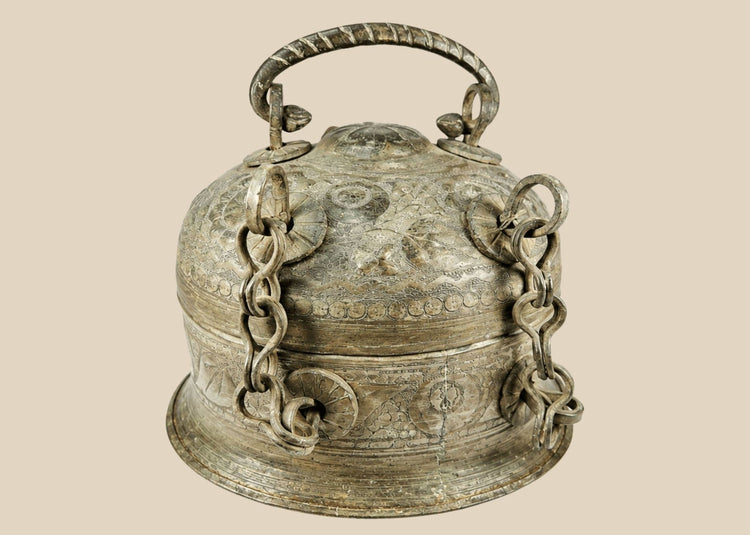
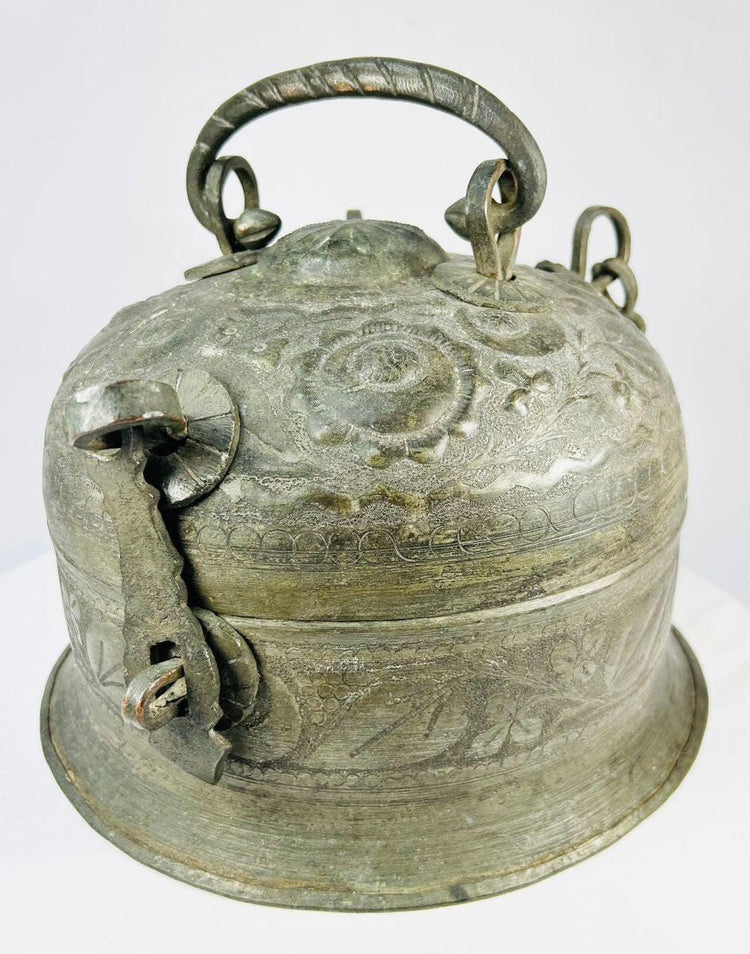
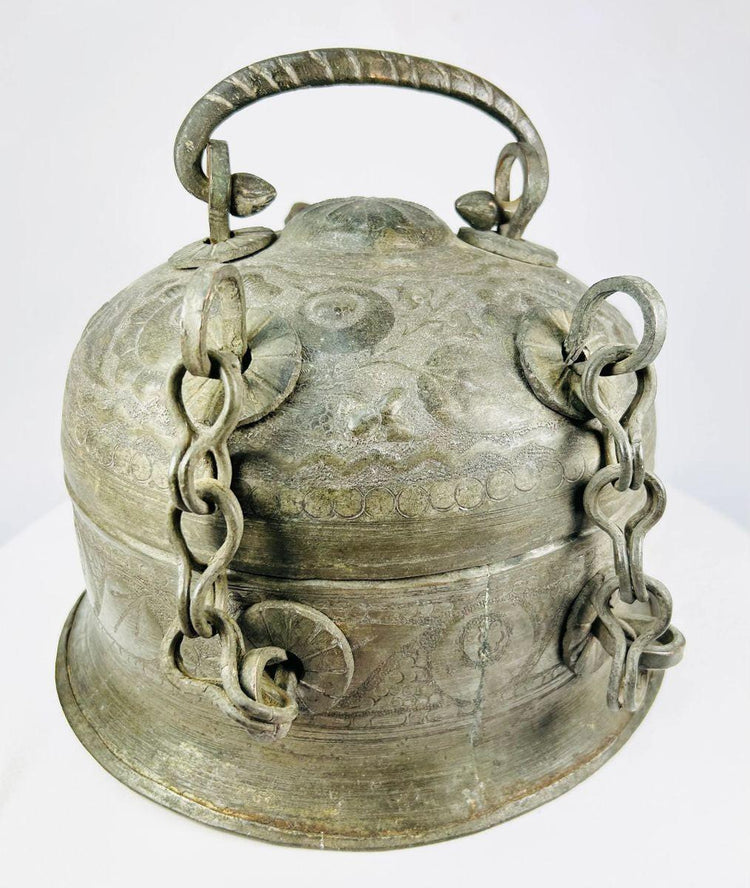
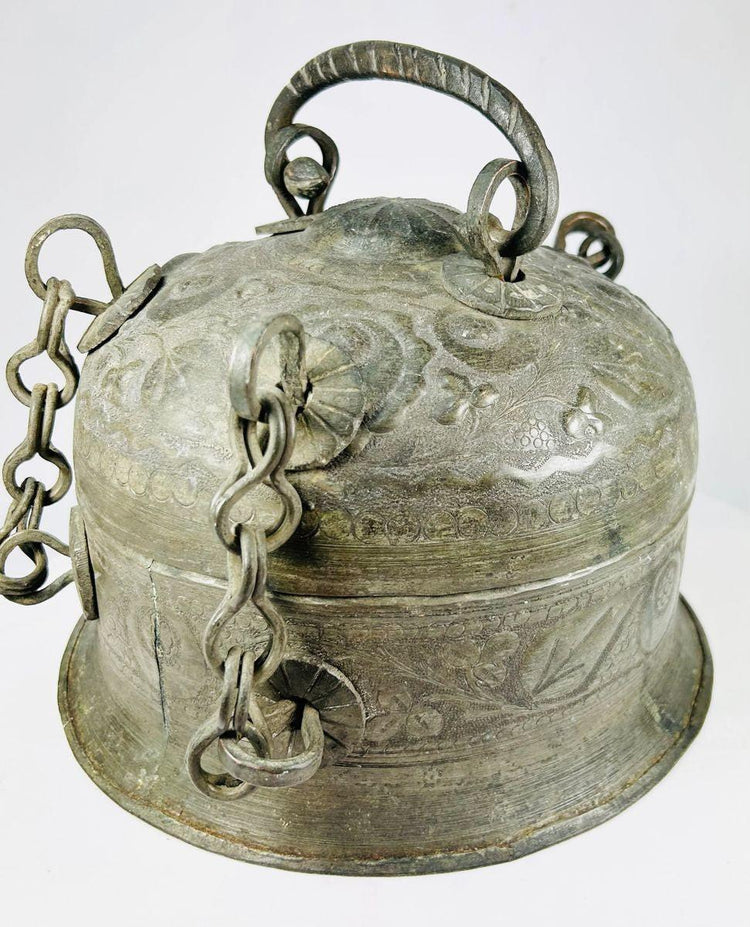
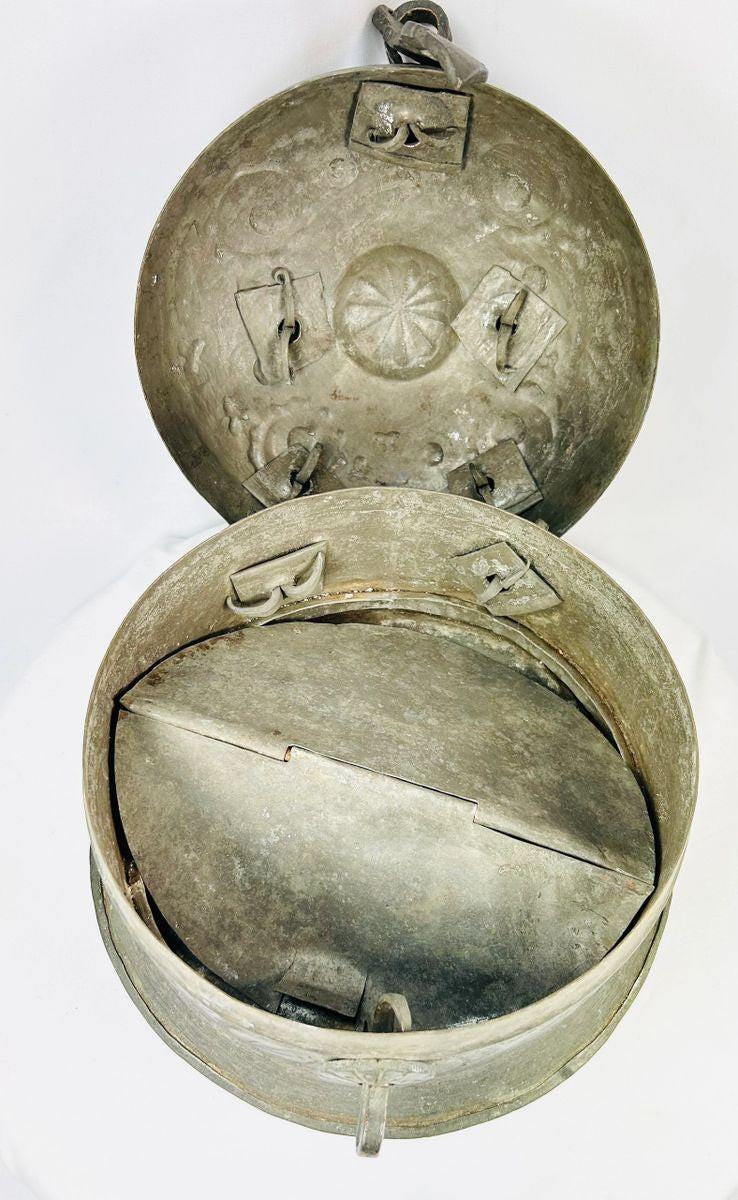
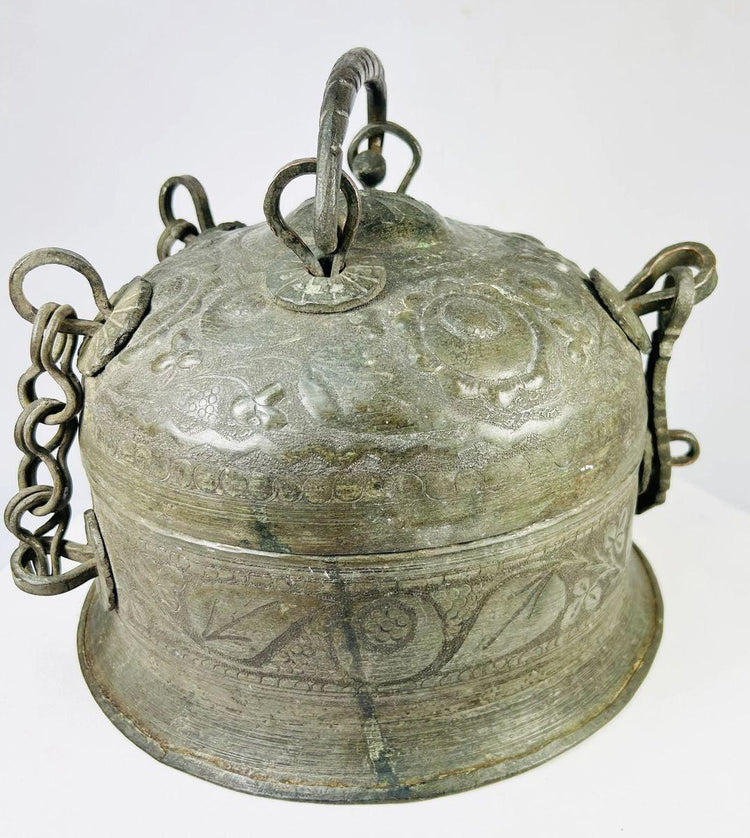
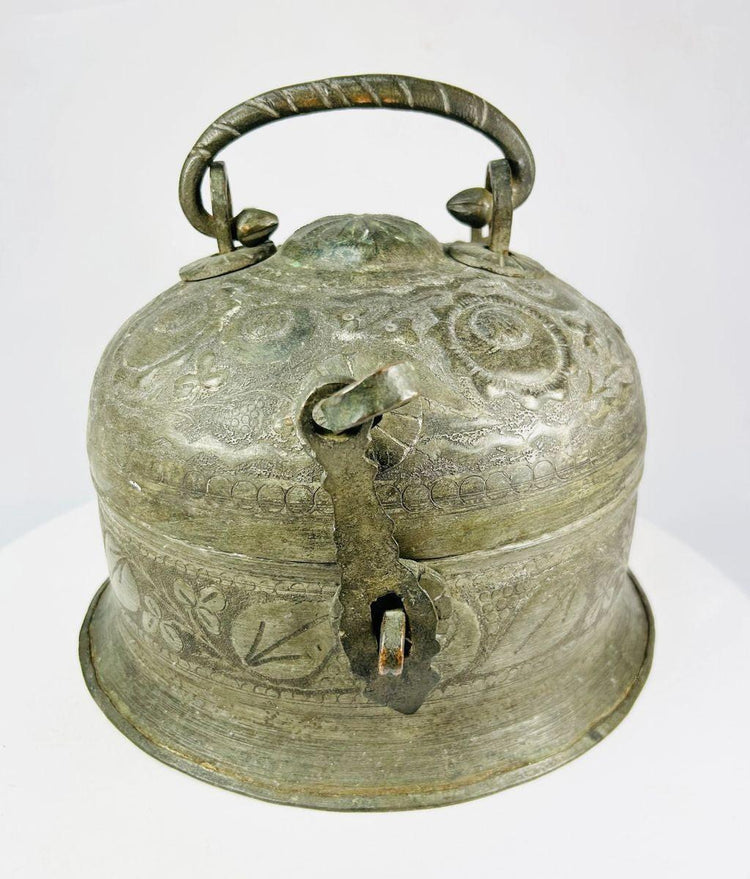
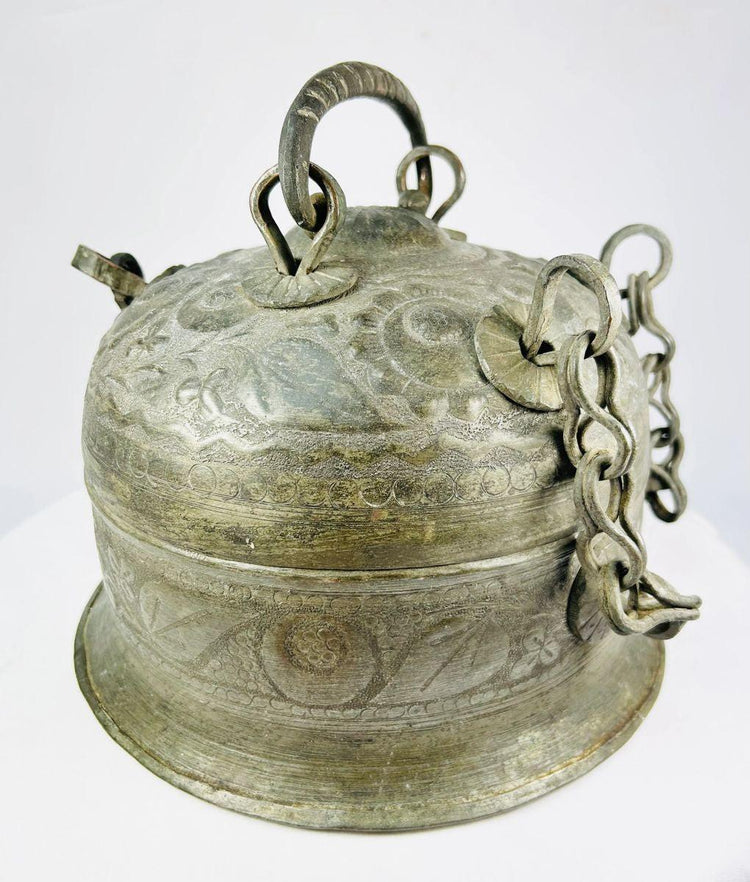
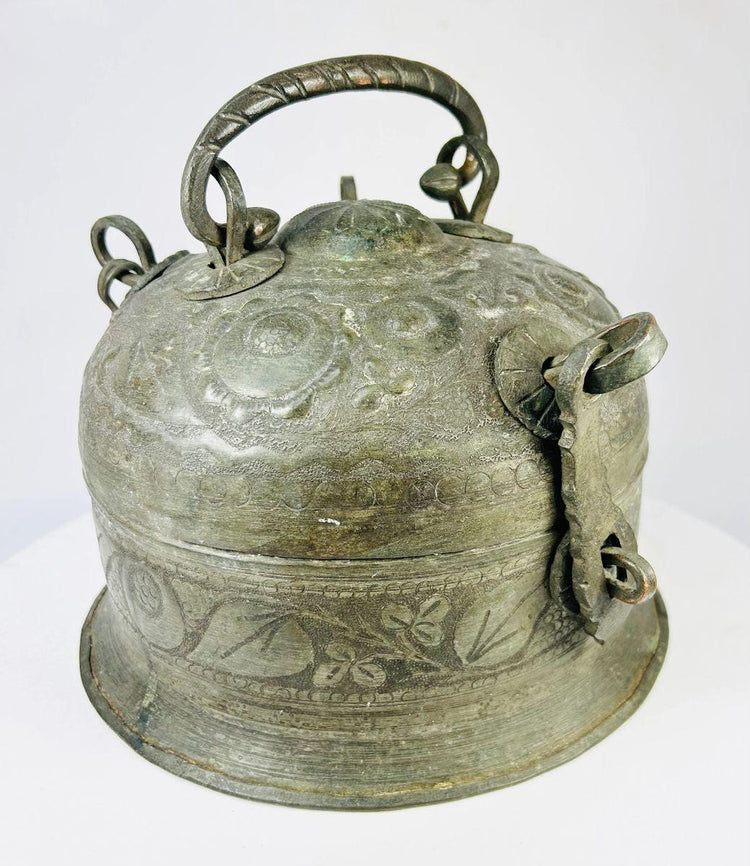
This exceptional hand-crafted Indian Paan Daan is a beautifully preserved example of traditional domestic metalwork from the late Mughal period. Constructed from hand-hammered copper with an elegantly domed body, the container features a robust swing handle, hinged lid, decorative locking clasp, and multiple removable interior compartments designed for storing the ingredients used in preparing paan (betel quid).
For centuries, paan occupied an important place throughout the Indian subcontinent, serving not only as a daily refreshment but also as an essential element of hospitality, courtly etiquette, and ceremonial life. Offering prepared betel leaves to guests symbolized generosity, respect, and social refinement. Wealthy households often commissioned finely crafted Paan Daans such as this example, which combined practical function with decorative artistry.
The restrained elegance of this piece reflects the influence of Mughal craftsmanship, emphasizing balanced proportions, hand-worked surfaces, and durable construction intended for generations of use. The rich natural patina and signs of age further enhance its historical character while preserving its authenticity.
Features
- Authentic antique Indian copper Paan Daan
- Late 18th–Early 19th Century
- Hand-hammered copper construction
- Domed hinged lid with decorative locking clasp
- Swing carrying handle
- Multiple removable interior compartments for paan ingredients
- Attractive naturally aged patina throughout
- Fine example of traditional Mughal-period domestic metalwork
Cultural Significance
The preparation and sharing of paan has been deeply woven into South Asian culture for well over a millennium. Traditionally consisting of betel leaf filled with areca nut, lime paste, spices, and aromatic ingredients, paan was enjoyed during celebrations, religious festivals, weddings, diplomatic meetings, and everyday social gatherings.
Specialized containers known as Paan Daans were prized household objects, often passed down through generations as family heirlooms. Their craftsmanship reflected both the owner's social standing and the importance placed upon hospitality within Indian society. Larger examples with multiple compartments, like this one, allowed each ingredient to be stored separately while remaining readily accessible during preparation.
Condition
The Paan Daan remains in very good antique condition. The hinged lid, carrying handle, locking clasp, and interior fittings remain intact. The copper surface displays an attractive naturally developed patina with areas of oxidation, surface wear, and age-related imperfections consistent with more than two centuries of careful use. These characteristics contribute to the object's authenticity and historical appeal.
Dimensions (Approximate)
Height: 10 in
Width: 8 in
Age (Approximate)
200–250 years old
Provenance
Formerly part of the BC Galleries Collection, Australia. Subsequently held in a private collection in Armadale, Australia.
Learn More
Discover a related Indian paan container in the collection of the Smithsonian National Museum of Asian Art
Explore Our Collection of Functional Tools & Ancient Implements
Description
Historical Context & Origin
Region: Northern India (Mughal Tradition)
Material: Hand-hammered copper with wrought iron fittings and interior compartments
Period: Late 18th–Early 19th Century
Description
This exceptional hand-crafted Indian Paan Daan is a beautifully preserved example of traditional domestic metalwork from the late Mughal period. Constructed from hand-hammered copper with an elegantly domed body, the container features a robust swing handle, hinged lid, decorative locking clasp, and multiple removable interior compartments designed for storing the ingredients used in preparing paan (betel quid).
For centuries, paan occupied an important place throughout the Indian subcontinent, serving not only as a daily refreshment but also as an essential element of hospitality, courtly etiquette, and ceremonial life. Offering prepared betel leaves to guests symbolized generosity, respect, and social refinement. Wealthy households often commissioned finely crafted Paan Daans such as this example, which combined practical function with decorative artistry.
The restrained elegance of this piece reflects the influence of Mughal craftsmanship, emphasizing balanced proportions, hand-worked surfaces, and durable construction intended for generations of use. The rich natural patina and signs of age further enhance its historical character while preserving its authenticity.
Features
- Authentic antique Indian copper Paan Daan
- Late 18th–Early 19th Century
- Hand-hammered copper construction
- Domed hinged lid with decorative locking clasp
- Swing carrying handle
- Multiple removable interior compartments for paan ingredients
- Attractive naturally aged patina throughout
- Fine example of traditional Mughal-period domestic metalwork
Cultural Significance
The preparation and sharing of paan has been deeply woven into South Asian culture for well over a millennium. Traditionally consisting of betel leaf filled with areca nut, lime paste, spices, and aromatic ingredients, paan was enjoyed during celebrations, religious festivals, weddings, diplomatic meetings, and everyday social gatherings.
Specialized containers known as Paan Daans were prized household objects, often passed down through generations as family heirlooms. Their craftsmanship reflected both the owner's social standing and the importance placed upon hospitality within Indian society. Larger examples with multiple compartments, like this one, allowed each ingredient to be stored separately while remaining readily accessible during preparation.
Condition
The Paan Daan remains in very good antique condition. The hinged lid, carrying handle, locking clasp, and interior fittings remain intact. The copper surface displays an attractive naturally developed patina with areas of oxidation, surface wear, and age-related imperfections consistent with more than two centuries of careful use. These characteristics contribute to the object's authenticity and historical appeal.
Dimensions (Approximate)
Height: 10 in
Width: 8 in
Age (Approximate)
200–250 years old
Provenance
Formerly part of the BC Galleries Collection, Australia. Subsequently held in a private collection in Armadale, Australia.
Learn More
Discover a related Indian paan container in the collection of the Smithsonian National Museum of Asian Art
Explore Our Collection of Functional Tools & Ancient Implements
You May Also Like
