

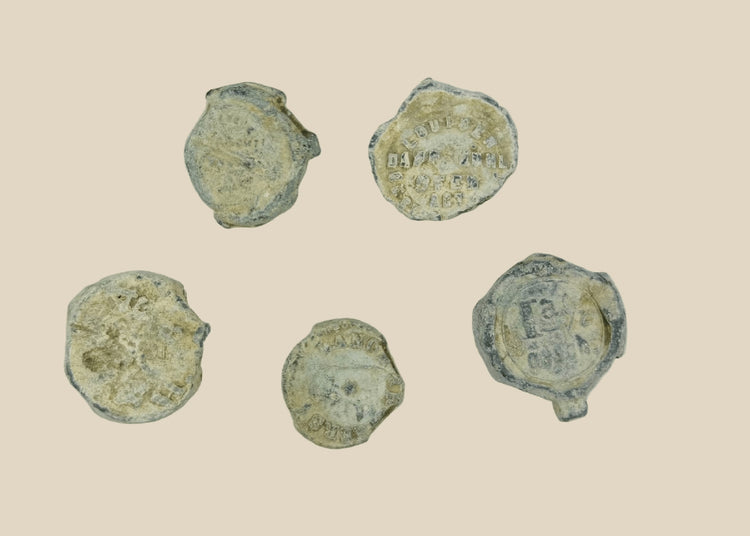
Maritime Trade Relics | Five Shipwreck-Recovered Lead Bag or Bale Seals | 18th–19th Century
Couldn't load pickup availability


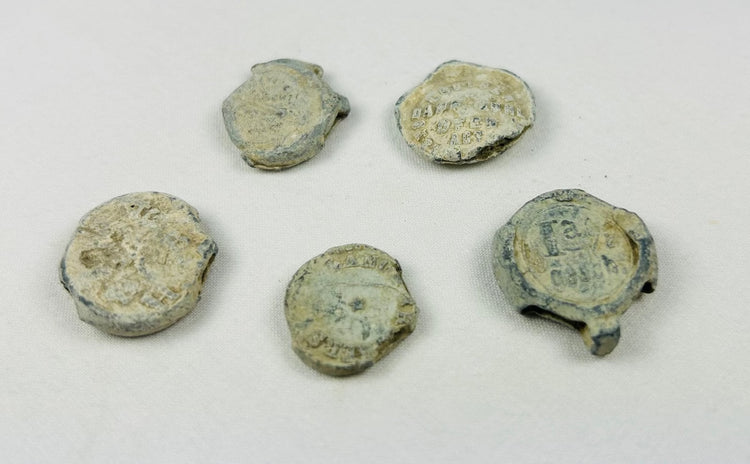
Maritime Trade Relics | Five Shipwreck-Recovered Lead Bag or Bale Seals | 18th–19th Century
Description
More
Less
Historical Context & Origin
Region: England and British maritime trade routes
Material: Lead with marine encrustation and patina
Period: 18th–19th century
Description
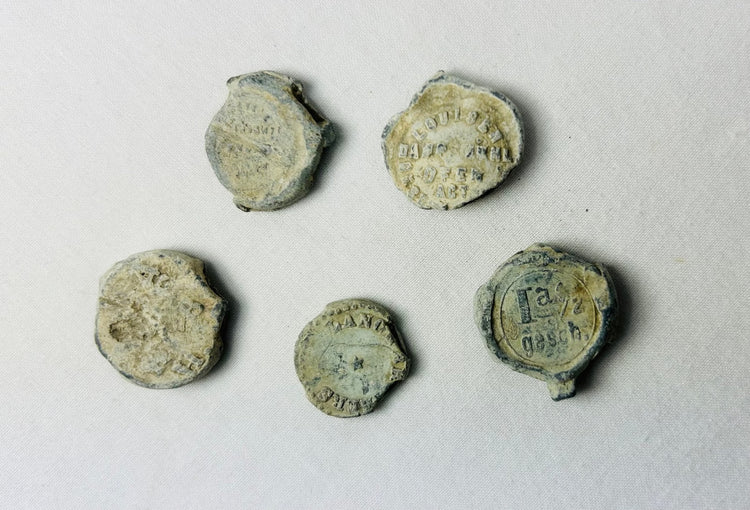
This group consists of five shipwreck-recovered lead bag or bale seals dating from the 18th or 19th century. These small lead seals were attached to the cords or closures of bags, sacks and commercial bales transported through historic trade networks.
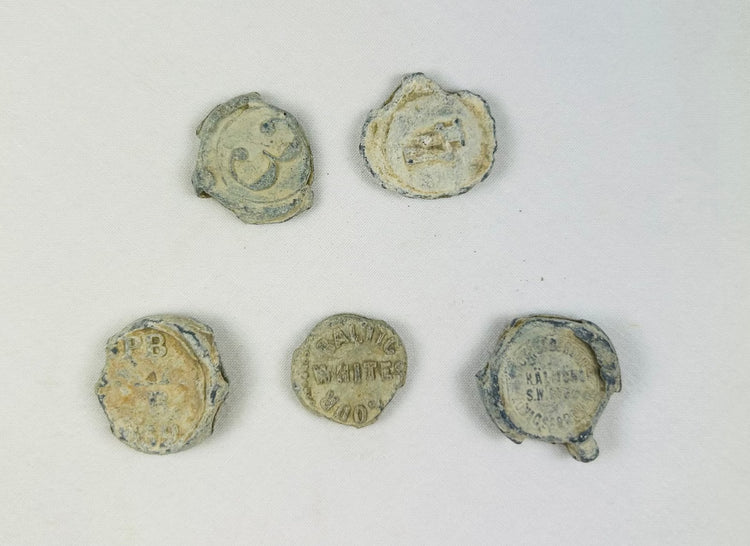
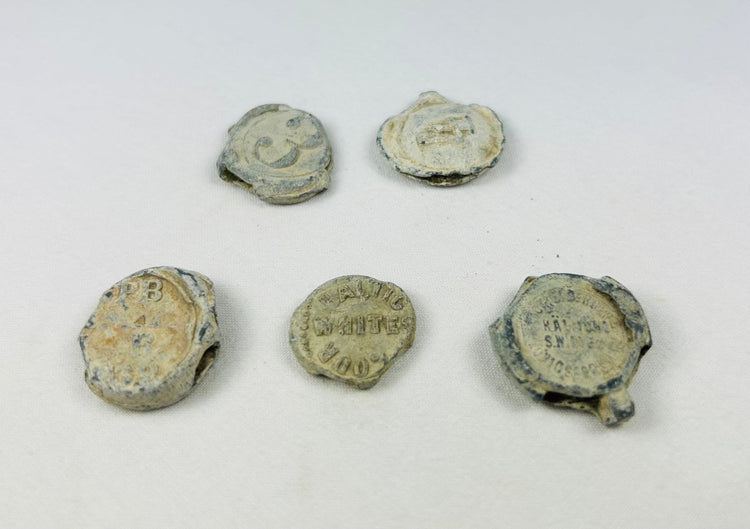
The seals were impressed with identifying marks that could relate to a merchant, producer, inspector, place of origin or shipment. Although their circular forms can resemble coins, they were not used as currency. Each example displays substantial marine corrosion and encrustation from prolonged underwater exposure, with traces of the original impressed markings remaining visible beneath the weathered surfaces.
Preserved together as a group, these seals offer a tangible connection to historic maritime commerce and the enormous quantities of packaged goods once transported along British and international shipping routes.
Features
- Group of five shipwreck-recovered lead bag or bale seals
- Originally attached to bags, sacks or bales of commercial goods
- Used to identify, secure or inspect packaged merchandise
- Traces of impressed symbols, lettering or commercial marks
- Natural marine patina, corrosion and encrustation
- Preserved together as a historic maritime trade group
Cultural Significance
Lead bag and bale seals were important tools in the administration of historic commerce. Depending on their intended use, their impressed markings could identify the owner, merchant, producer, inspector or place connected with a shipment. They could also help confirm that packaged goods had been inspected or had not been opened during transportation.
Their recovery from a shipwreck context reflects both the scale of maritime commerce during the 18th and 19th centuries and the dangers associated with transporting valuable goods by sea. These modest objects provide a direct link to the movement, identification and control of merchandise across historic trade routes.
Condition
Shipwreck condition, with heavy marine corrosion, oxidation, surface encrustation and loss of fine detail caused by prolonged underwater exposure. The original impressed markings are partly obscured, although portions remain visible. The overall forms remain substantially intact and suitable for display.
Dimensions (Approximate)
Largest seal: 1 inch in diameter
Age (Approximate)
125–325 years old
Provenance
Recovered from a shipwreck context. Previously held in a private collection in Brea, California, USA.
Learn More
Explore our full collection of shipwreck-recovered artifacts.
Who owns the treasure beneath the waves? Learn more about the laws and ownership questions surrounding shipwreck discoveries.
Description
Historical Context & Origin
Region: England and British maritime trade routes
Material: Lead with marine encrustation and patina
Period: 18th–19th century
Description
This group consists of five shipwreck-recovered lead bag or bale seals dating from the 18th or 19th century. These small lead seals were attached to the cords or closures of bags, sacks and commercial bales transported through historic trade networks.
The seals were impressed with identifying marks that could relate to a merchant, producer, inspector, place of origin or shipment. Although their circular forms can resemble coins, they were not used as currency. Each example displays substantial marine corrosion and encrustation from prolonged underwater exposure, with traces of the original impressed markings remaining visible beneath the weathered surfaces.
Preserved together as a group, these seals offer a tangible connection to historic maritime commerce and the enormous quantities of packaged goods once transported along British and international shipping routes.
Features
- Group of five shipwreck-recovered lead bag or bale seals
- Originally attached to bags, sacks or bales of commercial goods
- Used to identify, secure or inspect packaged merchandise
- Traces of impressed symbols, lettering or commercial marks
- Natural marine patina, corrosion and encrustation
- Preserved together as a historic maritime trade group
Cultural Significance
Lead bag and bale seals were important tools in the administration of historic commerce. Depending on their intended use, their impressed markings could identify the owner, merchant, producer, inspector or place connected with a shipment. They could also help confirm that packaged goods had been inspected or had not been opened during transportation.
Their recovery from a shipwreck context reflects both the scale of maritime commerce during the 18th and 19th centuries and the dangers associated with transporting valuable goods by sea. These modest objects provide a direct link to the movement, identification and control of merchandise across historic trade routes.
Condition
Shipwreck condition, with heavy marine corrosion, oxidation, surface encrustation and loss of fine detail caused by prolonged underwater exposure. The original impressed markings are partly obscured, although portions remain visible. The overall forms remain substantially intact and suitable for display.
Dimensions (Approximate)
Largest seal: 1 inch in diameter
Age (Approximate)
125–325 years old
Provenance
Recovered from a shipwreck context. Previously held in a private collection in Brea, California, USA.
Learn More
Explore our full collection of shipwreck-recovered artifacts.
Who owns the treasure beneath the waves? Learn more about the laws and ownership questions surrounding shipwreck discoveries.
You May Also Like
