


New Guinea Ritual Bone Dagger | Human Humerus with Pigment Decoration | Circa 19th Century
Couldn't load pickup availability


New Guinea Ritual Bone Dagger | Human Humerus with Pigment Decoration | Circa 19th Century
Description
More
Less
Historical Context & Origin
Region: New Guinea
Material: Human humerus with pigment decoration
Period: Circa 19th century
Description
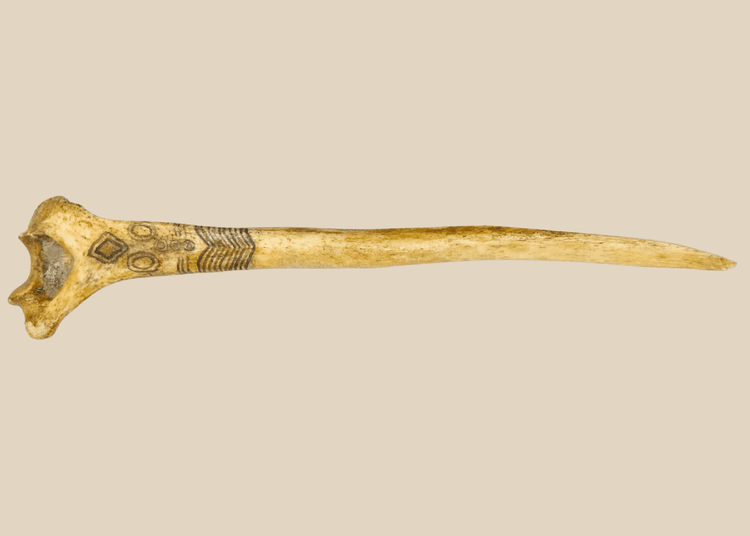
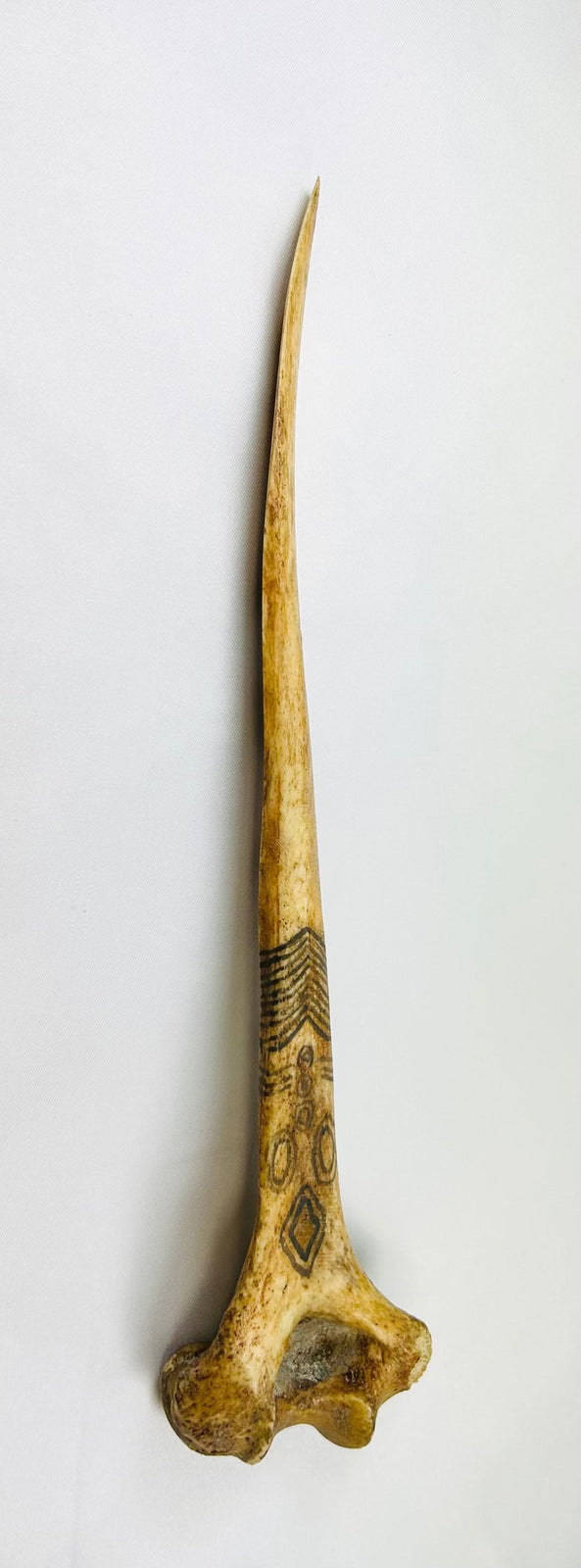
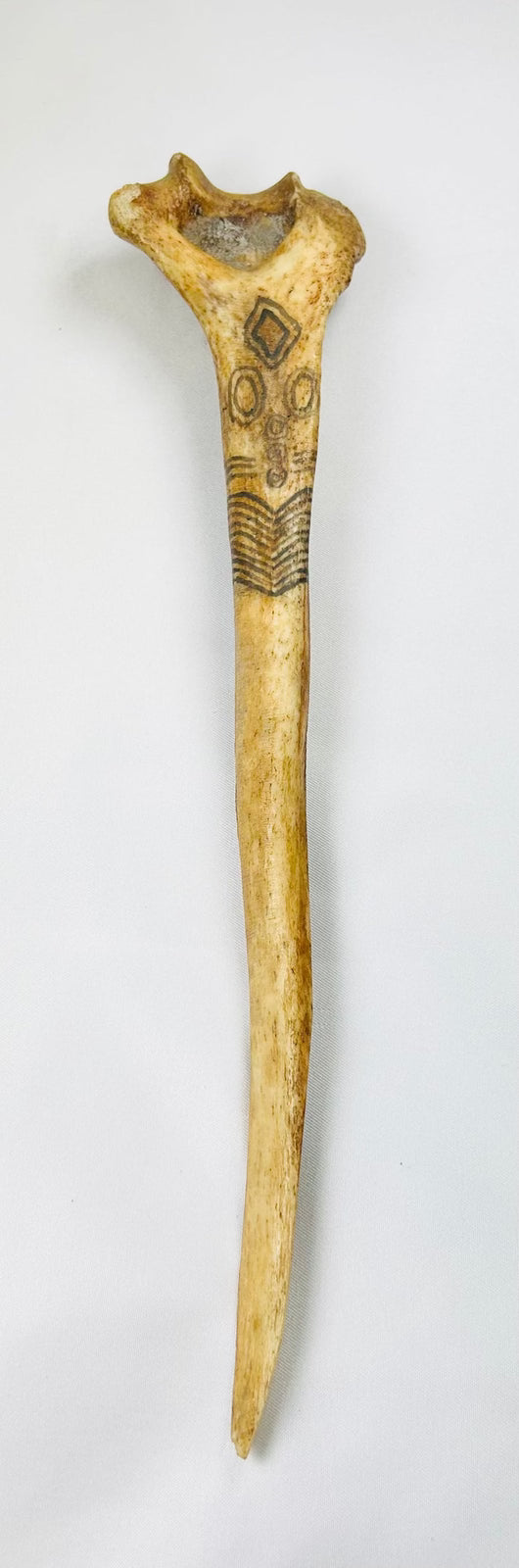
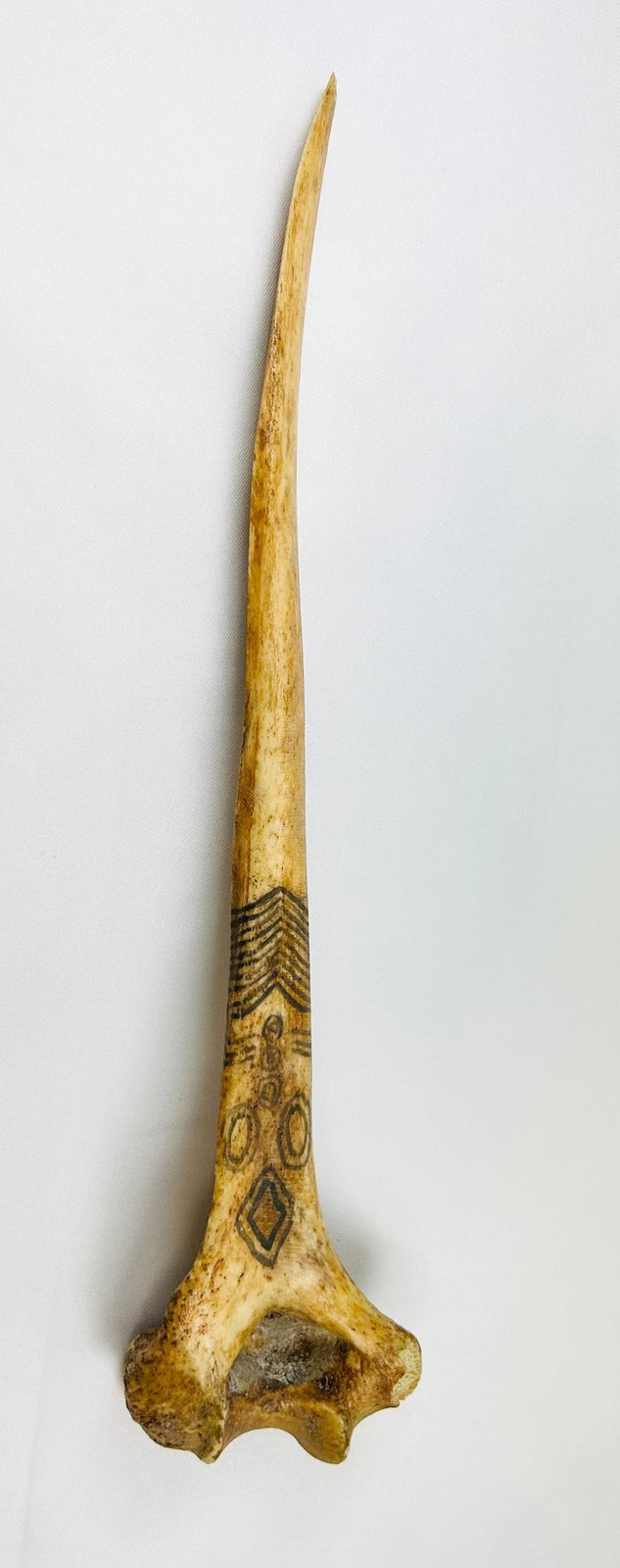
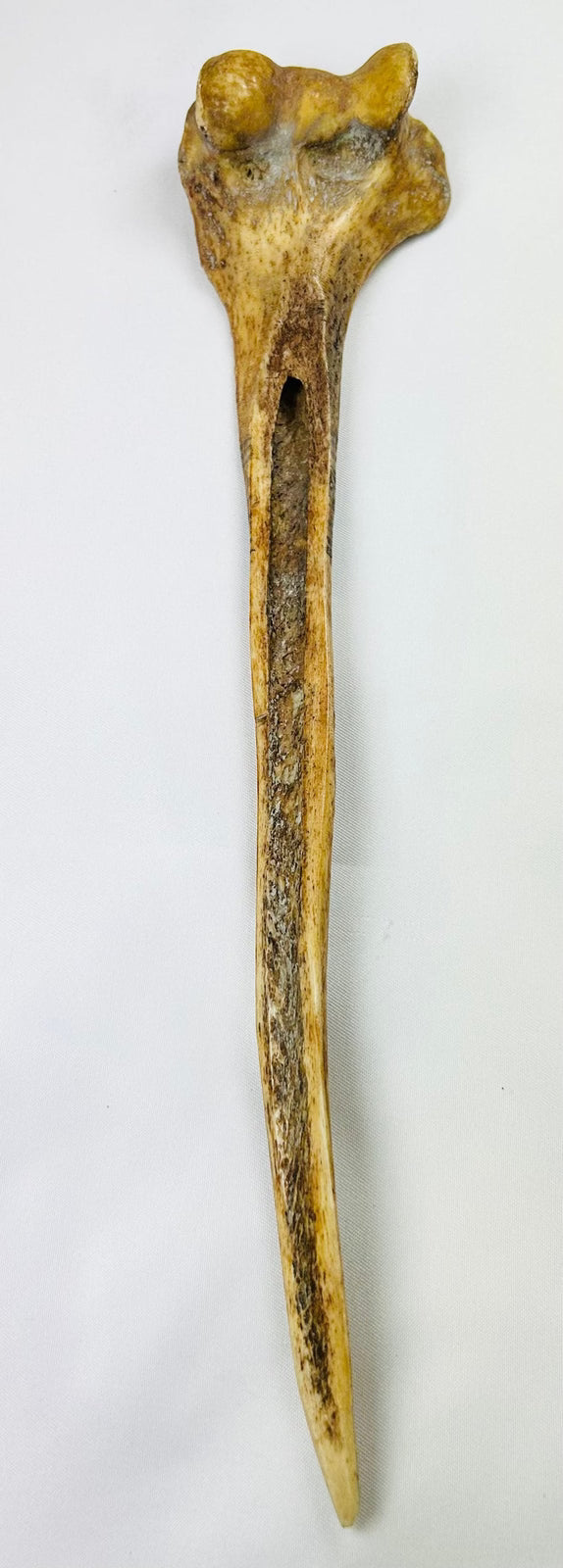
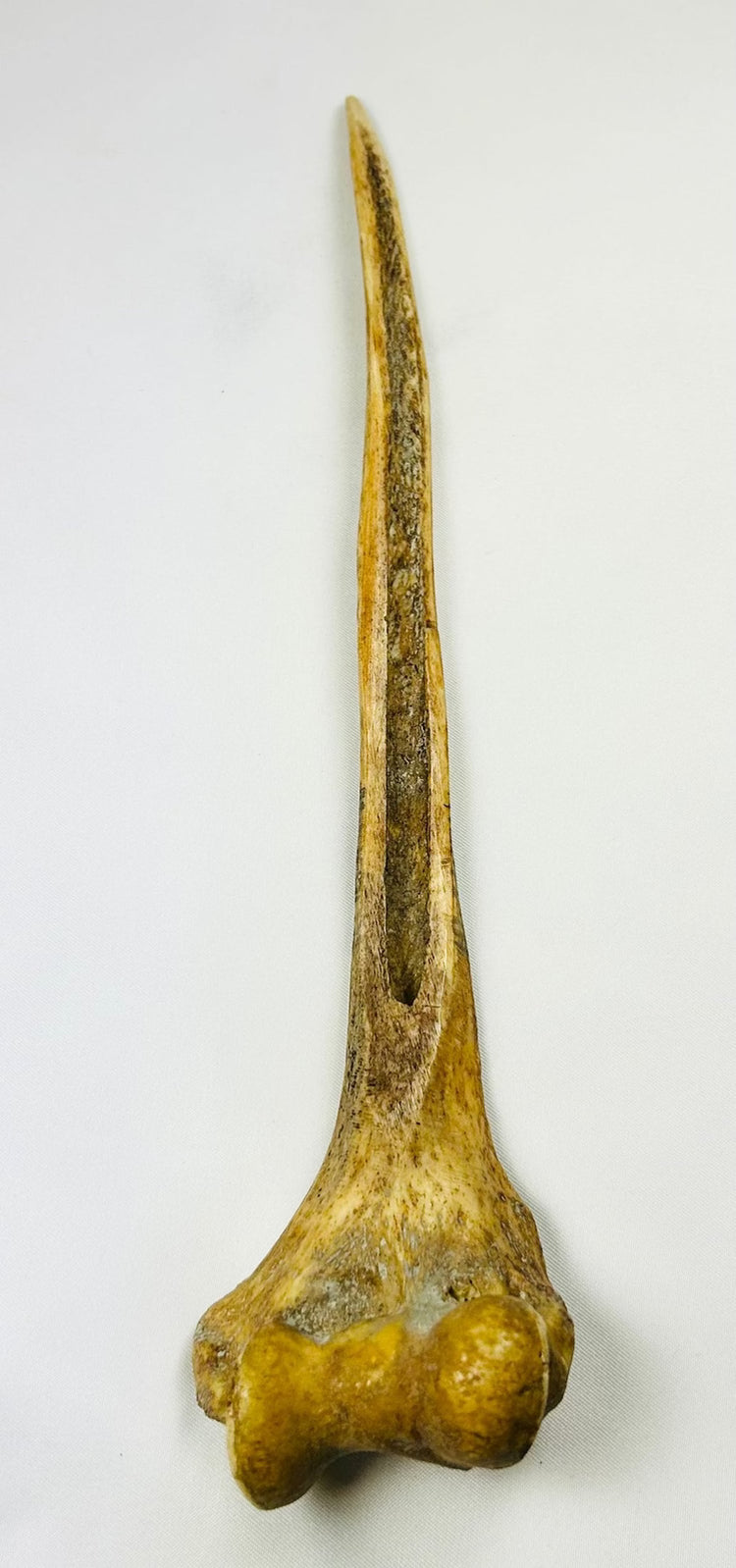
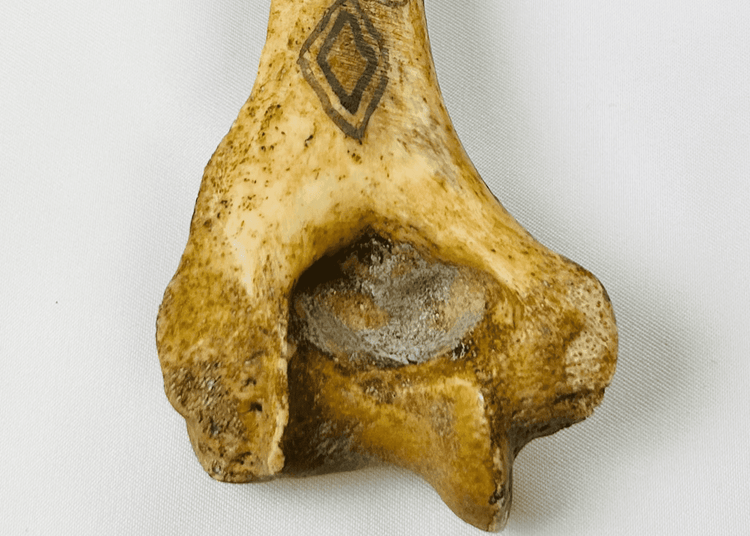
An exceptionally unusual New Guinea ritual dagger fashioned from a human humerus. Measuring approximately 13.75 inches long, the bone has been carefully worked into an elongated, tapering form terminating in a narrow point. The expanded anatomical end of the humerus has been retained as the handle or pommel, preserving a distinctive connection to the material from which the dagger was made.
Geometric and curvilinear motifs have been applied near the handle in dark pigment, creating a striking contrast against the naturally aged bone surface. No feather embellishments are currently attached to the object.
Features
- Fashioned from a human humerus, as confirmed by specialist assessment
- Long, carefully shaped body terminating in a tapered point
- Expanded anatomical end retained as the handle or pommel
- Geometric and curvilinear decoration applied in dark pigment
- Aged bone surface with visible colour variation and historical wear
- No feather embellishments present
Cultural Significance
Bone daggers were historically produced in several regions of New Guinea and served both practical and symbolic purposes. Published research describes these objects as close-combat weapons, works of artistic expression, conspicuous personal adornments, and symbols of strength and social prestige.
Human-bone daggers could carry particular significance because the material was associated with the identity, strength, and status of the individual from whom it originated. Published studies frequently discuss examples made from human femora; however, specialist Elizabeth Weiss, PhD, independently reviewed detailed photographs of this particular dagger and identified its material as a human humerus.
The preserved anatomical form, elongated point, and painted decoration make this a compelling example of the relationship between weaponry, artistry, identity, and symbolic power in New Guinea material culture.
Condition
Good overall condition for its age, with surface wear, discoloration, small abrasions, and an aged patina consistent with the material and attributed period. The elongated form and tapered point remain intact, while the painted geometric decoration is still clearly visible. No feather embellishments are present. No obvious modern restoration is evident. Please review the photographs carefully for a complete assessment of condition.
Dimensions (Approximate)
Length: 13.75 in
Age (Approximate)
125–225 years old
Provenance
From a private estate in Clearwater, Florida, USA, which included an extensive collection of New Guinea artefacts.
Subsequently handled by Blackwell Auctions in 2024.
Expert Assessment: Reviewed from detailed photographs by Elizabeth Weiss, PhD, Professor Emerita of Anthropology and a physical anthropologist specializing in human osteology. She confirmed that the dagger was fashioned from a human humerus.
Learn More
Read the published study New Guinea Bone Daggers Were Engineered to Preserve Social Prestige
Compare this object with a cassowary-bone dagger at the Timothy S. Y. Lam Museum of Anthropology
Explore related human-bone artifacts: Tibetan Kapala Skull Cup and Tibetan Kapala Citipati Beads
Description
Historical Context & Origin
Region: New Guinea
Material: Human humerus with pigment decoration
Period: Circa 19th century
Description
An exceptionally unusual New Guinea ritual dagger fashioned from a human humerus. Measuring approximately 13.75 inches long, the bone has been carefully worked into an elongated, tapering form terminating in a narrow point. The expanded anatomical end of the humerus has been retained as the handle or pommel, preserving a distinctive connection to the material from which the dagger was made.
Geometric and curvilinear motifs have been applied near the handle in dark pigment, creating a striking contrast against the naturally aged bone surface. No feather embellishments are currently attached to the object.
Features
- Fashioned from a human humerus, as confirmed by specialist assessment
- Long, carefully shaped body terminating in a tapered point
- Expanded anatomical end retained as the handle or pommel
- Geometric and curvilinear decoration applied in dark pigment
- Aged bone surface with visible colour variation and historical wear
- No feather embellishments present
Cultural Significance
Bone daggers were historically produced in several regions of New Guinea and served both practical and symbolic purposes. Published research describes these objects as close-combat weapons, works of artistic expression, conspicuous personal adornments, and symbols of strength and social prestige.
Human-bone daggers could carry particular significance because the material was associated with the identity, strength, and status of the individual from whom it originated. Published studies frequently discuss examples made from human femora; however, specialist Elizabeth Weiss, PhD, independently reviewed detailed photographs of this particular dagger and identified its material as a human humerus.
The preserved anatomical form, elongated point, and painted decoration make this a compelling example of the relationship between weaponry, artistry, identity, and symbolic power in New Guinea material culture.
Condition
Good overall condition for its age, with surface wear, discoloration, small abrasions, and an aged patina consistent with the material and attributed period. The elongated form and tapered point remain intact, while the painted geometric decoration is still clearly visible. No feather embellishments are present. No obvious modern restoration is evident. Please review the photographs carefully for a complete assessment of condition.
Dimensions (Approximate)
Length: 13.75 in
Age (Approximate)
125–225 years old
Provenance
From a private estate in Clearwater, Florida, USA, which included an extensive collection of New Guinea artefacts.
Subsequently handled by Blackwell Auctions in 2024.
Expert Assessment: Reviewed from detailed photographs by Elizabeth Weiss, PhD, Professor Emerita of Anthropology and a physical anthropologist specializing in human osteology. She confirmed that the dagger was fashioned from a human humerus.
Learn More
Read the published study New Guinea Bone Daggers Were Engineered to Preserve Social Prestige
Compare this object with a cassowary-bone dagger at the Timothy S. Y. Lam Museum of Anthropology
Explore related human-bone artifacts: Tibetan Kapala Skull Cup and Tibetan Kapala Citipati Beads
You May Also Like
