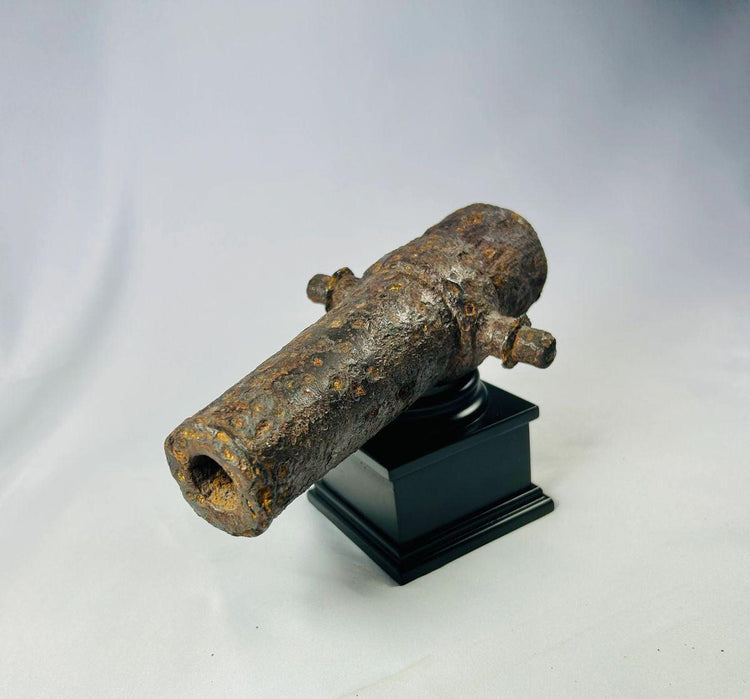
Niagara River Salvaged Signal Cannon | Maritime Communication Relic in Excavated Condition | Circa 1700s

Regular price
$1,200.00
Sale price
$1,200.00
Regular price
Free Worldwide Shipping on all orders
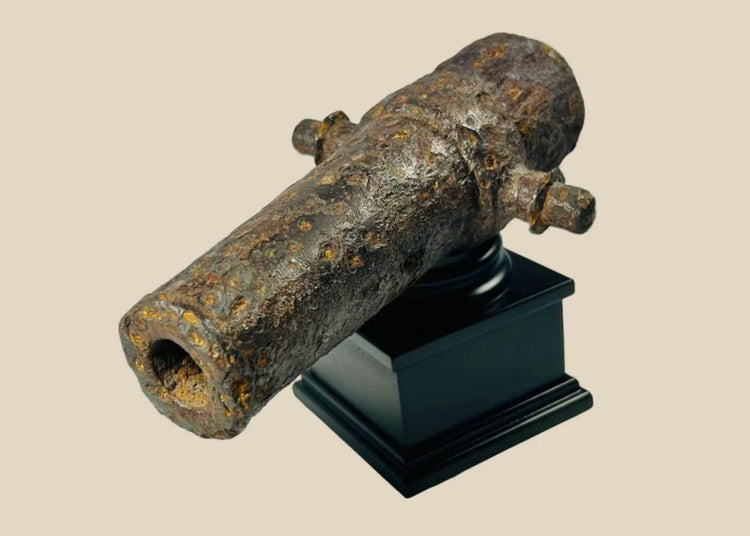
Rusted miniature iron cannon from the British Civil War period, mounted on a black display stand, featuring original trunnions and hollow barrel, 17th century.
Video showcasing an 18th-century British signal cannon salvaged from the Niagara River, displayed on a black museum stand.
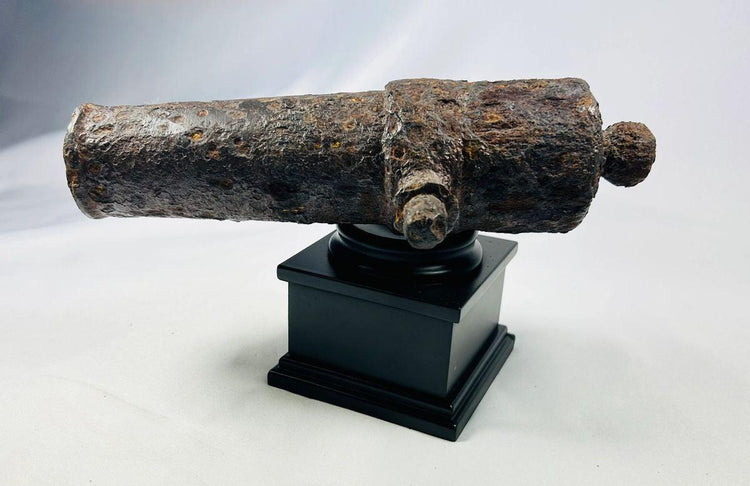
Side view of an excavated 18th-century British signal cannon displayed on a black museum stand.
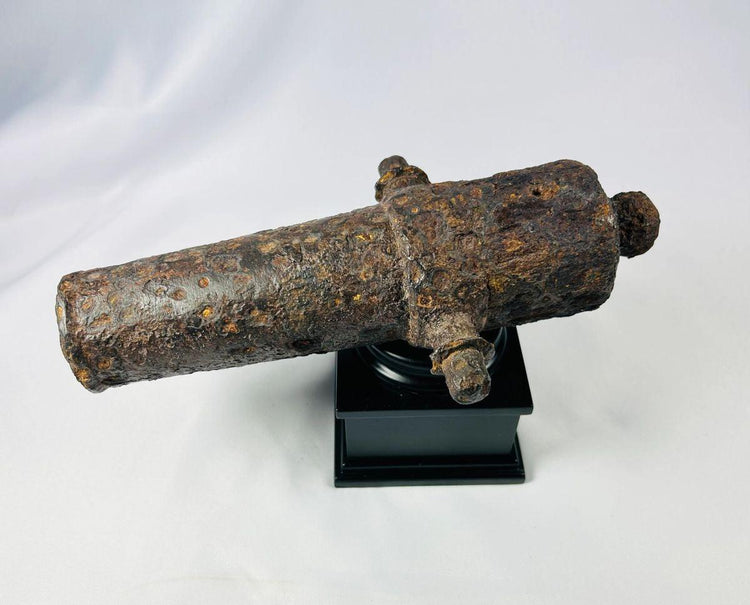
Angled view of an 18th-century British signal cannon with heavy encrustation displayed on a black museum stand.
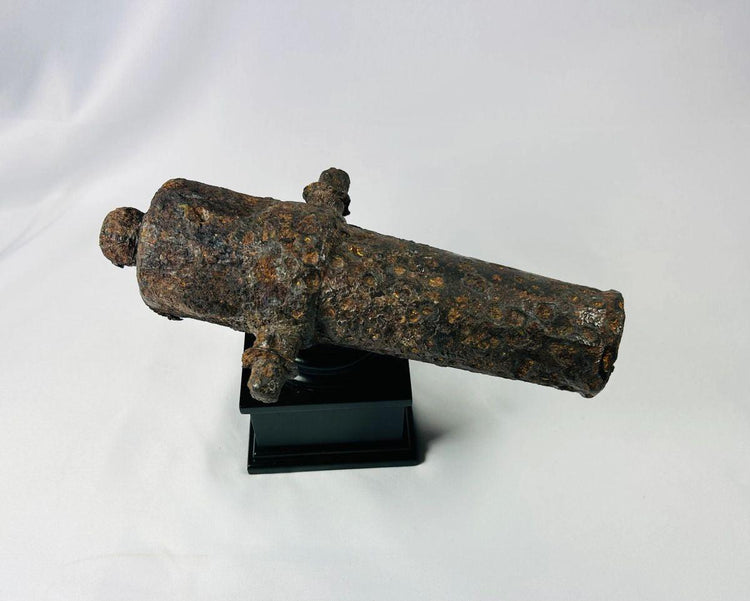
Angled overhead view of an 18th-century British signal cannon with heavy rust encrustation on a black museum display stand.
Rusted miniature iron cannon from the British Civil War period, mounted on a black display stand, featuring original trunnions and hollow barrel, 17th century.
  • Rusted miniature iron cannon from the British Civil War period, mounted on a black display stand, featuring original trunnions and hollow barrel, 17th century.
  • Video showcasing an 18th-century British signal cannon salvaged from the Niagara River, displayed on a black museum stand.
  • Side view of an excavated 18th-century British signal cannon displayed on a black museum stand.
  • Angled view of an 18th-century British signal cannon with heavy encrustation displayed on a black museum stand.
  • Angled overhead view of an 18th-century British signal cannon with heavy rust encrustation on a black museum display stand.
  • Rusted miniature iron cannon from the British Civil War period, mounted on a black display stand, featuring original trunnions and hollow barrel, 17th century.
Rusted miniature iron cannon from the British Civil War period, mounted on a black display stand, featuring original trunnions and hollow barrel, 17th century.
Video showcasing an 18th-century British signal cannon salvaged from the Niagara River, displayed on a black museum stand.
Side view of an excavated 18th-century British signal cannon displayed on a black museum stand.
Angled view of an 18th-century British signal cannon with heavy encrustation displayed on a black museum stand.
Angled overhead view of an 18th-century British signal cannon with heavy rust encrustation on a black museum display stand.
Rusted miniature iron cannon from the British Civil War period, mounted on a black display stand, featuring original trunnions and hollow barrel, 17th century.
Authenticity and secure checkout guarantee

Niagara River Salvaged Signal Cannon | Maritime Communication Relic in Excavated Condition | Circa 1700s

Description

Historical Context & Origin

Region: North America (Niagara River)
Material: Cast iron or brass (excavated condition)
Period: 18th Century

Description

This historically significant maritime artifact is an 18th-century signal cannon salvaged from the Niagara River and preserved in excavated condition. Signal cannons were widely used in ports and aboard ships during the 18th century to communicate arrivals, inspections, warnings, and ceremonial salutes. Their compact construction allowed for repeated firings while remaining durable in maritime environments.

Artifacts of this type played an important role in naval communication systems, particularly in busy waterways such as the Great Lakes. The cannon’s form and preservation offer a tangible connection to early maritime trade, naval signaling, and harbor operations.

Features

- Compact signal cannon design

- Cast iron or brass construction

- Excavated condition with authentic marine patina

- Salvaged from the Niagara River

- Representative of 18th-century maritime signaling equipment

Cultural Significance

Signal cannons were essential tools for maritime communication throughout the early modern period. They were fired to announce a vessel’s arrival, request harbor clearance, signal inspection for disease control, or mark ceremonial occasions. Their use was particularly important in strategic waterways such as the Great Lakes, where naval operations, trade, and colonial expansion depended on clear communication between ships and port authorities.

Condition

Excavated condition with natural surface encrustation and wear consistent with long-term submersion. The cannon retains strong structural form and historical character.

Dimensions (Approximate)

Height: 8.3 in

Age (Approximate)

225–325 years old

Learn More

Watch an overview of Signal Cannons and Their Maritime Use

Browse our Collection of Historic Weapons and Combat Artifacts

View examples of 18th Century Signal Cannons

Description

Historical Context & Origin

Region: North America (Niagara River)
Material: Cast iron or brass (excavated condition)
Period: 18th Century

Description

This historically significant maritime artifact is an 18th-century signal cannon salvaged from the Niagara River and preserved in excavated condition. Signal cannons were widely used in ports and aboard ships during the 18th century to communicate arrivals, inspections, warnings, and ceremonial salutes. Their compact construction allowed for repeated firings while remaining durable in maritime environments.

Artifacts of this type played an important role in naval communication systems, particularly in busy waterways such as the Great Lakes. The cannon’s form and preservation offer a tangible connection to early maritime trade, naval signaling, and harbor operations.

Features

- Compact signal cannon design

- Cast iron or brass construction

- Excavated condition with authentic marine patina

- Salvaged from the Niagara River

- Representative of 18th-century maritime signaling equipment

Cultural Significance

Signal cannons were essential tools for maritime communication throughout the early modern period. They were fired to announce a vessel’s arrival, request harbor clearance, signal inspection for disease control, or mark ceremonial occasions. Their use was particularly important in strategic waterways such as the Great Lakes, where naval operations, trade, and colonial expansion depended on clear communication between ships and port authorities.

Condition

Excavated condition with natural surface encrustation and wear consistent with long-term submersion. The cannon retains strong structural form and historical character.

Dimensions (Approximate)

Height: 8.3 in

Age (Approximate)

225–325 years old

Learn More

Watch an overview of Signal Cannons and Their Maritime Use

Browse our Collection of Historic Weapons and Combat Artifacts

View examples of 18th Century Signal Cannons

You May Also Like