

For a certain kind of collector, 2026 feels like a return to fundamentals: fewer “fast” trends, more lasting objects—pieces with weight, provenance, and a story that doesn’t expire. Ancient artifacts sit at the intersection of art, history, and scarcity, and that combination is exactly why more serious buyers are treating antiquities as part of a long-term collecting strategy.
The global art market remains enormous—measured in the tens of billions annually—which matters because it signals a mature ecosystem: scholarship, conservation, insurance, specialist logistics, and a deep buyer base.
Below is what’s driving the shift—and how thoughtful collectors approach antiquities investment today.
Scarcity you can’t manufacture
 |
 |
Unlike modern luxury goods, authentic ancient objects are not “produced” again. Supply is inherently finite, and the best pieces (with strong documentation, attractive condition, and aesthetic presence) become harder to replace each year.
That scarcity shows up in how collectors behave: when a piece checks the right boxes—authenticity, quality, and provenance—it tends to be treated as a “hold” object, not a flip.
Collector mindset in 2026: Buy fewer pieces. Buy better pieces. Keep them longer.
A diversification play that doesn’t look like a spreadsheet

Many high-end collectors don’t view antiquities as a day-trading asset. They view them as a store of cultural value that can complement more traditional holdings.
Knight Frank’s research on collectible categories frequently gets cited in wealth circles because it tracks luxury assets (art, watches, classic cars, etc.) and frames them as part of broader wealth strategy discussions.
Why antiquities fit this logic:
-
Low correlation to the same forces that move everyday consumer markets
-
Global collector demand across museums, institutions, and private buyers
-
Value supported by scholarship, rarity, and documented history
“Cultural capital” is real—and it’s becoming more visible
In 2026, collectors are curating homes and offices like private galleries. Ancient pieces work beautifully in modern interiors because they add contrast: timeworn surfaces, ancient geometry, hand-made imperfection, and human presence.
This isn’t just aesthetics—there’s status in taste plus knowledge. Owning an object that requires context, research, and discernment signals something different than owning something simply expensive.
The best antiquities behave like “blue-chip objects”

19th Century Omani Koran Holder Necklace
19th Century CE
Oman
Silver filigree & gilded hirz
Traditional tribal wearable

Tribal Ritual Mask
Early–Mid 20th Century
Northern Thailand / Laos
Wood & pigment
Ceremonial cultural object

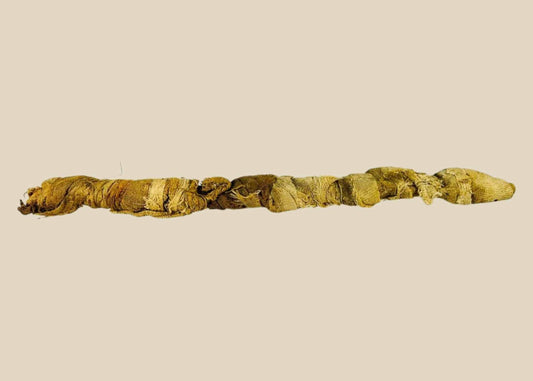
Ancient Peruvian Textile Fragment
c. 1000–1470 CE
Peru
Textile fiber fragment
Pre-Columbian cultural piece
Not every ancient artifact is an investment-grade piece. Serious collectors tend to focus on categories where demand stays consistent and quality is easier to evaluate, such as:
-
Ancient jewelry & wearable objects (rings, amulets, seals)
-
Small bronzes and ritual objects with strong form
-
Documented fragments (textiles, manuscript leaves, architectural elements)
-
Archaeological-style objects with clear region/period attribution
What collectors pay for:
-
Strong provenance or documented collecting history
-
Condition consistent with age (stable, not over-restored)
-
Aesthetics (presence matters—always has)
-
Scholarly comparables and clear identification
Provenance and ethical collecting matter more than ever
As the market becomes more sophisticated, due diligence becomes part of the value proposition.
International frameworks and museum-sector standards emphasize provenance, lawful export/import considerations, and responsible collecting practices. UNESCO’s 1970 Convention is frequently referenced as a cornerstone for combating illicit trafficking of cultural property. Museum and collections-ethics guidance also stresses having clear acquisition/provenance standards for archaeological material and ancient art.
What that means for collectors in practical terms:
-
Prefer objects with documented collecting history and transparent descriptions
-
Ask for paperwork, prior invoices, published references, and export documentation where applicable
-
Avoid pieces with gaps that can’t be responsibly explained
At Relic & Rarity, this is exactly why we treat provenance, attribution, and condition reporting as core—not optional.
How to think about “investment” without hype
Serious collectors rarely ask, “Will this double in 12 months?”
They ask:
-
“Is this a real object with a defensible identity?”
-
“Would I still want it if the market got quiet?”
-
“Is the quality high enough that I won’t need to ‘explain’ it later?”
That’s the long game. And it’s usually the winning one.
Where to go next on Relic & Rarity
Explore Our Curated Collection of Ancient Artifacts
Discover authentic ancient objects selected for their historical significance, material integrity, and long-term collectability. Each piece is carefully researched and presented with clear documentation and transparent descriptions.
→ View Ancient Artifacts for Sale
Ancient Jewelry & Wearable Antiquities
From rings and amulets to seals and personal adornments, wearable antiquities offer a direct and intimate connection to the ancient world and remain among the most sought-after collecting categories.
→ Explore Ancient Rings, Amulets & Jewelry
Museum-Quality Objects with Provenance
Learn how Relic & Rarity evaluates authenticity, provenance, condition, and cultural context—standards aligned with institutional best practices and serious private collections.
→ Learn About Our Authentication & Provenance Standards
New Arrivals & Recent Acquisitions
Our inventory evolves continually as new, carefully vetted pieces enter the collection. Many experienced collectors begin by reviewing recent acquisitions.
→ View New Arrivals
Explore Additional Curated Collections
Browse objects spanning civilizations, materials, and functions—each selected for quality, rarity, and historical resonance.
→ Browse All Collections


