

Shang–Zhou Dynasty Bronze Jar | Four-Handled Ritual Vessel with Lid | Circa 1600–256 BCE
Couldn't load pickup availability


Shang–Zhou Dynasty Bronze Jar | Four-Handled Ritual Vessel with Lid | Circa 1600–256 BCE
Description
More
Less
Historical Context & Origin
Region: Ancient China (Likely Shang or Zhou Dynasties)
Material: Cast bronze with natural patina
Period: Circa 1600–256 BCE
Description
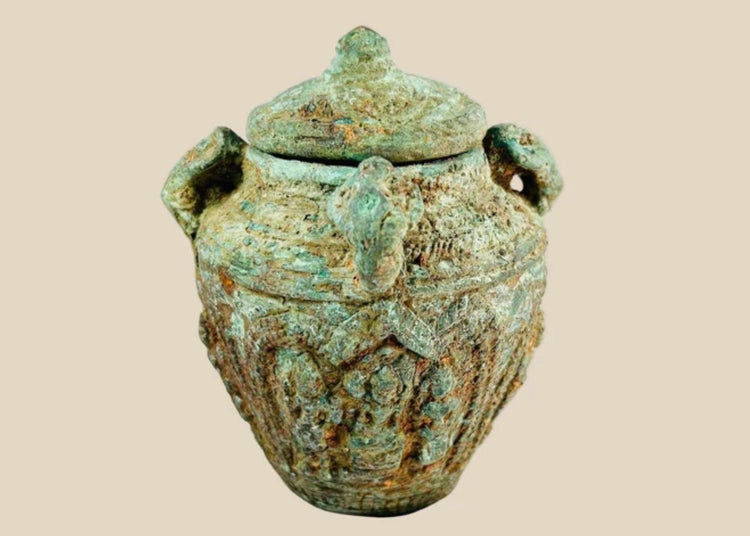
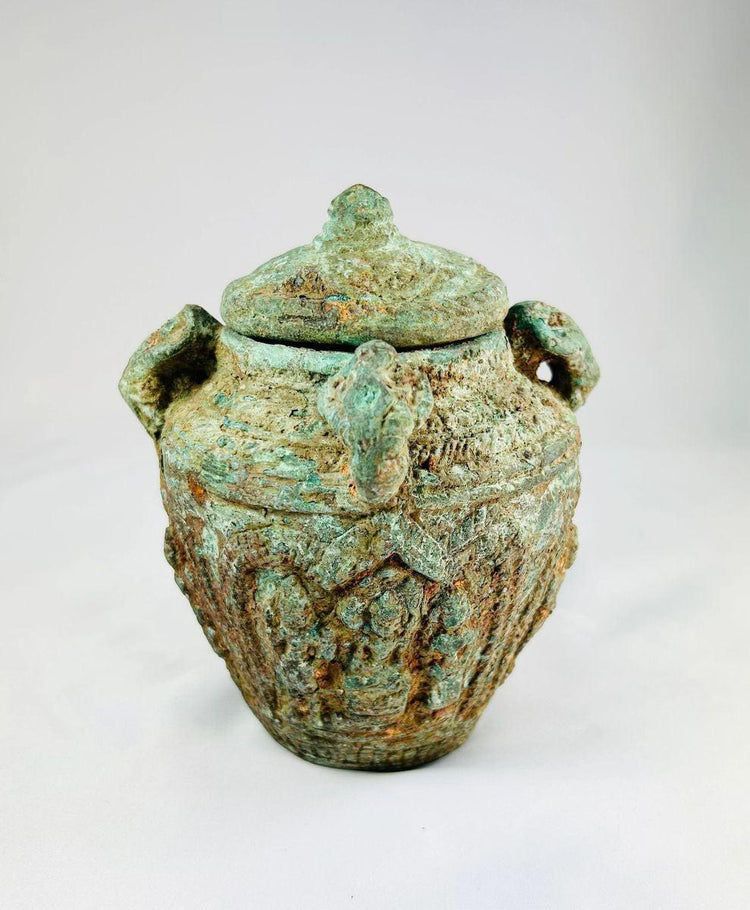
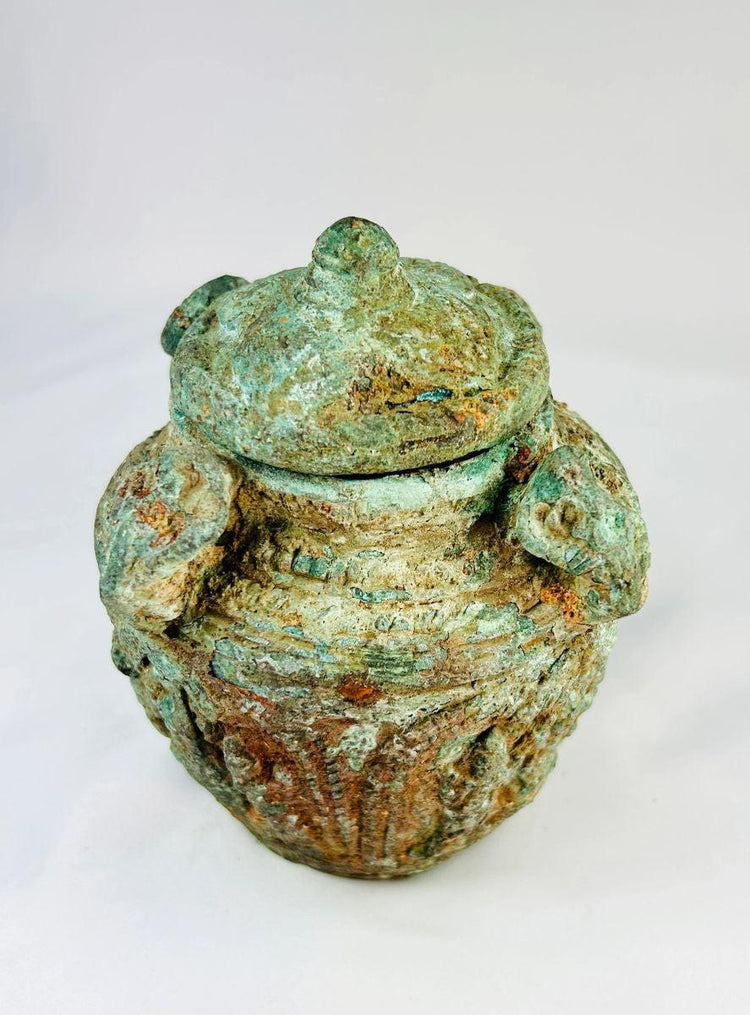
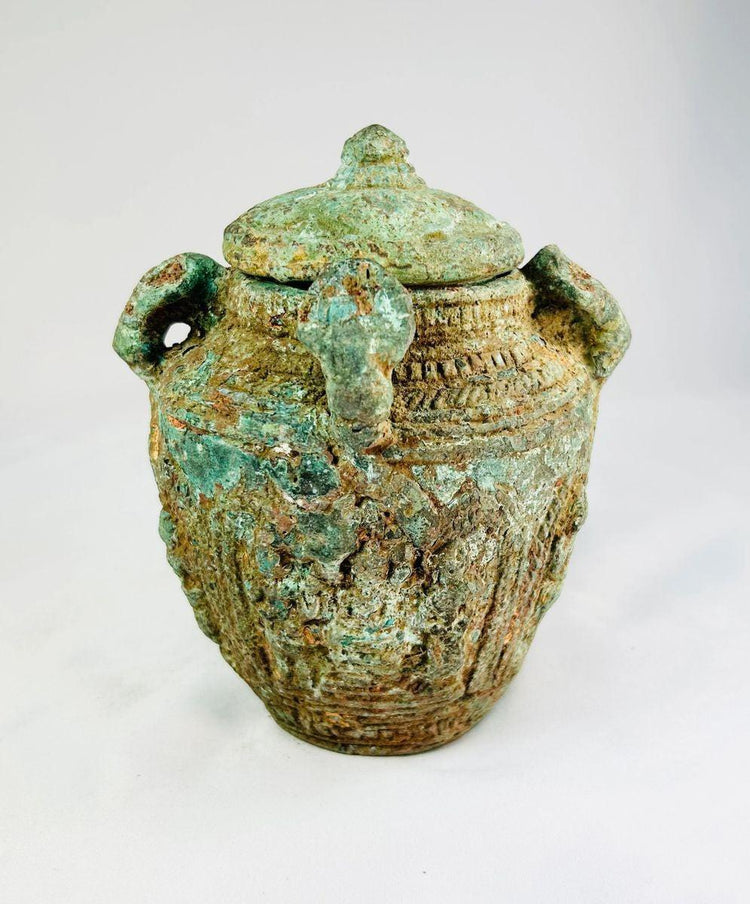
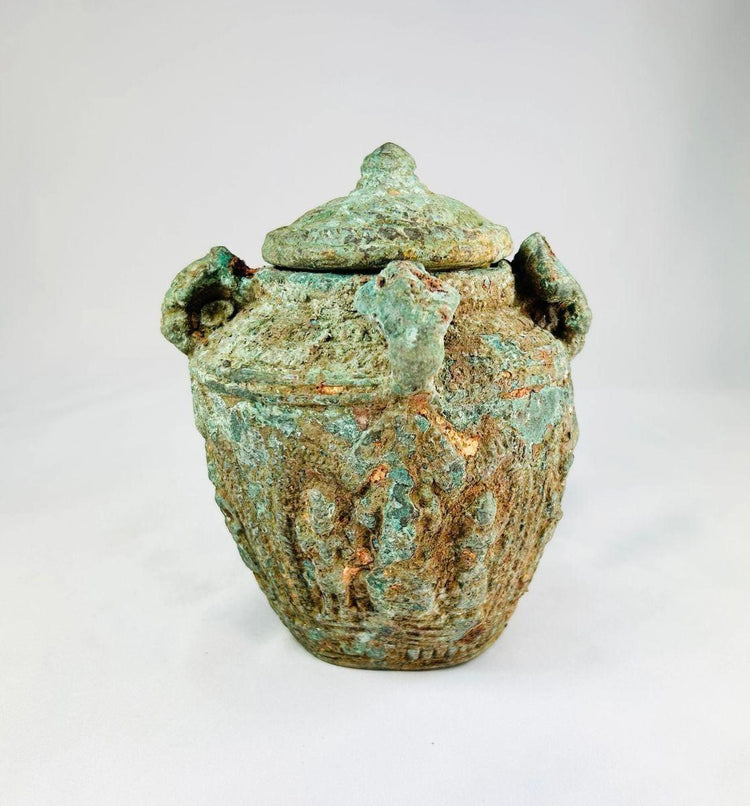
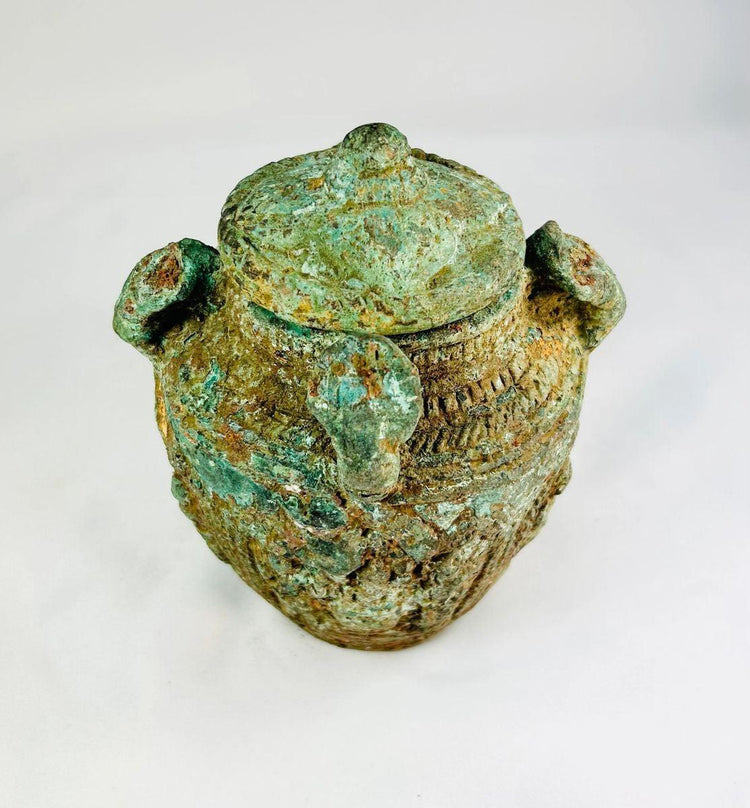
This ancient Chinese bronze lidded jar reflects the remarkable craftsmanship of early Chinese metallurgy. With its balanced form and richly developed patina, the vessel evokes ritual bronzes produced during the Shang and Zhou dynasties. Decorative motifs adorn the surface, while four symmetrically arranged handles provide both visual harmony and practical function. The fitted lid completes the form, suggesting ceremonial or ritual use within early Chinese religious practice.
Features
- Decorative surface motifs reflecting early Chinese symbolism
- Four handles arranged symmetrically for balance and utility
- Fitted lid crafted to match the vessel body
- Cast bronze construction with natural aged patina
- Compact form associated with ritual or ceremonial vessels
Cultural Significance
Bronze vessels were central to ritual life during the Shang (1600–1046 BCE) and Zhou (1046–256 BCE) dynasties. These objects were used in ancestor worship and ceremonial offerings, symbolizing authority, reverence, and continuity between the living and the ancestral world. Advances in bronze casting during this period produced vessels of exceptional durability and artistic sophistication, leaving an enduring legacy in Chinese cultural history.
Condition
Excellent preservation with clearly defined motifs, intact handles, and a rich surface patina consistent with great antiquity. The vessel remains structurally sound with its fitted lid intact, enhancing both authenticity and display value.
Dimensions (Approximate)
Height: 5.5 in
Width: 5 in
Age (Approximate)
2,281–3,625 years old
Learn More
Explore the history of Shang and Zhou Dynasty ritual bronzes
Browse our Collection of Ancient Chinese Artifacts and Imperial Relics
Description
Historical Context & Origin
Region: Ancient China (Likely Shang or Zhou Dynasties)
Material: Cast bronze with natural patina
Period: Circa 1600–256 BCE
Description
This ancient Chinese bronze lidded jar reflects the remarkable craftsmanship of early Chinese metallurgy. With its balanced form and richly developed patina, the vessel evokes ritual bronzes produced during the Shang and Zhou dynasties. Decorative motifs adorn the surface, while four symmetrically arranged handles provide both visual harmony and practical function. The fitted lid completes the form, suggesting ceremonial or ritual use within early Chinese religious practice.
Features
- Decorative surface motifs reflecting early Chinese symbolism
- Four handles arranged symmetrically for balance and utility
- Fitted lid crafted to match the vessel body
- Cast bronze construction with natural aged patina
- Compact form associated with ritual or ceremonial vessels
Cultural Significance
Bronze vessels were central to ritual life during the Shang (1600–1046 BCE) and Zhou (1046–256 BCE) dynasties. These objects were used in ancestor worship and ceremonial offerings, symbolizing authority, reverence, and continuity between the living and the ancestral world. Advances in bronze casting during this period produced vessels of exceptional durability and artistic sophistication, leaving an enduring legacy in Chinese cultural history.
Condition
Excellent preservation with clearly defined motifs, intact handles, and a rich surface patina consistent with great antiquity. The vessel remains structurally sound with its fitted lid intact, enhancing both authenticity and display value.
Dimensions (Approximate)
Height: 5.5 in
Width: 5 in
Age (Approximate)
2,281–3,625 years old
Learn More
Explore the history of Shang and Zhou Dynasty ritual bronzes
Browse our Collection of Ancient Chinese Artifacts and Imperial Relics
You May Also Like
