

Ancient Egyptian | Burial Ushabti in Glazed Faience | Circa Late Period 664–332 BCE
Couldn't load pickup availability


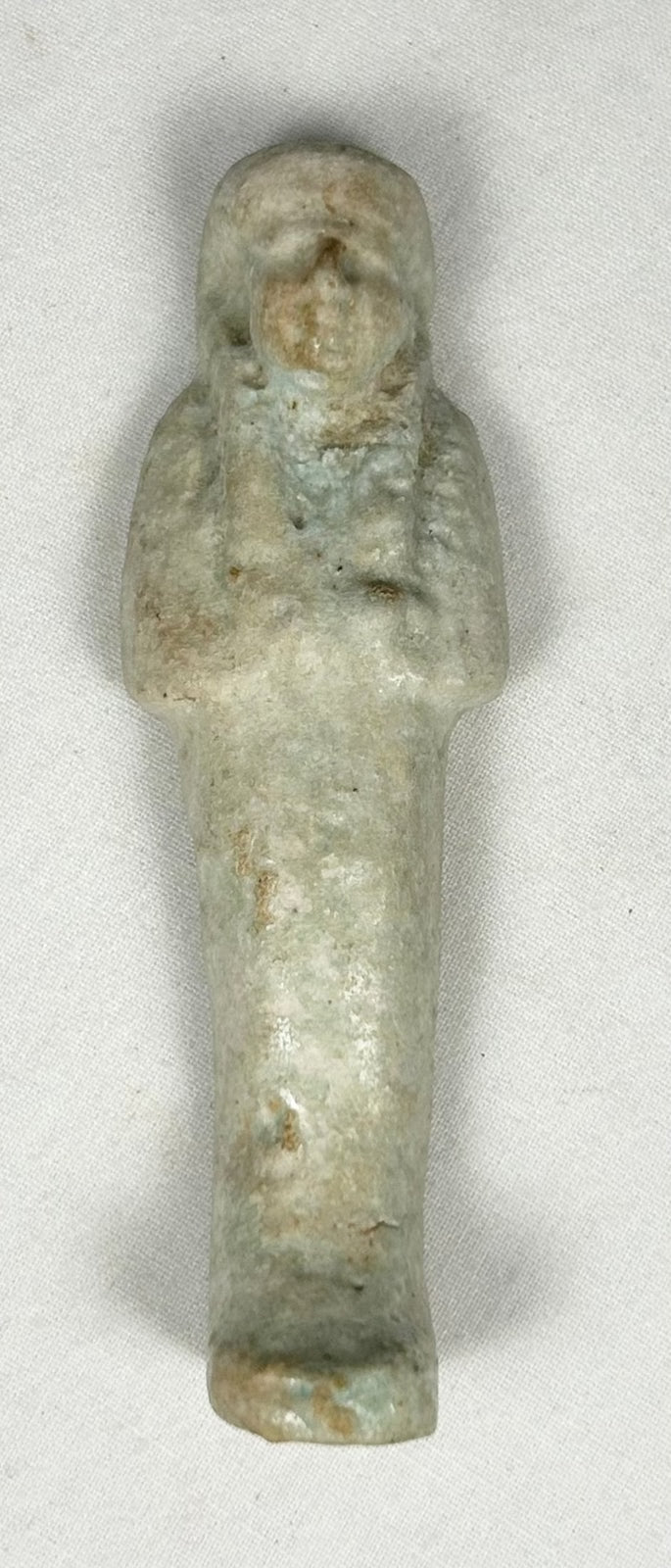
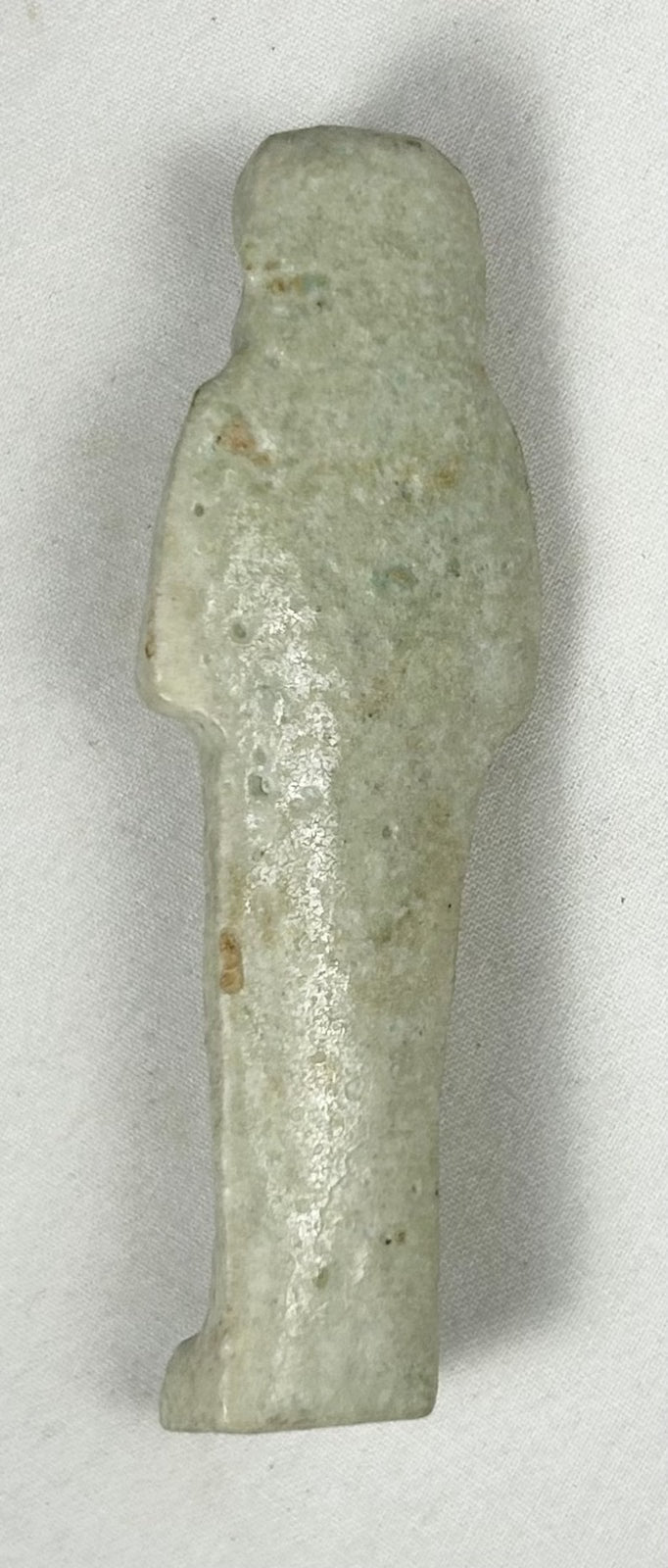
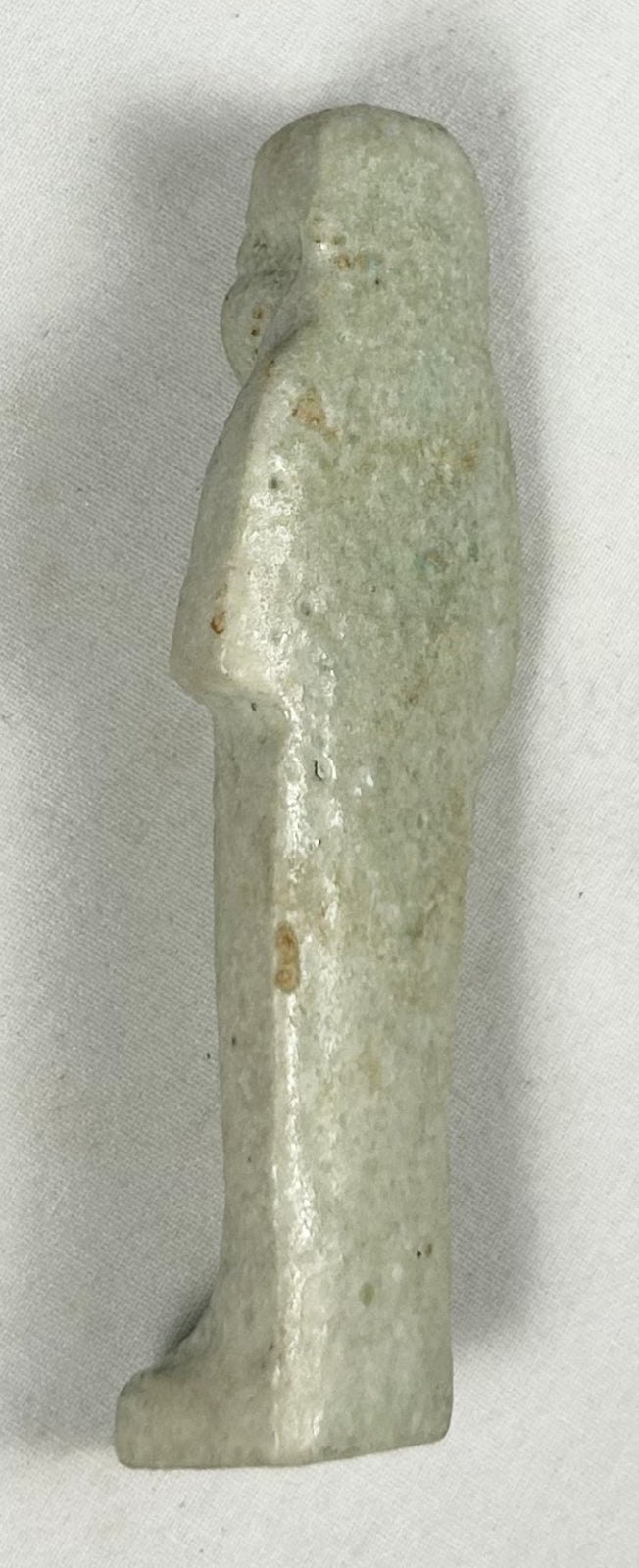
Ancient Egyptian | Burial Ushabti in Glazed Faience | Circa Late Period 664–332 BCE
Description
More
Less
Historical Context & Origin
Region: Ancient Egypt
Material: Egyptian faience with aged mineral surface deposits
Period: Late Period, circa 664–332 BCE
Description
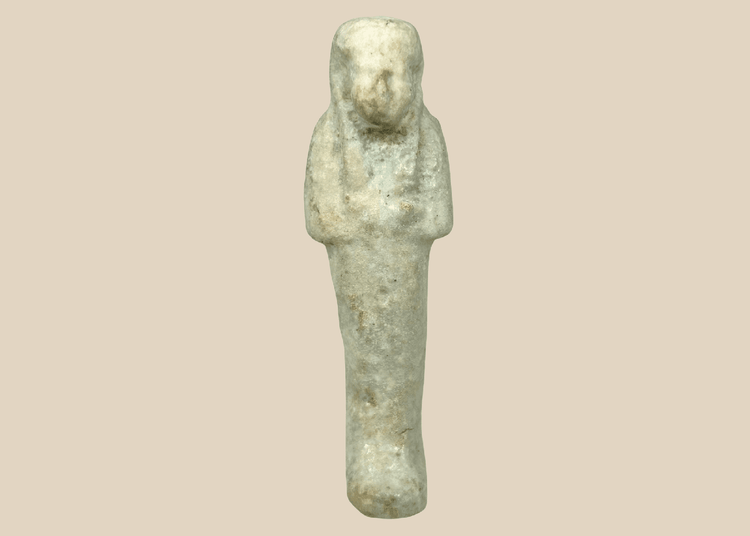
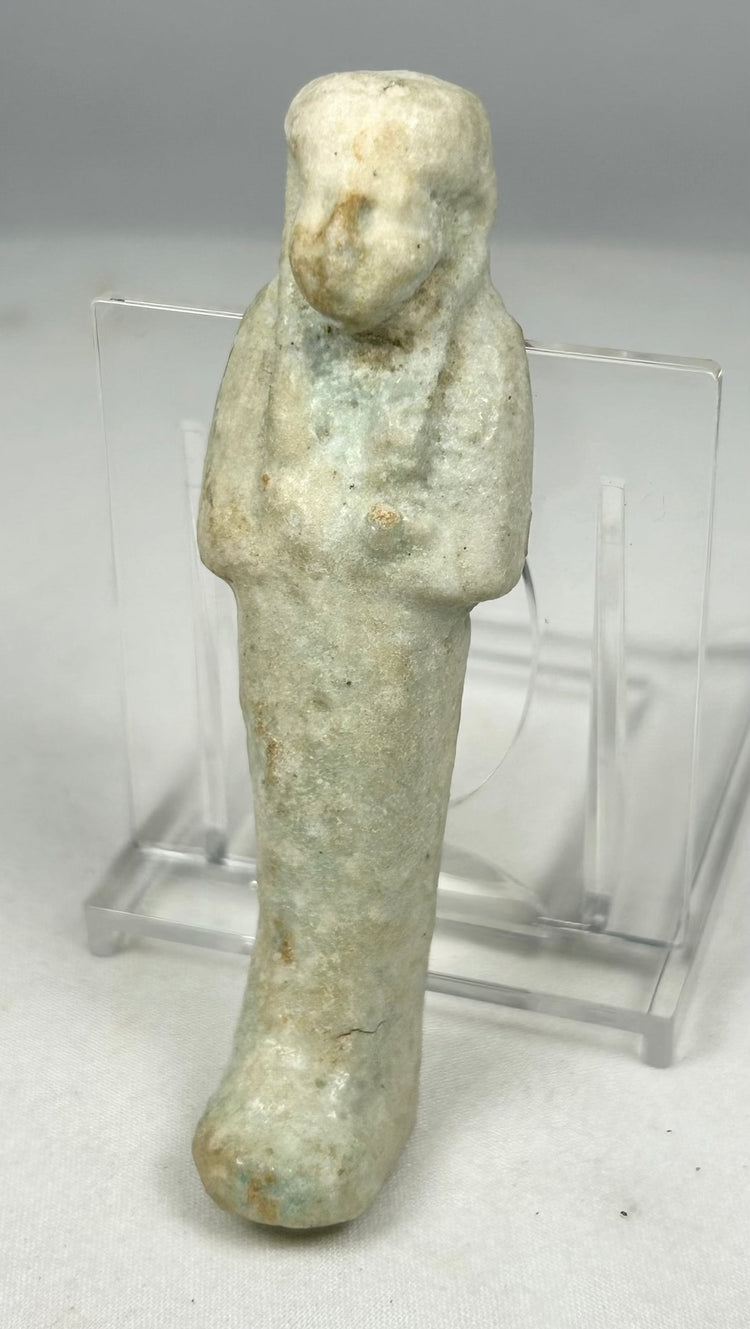
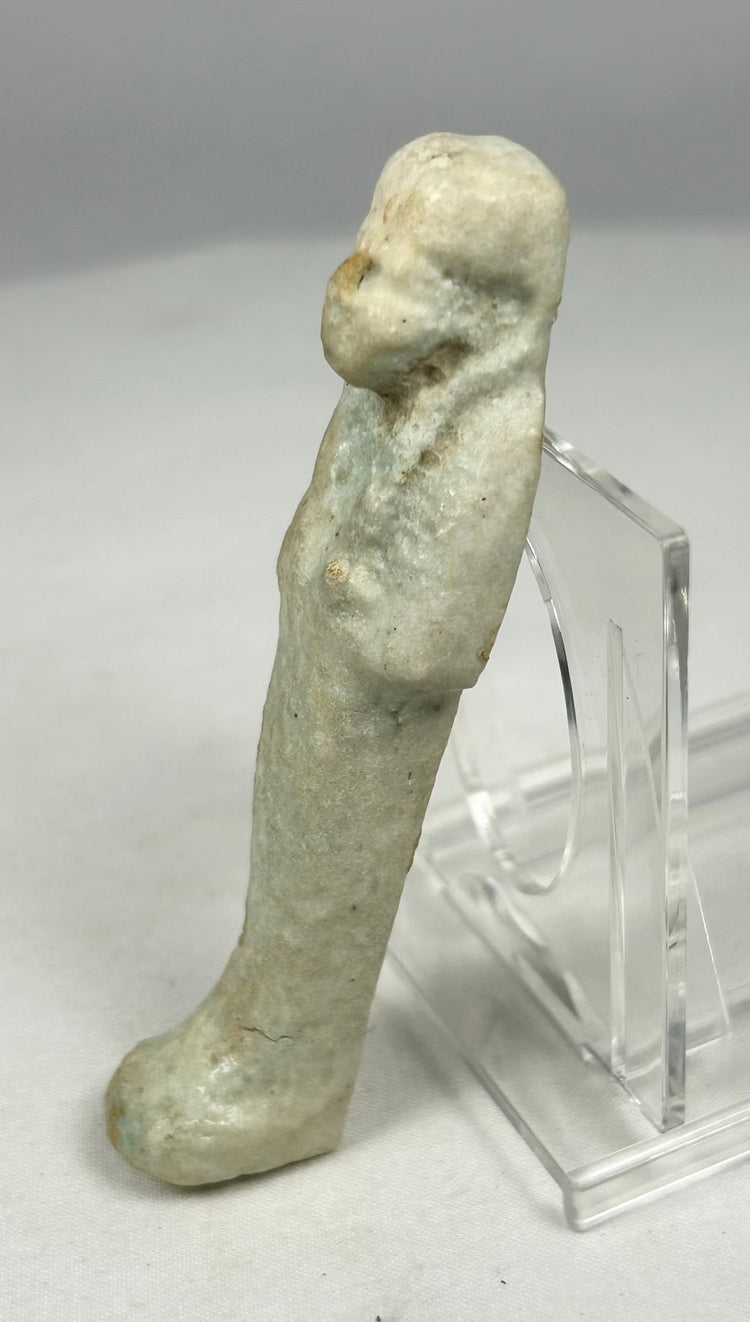
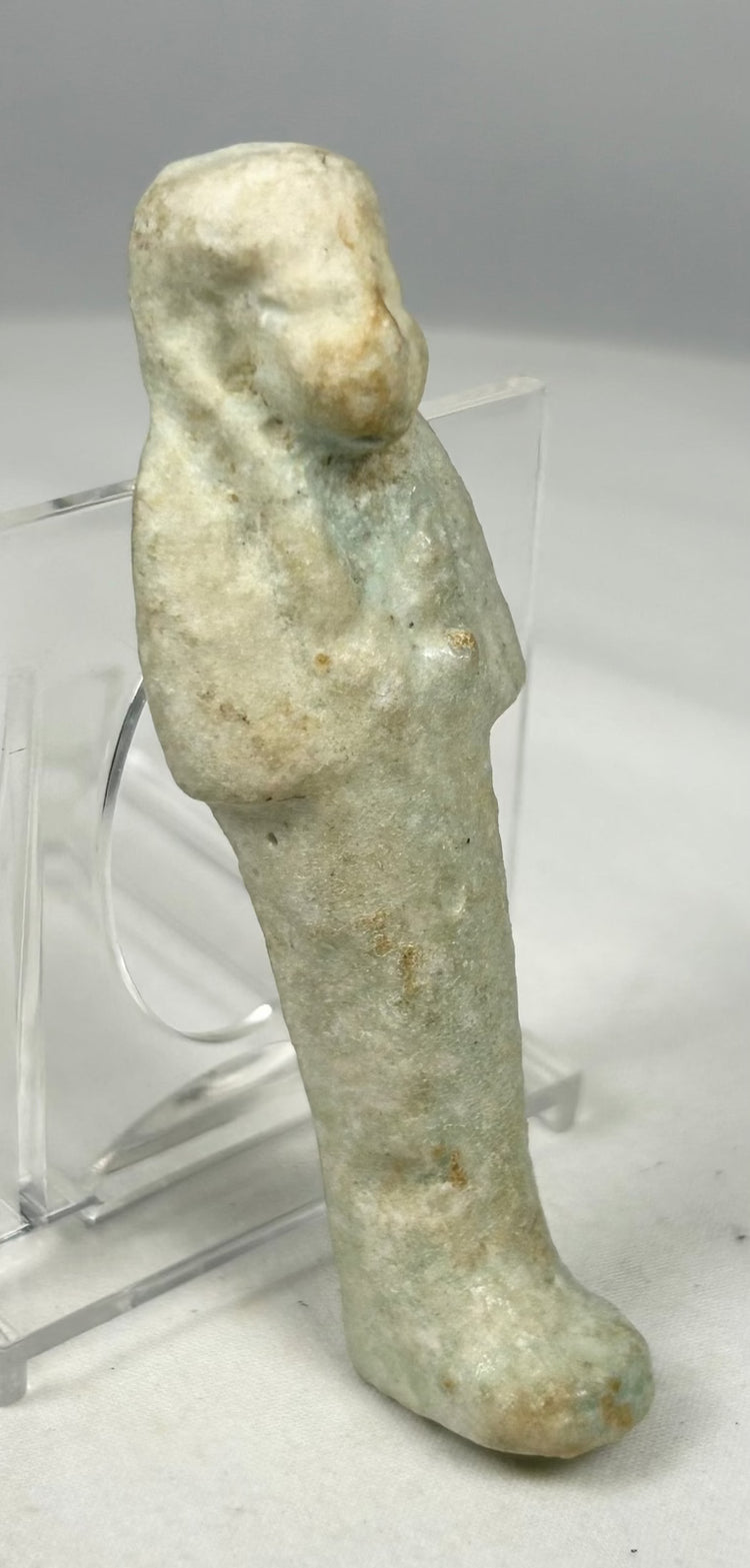
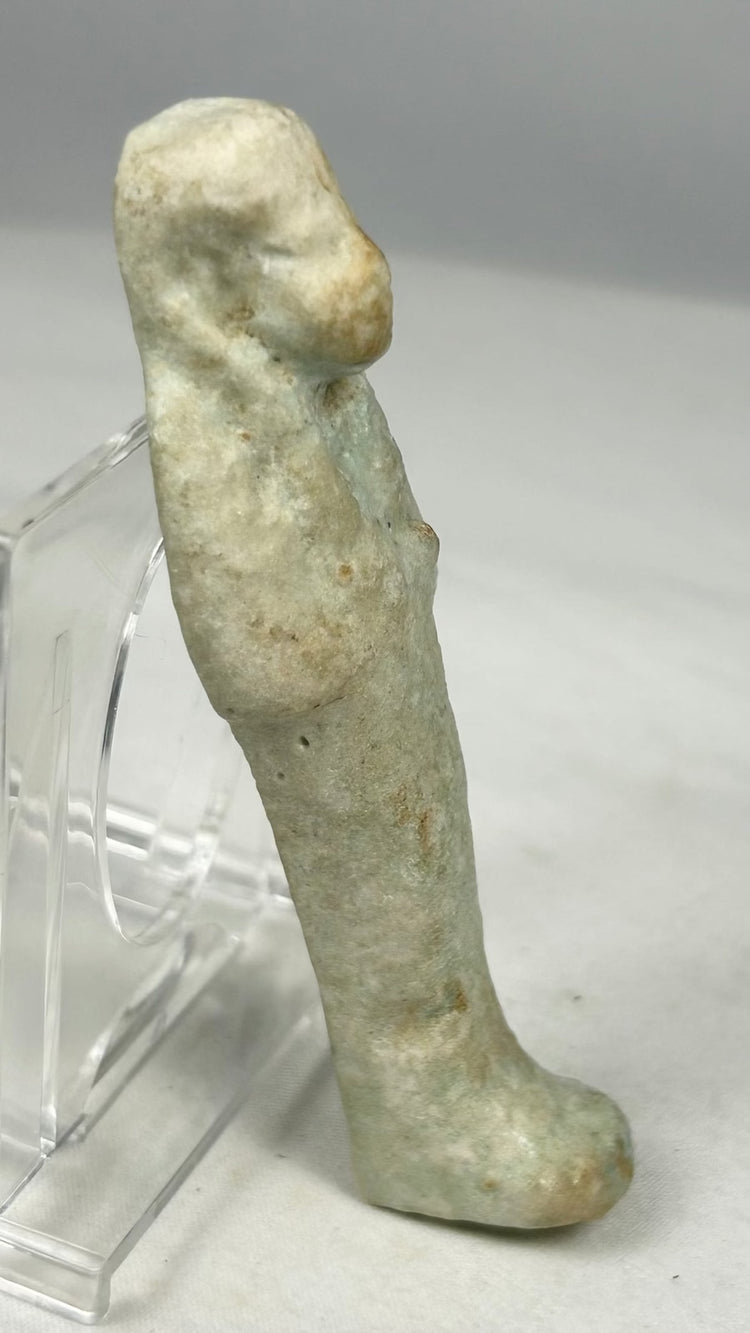
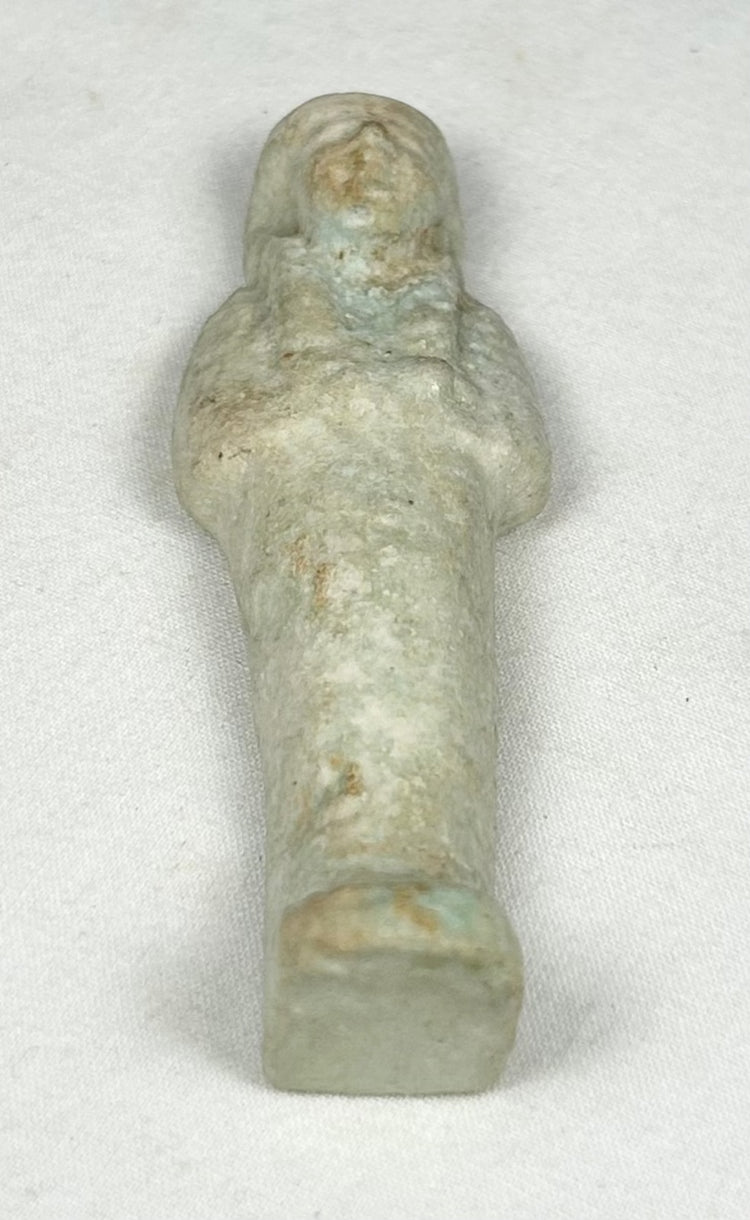
An authentic ancient Egyptian funerary ushabti figure, crafted in pale blue-green faience and exhibiting the classic mummiform stance associated with ritual companions of the afterlife. The figure stands upright with arms crossed, symbolizing readiness to serve the deceased in the next world — an essential element of Egyptian spiritual belief.
Though softened by time, the facial structure, headdress form, and body proportions remain sufficiently defined to confirm authenticity rather than modern reproduction. The surface shows earthen deposits, encrustations, and mineral bloom consistent with long-term burial and antiquity.
Features
- Classic ushabti funerary form
- Crafted in Egyptian faience with aged glaze remnants
- Distinct mummiform silhouette
- Strong ancient presence and spiritual character
Cultural Significance
Ushabtis were placed in tombs to magically serve the deceased in the afterlife. They symbolize duty, protection, and eternal service, making them powerful relics of Egyptian burial customs and spiritual tradition.
Condition
Good ancient condition with expected age-related wear, softened detail, surface weathering, and natural mineral deposits. No modern repairs detected; the piece remains stable and well preserved.
Dimensions (Approximate)
Height: 3.2 in
Age (Approximate)
2,300–2,700 years old
Provenance
Formerly held in a private collection in Pennsylvania, USA. Subsequently acquired by a private collector in Florida, USA, and later held in a private collection in New York, New York, USA.
Learn More
Explore Ancient Egyptian ushabtis at the Metropolitan Museum of Art
Discover our curated Ushabti & Egyptian Artifacts Collection
Description
Historical Context & Origin
Region: Ancient Egypt
Material: Egyptian faience with aged mineral surface deposits
Period: Late Period, circa 664–332 BCE
Description
An authentic ancient Egyptian funerary ushabti figure, crafted in pale blue-green faience and exhibiting the classic mummiform stance associated with ritual companions of the afterlife. The figure stands upright with arms crossed, symbolizing readiness to serve the deceased in the next world — an essential element of Egyptian spiritual belief.
Though softened by time, the facial structure, headdress form, and body proportions remain sufficiently defined to confirm authenticity rather than modern reproduction. The surface shows earthen deposits, encrustations, and mineral bloom consistent with long-term burial and antiquity.
Features
- Classic ushabti funerary form
- Crafted in Egyptian faience with aged glaze remnants
- Distinct mummiform silhouette
- Strong ancient presence and spiritual character
Cultural Significance
Ushabtis were placed in tombs to magically serve the deceased in the afterlife. They symbolize duty, protection, and eternal service, making them powerful relics of Egyptian burial customs and spiritual tradition.
Condition
Good ancient condition with expected age-related wear, softened detail, surface weathering, and natural mineral deposits. No modern repairs detected; the piece remains stable and well preserved.
Dimensions (Approximate)
Height: 3.2 in
Age (Approximate)
2,300–2,700 years old
Provenance
Formerly held in a private collection in Pennsylvania, USA. Subsequently acquired by a private collector in Florida, USA, and later held in a private collection in New York, New York, USA.
Learn More
Explore Ancient Egyptian ushabtis at the Metropolitan Museum of Art
Discover our curated Ushabti & Egyptian Artifacts Collection
You May Also Like
