



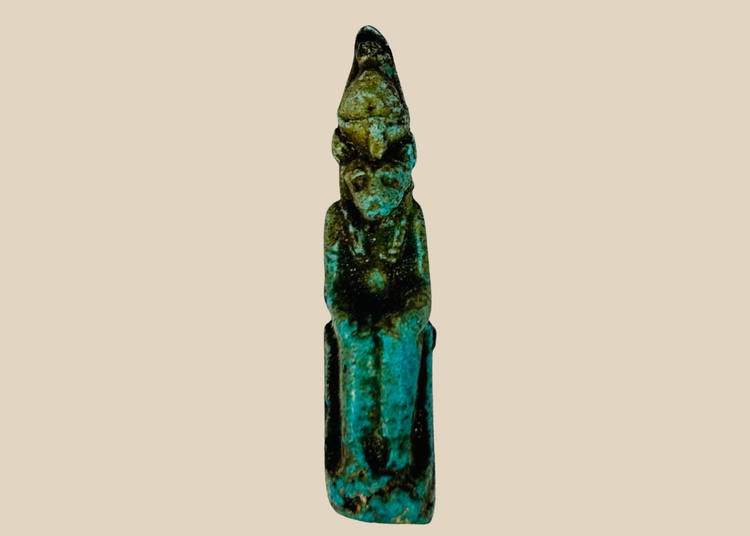
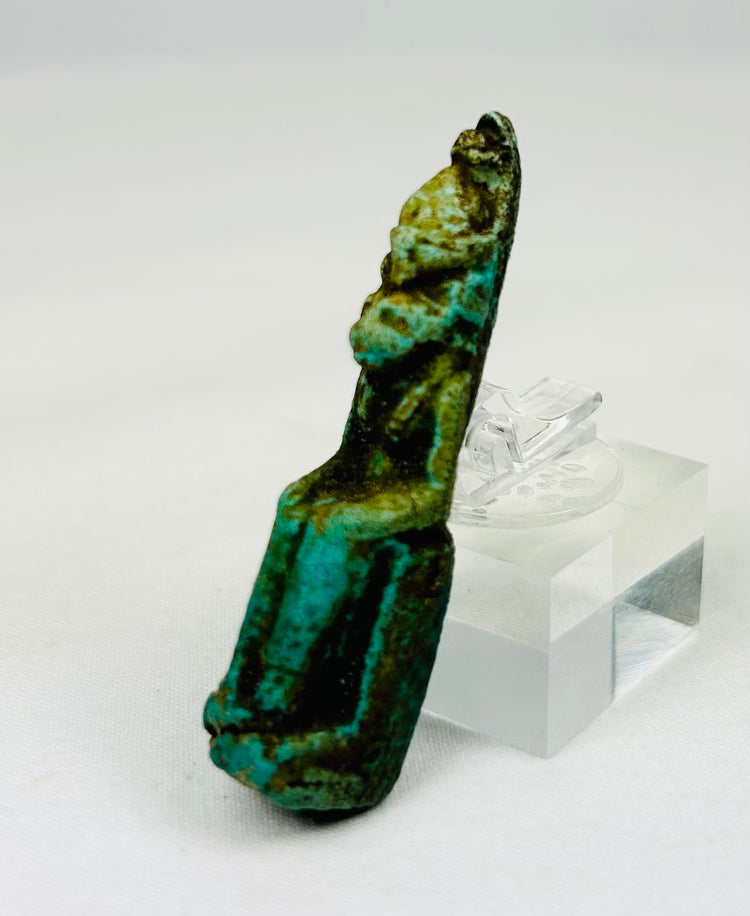
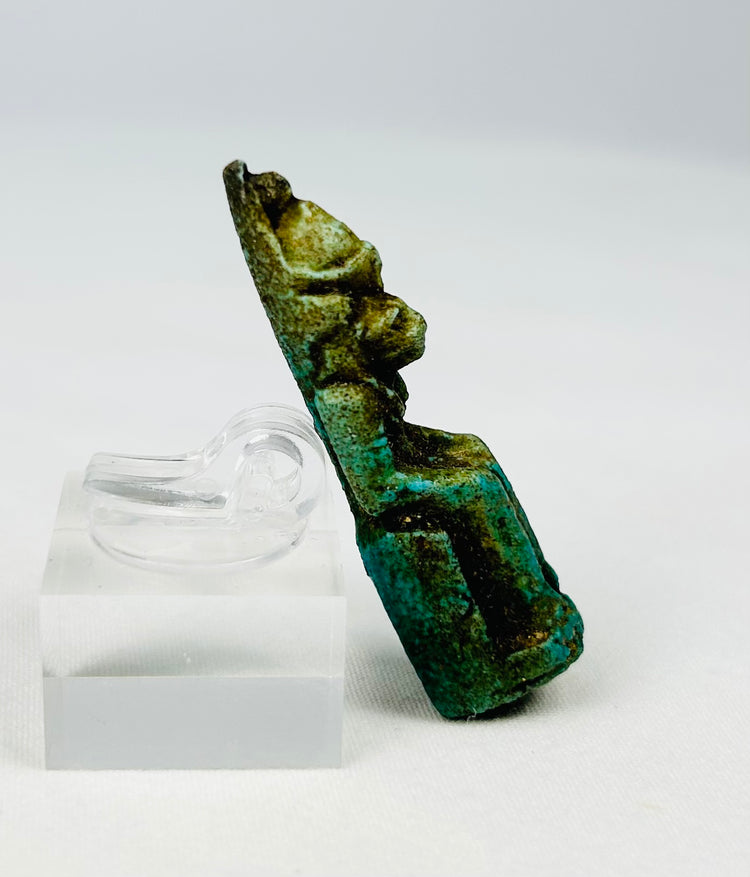
Ancient Egyptian | Faience Amulet of a Seated Deity | Circa 664–332 BCE
Description
More
Less
Historical Context & Origin
Region: Egypt
Material: Turquoise-green faience with surface aging and minor encrustation
Period: Late Period to Ptolemaic Period, circa 664–332 BCE
Description
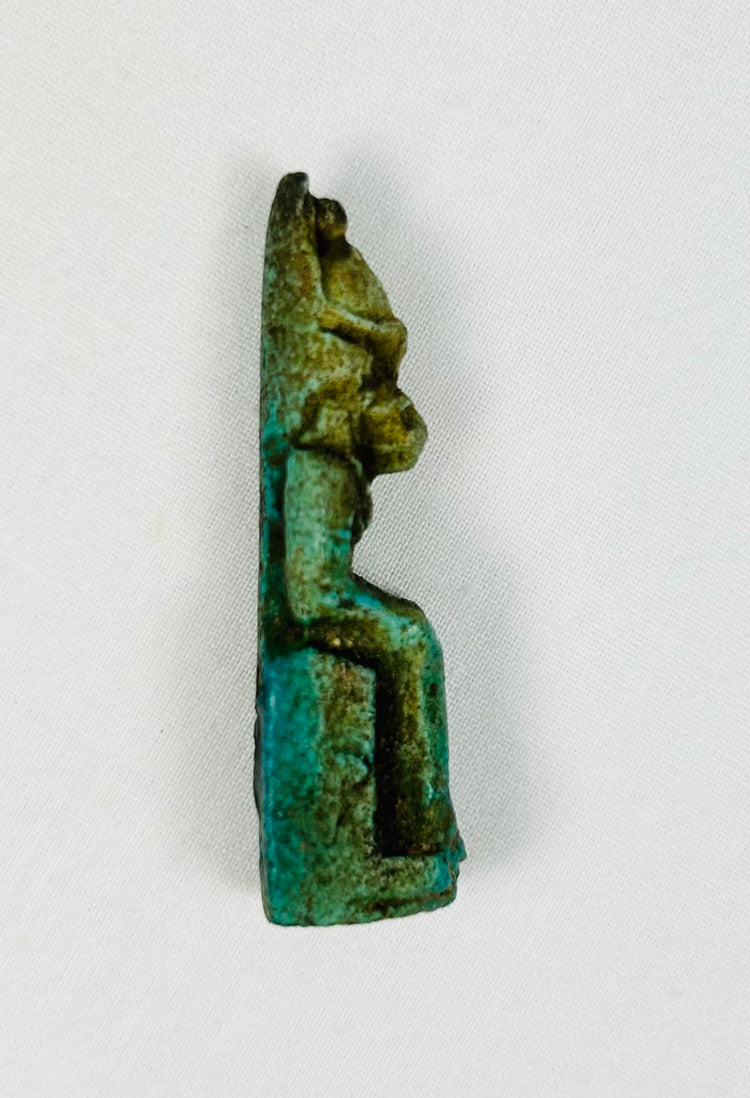
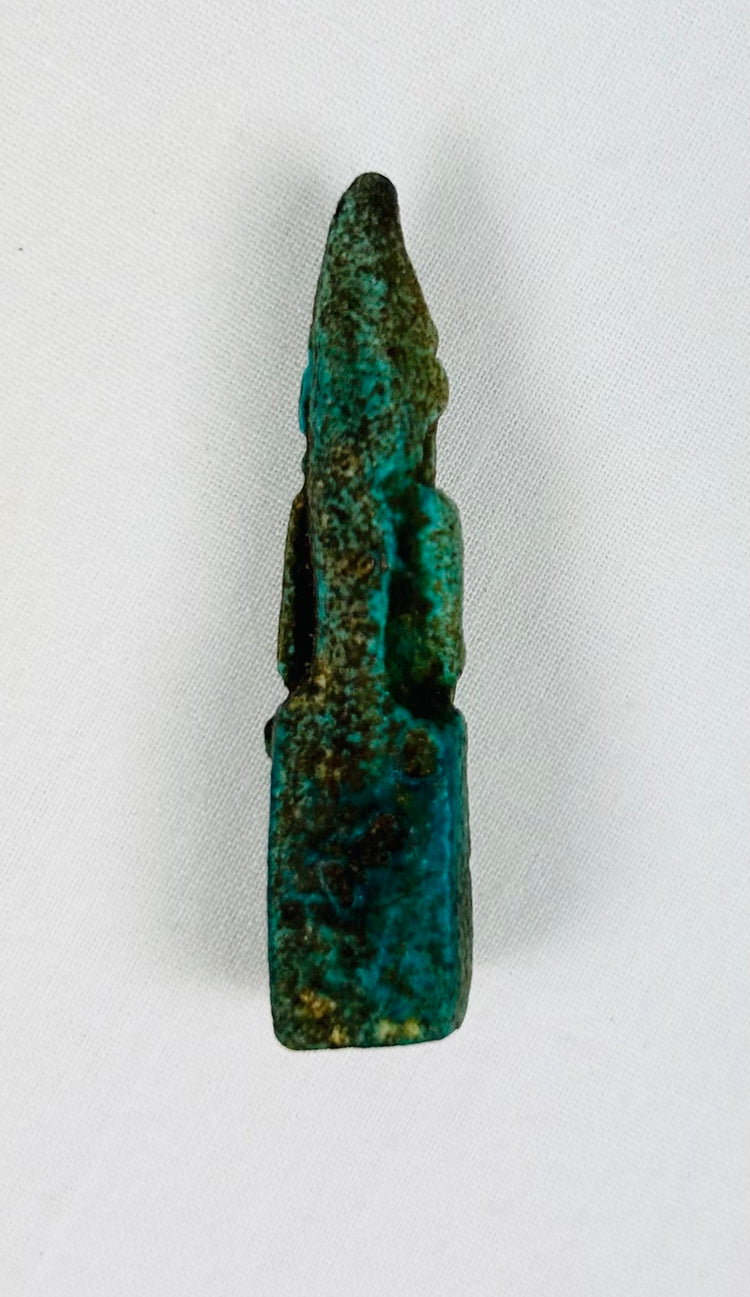
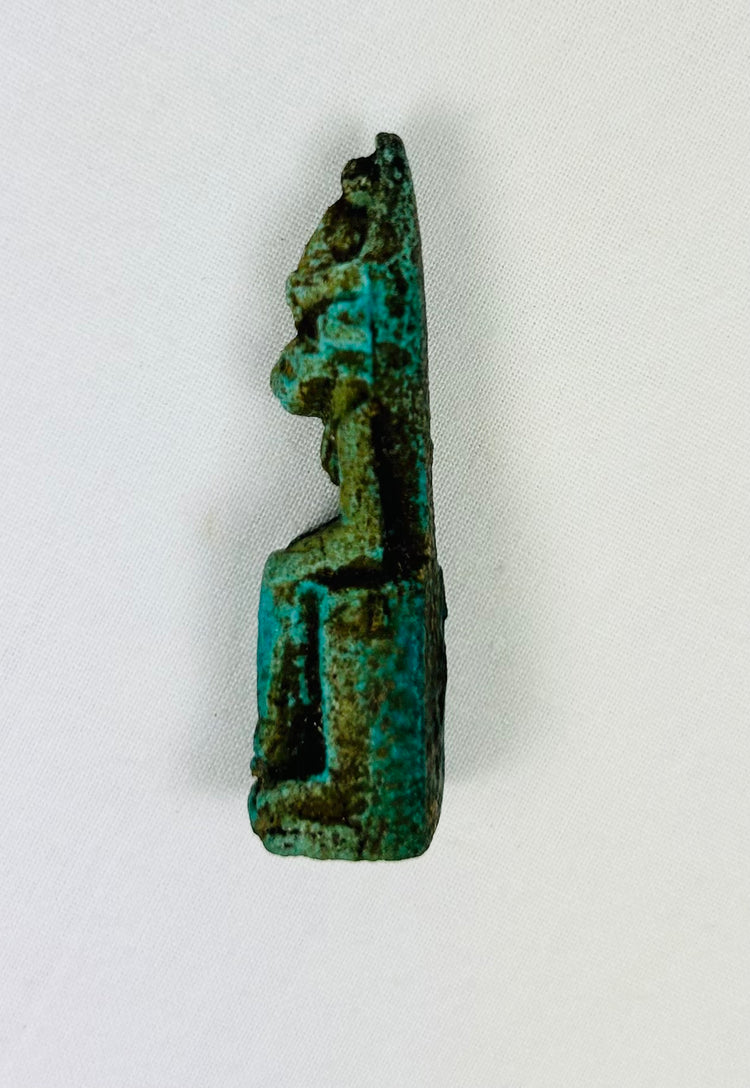
This beautifully preserved faience amulet depicts a seated Egyptian deity, rendered in the classic turquoise-green glaze associated with Late Period craftsmanship. The figure displays a refined vertical stance with a distinct headdress and faintly modeled facial and garment details, all softened by centuries of devotional handling and burial.
Amulets like this were worn on the body or placed within mummy wrappings to invoke divine protection, rebirth, and spiritual guidance. Their luminous blue-green hue symbolized regeneration and was closely tied to the sacred powers of deities such as Osiris, Hathor, and other protective figures in the Egyptian pantheon.
Features
- Distinct turquoise and deep green faience patina
- Seated figure in traditional Egyptian pose
- Clearly defined headdress and body contouring
- Surface mineralization and burial deposits confirming age
- Compact size suitable for display or jewelry integration
Cultural Significance
Faience amulets were central to Egyptian religious practice. Their radiant color represented eternal life, fertility, and divine favor, making them essential in both daily devotion and funerary rites. As symbolic conduits to the gods, these amulets protected individuals in life and continued safeguarding them into the afterlife.
Condition
Excellent preservation for age, with minor surface loss and encrustation typical of archaeological faience, and no evidence of modern restoration.
Dimensions (Approximate)
Height: 1.75 in
Width: 0.5 in
Age (Approximate)
2,350–2,700 years old
Learn More
Explore Egyptian faience through The Metropolitan Museum of Art
Browse our curated Ancient Egyptian Mummies & Artifacts Collection
Description
Historical Context & Origin
Region: Egypt
Material: Turquoise-green faience with surface aging and minor encrustation
Period: Late Period to Ptolemaic Period, circa 664–332 BCE
Description
This beautifully preserved faience amulet depicts a seated Egyptian deity, rendered in the classic turquoise-green glaze associated with Late Period craftsmanship. The figure displays a refined vertical stance with a distinct headdress and faintly modeled facial and garment details, all softened by centuries of devotional handling and burial.
Amulets like this were worn on the body or placed within mummy wrappings to invoke divine protection, rebirth, and spiritual guidance. Their luminous blue-green hue symbolized regeneration and was closely tied to the sacred powers of deities such as Osiris, Hathor, and other protective figures in the Egyptian pantheon.
Features
- Distinct turquoise and deep green faience patina
- Seated figure in traditional Egyptian pose
- Clearly defined headdress and body contouring
- Surface mineralization and burial deposits confirming age
- Compact size suitable for display or jewelry integration
Cultural Significance
Faience amulets were central to Egyptian religious practice. Their radiant color represented eternal life, fertility, and divine favor, making them essential in both daily devotion and funerary rites. As symbolic conduits to the gods, these amulets protected individuals in life and continued safeguarding them into the afterlife.
Condition
Excellent preservation for age, with minor surface loss and encrustation typical of archaeological faience, and no evidence of modern restoration.
Dimensions (Approximate)
Height: 1.75 in
Width: 0.5 in
Age (Approximate)
2,350–2,700 years old
Learn More
Explore Egyptian faience through The Metropolitan Museum of Art
Browse our curated Ancient Egyptian Mummies & Artifacts Collection
You May Also Like
