



Ancient Egyptian | Faience Ushabti | Circa 664–300 BCE
Couldn't load pickup availability






Ancient Egyptian | Faience Ushabti | Circa 664–300 BCE
Description
More
Less
Historical Context & Origin
Region: Ancient Egypt
Material: Glazed faience with mineral inclusions and earthen deposits
Period: Late Period to early Ptolemaic, circa 664–300 BCE
Description
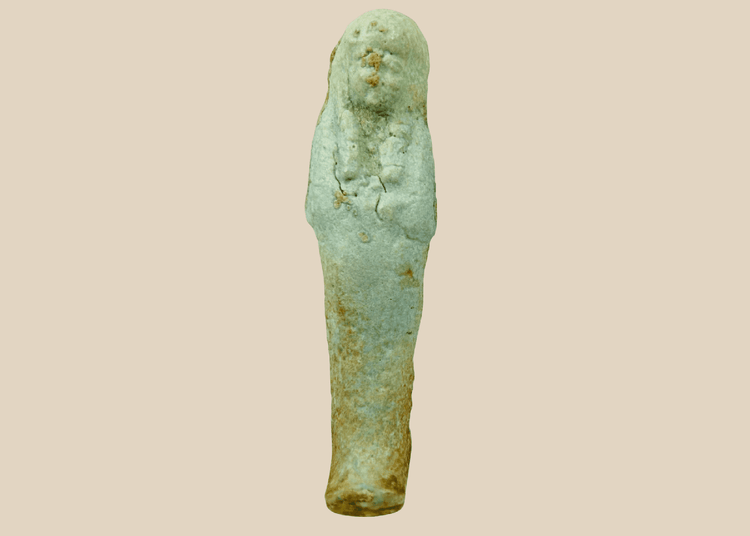
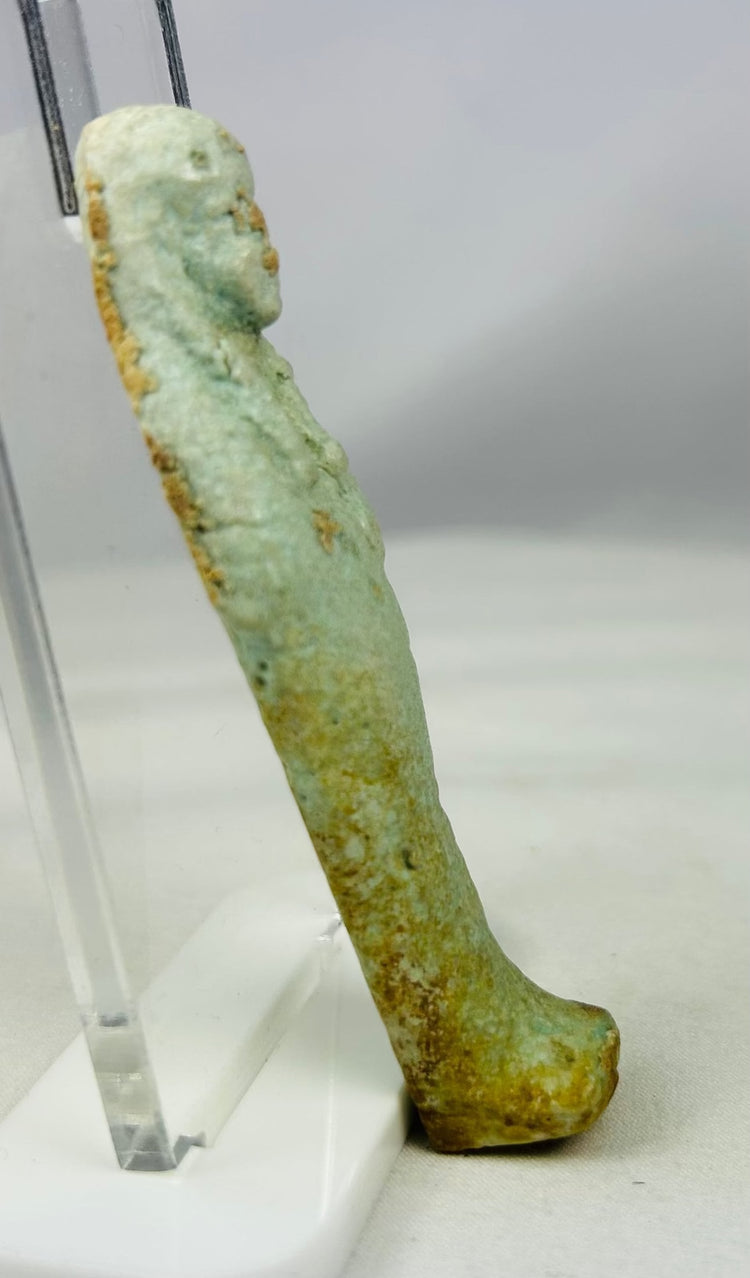
This is a beautifully aged Ancient Egyptian faience Ushabti figure. Exhibiting the classic mummy-form profile, the figure shows faint yet discernible facial features with arms crossed over the chest in traditional funerary posture. The surface retains an elegant pale blue-green faience glaze now softened by time, with attractive earthen adherence and mineral deposits that speak to its great antiquity. The lower body retains natural burial toning, blending from aqua to sandy earthen hues.
Features
- Traditional Ushabti funerary servant figure
- Pale blue-green faience glaze
- Distinct crossed-arm form
- Excellent ancient burial deposits and patina
Cultural Significance
Ushabti figures were placed in tombs to serve the deceased in the afterlife, symbolizing readiness, devotion, and eternal service. Their presence remains one of the most iconic representations of Egyptian religious belief and funerary practice. This piece offers a direct and tangible link to Egypt’s deep spiritual heritage.
Condition
Good ancient condition with expected age-related wear, softening of features, surface weathering, and stable age cracks. Burial encrustations and glaze toning present. No modern restoration detected.
Dimensions (Approximate)
Height: 3.25 in
Age (Approximate)
2,300–2,700 years old
Learn More
Learn about ushabti figures in ancient Egypt through the Metropolitan Museum of Art
Explore our curated Ancient Egyptian Artifacts & Mummies Collection
Description
Historical Context & Origin
Region: Ancient Egypt
Material: Glazed faience with mineral inclusions and earthen deposits
Period: Late Period to early Ptolemaic, circa 664–300 BCE
Description
This is a beautifully aged Ancient Egyptian faience Ushabti figure. Exhibiting the classic mummy-form profile, the figure shows faint yet discernible facial features with arms crossed over the chest in traditional funerary posture. The surface retains an elegant pale blue-green faience glaze now softened by time, with attractive earthen adherence and mineral deposits that speak to its great antiquity. The lower body retains natural burial toning, blending from aqua to sandy earthen hues.
Features
- Traditional Ushabti funerary servant figure
- Pale blue-green faience glaze
- Distinct crossed-arm form
- Excellent ancient burial deposits and patina
Cultural Significance
Ushabti figures were placed in tombs to serve the deceased in the afterlife, symbolizing readiness, devotion, and eternal service. Their presence remains one of the most iconic representations of Egyptian religious belief and funerary practice. This piece offers a direct and tangible link to Egypt’s deep spiritual heritage.
Condition
Good ancient condition with expected age-related wear, softening of features, surface weathering, and stable age cracks. Burial encrustations and glaze toning present. No modern restoration detected.
Dimensions (Approximate)
Height: 3.25 in
Age (Approximate)
2,300–2,700 years old
Learn More
Learn about ushabti figures in ancient Egypt through the Metropolitan Museum of Art
Explore our curated Ancient Egyptian Artifacts & Mummies Collection
You May Also Like
