

Ancient Egyptian Ushabti Figures (3) | Circa 1069–664 BCE
Couldn't load pickup availability


Ancient Egyptian Ushabti Figures (3) | Circa 1069–664 BCE
Description
More
Less
Historical Context & Origin
Region: Ancient Egypt
Material: Faience with mineral pigmentation
Period: Circa 1069–664 BCE (Third Intermediate Period)
Description
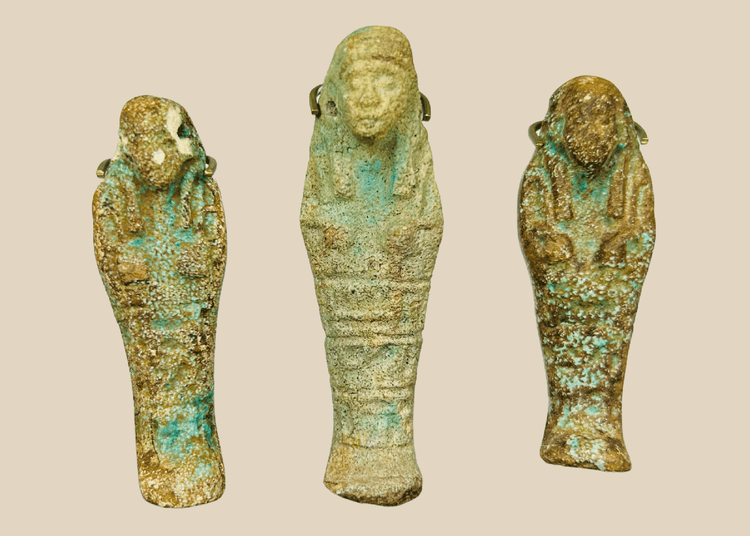
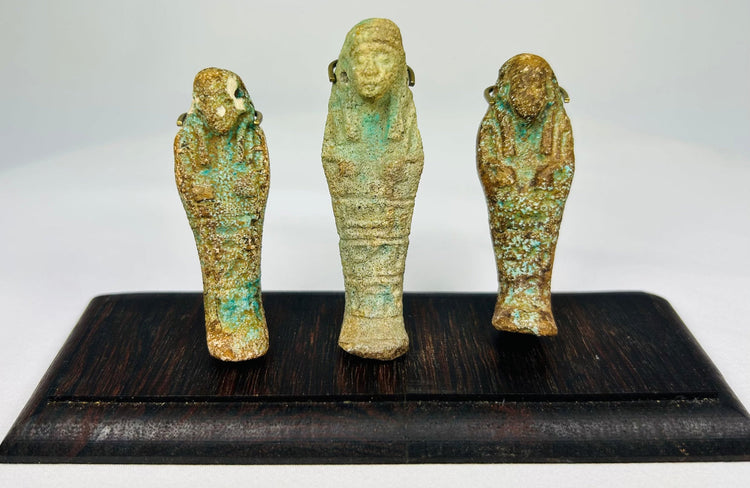
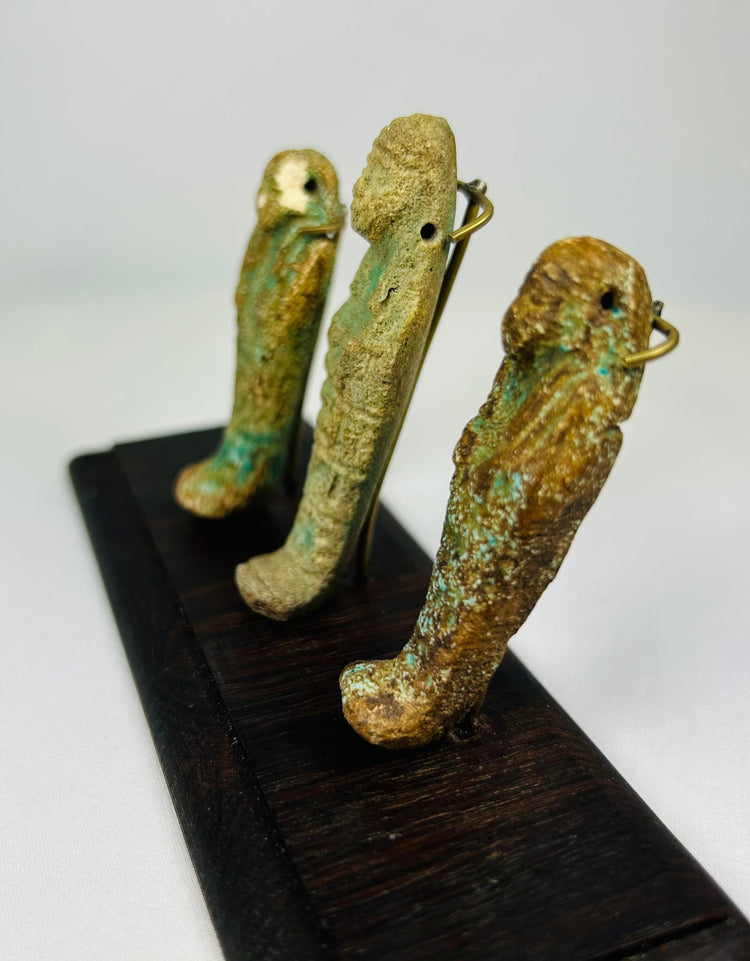
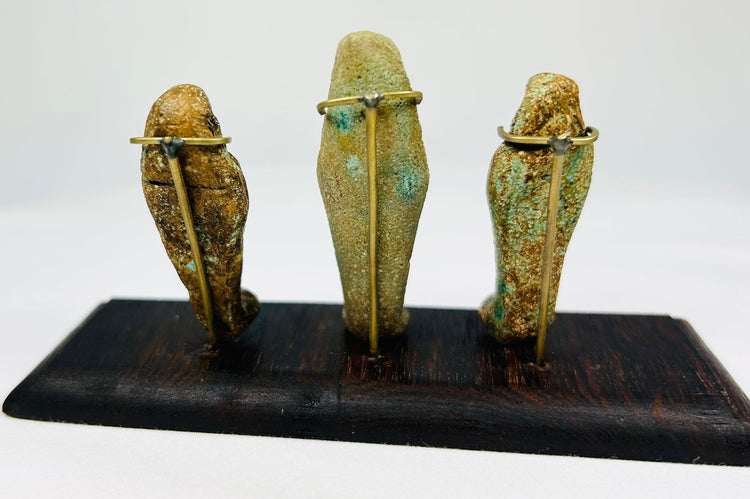
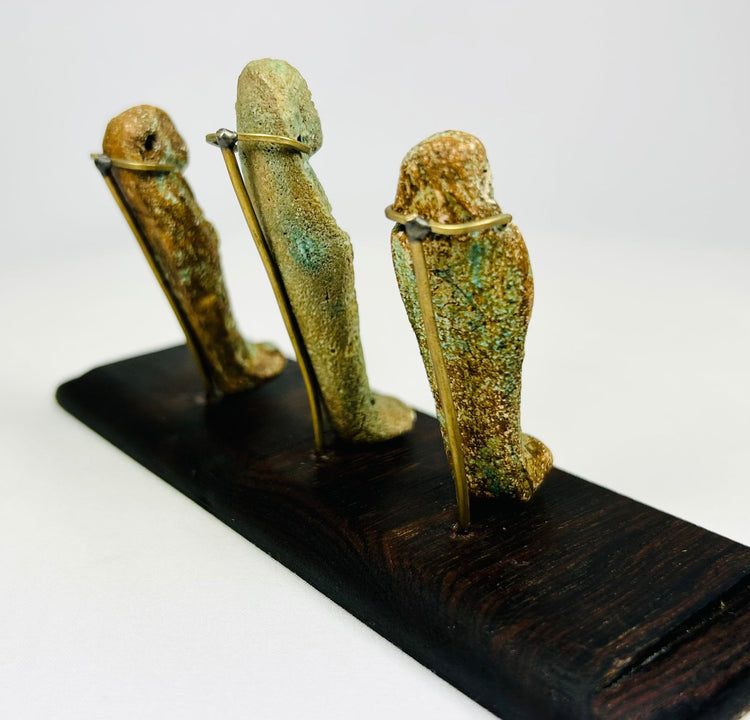
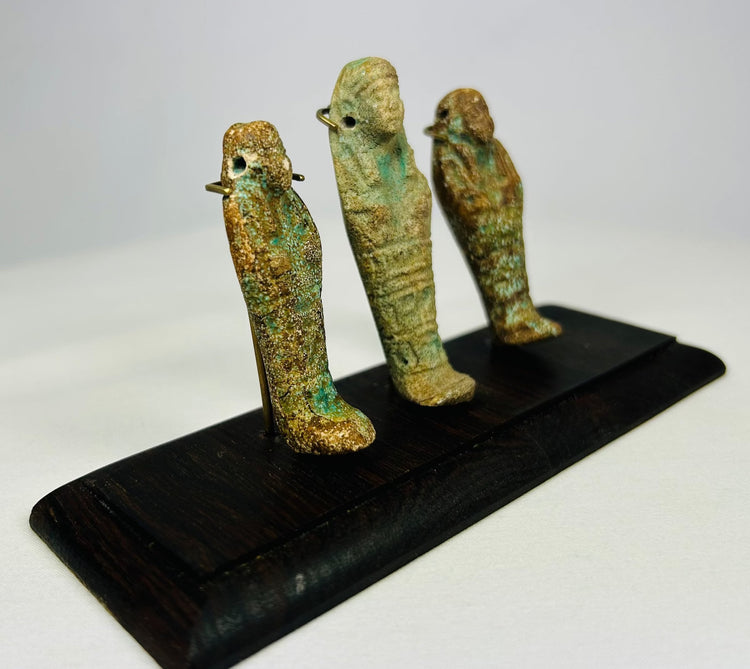
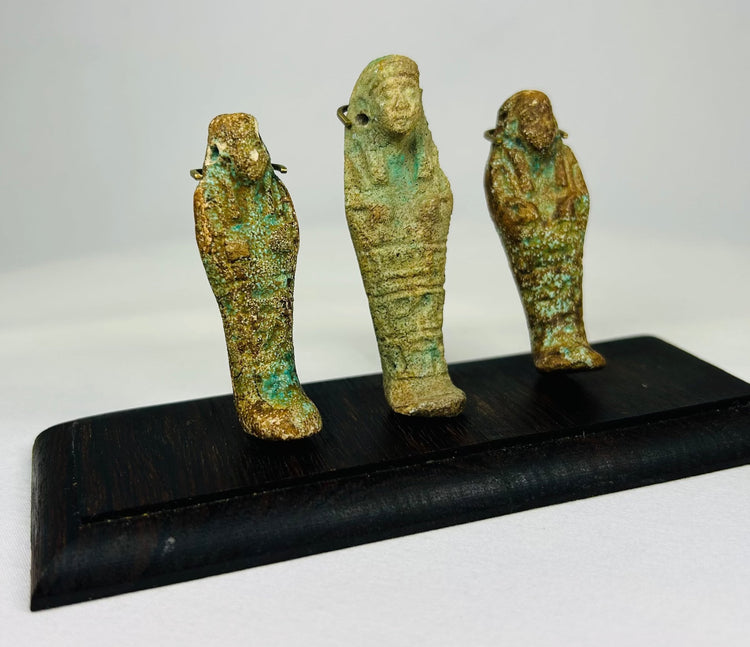
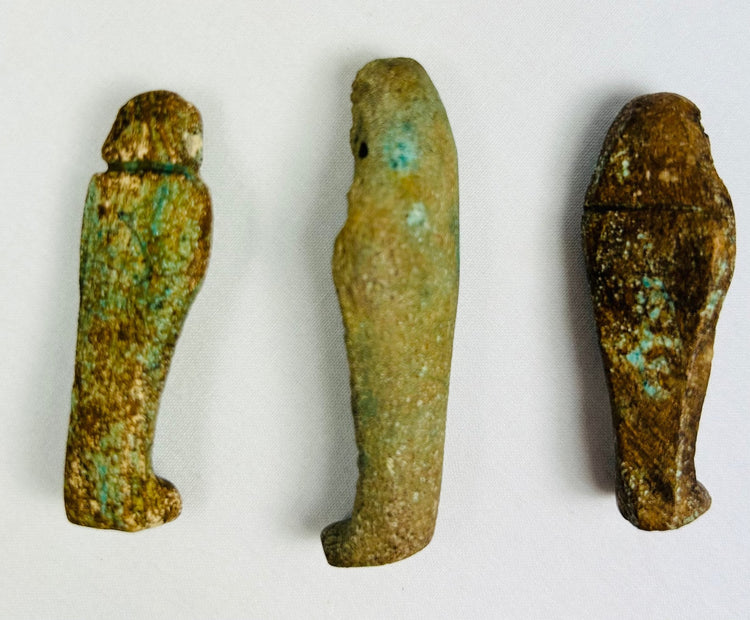
This exceptional trio of ancient Egyptian faience ushabti figures is a beautifully preserved funerary grouping, each modeled in traditional mummiform posture with arms crossed and detailed facial features. Exhibiting a striking palette of aged turquoise, sandy brown, and mineral-green surface encrustations, the figures retain traces of their original faience glaze, now softened by centuries of burial.
Each ushabti stands with characteristic poise—iconic representations of servants intended to accompany and serve the deceased in the afterlife. Variations in sculptural detail across the three indicate they were crafted individually, likely by the same workshop, making this an unusually cohesive miniature assemblage.
Mounted on a custom dark hardwood display base, the grouping presents as both an archaeological relic and an elegant presentation piece for collectors of Egyptian antiquities.
Features
- Authentic Ancient Egyptian faience ushabti trio
- Distinct sculptural differences showing handmade individuality
- Attractive mineral patina with turquoise, sandstone, and earthen tones
- Well-preserved facial details and traditional mummiform forms
- Mounted on a custom museum-style hardwood base
- A rare curated set — ideal for display or academic collection
Cultural Significance
Ushabtis, also known as shabtis or shawabtis, played a vital role in Egyptian funerary tradition. Placed inside tombs, they were believed to magically animate in the afterlife to perform agricultural and labor tasks on behalf of the deceased. Often inscribed with spells from Chapter 6 of the Book of the Dead, their presence symbolized comfort, provision, and eternal service.
A grouped set such as this echoes the ancient Egyptian belief in having numerous attendants to ensure abundance and security throughout eternity.
Condition
Excellent archaeological condition with expected surface wear from burial. Stable mineral deposits, encrustations, and light losses consistent with age. No modern restorations observed. Mounted securely for display.
Dimensions (Approximate)
Each Ushabti:
Height: 2.75–3.25 in
Width: 0.75–1 in
Mounted Display Base:
Length: 6.5 in
Depth: 2.5 in
Age (Approximate)
2,700–3,100 years old
Learn More
Explore ancient funerary traditions through the Ushabti of Horudja – Art Institute of Chicago
Discover our curated Ancient Egyptian Mummies & Artifacts Collection
Description
Historical Context & Origin
Region: Ancient Egypt
Material: Faience with mineral pigmentation
Period: Circa 1069–664 BCE (Third Intermediate Period)
Description
This exceptional trio of ancient Egyptian faience ushabti figures is a beautifully preserved funerary grouping, each modeled in traditional mummiform posture with arms crossed and detailed facial features. Exhibiting a striking palette of aged turquoise, sandy brown, and mineral-green surface encrustations, the figures retain traces of their original faience glaze, now softened by centuries of burial.
Each ushabti stands with characteristic poise—iconic representations of servants intended to accompany and serve the deceased in the afterlife. Variations in sculptural detail across the three indicate they were crafted individually, likely by the same workshop, making this an unusually cohesive miniature assemblage.
Mounted on a custom dark hardwood display base, the grouping presents as both an archaeological relic and an elegant presentation piece for collectors of Egyptian antiquities.
Features
- Authentic Ancient Egyptian faience ushabti trio
- Distinct sculptural differences showing handmade individuality
- Attractive mineral patina with turquoise, sandstone, and earthen tones
- Well-preserved facial details and traditional mummiform forms
- Mounted on a custom museum-style hardwood base
- A rare curated set — ideal for display or academic collection
Cultural Significance
Ushabtis, also known as shabtis or shawabtis, played a vital role in Egyptian funerary tradition. Placed inside tombs, they were believed to magically animate in the afterlife to perform agricultural and labor tasks on behalf of the deceased. Often inscribed with spells from Chapter 6 of the Book of the Dead, their presence symbolized comfort, provision, and eternal service.
A grouped set such as this echoes the ancient Egyptian belief in having numerous attendants to ensure abundance and security throughout eternity.
Condition
Excellent archaeological condition with expected surface wear from burial. Stable mineral deposits, encrustations, and light losses consistent with age. No modern restorations observed. Mounted securely for display.
Dimensions (Approximate)
Each Ushabti:
Height: 2.75–3.25 in
Width: 0.75–1 in
Mounted Display Base:
Length: 6.5 in
Depth: 2.5 in
Age (Approximate)
2,700–3,100 years old
Learn More
Explore ancient funerary traditions through the Ushabti of Horudja – Art Institute of Chicago
Discover our curated Ancient Egyptian Mummies & Artifacts Collection
You May Also Like
