


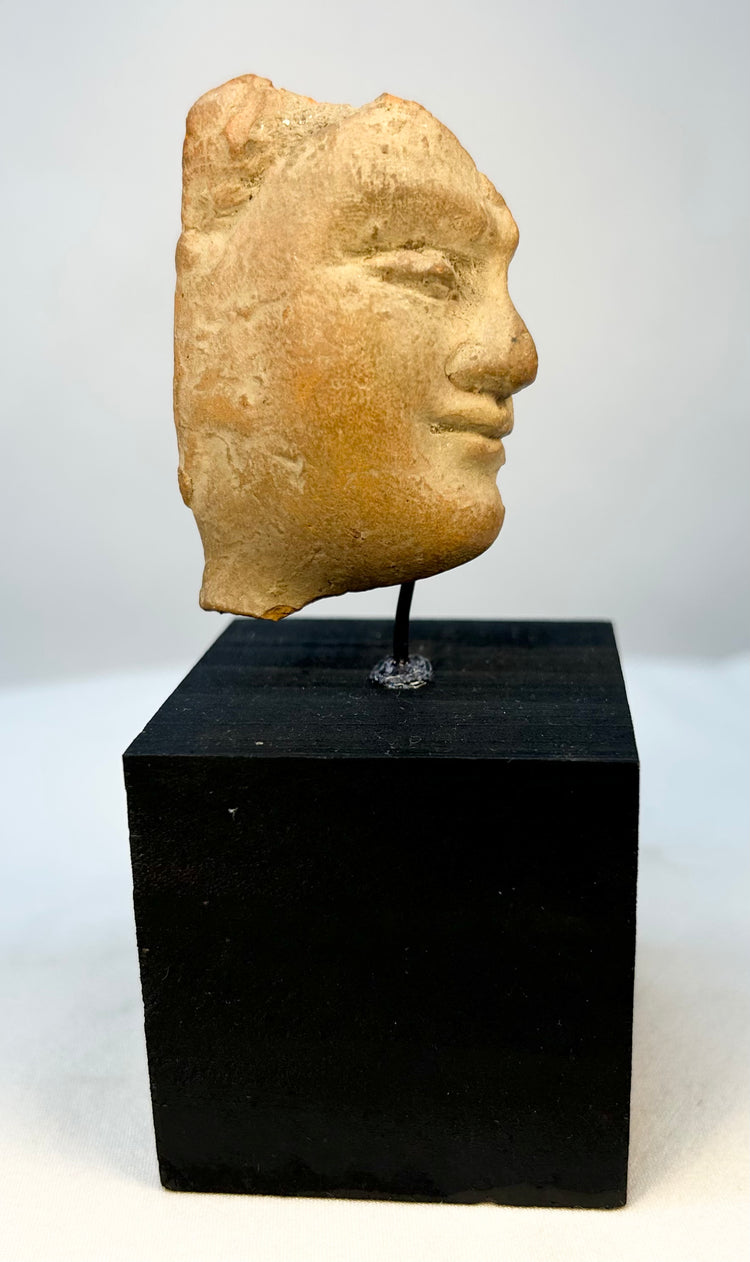
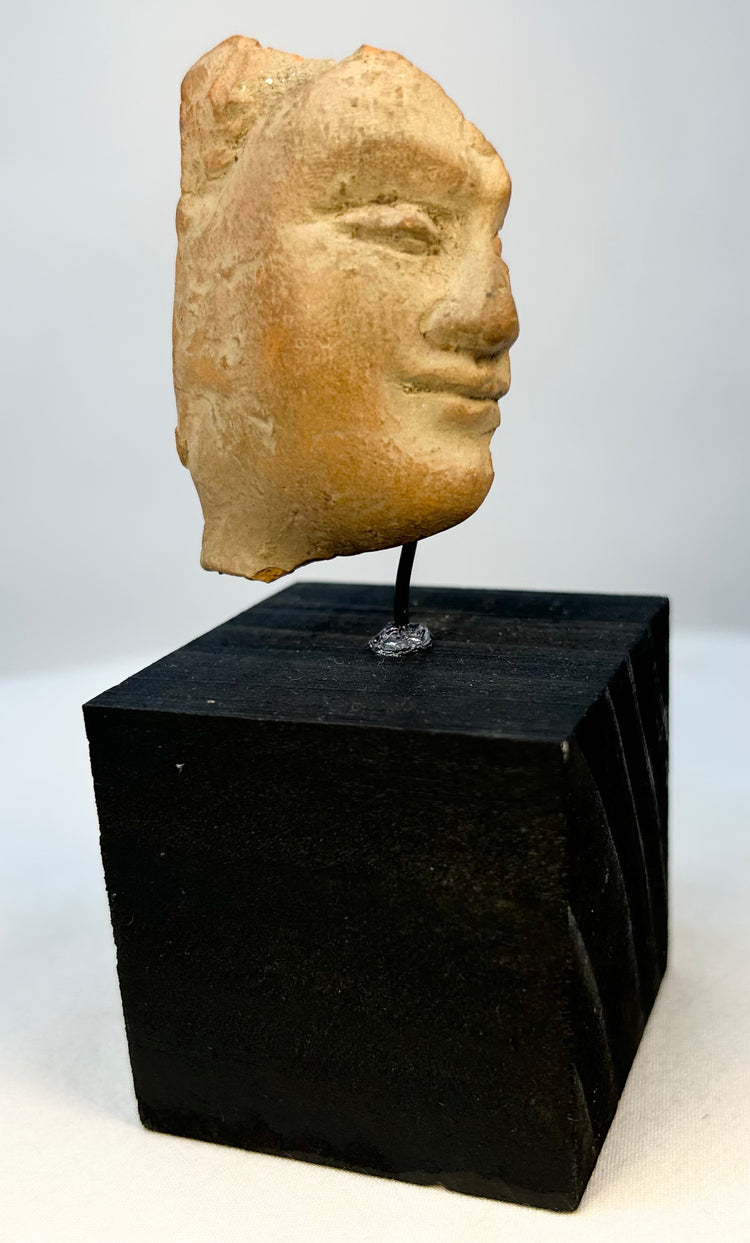
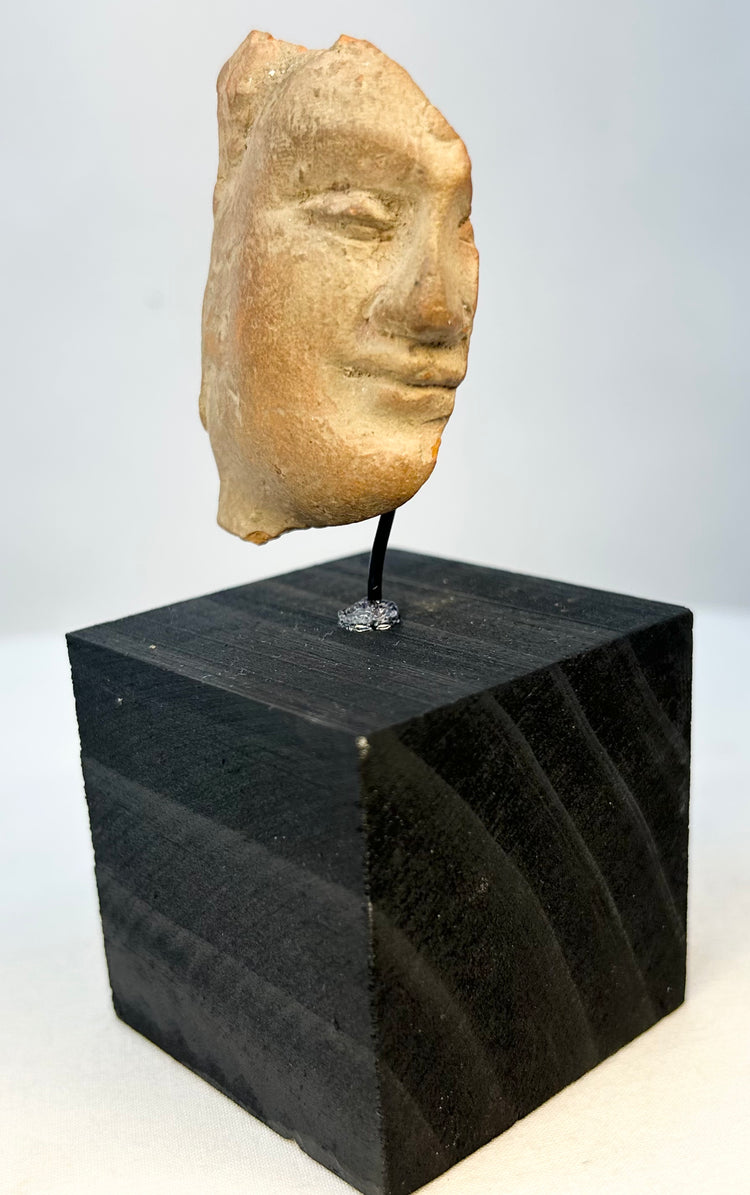
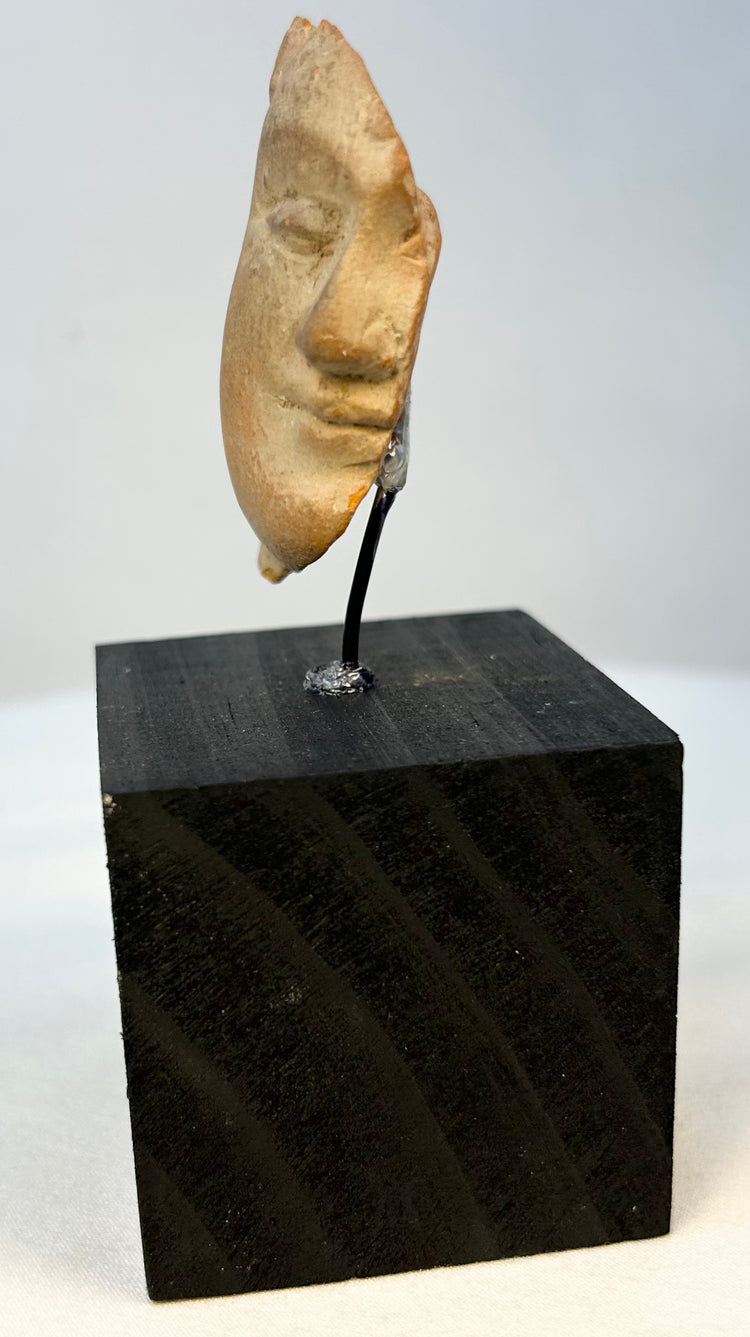
Ancient Mediterranean | Sculptural Portrait Fragment | Terracotta Head Section | Circa 3rd Century BCE – 2nd Century CE
Description
More
Less
Historical Context & Origin
Region: Eastern Mediterranean (likely Hellenistic or Roman Provincial)
Material: Hand-modeled terracotta clay
Period: Circa 3rd Century BCE – 2nd Century CE
Description
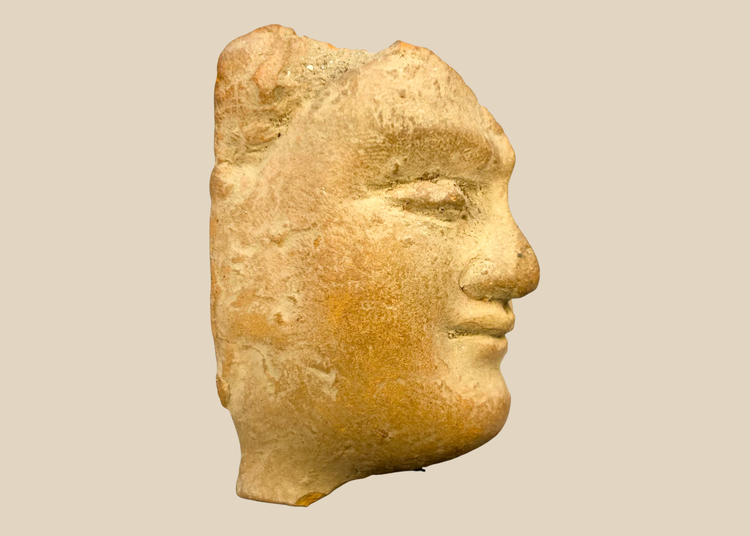
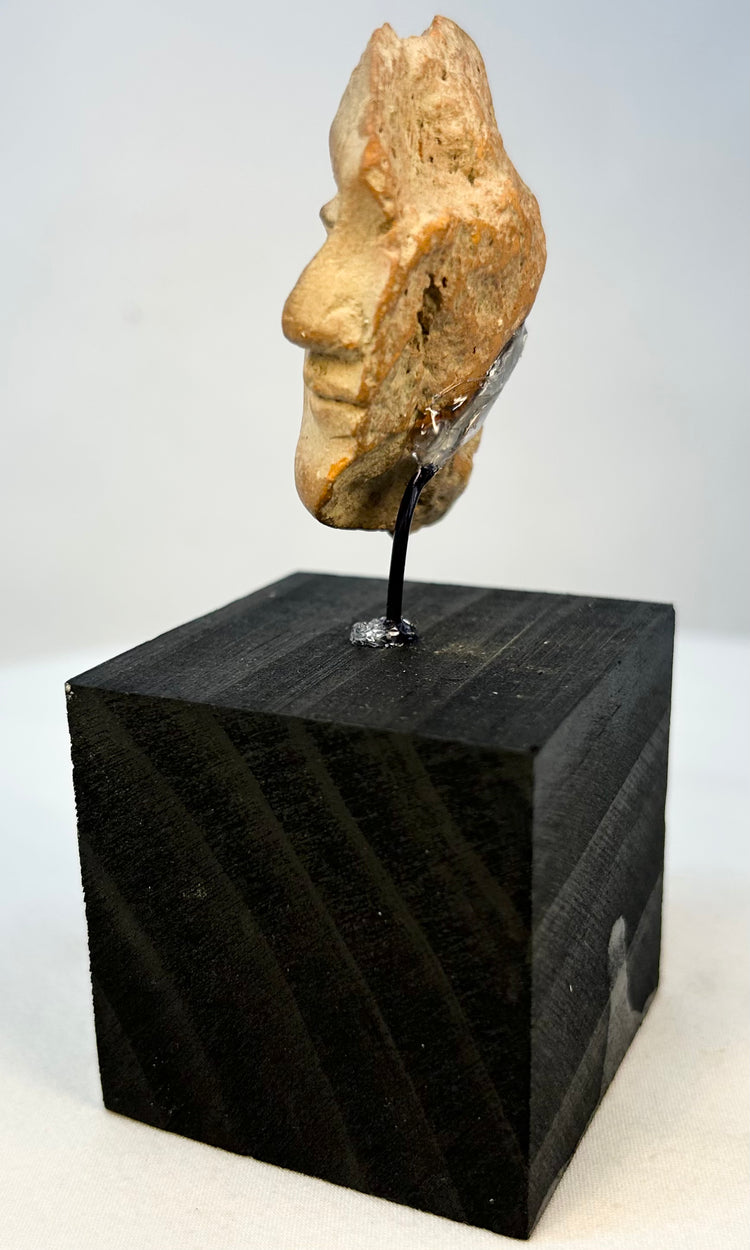
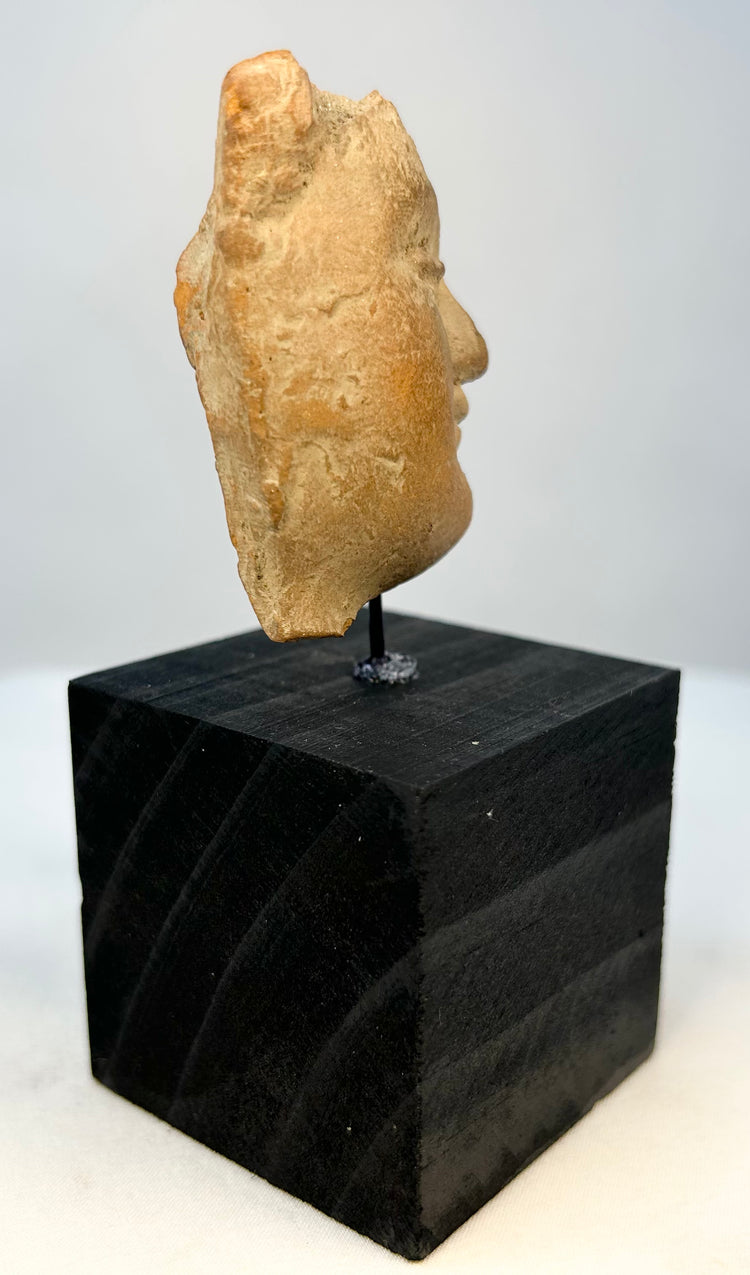
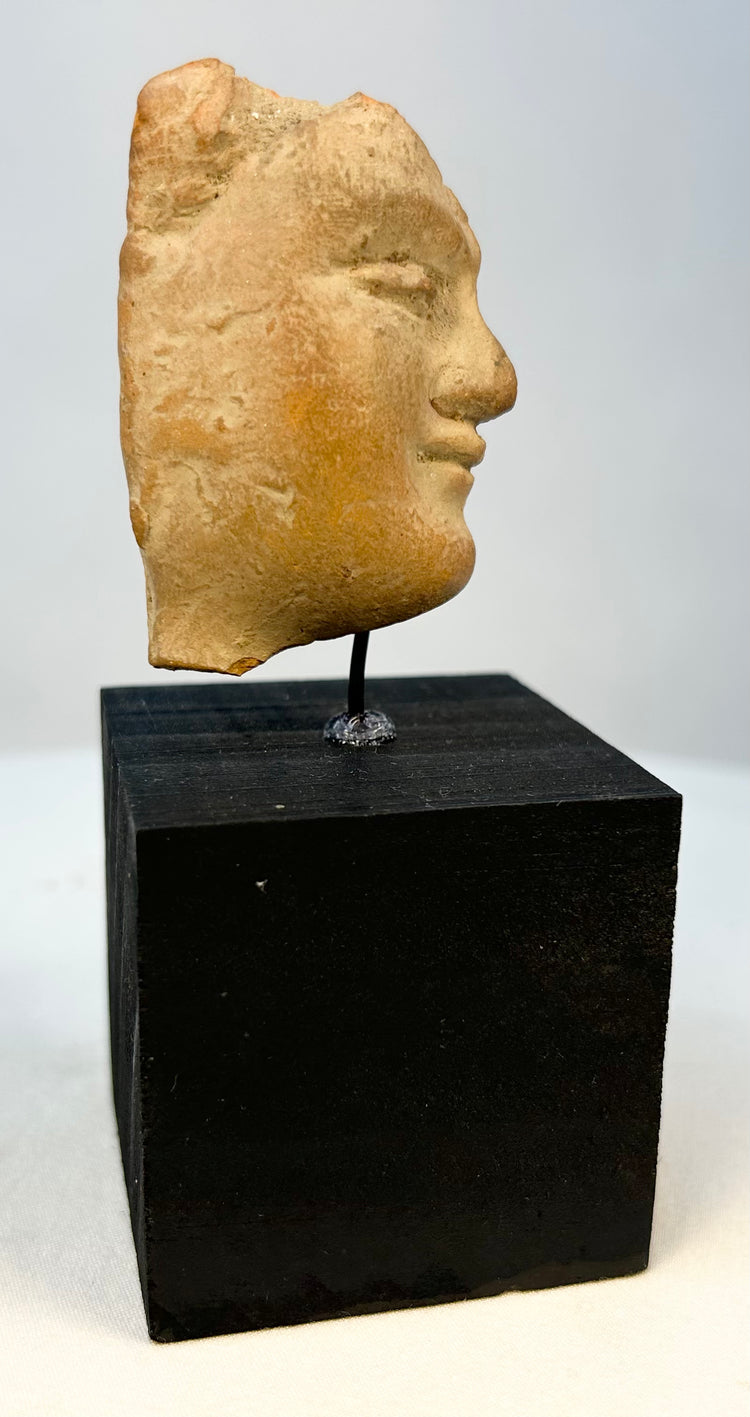
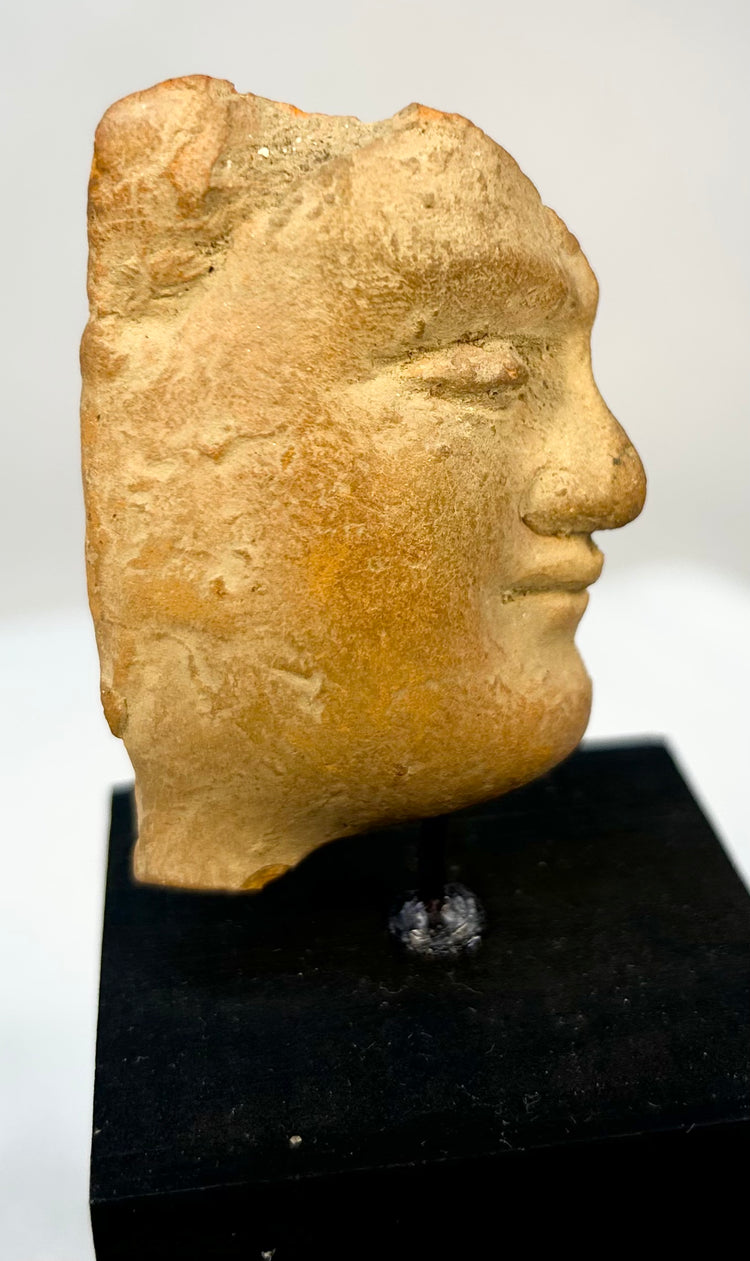
This elegant ancient terracotta facial fragment represents the refined sculptural traditions of the Classical Mediterranean world. Once part of a larger figure or votive statue, it preserves the beautifully modeled right profile of a serene male face, featuring a strong chin, defined lips, softly contoured cheek, and a prominent Classical nose. The eye is carefully shaped beneath a delicately formed brow ridge, displaying the naturalistic artistic style associated with Greek and Roman craftsmanship.
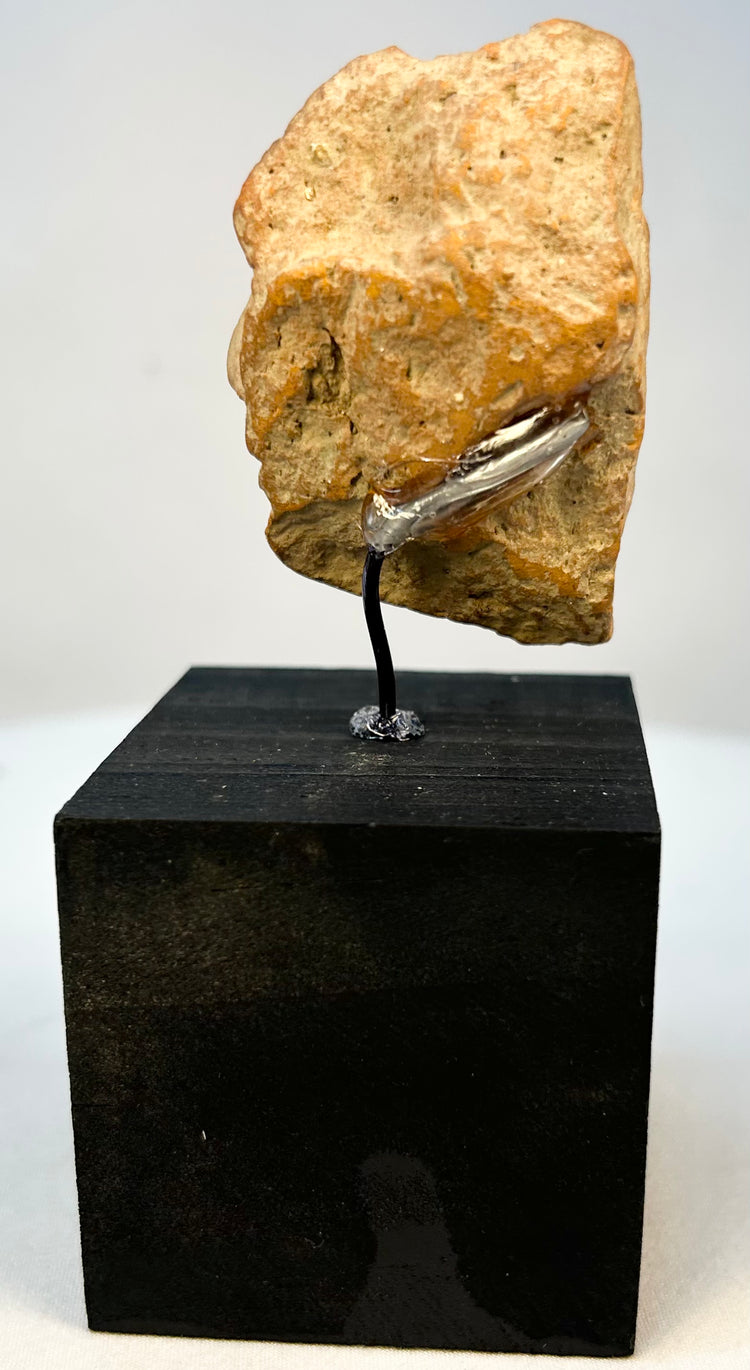
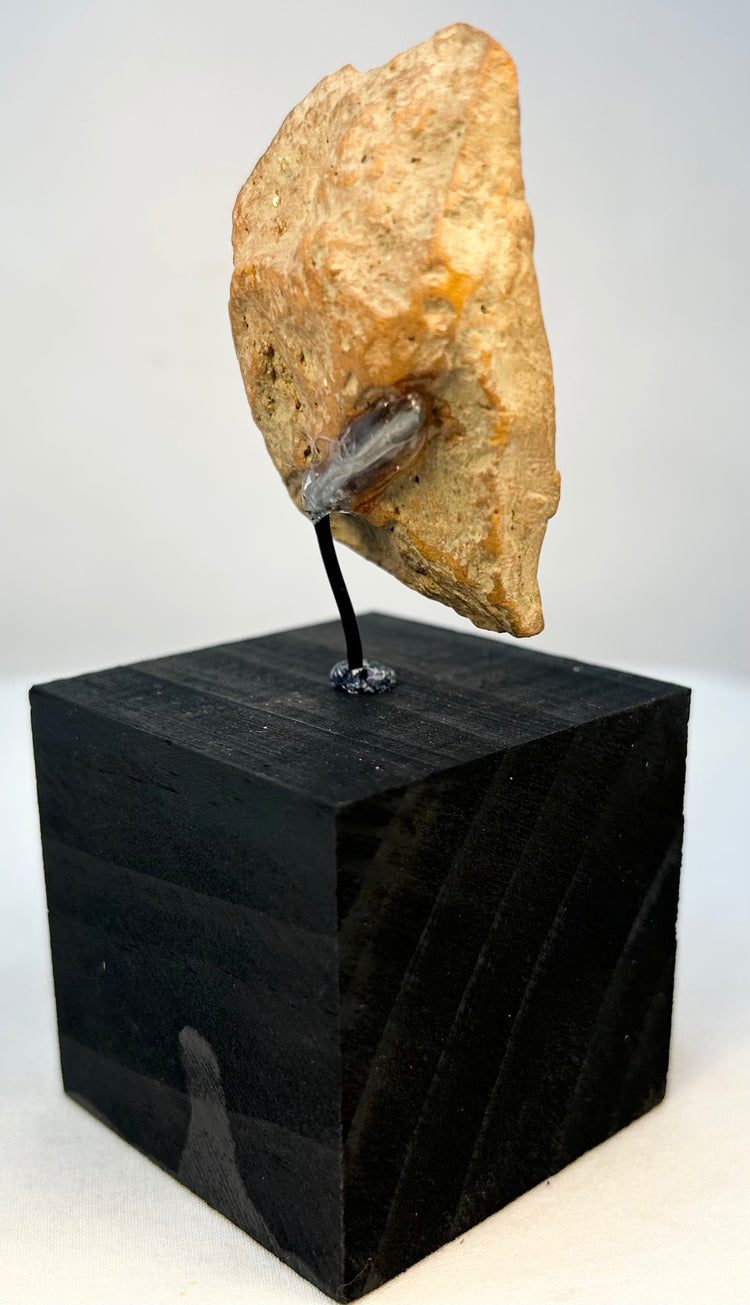
The surface retains a warm earthen tone with attractive archaeological patination and mineral deposits, emphasizing its long history and authenticity. Mounted on a modern museum-style base, the fragment presents with excellent visual presence.
Features
- Authentic ancient terracotta portrait fragment
- Finely modeled Classical facial profile
- Distinctive sculptural detail and refined aesthetic
- Warm archaeological patina and natural surface deposits
- Mounted on a custom display stand
- A striking example of ancient Mediterranean portrait art
Cultural Significance
Terracotta sculptures played an essential role in Mediterranean life, serving as religious votives, funerary objects, architectural elements, and domestic art. Portrait fragments such as this reflect the Classical world’s admiration for realism, identity, and expressive human form. Pieces like this provide a rare and direct connection to ancient culture, artistry, and personal devotion.
Condition
Well-preserved ancient condition with expected age wear consistent with archaeological antiquities over 2,000 years old. Fragmentary as excavated, retaining excellent facial definition and surface integrity. Minor edge losses, weathering, and natural encrustations present, all enhancing historical authenticity. Securely mounted and stable for display.
Dimensions (Approximate)
Height: 4.25 in
Age (Approximate)
1,800–2,300 years old
Learn More
Explore Roman expansion across the Mediterranean through Encyclopedia Britannica
Discover our curated Ancient Roman & Greek Artifacts Collection
Description
Historical Context & Origin
Region: Eastern Mediterranean (likely Hellenistic or Roman Provincial)
Material: Hand-modeled terracotta clay
Period: Circa 3rd Century BCE – 2nd Century CE
Description
This elegant ancient terracotta facial fragment represents the refined sculptural traditions of the Classical Mediterranean world. Once part of a larger figure or votive statue, it preserves the beautifully modeled right profile of a serene male face, featuring a strong chin, defined lips, softly contoured cheek, and a prominent Classical nose. The eye is carefully shaped beneath a delicately formed brow ridge, displaying the naturalistic artistic style associated with Greek and Roman craftsmanship.
The surface retains a warm earthen tone with attractive archaeological patination and mineral deposits, emphasizing its long history and authenticity. Mounted on a modern museum-style base, the fragment presents with excellent visual presence.
Features
- Authentic ancient terracotta portrait fragment
- Finely modeled Classical facial profile
- Distinctive sculptural detail and refined aesthetic
- Warm archaeological patina and natural surface deposits
- Mounted on a custom display stand
- A striking example of ancient Mediterranean portrait art
Cultural Significance
Terracotta sculptures played an essential role in Mediterranean life, serving as religious votives, funerary objects, architectural elements, and domestic art. Portrait fragments such as this reflect the Classical world’s admiration for realism, identity, and expressive human form. Pieces like this provide a rare and direct connection to ancient culture, artistry, and personal devotion.
Condition
Well-preserved ancient condition with expected age wear consistent with archaeological antiquities over 2,000 years old. Fragmentary as excavated, retaining excellent facial definition and surface integrity. Minor edge losses, weathering, and natural encrustations present, all enhancing historical authenticity. Securely mounted and stable for display.
Dimensions (Approximate)
Height: 4.25 in
Age (Approximate)
1,800–2,300 years old
Learn More
Explore Roman expansion across the Mediterranean through Encyclopedia Britannica
Discover our curated Ancient Roman & Greek Artifacts Collection
You May Also Like
