


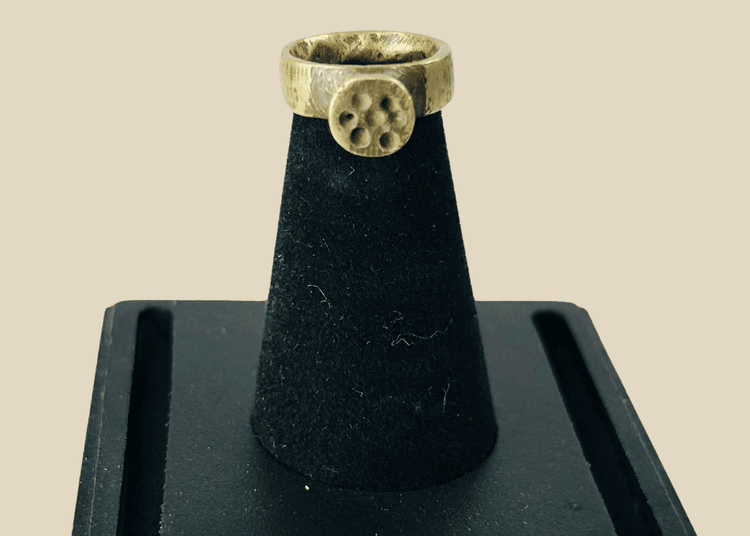
Ancient Roman | Bronze Ring | with Circular Rosette Motif | Circa 2nd–4th Century AD
Couldn't load pickup availability


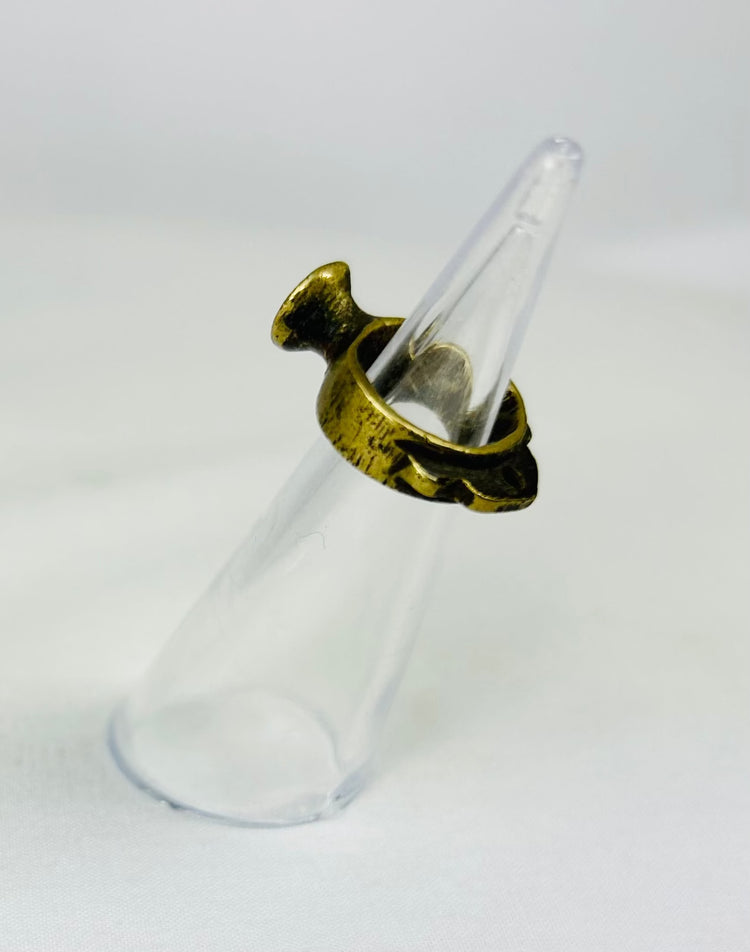
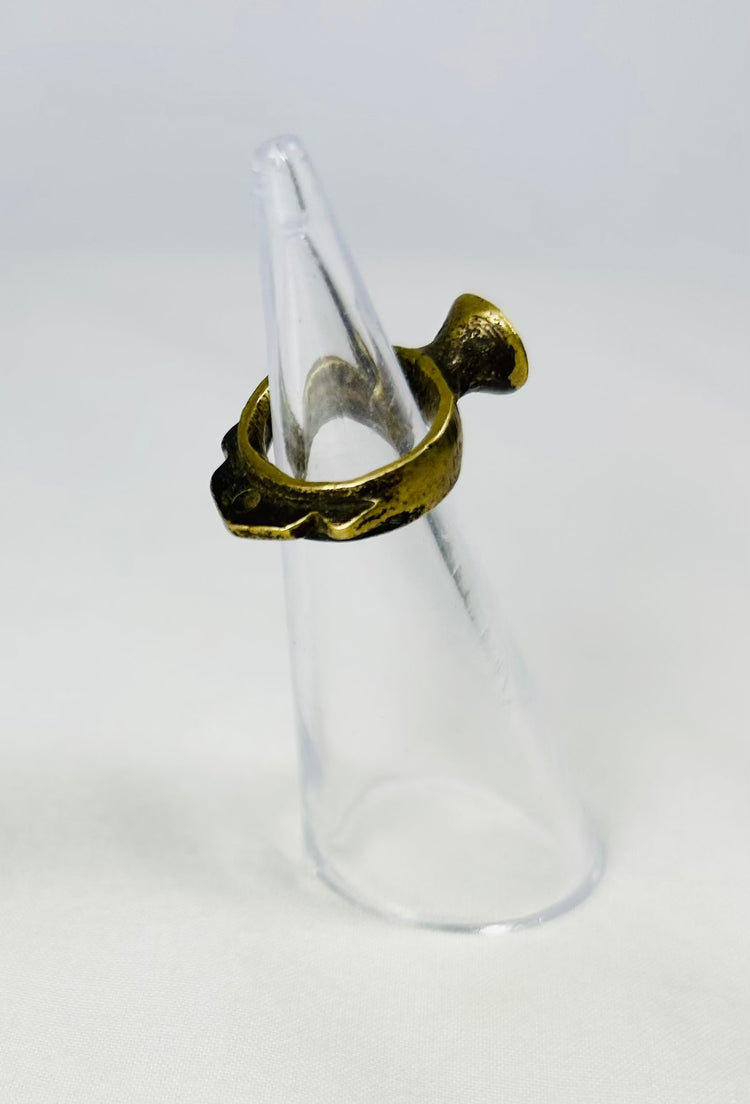
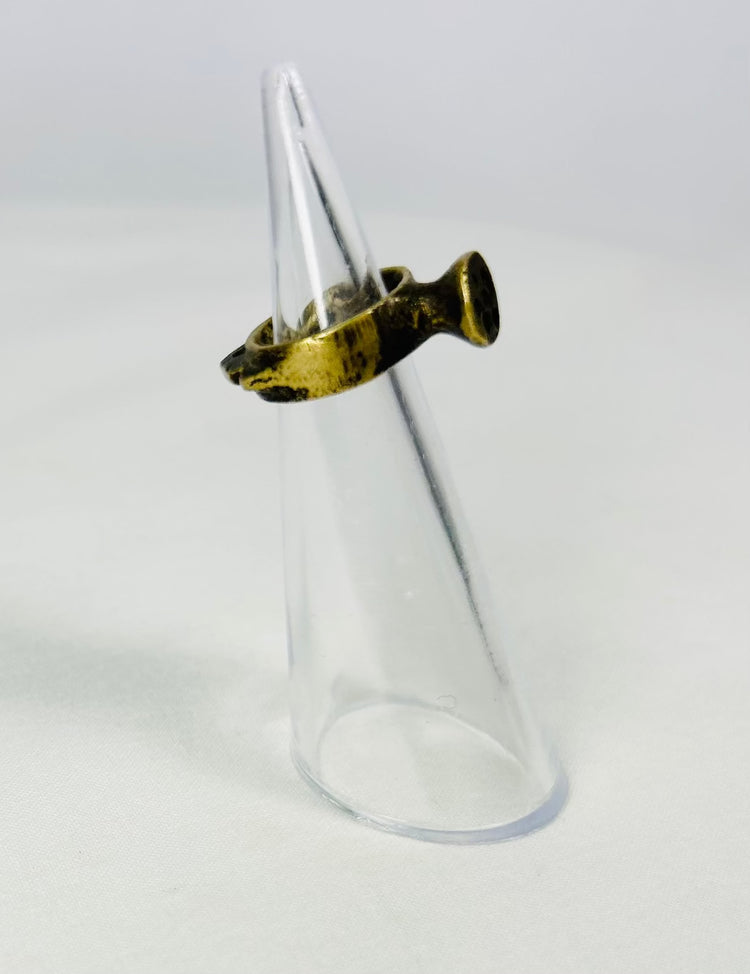
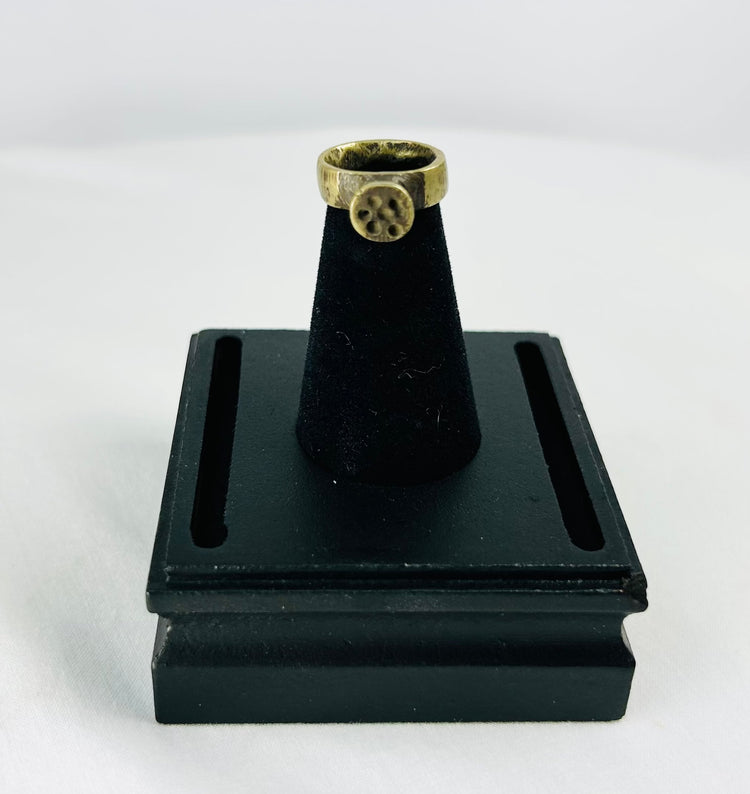
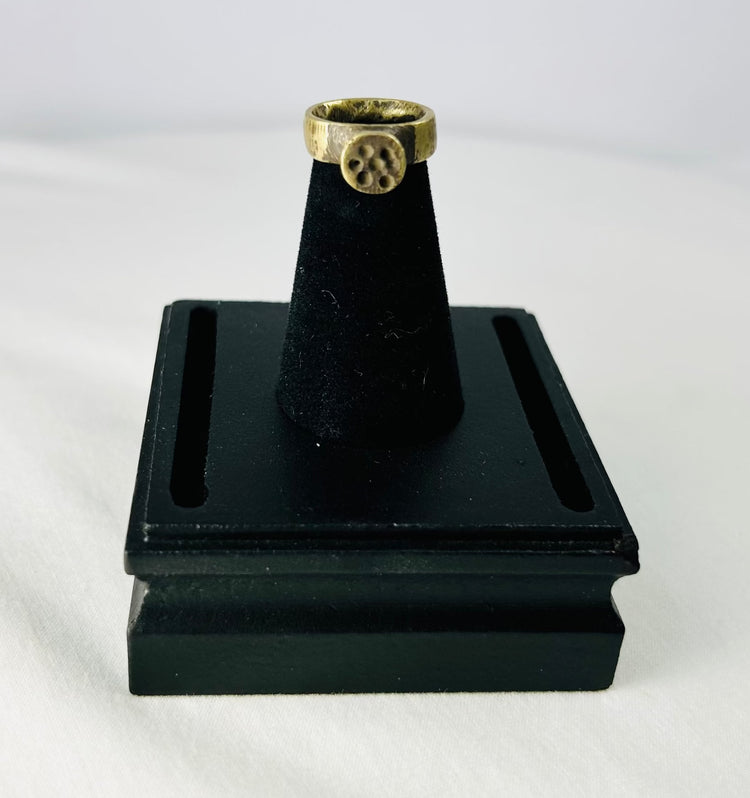
Ancient Roman | Bronze Ring | with Circular Rosette Motif | Circa 2nd–4th Century AD
Description
More
Less
Historical Context & Origin
Region: Eastern Mediterranean, Roman Empire
Material: Cast bronze
Period: Circa 2nd–4th Century AD
Description
This authentic Ancient Roman bronze ring, dating from the 2nd to 4th century AD, is a beautifully preserved example of Roman craftsmanship and symbolism. Cast from bronze, the ring features a broad, sturdy band and a circular bezel adorned with a dotted or rosette motif—an emblem thought to represent the sun or cosmic order, invoking protection and harmony for its wearer.
With its minimalist yet elegant design, this piece reflects the refined aesthetic of Roman personal adornment—functional, durable, and symbolically charged. The smooth, naturally aged patina enhances its timeless appeal, offering a tangible link to everyday life in the Roman Empire.
Features
- Cast bronze construction with rich greenish-brown patina
- Circular bezel featuring raised dotted or rosette motif
- Broad, solid band typical of late Roman craftsmanship
- Excellent preservation with distinct ancient surface texture
- Authentic artifact representing Roman social and artistic culture
Cultural Significance
Rings held great importance in Roman society, serving as emblems of rank, identity, and personal devotion. While gold and silver rings were reserved for the elite, bronze examples like this one were worn by soldiers, merchants, and free citizens, embodying both practicality and pride. The dotted bezel design may also carry solar or divine associations, symbolizing light, order, and protection.
Condition
Good ancient condition with stable patina, minor surface wear, and light encrustation consistent with archaeological preservation. No modern restoration.
Dimensions (Approximate)
Ring Size: 1 US
Bezel Diameter: 0.3 in
Age (Approximate)
1,600–1,800 years old
Learn More
Explore comparable examples in the Metropolitan Museum of Art
Discover more ancient adornments in our Ancient Rings & Jewelry Collection
Description
Historical Context & Origin
Region: Eastern Mediterranean, Roman Empire
Material: Cast bronze
Period: Circa 2nd–4th Century AD
Description
This authentic Ancient Roman bronze ring, dating from the 2nd to 4th century AD, is a beautifully preserved example of Roman craftsmanship and symbolism. Cast from bronze, the ring features a broad, sturdy band and a circular bezel adorned with a dotted or rosette motif—an emblem thought to represent the sun or cosmic order, invoking protection and harmony for its wearer.
With its minimalist yet elegant design, this piece reflects the refined aesthetic of Roman personal adornment—functional, durable, and symbolically charged. The smooth, naturally aged patina enhances its timeless appeal, offering a tangible link to everyday life in the Roman Empire.
Features
- Cast bronze construction with rich greenish-brown patina
- Circular bezel featuring raised dotted or rosette motif
- Broad, solid band typical of late Roman craftsmanship
- Excellent preservation with distinct ancient surface texture
- Authentic artifact representing Roman social and artistic culture
Cultural Significance
Rings held great importance in Roman society, serving as emblems of rank, identity, and personal devotion. While gold and silver rings were reserved for the elite, bronze examples like this one were worn by soldiers, merchants, and free citizens, embodying both practicality and pride. The dotted bezel design may also carry solar or divine associations, symbolizing light, order, and protection.
Condition
Good ancient condition with stable patina, minor surface wear, and light encrustation consistent with archaeological preservation. No modern restoration.
Dimensions (Approximate)
Ring Size: 1 US
Bezel Diameter: 0.3 in
Age (Approximate)
1,600–1,800 years old
Learn More
Explore comparable examples in the Metropolitan Museum of Art
Discover more ancient adornments in our Ancient Rings & Jewelry Collection
You May Also Like
