



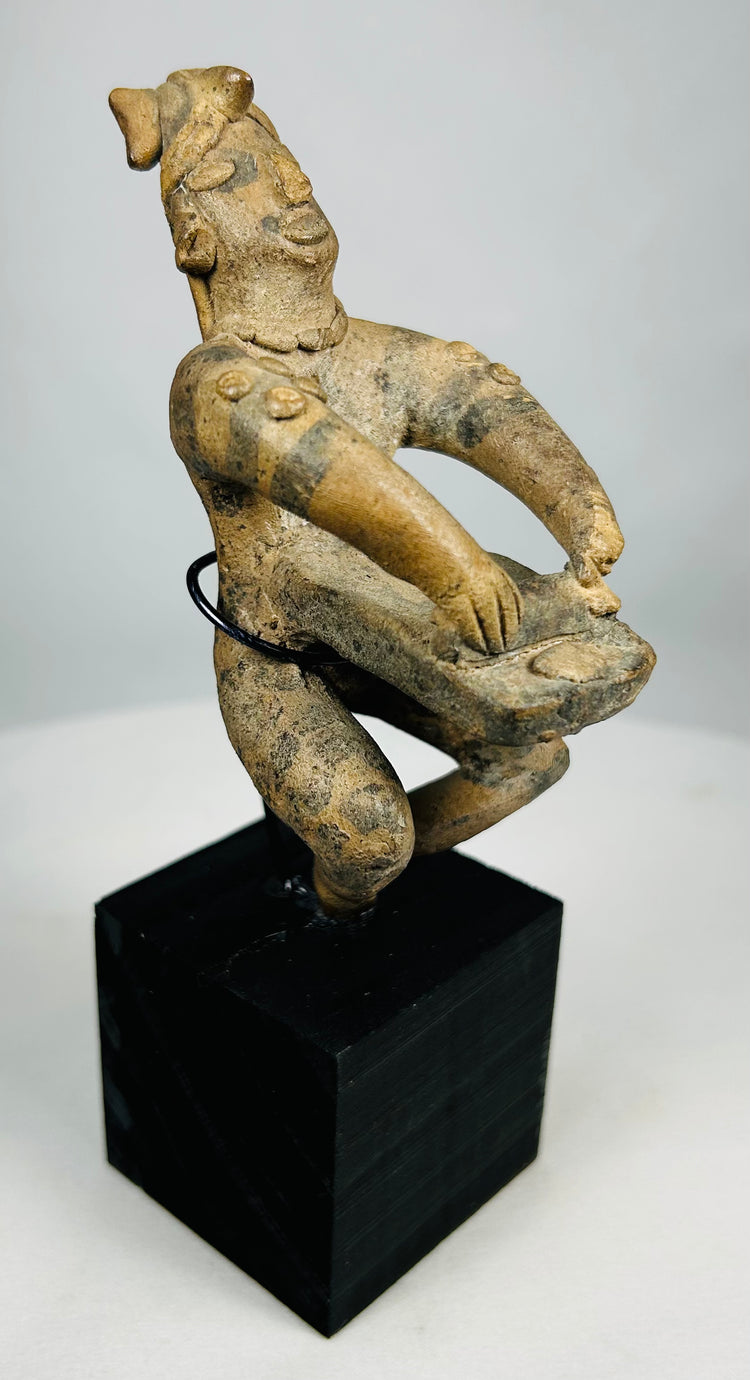
Ancient West Mexican Terracotta Musician Figure | Pre-Columbian Shaft Tomb Sculpture | Circa 300 BCE – 300 CE
Description
More
Less
Historical Context & Origin
Region: West Mexico – likely associated with the Nayarit / Jalisco shaft tomb cultures
Material: Hand-formed terracotta clay with mineral deposits and burial encrustations
Period: Circa 300 BCE – 300 CE
Description
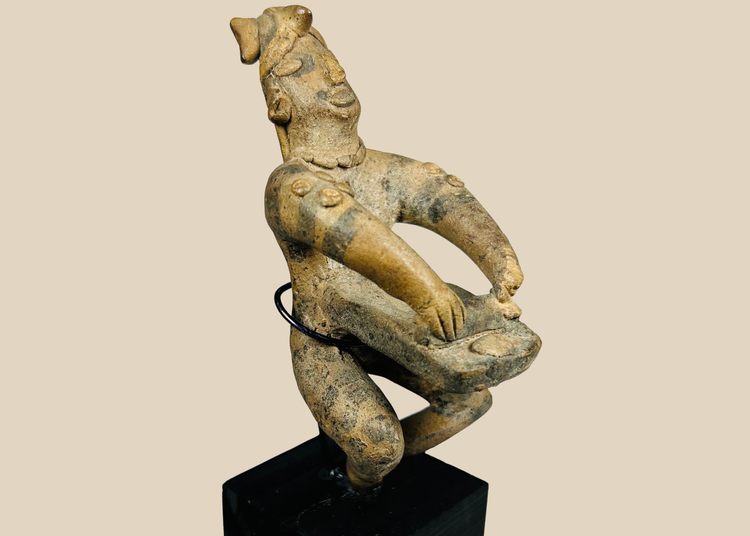
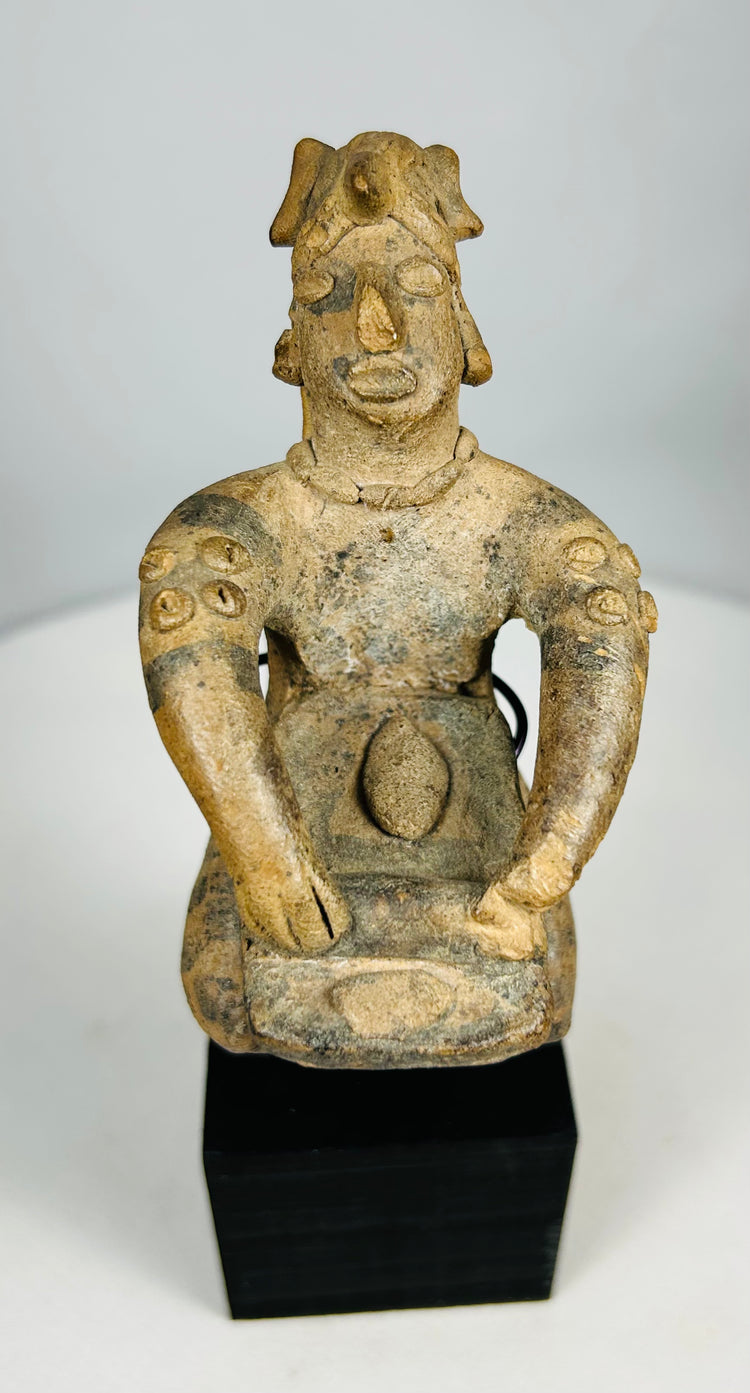
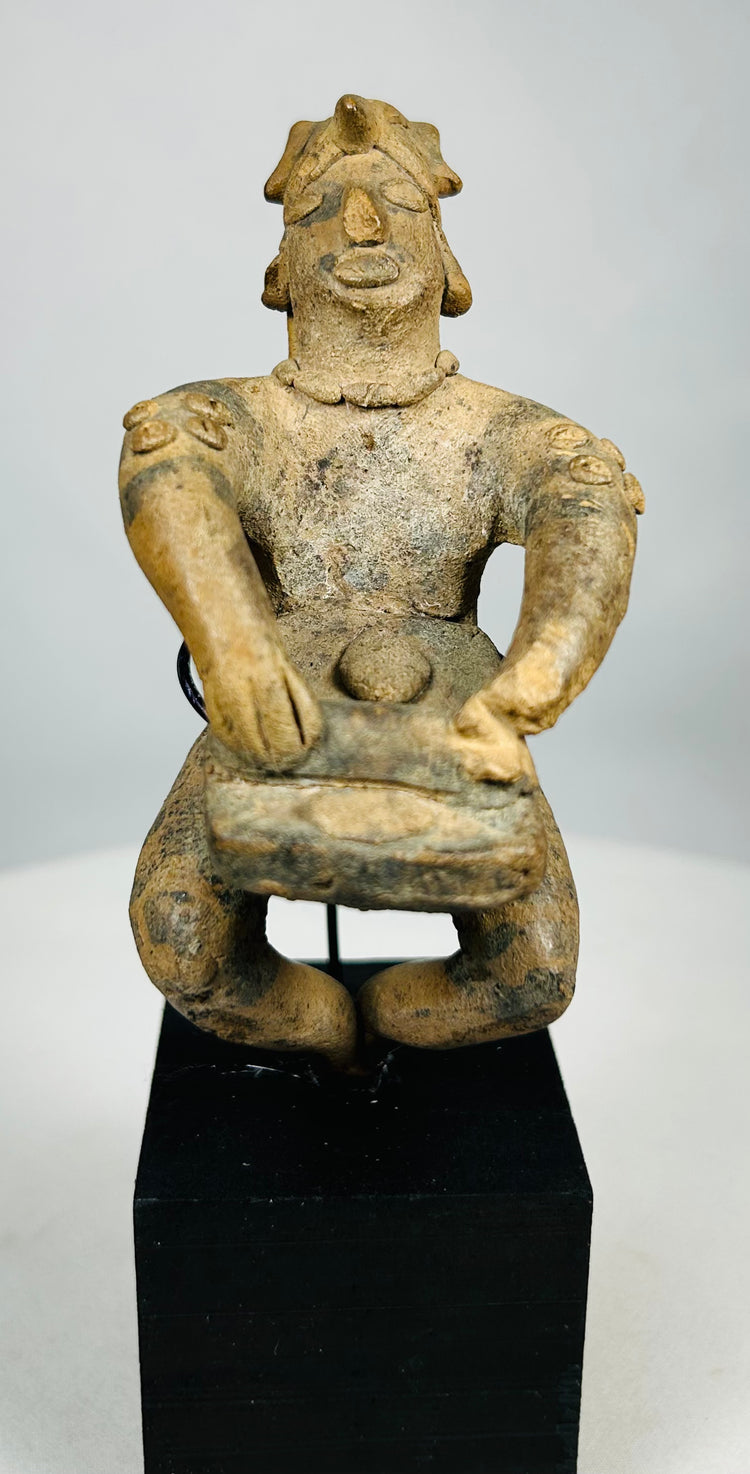
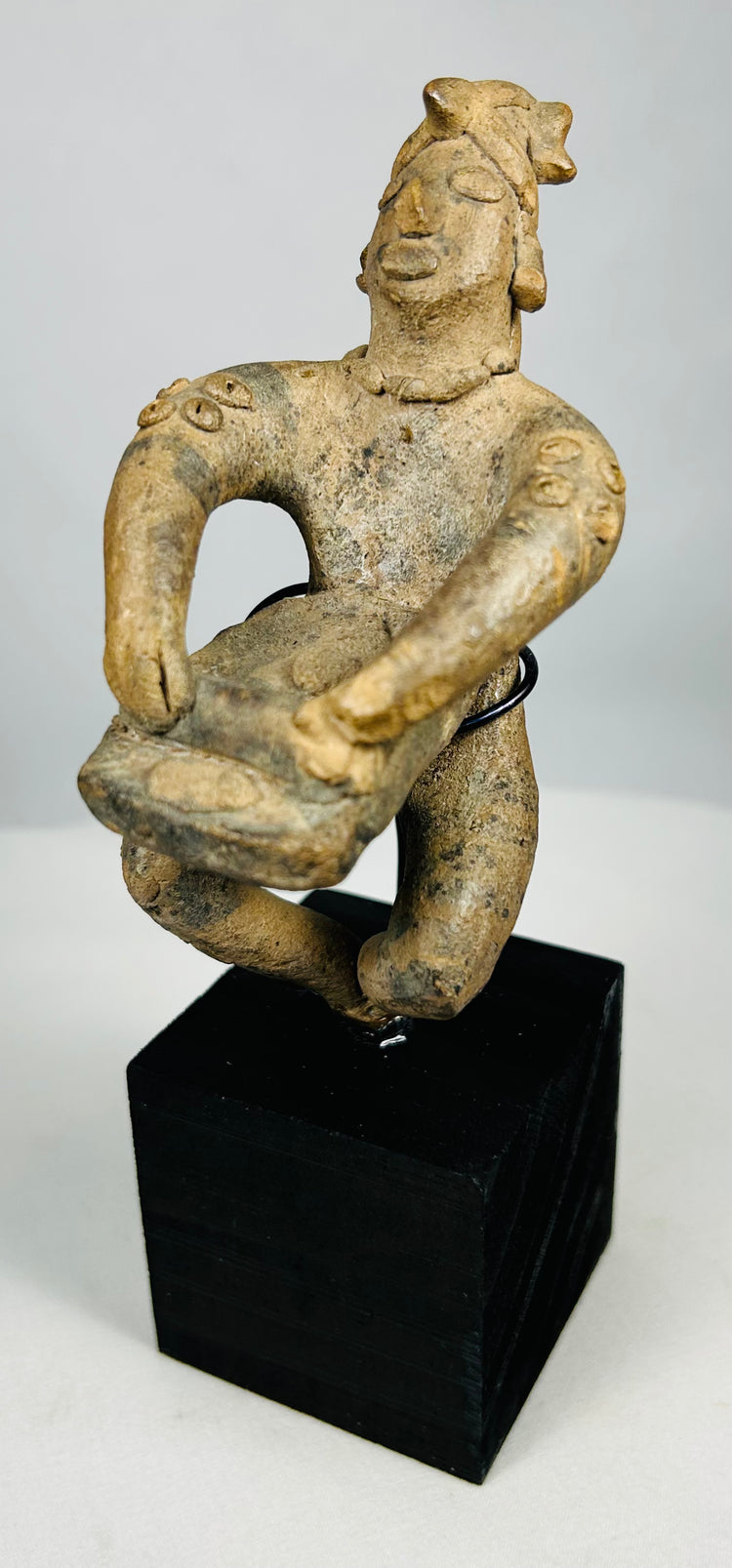
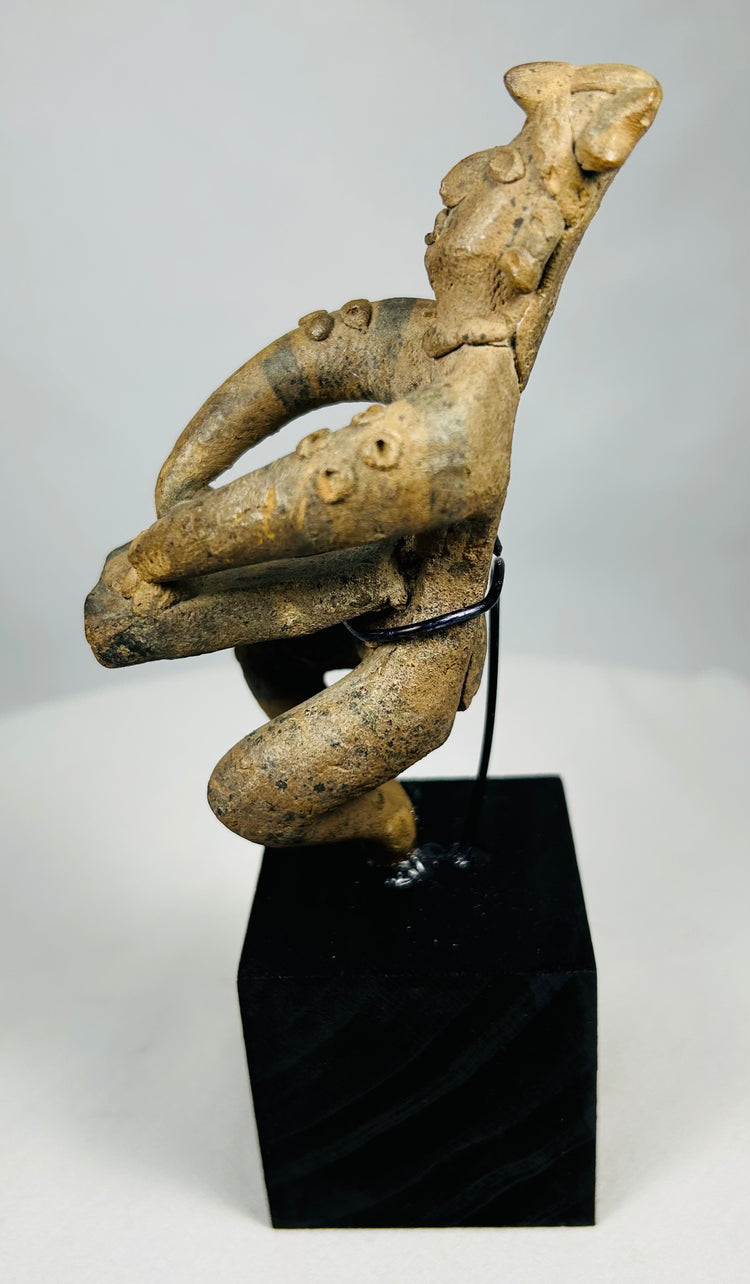
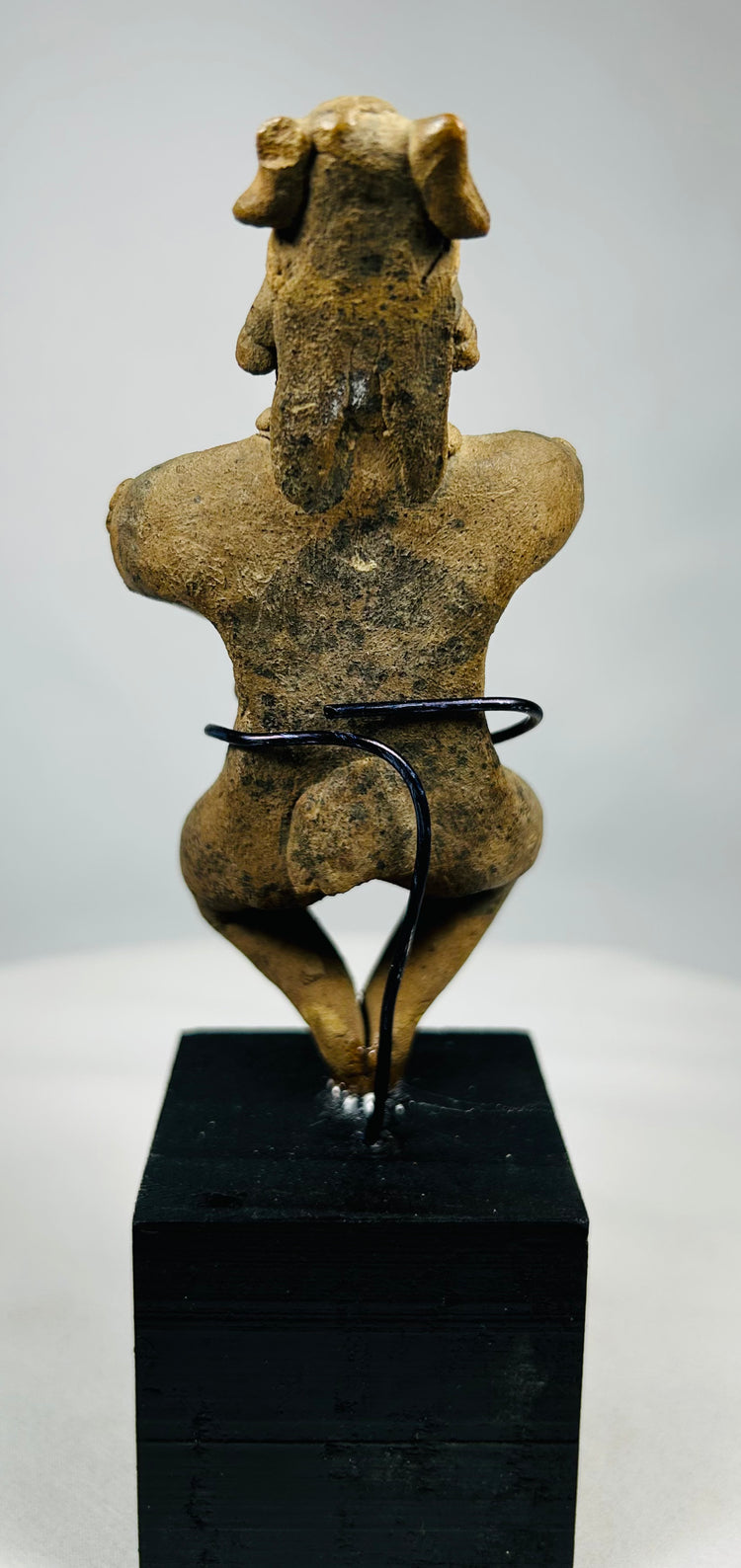
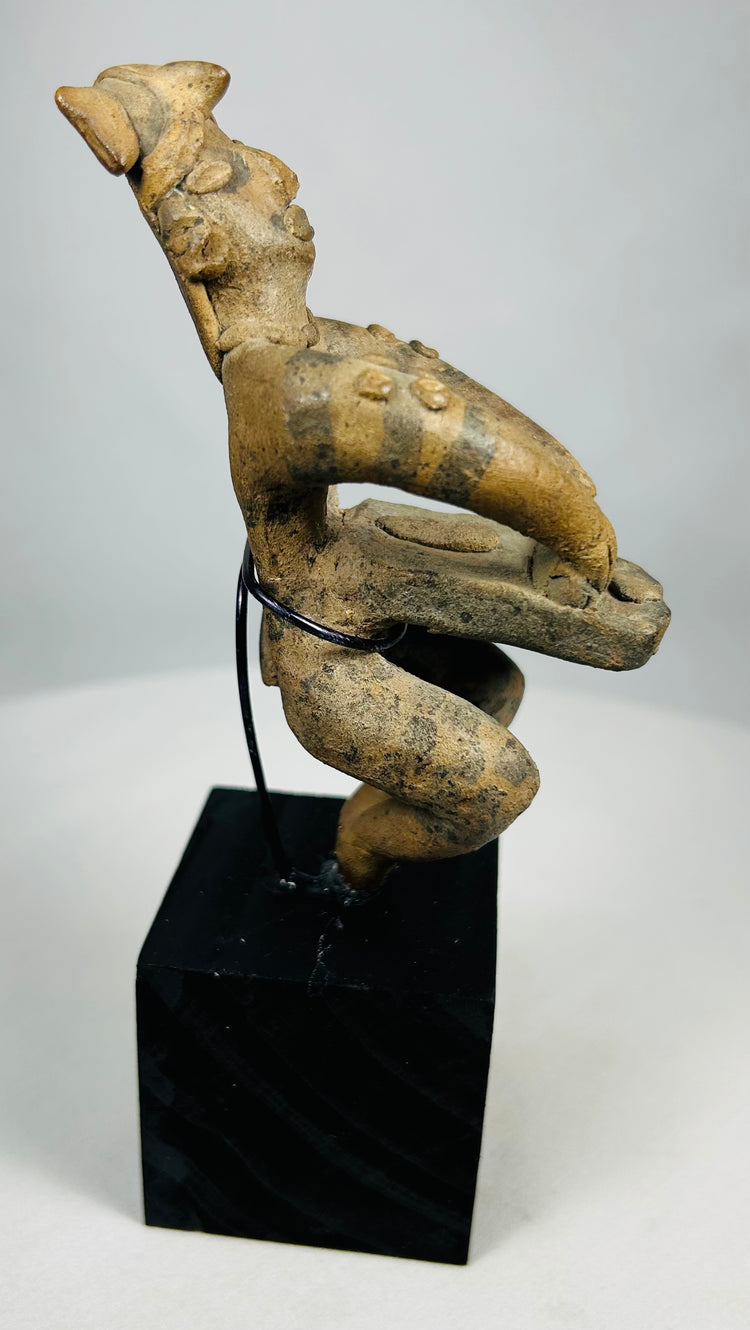
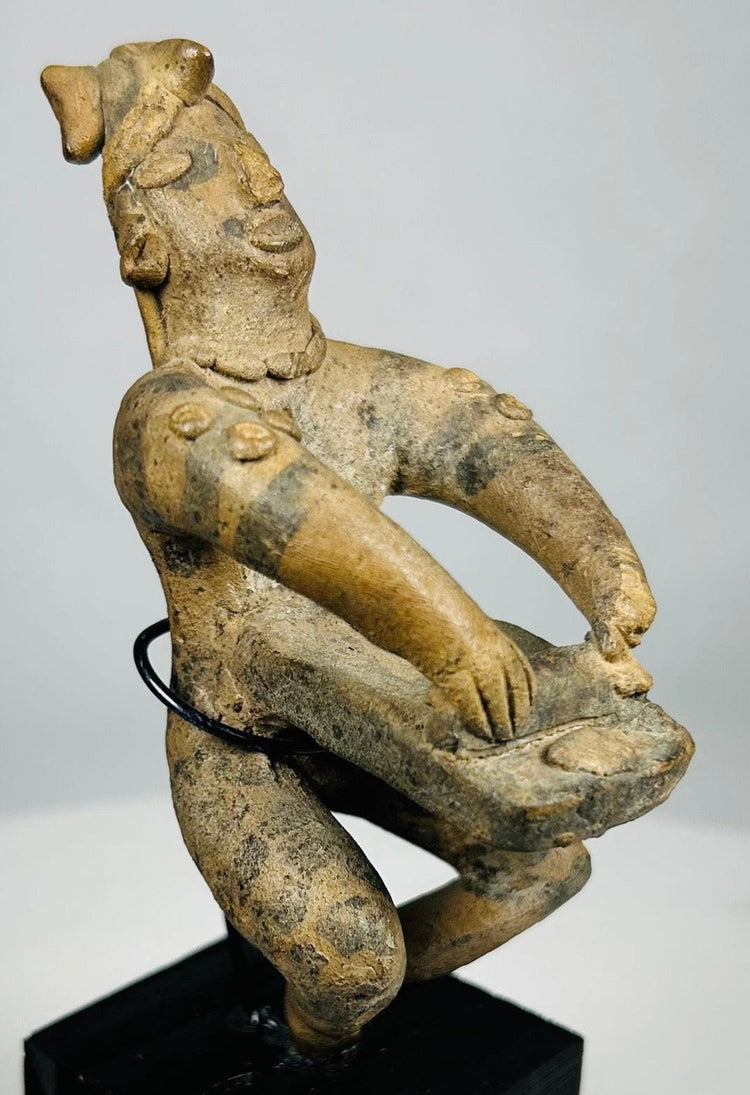
A striking ancient Pre-Columbian terracotta figure depicting a seated musician or ceremonial participant, shown in a dynamic forward-leaning posture while supporting a rounded object — likely a ritual drum, offering vessel, or ceremonial tray — upon the lap. The figure exhibits classic West Mexican sculptural traits including stylized facial features, applied nodular decorations to the shoulders and arms, and faint traces of original painted pigment. The surface retains an evocative ancient earthen patina consistent with long-term burial, presenting as an excellent and authentic example of West Mexican funerary art.
Features
- Seated musician / ceremonial figure
- Distinctive West Mexican sculptural style
- Raised nodular shoulder and arm adornments
- Subtle remnants of ancient surface pigmentation
- Expressive posture conveying presence and movement
- Professionally mounted on a custom display stand
Cultural Significance
Figures of this type are closely associated with ritual performance, funerary belief systems, social identity, and ancestor veneration within ancient West Mexican societies. They are believed to represent musicians, dancers, guardians, and important community figures intended to accompany and protect the deceased in the afterlife.
Condition
Excellent preserved condition for age with expected mineral deposits, surface wear, burial patina, and minor age-related losses. No modern restorations observed. Securely mounted for display.
Dimensions (Approximate)
Height: 6.75 in
Age (Approximate)
1,700–2,300 years old
Learn More
Discover West Mexican terracotta artistry at the Metropolitan Museum of Art
Explore our curated Ancient Pre-Columbian Artifacts & Relics Collection
Description
Historical Context & Origin
Region: West Mexico – likely associated with the Nayarit / Jalisco shaft tomb cultures
Material: Hand-formed terracotta clay with mineral deposits and burial encrustations
Period: Circa 300 BCE – 300 CE
Description
A striking ancient Pre-Columbian terracotta figure depicting a seated musician or ceremonial participant, shown in a dynamic forward-leaning posture while supporting a rounded object — likely a ritual drum, offering vessel, or ceremonial tray — upon the lap. The figure exhibits classic West Mexican sculptural traits including stylized facial features, applied nodular decorations to the shoulders and arms, and faint traces of original painted pigment. The surface retains an evocative ancient earthen patina consistent with long-term burial, presenting as an excellent and authentic example of West Mexican funerary art.
Features
- Seated musician / ceremonial figure
- Distinctive West Mexican sculptural style
- Raised nodular shoulder and arm adornments
- Subtle remnants of ancient surface pigmentation
- Expressive posture conveying presence and movement
- Professionally mounted on a custom display stand
Cultural Significance
Figures of this type are closely associated with ritual performance, funerary belief systems, social identity, and ancestor veneration within ancient West Mexican societies. They are believed to represent musicians, dancers, guardians, and important community figures intended to accompany and protect the deceased in the afterlife.
Condition
Excellent preserved condition for age with expected mineral deposits, surface wear, burial patina, and minor age-related losses. No modern restorations observed. Securely mounted for display.
Dimensions (Approximate)
Height: 6.75 in
Age (Approximate)
1,700–2,300 years old
Learn More
Discover West Mexican terracotta artistry at the Metropolitan Museum of Art
Explore our curated Ancient Pre-Columbian Artifacts & Relics Collection
You May Also Like
