

Ancient West Mexico | Ceremonial Terracotta Bowl with Painted Motifs | Circa 300 BCE – 300 CE
Couldn't load pickup availability


Ancient West Mexico | Ceremonial Terracotta Bowl with Painted Motifs | Circa 300 BCE – 300 CE
Description
More
Less
Historical Context & Origin
Region: West Mexico, Pre-Columbian Mesoamerica
Material: Hand-formed terracotta clay with cream slip and painted iron-oxide decoration
Period: Circa 300 BCE – 300 CE
Description
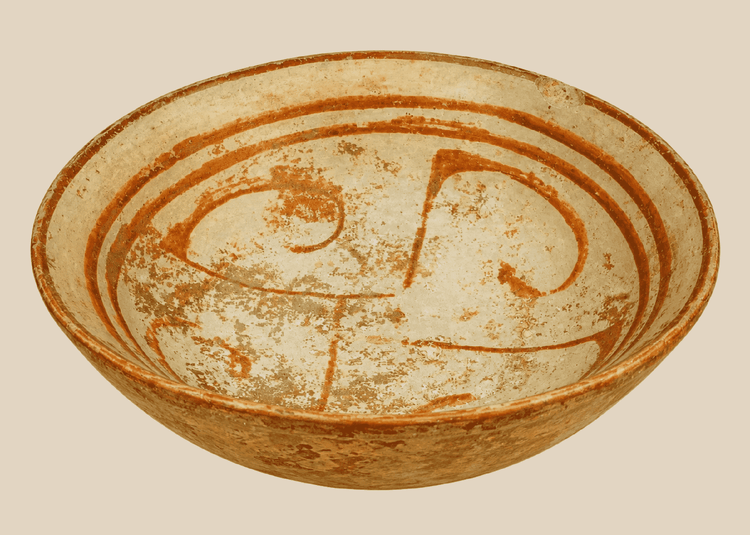
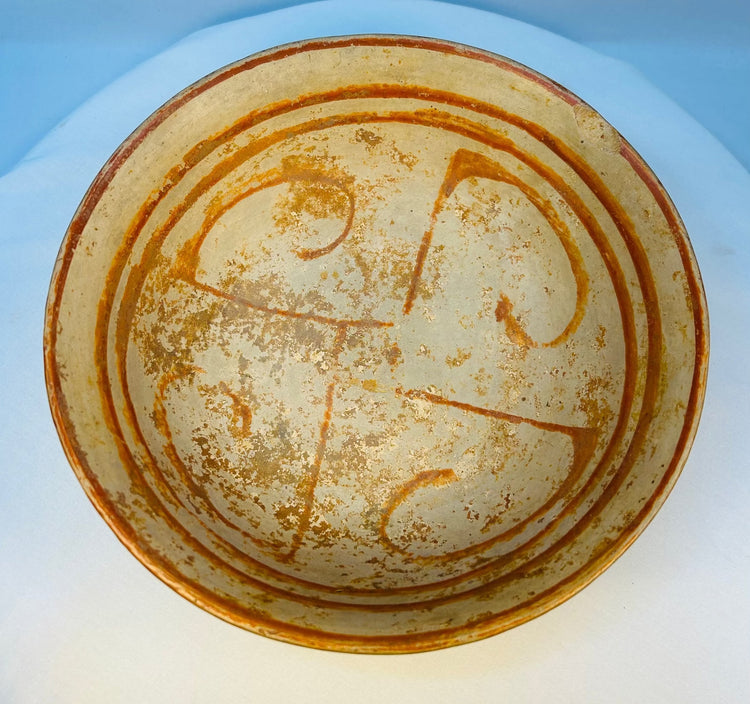
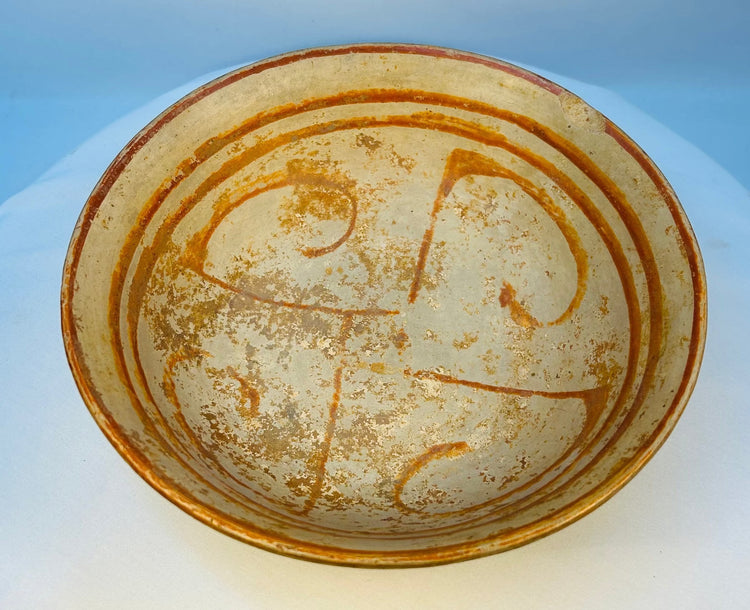
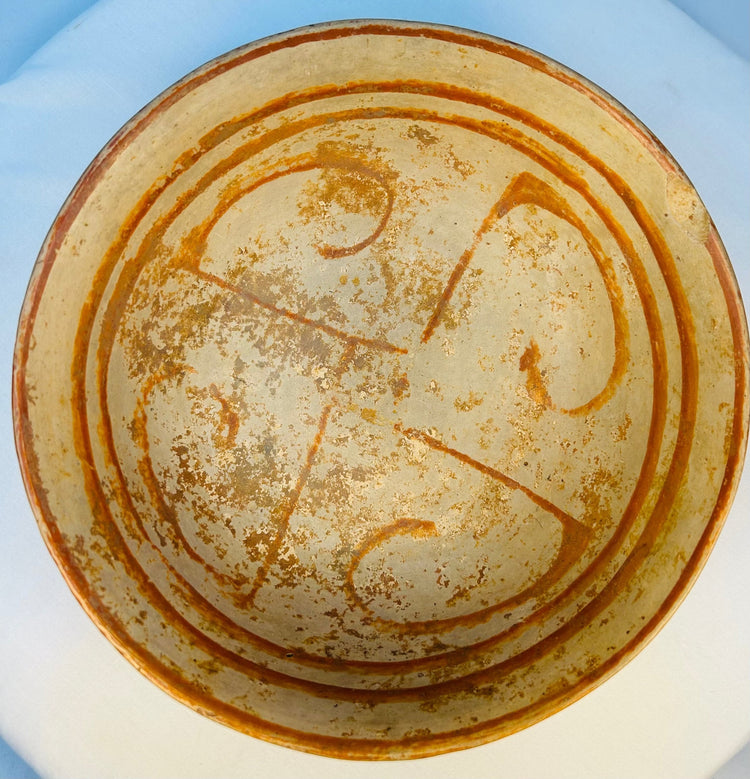
This beautiful ancient terracotta bowl represents classic West Mexican ceramic tradition, displaying a refined cream slip interior decorated with boldly painted linear and curvilinear motifs in warm reddish-brown pigment. The design is arranged in a balanced, almost windmill-like quadrant pattern, bordered by concentric painted bands that follow the contour of the interior walls — a visually striking combination of movement and symmetry characteristic of ceremonial vessels of the region.
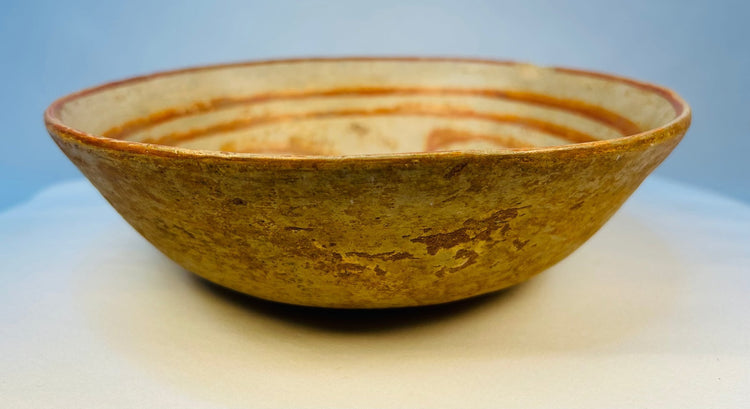
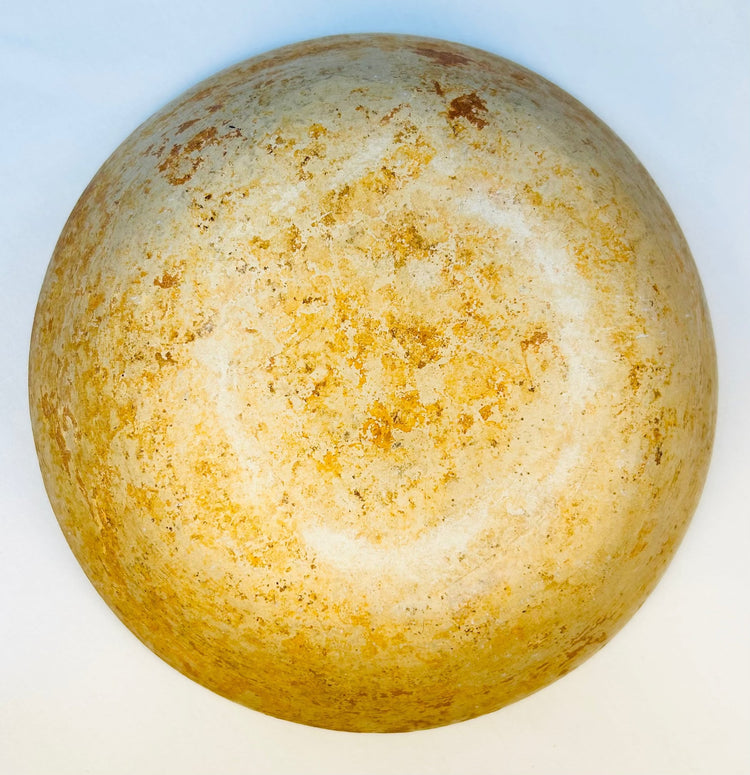
The exterior surface exhibits a warm buff-to-ochre earthen tone, softened by centuries of age and burial. Hand-burnished interior surfaces retain a faint sheen beneath the archaeological surface weathering. With its shallow, gently flaring form, balanced weight, and harmonious decoration, this bowl embodies both aesthetic beauty and cultural meaning.
Bowls of this quality were not merely utilitarian; they frequently served ceremonial, funerary, or ritual functions, often interred with the deceased as offerings, symbolizing sustenance, protection, or passage into the afterlife.
Features
- Authentic Pre-Columbian West Mexican terracotta bowl
- Elegant shallow form with gently sloping sides
- Distinctive cream interior slip with painted geometric swirl design
- Triple interior border rings emphasizing depth and movement
- Warm earthen exterior with natural archaeological patination
Cultural Significance
Ceramic vessels such as this played a vital role in daily, ritual, and funerary practices throughout ancient West Mexico. Their painted motifs held symbolic meaning relating to nature, life cycles, spiritual beliefs, and cosmology. Today, they stand as enduring artistic testaments to the craftsmanship, cultural identity, and ceremonial traditions of ancient Mesoamerican civilizations.
Condition
Good authentic ancient condition consistent with age and burial. Surface exhibits expected archaeological mineral deposits, surface weathering, and pigment fading throughout. Small rim wear and minor edge losses present in areas, but no modern repairs noted. Stable, structurally sound, and visually striking with exceptional patina and character.
Dimensions (Approximate)
Diameter: 8.5 in
Age (Approximate)
1,700–2,300 years old
Provenance
From a private collection in Ottawa, Ontario. The owner was a lifelong collector of Pre-Columbian art and artifacts who traveled extensively throughout South America. Following their passing, the collection was liquidated by the family.
Learn More
Discover the history of Mexican pottery through Sandia Folk
Explore our curated Ancient Pre-Columbian Artifacts & Relics Collection
Description
Historical Context & Origin
Region: West Mexico, Pre-Columbian Mesoamerica
Material: Hand-formed terracotta clay with cream slip and painted iron-oxide decoration
Period: Circa 300 BCE – 300 CE
Description
This beautiful ancient terracotta bowl represents classic West Mexican ceramic tradition, displaying a refined cream slip interior decorated with boldly painted linear and curvilinear motifs in warm reddish-brown pigment. The design is arranged in a balanced, almost windmill-like quadrant pattern, bordered by concentric painted bands that follow the contour of the interior walls — a visually striking combination of movement and symmetry characteristic of ceremonial vessels of the region.
The exterior surface exhibits a warm buff-to-ochre earthen tone, softened by centuries of age and burial. Hand-burnished interior surfaces retain a faint sheen beneath the archaeological surface weathering. With its shallow, gently flaring form, balanced weight, and harmonious decoration, this bowl embodies both aesthetic beauty and cultural meaning.
Bowls of this quality were not merely utilitarian; they frequently served ceremonial, funerary, or ritual functions, often interred with the deceased as offerings, symbolizing sustenance, protection, or passage into the afterlife.
Features
- Authentic Pre-Columbian West Mexican terracotta bowl
- Elegant shallow form with gently sloping sides
- Distinctive cream interior slip with painted geometric swirl design
- Triple interior border rings emphasizing depth and movement
- Warm earthen exterior with natural archaeological patination
Cultural Significance
Ceramic vessels such as this played a vital role in daily, ritual, and funerary practices throughout ancient West Mexico. Their painted motifs held symbolic meaning relating to nature, life cycles, spiritual beliefs, and cosmology. Today, they stand as enduring artistic testaments to the craftsmanship, cultural identity, and ceremonial traditions of ancient Mesoamerican civilizations.
Condition
Good authentic ancient condition consistent with age and burial. Surface exhibits expected archaeological mineral deposits, surface weathering, and pigment fading throughout. Small rim wear and minor edge losses present in areas, but no modern repairs noted. Stable, structurally sound, and visually striking with exceptional patina and character.
Dimensions (Approximate)
Diameter: 8.5 in
Age (Approximate)
1,700–2,300 years old
Provenance
From a private collection in Ottawa, Ontario. The owner was a lifelong collector of Pre-Columbian art and artifacts who traveled extensively throughout South America. Following their passing, the collection was liquidated by the family.
Learn More
Discover the history of Mexican pottery through Sandia Folk
Explore our curated Ancient Pre-Columbian Artifacts & Relics Collection
You May Also Like
