



Antique Hand-Carved Wooden Mortar and Pestle with Decorative Face Motif | 18th–19th Century
Couldn't load pickup availability


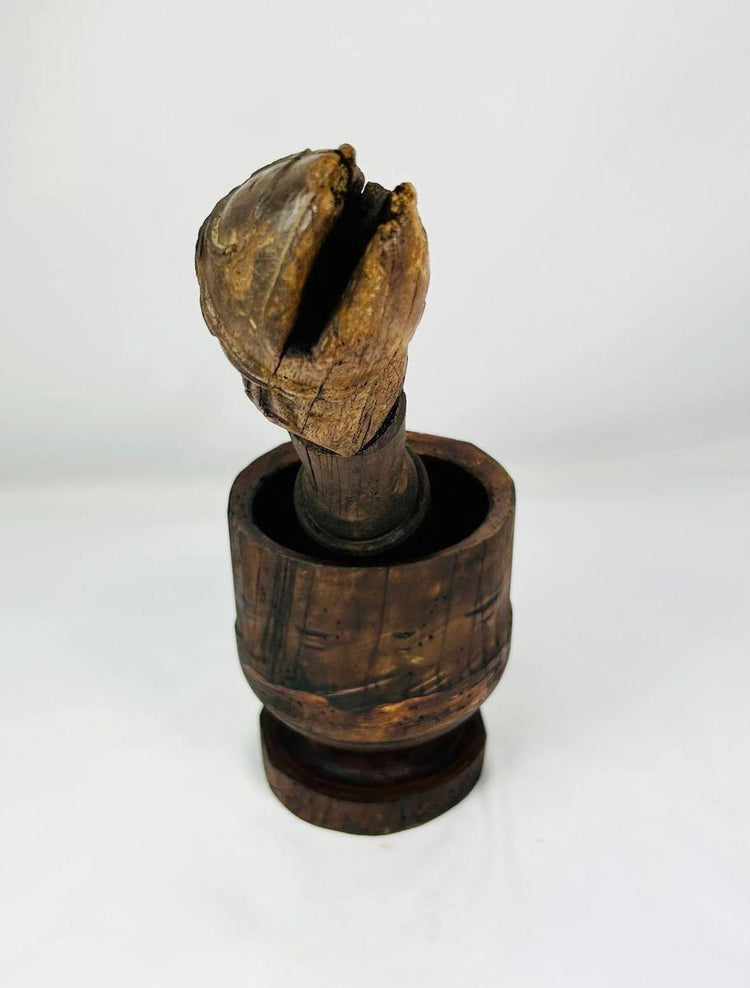
Antique Hand-Carved Wooden Mortar and Pestle with Decorative Face Motif | 18th–19th Century
Description
More
Less
Historical Context & Origin
Region: Europe
Material: Hand-Carved Wood
Period: 18th–19th Century
Description
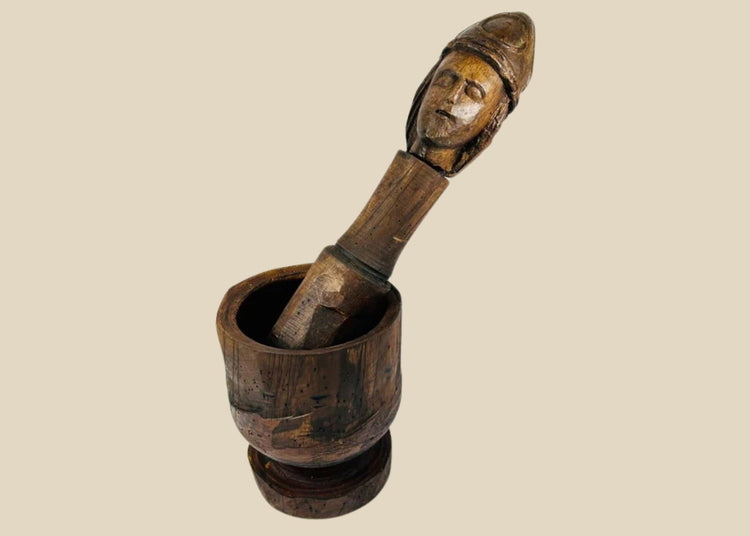
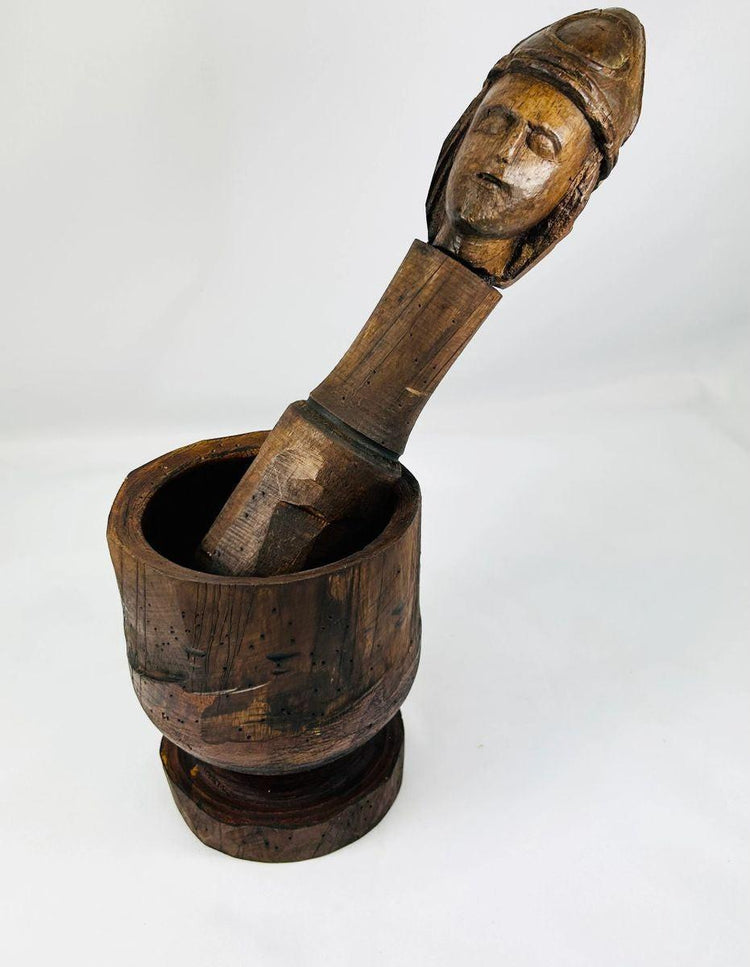
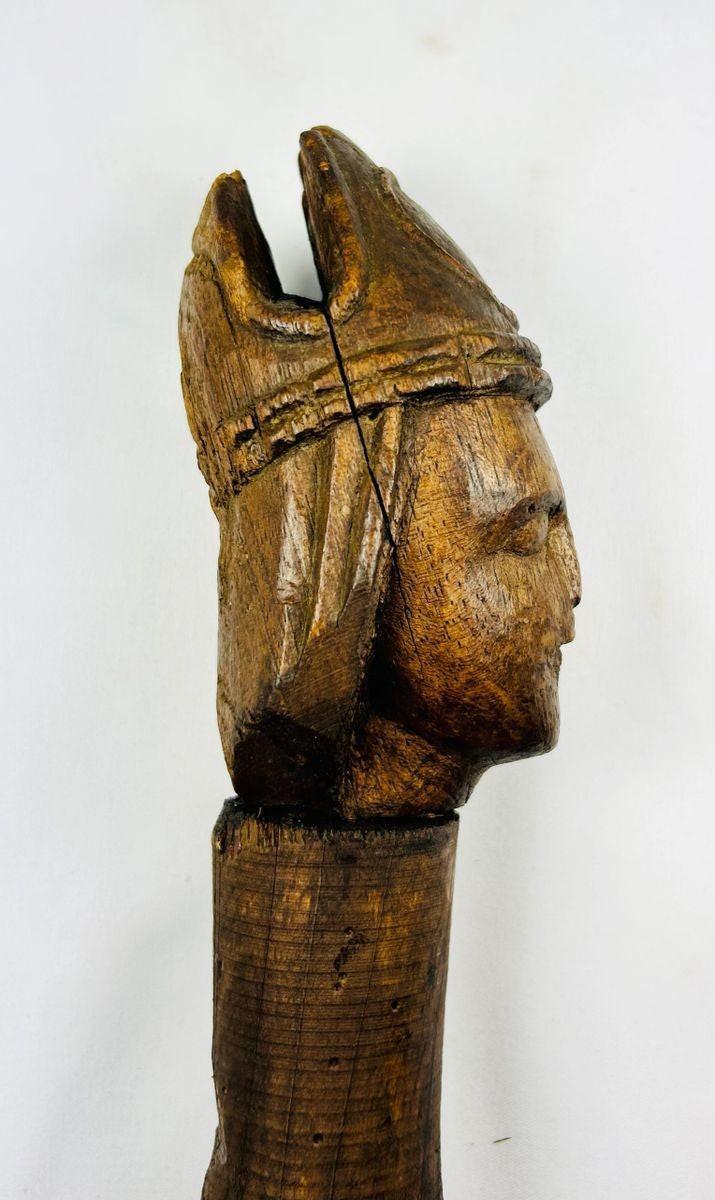
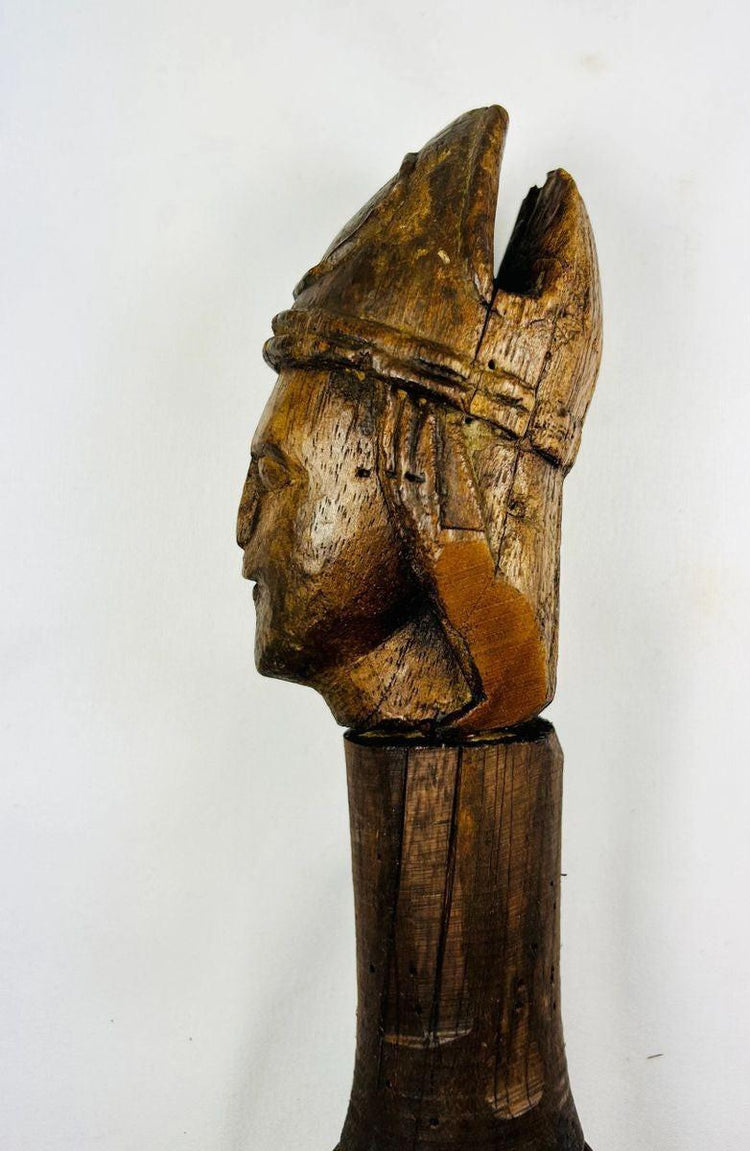
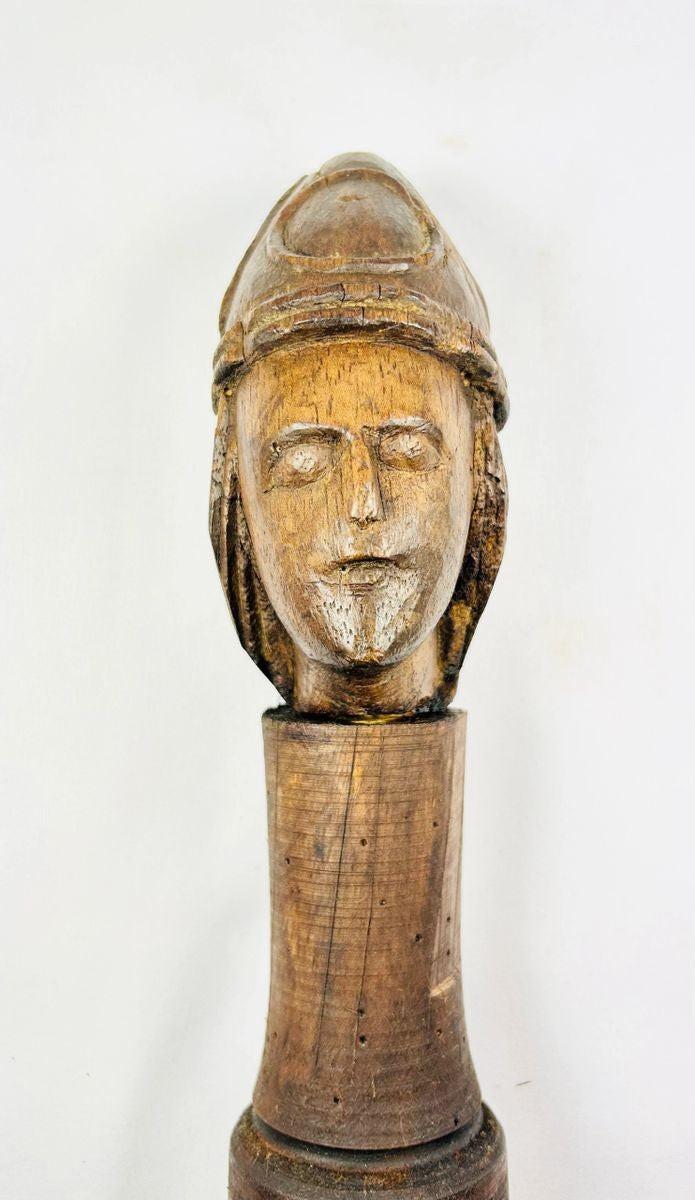
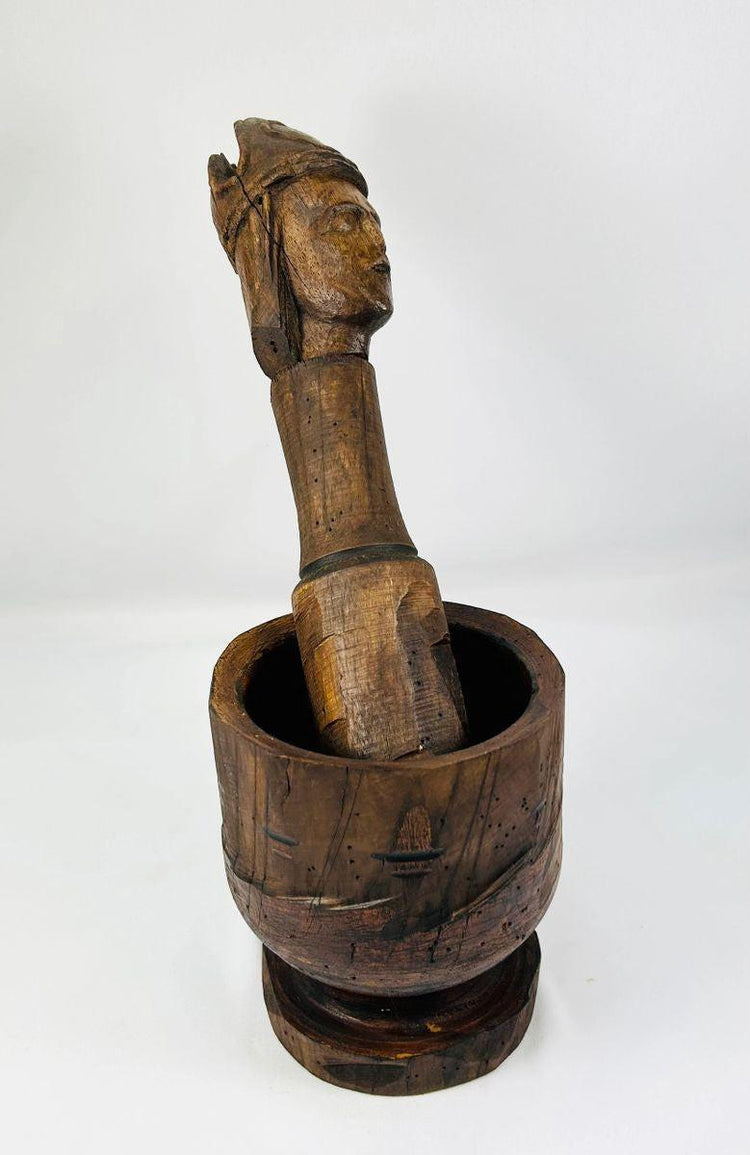
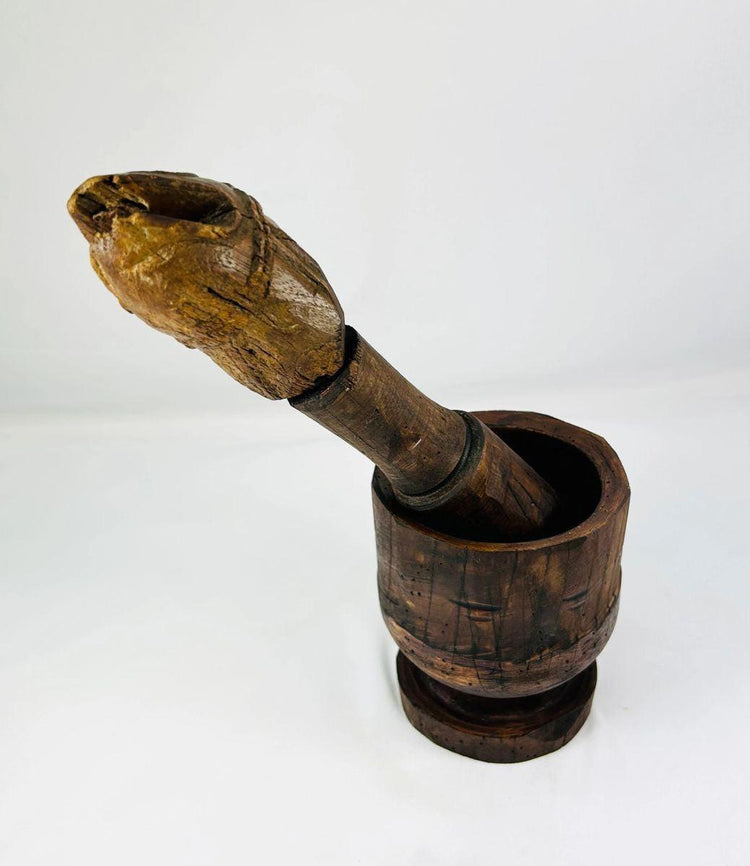
This unique antique mortar and pestle is an exceptional example of traditional European craftsmanship. The pestle is distinguished by a finely carved human face, possibly representing a cultural or historical figure, adding both artistry and symbolic resonance to a utilitarian object. The mortar itself is robust and cylindrical, designed for grinding herbs or apothecary use, while the surfaces of both pieces display a rich patina and natural wear developed over generations of use.
Features
• Pestle carved with a human face showcasing delicate detailing and folk artistry
• Robust wooden mortar with cylindrical form, practical yet refined in design
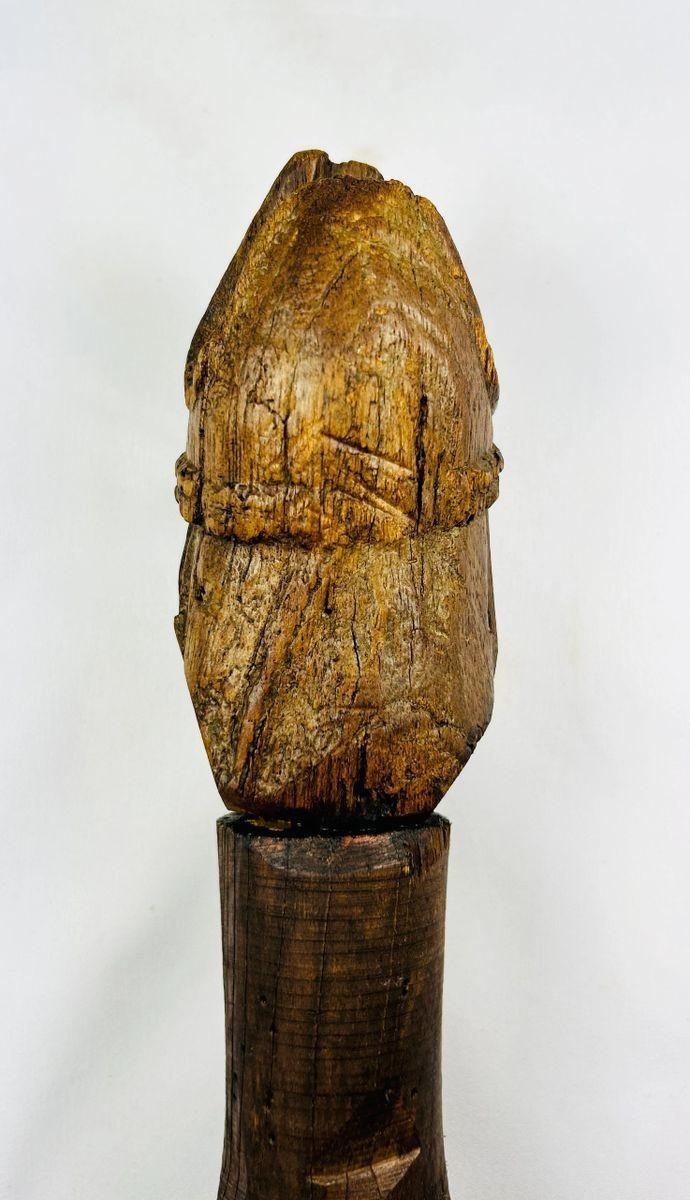
• Aged wood with natural patina and surface wear enhancing authenticity
• Likely used in apothecary, herbal medicine, or domestic settings
Cultural Significance
Mortar and pestle sets were essential tools in both households and early apothecaries across Europe. The carved face elevates this piece beyond simple function and may symbolize protection, identity, or traditional craftsmanship. Such details illustrate the blending of artistry with practical use, transforming everyday implements into culturally meaningful objects.
Condition
Excellent antique condition with visible signs of wear consistent with age and use. The wood retains a deep natural patina, and the carved details remain clear and expressive. Certain portions may be later additions introduced during historic restorations, consistent with the piece’s long period of use and preservation.
Dimensions (Approximate)
Height: 11.5 in
Width: 4.5 in
Depth: 4.5 in
Age (Approximate)
125–325 years old
Learn More
Learn About the History of Apothecary Tools in the Collection of the Wellcome Collection
Browse Our Collection of Functional Tools & Ancient Implements
Description
Historical Context & Origin
Region: Europe
Material: Hand-Carved Wood
Period: 18th–19th Century
Description
This unique antique mortar and pestle is an exceptional example of traditional European craftsmanship. The pestle is distinguished by a finely carved human face, possibly representing a cultural or historical figure, adding both artistry and symbolic resonance to a utilitarian object. The mortar itself is robust and cylindrical, designed for grinding herbs or apothecary use, while the surfaces of both pieces display a rich patina and natural wear developed over generations of use.
Features
• Pestle carved with a human face showcasing delicate detailing and folk artistry
• Robust wooden mortar with cylindrical form, practical yet refined in design
• Aged wood with natural patina and surface wear enhancing authenticity
• Likely used in apothecary, herbal medicine, or domestic settings
Cultural Significance
Mortar and pestle sets were essential tools in both households and early apothecaries across Europe. The carved face elevates this piece beyond simple function and may symbolize protection, identity, or traditional craftsmanship. Such details illustrate the blending of artistry with practical use, transforming everyday implements into culturally meaningful objects.
Condition
Excellent antique condition with visible signs of wear consistent with age and use. The wood retains a deep natural patina, and the carved details remain clear and expressive. Certain portions may be later additions introduced during historic restorations, consistent with the piece’s long period of use and preservation.
Dimensions (Approximate)
Height: 11.5 in
Width: 4.5 in
Depth: 4.5 in
Age (Approximate)
125–325 years old
Learn More
Learn About the History of Apothecary Tools in the Collection of the Wellcome Collection
Browse Our Collection of Functional Tools & Ancient Implements
You May Also Like
