



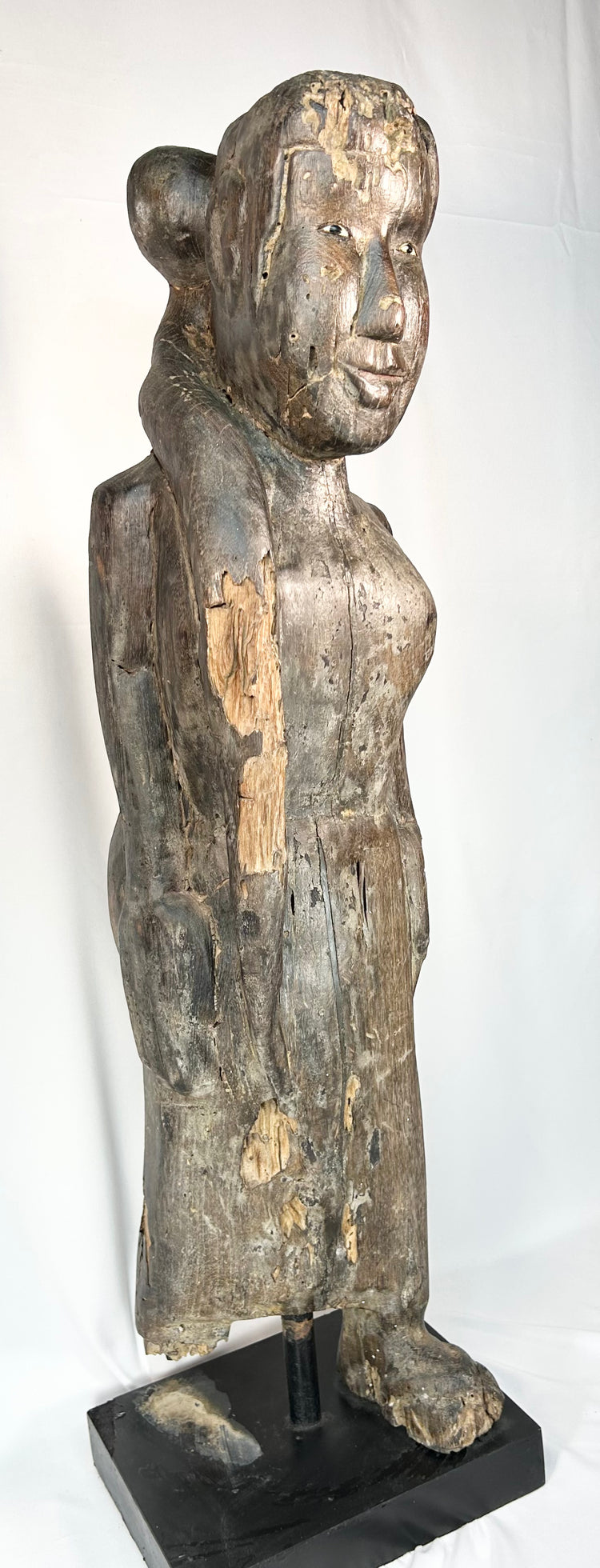
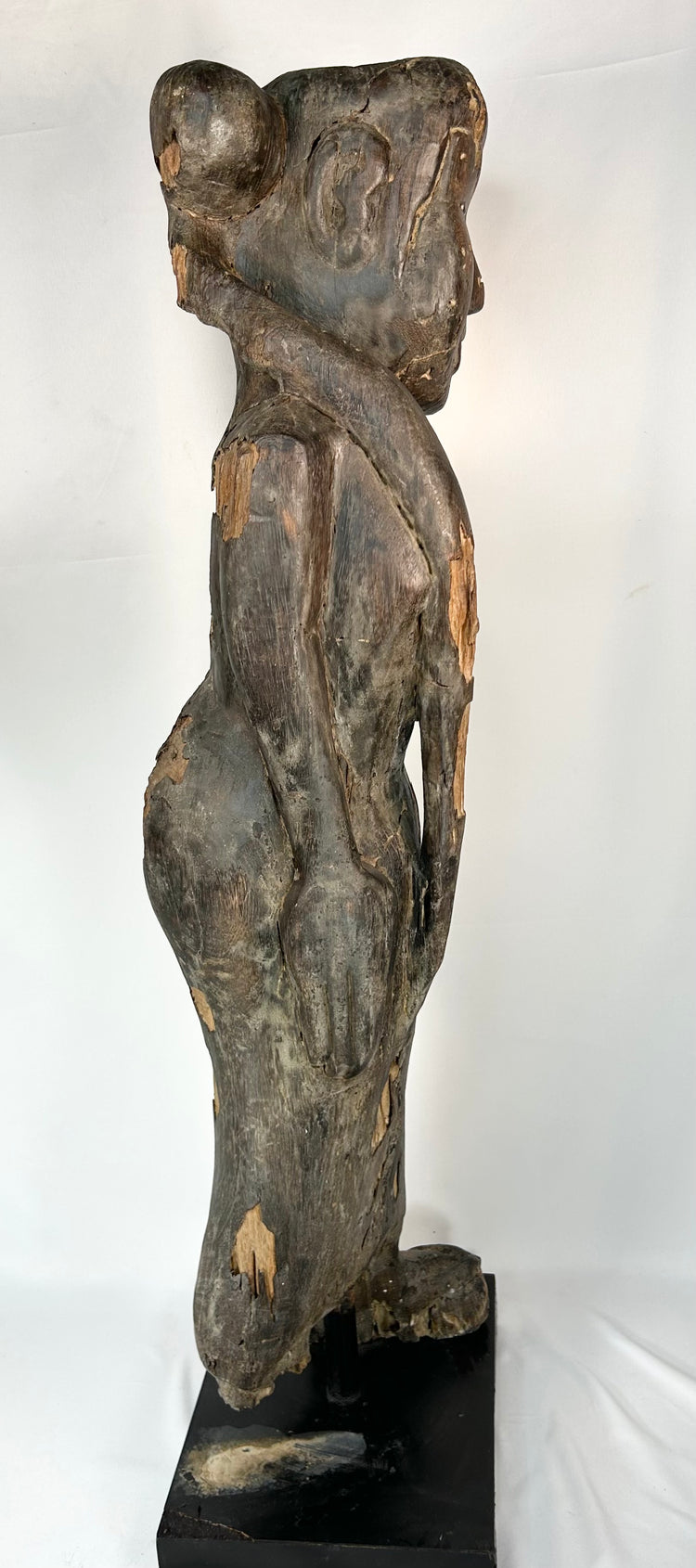
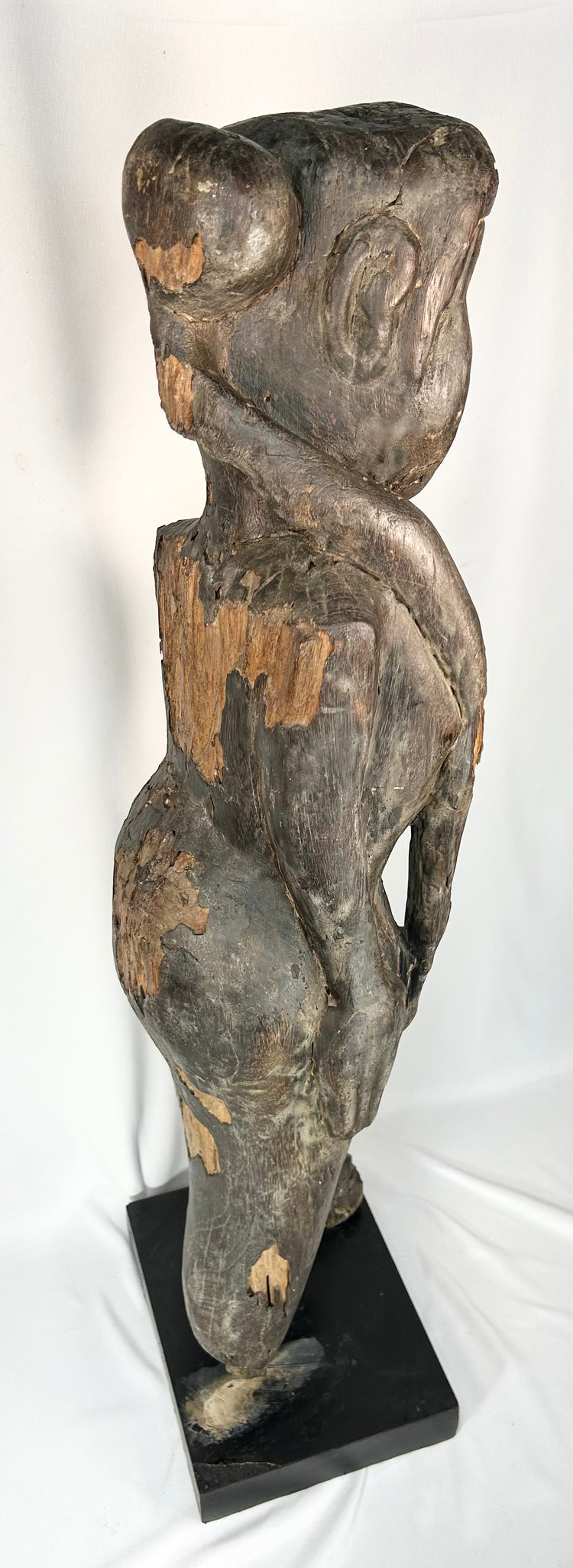
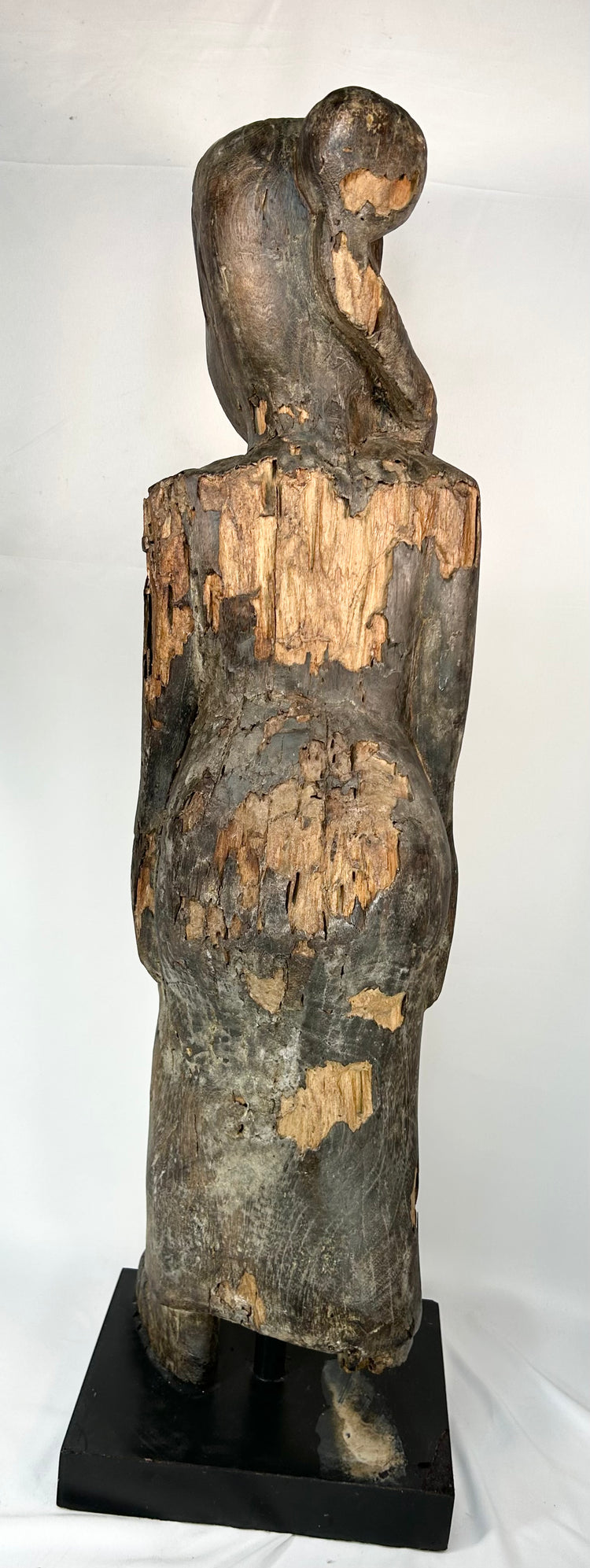
Antique Southeast Asian Ancestral Guardian Figure in Carved Wood | Circa Late 19th – Early 20th Century
Description
More
Less
Historical Context & Origin
Region: Borneo (Kalimantan), Indonesia
Material: Hand-carved wood with encrusted surface patina and inset eyes; mounted on a later wood base
Period: Late 19th – Early 20th Century CE
Description
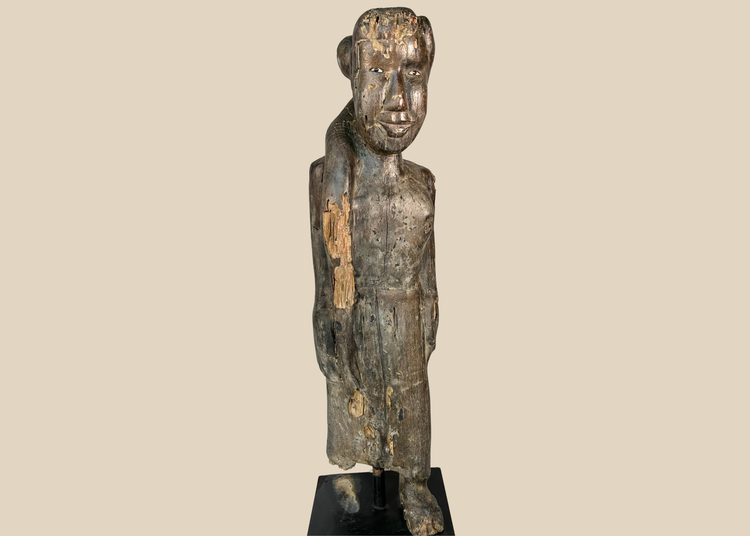
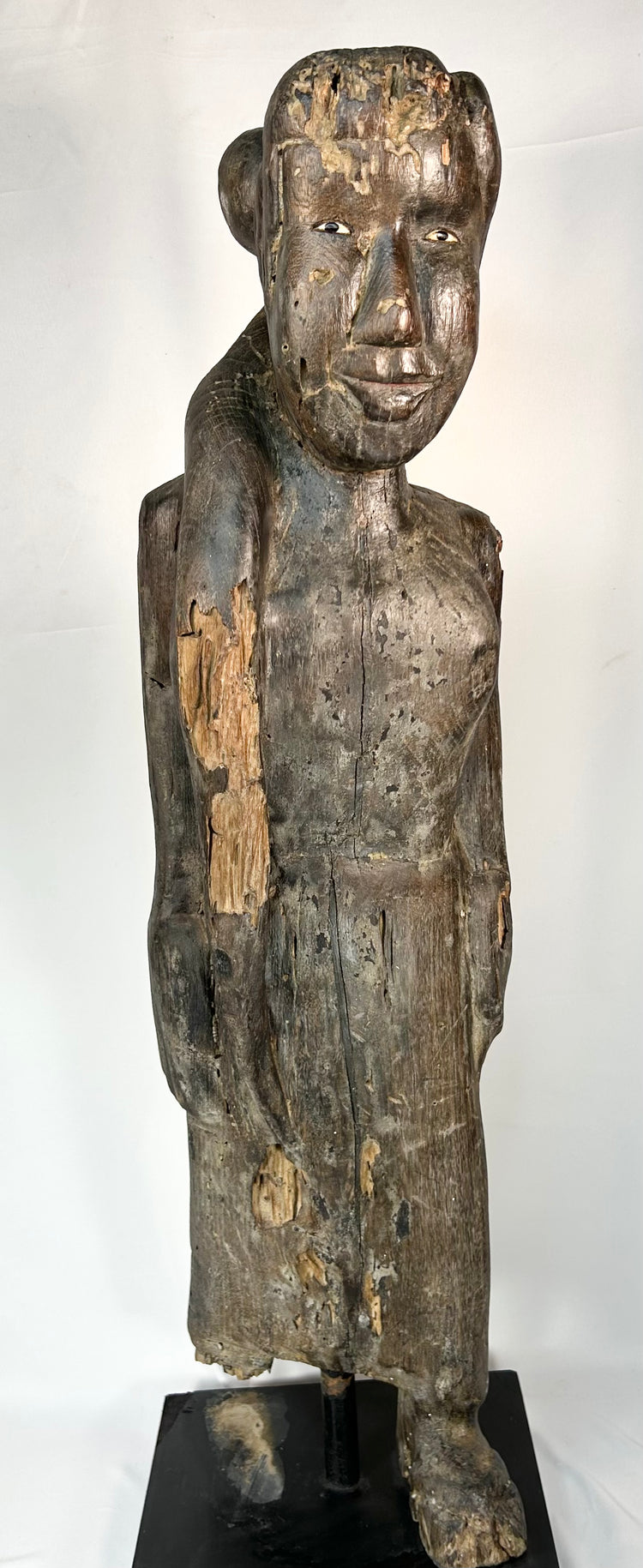
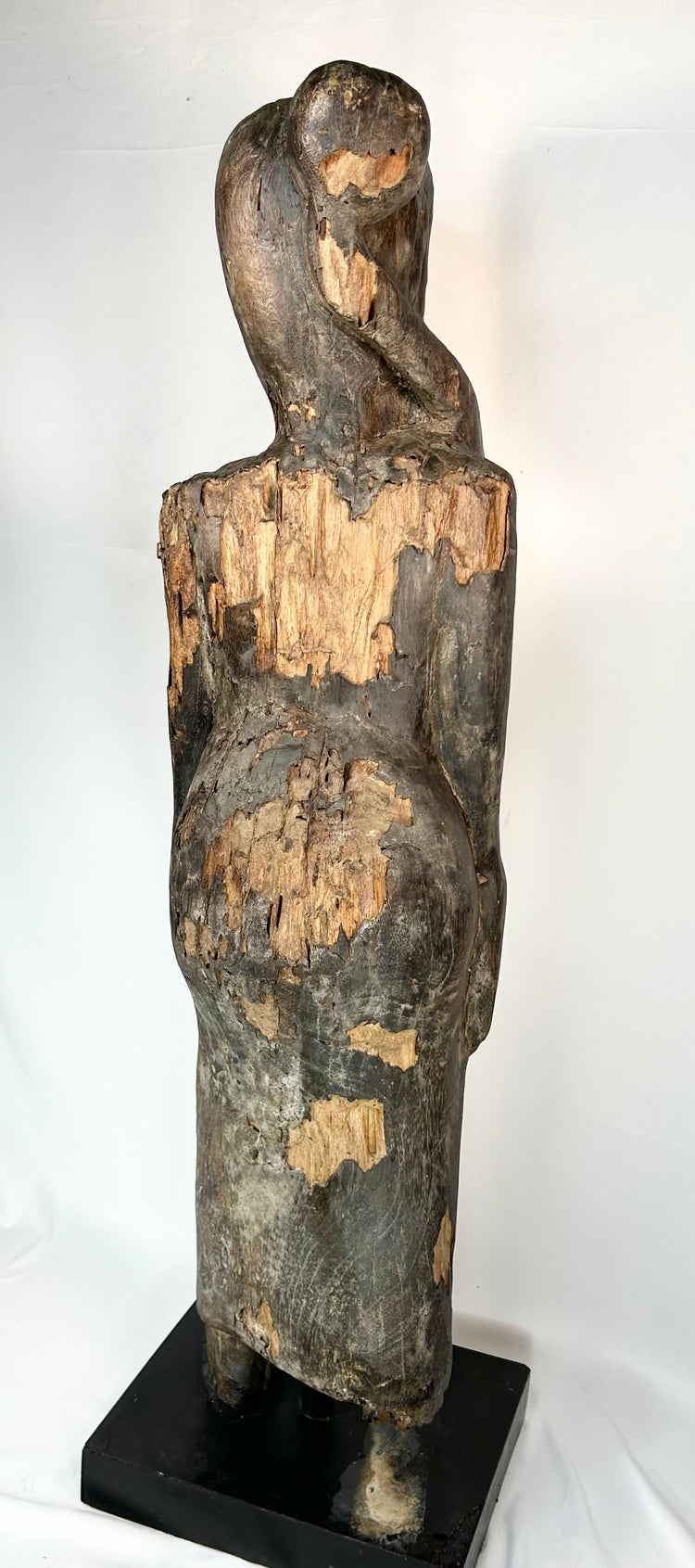
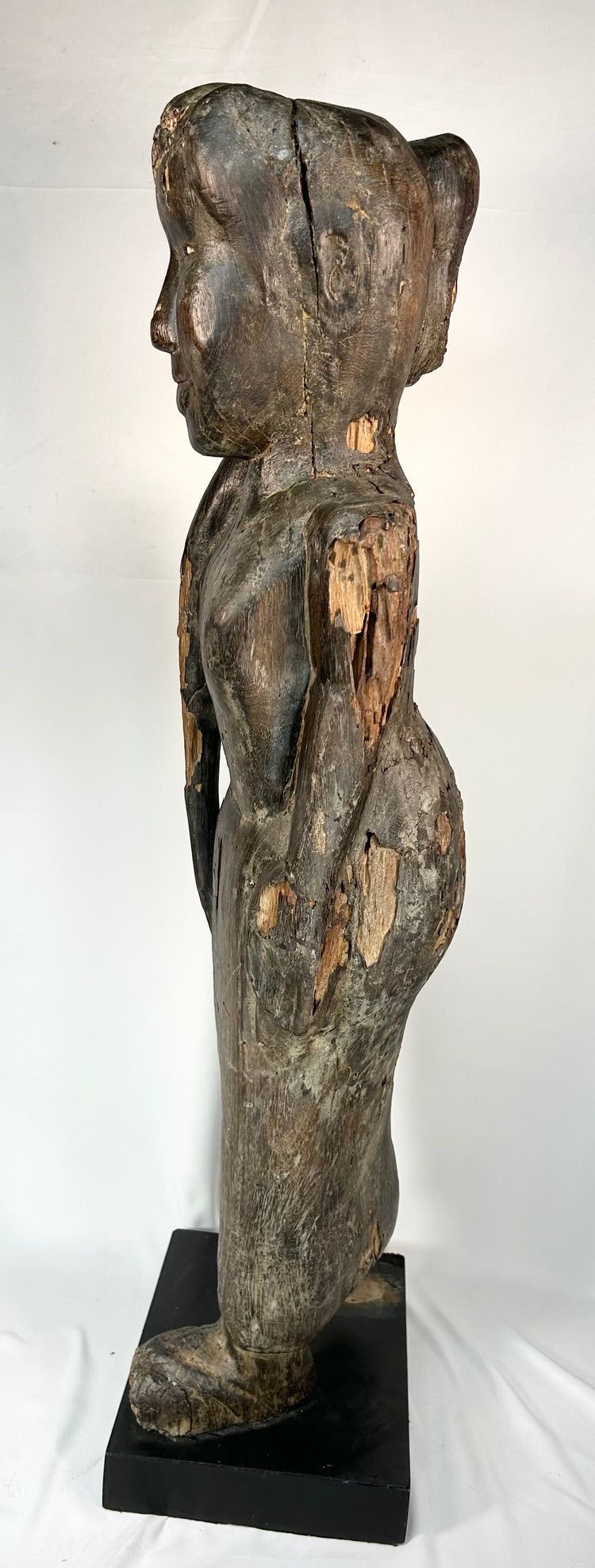
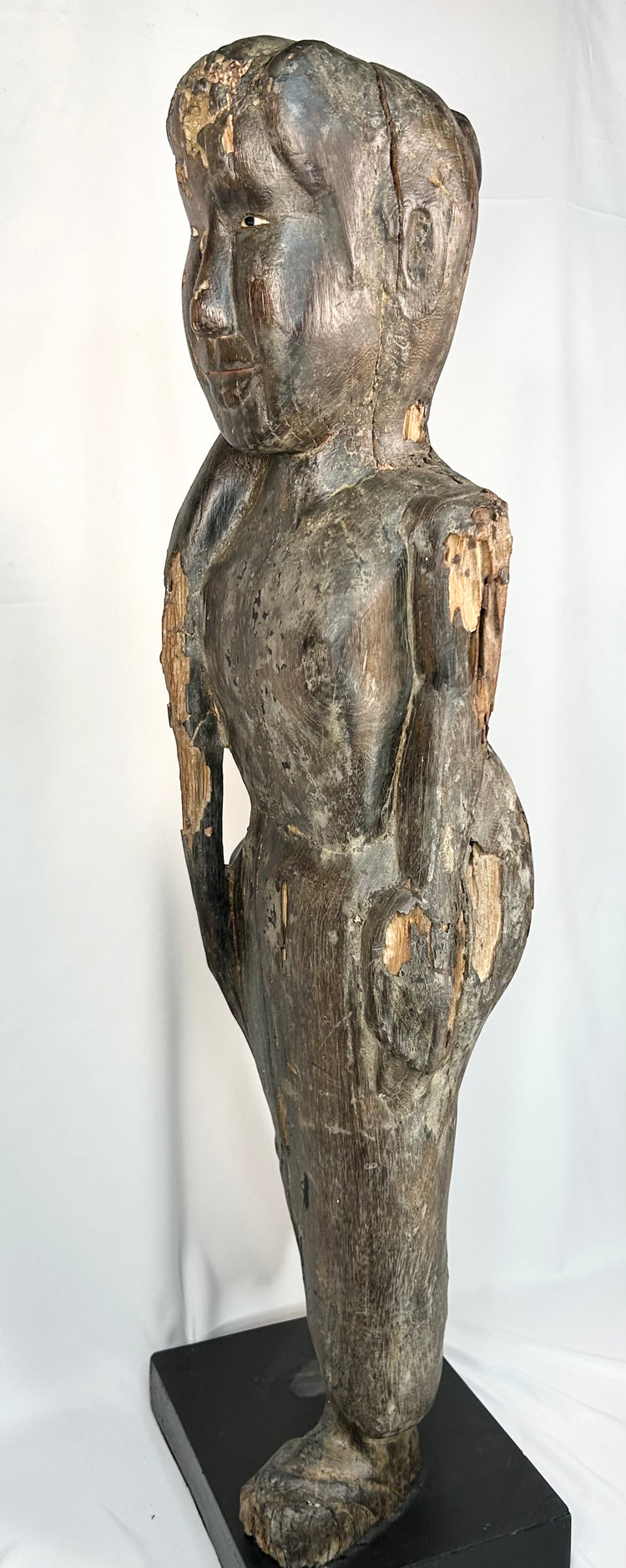
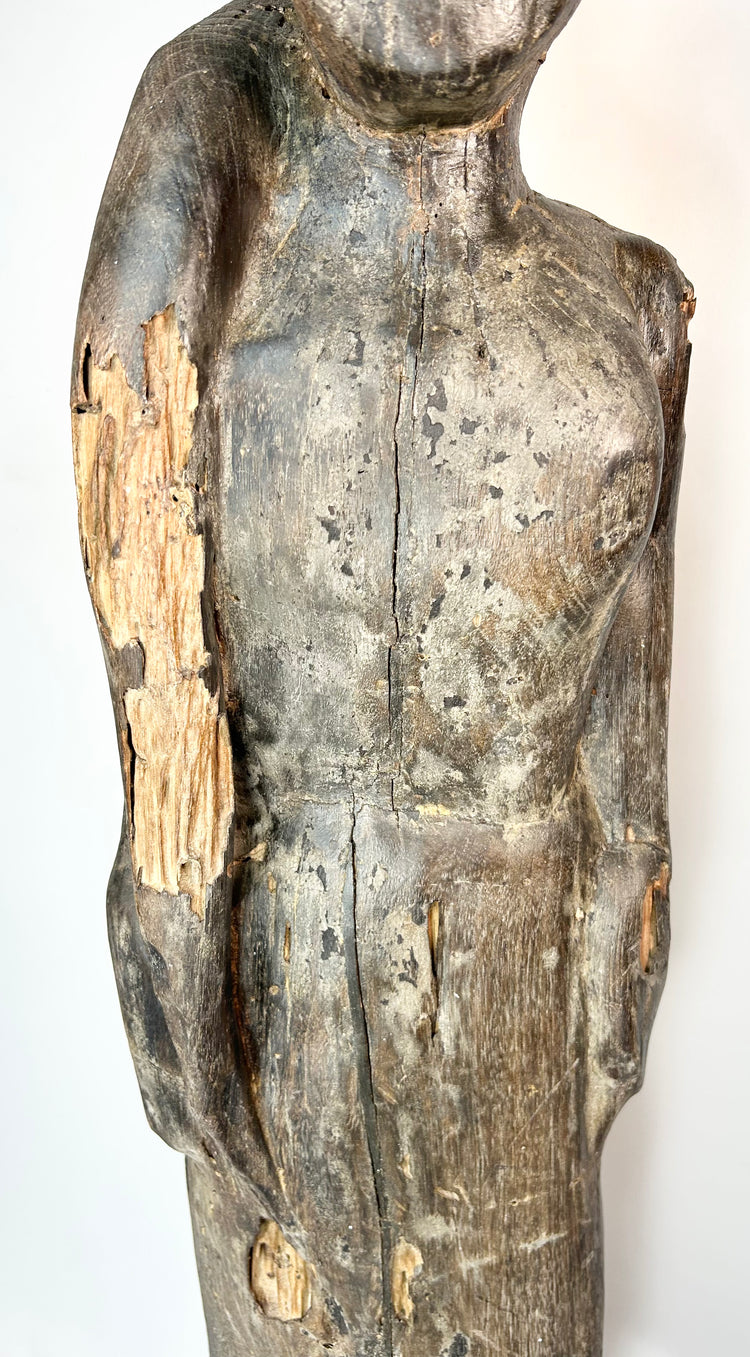
This large-scale carved wooden figure is an antique Dayak ancestral sculpture, commonly referred to as a Hampatong, originating from the indigenous Dayak peoples of Borneo. Figures of this type were traditionally placed near villages, burial grounds, or ritual sites and were believed to serve as spiritual guardians, embodying ancestral presence and protective forces.
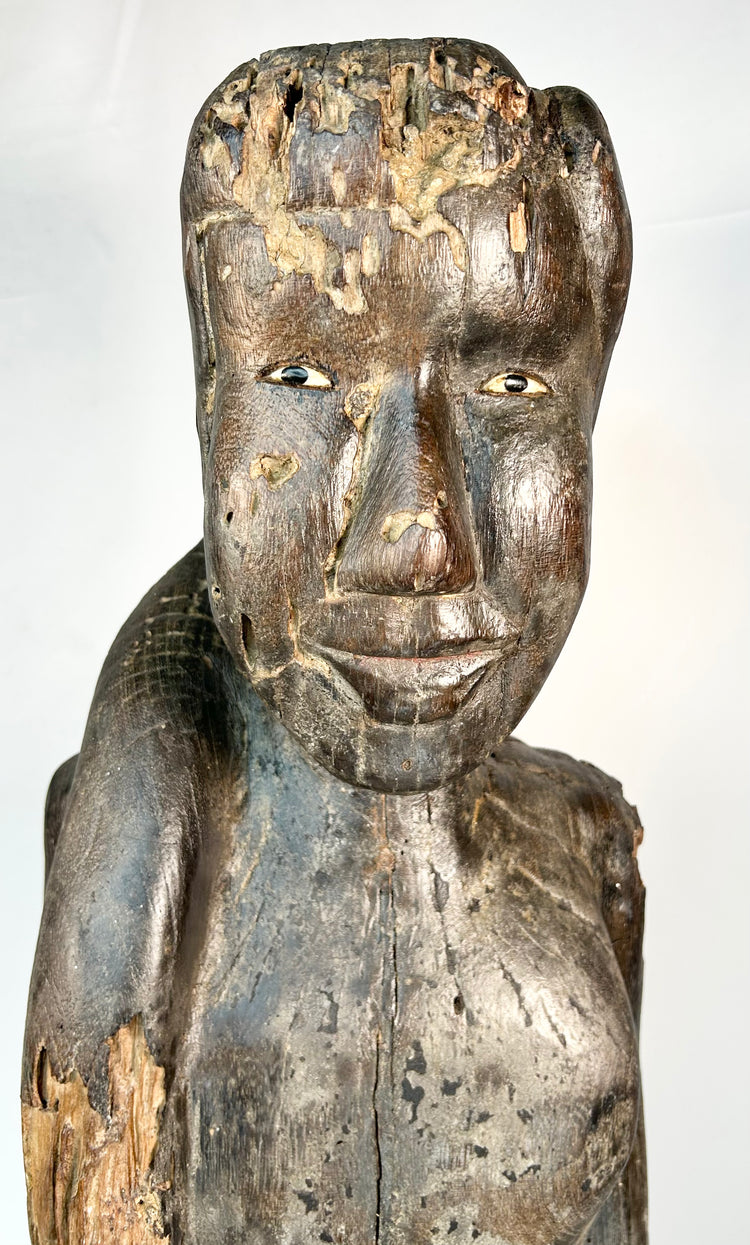
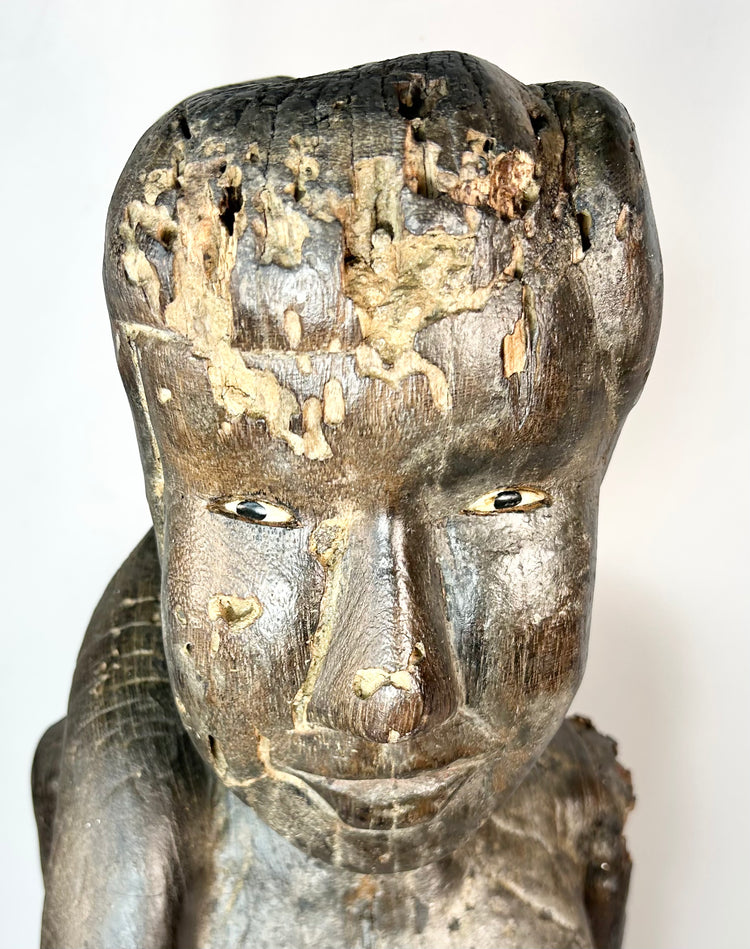
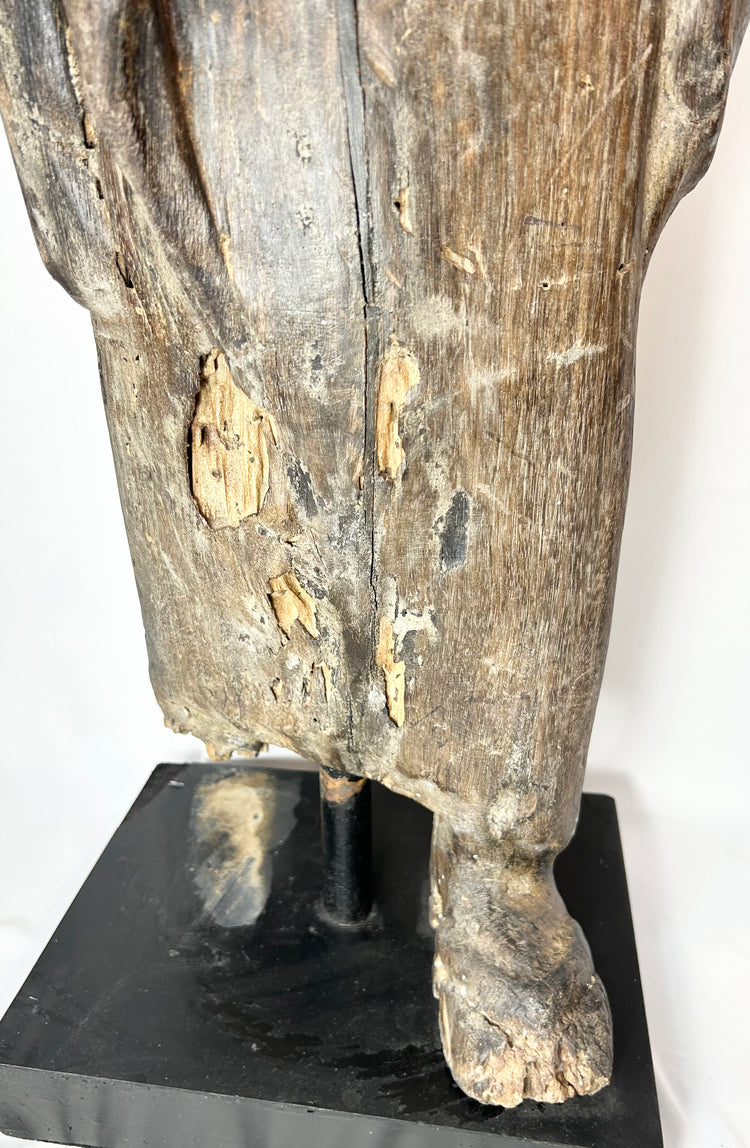
Carved in a standing frontal posture with elongated proportions, the figure presents a calm yet commanding facial expression. The face is defined by a pronounced nose, softly modeled mouth, and inset eyes that create a vivid, watchful presence. The surface exhibits a deeply encrusted, darkened patina with extensive age wear and exposed wood, consistent with long-term use and environmental exposure. The sculpture is presented on a later wood base for stability and display.
Features
- Antique Dayak Hampatong ancestral figure
- Hand-carved hardwood construction
- Inset eyes enhancing expression and presence
- Deeply encrusted, aged surface patina
- Elongated standing form with frontal orientation
- Mounted on a later wood display base
- Strong sculptural presence with substantial scale
Cultural Significance
Among the Dayak peoples of Borneo, Hampatong figures held profound spiritual importance. They were believed to embody or channel ancestral spirits and were used to protect communities, mark sacred spaces, and maintain balance between the physical and spiritual worlds. Such figures were functional ritual objects, deeply embedded in Dayak cosmology and traditional belief systems.
Condition
Losses, age cracks, surface wear, insect activity, and areas of wood loss consistent with significant age and traditional use. One foot is missing (loss), and there is visible edge wear to the lower extremities. Overall condition reflects an aged ritual object rather than a later decorative carving.
Dimensions (Approximate)
Length: 12.5 in
Width:9.5 in
Height: 41.5 in
Age (Approximate)
100+ years old
Learn More
Discover the Cultural Heritage of The Dayak Tribes of Borneo
Explore Our Collection of Ancient Statues, Figures & Carvings
Description
Historical Context & Origin
Region: Borneo (Kalimantan), Indonesia
Material: Hand-carved wood with encrusted surface patina and inset eyes; mounted on a later wood base
Period: Late 19th – Early 20th Century CE
Description
This large-scale carved wooden figure is an antique Dayak ancestral sculpture, commonly referred to as a Hampatong, originating from the indigenous Dayak peoples of Borneo. Figures of this type were traditionally placed near villages, burial grounds, or ritual sites and were believed to serve as spiritual guardians, embodying ancestral presence and protective forces.
Carved in a standing frontal posture with elongated proportions, the figure presents a calm yet commanding facial expression. The face is defined by a pronounced nose, softly modeled mouth, and inset eyes that create a vivid, watchful presence. The surface exhibits a deeply encrusted, darkened patina with extensive age wear and exposed wood, consistent with long-term use and environmental exposure. The sculpture is presented on a later wood base for stability and display.
Features
- Antique Dayak Hampatong ancestral figure
- Hand-carved hardwood construction
- Inset eyes enhancing expression and presence
- Deeply encrusted, aged surface patina
- Elongated standing form with frontal orientation
- Mounted on a later wood display base
- Strong sculptural presence with substantial scale
Cultural Significance
Among the Dayak peoples of Borneo, Hampatong figures held profound spiritual importance. They were believed to embody or channel ancestral spirits and were used to protect communities, mark sacred spaces, and maintain balance between the physical and spiritual worlds. Such figures were functional ritual objects, deeply embedded in Dayak cosmology and traditional belief systems.
Condition
Losses, age cracks, surface wear, insect activity, and areas of wood loss consistent with significant age and traditional use. One foot is missing (loss), and there is visible edge wear to the lower extremities. Overall condition reflects an aged ritual object rather than a later decorative carving.
Dimensions (Approximate)
Length: 12.5 in
Width:9.5 in
Height: 41.5 in
Age (Approximate)
100+ years old
Learn More
Discover the Cultural Heritage of The Dayak Tribes of Borneo
Explore Our Collection of Ancient Statues, Figures & Carvings
You May Also Like
