



Authentic Ancient Mesoamerican Burnished Clay Bowl | Painted Ceremonial Vessel | Circa 300 BCE – 700 CE
Description
More
Less
Historical Context & Origin
Region: Pre-Columbian Mesoamerica, likely West Mexico (Nayarit / Jalisco tradition)
Material: Hand-formed terracotta clay with original painted slip decoration
Period: Circa 300 BCE – 700 CE
Description
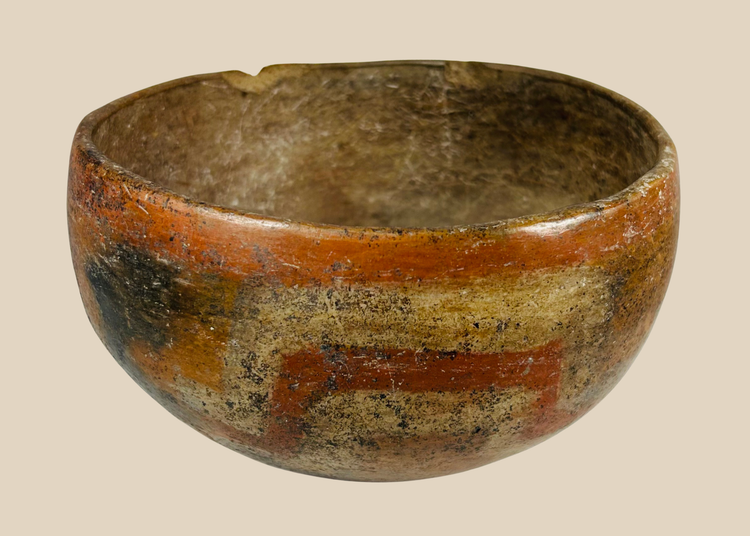
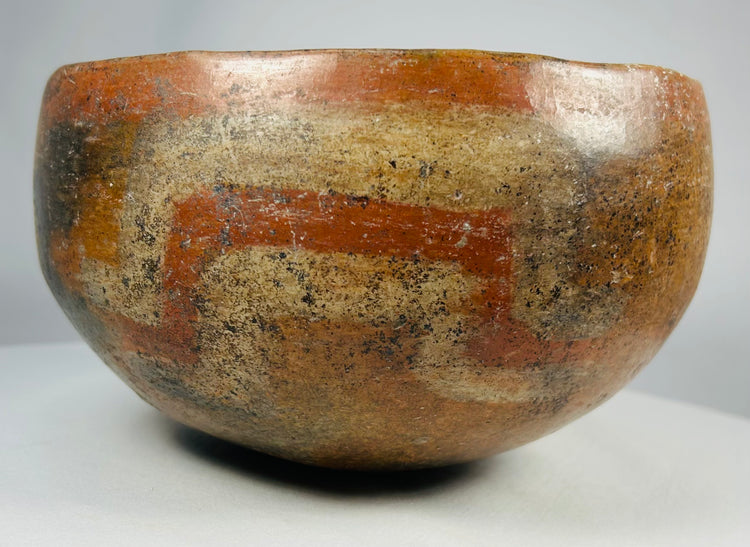
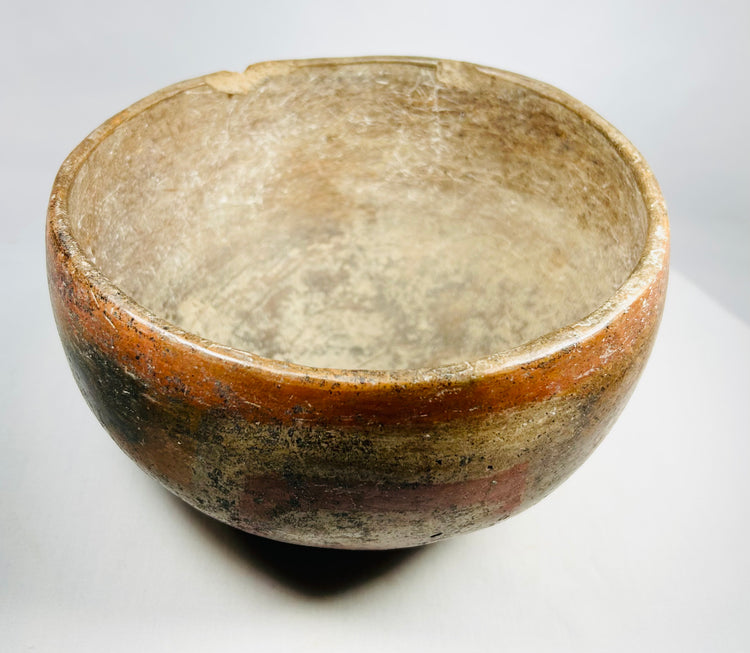
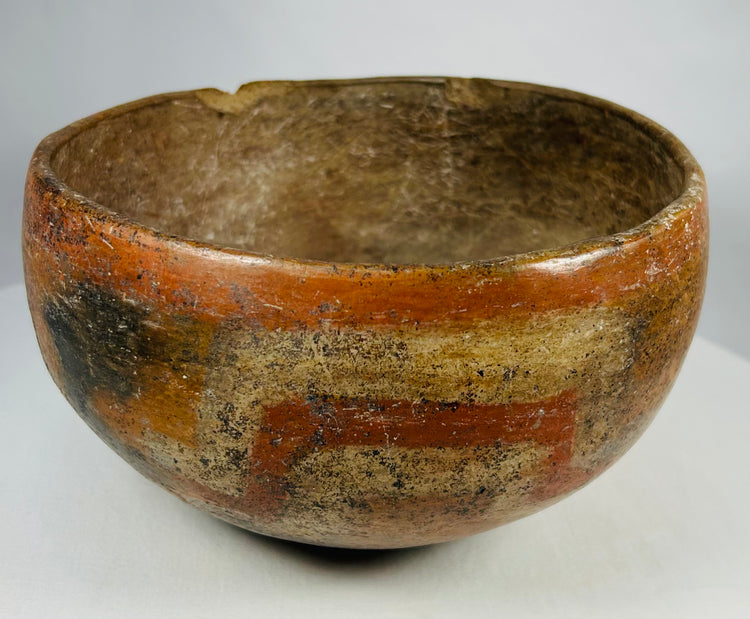
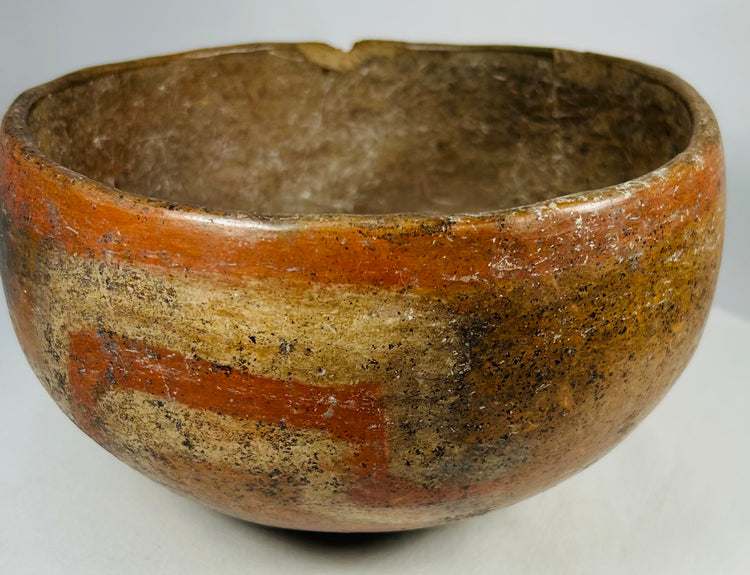
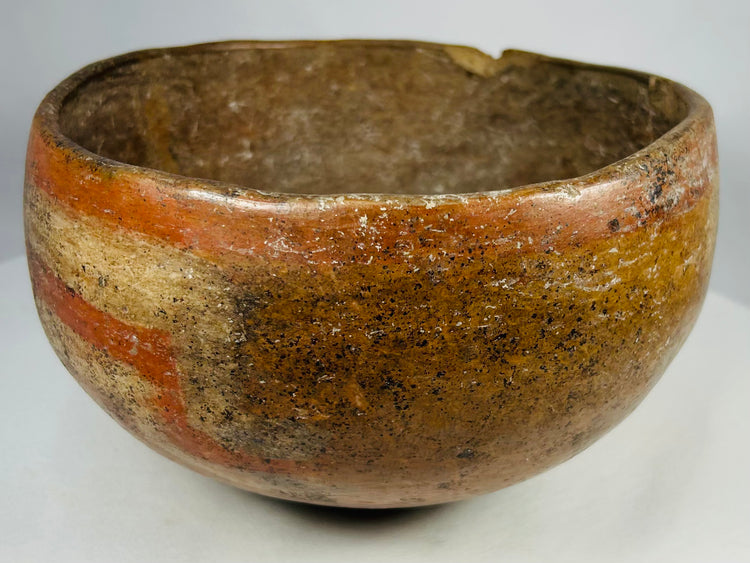
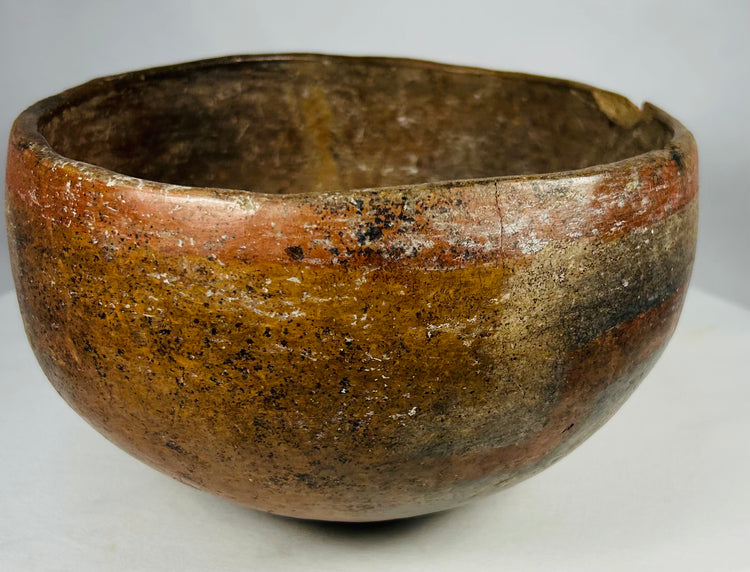
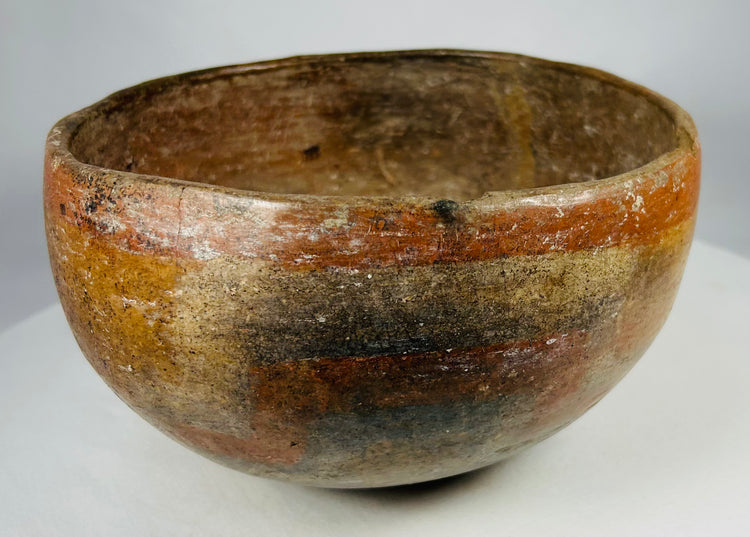
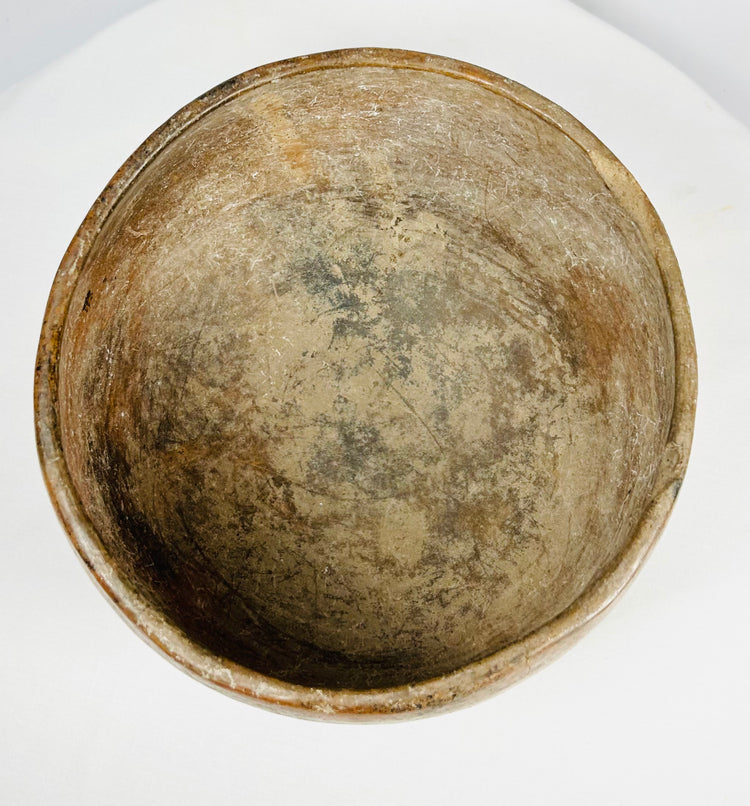
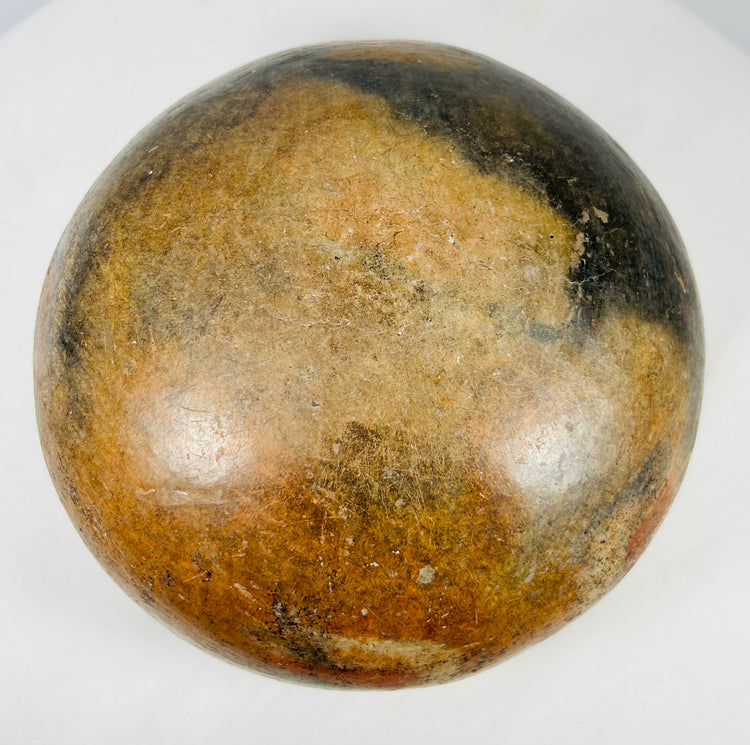
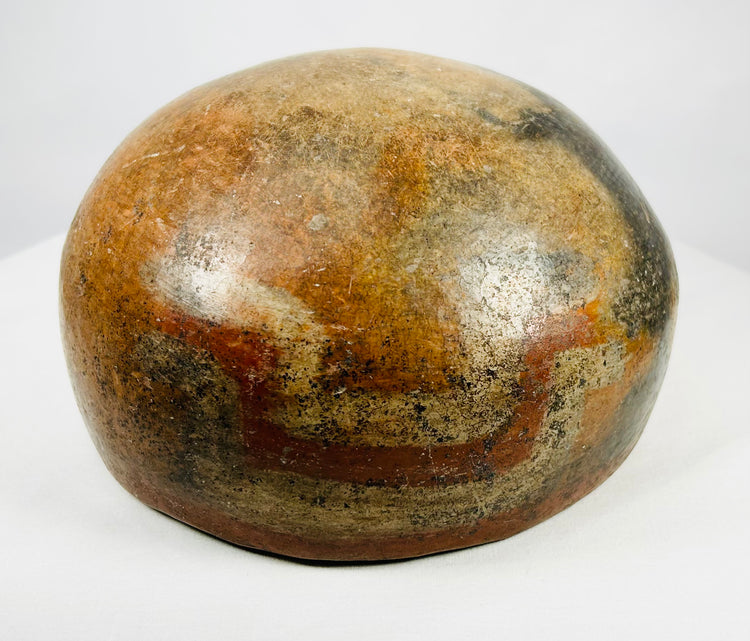
A striking ancient Pre-Columbian hemispherical bowl displaying the classic burnished terracotta surface and remnants of painted geometric banding in rich earth-tone pigments. The outer wall presents layered hues of deep red, ochre, and natural clay, softened by centuries of aging and surface wear, while the interior remains plain and functional, showing evidence of ritual or domestic use. The form is beautifully balanced with a gently rounded profile, slightly everted rim, and tactile surface.
Features
- Hand-coiled and carefully smoothed construction
- Original pigments with geometric painted decoration visible
- Beautifully aged surface with desirable archaeological patina
- Deep bowl form suitable for ceremonial or utilitarian function in antiquity
Cultural Significance
Bowls such as this were essential vessels within Pre-Columbian life, used in ceremonial ritual contexts, offerings, feasting, and domestic daily life. Painted pottery held symbolic and cultural meaning, often reflecting community identity, spiritual beliefs, and social status.
Condition
Excellent ancient condition for age with expected surface wear, mineral deposits, and patina consistent with burial and age. A stable rim chip and fine surface age cracks present, but the structure remains sound and displays beautifully. No modern repainting.
Dimensions (Approximate)
Diameter: 7.25 in
Height: 4.5 in
Age (Approximate)
1,300–2,000 years old
Learn More
Learn about West Mexican ceramic traditions through Crow Canyon Archaeological Center
Explore our curated Ancient Pre-Columbian Artifacts & Relics Collection
Description
Historical Context & Origin
Region: Pre-Columbian Mesoamerica, likely West Mexico (Nayarit / Jalisco tradition)
Material: Hand-formed terracotta clay with original painted slip decoration
Period: Circa 300 BCE – 700 CE
Description
A striking ancient Pre-Columbian hemispherical bowl displaying the classic burnished terracotta surface and remnants of painted geometric banding in rich earth-tone pigments. The outer wall presents layered hues of deep red, ochre, and natural clay, softened by centuries of aging and surface wear, while the interior remains plain and functional, showing evidence of ritual or domestic use. The form is beautifully balanced with a gently rounded profile, slightly everted rim, and tactile surface.
Features
- Hand-coiled and carefully smoothed construction
- Original pigments with geometric painted decoration visible
- Beautifully aged surface with desirable archaeological patina
- Deep bowl form suitable for ceremonial or utilitarian function in antiquity
Cultural Significance
Bowls such as this were essential vessels within Pre-Columbian life, used in ceremonial ritual contexts, offerings, feasting, and domestic daily life. Painted pottery held symbolic and cultural meaning, often reflecting community identity, spiritual beliefs, and social status.
Condition
Excellent ancient condition for age with expected surface wear, mineral deposits, and patina consistent with burial and age. A stable rim chip and fine surface age cracks present, but the structure remains sound and displays beautifully. No modern repainting.
Dimensions (Approximate)
Diameter: 7.25 in
Height: 4.5 in
Age (Approximate)
1,300–2,000 years old
Learn More
Learn about West Mexican ceramic traditions through Crow Canyon Archaeological Center
Explore our curated Ancient Pre-Columbian Artifacts & Relics Collection
You May Also Like
