



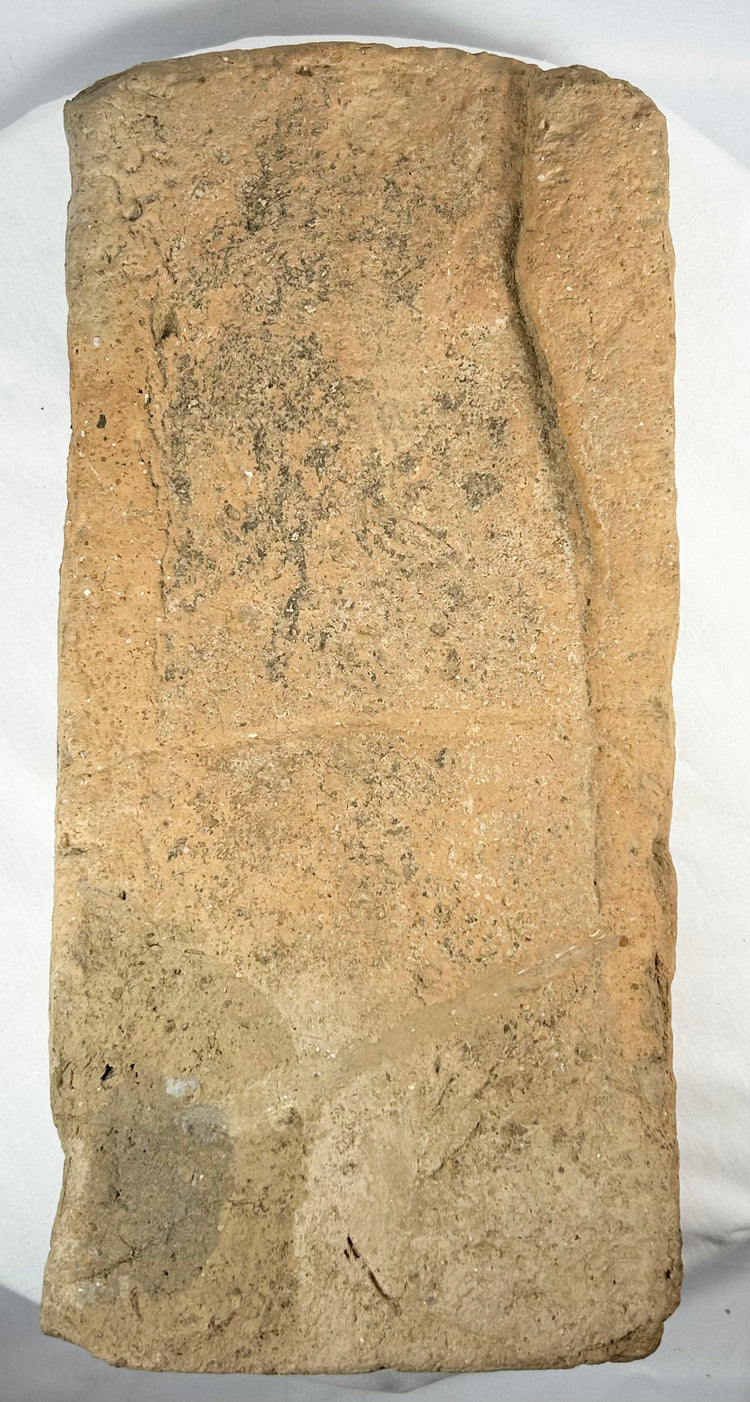
Chinese Northern Wei Dynasty Buddhist Terracotta Brick with Seated Buddha Relief | Circa 386–534 CE
Description
More
Less
Historical Context & Origin
Region: China, East Asia
Material: Low-fired terracotta / earthenware brick with carved relief and traces of original pigment
Period: Northern Wei Dynasty, circa 386–534 CE
Description
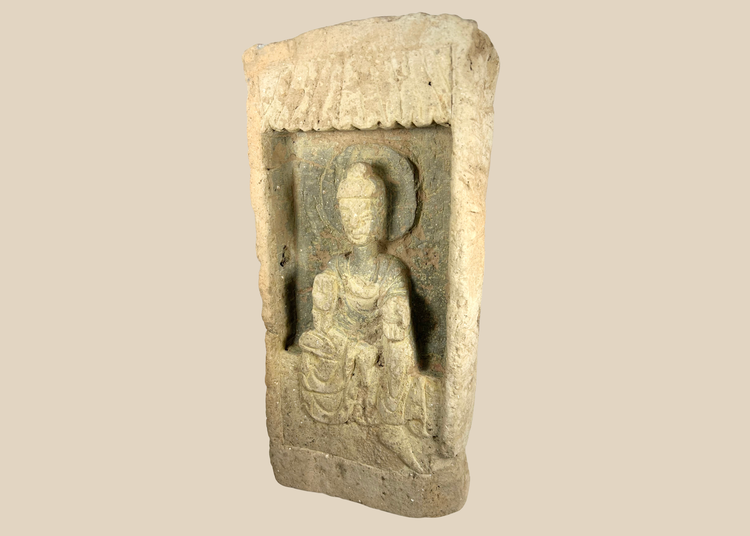
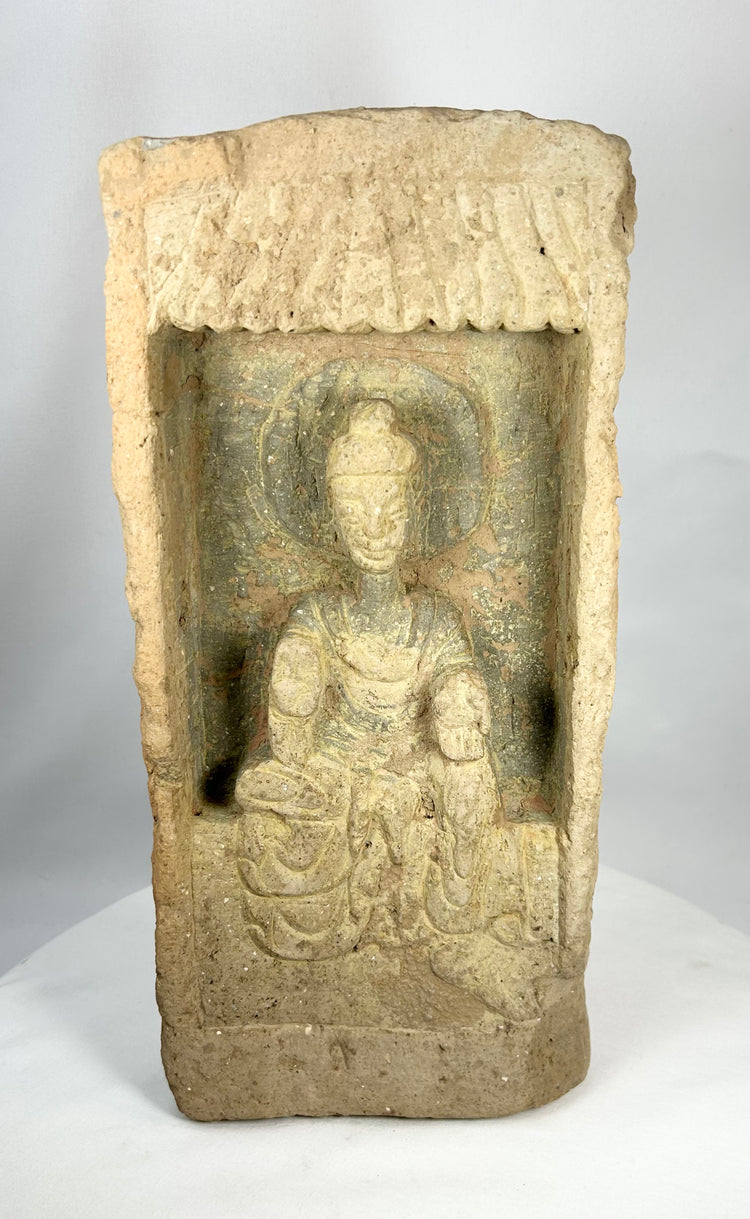
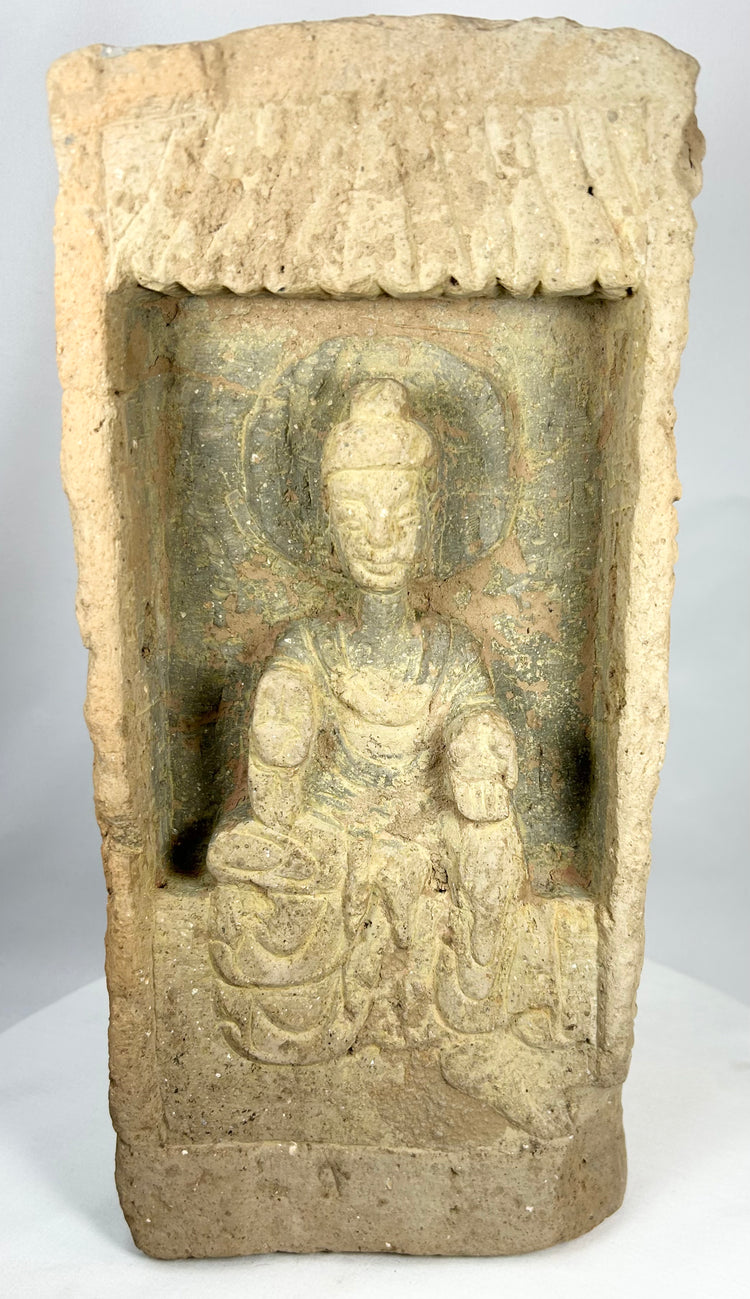
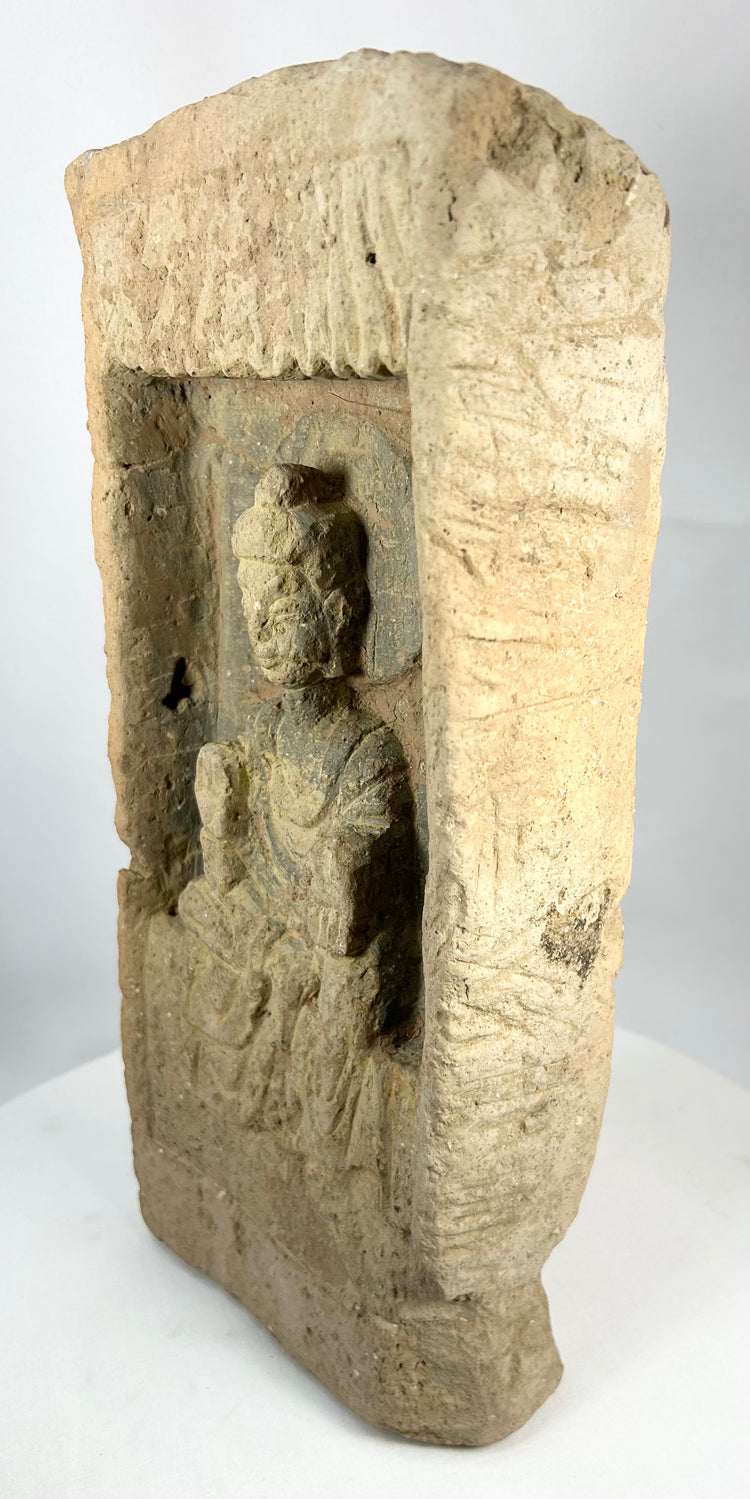
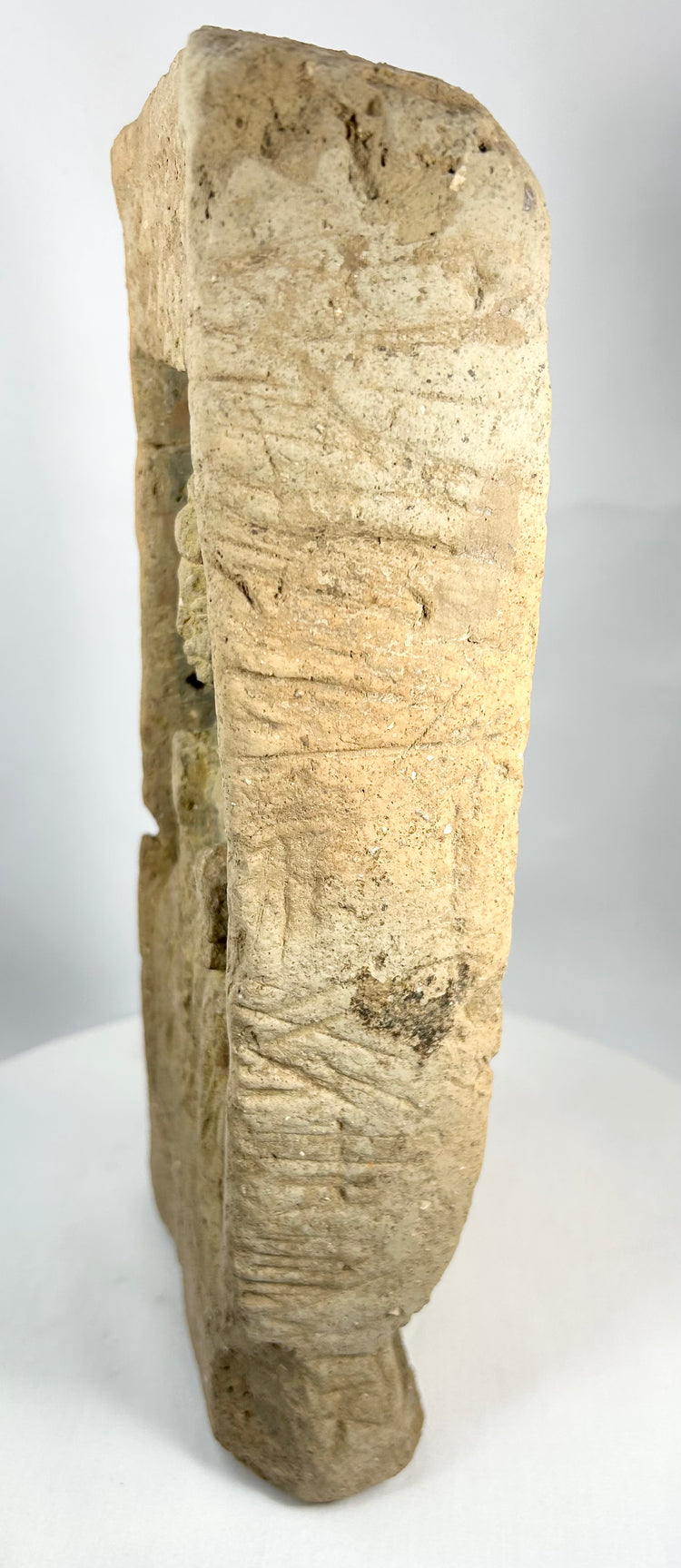
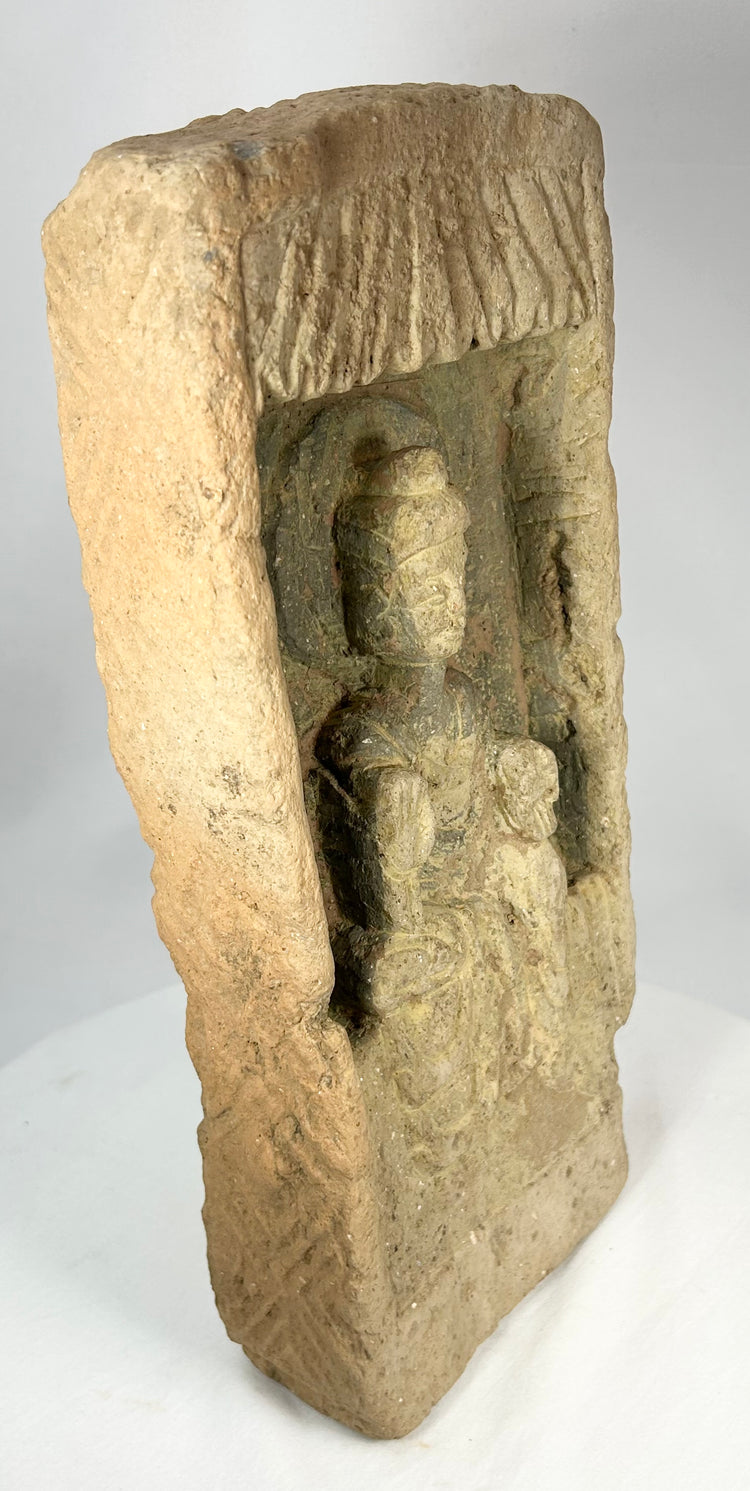
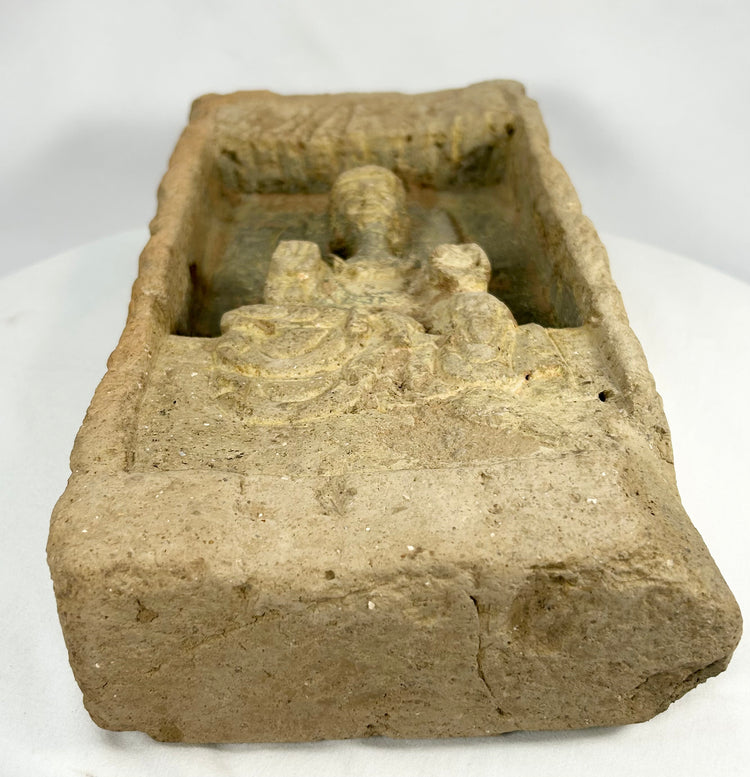
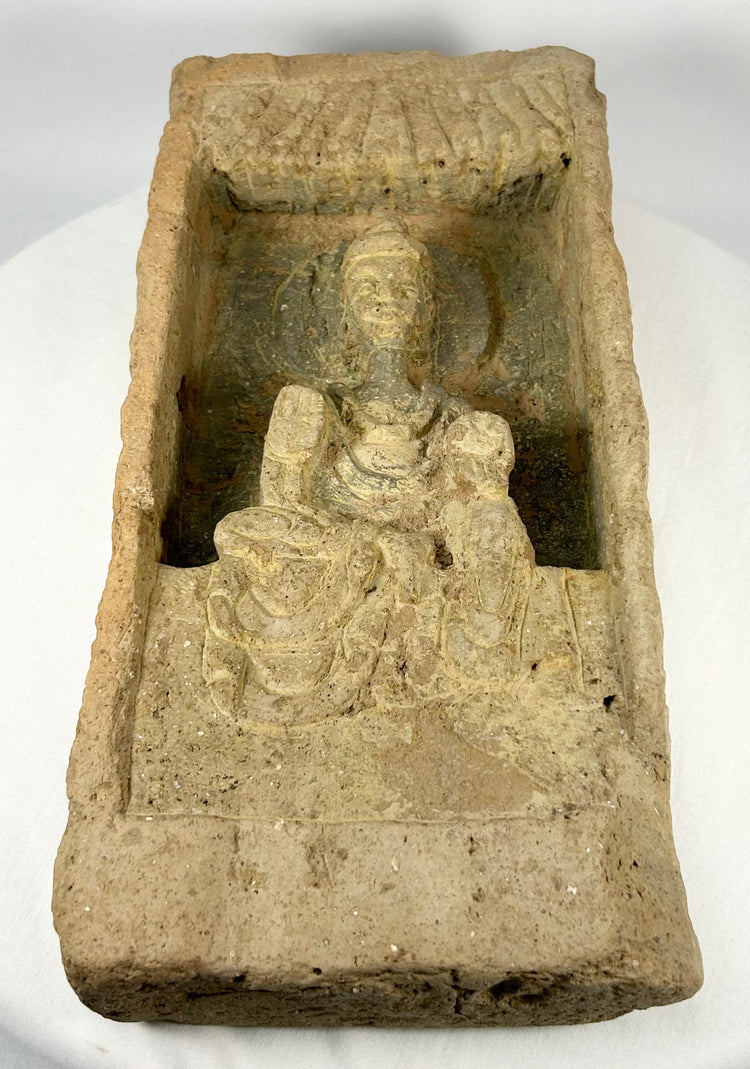
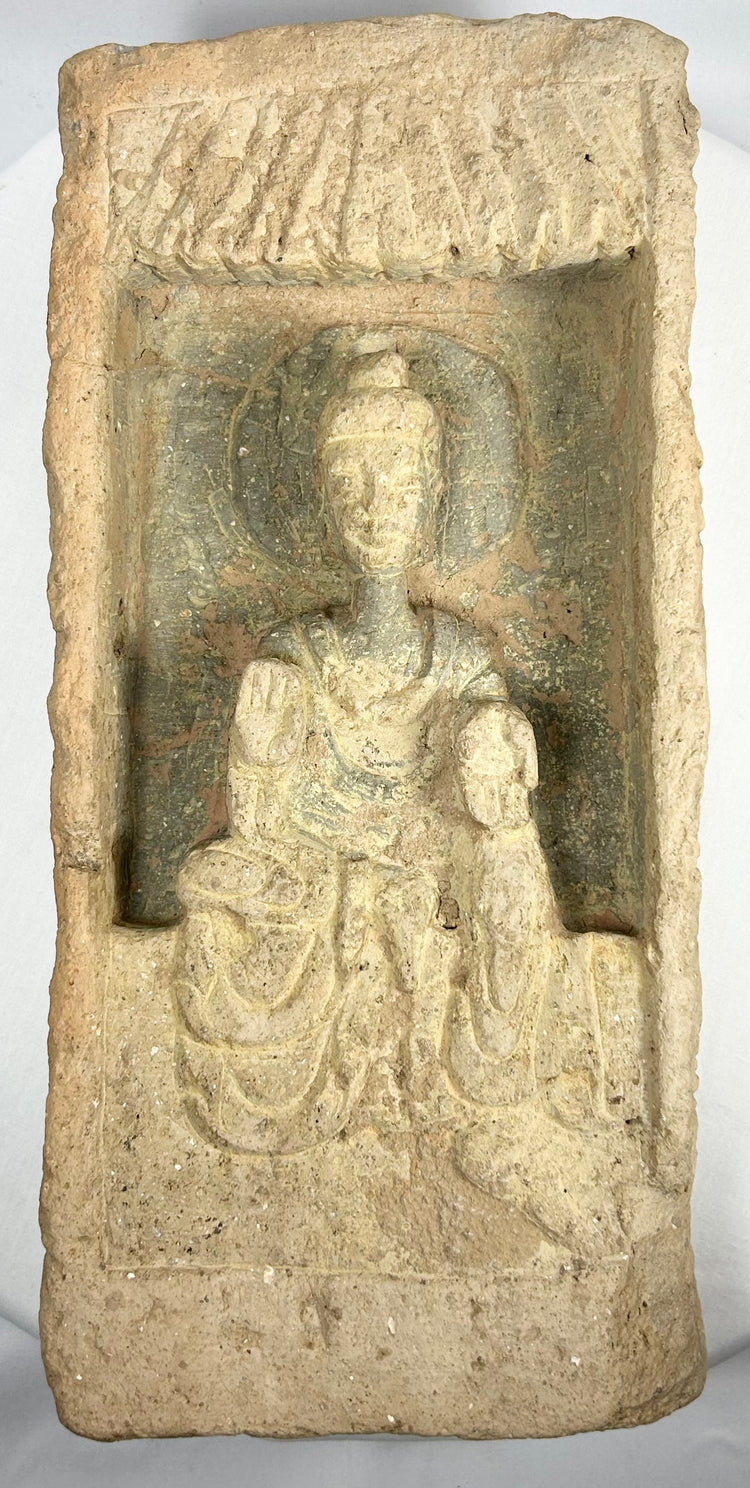
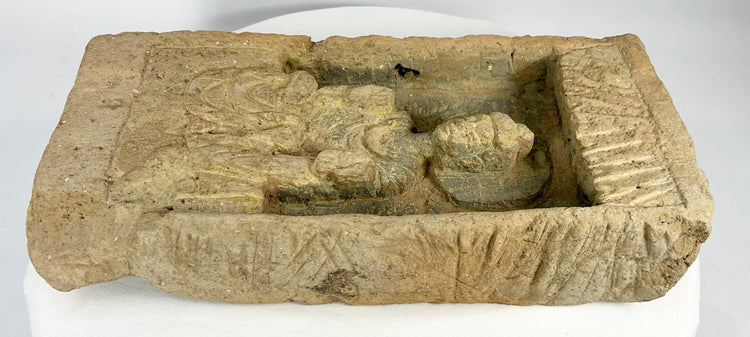
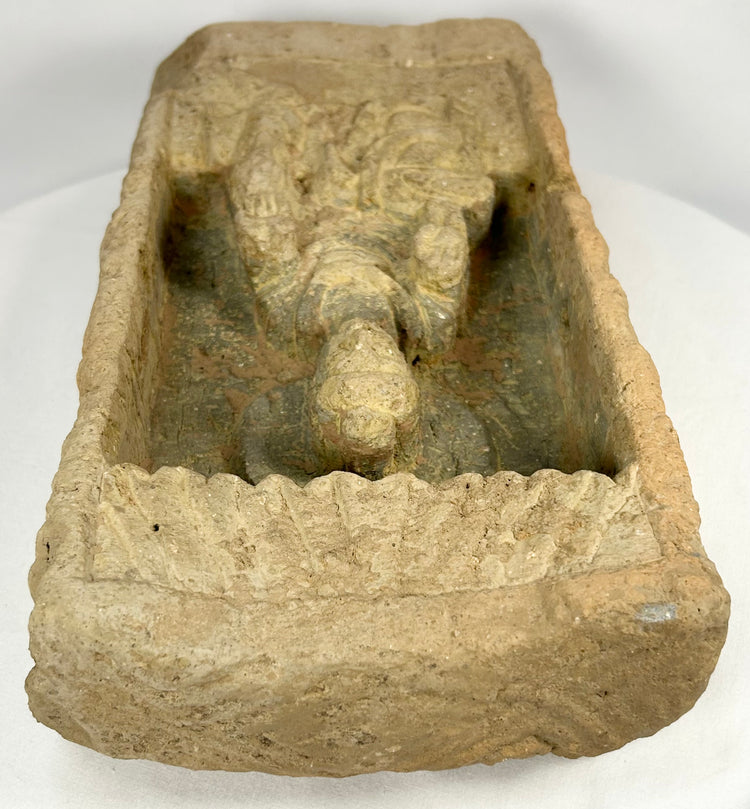
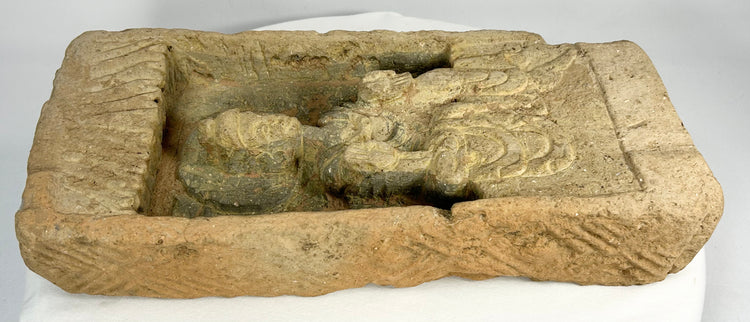
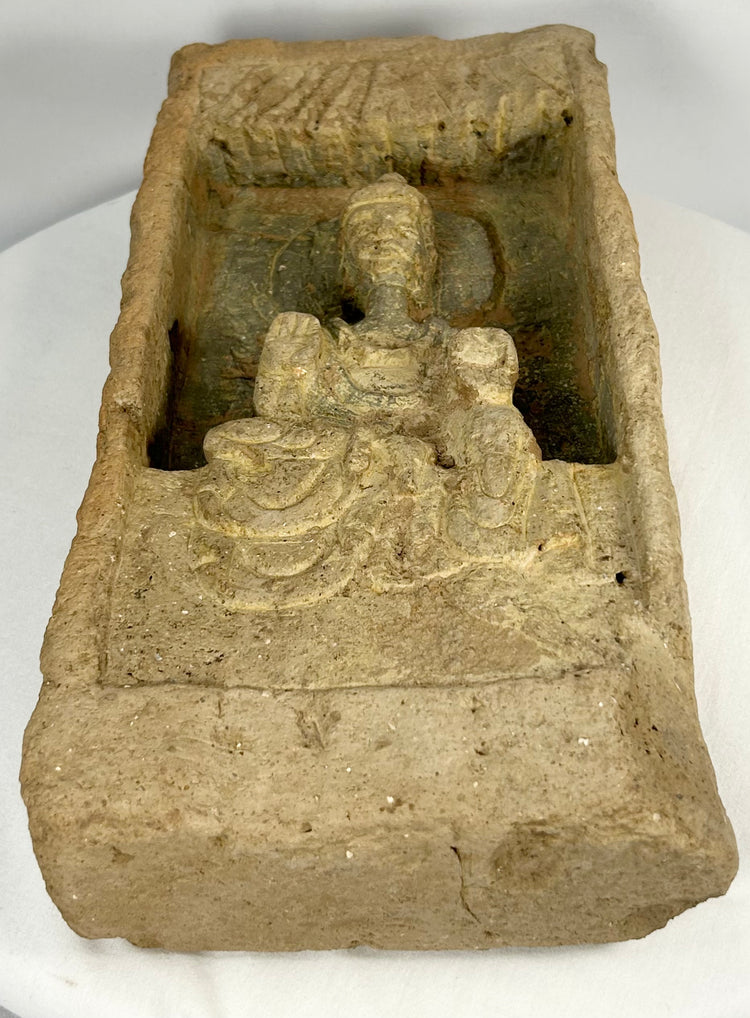
A powerful and evocative Chinese Northern Wei Dynasty Buddhist architectural brick carved in deep relief with a seated Buddha figure within a recessed shrine-like niche. The figure is depicted frontally in serene composure, framed by a circular halo and draped in flowing layered robes, with one hand raised in a gesture of blessing and the other resting calmly in the lap. A striated, temple-like canopy is carved across the upper edge of the niche, enhancing the architectural character of the composition. The surrounding brick remains intentionally rough and tactile, creating strong contrast with the sacred figure within.
Northern Wei Buddhist bricks such as this were traditionally integrated into temple architecture, monastery walls, and sacred devotional structures, contributing both spiritual presence and artistic beauty to religious environments. This example embodies the refined spiritual elegance of early Chinese Buddhist art during a period when Buddhism flourished and monumental temple construction expanded significantly.
Features
- Authentic Northern Wei carved Buddhist architectural brick
- Deeply recessed shrine composition with seated Buddha figure
- Haloed figure with flowing robes and blessing gesture
- Temple roof–inspired canopy motif carved above the niche
- Traces of ancient pigment preserved within protected recesses
- Distinct devotional presence with strong archaeological authenticity
Cultural Significance
During the Northern Wei Dynasty (386–534 CE), Buddhism reached a period of profound expansion in China. Temple complexes, grotto sanctuaries, and sacred structures were richly embellished with architectural reliefs depicting Buddhas and bodhisattvas. Bricks like this served as integral devotional elements, creating spiritual continuity throughout sacred spaces. The halo, posture, and symbolic gesture reflect core Buddhist themes of enlightenment, compassion, and divine protection, embodying the pivotal role of Buddhist imagery in shaping early Chinese religious identity.
Condition
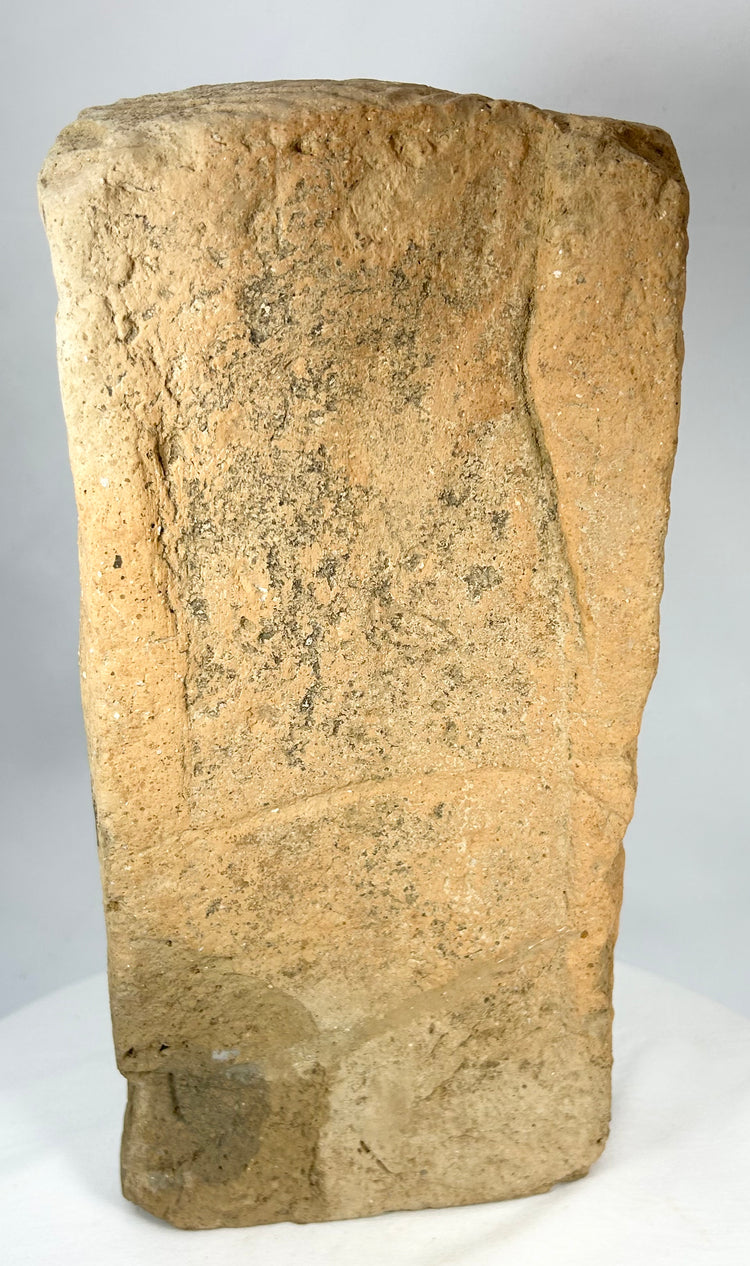
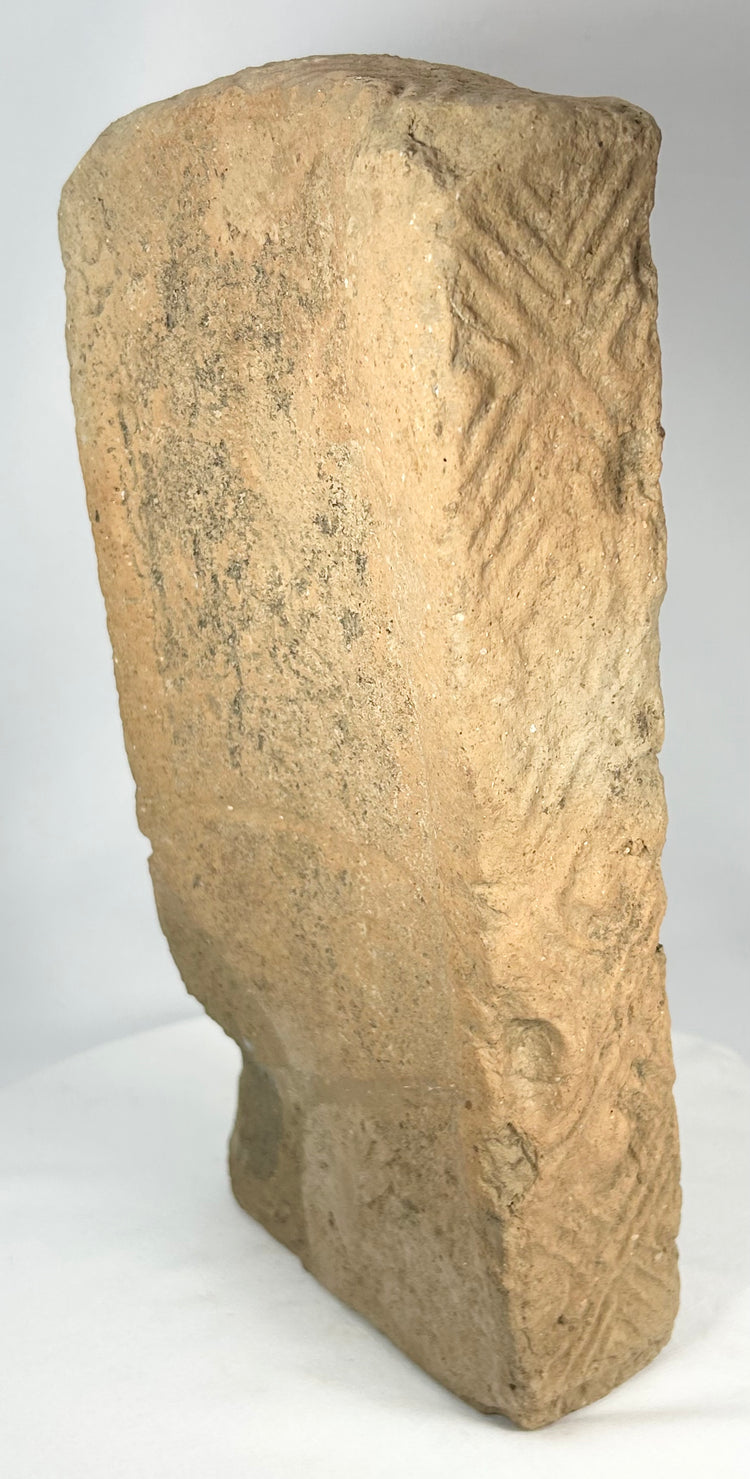
Excellent condition for its great age, exhibiting authentic and desirable devotional wear. Surface softening to some carved details, minor edge losses, small firing fissures, and encrustations consistent with antiquity and architectural placement. Stable, intact, and retaining an appealing untouched archaeological patina with traces of pigment preserved in sheltered areas.
Dimensions (Approximate)
Height: 12.75 in
Width: 6 in
Depth: 2.35 in
Age (Approximate)
1,500–1,650 years old
Learn More
View a Northern Wei Buddha brick at the Metropolitan Museum of Art
Explore our curated Ancient Chinese Artifacts & Imperial Relics Collection
Description
Historical Context & Origin
Region: China, East Asia
Material: Low-fired terracotta / earthenware brick with carved relief and traces of original pigment
Period: Northern Wei Dynasty, circa 386–534 CE
Description
A powerful and evocative Chinese Northern Wei Dynasty Buddhist architectural brick carved in deep relief with a seated Buddha figure within a recessed shrine-like niche. The figure is depicted frontally in serene composure, framed by a circular halo and draped in flowing layered robes, with one hand raised in a gesture of blessing and the other resting calmly in the lap. A striated, temple-like canopy is carved across the upper edge of the niche, enhancing the architectural character of the composition. The surrounding brick remains intentionally rough and tactile, creating strong contrast with the sacred figure within.
Northern Wei Buddhist bricks such as this were traditionally integrated into temple architecture, monastery walls, and sacred devotional structures, contributing both spiritual presence and artistic beauty to religious environments. This example embodies the refined spiritual elegance of early Chinese Buddhist art during a period when Buddhism flourished and monumental temple construction expanded significantly.
Features
- Authentic Northern Wei carved Buddhist architectural brick
- Deeply recessed shrine composition with seated Buddha figure
- Haloed figure with flowing robes and blessing gesture
- Temple roof–inspired canopy motif carved above the niche
- Traces of ancient pigment preserved within protected recesses
- Distinct devotional presence with strong archaeological authenticity
Cultural Significance
During the Northern Wei Dynasty (386–534 CE), Buddhism reached a period of profound expansion in China. Temple complexes, grotto sanctuaries, and sacred structures were richly embellished with architectural reliefs depicting Buddhas and bodhisattvas. Bricks like this served as integral devotional elements, creating spiritual continuity throughout sacred spaces. The halo, posture, and symbolic gesture reflect core Buddhist themes of enlightenment, compassion, and divine protection, embodying the pivotal role of Buddhist imagery in shaping early Chinese religious identity.
Condition
Excellent condition for its great age, exhibiting authentic and desirable devotional wear. Surface softening to some carved details, minor edge losses, small firing fissures, and encrustations consistent with antiquity and architectural placement. Stable, intact, and retaining an appealing untouched archaeological patina with traces of pigment preserved in sheltered areas.
Dimensions (Approximate)
Height: 12.75 in
Width: 6 in
Depth: 2.35 in
Age (Approximate)
1,500–1,650 years old
Learn More
View a Northern Wei Buddha brick at the Metropolitan Museum of Art
Explore our curated Ancient Chinese Artifacts & Imperial Relics Collection
You May Also Like
