


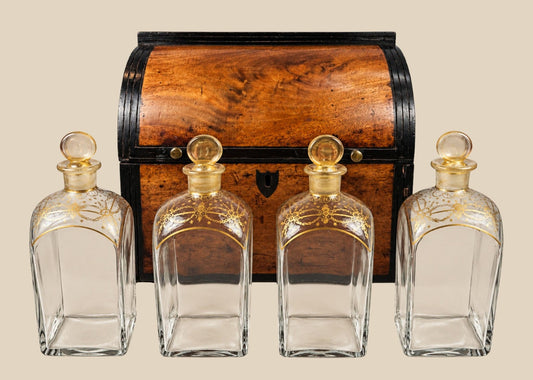
Chinese Gilt Bronze Buddha in Meditation Pose | Circa 16th–17th Century
Couldn't load pickup availability


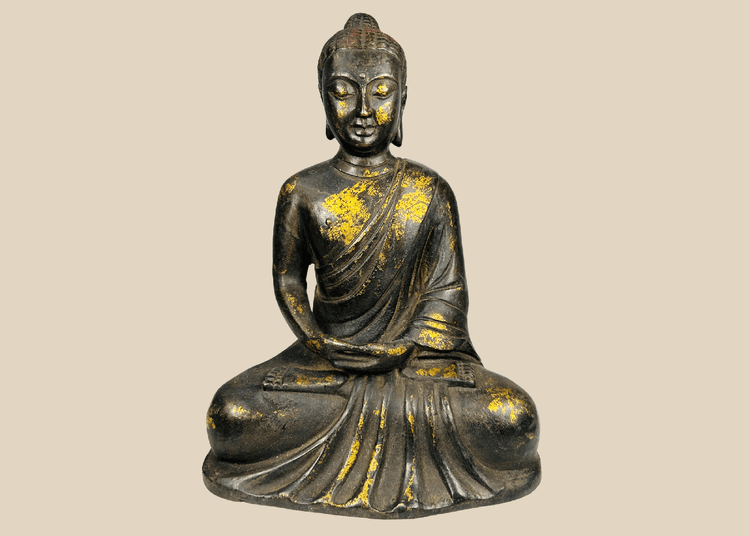
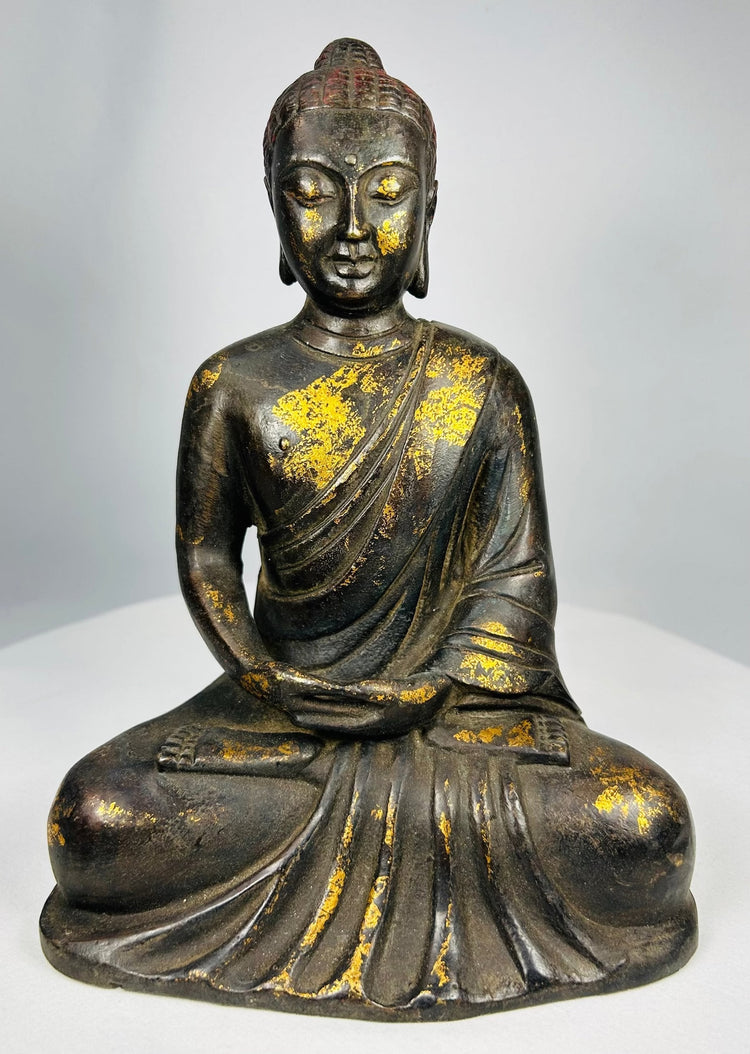
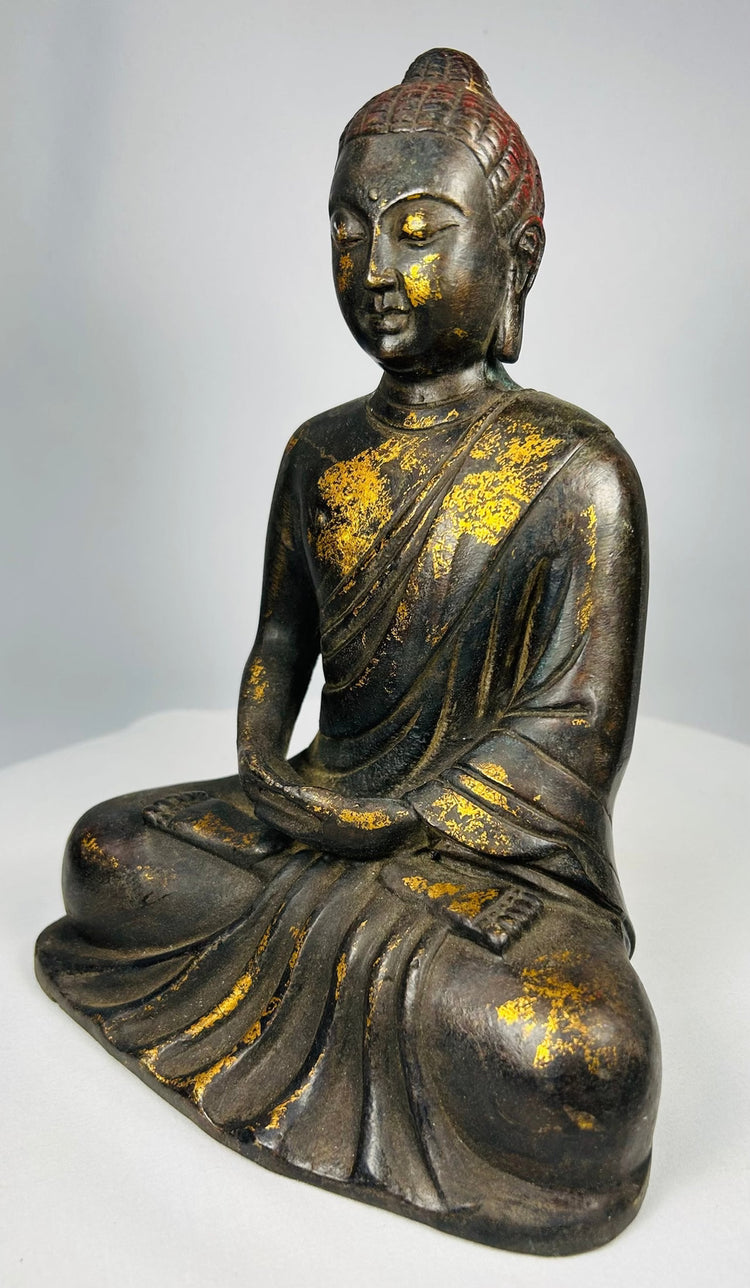
Chinese Gilt Bronze Buddha in Meditation Pose | Circa 16th–17th Century
Description
More
Less
Historical Context & Origin
Region: China
Material: Cast bronze with remnants of gilt and red lacquer pigment
Period: Late Ming Dynasty to Early Qing Dynasty (circa 16th–17th century)
Description
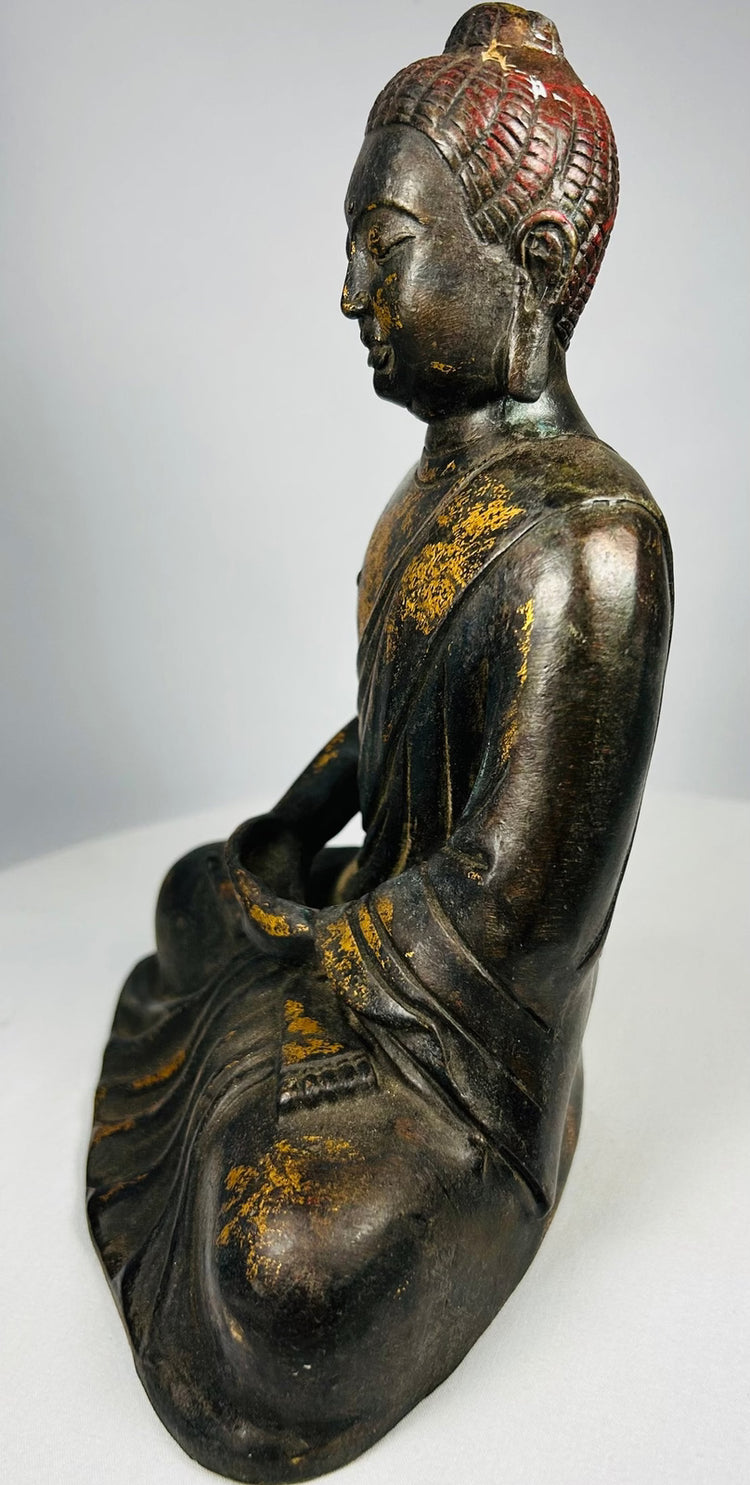
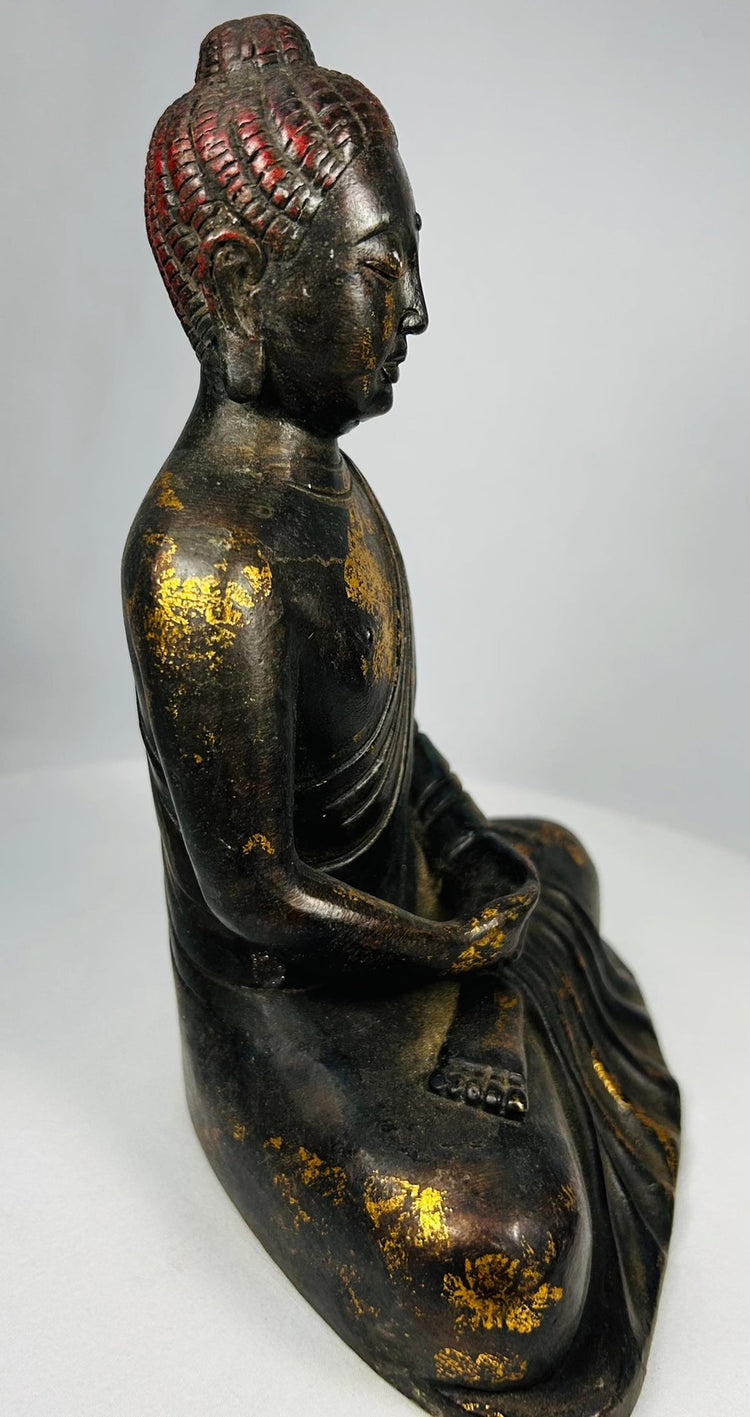
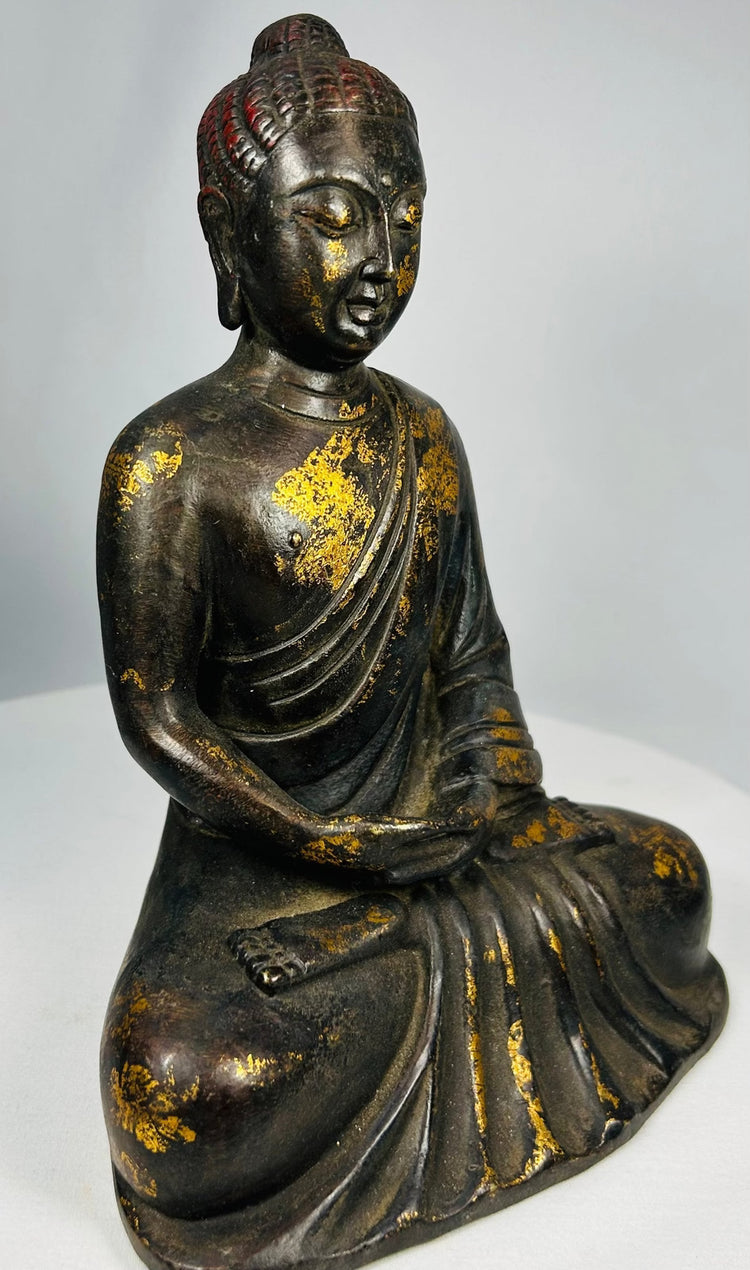
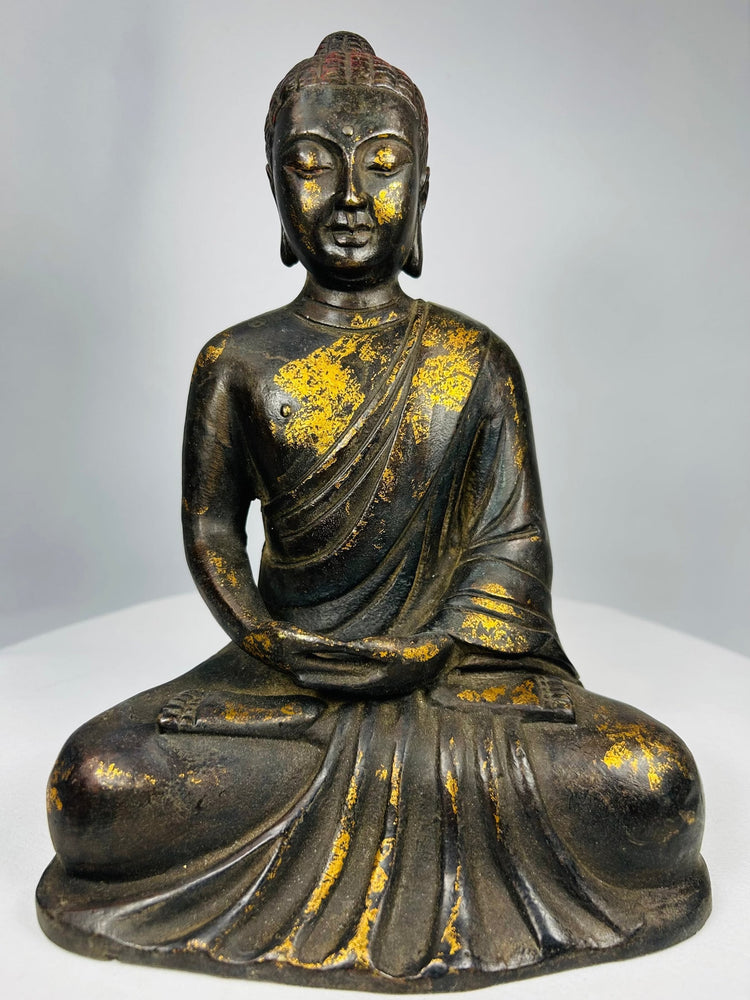
This finely cast Chinese bronze figure depicts the Buddha seated in meditation (Dhyāna Mudrā), with hands resting in the lap and legs crossed in the traditional lotus posture. The figure is rendered with a serene, inward expression, elongated earlobes, and a gently modeled face—hallmarks of late imperial Chinese Buddhist sculpture.
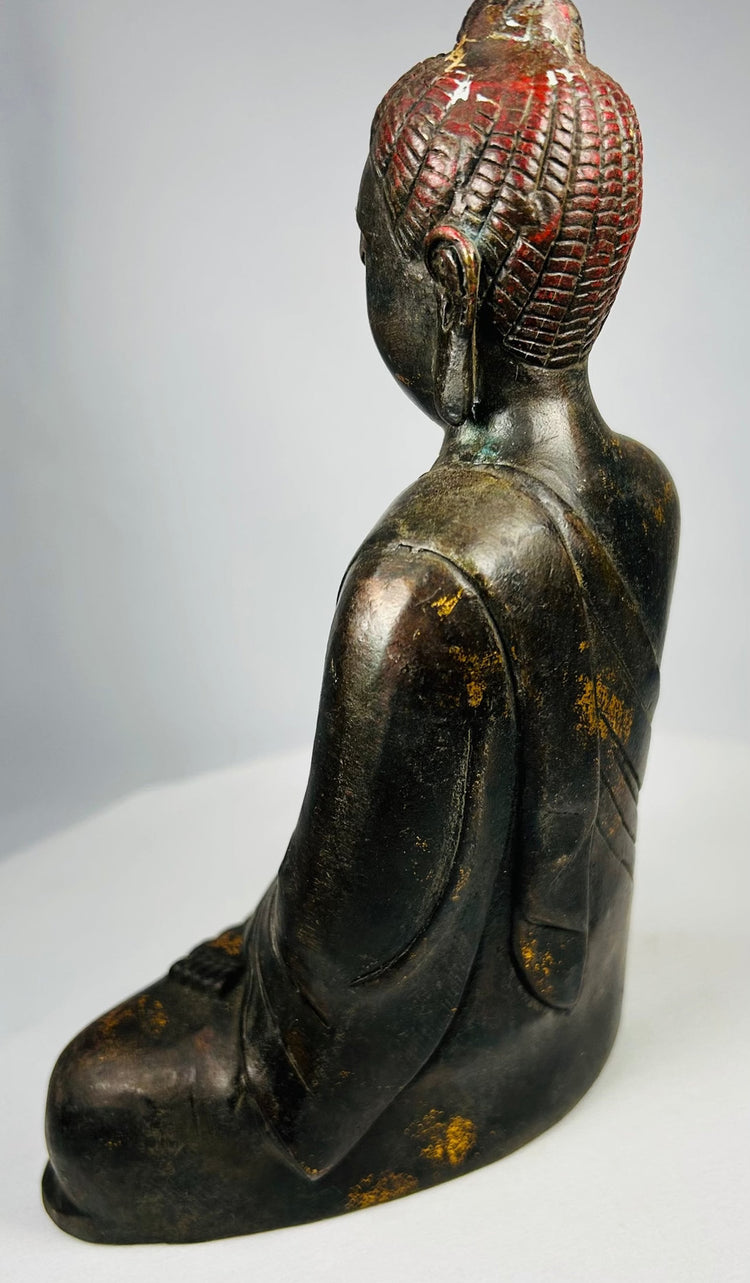
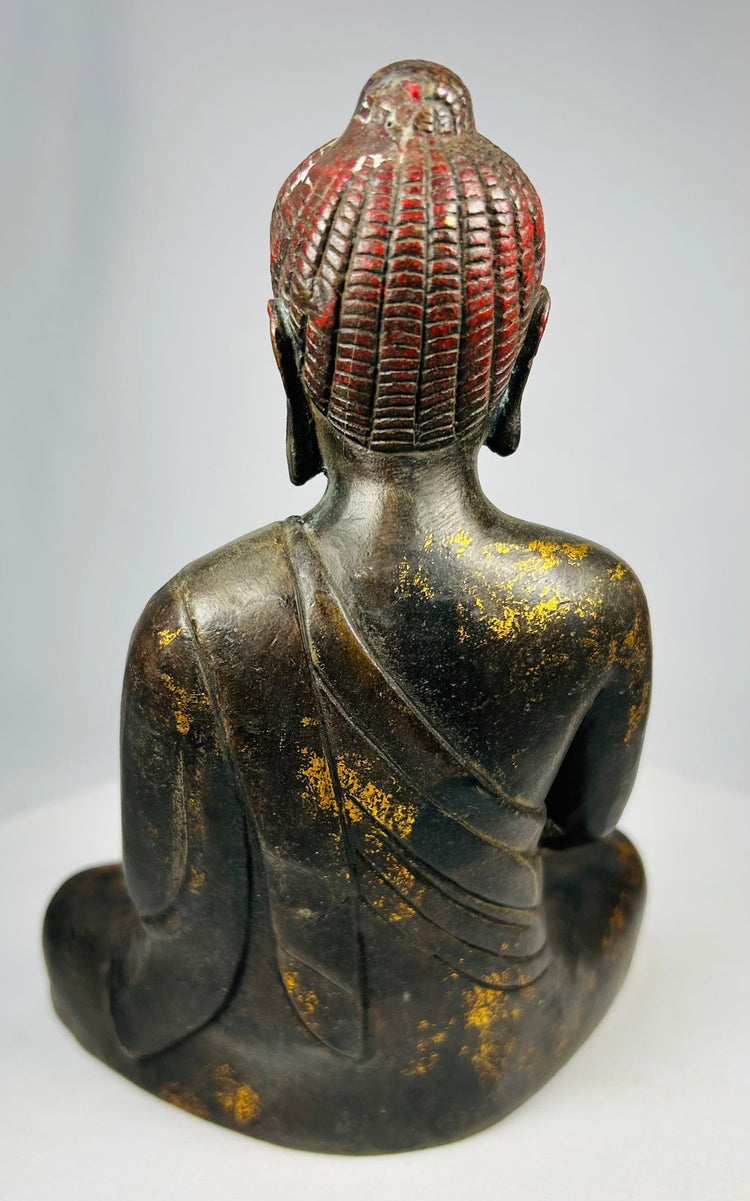
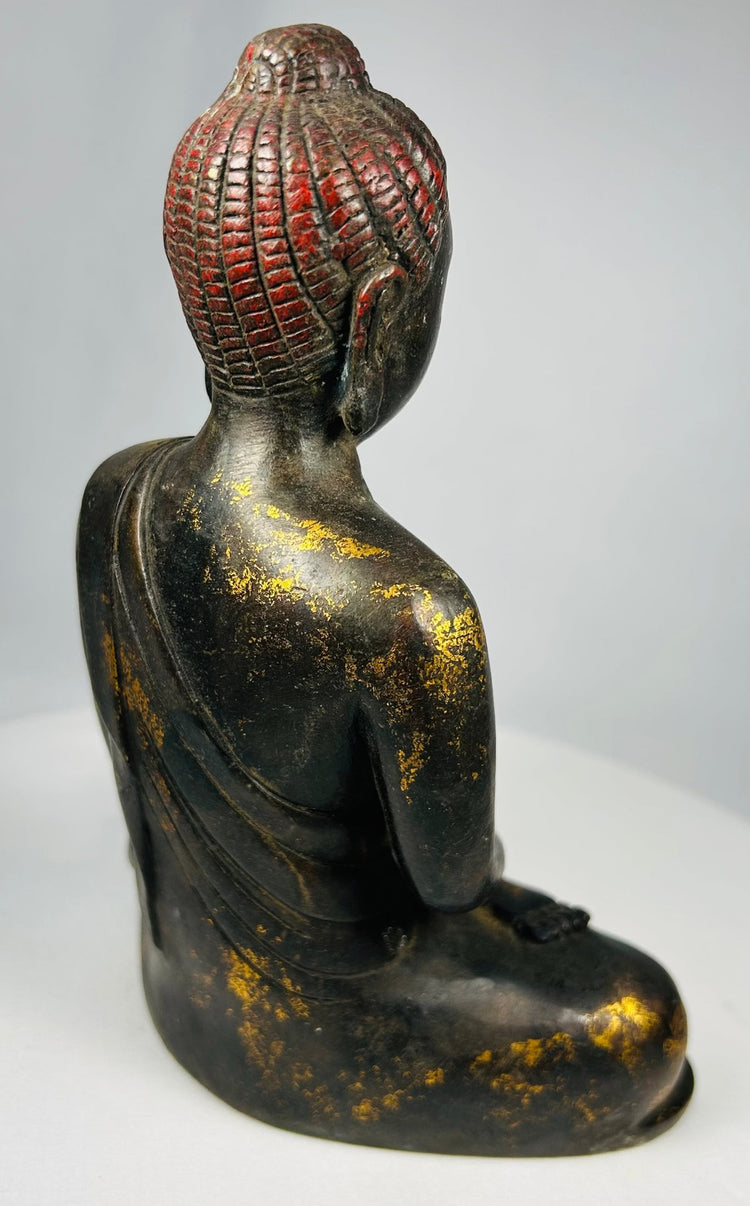
The surface retains extensive original gilt remnants, particularly across the torso, face, and drapery, indicating the figure was once fully gilded. Traces of red lacquer pigment remain visible within the hair coils, a detail commonly associated with late Ming and early Qing devotional bronzes. The robe is draped naturally over one shoulder, with softly flowing folds that emphasize balance and calm rather than rigid formality.
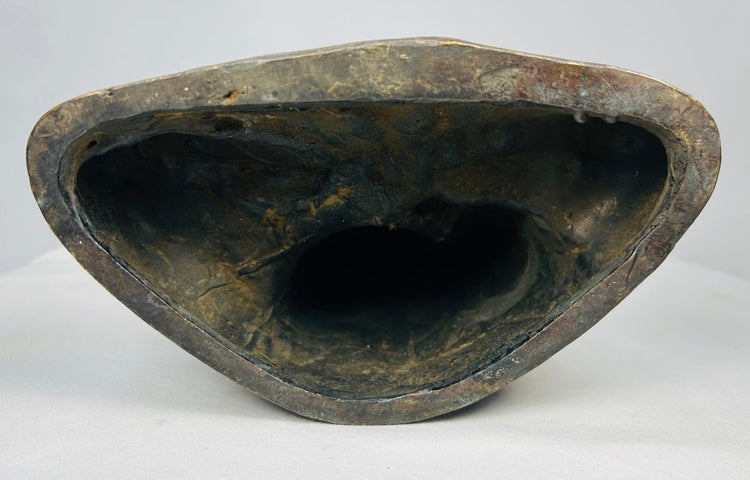
The sculpture is hollow cast, evidenced by the open underside and interior wear consistent with age, ritual handling, and long-term devotional use.
Features
- Seated Buddha in Dhyāna (meditation) mudrā
- Hollow cast bronze construction
- Original gilt remnants visible throughout the surface
- Red lacquer pigment remaining within hair coils
- Naturalistic robe folds typical of late imperial Buddhist bronzes
- Smooth, aged patina from centuries of devotional handling
Cultural Significance
During the Late Ming and Early Qing periods, Buddhist bronze figures such as this were widely commissioned for temple altars, private shrines, and scholar’s studios. Gilded bronze Buddhas symbolized enlightenment, spiritual refinement, and moral cultivation. The calm expression and balanced posture reflect Mahayana Buddhist ideals of inner stillness, wisdom, and spiritual harmony.
Condition
Good antique condition consistent with age. Wear to gilding throughout, surface patina present, minor abrasions, and age-related casting irregularities visible. No modern repairs observed.
Dimensions (Approximate)
Height: 8.1 in
Length: 6.2 in
Width: 3.8 in
Age (Approximate)
Approximately 325–525 years old
Provenance
Formerly held in a private collection specializing in Asian antiques and art. Subsequently acquired by a private collector in Flushing, New York, USA.
Learn More
Explore Chinese sacred sculpture in Wisdom Embodied – The Metropolitan Museum of Art
Explore our curated Religious & Spiritual Relics Collection
Description
Historical Context & Origin
Region: China
Material: Cast bronze with remnants of gilt and red lacquer pigment
Period: Late Ming Dynasty to Early Qing Dynasty (circa 16th–17th century)
Description
This finely cast Chinese bronze figure depicts the Buddha seated in meditation (Dhyāna Mudrā), with hands resting in the lap and legs crossed in the traditional lotus posture. The figure is rendered with a serene, inward expression, elongated earlobes, and a gently modeled face—hallmarks of late imperial Chinese Buddhist sculpture.
The surface retains extensive original gilt remnants, particularly across the torso, face, and drapery, indicating the figure was once fully gilded. Traces of red lacquer pigment remain visible within the hair coils, a detail commonly associated with late Ming and early Qing devotional bronzes. The robe is draped naturally over one shoulder, with softly flowing folds that emphasize balance and calm rather than rigid formality.
The sculpture is hollow cast, evidenced by the open underside and interior wear consistent with age, ritual handling, and long-term devotional use.
Features
- Seated Buddha in Dhyāna (meditation) mudrā
- Hollow cast bronze construction
- Original gilt remnants visible throughout the surface
- Red lacquer pigment remaining within hair coils
- Naturalistic robe folds typical of late imperial Buddhist bronzes
- Smooth, aged patina from centuries of devotional handling
Cultural Significance
During the Late Ming and Early Qing periods, Buddhist bronze figures such as this were widely commissioned for temple altars, private shrines, and scholar’s studios. Gilded bronze Buddhas symbolized enlightenment, spiritual refinement, and moral cultivation. The calm expression and balanced posture reflect Mahayana Buddhist ideals of inner stillness, wisdom, and spiritual harmony.
Condition
Good antique condition consistent with age. Wear to gilding throughout, surface patina present, minor abrasions, and age-related casting irregularities visible. No modern repairs observed.
Dimensions (Approximate)
Height: 8.1 in
Length: 6.2 in
Width: 3.8 in
Age (Approximate)
Approximately 325–525 years old
Provenance
Formerly held in a private collection specializing in Asian antiques and art. Subsequently acquired by a private collector in Flushing, New York, USA.
Learn More
Explore Chinese sacred sculpture in Wisdom Embodied – The Metropolitan Museum of Art
Explore our curated Religious & Spiritual Relics Collection
You May Also Like
