Chinese Glazed Ceramic Figure of the Laughing Monk | Antique Folk Religious Sculpture | Circa 1880–1930
Description
More
Less
Historical Context & Origin
Region: China
Material: Glazed terracotta / ceramic
Period: Late Qing Dynasty to Republic Period, circa 1880–1930
Description
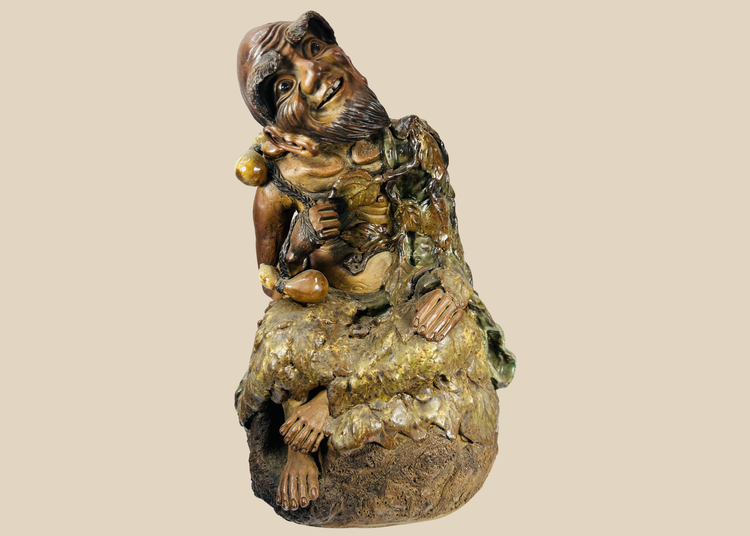
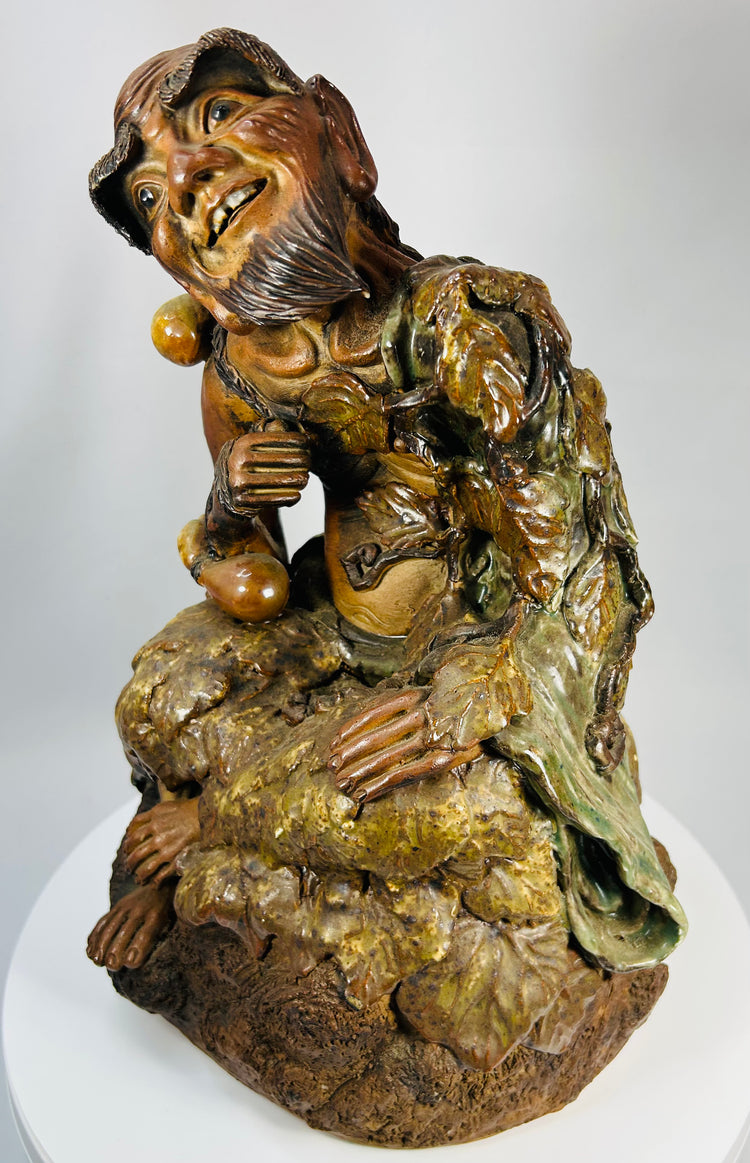
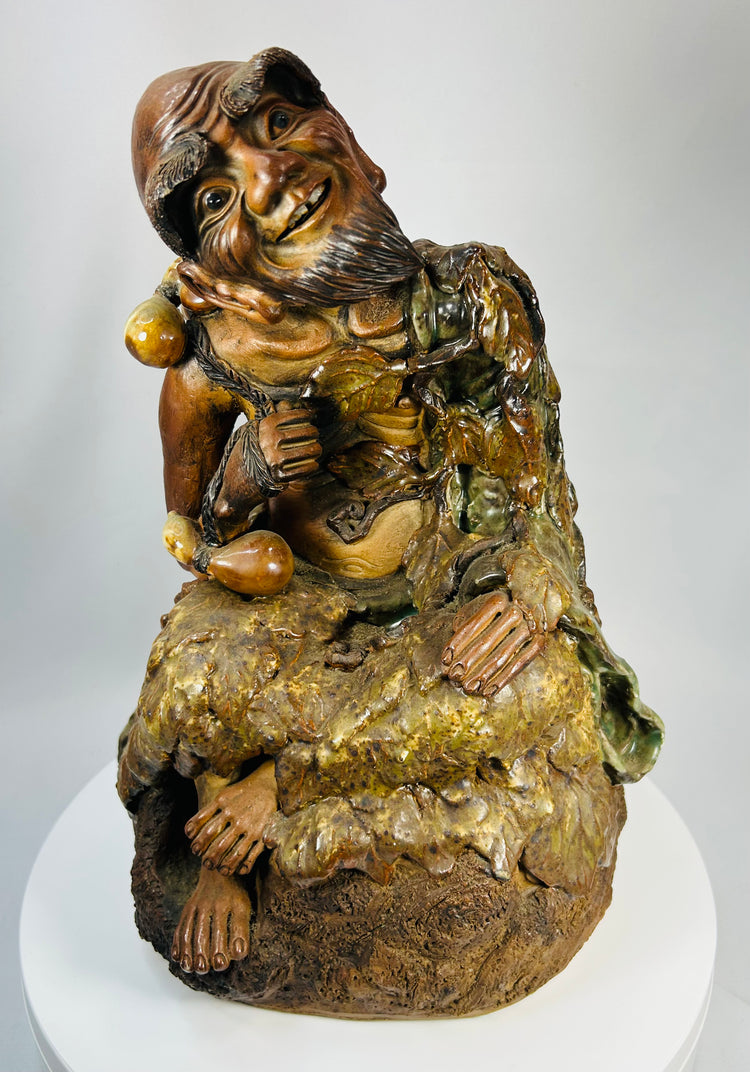
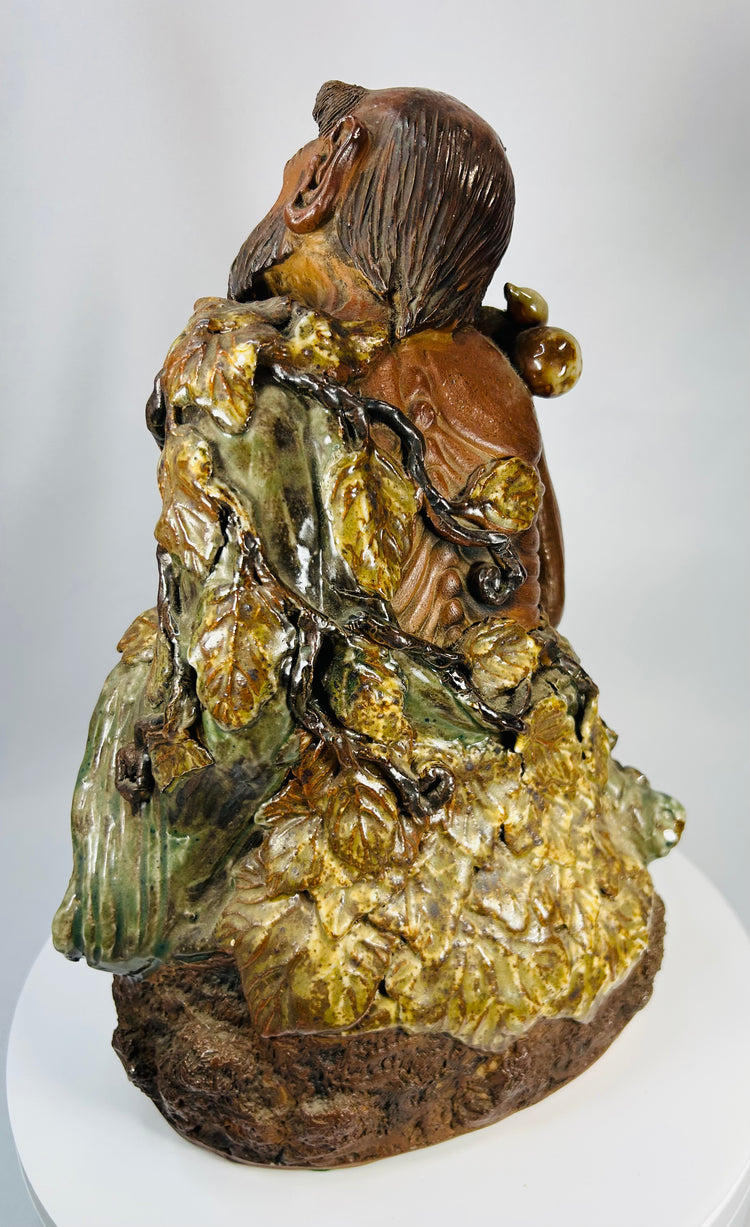
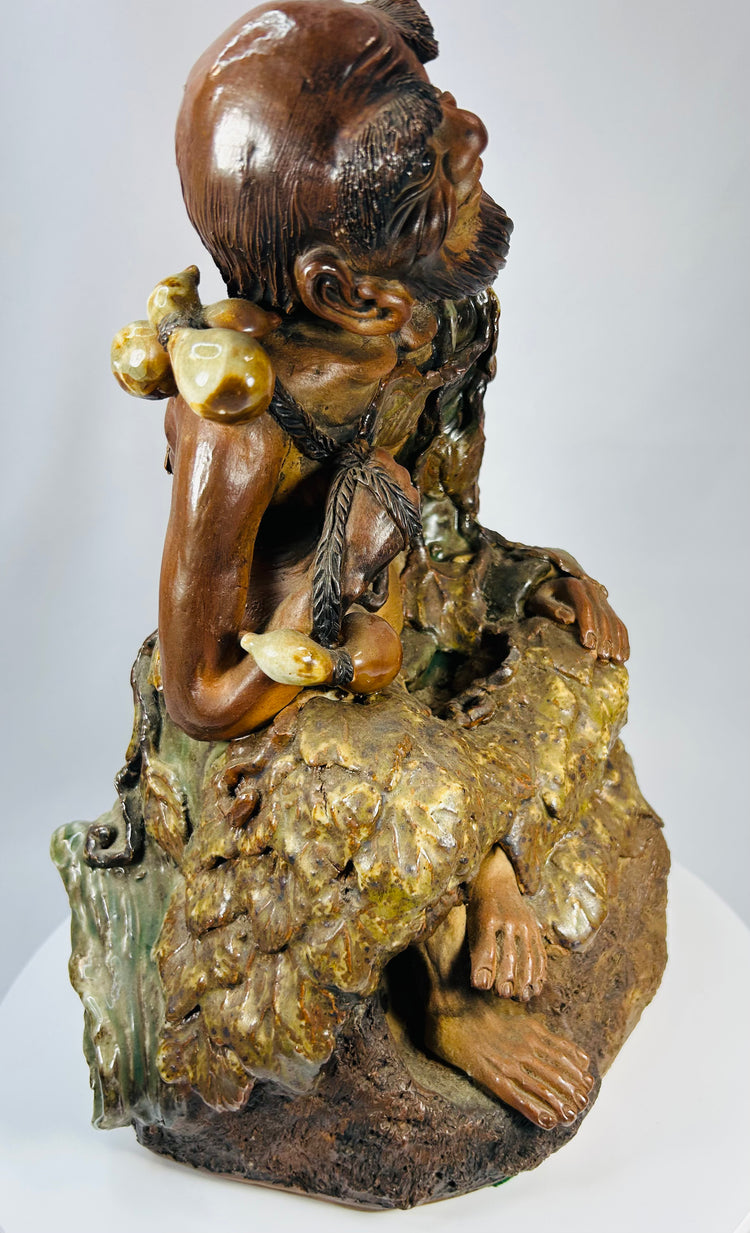
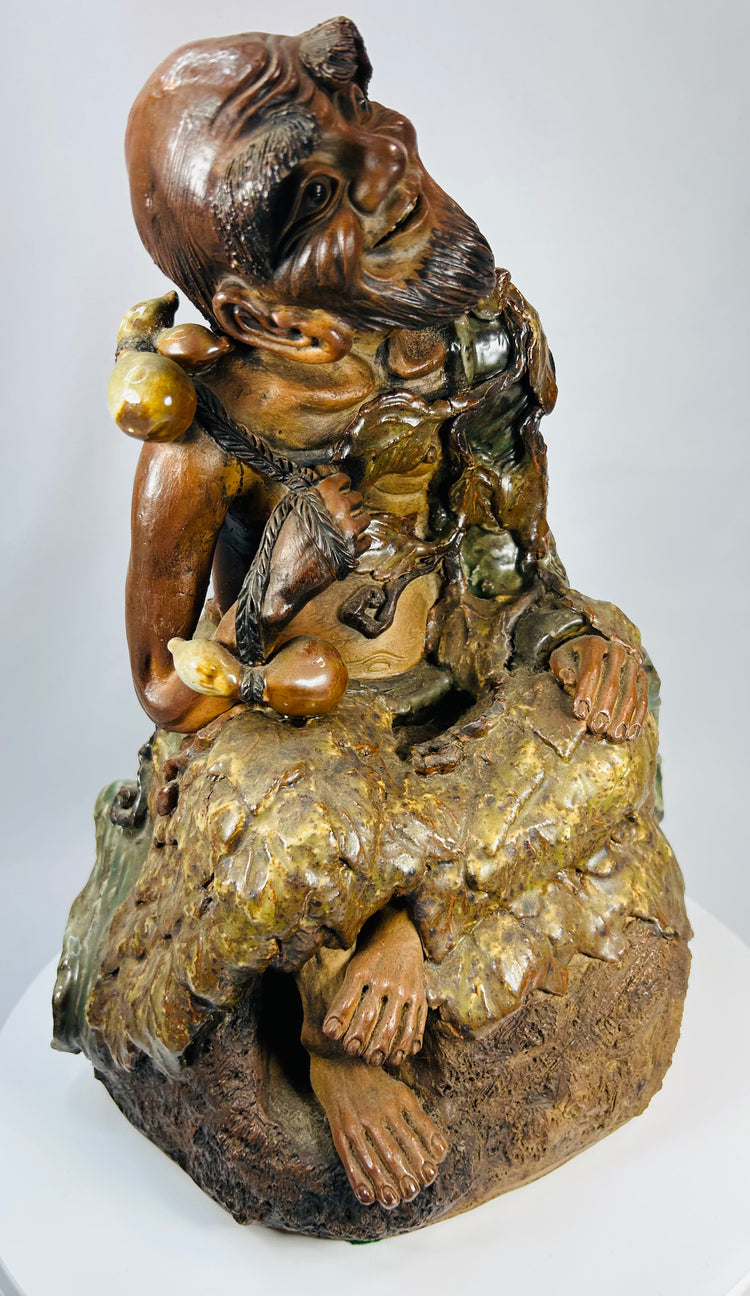
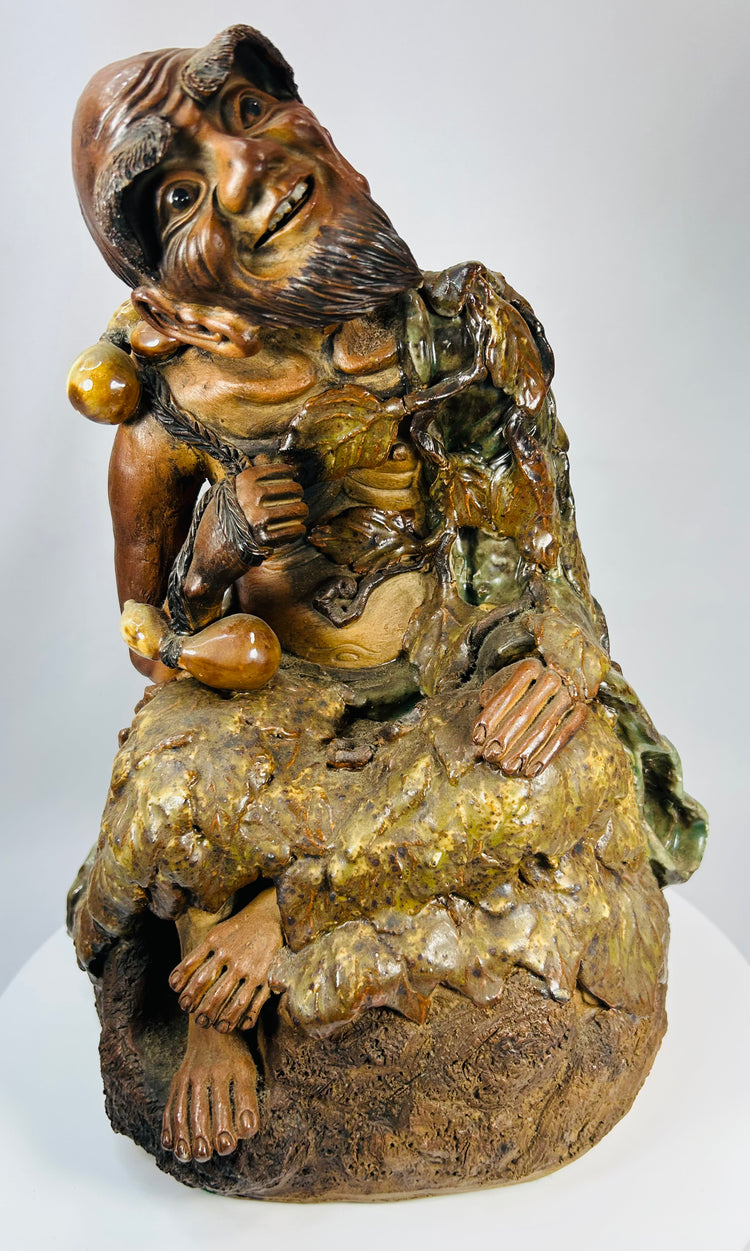
This expressive Chinese glazed terracotta sculpture depicts the legendary eccentric monk Jigong (Ji Gong), one of the most beloved figures in Chinese Buddhist folklore. Known as the “Mad Monk,” Jigong was a wandering Chan Buddhist monk celebrated for his compassion, humor, and miraculous acts performed while living as a humble beggar.
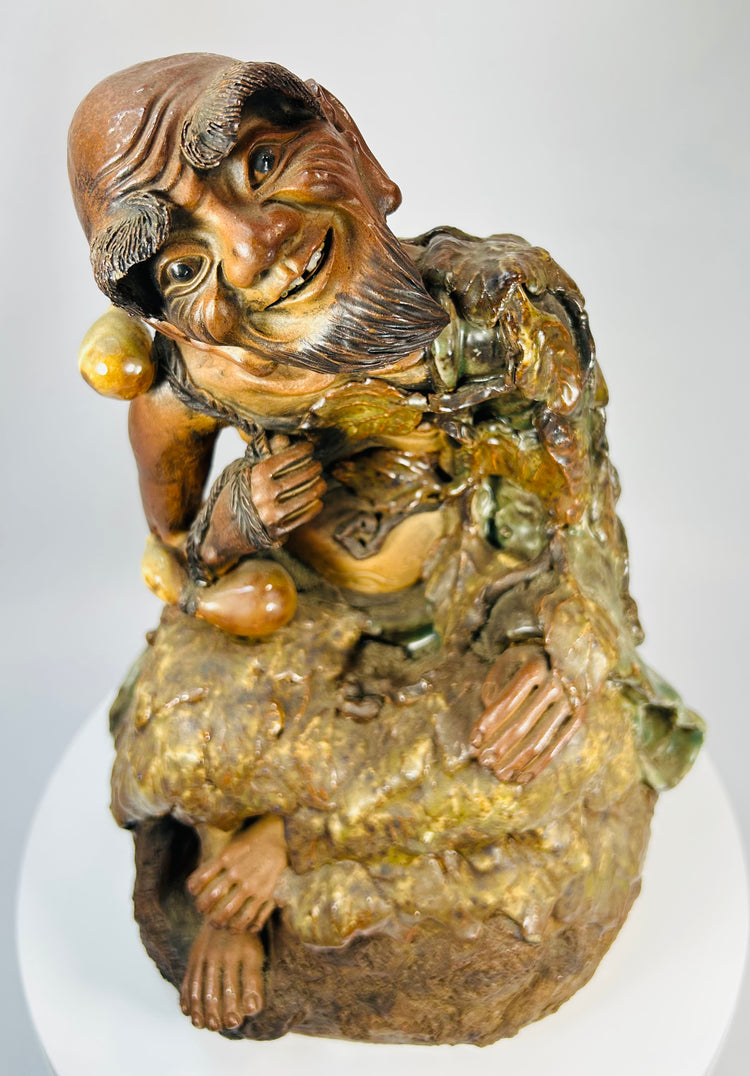
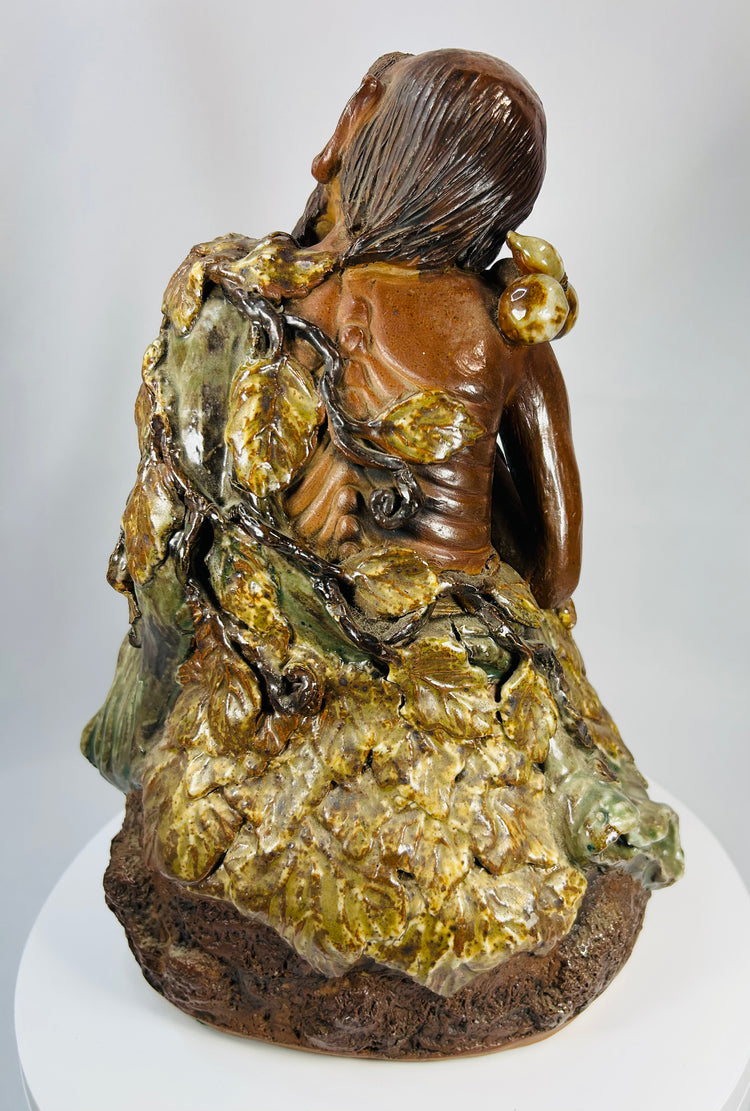
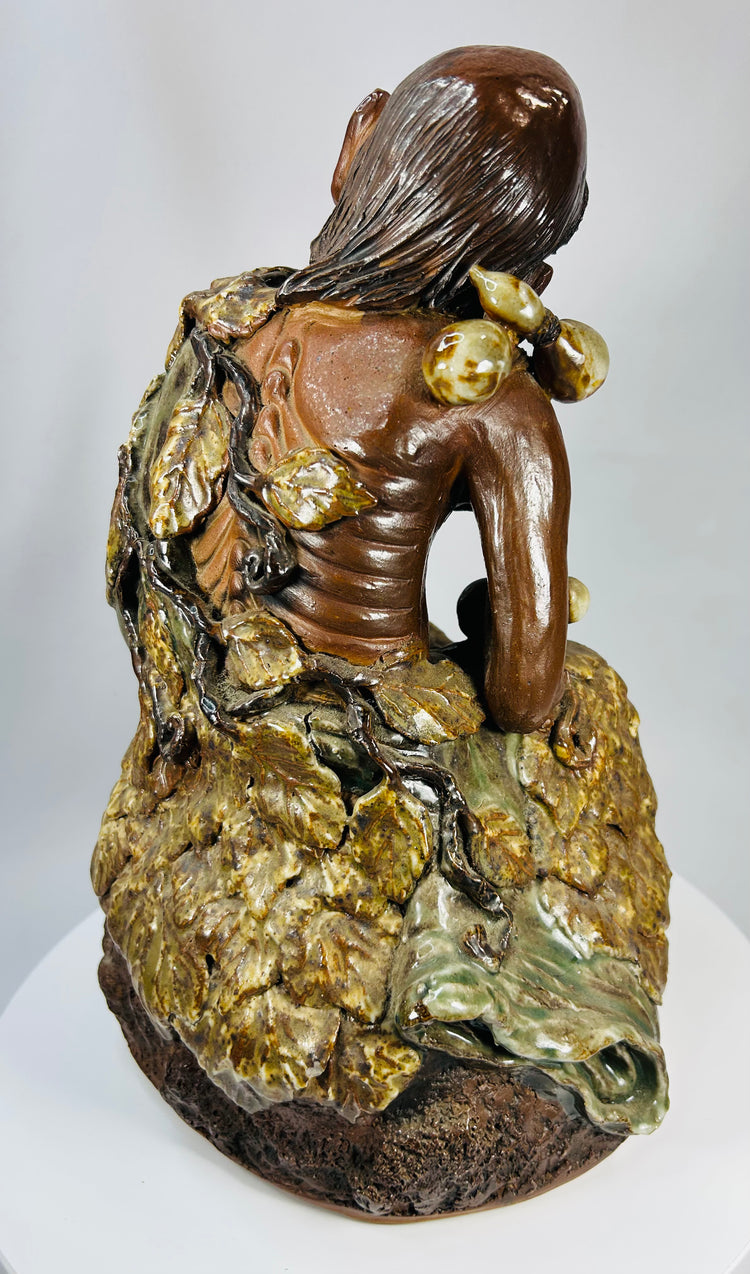
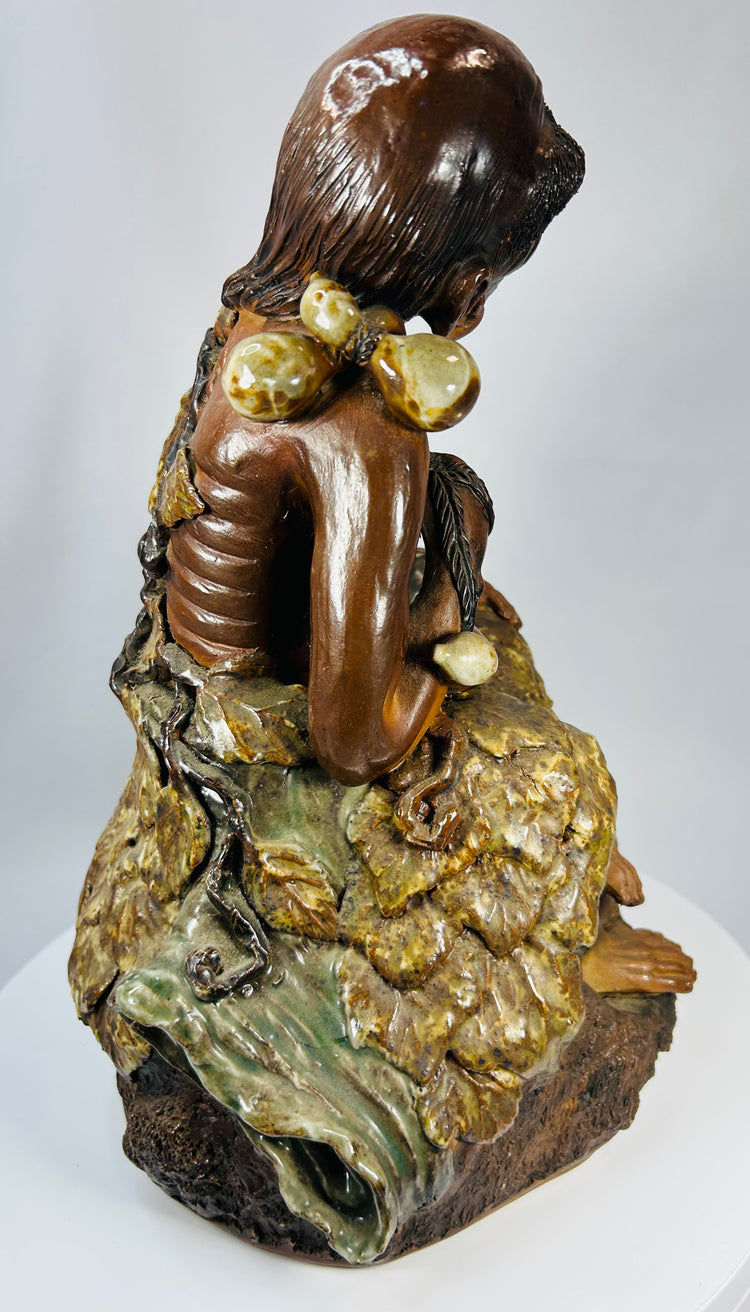
The figure is portrayed seated upon a rocky base, his thin ascetic body leaning forward with an animated expression and mischievous smile. His head tilts playfully to the side, emphasizing his lively personality and unconventional character. A short beard and expressive facial features are carefully sculpted, capturing the folkloric representation of the wandering monk.
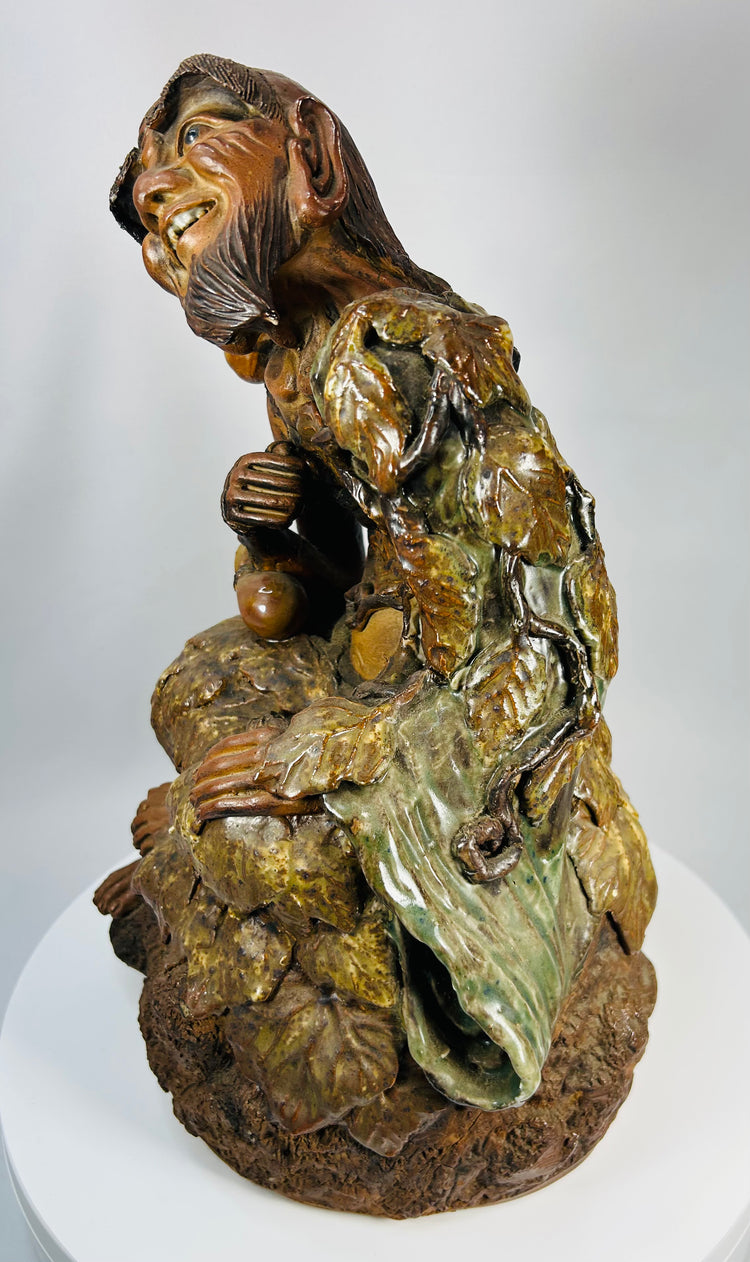
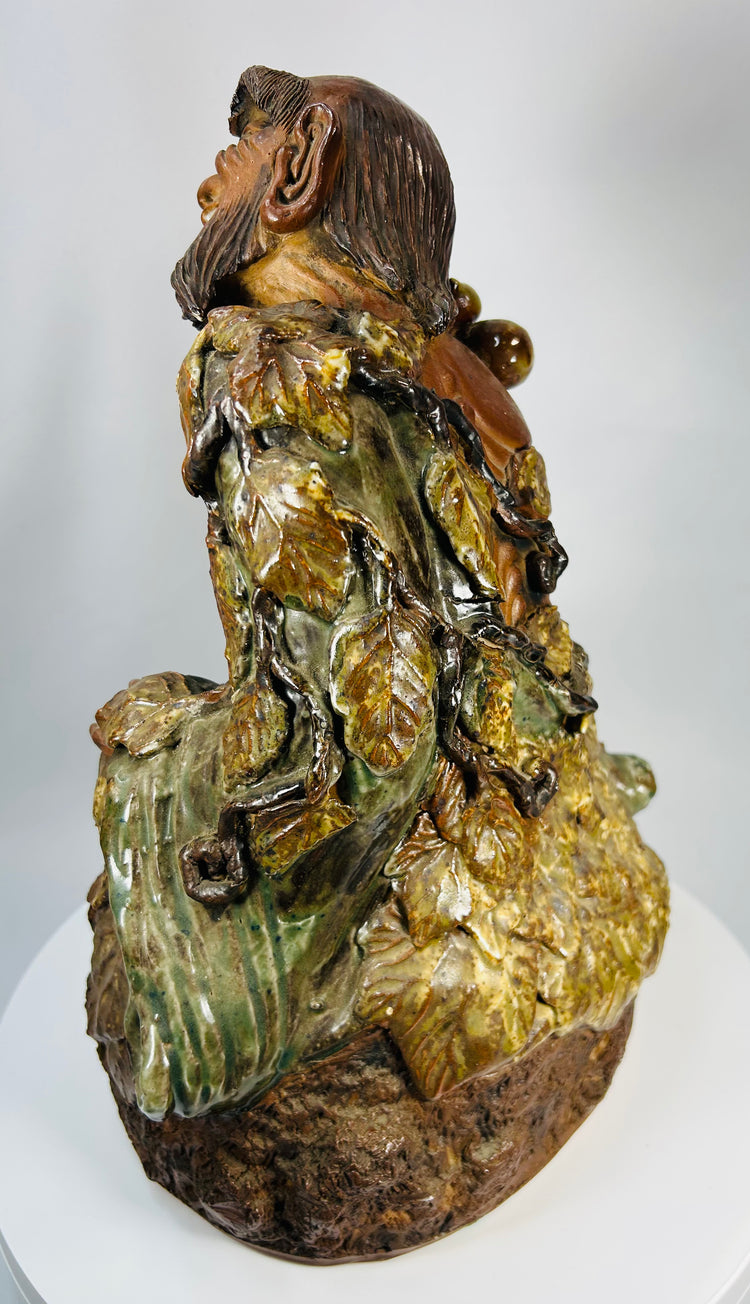
Across his shoulders and body drape large naturalistic vine leaves rendered in flowing relief and finished with mottled green and amber glazes. Several gourd vessels appear along the figure’s side and back—traditional attributes associated with wandering monks and Daoist immortals, symbolizing medicine, spiritual power, and the containment of magical elixirs.
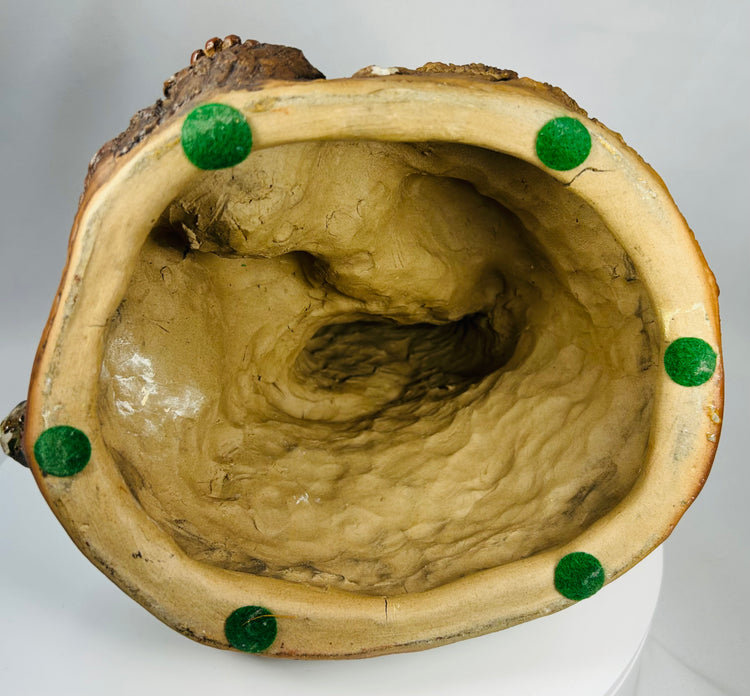
The sculpture displays a rich palette of earthy browns, greens, and amber tones produced through traditional Chinese ceramic glazing techniques. The hollow underside indicates kiln-fired production typical of larger ceramic temple or decorative figures.
Such figures were commonly produced for temple display, scholar’s studios, and domestic altars, celebrating Jigong’s role as a protector of the poor and a humorous embodiment of enlightened wisdom.
Features
- Animated depiction of the legendary monk Jigong
- Naturalistic vine leaves and gourd motifs symbolizing immortality and spiritual power
- Rich multi-tone ceramic glazing in green, amber, and brown
- Expressive facial carving with humorous folkloric character
- Hollow kiln-fired construction typical of late Qing ceramic sculpture
Cultural Significance
Jigong (1130–1209) was a real historical Buddhist monk from the Southern Song Dynasty whose unconventional lifestyle made him a legendary figure throughout Chinese folklore. Though often depicted as disheveled and humorous, he was believed to possess supernatural powers and was revered for helping the poor and performing miracles.
Statues of Jigong became especially popular during the Qing Dynasty and early Republic period, when his story was widely celebrated in folk religion, opera, and literature. His image symbolizes compassion, humor, spiritual wisdom, and the idea that enlightenment may appear in unexpected forms.
Condition
Very good antique condition with expected age-related wear. Minor glaze irregularities and surface variations consistent with kiln-fired ceramic production. No major structural damage observed.
Dimensions (Approximate)
Height: 12.5 in
Width: 9.5 in
Depth: 7.5 in
Age (Approximate)
95–145 years old
Learn More
Learn about the legendary monk Jigong through Tsem Rinpoche
Explore our curated Ancient Chinese Artifacts & Imperial Relics Collection
Description
Historical Context & Origin
Region: China
Material: Glazed terracotta / ceramic
Period: Late Qing Dynasty to Republic Period, circa 1880–1930
Description
This expressive Chinese glazed terracotta sculpture depicts the legendary eccentric monk Jigong (Ji Gong), one of the most beloved figures in Chinese Buddhist folklore. Known as the “Mad Monk,” Jigong was a wandering Chan Buddhist monk celebrated for his compassion, humor, and miraculous acts performed while living as a humble beggar.
The figure is portrayed seated upon a rocky base, his thin ascetic body leaning forward with an animated expression and mischievous smile. His head tilts playfully to the side, emphasizing his lively personality and unconventional character. A short beard and expressive facial features are carefully sculpted, capturing the folkloric representation of the wandering monk.
Across his shoulders and body drape large naturalistic vine leaves rendered in flowing relief and finished with mottled green and amber glazes. Several gourd vessels appear along the figure’s side and back—traditional attributes associated with wandering monks and Daoist immortals, symbolizing medicine, spiritual power, and the containment of magical elixirs.
The sculpture displays a rich palette of earthy browns, greens, and amber tones produced through traditional Chinese ceramic glazing techniques. The hollow underside indicates kiln-fired production typical of larger ceramic temple or decorative figures.
Such figures were commonly produced for temple display, scholar’s studios, and domestic altars, celebrating Jigong’s role as a protector of the poor and a humorous embodiment of enlightened wisdom.
Features
- Animated depiction of the legendary monk Jigong
- Naturalistic vine leaves and gourd motifs symbolizing immortality and spiritual power
- Rich multi-tone ceramic glazing in green, amber, and brown
- Expressive facial carving with humorous folkloric character
- Hollow kiln-fired construction typical of late Qing ceramic sculpture
Cultural Significance
Jigong (1130–1209) was a real historical Buddhist monk from the Southern Song Dynasty whose unconventional lifestyle made him a legendary figure throughout Chinese folklore. Though often depicted as disheveled and humorous, he was believed to possess supernatural powers and was revered for helping the poor and performing miracles.
Statues of Jigong became especially popular during the Qing Dynasty and early Republic period, when his story was widely celebrated in folk religion, opera, and literature. His image symbolizes compassion, humor, spiritual wisdom, and the idea that enlightenment may appear in unexpected forms.
Condition
Very good antique condition with expected age-related wear. Minor glaze irregularities and surface variations consistent with kiln-fired ceramic production. No major structural damage observed.
Dimensions (Approximate)
Height: 12.5 in
Width: 9.5 in
Depth: 7.5 in
Age (Approximate)
95–145 years old
Learn More
Learn about the legendary monk Jigong through Tsem Rinpoche
Explore our curated Ancient Chinese Artifacts & Imperial Relics Collection
You May Also Like