


Dutch | Caravaggesque School | Ecce Homo Painting | Early 17th Century
Couldn't load pickup availability


Dutch | Caravaggesque School | Ecce Homo Painting | Early 17th Century
Description
More
Less
Historical Context & Origin
Region: Netherlands, Dutch Golden Age
Material: Oil on canvas with gilded Baroque-style frame
Period: Early 17th Century CE
Description
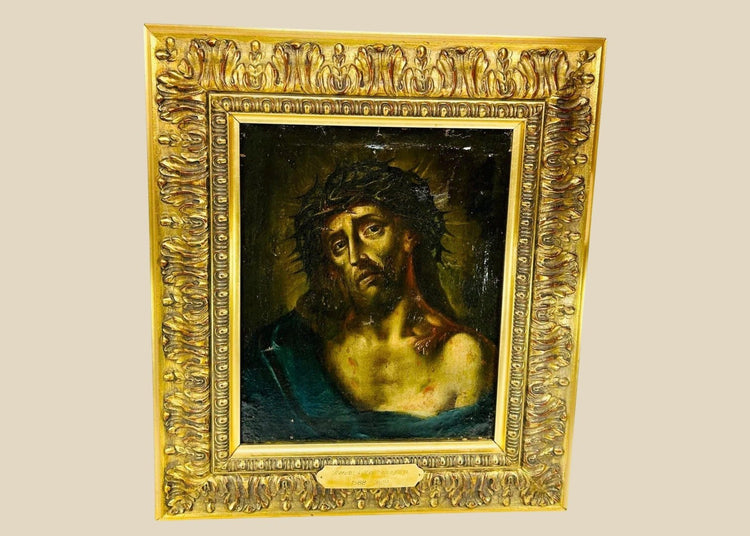
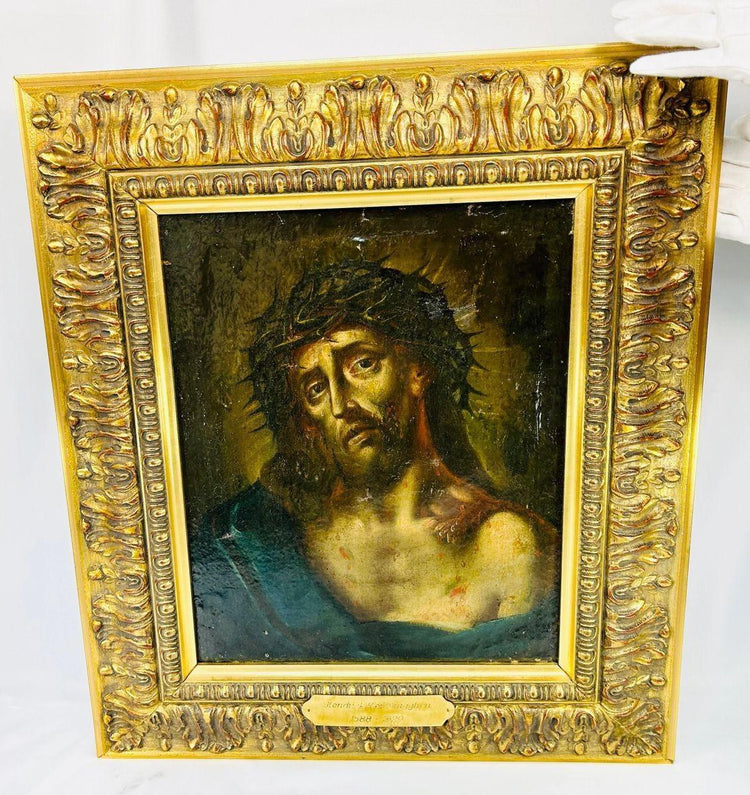
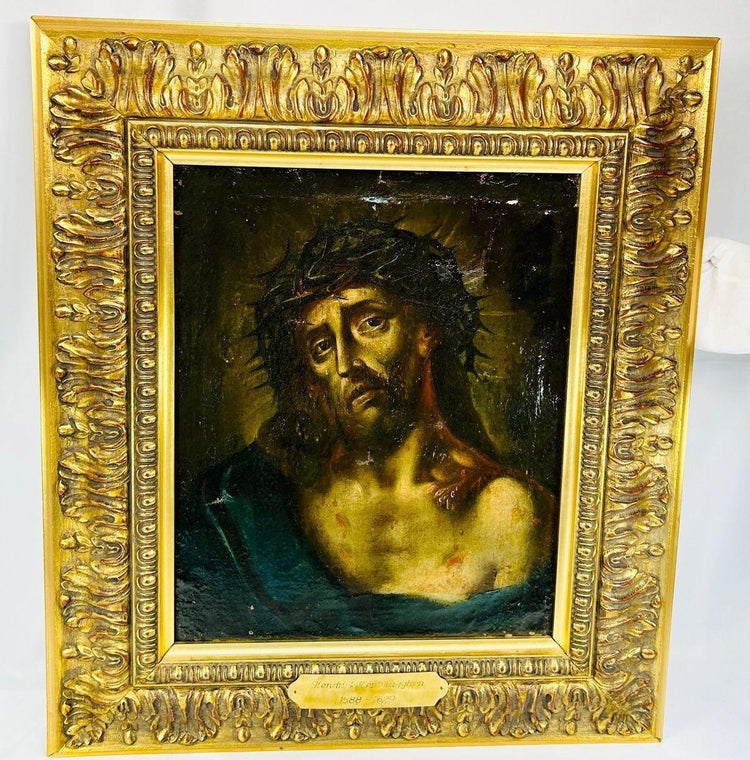
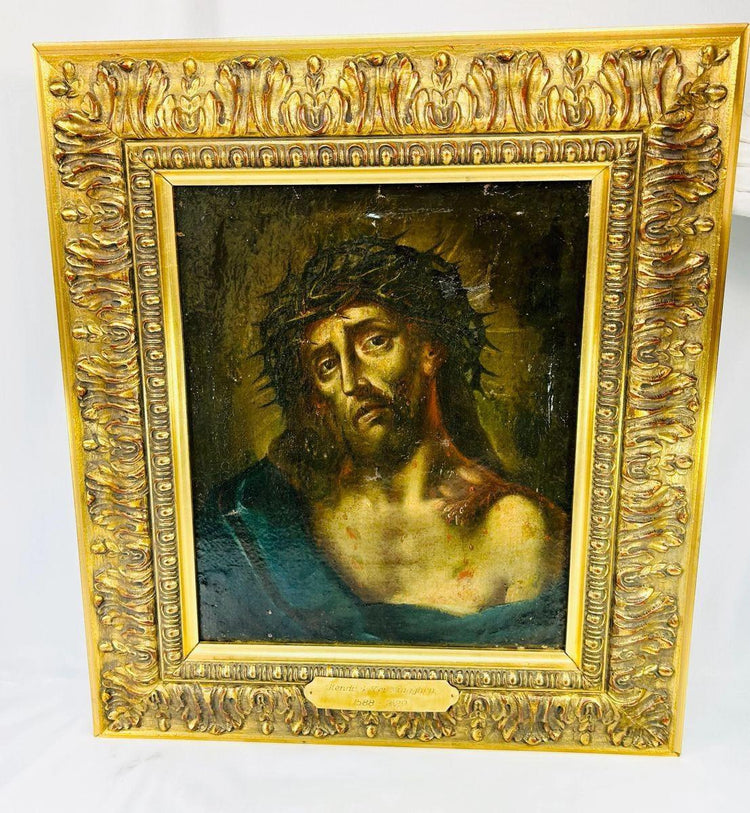
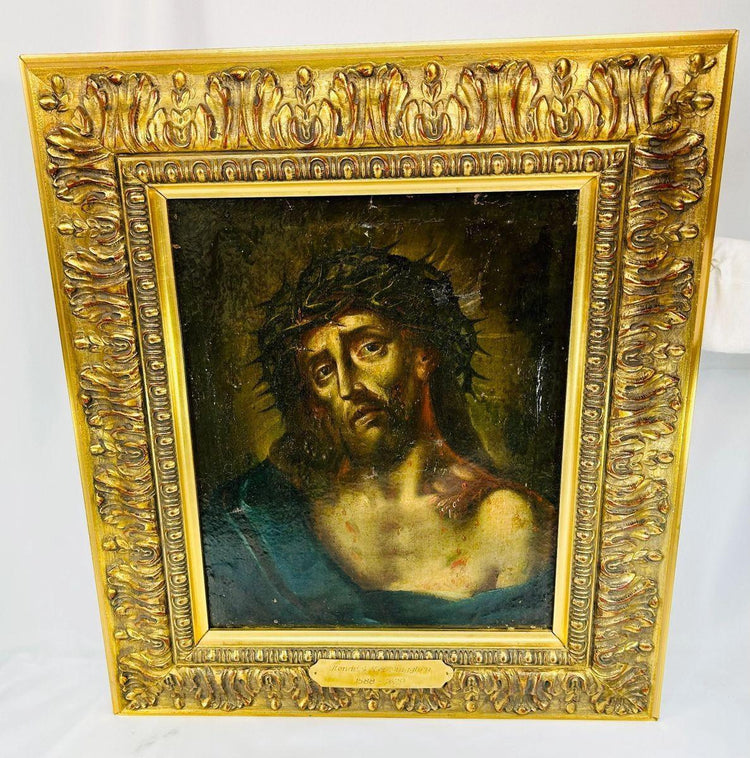
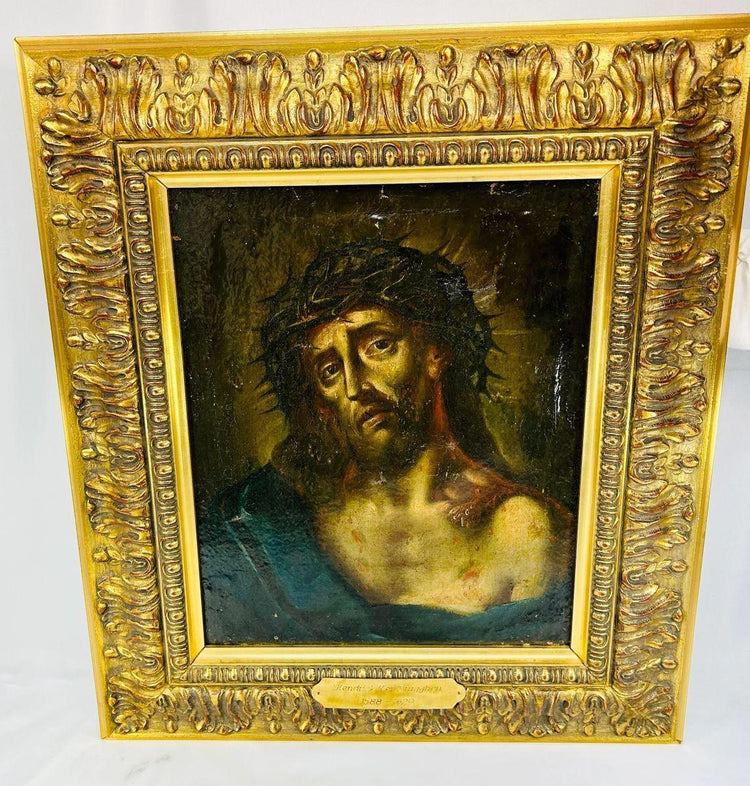
This striking Old Master–style oil painting presents a powerful Ecce Homo depiction of Jesus Christ crowned with thorns. Executed in the dramatic Caravaggesque tradition, the composition employs strong contrasts of light and shadow to emphasize the solemn expression of Christ and the emotional weight of the scene.
The work reflects the artistic influence of the Utrecht Caravaggisti, a group of Dutch painters active in the early 17th century who were inspired by the revolutionary lighting and realism of Caravaggio. Paintings of this kind were intended to evoke contemplation, empathy, and devotion.
The ornate Baroque-style gilded frame enhances the visual impact of the composition, presenting the work in a manner consistent with historical European devotional paintings.
Features
- Dramatic Caravaggesque chiaroscuro with strong contrasts of light and shadow
- Expressive rendering of Christ’s face and crown of thorns
- Old Master–style religious composition rooted in the Dutch Baroque tradition
- Decorative gilded Baroque-style frame
Cultural Significance
Paintings depicting Ecce Homo (“Behold the Man”) were widely produced throughout Catholic and Protestant Europe during the Baroque period. The subject portrays the moment when Christ is presented to the crowd before the crucifixion, emphasizing themes of sacrifice, humility, and spiritual endurance.
Artists associated with the Utrecht Caravaggisti introduced Caravaggio’s dramatic lighting and realism into Dutch painting, creating emotionally powerful religious works that remain significant within the history of European art.
Attribution
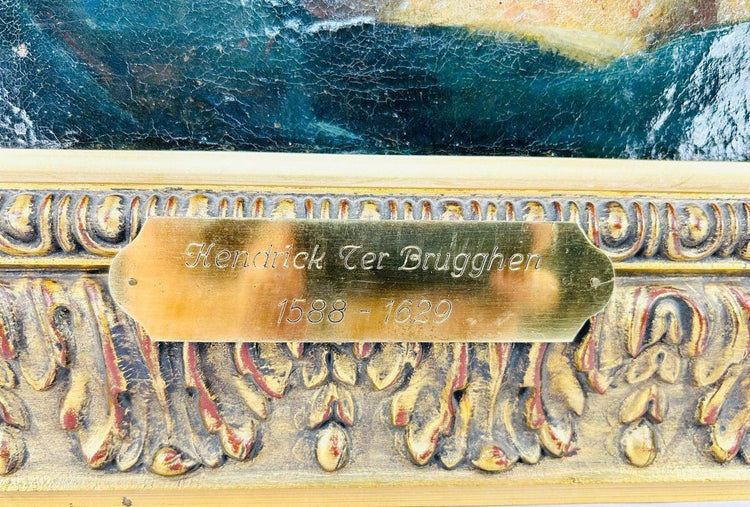
The painting reflects the style and influence of the Utrecht Caravaggisti, a group of Dutch painters active during the early 17th century. While the work shares stylistic similarities with artists such as Hendrick ter Brugghen, it is presently offered as a Dutch Baroque Ecce Homo painting in the Caravaggesque tradition.
Condition
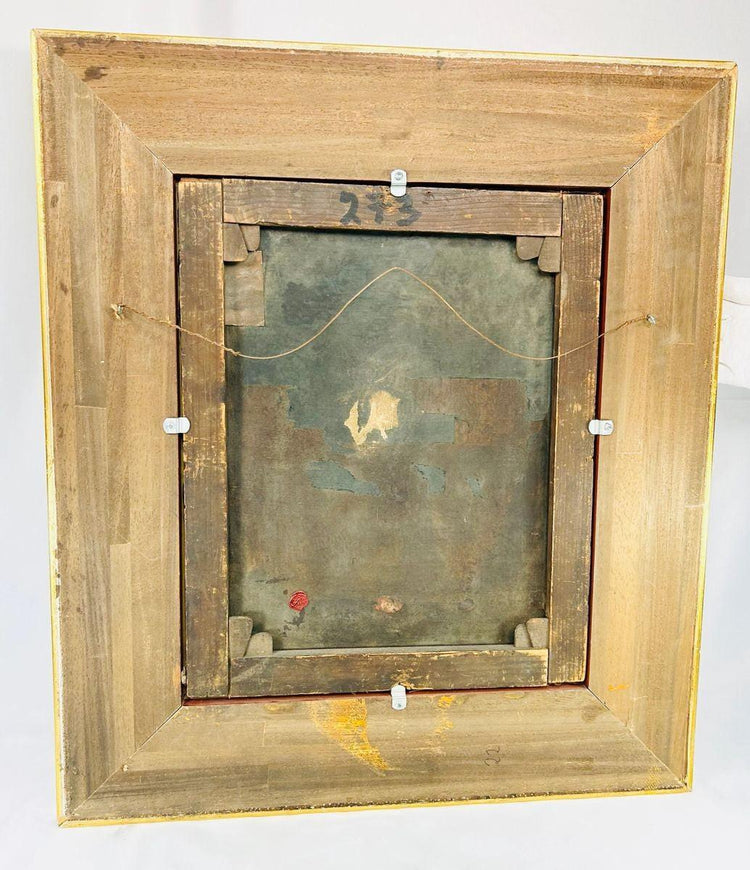
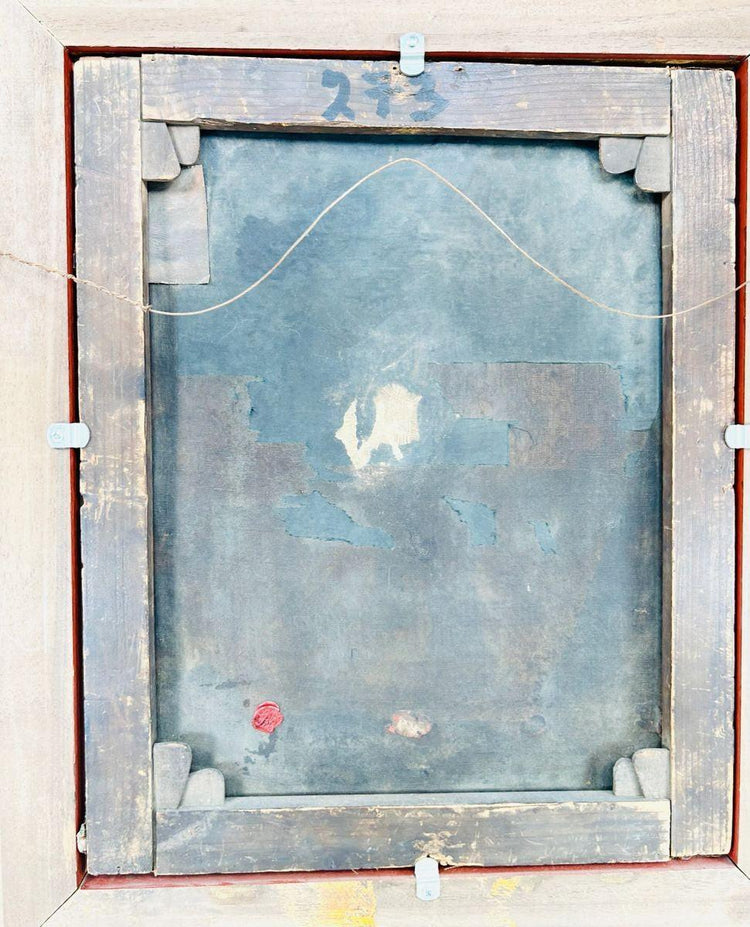
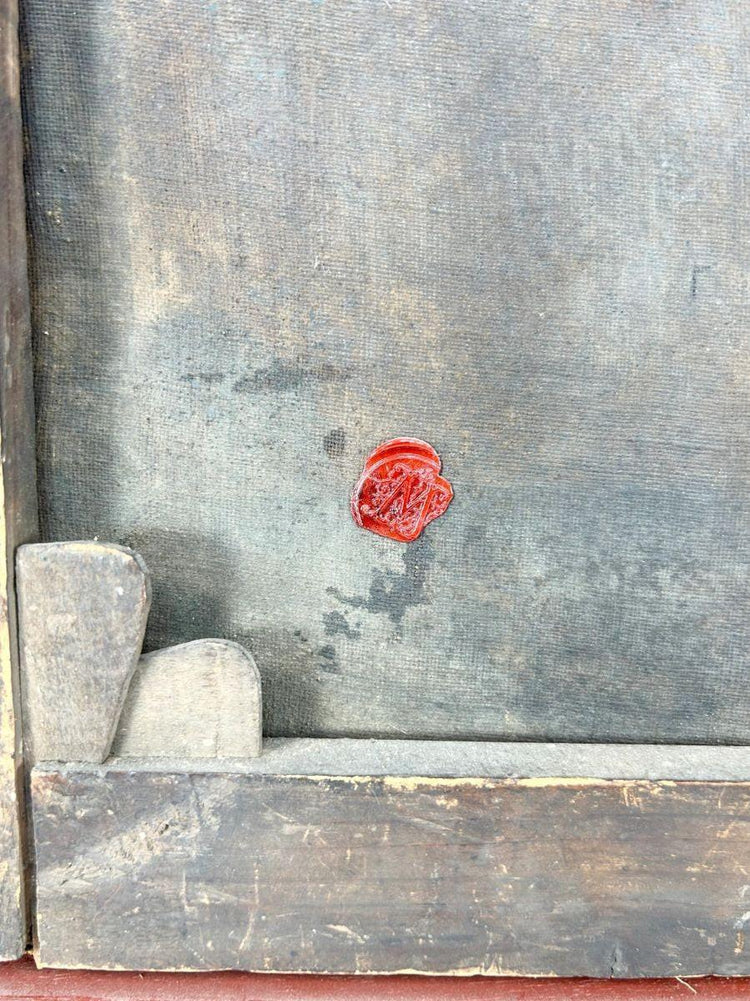
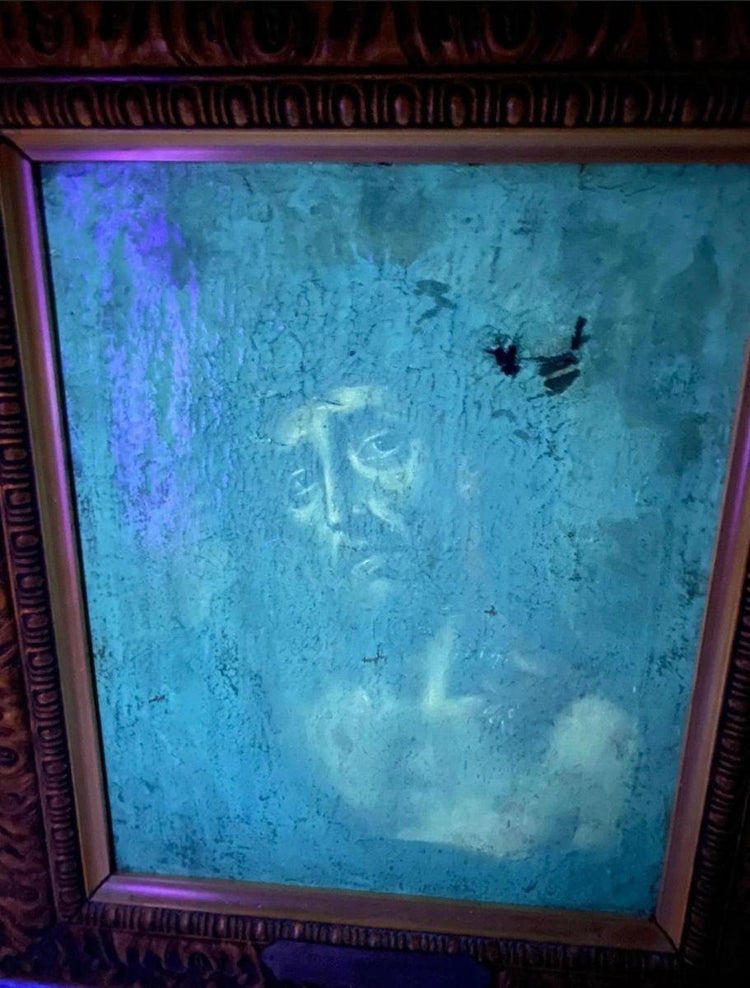
The painting displays age-appropriate craquelure and minor paint loss consistent with historical works on canvas. A recent ultraviolet (UV) fluorescence examination reveals areas of conservation and touch-up typical for paintings of this period.
Dimensions (Approximate)
Height: 24 in
Width: 26 in
Age (Approximate)
375–425 years old
Learn More
Explore related religious artworks including European Oil Painting of Jesus with Crown of Thorns and European Oil Painting of the Virgin Mary in Mourning
Learn about the meaning of Ecce Homo – “Behold the Man” in Christian art history
Description
Historical Context & Origin
Region: Netherlands, Dutch Golden Age
Material: Oil on canvas with gilded Baroque-style frame
Period: Early 17th Century CE
Description
This striking Old Master–style oil painting presents a powerful Ecce Homo depiction of Jesus Christ crowned with thorns. Executed in the dramatic Caravaggesque tradition, the composition employs strong contrasts of light and shadow to emphasize the solemn expression of Christ and the emotional weight of the scene.
The work reflects the artistic influence of the Utrecht Caravaggisti, a group of Dutch painters active in the early 17th century who were inspired by the revolutionary lighting and realism of Caravaggio. Paintings of this kind were intended to evoke contemplation, empathy, and devotion.
The ornate Baroque-style gilded frame enhances the visual impact of the composition, presenting the work in a manner consistent with historical European devotional paintings.
Features
- Dramatic Caravaggesque chiaroscuro with strong contrasts of light and shadow
- Expressive rendering of Christ’s face and crown of thorns
- Old Master–style religious composition rooted in the Dutch Baroque tradition
- Decorative gilded Baroque-style frame
Cultural Significance
Paintings depicting Ecce Homo (“Behold the Man”) were widely produced throughout Catholic and Protestant Europe during the Baroque period. The subject portrays the moment when Christ is presented to the crowd before the crucifixion, emphasizing themes of sacrifice, humility, and spiritual endurance.
Artists associated with the Utrecht Caravaggisti introduced Caravaggio’s dramatic lighting and realism into Dutch painting, creating emotionally powerful religious works that remain significant within the history of European art.
Attribution
The painting reflects the style and influence of the Utrecht Caravaggisti, a group of Dutch painters active during the early 17th century. While the work shares stylistic similarities with artists such as Hendrick ter Brugghen, it is presently offered as a Dutch Baroque Ecce Homo painting in the Caravaggesque tradition.
Condition
The painting displays age-appropriate craquelure and minor paint loss consistent with historical works on canvas. A recent ultraviolet (UV) fluorescence examination reveals areas of conservation and touch-up typical for paintings of this period.
Dimensions (Approximate)
Height: 24 in
Width: 26 in
Age (Approximate)
375–425 years old
Learn More
Explore related religious artworks including European Oil Painting of Jesus with Crown of Thorns and European Oil Painting of the Virgin Mary in Mourning
Learn about the meaning of Ecce Homo – “Behold the Man” in Christian art history
You May Also Like
