
Egyptian Faience Ushabti with Traces of Pigment | Circa 664–332 BCE
Couldn't load pickup availability


Egyptian Faience Ushabti with Traces of Pigment | Circa 664–332 BCE
Description
More
Less
Historical Context & Origin
Region: Egypt
Material: Faience with mineral surface deposits
Period: Circa 664–332 BCE
Description
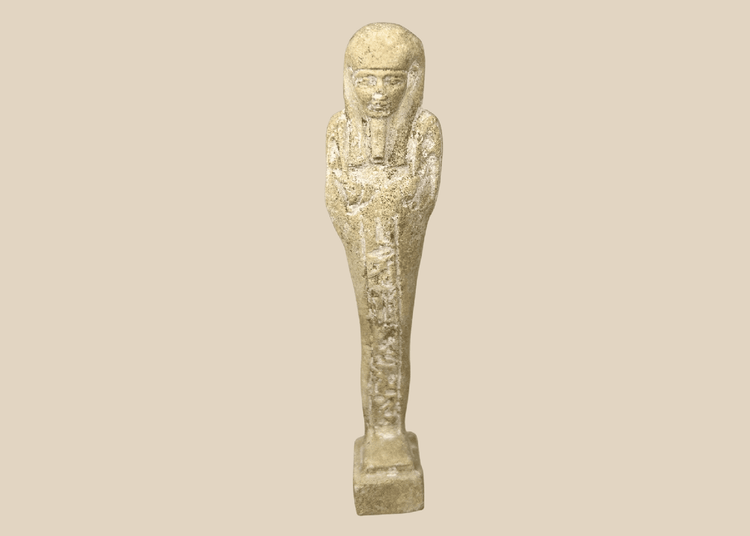
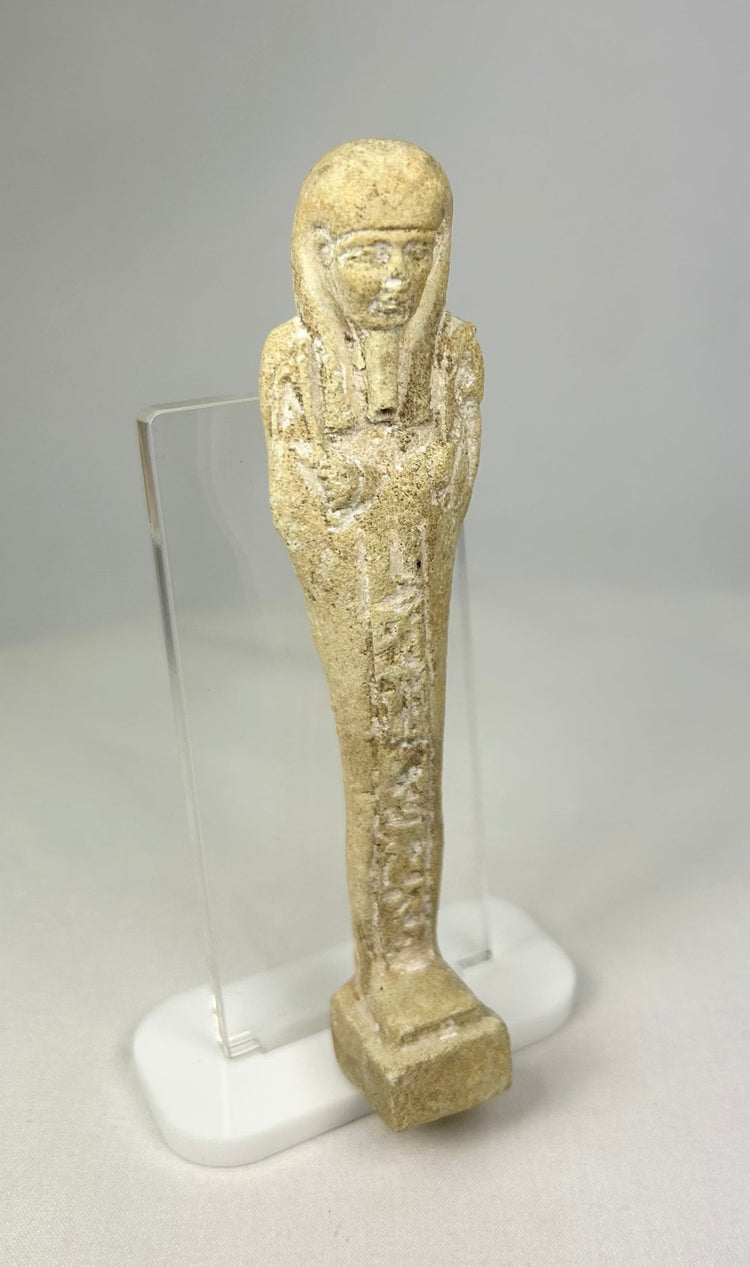
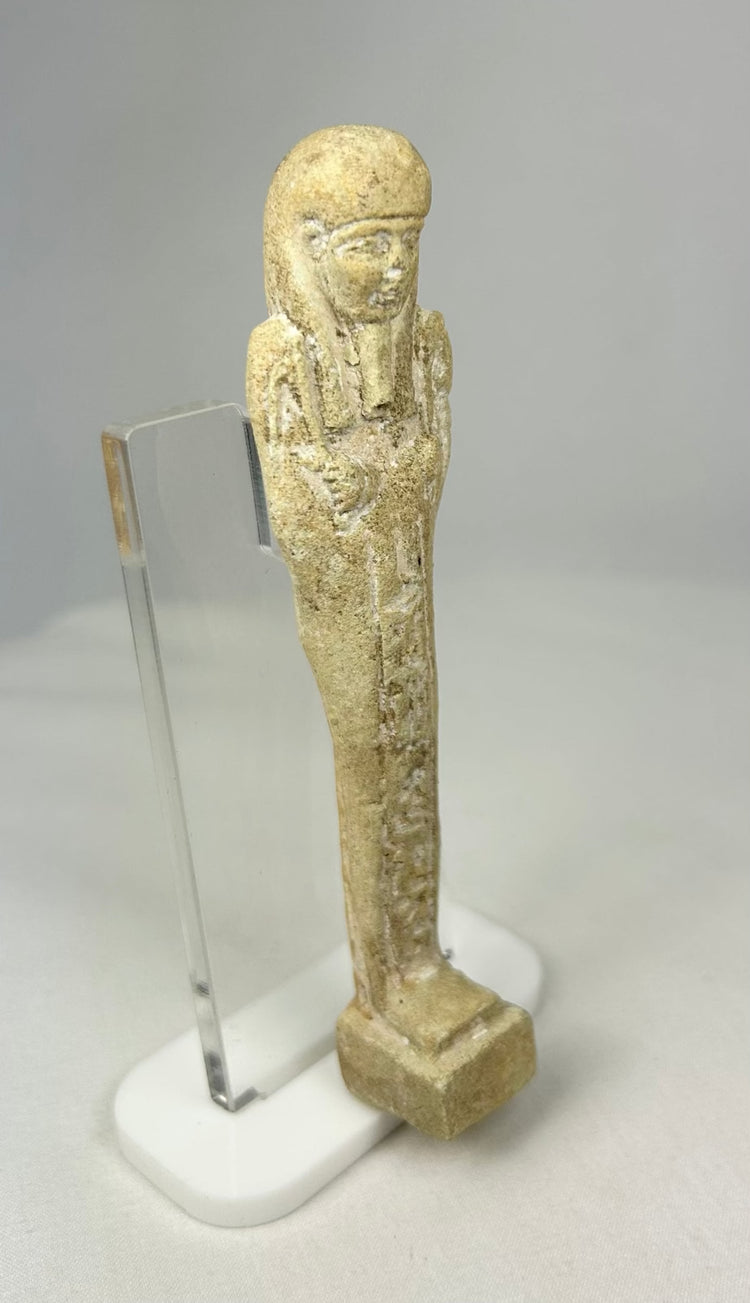
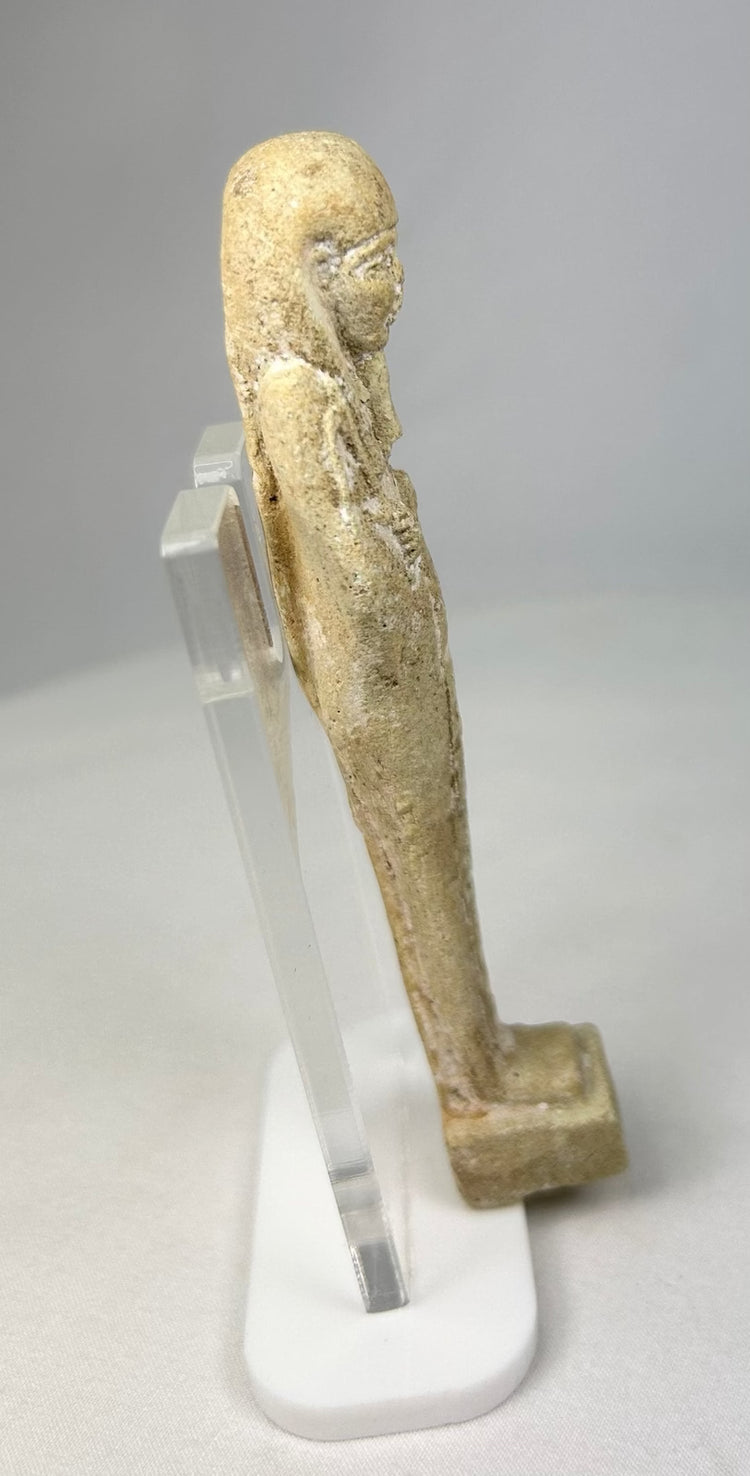
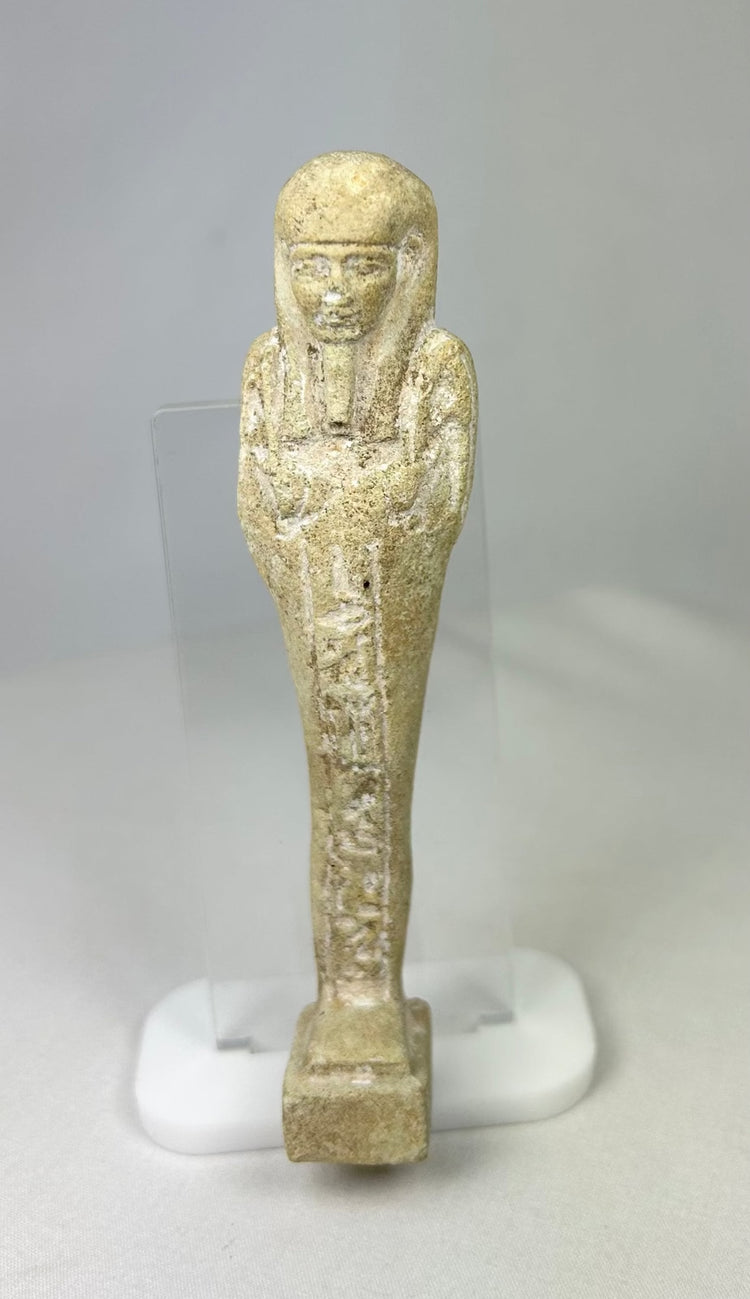
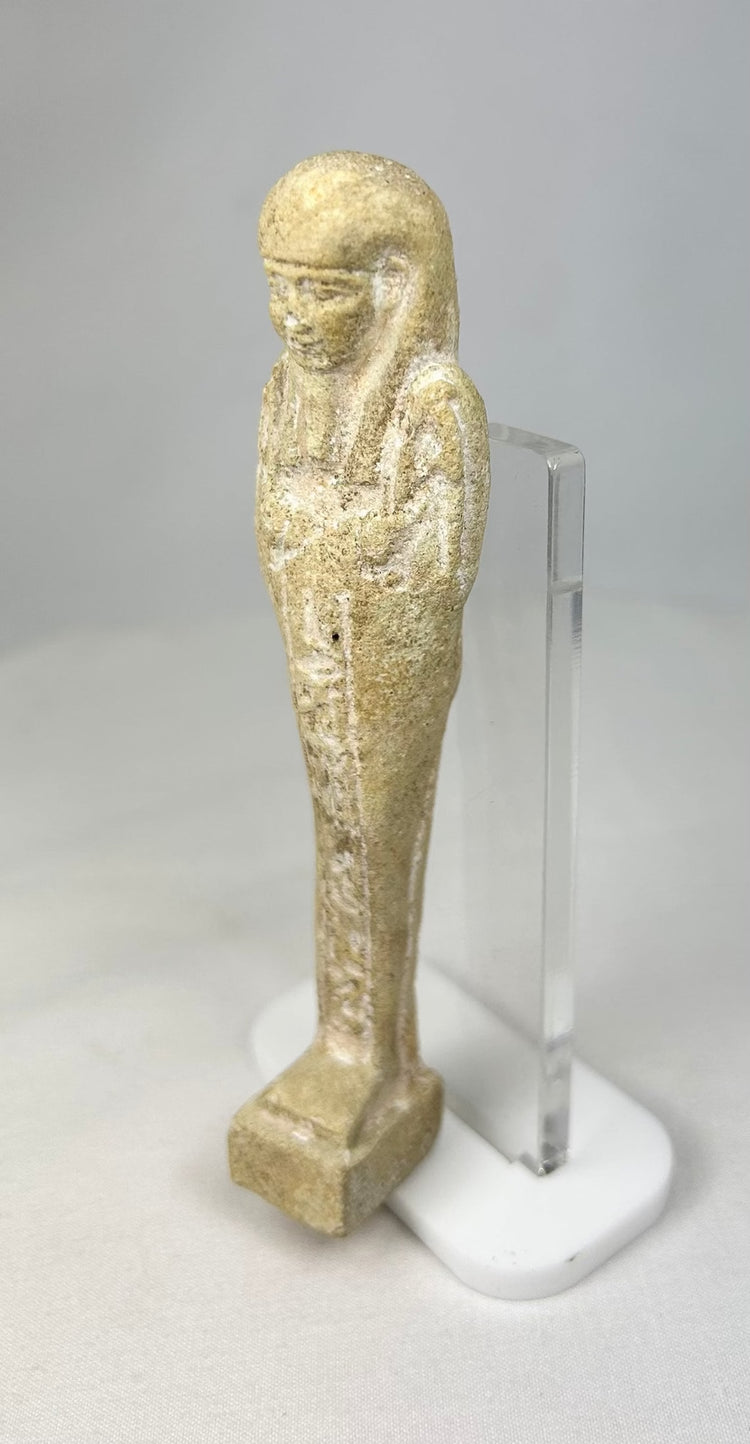
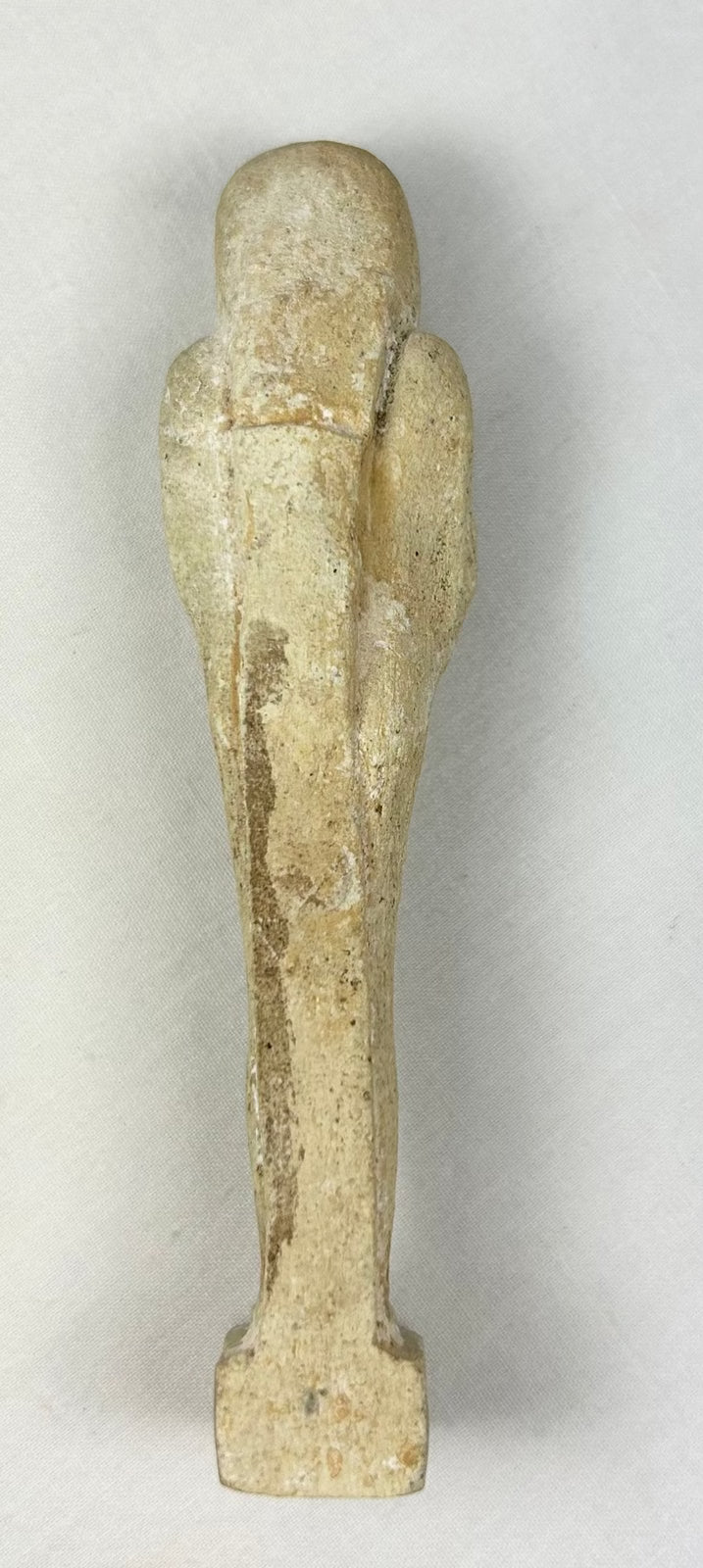
This is an authentic Ancient Egyptian ushabti (shabti) figure carved from pale faience and presented in the traditional mummiform pose. The figure features folded arms, a smooth tripartite wig, and faint sculptural details characteristic of Late Period craftsmanship. Ushabtis served as symbolic attendants placed in tombs to perform manual labour on behalf of the deceased in the afterlife.
The surface retains ancient mineral encrustations and burial patination, giving the piece a powerful historical presence. Despite its age, the ushabti remains well-proportioned with visible facial structure and body contours.
Features
- Mummiform funerary servant figure
- Traditional Late Period proportions
- Pale faience with ancient mineral deposits
- Standing pose with arms crossed
Cultural Significance
Ushabtis were essential components of Egyptian funerary practice, believed to magically perform tasks required of the deceased in the afterlife. Individuals of status often included dozens of them within their tomb assemblages. This example reflects the enduring artistry and religious symbolism of the Late Period, when such figures were skillfully produced in stone, faience, and occasionally wood.
Condition
Excellent for age. Minor surface wear, stable ancient deposits, and expected burial patina. No restoration observed. Mounted on a clear acrylic base for professional display.
Dimensions (Approximate)
Height: 4.5 in
Width: 1.25 in
Age (Approximate)
2,350–2,700 years old
Learn More
Explore Egyptian ushabtis through the Art Institute of Chicago
Browse our curated Ancient Egyptian Mummies & Artifacts Collection
Description
Historical Context & Origin
Region: Egypt
Material: Faience with mineral surface deposits
Period: Circa 664–332 BCE
Description
This is an authentic Ancient Egyptian ushabti (shabti) figure carved from pale faience and presented in the traditional mummiform pose. The figure features folded arms, a smooth tripartite wig, and faint sculptural details characteristic of Late Period craftsmanship. Ushabtis served as symbolic attendants placed in tombs to perform manual labour on behalf of the deceased in the afterlife.
The surface retains ancient mineral encrustations and burial patination, giving the piece a powerful historical presence. Despite its age, the ushabti remains well-proportioned with visible facial structure and body contours.
Features
- Mummiform funerary servant figure
- Traditional Late Period proportions
- Pale faience with ancient mineral deposits
- Standing pose with arms crossed
Cultural Significance
Ushabtis were essential components of Egyptian funerary practice, believed to magically perform tasks required of the deceased in the afterlife. Individuals of status often included dozens of them within their tomb assemblages. This example reflects the enduring artistry and religious symbolism of the Late Period, when such figures were skillfully produced in stone, faience, and occasionally wood.
Condition
Excellent for age. Minor surface wear, stable ancient deposits, and expected burial patina. No restoration observed. Mounted on a clear acrylic base for professional display.
Dimensions (Approximate)
Height: 4.5 in
Width: 1.25 in
Age (Approximate)
2,350–2,700 years old
Learn More
Explore Egyptian ushabtis through the Art Institute of Chicago
Browse our curated Ancient Egyptian Mummies & Artifacts Collection
You May Also Like
