



Egyptian Limestone Ushabti with Mineral Deposits | Circa 664–332 BCE
Couldn't load pickup availability


Egyptian Limestone Ushabti with Mineral Deposits | Circa 664–332 BCE
Description
More
Less
Historical Context & Origin
Region: Egypt
Material: Carved limestone with natural surface mineral deposits
Period: Late Period, 26th–30th Dynasty (Circa 664–332 BCE)
Description
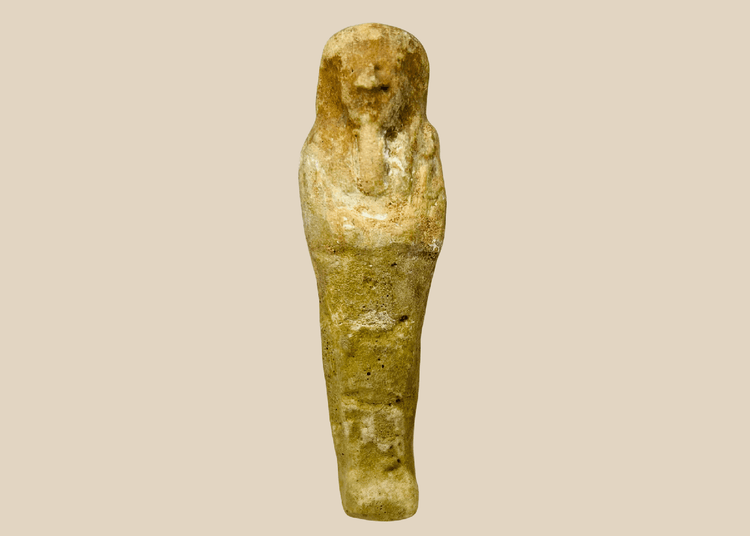
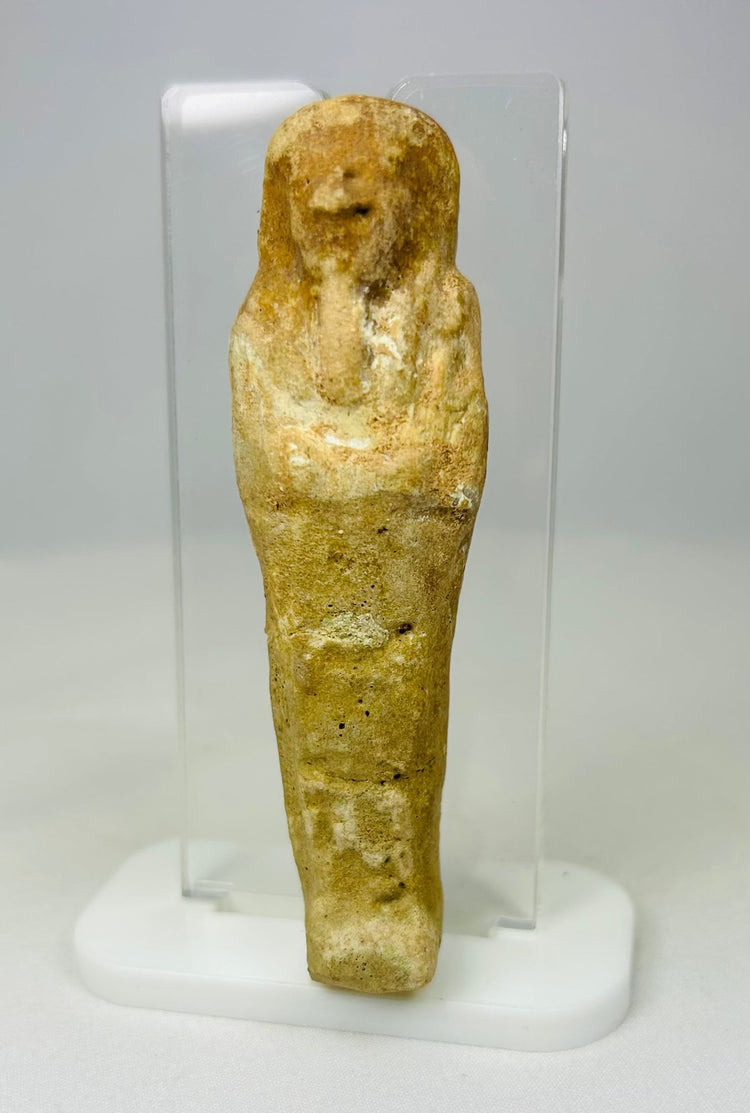
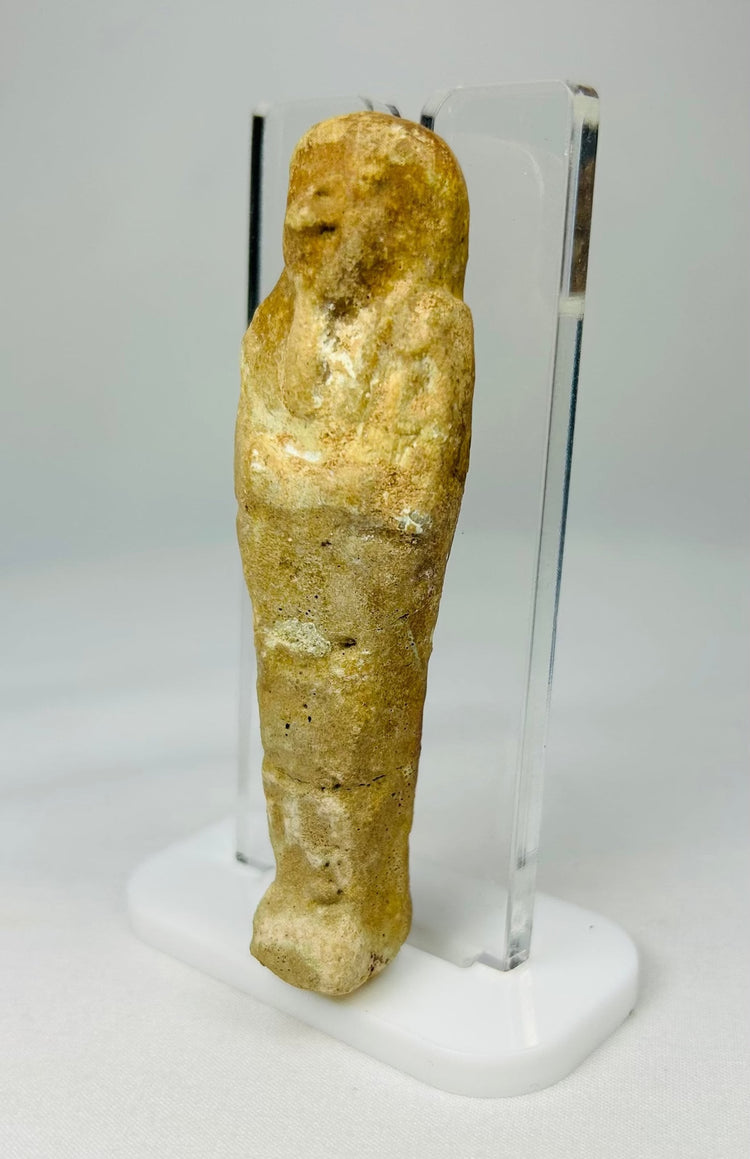
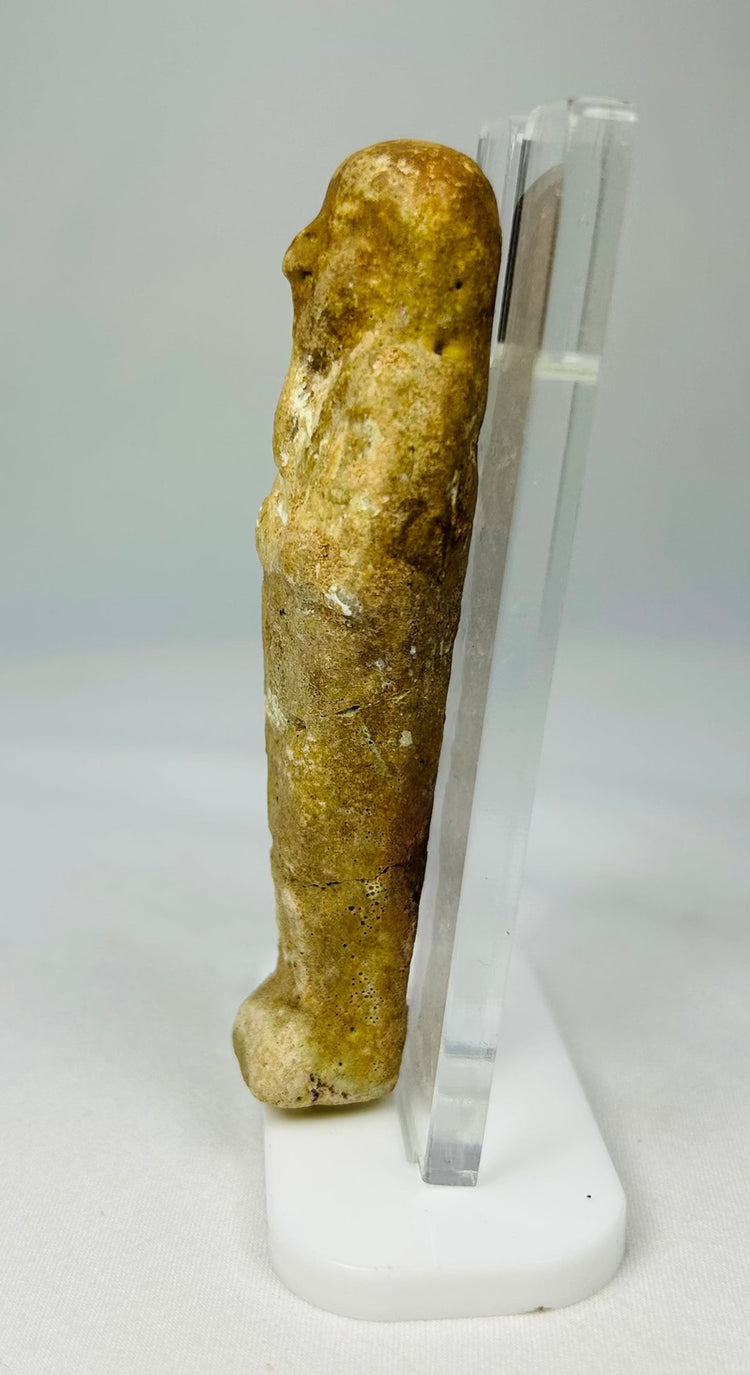
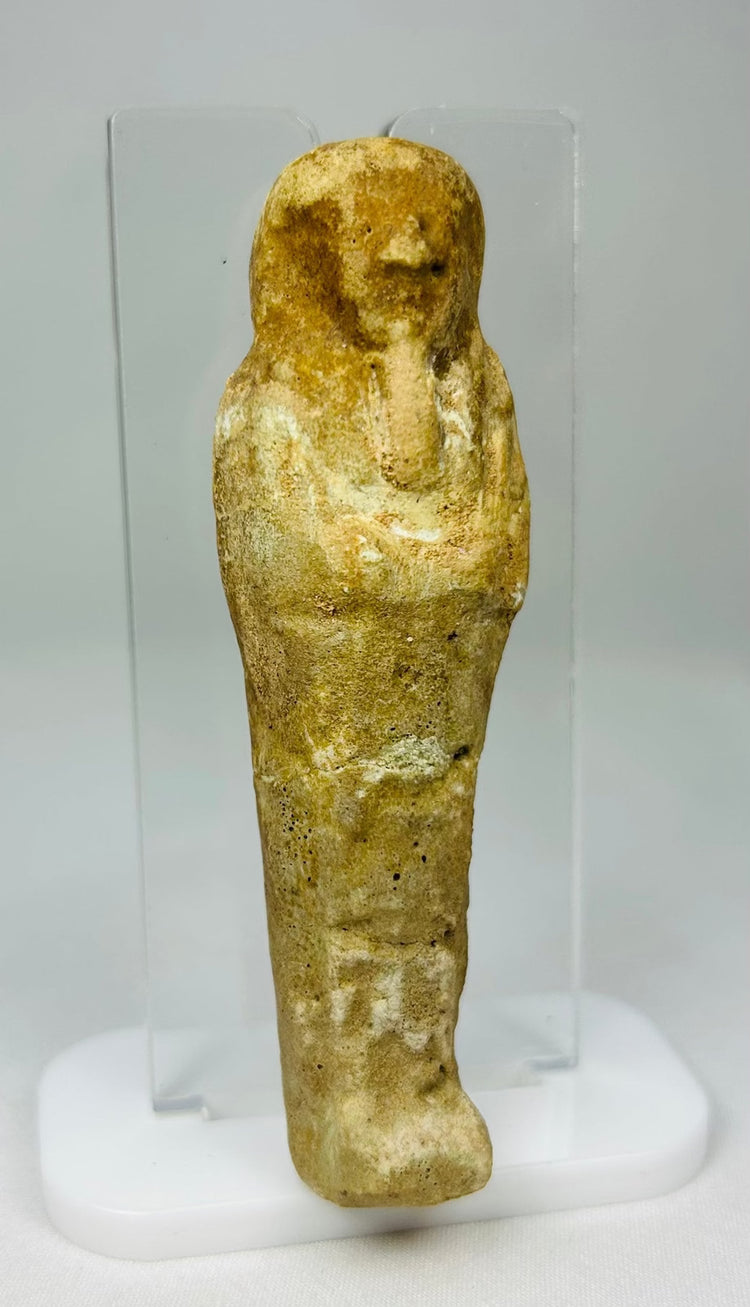
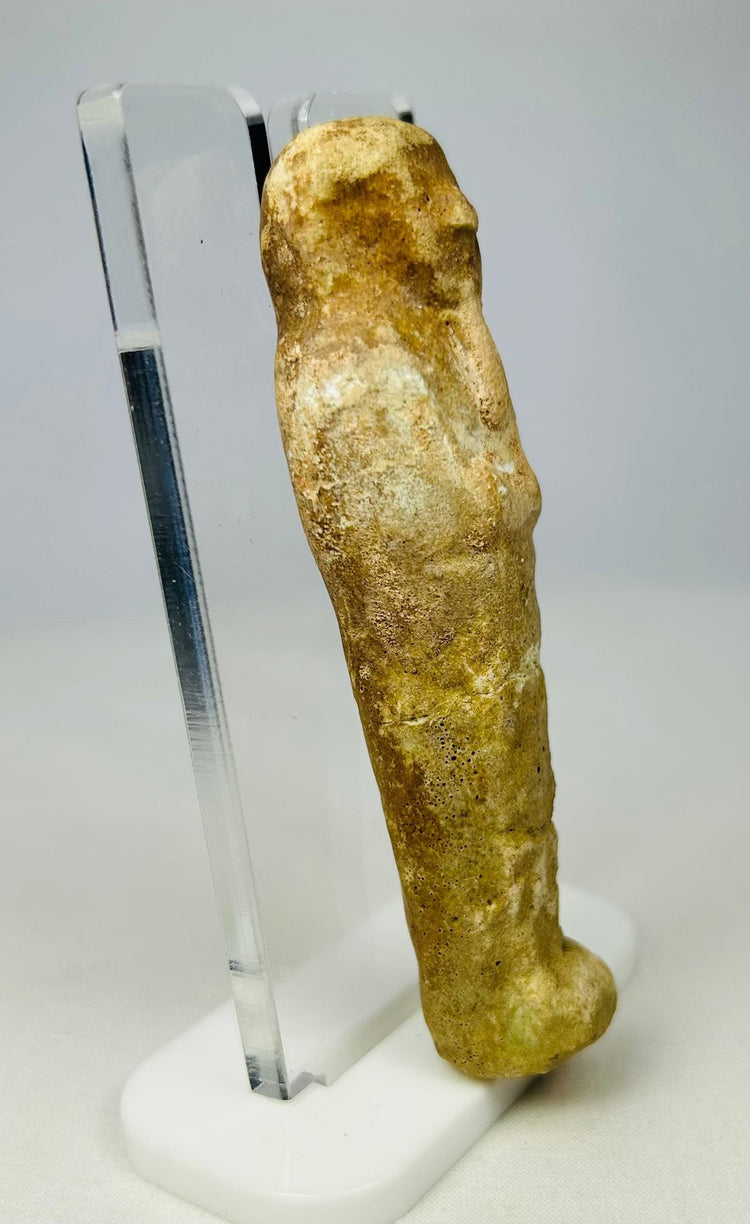
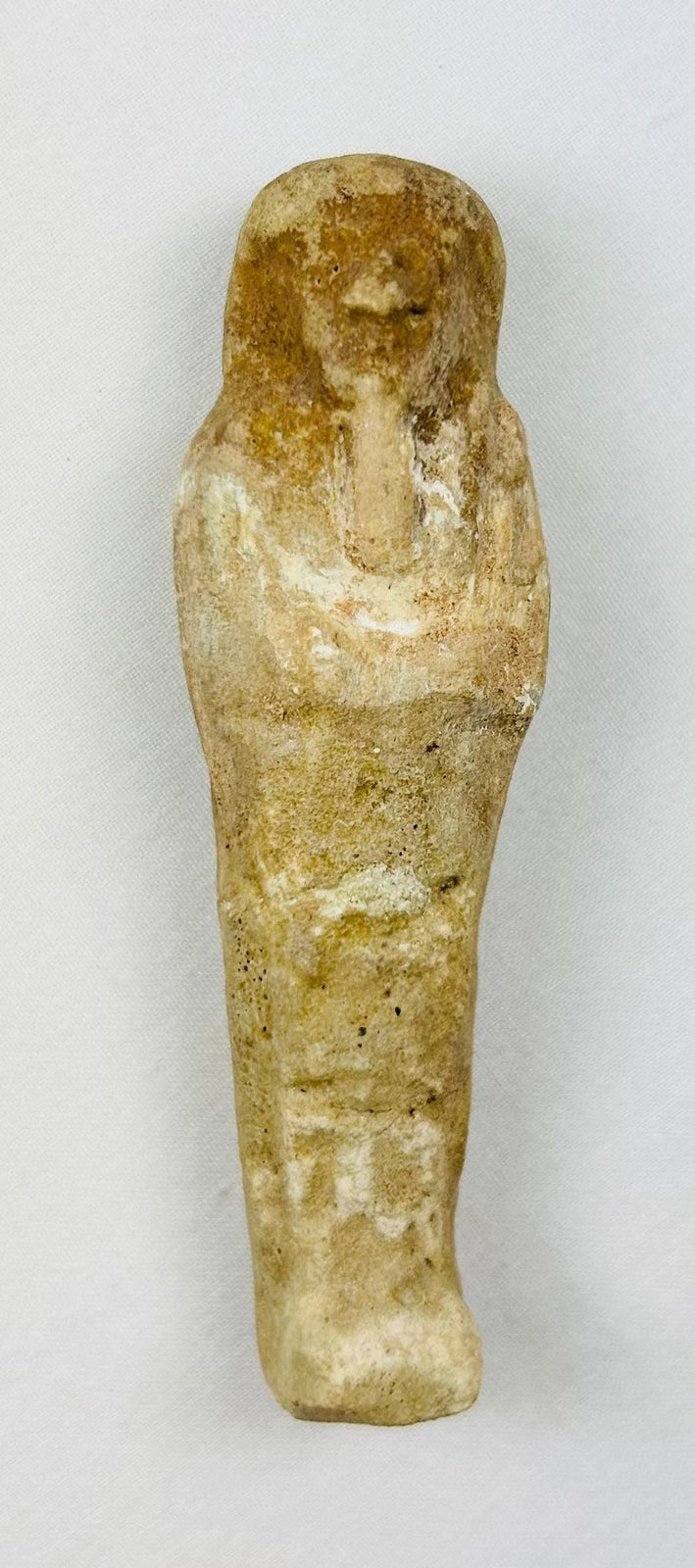
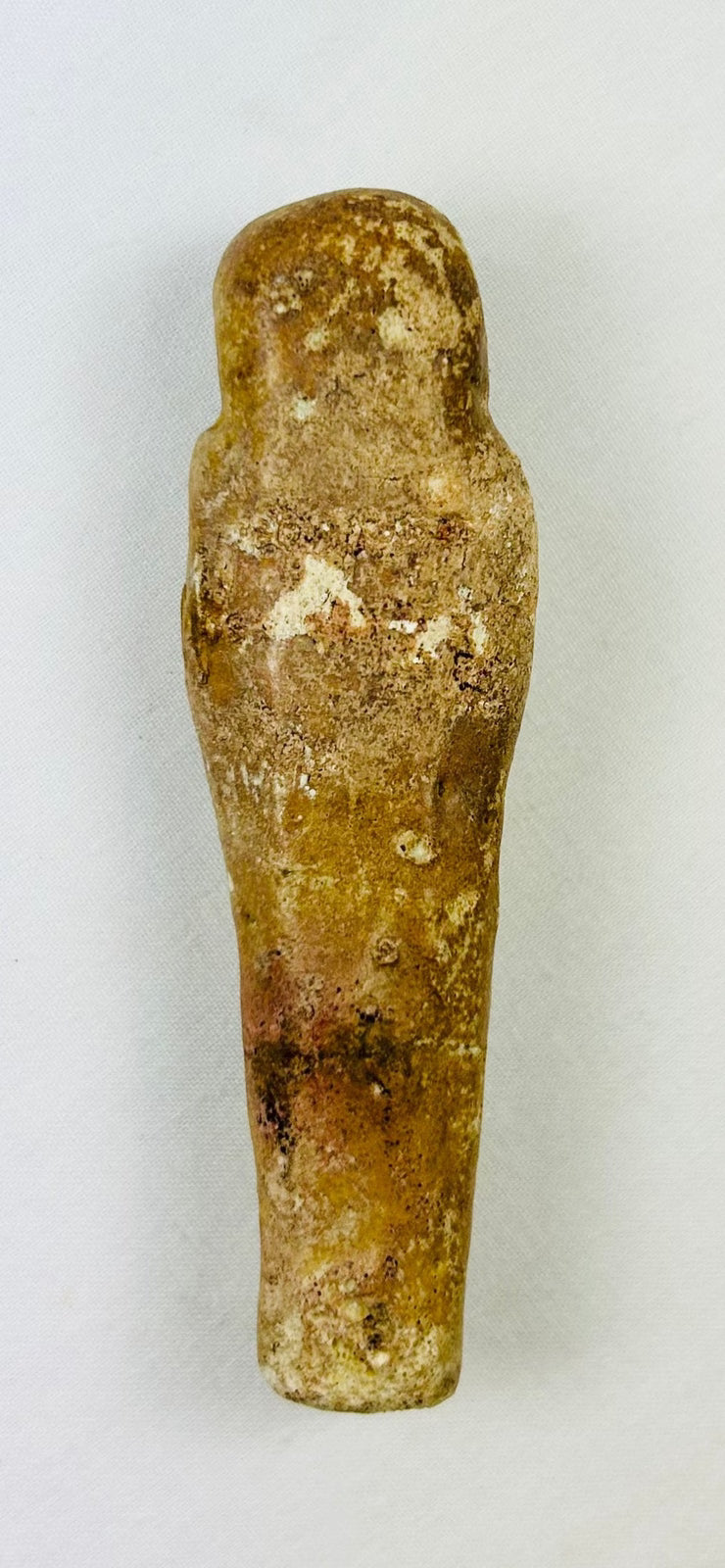
This ancient Egyptian ushabti is carved from warm-toned limestone and retains a naturally weathered surface enhanced by centuries of mineral accretion. Standing in the classic mummiform pose with arms crossed, the figure once served as a funerary servant intended to assist the deceased in the afterlife. Its expressive facial contours, elongated proportions, and softened edges are characteristic of Late Period provincial workshop production. Despite its age, the piece maintains a strong visual presence, accented by original surface texture, faint pigment traces, and layered mineral deposits accumulated over more than two millennia.
Features
- Authentic Late Period limestone ushabti
- Distinct mineral surface deposits from ancient burial
- Classic mummiform stance with crossed arms
- Carved detailing across the face, body, and head
Cultural Significance
Ushabtis were placed within tombs as ritual substitutes to perform agricultural labour for the deceased in the Field of Reeds. Their use spans thousands of years of Egyptian funerary practice, symbolizing eternal life, divine reciprocity, and continuity beyond death. Late Period examples such as this represent the culmination of that long tradition—bridging earthly existence with the eternal afterworld.
Condition
Excellent archaeological condition for its age. Expected weathering from burial, with mineral deposits, earthen encrustations, and authentic surface wear. Minor abrasions and edge smoothing typical of Late Period limestone ushabtis. Stable and professionally mounted for display.
Dimensions (Approximate)
Height: 3.25 in
Width: 1.0 in
Age (Approximate)
Over 2,300 years old
Learn More
Compare with an Egyptian ushabti through BM Images Archive
Browse our curated Egyptian Ushabti & Artifacts Collection
Description
Historical Context & Origin
Region: Egypt
Material: Carved limestone with natural surface mineral deposits
Period: Late Period, 26th–30th Dynasty (Circa 664–332 BCE)
Description
This ancient Egyptian ushabti is carved from warm-toned limestone and retains a naturally weathered surface enhanced by centuries of mineral accretion. Standing in the classic mummiform pose with arms crossed, the figure once served as a funerary servant intended to assist the deceased in the afterlife. Its expressive facial contours, elongated proportions, and softened edges are characteristic of Late Period provincial workshop production. Despite its age, the piece maintains a strong visual presence, accented by original surface texture, faint pigment traces, and layered mineral deposits accumulated over more than two millennia.
Features
- Authentic Late Period limestone ushabti
- Distinct mineral surface deposits from ancient burial
- Classic mummiform stance with crossed arms
- Carved detailing across the face, body, and head
Cultural Significance
Ushabtis were placed within tombs as ritual substitutes to perform agricultural labour for the deceased in the Field of Reeds. Their use spans thousands of years of Egyptian funerary practice, symbolizing eternal life, divine reciprocity, and continuity beyond death. Late Period examples such as this represent the culmination of that long tradition—bridging earthly existence with the eternal afterworld.
Condition
Excellent archaeological condition for its age. Expected weathering from burial, with mineral deposits, earthen encrustations, and authentic surface wear. Minor abrasions and edge smoothing typical of Late Period limestone ushabtis. Stable and professionally mounted for display.
Dimensions (Approximate)
Height: 3.25 in
Width: 1.0 in
Age (Approximate)
Over 2,300 years old
Learn More
Compare with an Egyptian ushabti through BM Images Archive
Browse our curated Egyptian Ushabti & Artifacts Collection
You May Also Like
