

European | Baroque Carved Wood Capital Fragment with Gilding | Circa 18th–19th Century
Couldn't load pickup availability


European | Baroque Carved Wood Capital Fragment with Gilding | Circa 18th–19th Century
Description
More
Less
Historical Context & Origin
Region: Southern Europe, likely Italy or Spain
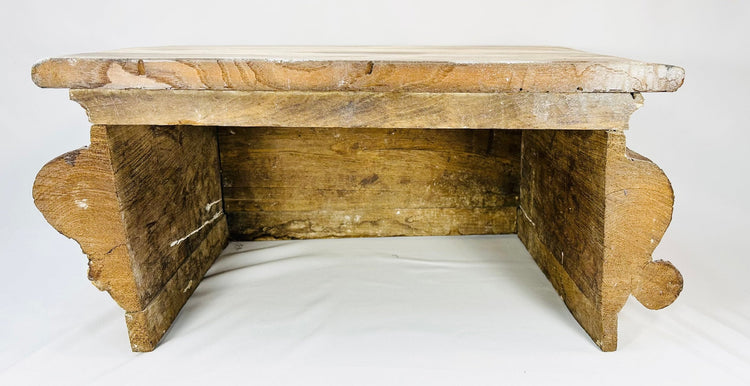
Material: Hand-carved softwood with gesso, traces of original gilding and polychrome, later plank top
Period: Circa 18th–19th Century
Description
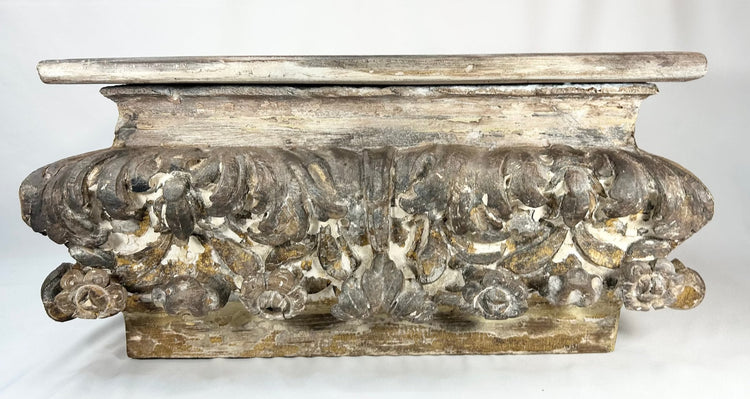
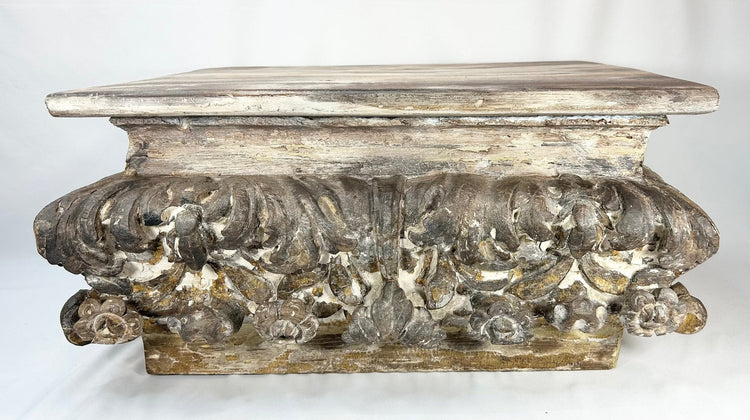
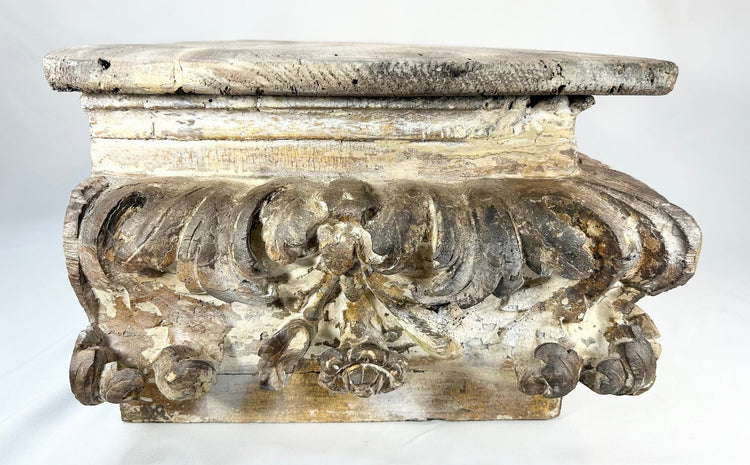
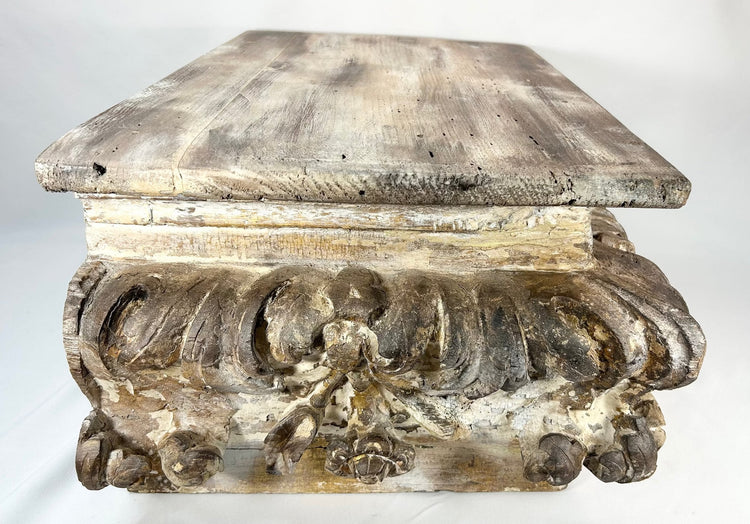
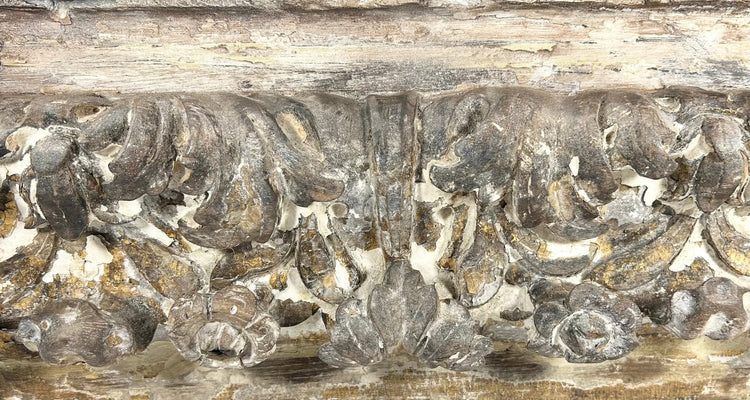
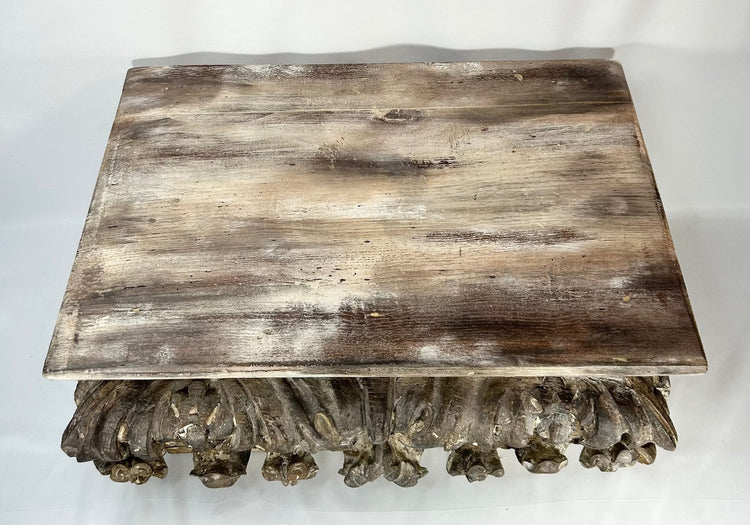
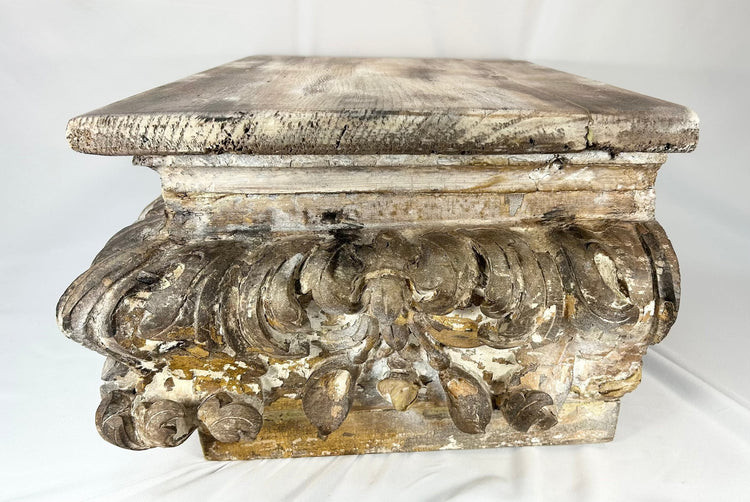
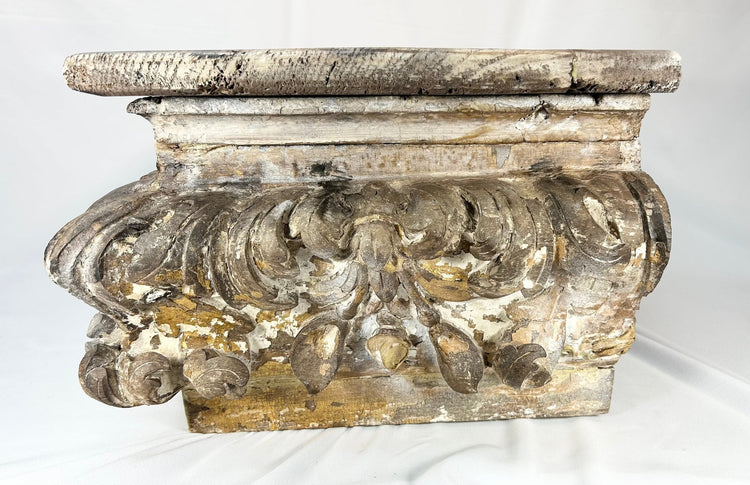
A substantial architectural fragment from a grand Baroque or Rococo interior, later adapted into a striking low display stand or pedestal. The richly carved front and sides preserve what was likely part of a column capital, entablature, or decorative architectural element from a church or noble residence. Deeply carved scrolling acanthus leaves, floral rosettes, and pendant foliage create a powerful cascading design, still showing traces of white gesso and worn gilding over a beautifully softened wood surface.
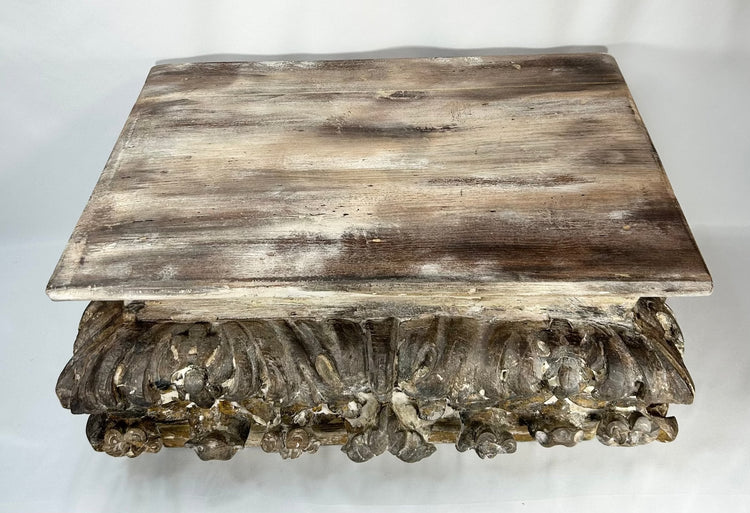
The underside remains open, with later boards forming a flat, stable “table” surface that allows the fragment to function perfectly as a sculptural stand or low console while retaining the dramatic historic carving across all visible sides.
Features
- Bold three-sided architectural carving with acanthus scrolls, flowers, and pendant leaf motifs
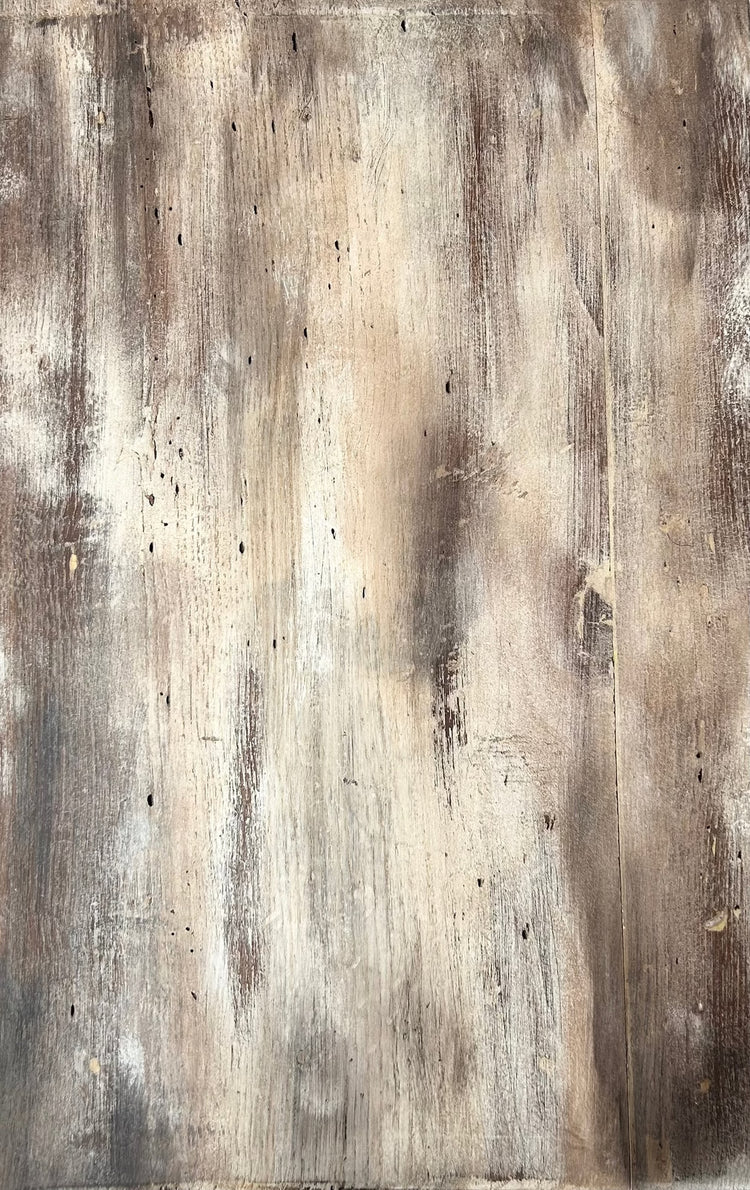
- Thick later-added plank top, aged to a soft grey-brown tone that complements the original carving
- Traces of original gilding and polychrome over gesso, now beautifully distressed with time
- Deep relief carving that creates dramatic light and shadow, ideal for display environments
- Historic architectural fragment thoughtfully adapted into a functional, decorative display stand
Cultural Significance
Carved and gilded architectural elements like this were defining features of Baroque and Rococo interiors throughout Southern Europe, particularly in churches, chapels, and aristocratic homes. These designs were intended to convey movement, grandeur, and visual drama, often framing altars, staircases, or ceremonial spaces.
Today, fragments such as this allow collectors to own a preserved piece of architectural history—bringing centuries-old craftsmanship and decorative artistry into a modern living space.
Condition
Structurally sound and stable for use as a stand, with heavy but attractive age-related wear throughout. Losses to carving, surface abrasion, age cracks, and flaking to gesso and gilding are present, exposing areas of wood beneath. The top plank shows worming, surface wear, and natural age warping, all stable. Expected small repairs, chips, and edge losses are consistent with antique architectural salvage and contribute to its authentic, decorative patina.
Dimensions (Approximate)
Width: 21.5 in
Depth: 15 in
Height: 10.75 in
Age (Approximate)
150–300 years old
Provenance
From a private collection in Pineville, Virginia, USA.
Learn More
Explore Rococo design artistry at the Metropolitan Museum of Art
Discover our curated Statues, Figures & Carvings Collection
Description
Historical Context & Origin
Region: Southern Europe, likely Italy or Spain
Material: Hand-carved softwood with gesso, traces of original gilding and polychrome, later plank top
Period: Circa 18th–19th Century
Description
A substantial architectural fragment from a grand Baroque or Rococo interior, later adapted into a striking low display stand or pedestal. The richly carved front and sides preserve what was likely part of a column capital, entablature, or decorative architectural element from a church or noble residence. Deeply carved scrolling acanthus leaves, floral rosettes, and pendant foliage create a powerful cascading design, still showing traces of white gesso and worn gilding over a beautifully softened wood surface.
The underside remains open, with later boards forming a flat, stable “table” surface that allows the fragment to function perfectly as a sculptural stand or low console while retaining the dramatic historic carving across all visible sides.
Features
- Bold three-sided architectural carving with acanthus scrolls, flowers, and pendant leaf motifs
- Thick later-added plank top, aged to a soft grey-brown tone that complements the original carving
- Traces of original gilding and polychrome over gesso, now beautifully distressed with time
- Deep relief carving that creates dramatic light and shadow, ideal for display environments
- Historic architectural fragment thoughtfully adapted into a functional, decorative display stand
Cultural Significance
Carved and gilded architectural elements like this were defining features of Baroque and Rococo interiors throughout Southern Europe, particularly in churches, chapels, and aristocratic homes. These designs were intended to convey movement, grandeur, and visual drama, often framing altars, staircases, or ceremonial spaces.
Today, fragments such as this allow collectors to own a preserved piece of architectural history—bringing centuries-old craftsmanship and decorative artistry into a modern living space.
Condition
Structurally sound and stable for use as a stand, with heavy but attractive age-related wear throughout. Losses to carving, surface abrasion, age cracks, and flaking to gesso and gilding are present, exposing areas of wood beneath. The top plank shows worming, surface wear, and natural age warping, all stable. Expected small repairs, chips, and edge losses are consistent with antique architectural salvage and contribute to its authentic, decorative patina.
Dimensions (Approximate)
Width: 21.5 in
Depth: 15 in
Height: 10.75 in
Age (Approximate)
150–300 years old
Provenance
From a private collection in Pineville, Virginia, USA.
Learn More
Explore Rococo design artistry at the Metropolitan Museum of Art
Discover our curated Statues, Figures & Carvings Collection
You May Also Like
