



European Socketed Spearhead | Iron Leaf-Shaped Blade with Rolled Base | 18th Century or Earlier
Couldn't load pickup availability


European Socketed Spearhead | Iron Leaf-Shaped Blade with Rolled Base | 18th Century or Earlier
Description
More
Less
Historical Context & Origin
Region: Europe
Material: Iron
Period: 18th Century or Earlier
Description
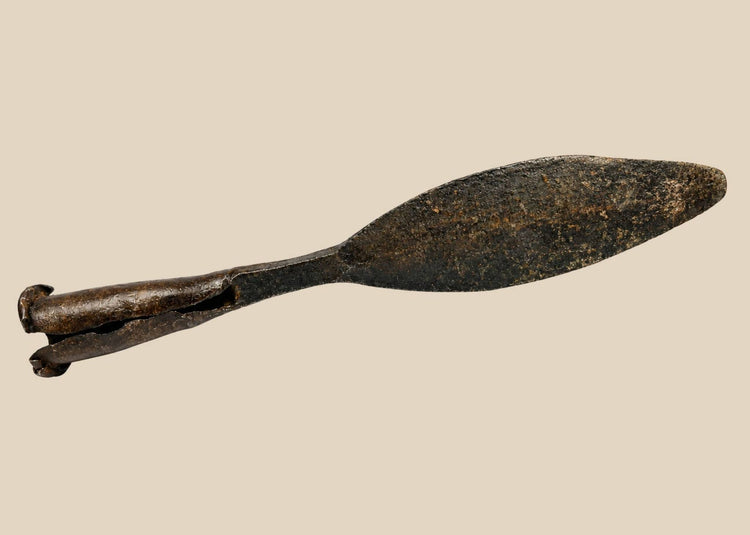
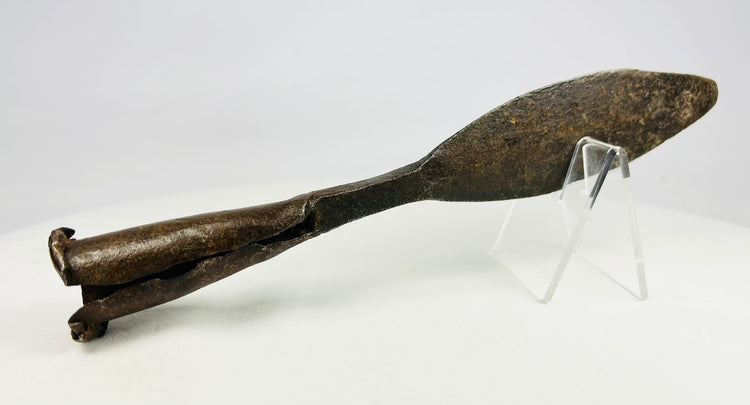
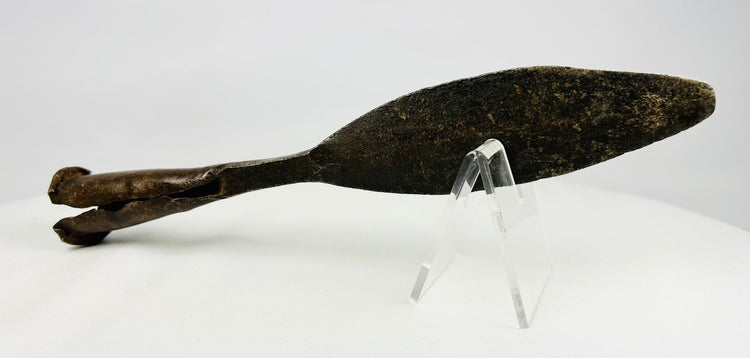
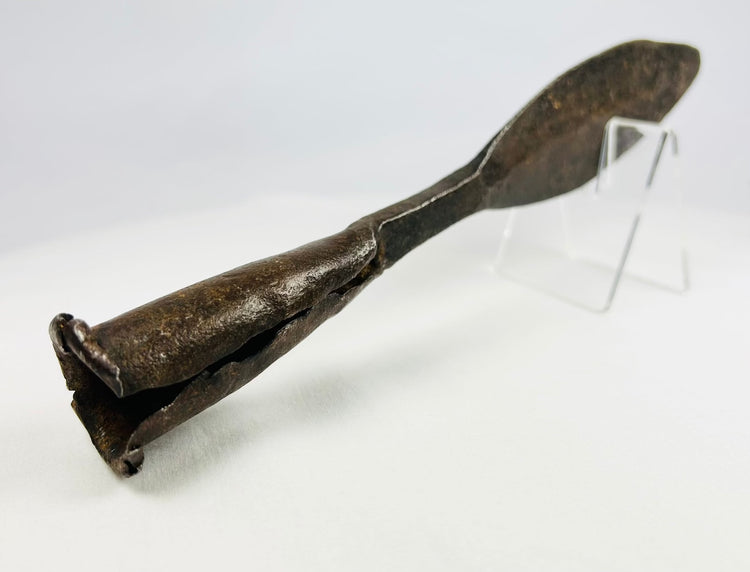
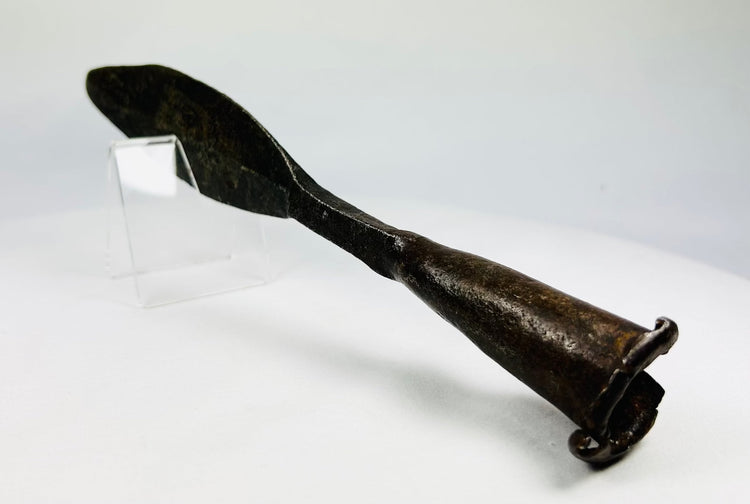
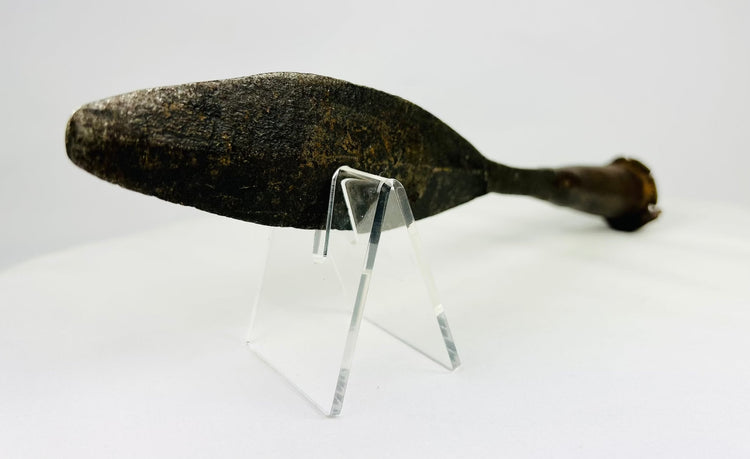
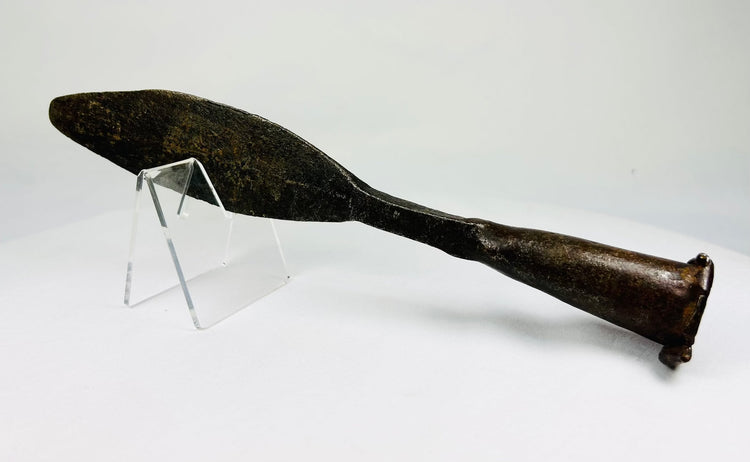
This European socketed spearhead is a remarkable example of early weaponry, crafted with both functionality and skilled metalworking in mind. Featuring a double-edged, leaf-shaped blade and a rolled socketed base, the design reflects the advanced forging techniques practiced by European blacksmiths. The balanced form demonstrates the practical engineering of historic arms, designed to be securely mounted on a wooden shaft while maintaining effective cutting and piercing capability.
Features
• Double-edged, leaf-shaped blade designed for cutting and piercing
• Four-sided transition leading into a rolled socketed base for shaft mounting
• Natural aged patina developed over centuries
• Forged iron construction demonstrating durability and craftsmanship
Cultural Significance
Spearheads were among the most important weapons in European history, serving roles in warfare, hunting, and ceremonial display. Their design symbolized strength, authority, and martial readiness while also functioning as essential tools for defense and survival. Surviving examples such as this provide valuable insight into the weaponry and craftsmanship of early European societies.
Condition
Good antique condition with visible surface wear consistent with age. The iron displays an attractive aged patina while the socket and blade remain structurally intact, preserving the historic character of the piece.
Dimensions (Approximate)
Length: 9.25 in
Age (Approximate)
225 years old or older
Provenance
Formerly held in a private collection in Hollywood, California, USA.
Learn More
Explore the Early Development of Spears at Archaeology Magazine
Browse Our Collection of Historic Spearheads
Description
Historical Context & Origin
Region: Europe
Material: Iron
Period: 18th Century or Earlier
Description
This European socketed spearhead is a remarkable example of early weaponry, crafted with both functionality and skilled metalworking in mind. Featuring a double-edged, leaf-shaped blade and a rolled socketed base, the design reflects the advanced forging techniques practiced by European blacksmiths. The balanced form demonstrates the practical engineering of historic arms, designed to be securely mounted on a wooden shaft while maintaining effective cutting and piercing capability.
Features
• Double-edged, leaf-shaped blade designed for cutting and piercing
• Four-sided transition leading into a rolled socketed base for shaft mounting
• Natural aged patina developed over centuries
• Forged iron construction demonstrating durability and craftsmanship
Cultural Significance
Spearheads were among the most important weapons in European history, serving roles in warfare, hunting, and ceremonial display. Their design symbolized strength, authority, and martial readiness while also functioning as essential tools for defense and survival. Surviving examples such as this provide valuable insight into the weaponry and craftsmanship of early European societies.
Condition
Good antique condition with visible surface wear consistent with age. The iron displays an attractive aged patina while the socket and blade remain structurally intact, preserving the historic character of the piece.
Dimensions (Approximate)
Length: 9.25 in
Age (Approximate)
225 years old or older
Provenance
Formerly held in a private collection in Hollywood, California, USA.
Learn More
Explore the Early Development of Spears at Archaeology Magazine
Browse Our Collection of Historic Spearheads
You May Also Like
