


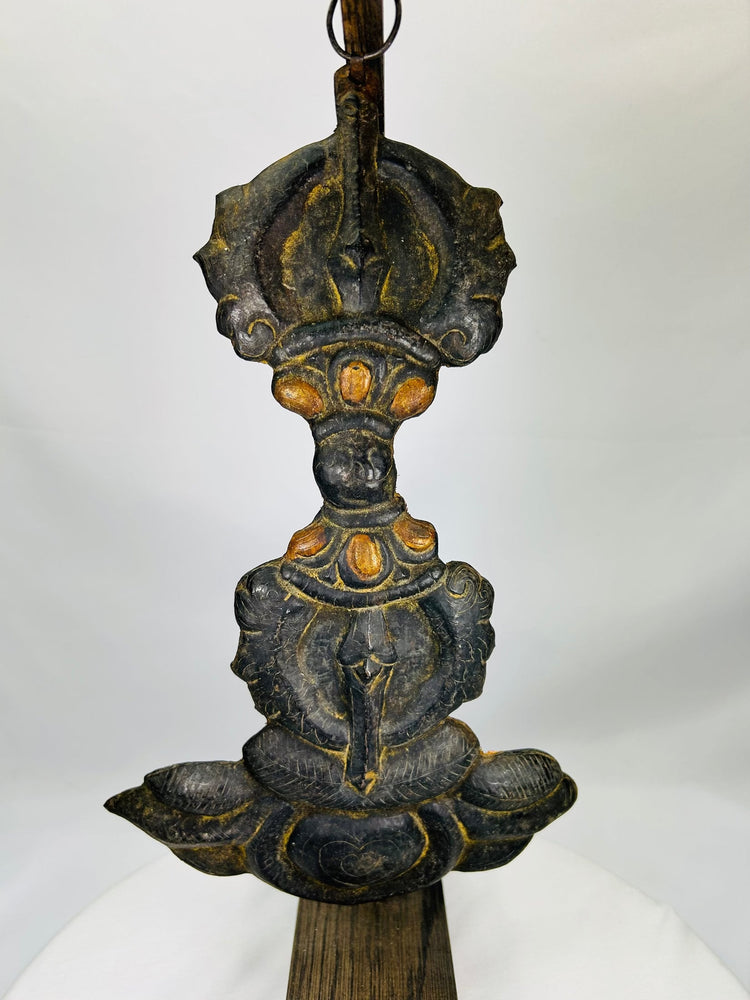
Gilt and Silver-Inlaid | Japanese Bronze Ritual Ornament | Circa 1400–1650
Couldn't load pickup availability


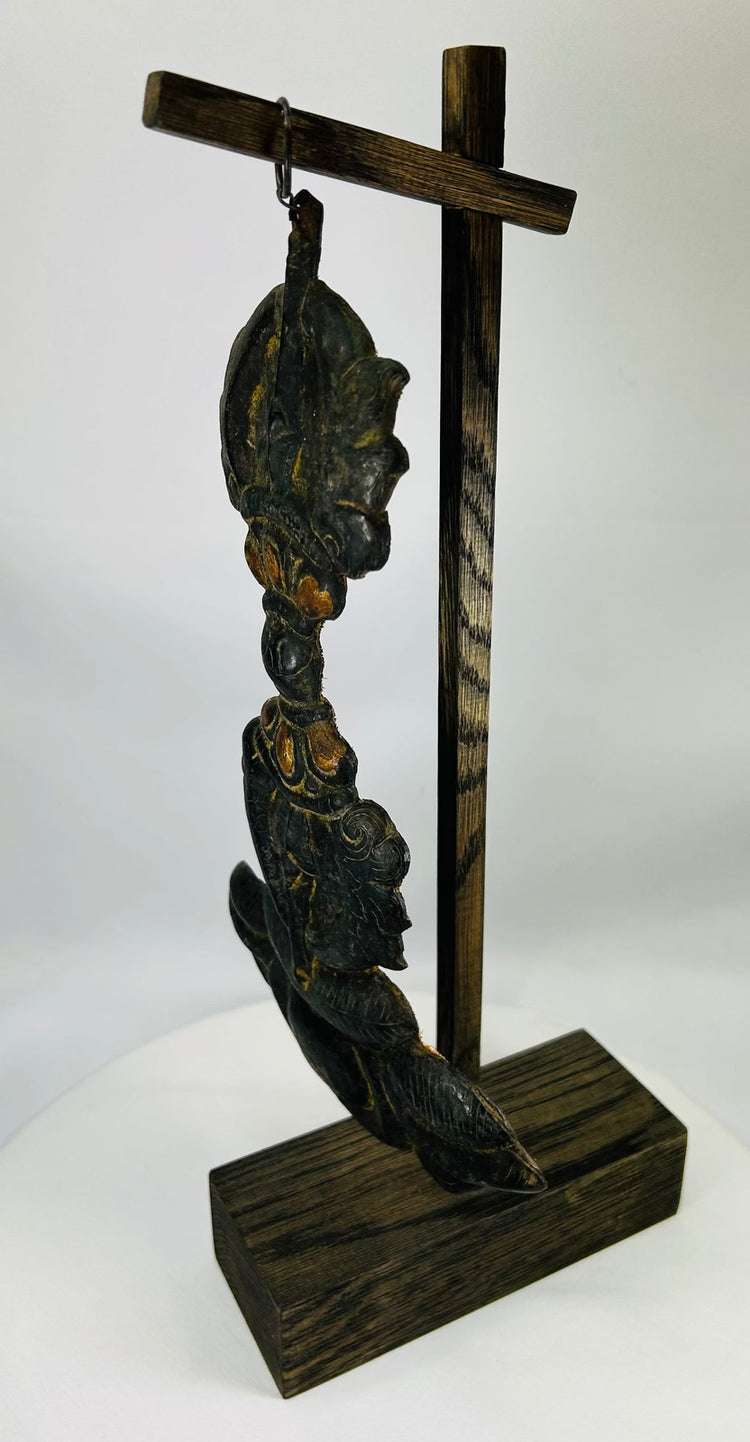
Gilt and Silver-Inlaid | Japanese Bronze Ritual Ornament | Circa 1400–1650
Description
More
Less
Historical Context & Origin
Region: Japan, Buddhist Temple Culture
Material: Gilt and silver-inlaid repoussé bronze with textile-backed mount
Period: Late Muromachi to Early Edo Period, circa 1400–1650 CE
Description
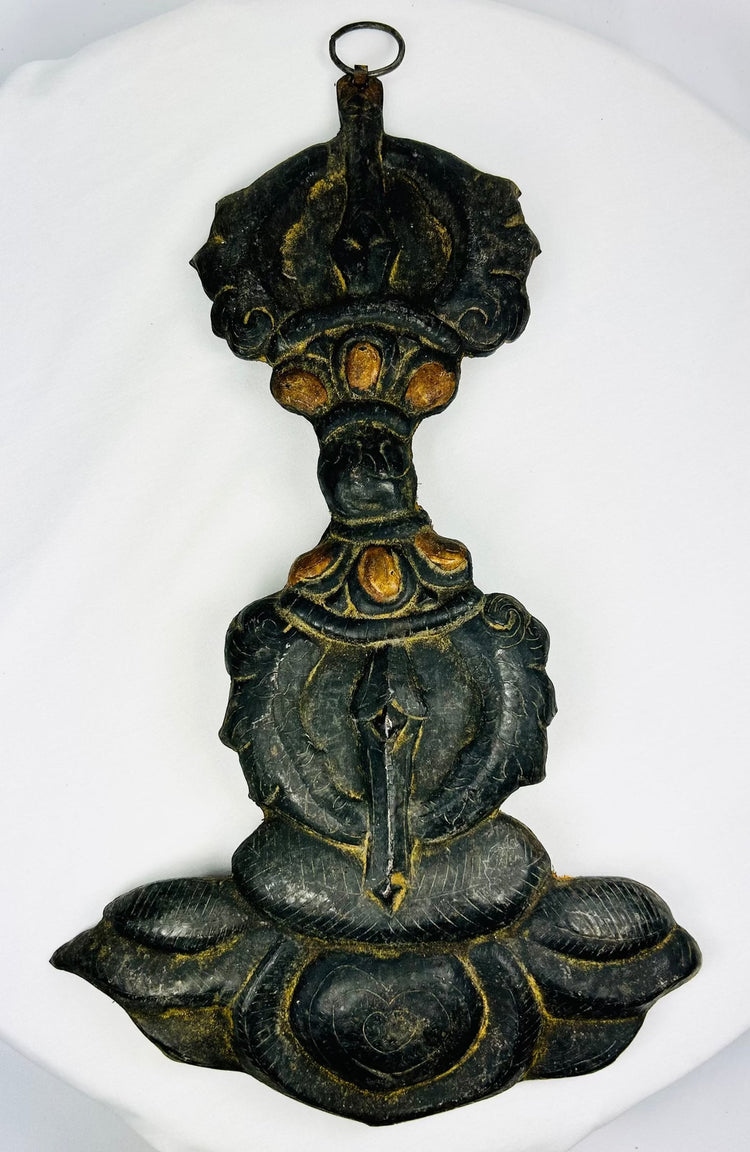
This impressive Japanese Buddhist ritual ornament is crafted in repoussé bronze, highlighted with traces of original gilt and silver inlay. Inspired by the sacred geometry of the vajra (dorje)—a symbol of indestructibility and transcendent wisdom in esoteric Buddhism—the piece displays refined temple craftsmanship of the Muromachi to early Edo era.
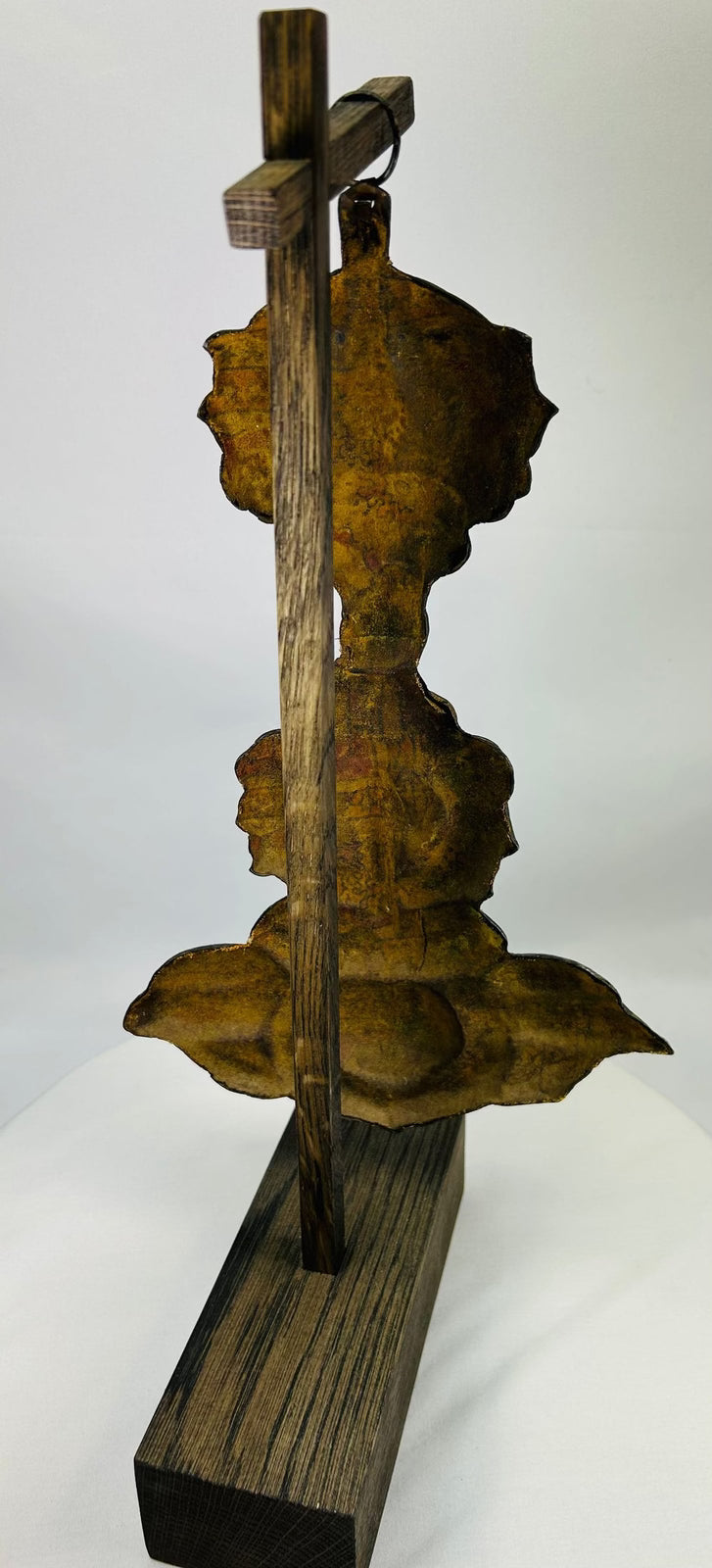
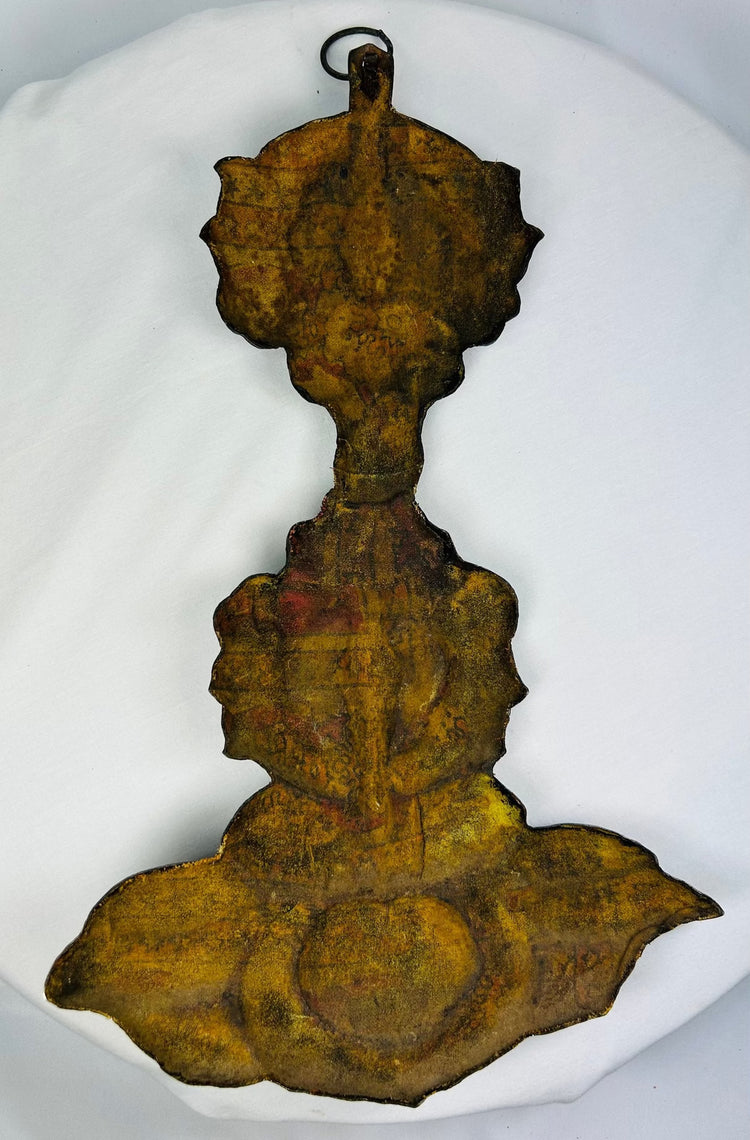
Its tiered composition features lotus petal bases, rounded nodes, and crowned finials arranged in elegant symmetry. The back retains its aged resist-dyed textile lining, indicating its use as a mounted altar element, architectural embellishment, or component of temple ritual furnishings. Deep patina contrasts beautifully with surviving gold and silver accents, giving the object a commanding and dignified spiritual presence.
Features
- Repoussé bronze ritual ornament with gilt and silver inlay
- Vajra-inspired symbolic form with lotus-based architectural design
- Tiered symmetrical composition representing spiritual ascent
- Original traditional resist-dyed textile backing
- Powerful aged patina with flashes of remaining gilding
- Rare example of Muromachi–Edo period Buddhist ritual metalwork
Cultural Significance
During the Muromachi and early Edo periods, Buddhist temples commissioned elaborate ritual furnishings to embody esoteric cosmology and sacred power. The vajra motif symbolized unbreakable truth and the thunderbolt of enlightenment, appearing in altars, temple fixtures, and ceremonial regalia. Ornaments like this were integral to sacred environments, elevating spiritual awareness and reinforcing ritual meaning. Today, surviving examples offer deep insight into Japanese religious art and metalworking tradition.
Condition
Surface exhibits historic patina, oxidation, and wear consistent with centuries of temple use. Traces of original gilding and silver detailing remain in recessed areas. Textile backing is worn but intact. Structurally stable with no modern restoration observed.
Dimensions (Approximate)
Height: 12.5 in
Age (Approximate)
350–600 years old
Provenance
Formerly offered and sold by Waddington’s Auctioneers & Appraisers, Toronto, Ontario, as Lot 338 in its Asian Art auction closing December 4, 2025. It subsequently entered a private collection in Toronto, Ontario, Canada.
Learn More
Learn about Japanese Buddhism through Japan Experience
Explore our curated Cultural & Ethnographic Artifacts Collection
Description
Historical Context & Origin
Region: Japan, Buddhist Temple Culture
Material: Gilt and silver-inlaid repoussé bronze with textile-backed mount
Period: Late Muromachi to Early Edo Period, circa 1400–1650 CE
Description
This impressive Japanese Buddhist ritual ornament is crafted in repoussé bronze, highlighted with traces of original gilt and silver inlay. Inspired by the sacred geometry of the vajra (dorje)—a symbol of indestructibility and transcendent wisdom in esoteric Buddhism—the piece displays refined temple craftsmanship of the Muromachi to early Edo era.
Its tiered composition features lotus petal bases, rounded nodes, and crowned finials arranged in elegant symmetry. The back retains its aged resist-dyed textile lining, indicating its use as a mounted altar element, architectural embellishment, or component of temple ritual furnishings. Deep patina contrasts beautifully with surviving gold and silver accents, giving the object a commanding and dignified spiritual presence.
Features
- Repoussé bronze ritual ornament with gilt and silver inlay
- Vajra-inspired symbolic form with lotus-based architectural design
- Tiered symmetrical composition representing spiritual ascent
- Original traditional resist-dyed textile backing
- Powerful aged patina with flashes of remaining gilding
- Rare example of Muromachi–Edo period Buddhist ritual metalwork
Cultural Significance
During the Muromachi and early Edo periods, Buddhist temples commissioned elaborate ritual furnishings to embody esoteric cosmology and sacred power. The vajra motif symbolized unbreakable truth and the thunderbolt of enlightenment, appearing in altars, temple fixtures, and ceremonial regalia. Ornaments like this were integral to sacred environments, elevating spiritual awareness and reinforcing ritual meaning. Today, surviving examples offer deep insight into Japanese religious art and metalworking tradition.
Condition
Surface exhibits historic patina, oxidation, and wear consistent with centuries of temple use. Traces of original gilding and silver detailing remain in recessed areas. Textile backing is worn but intact. Structurally stable with no modern restoration observed.
Dimensions (Approximate)
Height: 12.5 in
Age (Approximate)
350–600 years old
Provenance
Formerly offered and sold by Waddington’s Auctioneers & Appraisers, Toronto, Ontario, as Lot 338 in its Asian Art auction closing December 4, 2025. It subsequently entered a private collection in Toronto, Ontario, Canada.
Learn More
Learn about Japanese Buddhism through Japan Experience
Explore our curated Cultural & Ethnographic Artifacts Collection
You May Also Like
