


Gothic Tudor | Carved Oak Architectural Panel | Circa 16th Century
Couldn't load pickup availability


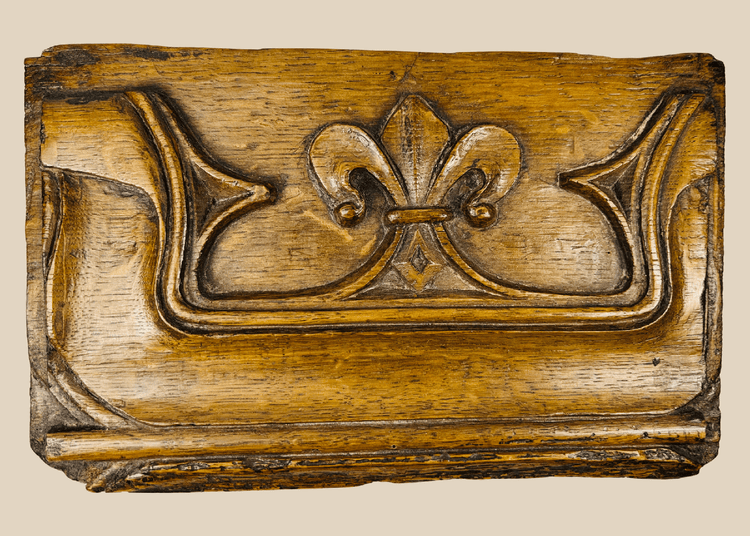
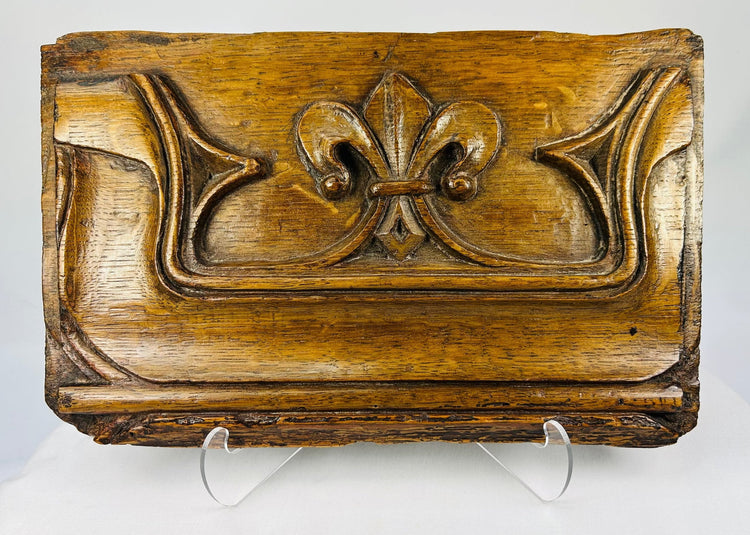
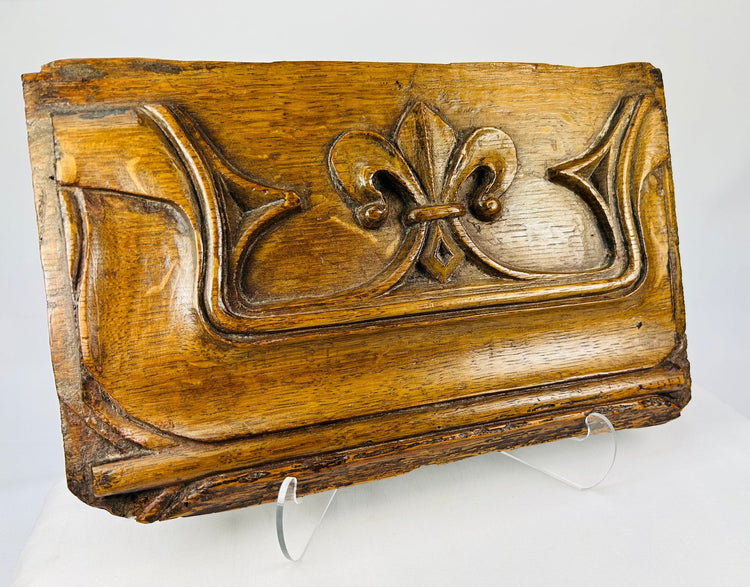
Gothic Tudor | Carved Oak Architectural Panel | Circa 16th Century
Description
More
Less
Historical Context & Origin
Region: England or Continental Europe (France / Low Countries)
Material: Hand-carved solid oak
Period: 16th Century (circa 1500–1600 CE)
Description
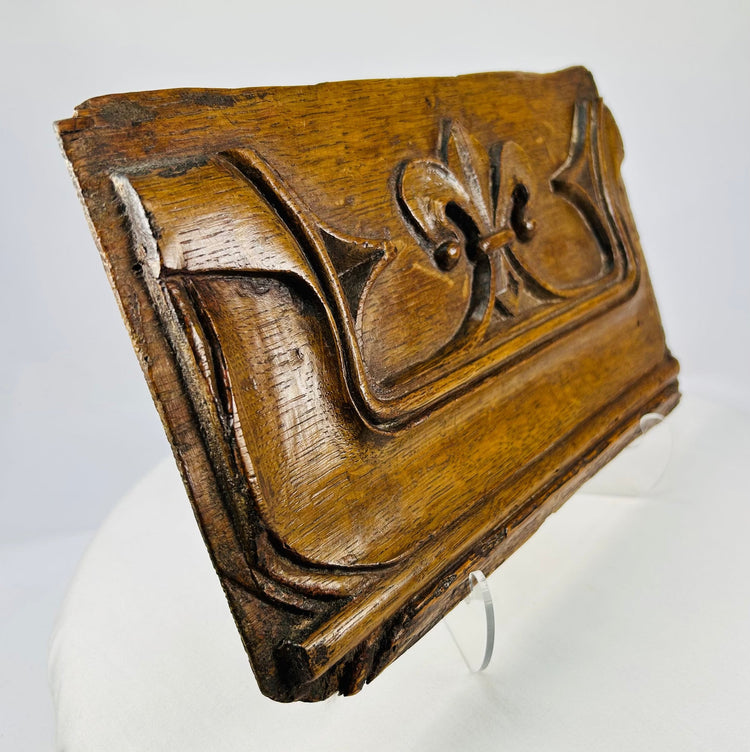
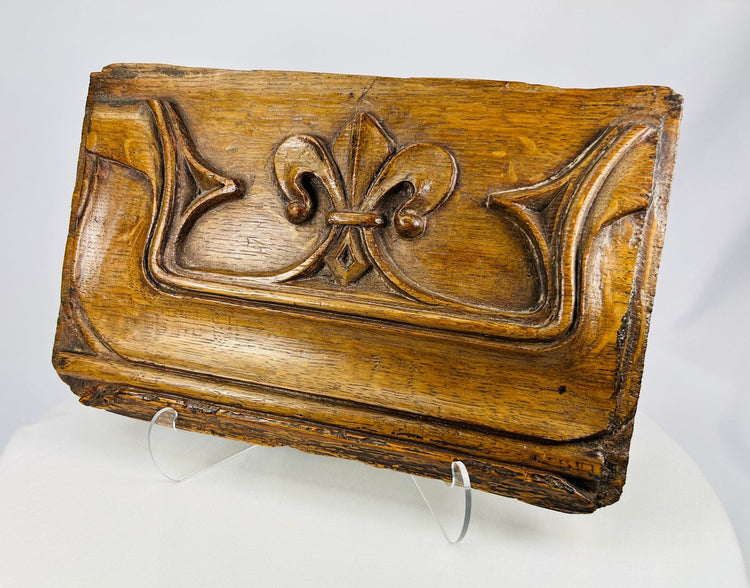
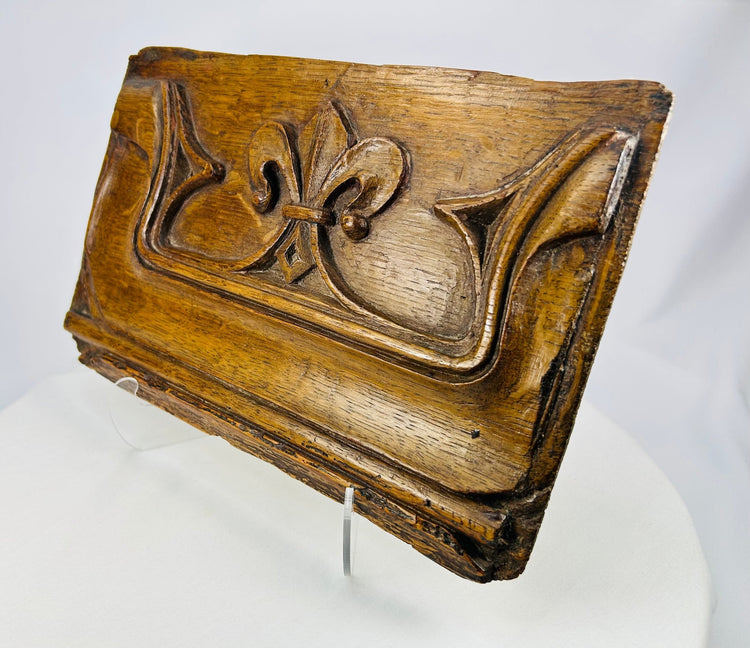
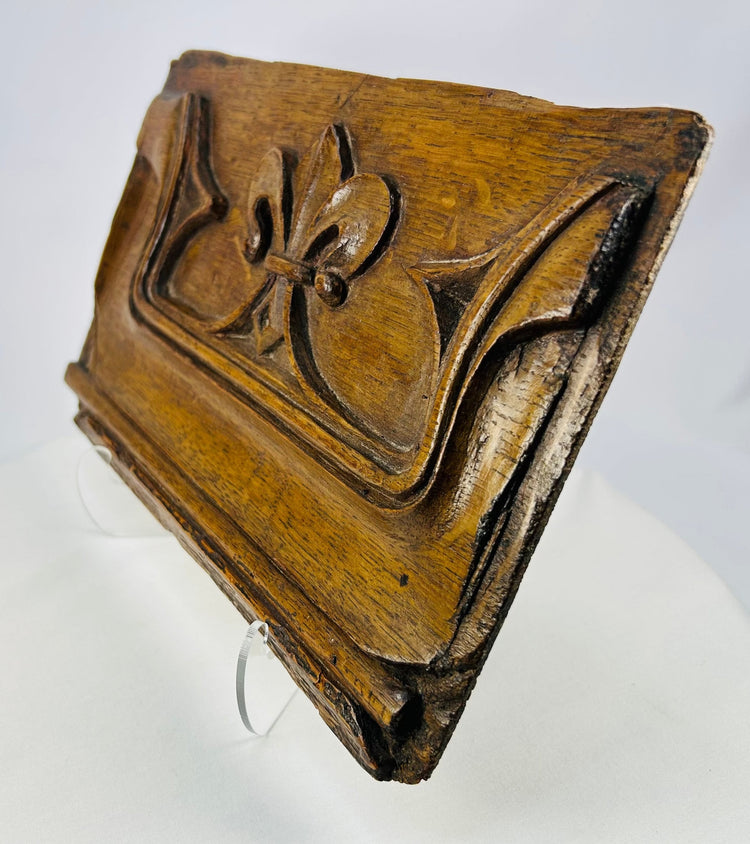
This finely preserved hand-carved oak panel dates to the 16th century and originates from either Tudor-period England or the broader Continental Gothic tradition of France or the Low Countries. Sculpted from a thick, single oak block, the panel features a boldly carved fleur-de-lis set within flowing Gothic tracery—an iconic motif associated with ecclesiastical architecture, noble heraldry, and early Renaissance decorative arts.
The piece displays a warm, centuries-old patina, crisp sculptural depth, and visible tool-cut surfaces that reflect the skilled craftsmanship of a master carver working during the transitional period between late medieval Gothic and early Renaissance design. Panels of this quality once adorned church furnishings, choir stalls, chests, architectural interiors, or high-status domestic furniture.
Features
- Strong Gothic architectural design with curved relief tracery
- Central fleur-de-lis symbol representing purity, royalty, and heraldic authority
- Excellent patina and surface character retained from centuries of age
- Visible hand-hewn tool marks throughout the carving
Cultural Significance
During the Gothic and early Tudor periods, carved oak panels served as key decorative elements in both religious and noble interiors. The fleur-de-lis motif was widely used across England, France, and the Low Countries, symbolizing sanctity, monarchy, and lineage. As a result, this panel reflects the intertwined traditions of ecclesiastical symbolism and aristocratic identity prevalent in 16th-century Europe.
Condition
Excellent condition for a 16th-century carved artifact.
Expected surface wear, abrasion, and minor edge losses consistent with historic architectural use.
Stable and fully intact with a rich natural patina.
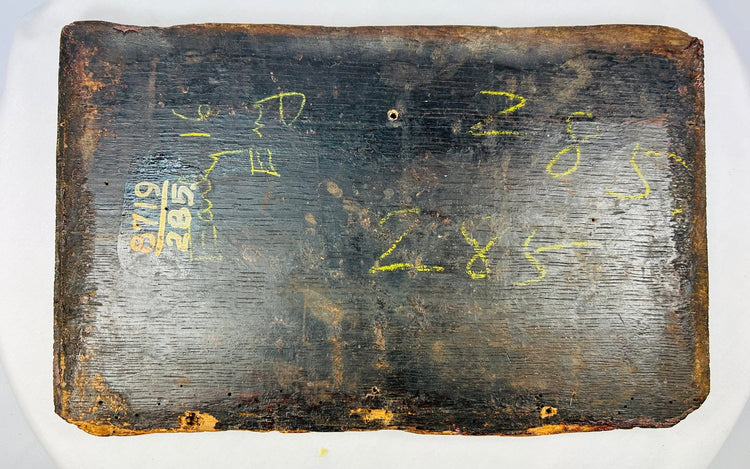
Reverse retains old inventory markings.
Dimensions (Approximate)
Height: 11.25 in
Width: 7.25 in
Age (Approximate)
425–525 years old
Learn More
Discover Tudor-era woodcarving through Arttus
Explore our curated Gothic & Tudor Carved Panels Collection
Description
Historical Context & Origin
Region: England or Continental Europe (France / Low Countries)
Material: Hand-carved solid oak
Period: 16th Century (circa 1500–1600 CE)
Description
This finely preserved hand-carved oak panel dates to the 16th century and originates from either Tudor-period England or the broader Continental Gothic tradition of France or the Low Countries. Sculpted from a thick, single oak block, the panel features a boldly carved fleur-de-lis set within flowing Gothic tracery—an iconic motif associated with ecclesiastical architecture, noble heraldry, and early Renaissance decorative arts.
The piece displays a warm, centuries-old patina, crisp sculptural depth, and visible tool-cut surfaces that reflect the skilled craftsmanship of a master carver working during the transitional period between late medieval Gothic and early Renaissance design. Panels of this quality once adorned church furnishings, choir stalls, chests, architectural interiors, or high-status domestic furniture.
Features
- Strong Gothic architectural design with curved relief tracery
- Central fleur-de-lis symbol representing purity, royalty, and heraldic authority
- Excellent patina and surface character retained from centuries of age
- Visible hand-hewn tool marks throughout the carving
Cultural Significance
During the Gothic and early Tudor periods, carved oak panels served as key decorative elements in both religious and noble interiors. The fleur-de-lis motif was widely used across England, France, and the Low Countries, symbolizing sanctity, monarchy, and lineage. As a result, this panel reflects the intertwined traditions of ecclesiastical symbolism and aristocratic identity prevalent in 16th-century Europe.
Condition
Excellent condition for a 16th-century carved artifact.
Expected surface wear, abrasion, and minor edge losses consistent with historic architectural use.
Stable and fully intact with a rich natural patina.
Reverse retains old inventory markings.
Dimensions (Approximate)
Height: 11.25 in
Width: 7.25 in
Age (Approximate)
425–525 years old
Learn More
Discover Tudor-era woodcarving through Arttus
Explore our curated Gothic & Tudor Carved Panels Collection
You May Also Like
