

Hand-Forged Spoon with Twisted Handle | Circa 2nd Century AD
Couldn't load pickup availability


Hand-Forged Spoon with Twisted Handle | Circa 2nd Century AD
Description
More
Less
Historical Context & Origin
Region: Roman Empire (likely Mediterranean region)
Material: Cast bronze with natural patina
Period: Circa 2nd Century AD
Description
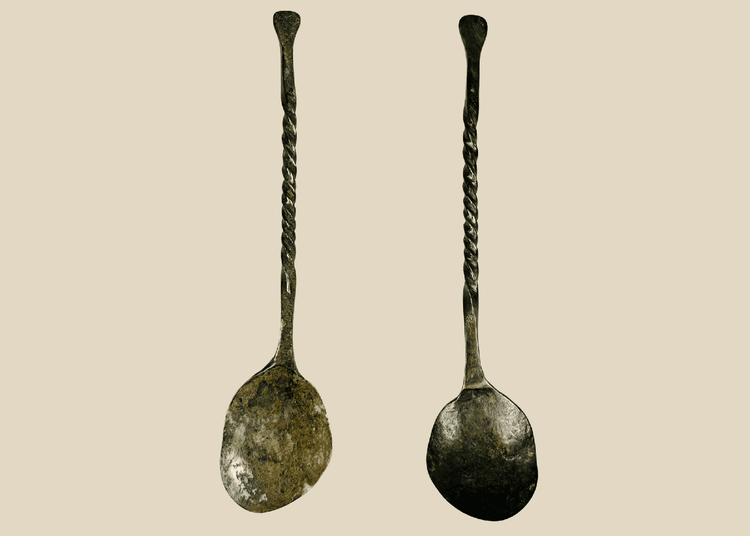
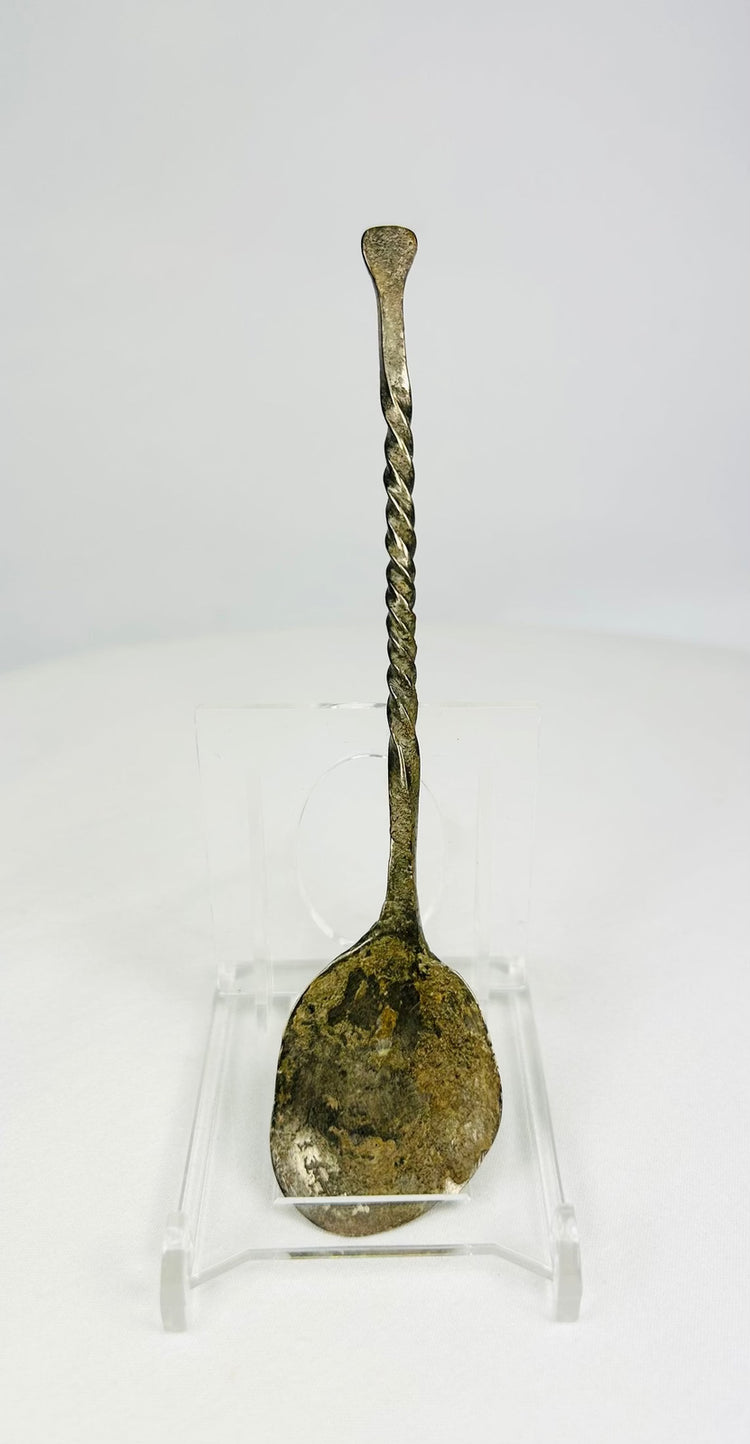
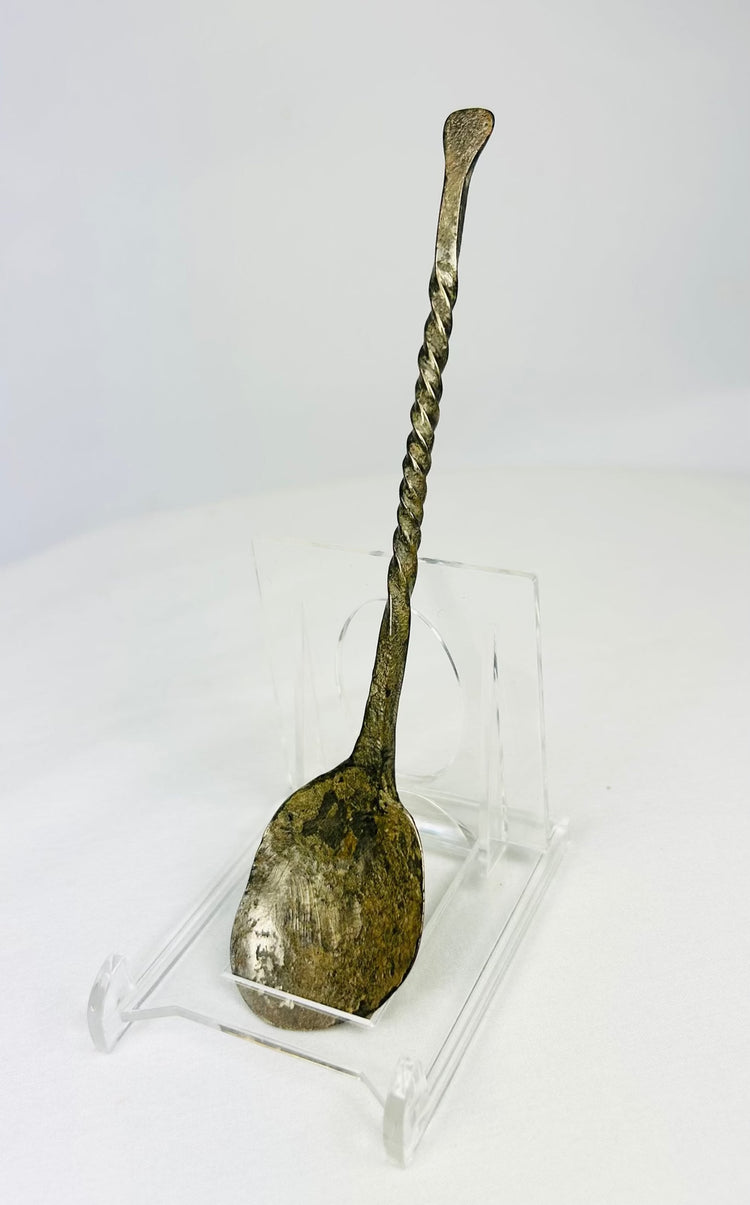
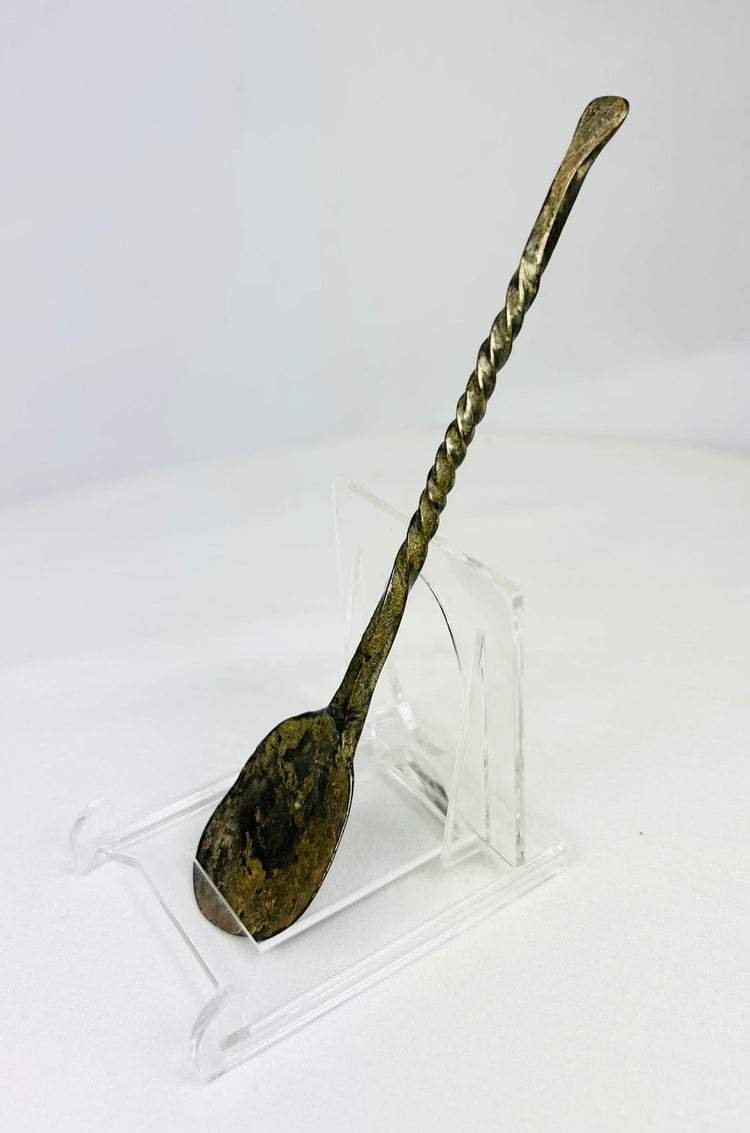
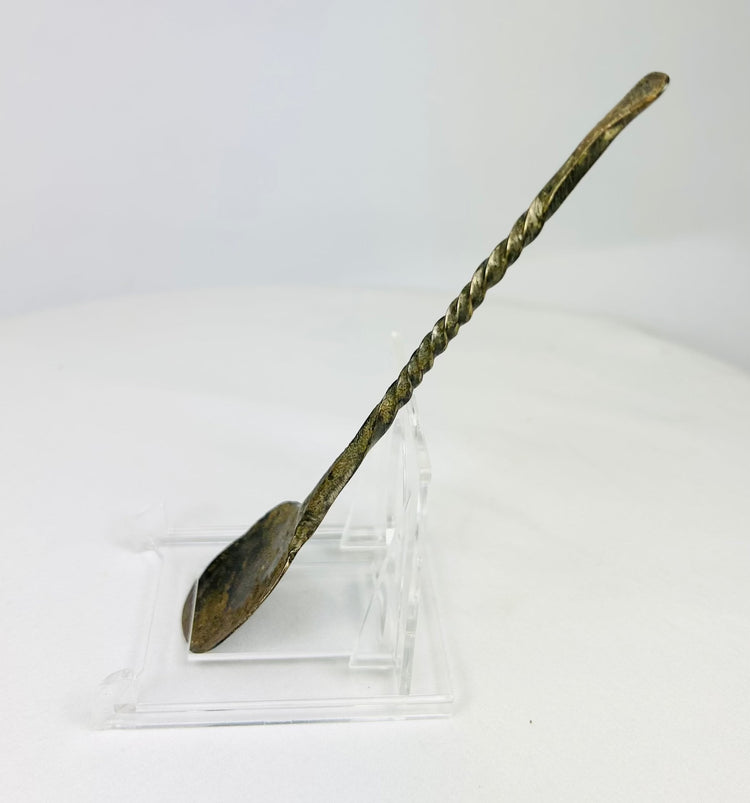
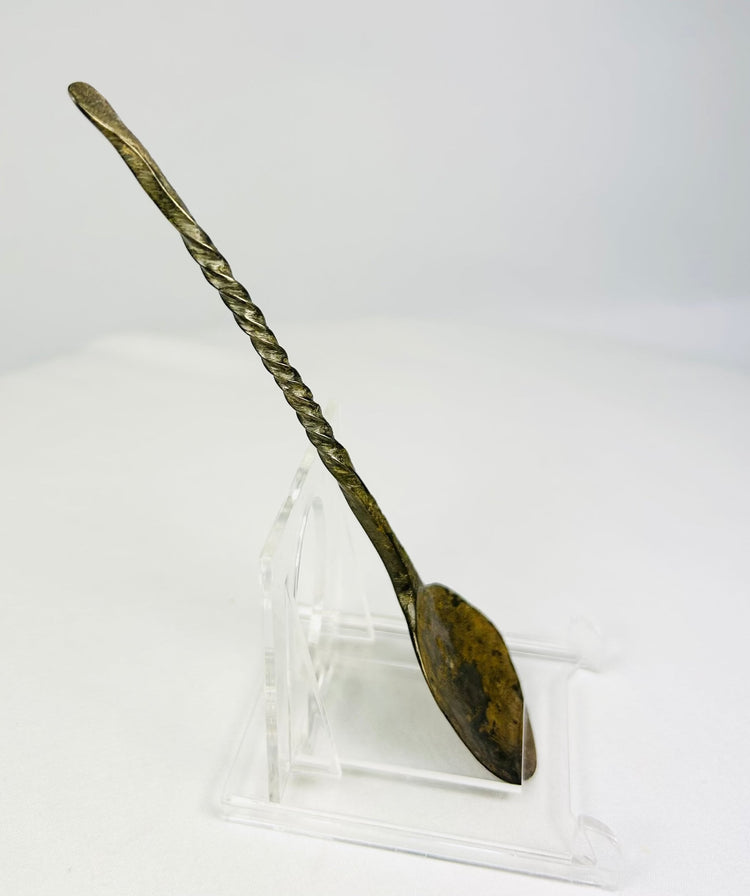
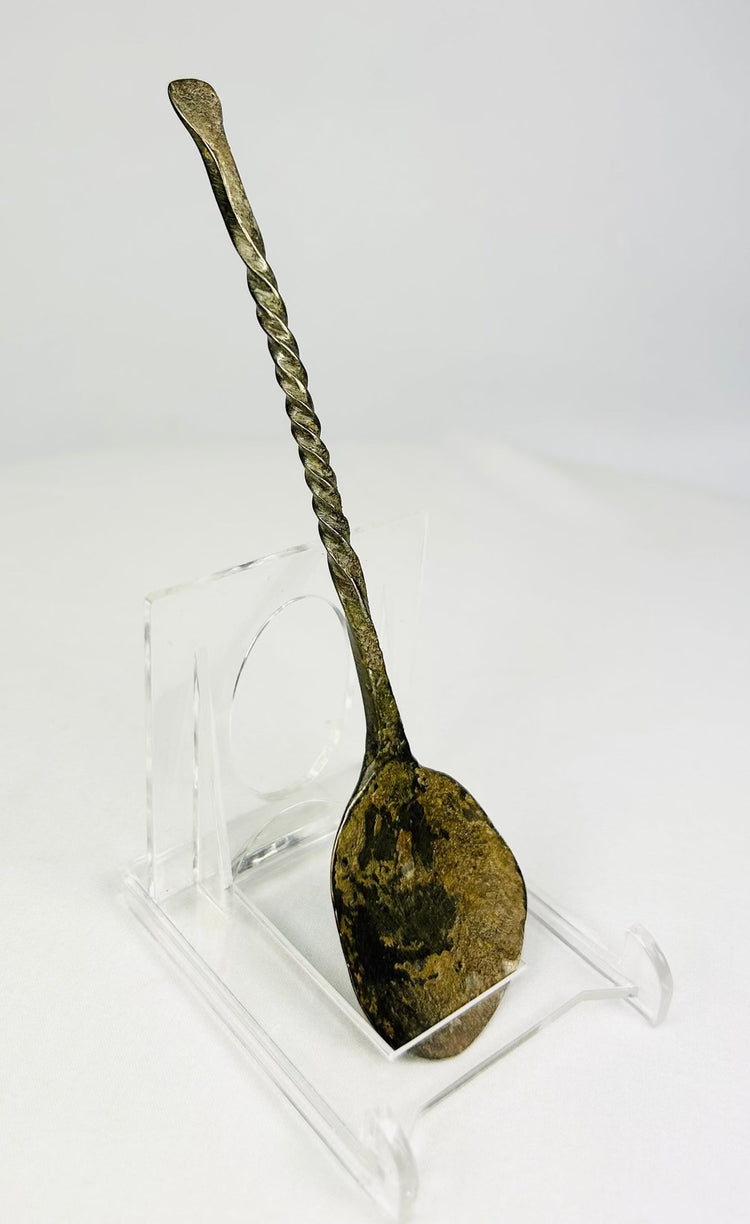
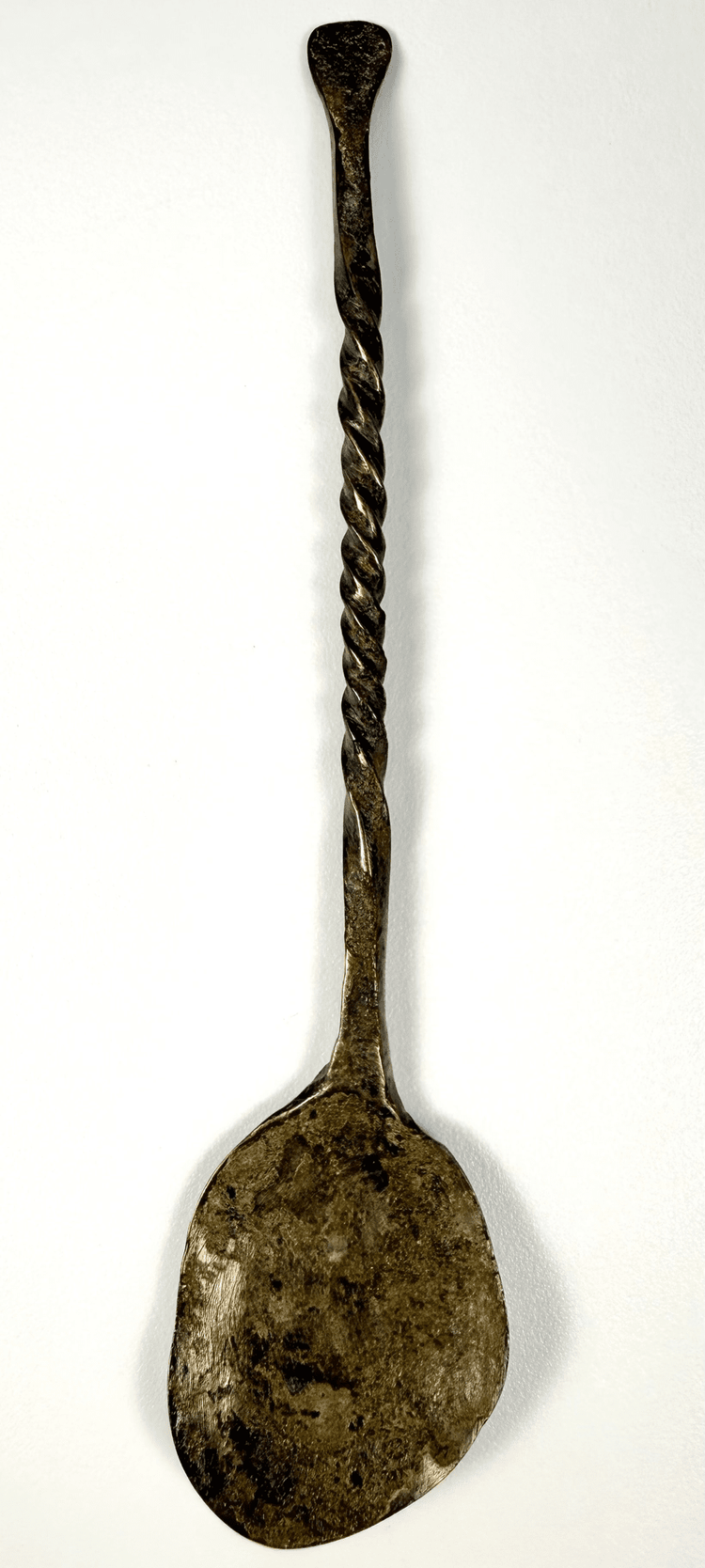
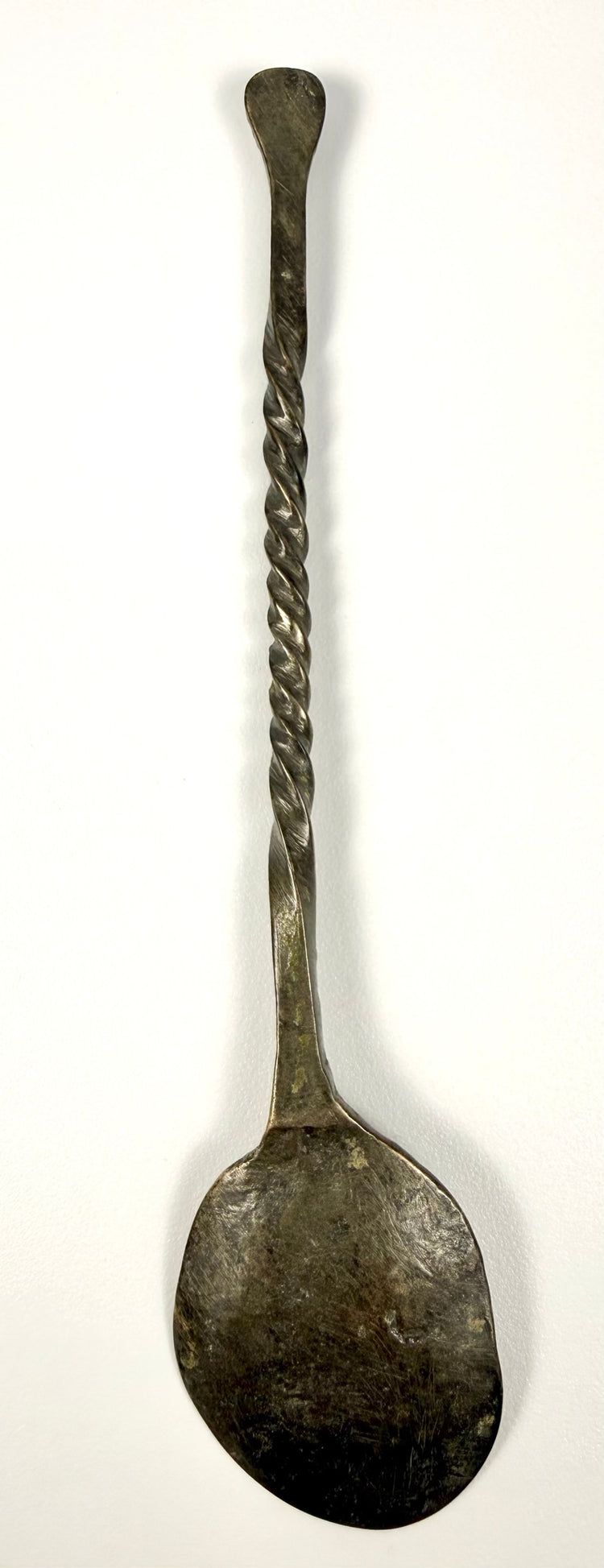
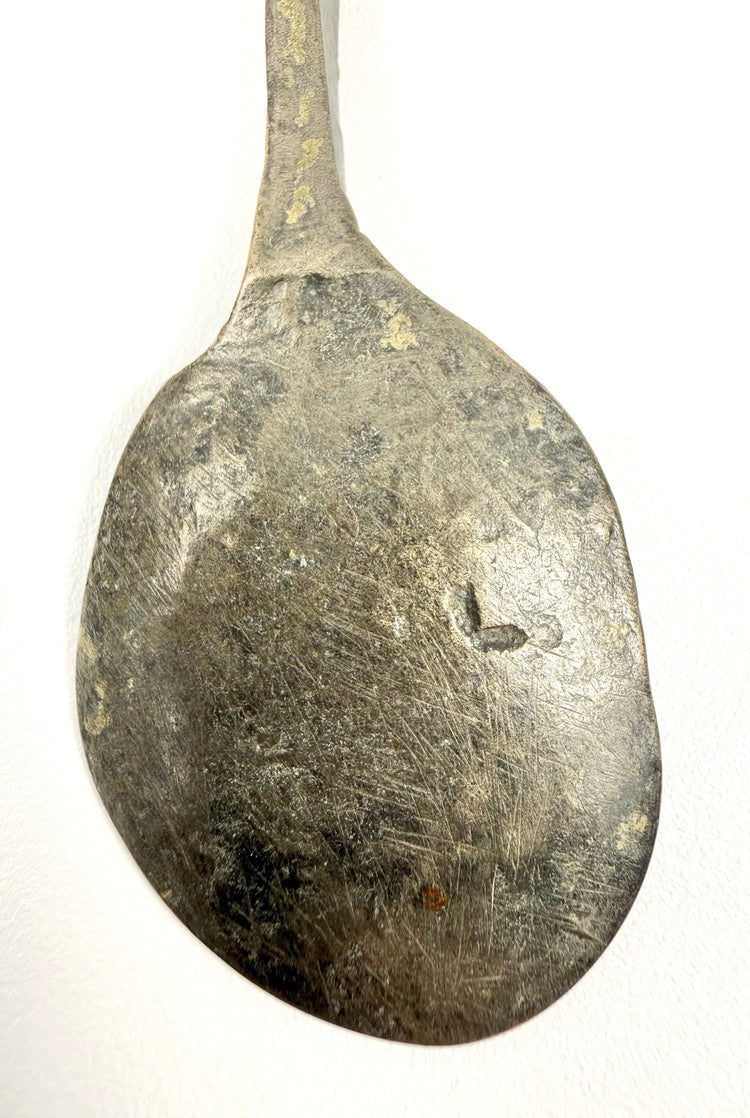
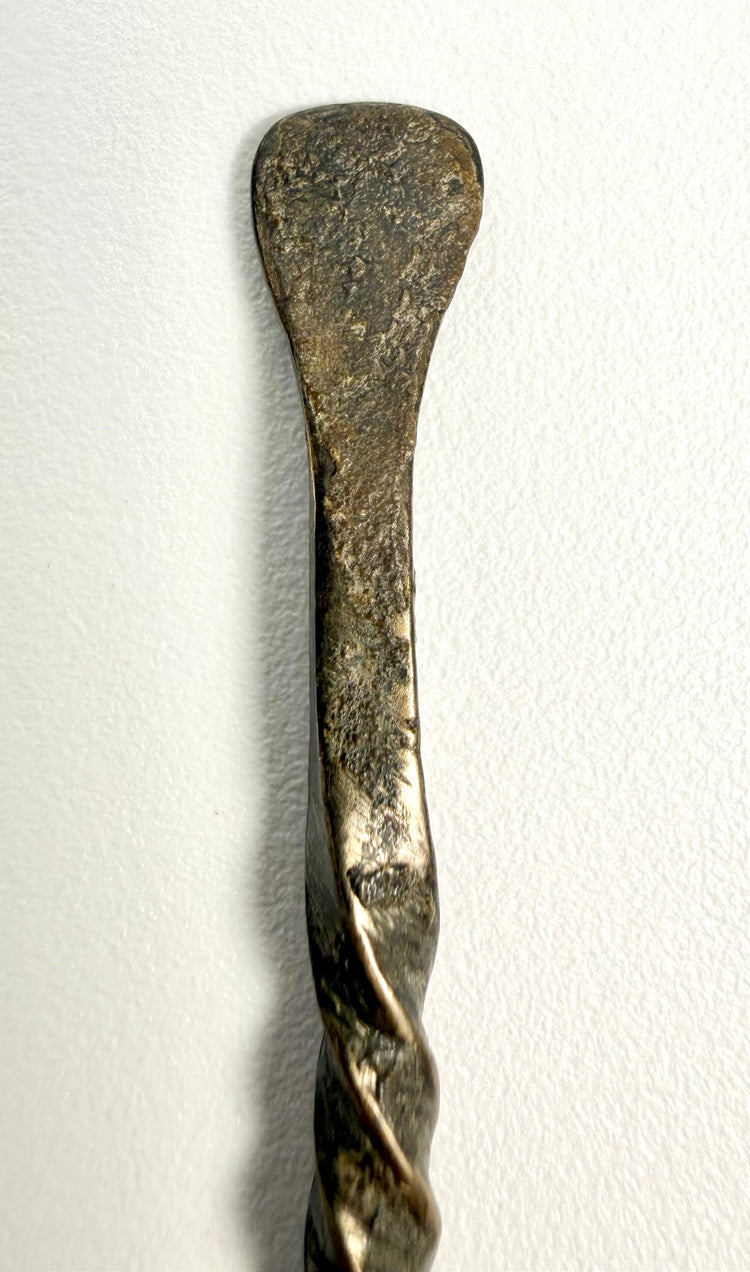
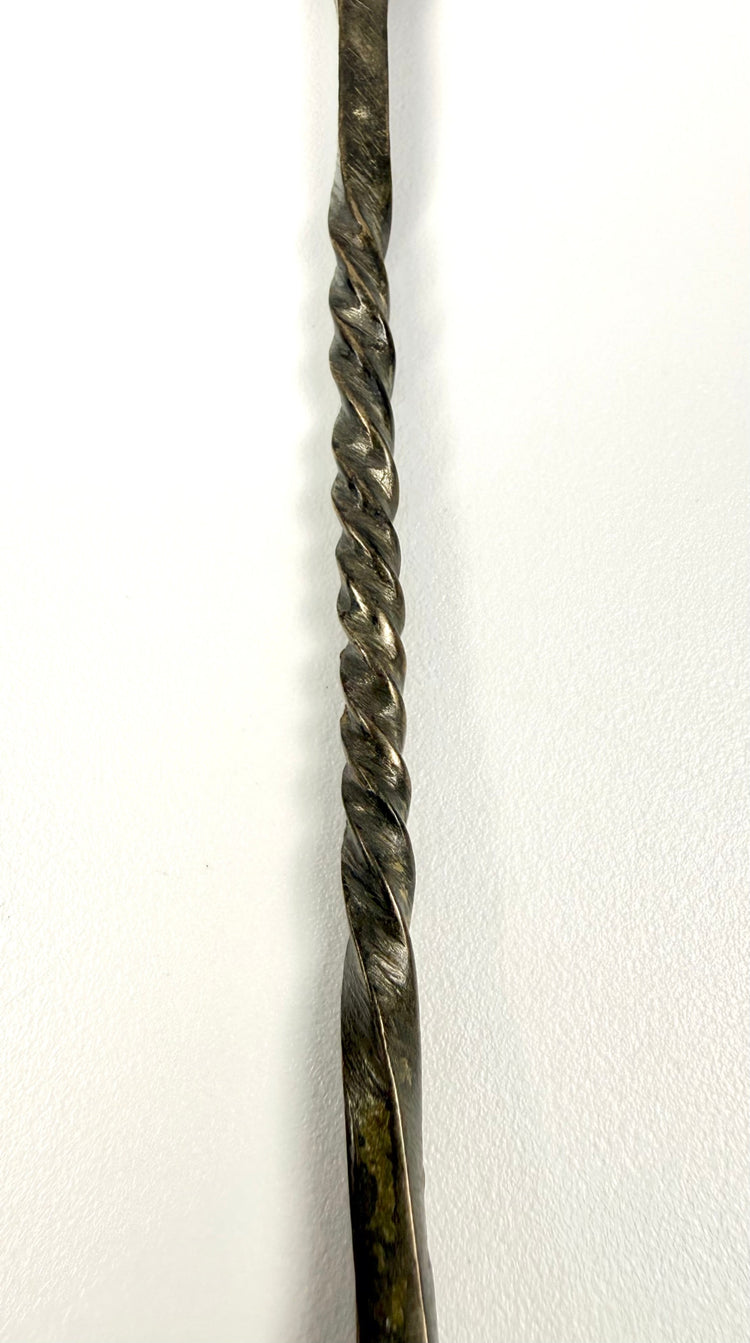
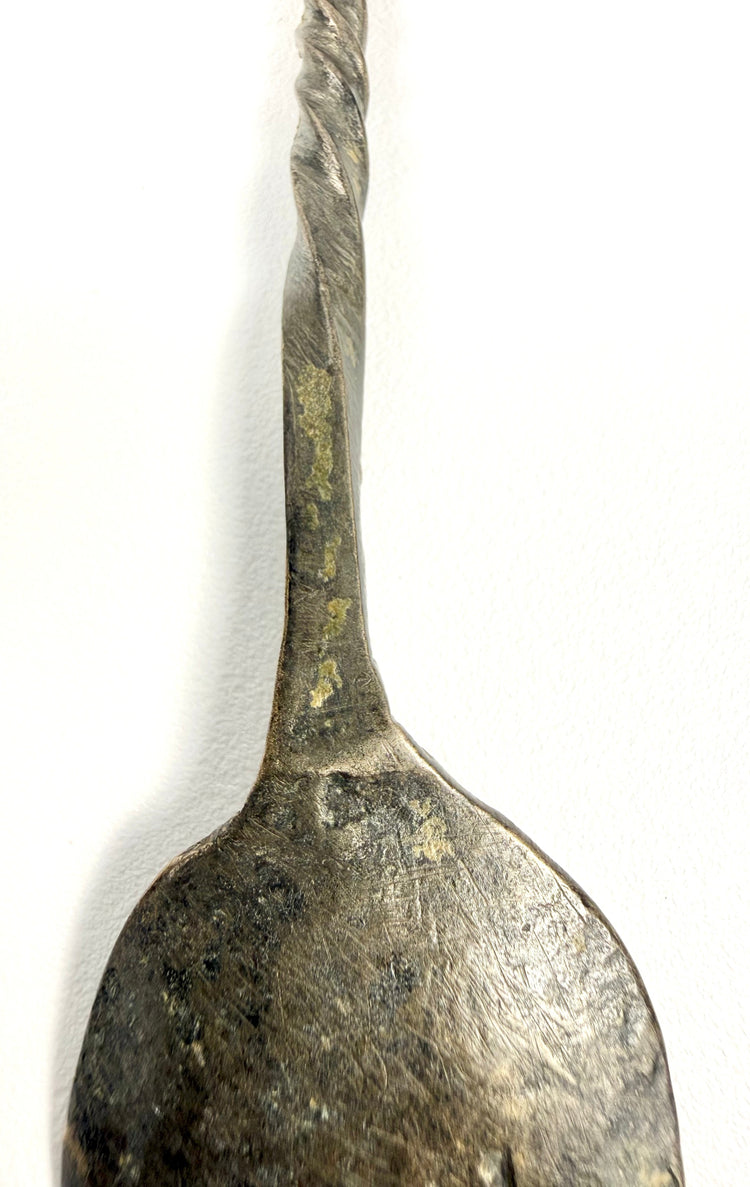
An authentic Ancient Roman bronze spoon, elegantly forged with a twisted handle and a gently rounded bowl. This finely crafted utensil reflects the daily life and refined dining practices of Roman households during the height of the Empire. Its hand-twisted stem and smooth bowl reveal the artisan skill and aesthetic sensibility typical of Roman bronze work.
Features
- Hand-forged bronze with spiral-twist handle
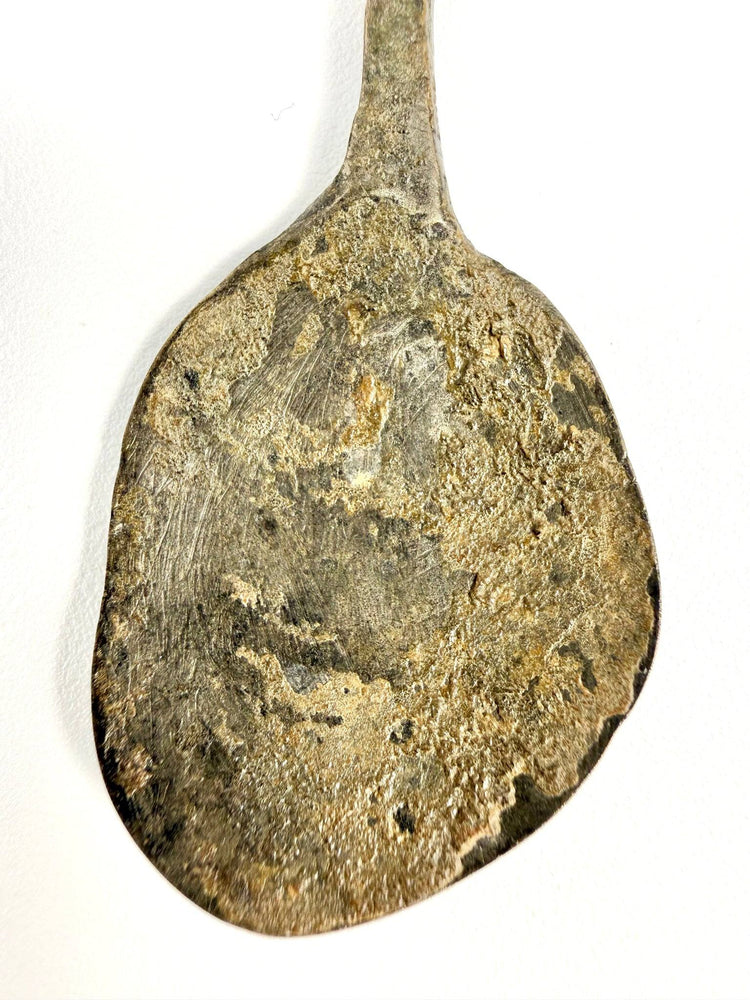
- Shallow oval bowl with smooth interior
- Natural dark green and brown patina from age
- Balanced proportions, refined yet practical
Cultural Significance
Such spoons were common in Roman domestic settings, used for meals, oils, or medicinal mixtures. They exemplify the Roman approach to craftsmanship—where functionality met beauty. Surviving examples are rare and offer a tactile connection to ancient daily life and hospitality traditions.
Condition
Excellent ancient condition with stable patina and light encrustation from burial. Minor surface wear consistent with age.
Dimensions (Approximate)
Length: 5.5 in
Width: 1.25 in
Age (Approximate)
1,825–1,925 years old
Provenance
Formerly held in a private collection in the United Kingdom during the 1980s. Subsequently purchased at Grays Antique Market, Mayfair, London, England, and later handled by Palmyra Heritage Gallery. The piece thereafter entered a private collection in Toronto, Ontario, Canada.
Established in 1977, Grays Antique Market is a longstanding Mayfair antiques centre known for its specialist dealers in fine art, ceramics, and collectables.
Learn More
Learn about Roman spoon design and daily use in Journal of Roman Archaeology
Explore Roman dining culture through The Metropolitan Museum of Art
Browse related antiquities in our Roman & Greek Artifacts Collection
Description
Historical Context & Origin
Region: Roman Empire (likely Mediterranean region)
Material: Cast bronze with natural patina
Period: Circa 2nd Century AD
Description
An authentic Ancient Roman bronze spoon, elegantly forged with a twisted handle and a gently rounded bowl. This finely crafted utensil reflects the daily life and refined dining practices of Roman households during the height of the Empire. Its hand-twisted stem and smooth bowl reveal the artisan skill and aesthetic sensibility typical of Roman bronze work.
Features
- Hand-forged bronze with spiral-twist handle
- Shallow oval bowl with smooth interior
- Natural dark green and brown patina from age
- Balanced proportions, refined yet practical
Cultural Significance
Such spoons were common in Roman domestic settings, used for meals, oils, or medicinal mixtures. They exemplify the Roman approach to craftsmanship—where functionality met beauty. Surviving examples are rare and offer a tactile connection to ancient daily life and hospitality traditions.
Condition
Excellent ancient condition with stable patina and light encrustation from burial. Minor surface wear consistent with age.
Dimensions (Approximate)
Length: 5.5 in
Width: 1.25 in
Age (Approximate)
1,825–1,925 years old
Provenance
Formerly held in a private collection in the United Kingdom during the 1980s. Subsequently purchased at Grays Antique Market, Mayfair, London, England, and later handled by Palmyra Heritage Gallery. The piece thereafter entered a private collection in Toronto, Ontario, Canada.
Established in 1977, Grays Antique Market is a longstanding Mayfair antiques centre known for its specialist dealers in fine art, ceramics, and collectables.
Learn More
Learn about Roman spoon design and daily use in Journal of Roman Archaeology
Explore Roman dining culture through The Metropolitan Museum of Art
Browse related antiquities in our Roman & Greek Artifacts Collection
You May Also Like
