

Iron-Bound Strongbox | Spain or Portugal | Dated 1840 (16th–17th Century Style)
Couldn't load pickup availability


Iron-Bound Strongbox | Spain or Portugal | Dated 1840 (16th–17th Century Style)
Description
More
Less
Historical Context & Origin
Region: Iberian Peninsula (Spain or Portugal)
Material: Wrought iron with brass studs and brass inscription plaque, internal painted iron panels
Period: Dated 1840 (16th–17th Century Style)
Description
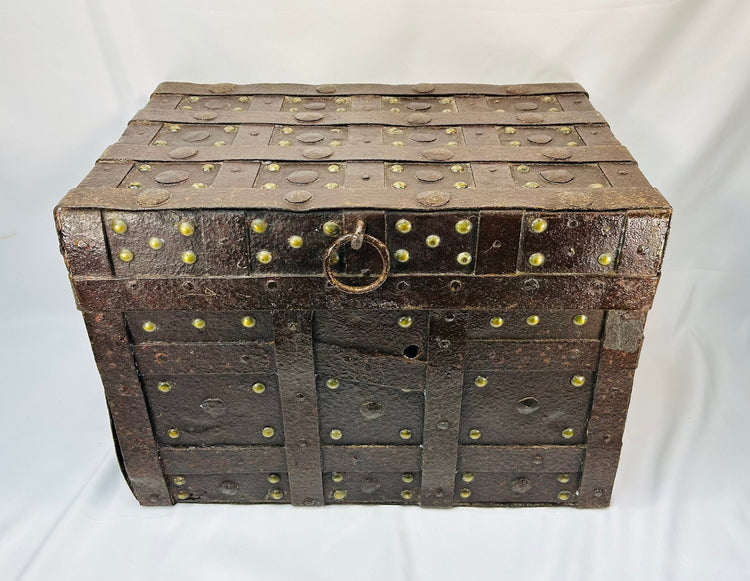
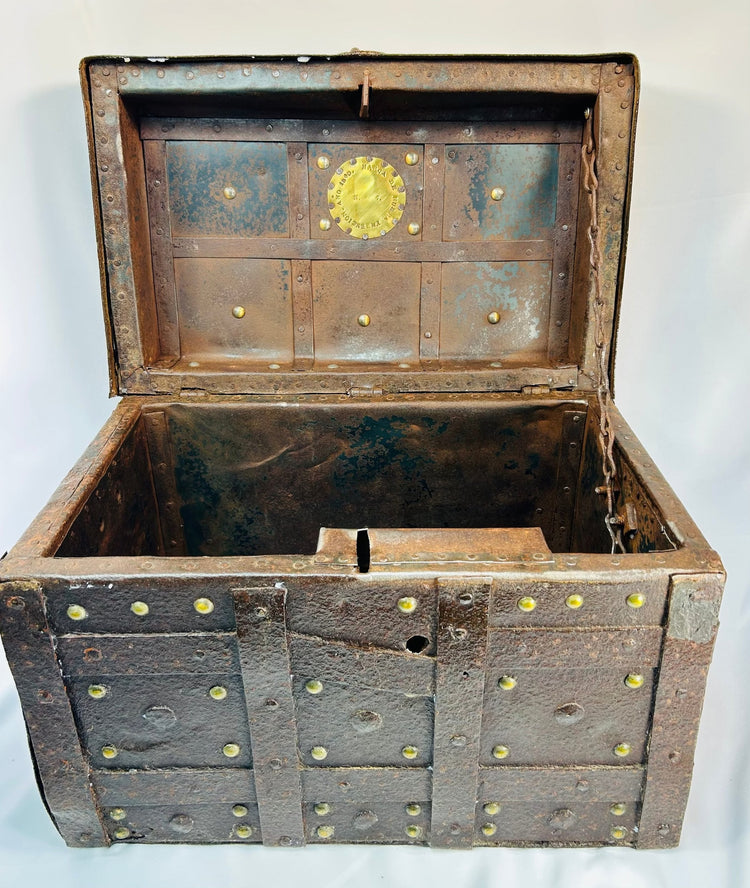
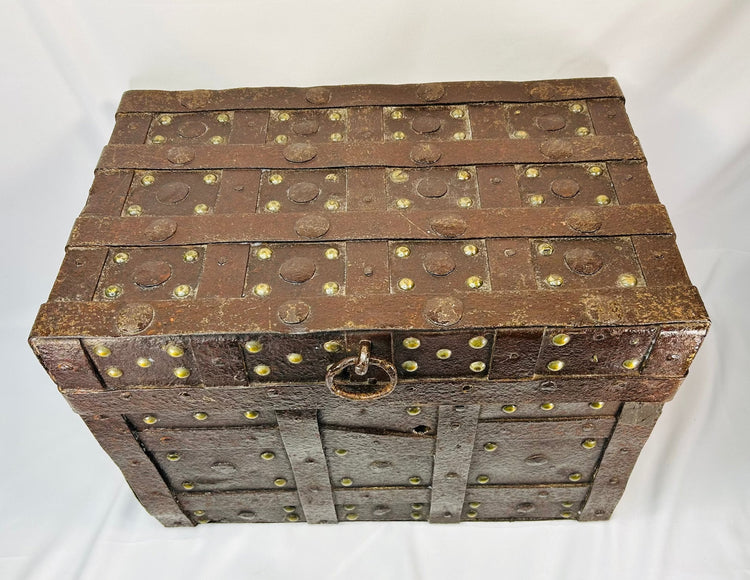
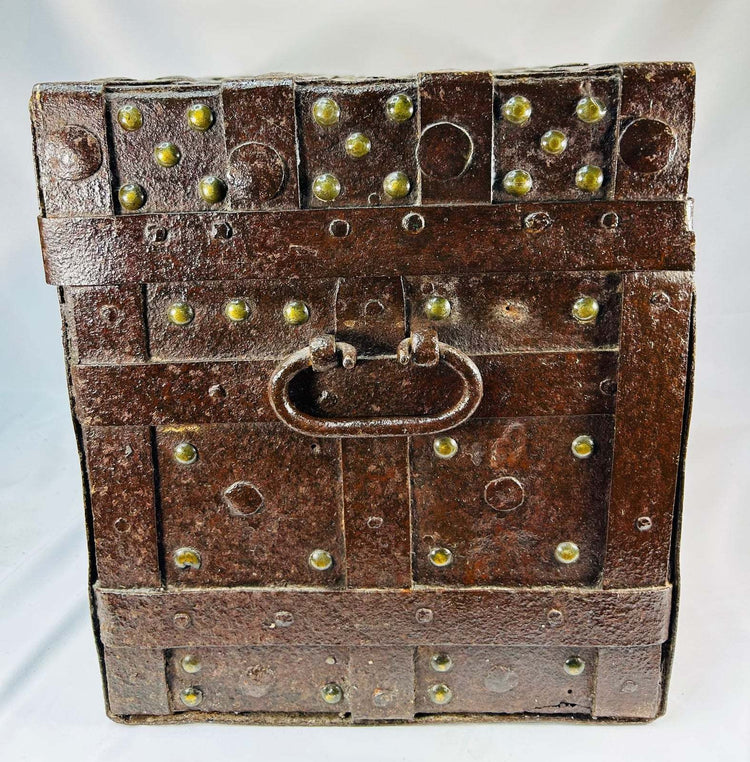
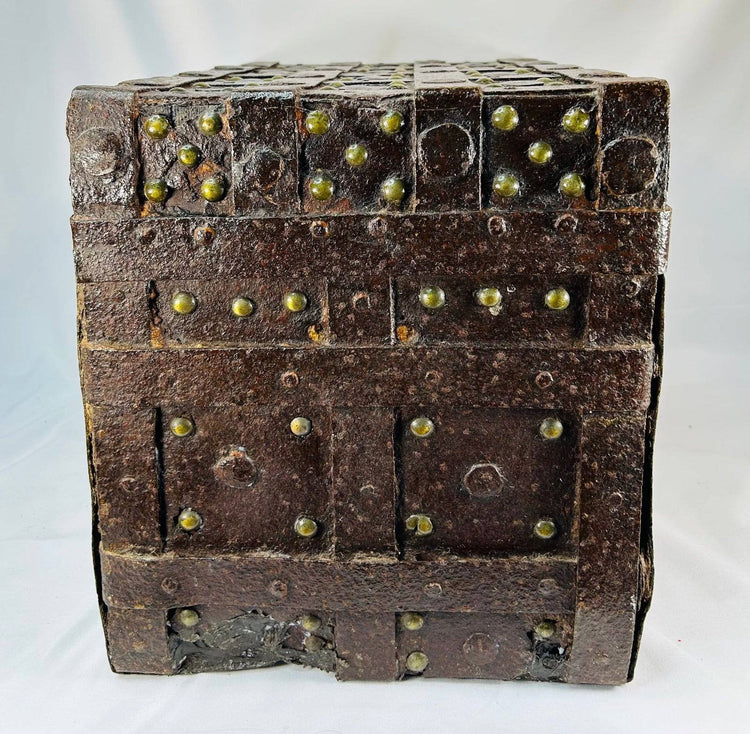
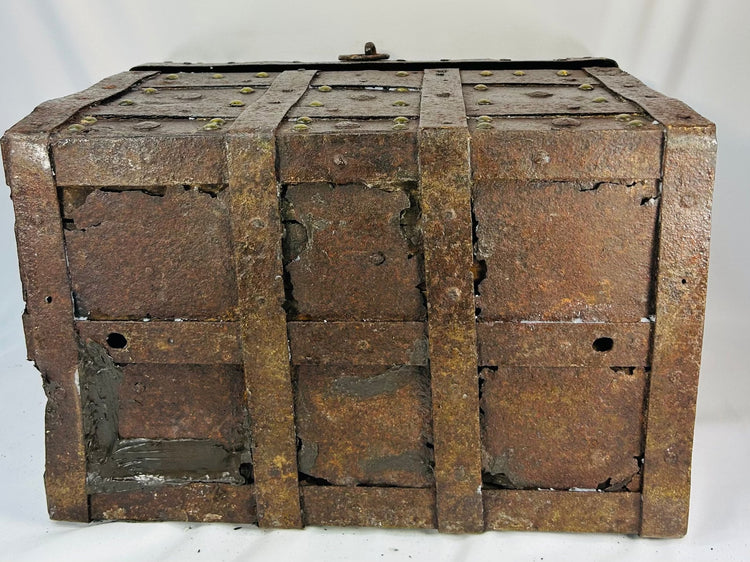
This impressive iron-bound strongbox was designed in the tradition of 16th–17th century European strong chests. The exterior is completely sheathed in thick wrought-iron plates laid out in a grid and reinforced with horizontal and vertical strapwork, each panel secured with domed rivets and decorative brass studs.
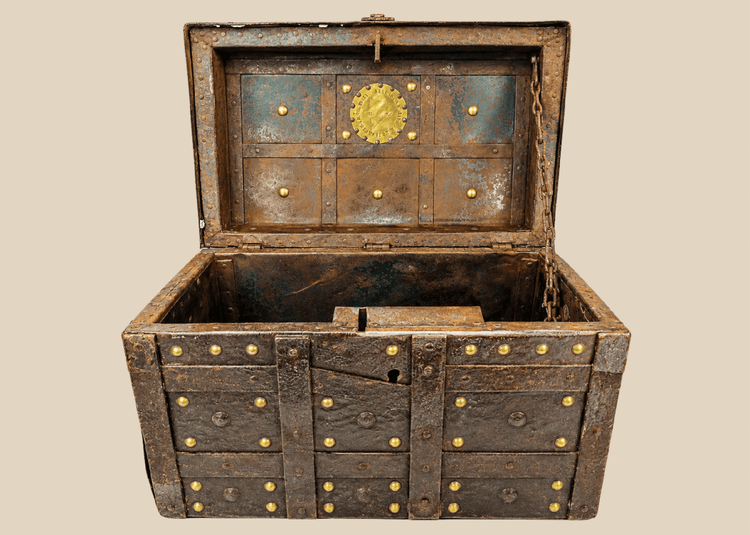
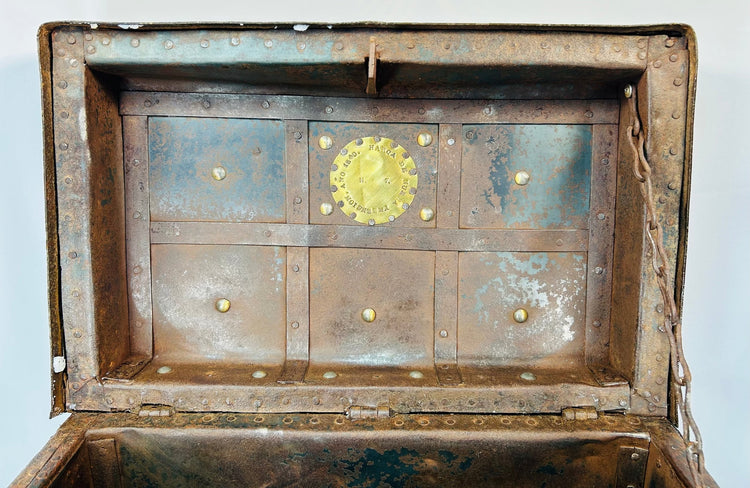
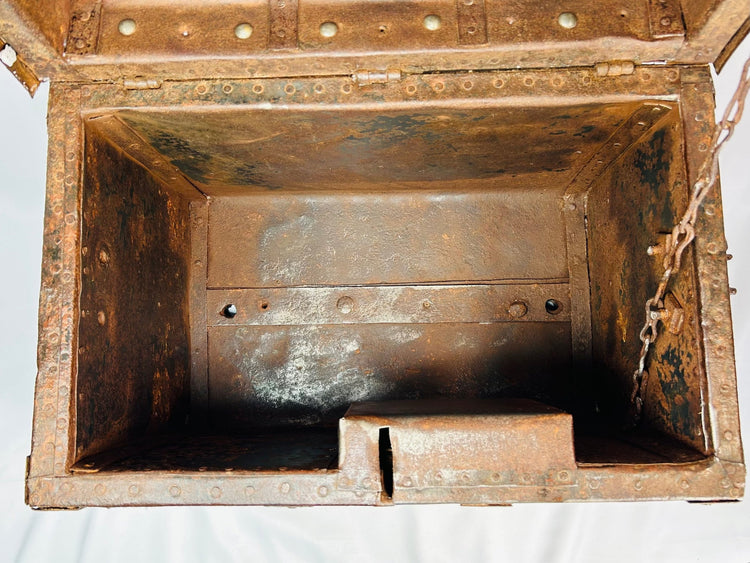
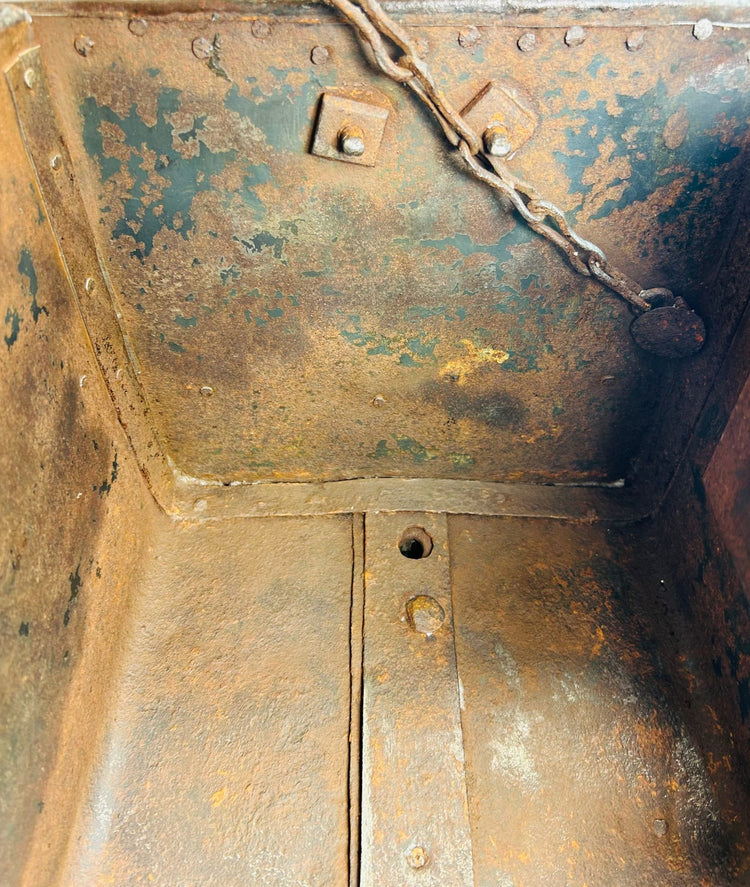
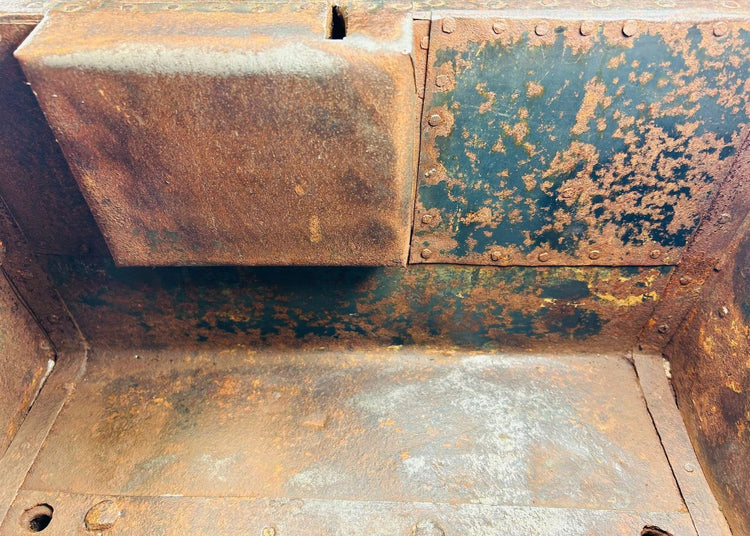
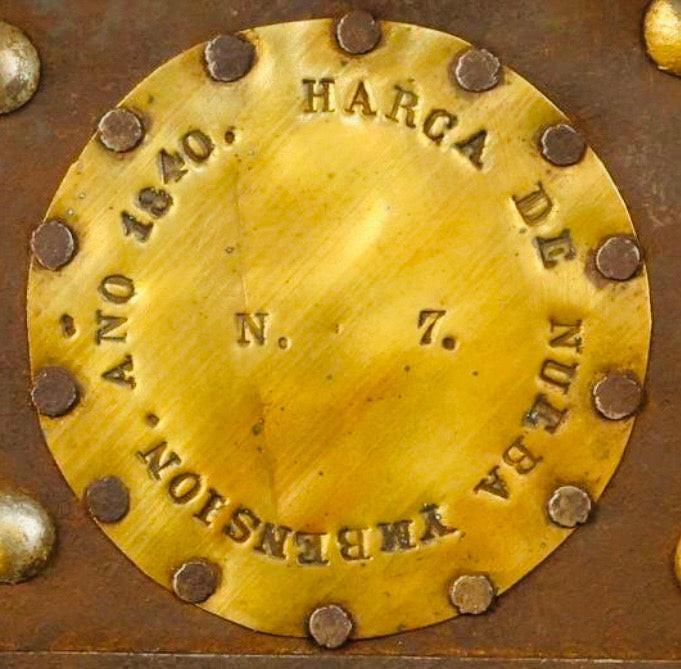
Lifting the heavy lid reveals a simple but robust interior with thick iron walls, traces of original green paint. A chain secures the lid to one side, and the interior brass plaque – with archaic Spanish/Portuguese-style lettering – suggests an official or commercial use, perhaps for securing funds, documents, or valuables in a merchant, banking, shipping, or administrative context.
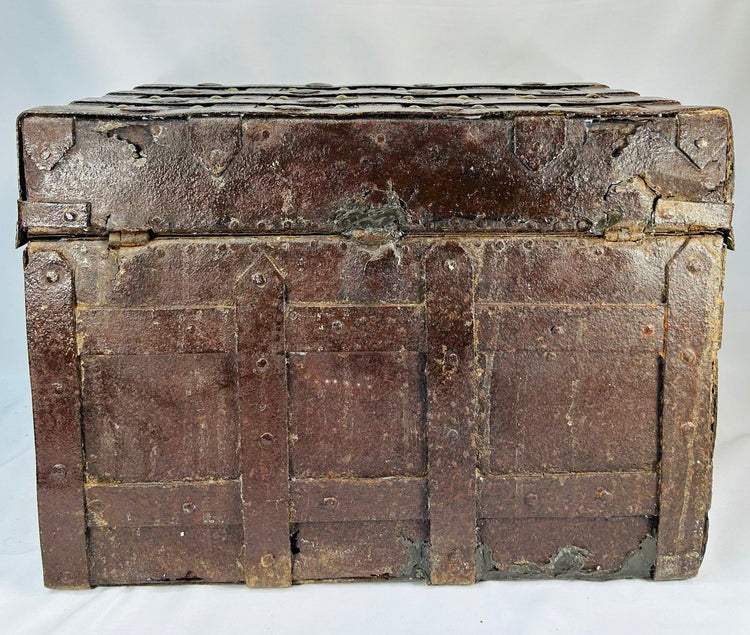
The box retains one original forged iron carrying handle to one side; the opposite handle is now missing. Old repairs and reinforcements are visible around the underside and back edge, testifying to long use and practical maintenance over time.
Features
- Heavy iron strongbox constructed entirely of wrought-iron plate and strapwork
- Decorative layout of riveted panels with domed brass studs throughout
- Interior brass plaque reading approximately “MARCA DE NUEBA YMBENSIÓN. AÑO 1840. N. 7.” (archaic spelling, roughly “mark of new invention, year 1840, no. 7”)
- Thick iron walls with remnants of green interior paint
- Original forged iron ring handle to one side (other handle now missing)
- Substantial weight and presence, designed for security and durability
Cultural Significance
Strongboxes such as this were essential security furnishings in Europe from the Renaissance through the 19th century, used by merchants, bankers, ship captains, and administrators to safeguard coin, bullion, contracts, and sensitive documents.
The heavy strapwork, studded panels, and ring handles recall Renaissance strong chests, while the 1840-dated interior plaque reflects contemporary interest in patenting or marking new “inventions” and security mechanisms. Pieces like this illustrate the continuity of trade, finance, and security practices over centuries, and make a powerful statement.
Condition
Overall good antique, well-used condition consistent with age and heavy functional use. The iron surfaces display extensive patina, oxidation, and pitting throughout, reflecting long and legitimate service life. One original side handle remains intact while the opposite handle is missing. Visible old repairs and patching are present, particularly along the underside and back, including soldered or filled areas. Expected wear, dents, and surface losses are evident, with the interior showing rusting and flaking remnants of earlier green paint. Hinges and lid remain functional, and the interior chain is intact. Structurally stable and sound for display, this piece retains strong authenticity and the evocative “working life” character collectors value.
Dimensions (Approximate)
Length: 18.5 in
Width: 11.75 in
Height: 13.75 in
Age (Approximate)
185 years old (Dated 1840)
Provenance
Formerly part of a private collection in St. Petersburg, Florida, USA. The collection was assembled over a number of years and included a diverse selection of historical, cultural, and decorative objects.
Learn More
Discover the history of European security chests through Guardians of Goods and Time
Explore our curated Maritime & Scientific Relics Collection
Description
Historical Context & Origin
Region: Iberian Peninsula (Spain or Portugal)
Material: Wrought iron with brass studs and brass inscription plaque, internal painted iron panels
Period: Dated 1840 (16th–17th Century Style)
Description
This impressive iron-bound strongbox was designed in the tradition of 16th–17th century European strong chests. The exterior is completely sheathed in thick wrought-iron plates laid out in a grid and reinforced with horizontal and vertical strapwork, each panel secured with domed rivets and decorative brass studs.
Lifting the heavy lid reveals a simple but robust interior with thick iron walls, traces of original green paint. A chain secures the lid to one side, and the interior brass plaque – with archaic Spanish/Portuguese-style lettering – suggests an official or commercial use, perhaps for securing funds, documents, or valuables in a merchant, banking, shipping, or administrative context.
The box retains one original forged iron carrying handle to one side; the opposite handle is now missing. Old repairs and reinforcements are visible around the underside and back edge, testifying to long use and practical maintenance over time.
Features
- Heavy iron strongbox constructed entirely of wrought-iron plate and strapwork
- Decorative layout of riveted panels with domed brass studs throughout
- Interior brass plaque reading approximately “MARCA DE NUEBA YMBENSIÓN. AÑO 1840. N. 7.” (archaic spelling, roughly “mark of new invention, year 1840, no. 7”)
- Thick iron walls with remnants of green interior paint
- Original forged iron ring handle to one side (other handle now missing)
- Substantial weight and presence, designed for security and durability
Cultural Significance
Strongboxes such as this were essential security furnishings in Europe from the Renaissance through the 19th century, used by merchants, bankers, ship captains, and administrators to safeguard coin, bullion, contracts, and sensitive documents.
The heavy strapwork, studded panels, and ring handles recall Renaissance strong chests, while the 1840-dated interior plaque reflects contemporary interest in patenting or marking new “inventions” and security mechanisms. Pieces like this illustrate the continuity of trade, finance, and security practices over centuries, and make a powerful statement.
Condition
Overall good antique, well-used condition consistent with age and heavy functional use. The iron surfaces display extensive patina, oxidation, and pitting throughout, reflecting long and legitimate service life. One original side handle remains intact while the opposite handle is missing. Visible old repairs and patching are present, particularly along the underside and back, including soldered or filled areas. Expected wear, dents, and surface losses are evident, with the interior showing rusting and flaking remnants of earlier green paint. Hinges and lid remain functional, and the interior chain is intact. Structurally stable and sound for display, this piece retains strong authenticity and the evocative “working life” character collectors value.
Dimensions (Approximate)
Length: 18.5 in
Width: 11.75 in
Height: 13.75 in
Age (Approximate)
185 years old (Dated 1840)
Provenance
Formerly part of a private collection in St. Petersburg, Florida, USA. The collection was assembled over a number of years and included a diverse selection of historical, cultural, and decorative objects.
Learn More
Discover the history of European security chests through Guardians of Goods and Time
Explore our curated Maritime & Scientific Relics Collection
You May Also Like
