

Northern Wei Dynasty | Court Attendant Figure with Traces of Polychrome Pigment | Circa 386–535 CE
Couldn't load pickup availability


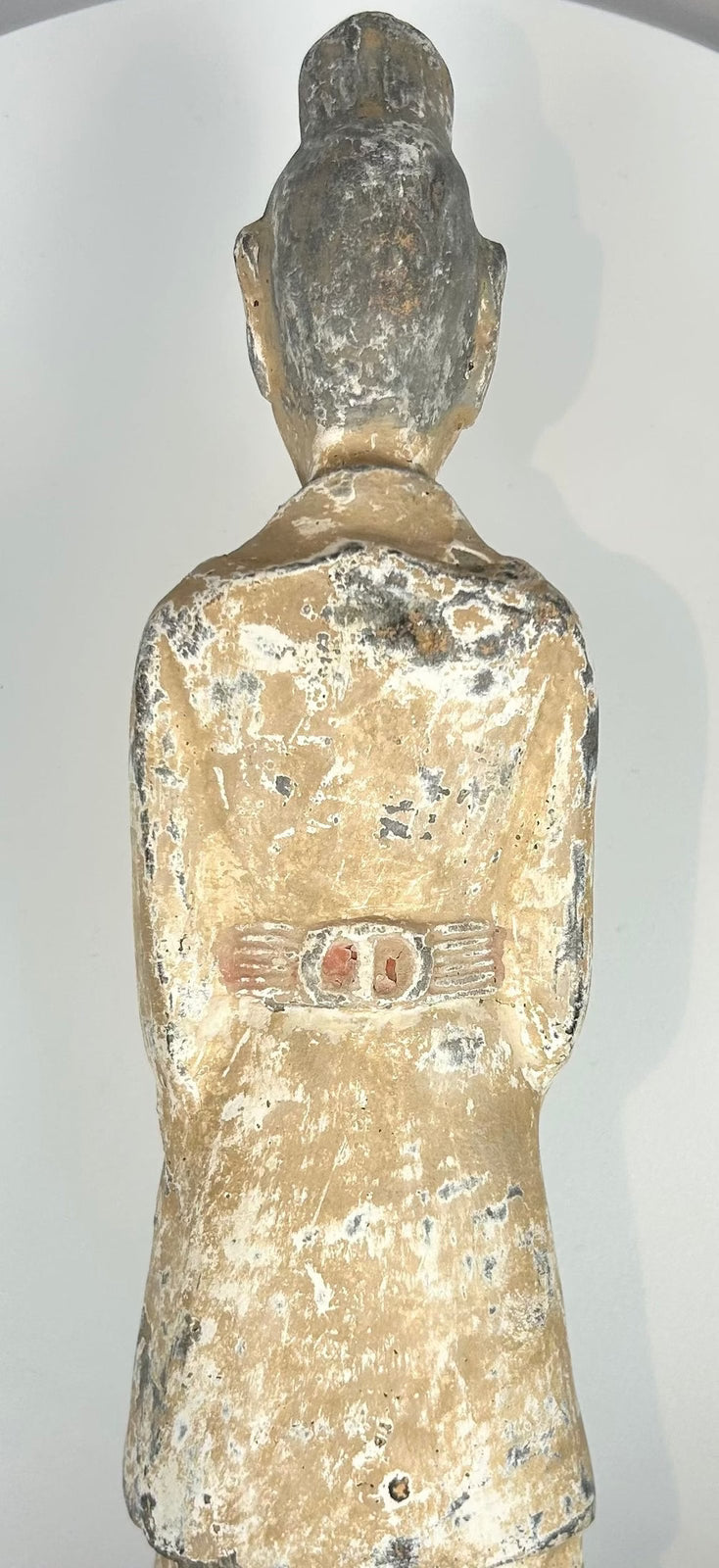
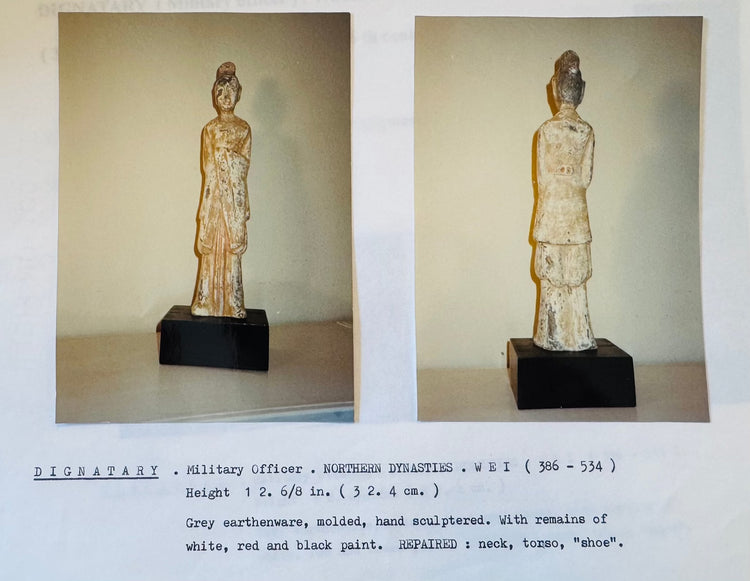
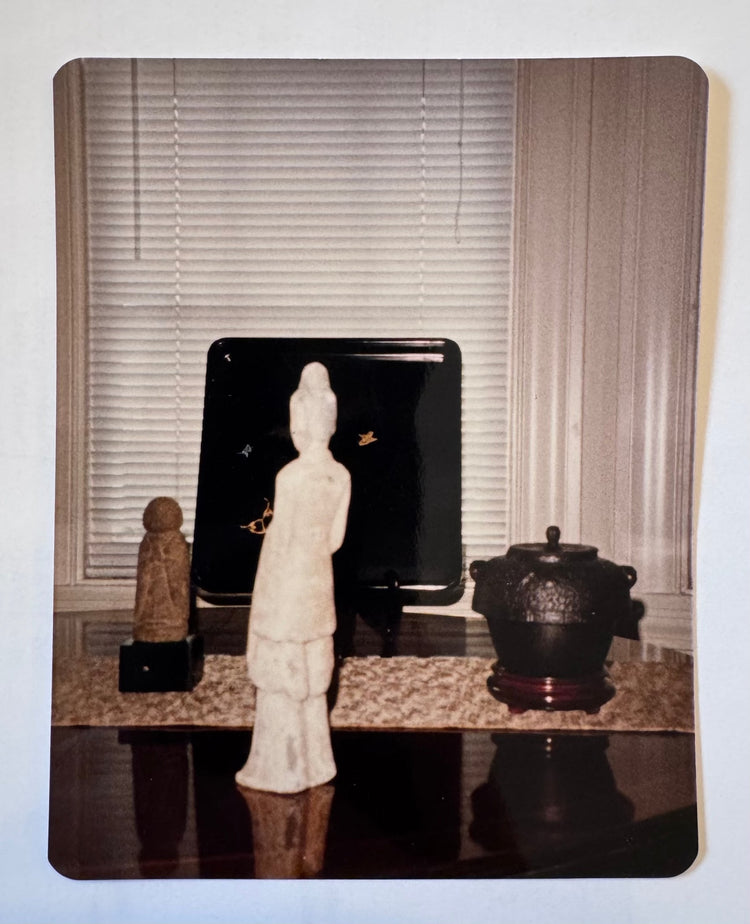
Northern Wei Dynasty | Court Attendant Figure with Traces of Polychrome Pigment | Circa 386–535 CE
Description
More
Less
Historical Context & Origin
Region: China
Material: Grey earthenware with traces of mineral pigments
Period: Northern Wei Dynasty, 386–535 CE
Description
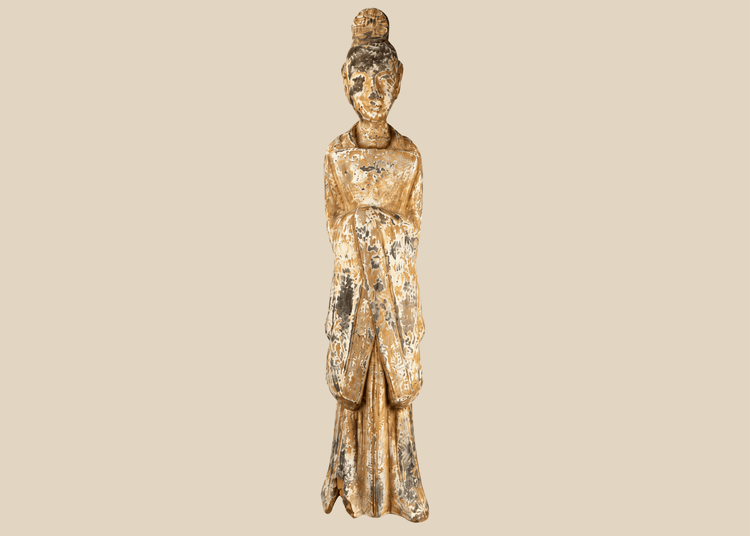
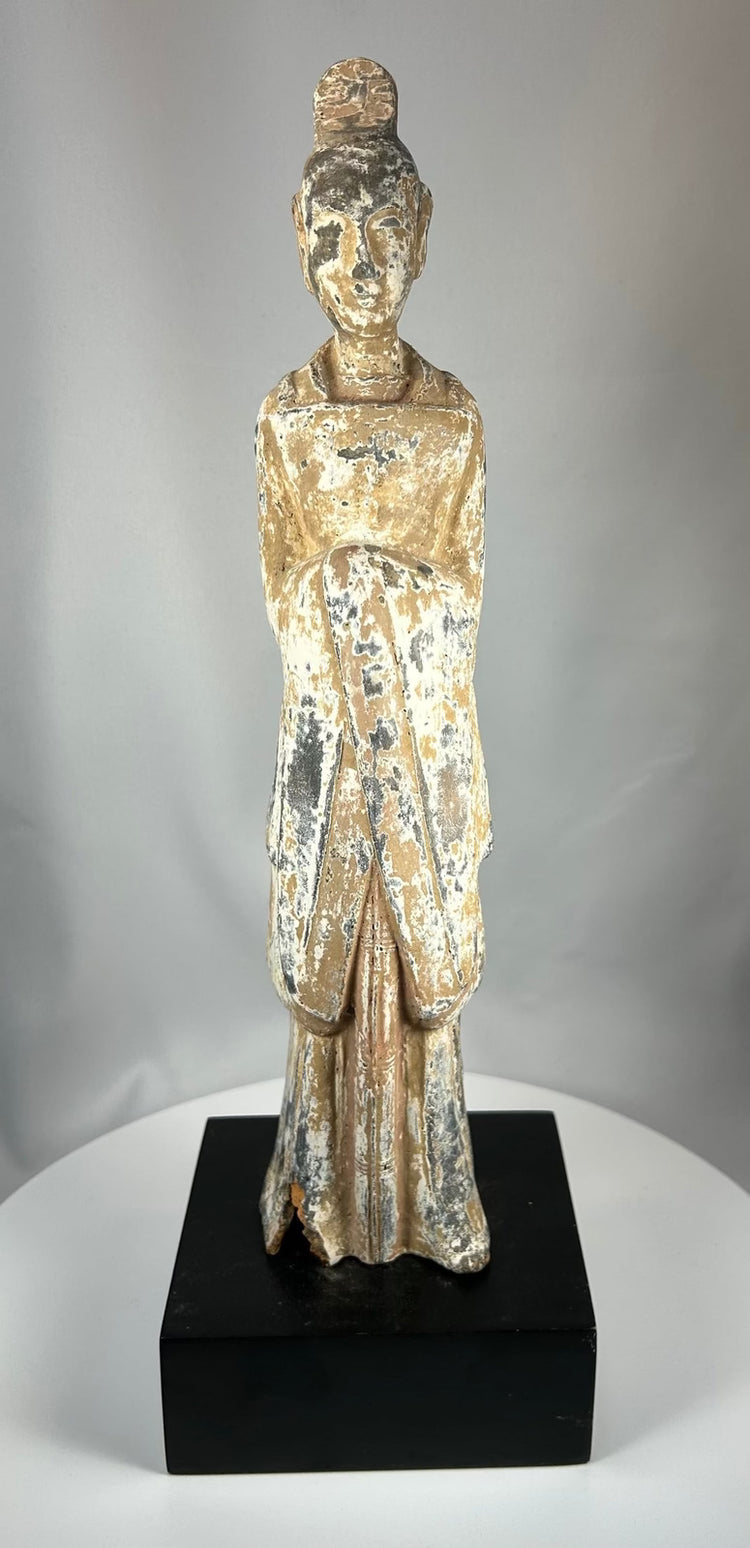
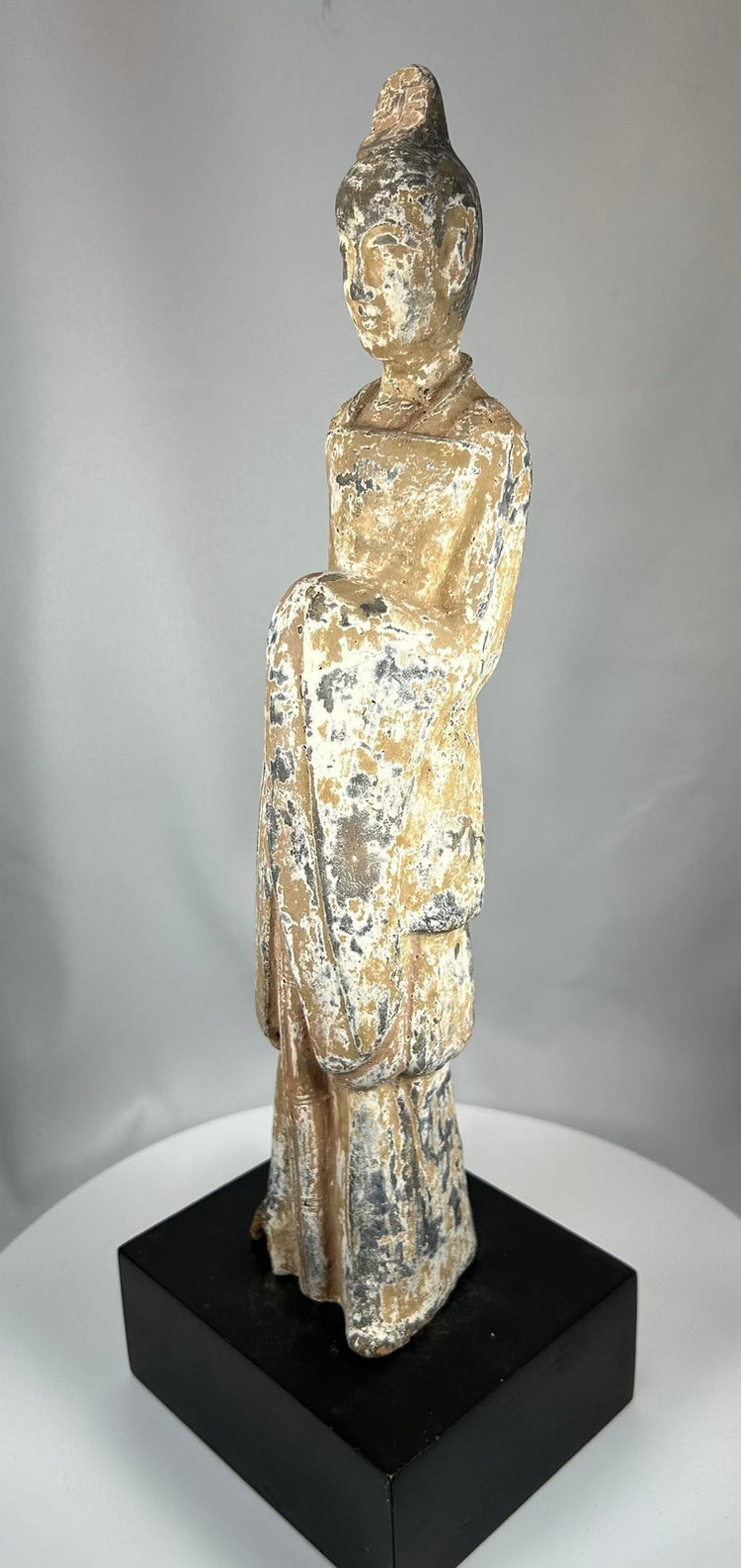
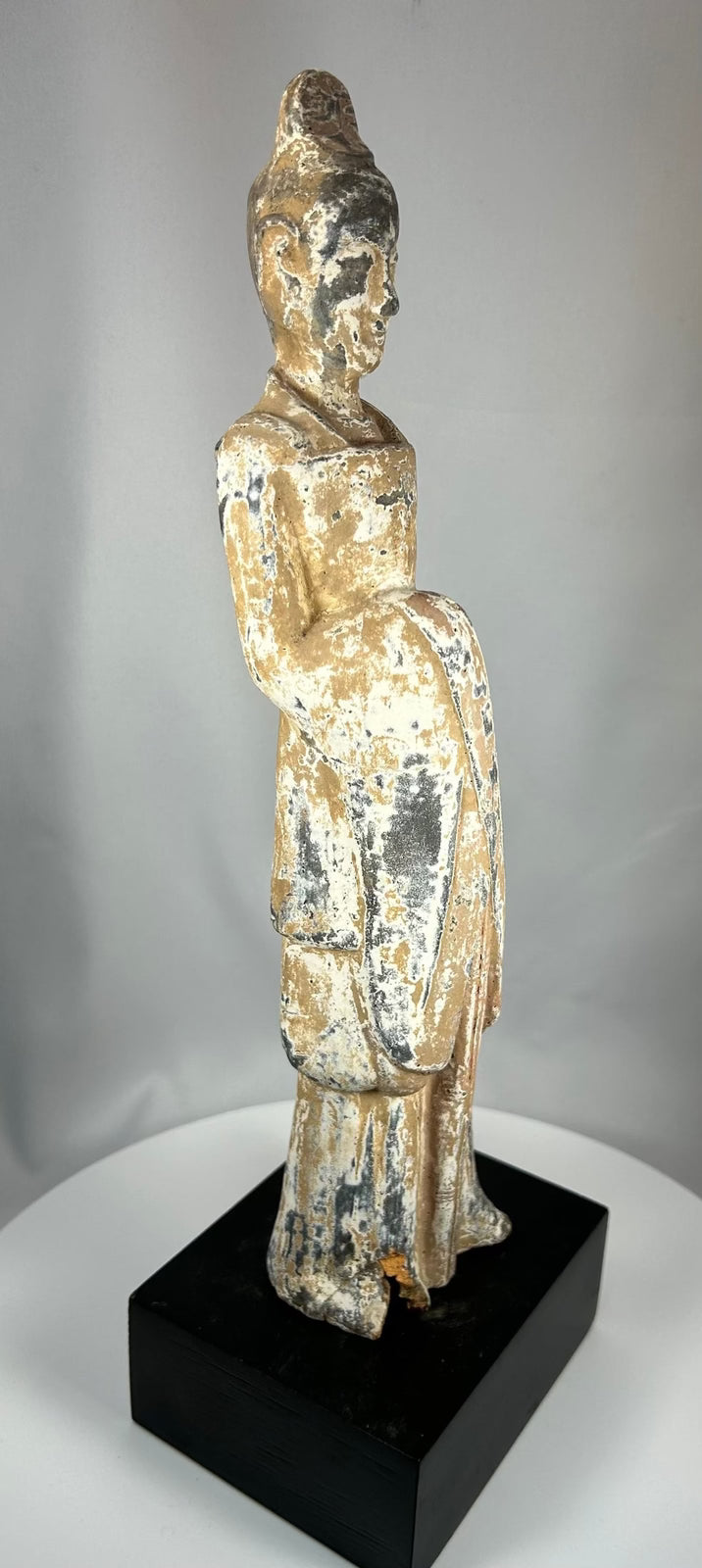
This striking ancient Chinese earthenware figure represents a standing court dignitary or attendant from the Northern Wei Dynasty, a transformative period in early medieval Chinese history when Buddhism, imperial court culture, and funerary traditions flourished.
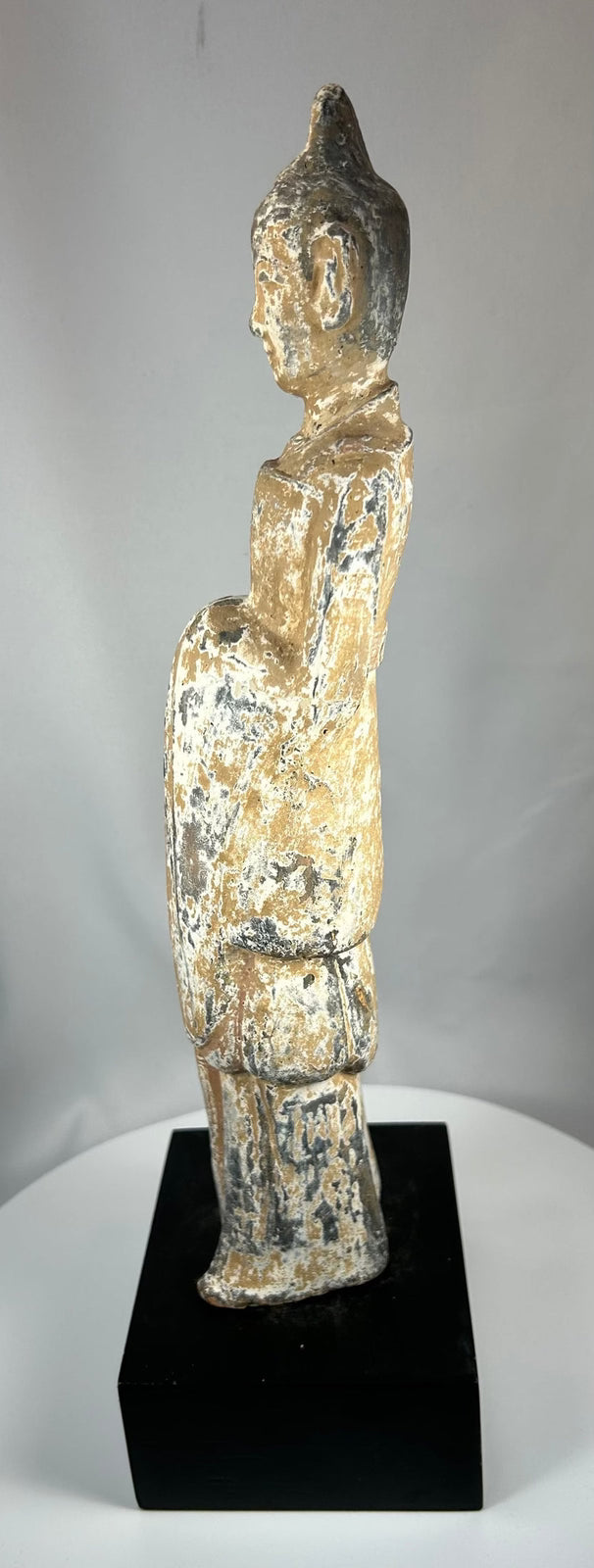
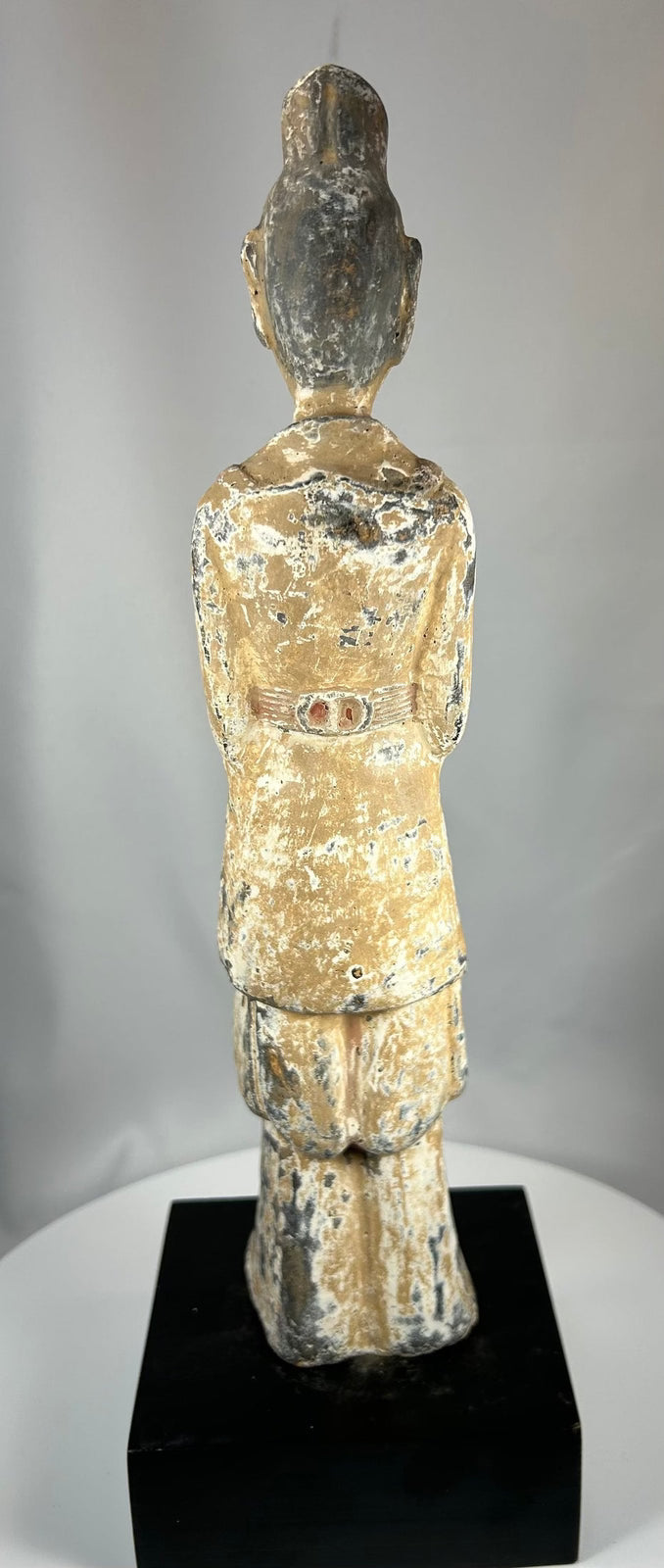
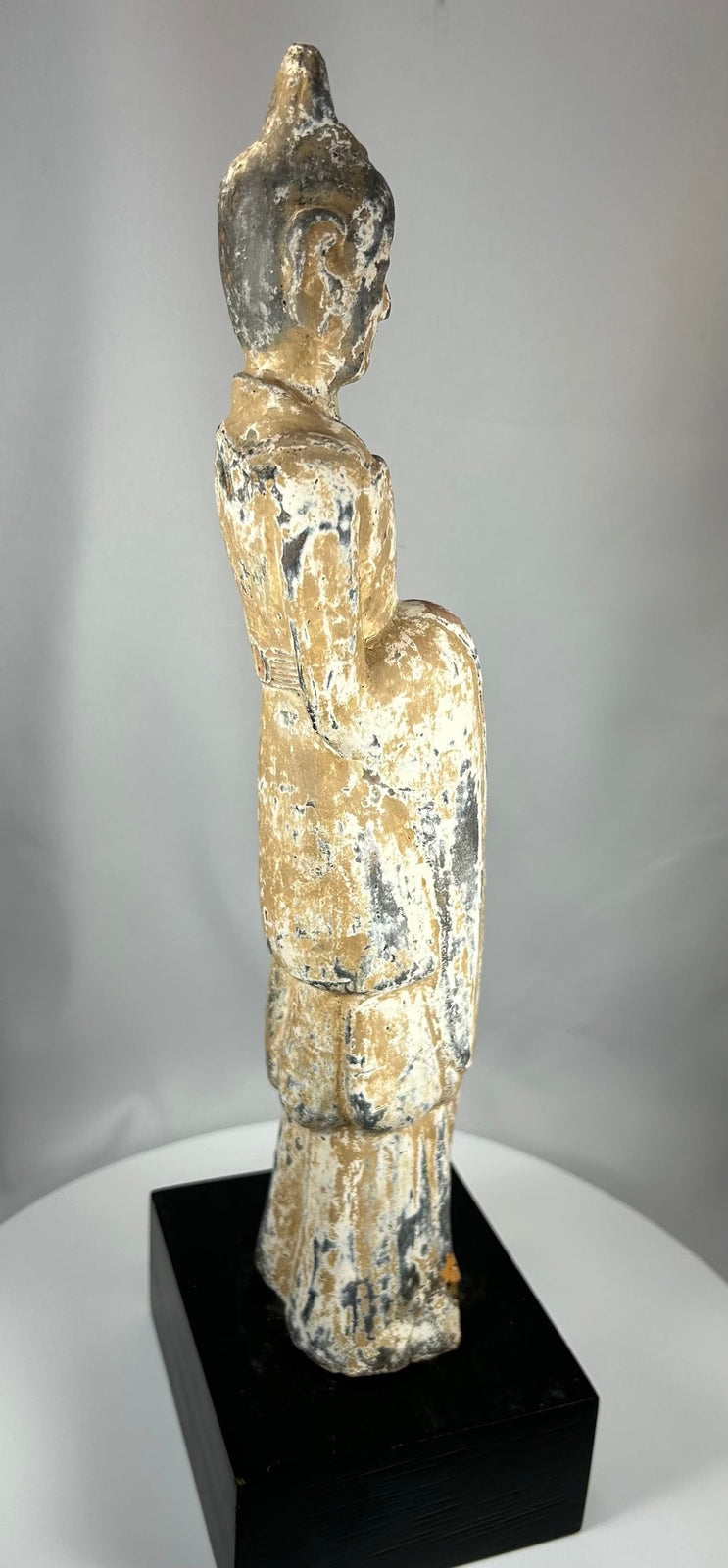
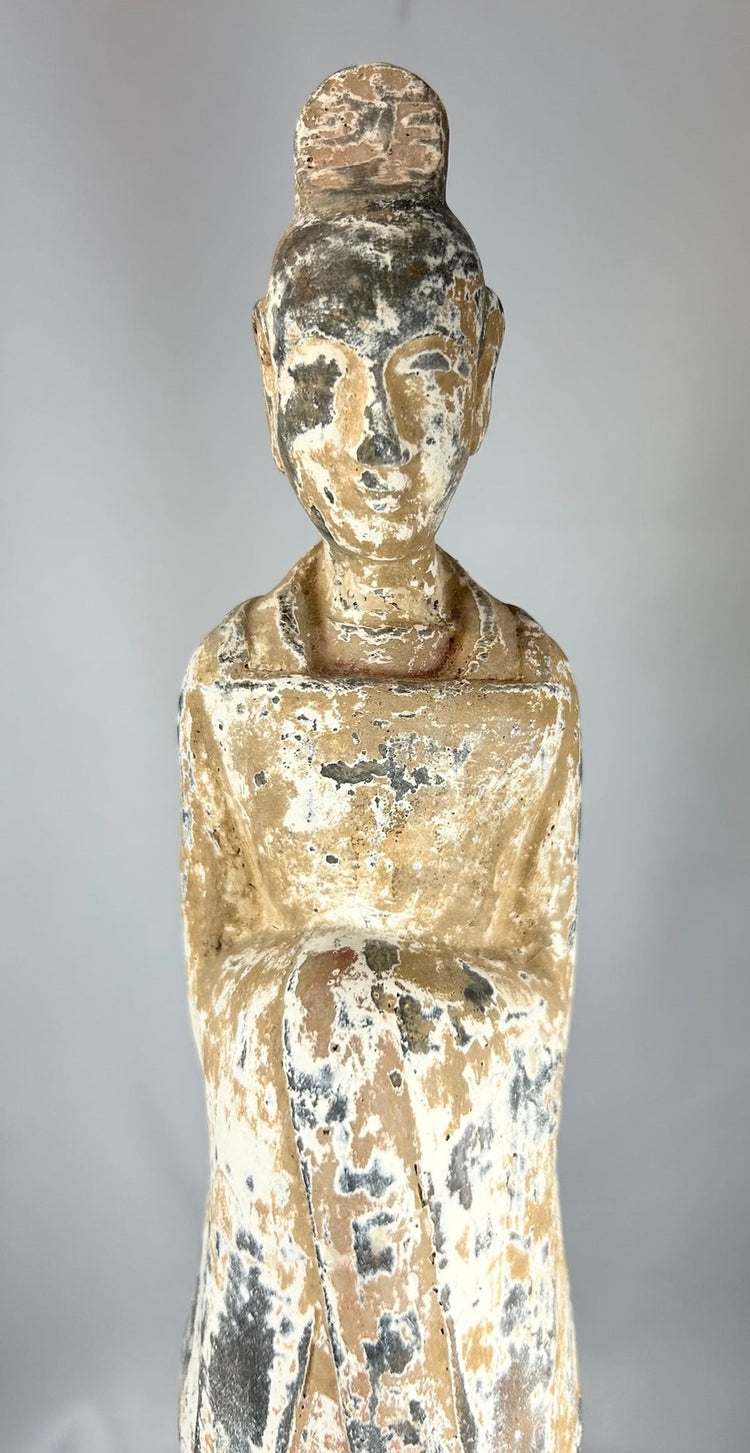
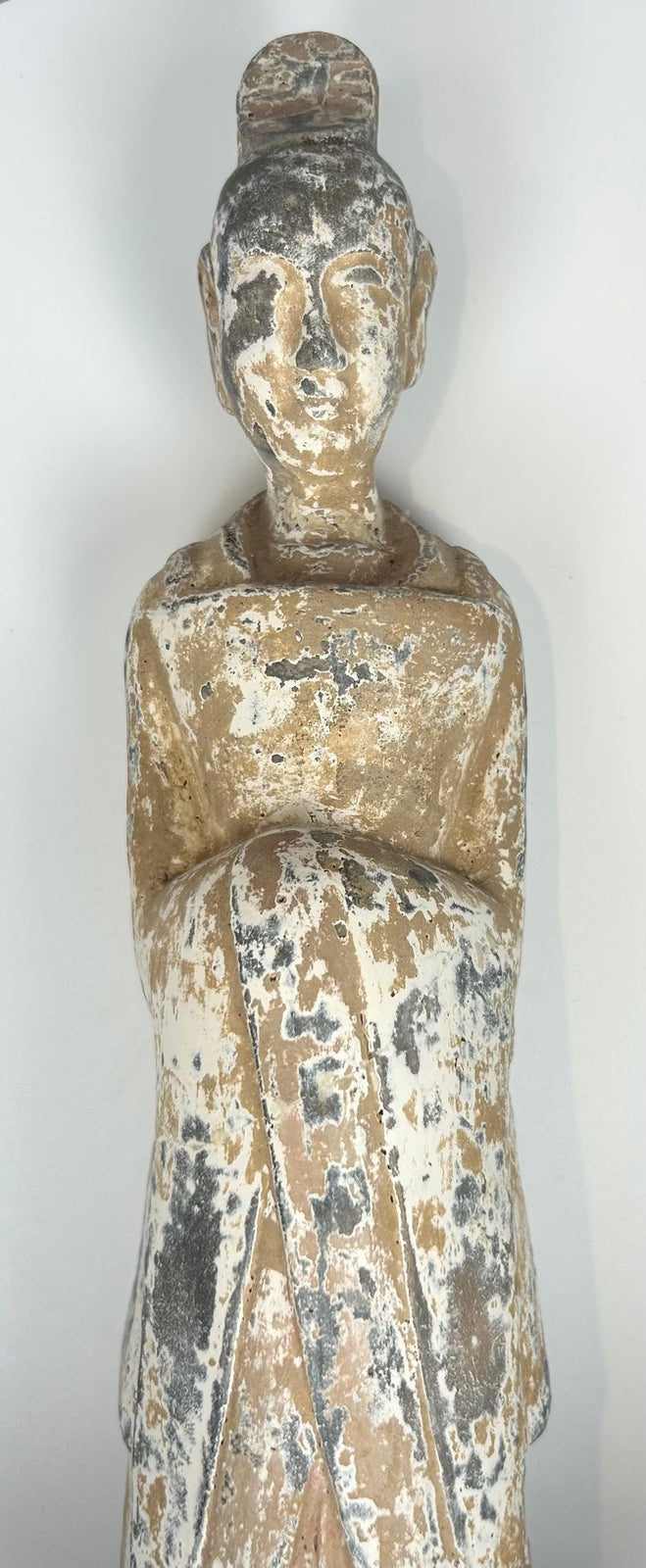
The figure stands upright in a formal posture, hands concealed within the long sleeves of a layered robe, a gesture commonly associated with respectful court etiquette in early Chinese sculpture. The elongated body, high collar, and stylized drapery reflect the distinctive sculptural aesthetics of the Northern Wei period, when artists emphasized elegant verticality and simplified forms.
The figure’s head is topped with a formal headdress or hair knot, suggesting status within the imperial court hierarchy. Facial features are softly modeled, with almond-shaped eyes, a subtle mouth, and calm expression, conveying the serene dignity typical of early Chinese funerary sculpture.
Traces of original white, red, and black polychrome pigments remain visible across the surface, offering rare evidence of the vibrant painted decoration that once covered these figures. Over time the pigments have weathered, leaving a beautifully mottled surface patina that highlights the sculpture’s great age.
Such figures were typically placed in elite tombs as part of mingqi, or “spirit objects,” created to accompany and serve the deceased in the afterlife. Court officials, attendants, and guardians were believed to provide protection and status for the tomb occupant.
The sculpture is mounted on a modern display base for stability and presentation.
Features
- Ancient Chinese funerary attendant figure
- Attributed to the Northern Wei Dynasty (386–535 CE)
- Grey earthenware construction
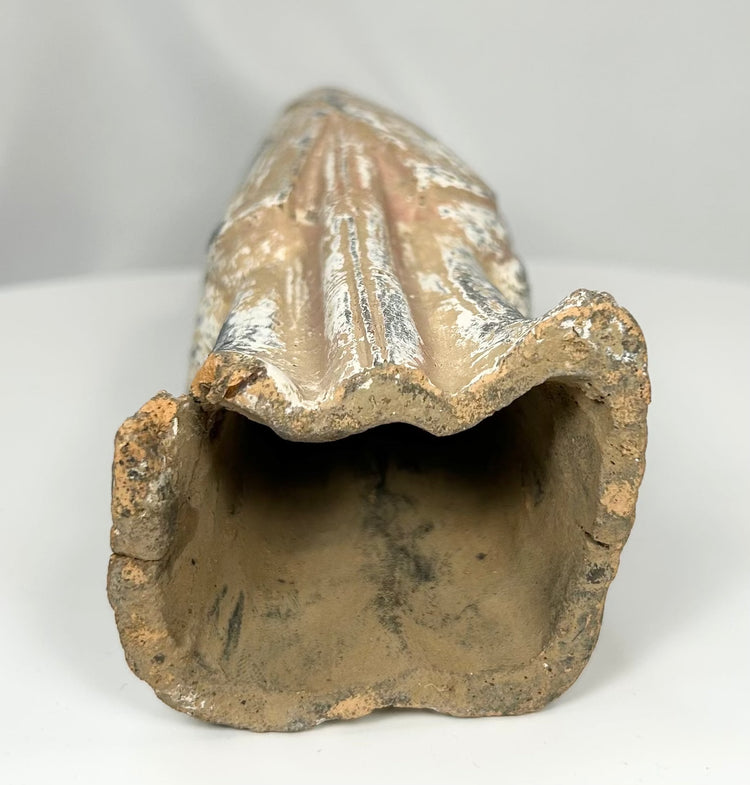
- Molded and hand-finished sculptural details
- Remnants of original polychrome pigments (white, red, and black)
- Formal court attire with long flowing robe
- Distinctive Northern Wei sculptural style
- Mounted on a modern custom display base
Cultural Significance
During the Northern Wei Dynasty, burial traditions involved placing ceramic figures within tombs to represent servants, officials, animals, and guardians that would assist the deceased in the spiritual realm.
These figures reflect both the social structure of early Chinese courts and the artistic transition taking place during this era, when influences from Central Asia and Buddhism began shaping Chinese sculpture.
Condition
Age-related wear throughout, including surface weathering and pigment loss consistent with burial and centuries of age. Old repairs are present at the neck, torso, and foot area, typical of ancient excavated ceramics. The sculpture remains structurally stable and displays well.
Dimensions
Height: 15.25 in (mounted on modern display base)
Age
1,500–1,650 years old
Provenance
Learn More
Explore a comparable Northern Wei tomb attendant figure preserved in the Yale University Art Gallery collection
Browse our Ancient Chinese Artifacts & Imperial Relics Collection
Description
Historical Context & Origin
Region: China
Material: Grey earthenware with traces of mineral pigments
Period: Northern Wei Dynasty, 386–535 CE
Description
This striking ancient Chinese earthenware figure represents a standing court dignitary or attendant from the Northern Wei Dynasty, a transformative period in early medieval Chinese history when Buddhism, imperial court culture, and funerary traditions flourished.
The figure stands upright in a formal posture, hands concealed within the long sleeves of a layered robe, a gesture commonly associated with respectful court etiquette in early Chinese sculpture. The elongated body, high collar, and stylized drapery reflect the distinctive sculptural aesthetics of the Northern Wei period, when artists emphasized elegant verticality and simplified forms.
The figure’s head is topped with a formal headdress or hair knot, suggesting status within the imperial court hierarchy. Facial features are softly modeled, with almond-shaped eyes, a subtle mouth, and calm expression, conveying the serene dignity typical of early Chinese funerary sculpture.
Traces of original white, red, and black polychrome pigments remain visible across the surface, offering rare evidence of the vibrant painted decoration that once covered these figures. Over time the pigments have weathered, leaving a beautifully mottled surface patina that highlights the sculpture’s great age.
Such figures were typically placed in elite tombs as part of mingqi, or “spirit objects,” created to accompany and serve the deceased in the afterlife. Court officials, attendants, and guardians were believed to provide protection and status for the tomb occupant.
The sculpture is mounted on a modern display base for stability and presentation.
Features
- Ancient Chinese funerary attendant figure
- Attributed to the Northern Wei Dynasty (386–535 CE)
- Grey earthenware construction
- Molded and hand-finished sculptural details
- Remnants of original polychrome pigments (white, red, and black)
- Formal court attire with long flowing robe
- Distinctive Northern Wei sculptural style
- Mounted on a modern custom display base
Cultural Significance
During the Northern Wei Dynasty, burial traditions involved placing ceramic figures within tombs to represent servants, officials, animals, and guardians that would assist the deceased in the spiritual realm.
These figures reflect both the social structure of early Chinese courts and the artistic transition taking place during this era, when influences from Central Asia and Buddhism began shaping Chinese sculpture.
Condition
Age-related wear throughout, including surface weathering and pigment loss consistent with burial and centuries of age. Old repairs are present at the neck, torso, and foot area, typical of ancient excavated ceramics. The sculpture remains structurally stable and displays well.
Dimensions
Height: 15.25 in (mounted on modern display base)
Age
1,500–1,650 years old
Provenance
Learn More
Explore a comparable Northern Wei tomb attendant figure preserved in the Yale University Art Gallery collection
Browse our Ancient Chinese Artifacts & Imperial Relics Collection
You May Also Like
