



Pre-Columbian Ceramic Fragment Group | Ritual Vessel or Effigy Elements | Circa 500 BCE – 1500 CE
Description
More
Less
Historical Context & Origin
Region: Mesoamerica or Northern South America
Material: Hand-formed ceramic / terracotta
Period: Pre-Columbian, circa 500 BCE – 1500 CE
Description
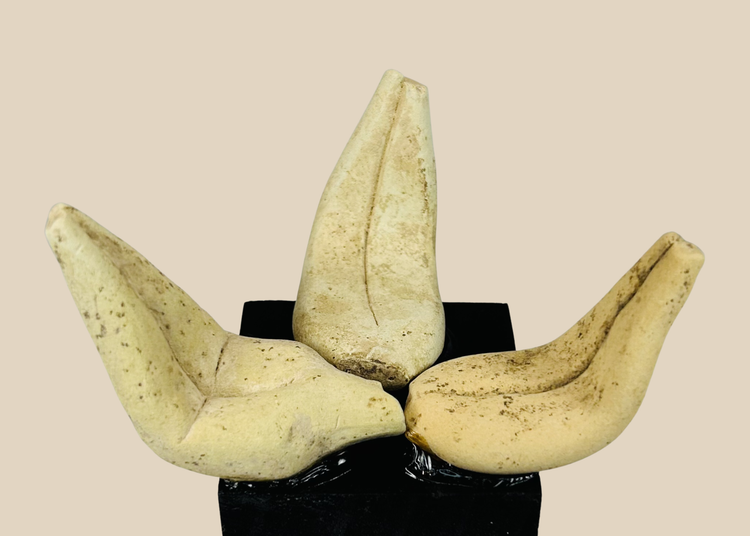
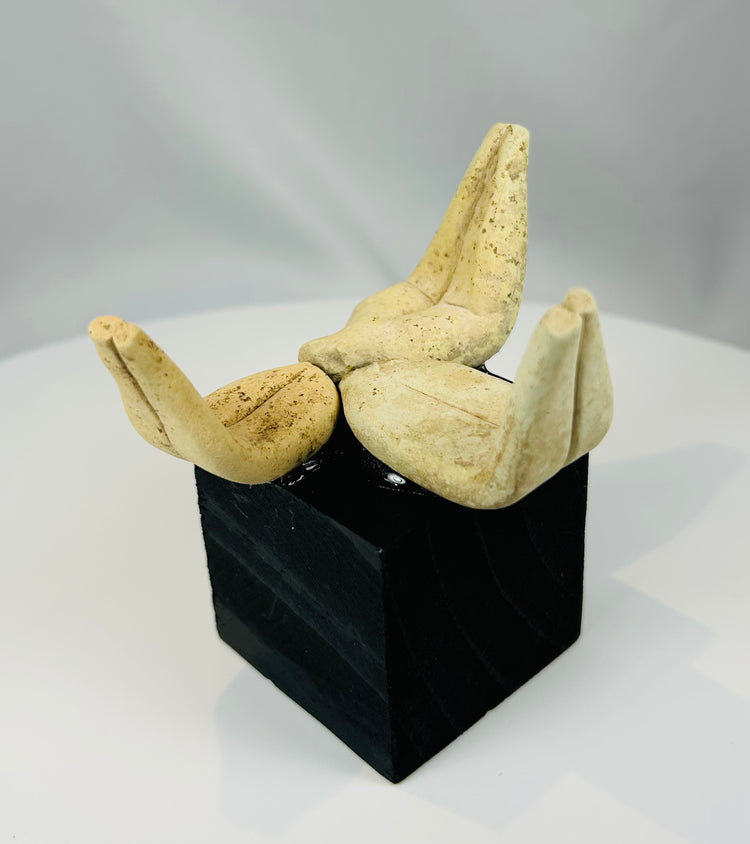
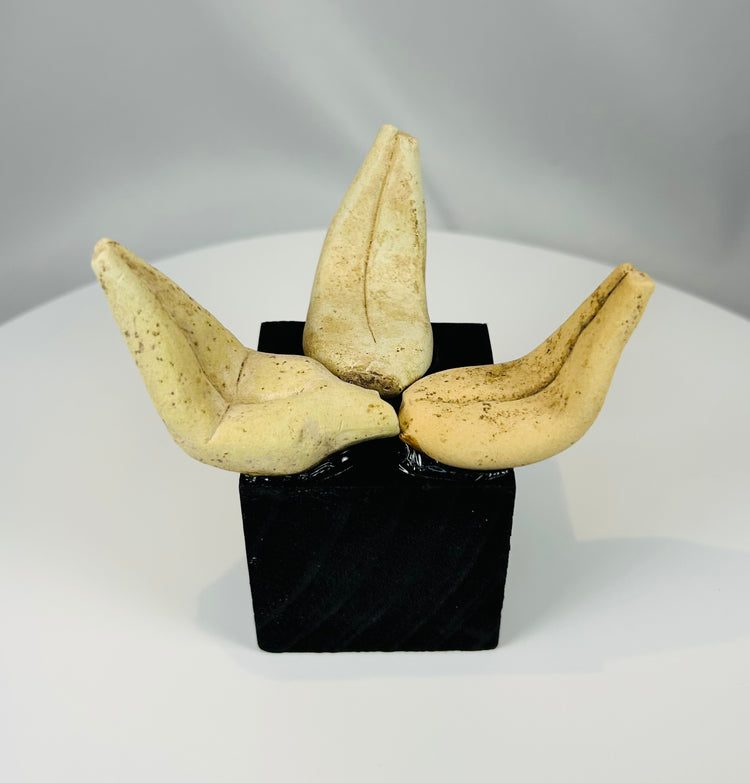
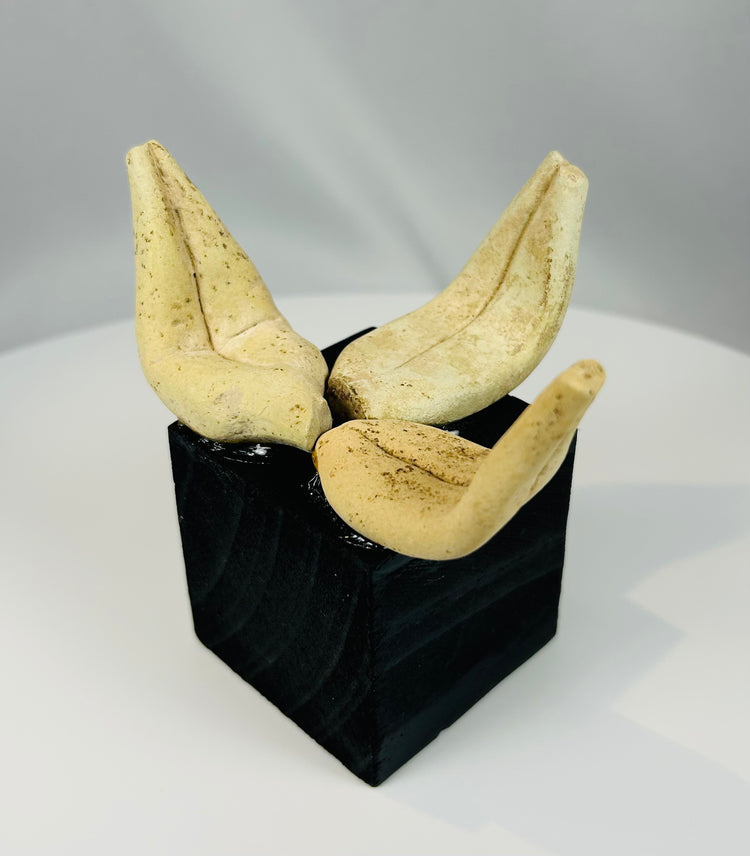
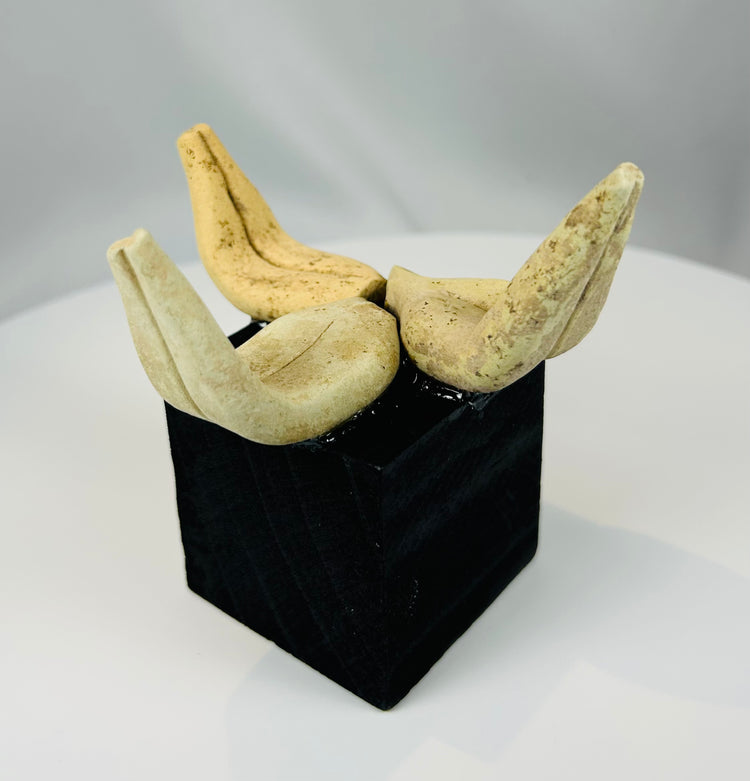
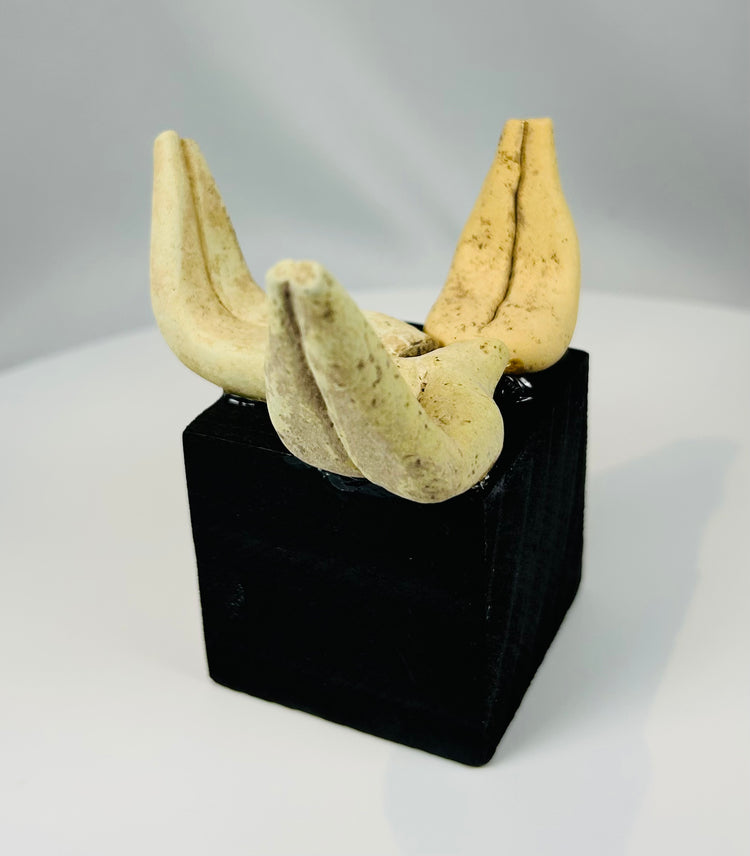
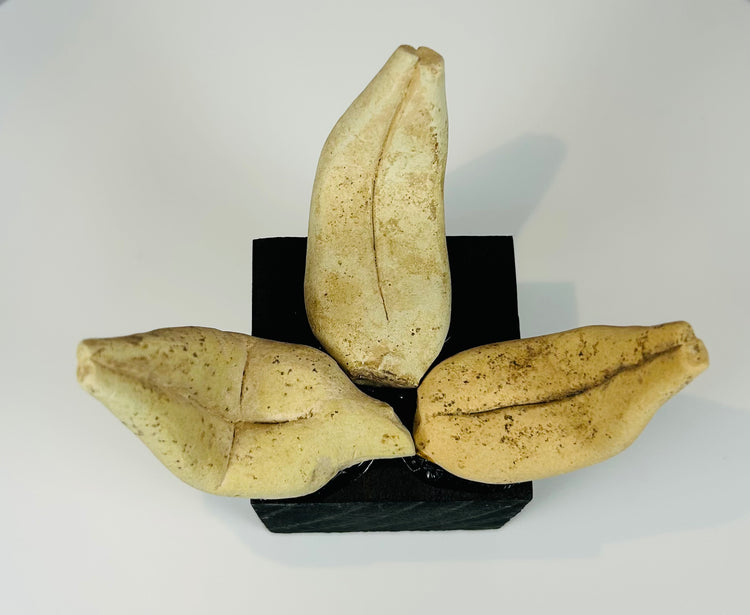
This intriguing group of three Pre-Columbian ceramic fragments originates from a larger pottery assemblage and represents surviving components from a once complete ceramic object. Each fragment displays a distinctive curved, tapered form with a central incised groove running along the upper surface. The sculptural shaping suggests these pieces originally served as applied decorative or structural elements attached to a larger vessel or effigy figure.
The fragments exhibit the soft buff to light ochre coloration characteristic of low-fired terracotta ceramics commonly produced throughout ancient Mesoamerican cultures. Their hand-modeled construction and asymmetrical shaping indicate individual craftsmanship rather than mold-based production. Subtle variations in surface tone and natural mineral inclusions further support their antiquity.
Although the original object is no longer intact, fragments such as these often derive from ritual vessels, effigy figures, whistles, or ceremonial pottery that incorporated projecting sculptural elements. Their curved forms may have represented stylized appendages, decorative appliqués, or functional components of a more complex object.
Despite the loss of the larger structure, the pieces remain compelling artifacts that illustrate the sculptural approach used in Pre-Columbian ceramic production. They provide insight into the craftsmanship and artistic vocabulary of ancient American ceramic traditions.
Features
- Group of three Pre-Columbian ceramic fragments
- Hand-formed terracotta construction
- Distinctive tapered and curved sculptural forms
- Central carved grooves along the upper surfaces
- Natural mineral deposits and surface aging consistent with archaeological ceramics
- Mounted for display
Cultural Significance
Ceramic production played a central role in Pre-Columbian societies across the Americas. Pottery was used for domestic purposes, ritual ceremonies, burial offerings, and symbolic artistic expression. Decorative sculptural elements were frequently applied to vessels or figurines to represent animals, mythological beings, or abstract symbolic forms.
Fragments such as these provide valuable insight into ancient ceramic design techniques and the artistic traditions of early American civilizations. Even in fragmentary form, they preserve evidence of the creative and technical skills of the artisans who produced them centuries ago.
Condition
Fragmentary archaeological condition. Each piece is broken from a larger original ceramic object with expected surface wear, mineral deposits, and age-related patina. The fragments are stable and have been mounted for presentation.
Dimensions (Approximate)
Height: 3.5 in
Width: 2 in
Depth: 2 in
Age (Approximate)
500–2,500 years old
Learn More
Explore the artistry and cultural importance of Pre-Columbian pottery and South American ceramic traditions
Description
Historical Context & Origin
Region: Mesoamerica or Northern South America
Material: Hand-formed ceramic / terracotta
Period: Pre-Columbian, circa 500 BCE – 1500 CE
Description
This intriguing group of three Pre-Columbian ceramic fragments originates from a larger pottery assemblage and represents surviving components from a once complete ceramic object. Each fragment displays a distinctive curved, tapered form with a central incised groove running along the upper surface. The sculptural shaping suggests these pieces originally served as applied decorative or structural elements attached to a larger vessel or effigy figure.
The fragments exhibit the soft buff to light ochre coloration characteristic of low-fired terracotta ceramics commonly produced throughout ancient Mesoamerican cultures. Their hand-modeled construction and asymmetrical shaping indicate individual craftsmanship rather than mold-based production. Subtle variations in surface tone and natural mineral inclusions further support their antiquity.
Although the original object is no longer intact, fragments such as these often derive from ritual vessels, effigy figures, whistles, or ceremonial pottery that incorporated projecting sculptural elements. Their curved forms may have represented stylized appendages, decorative appliqués, or functional components of a more complex object.
Despite the loss of the larger structure, the pieces remain compelling artifacts that illustrate the sculptural approach used in Pre-Columbian ceramic production. They provide insight into the craftsmanship and artistic vocabulary of ancient American ceramic traditions.
Features
- Group of three Pre-Columbian ceramic fragments
- Hand-formed terracotta construction
- Distinctive tapered and curved sculptural forms
- Central carved grooves along the upper surfaces
- Natural mineral deposits and surface aging consistent with archaeological ceramics
- Mounted for display
Cultural Significance
Ceramic production played a central role in Pre-Columbian societies across the Americas. Pottery was used for domestic purposes, ritual ceremonies, burial offerings, and symbolic artistic expression. Decorative sculptural elements were frequently applied to vessels or figurines to represent animals, mythological beings, or abstract symbolic forms.
Fragments such as these provide valuable insight into ancient ceramic design techniques and the artistic traditions of early American civilizations. Even in fragmentary form, they preserve evidence of the creative and technical skills of the artisans who produced them centuries ago.
Condition
Fragmentary archaeological condition. Each piece is broken from a larger original ceramic object with expected surface wear, mineral deposits, and age-related patina. The fragments are stable and have been mounted for presentation.
Dimensions (Approximate)
Height: 3.5 in
Width: 2 in
Depth: 2 in
Age (Approximate)
500–2,500 years old
Learn More
Explore the artistry and cultural importance of Pre-Columbian pottery and South American ceramic traditions
You May Also Like
