


Pre-Columbian | Greenstone Effigy Pendant | Carved Animal Form | Circa 500 BCE – 1500 CE
Couldn't load pickup availability


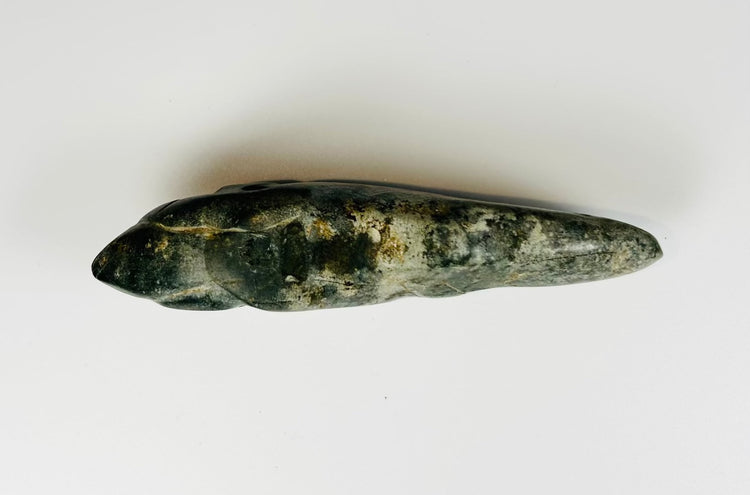
Pre-Columbian | Greenstone Effigy Pendant | Carved Animal Form | Circa 500 BCE – 1500 CE
Description
More
Less
Historical Context & Origin
Region: Mesoamerica (likely Central America or Southern Mexico)
Material: Greenstone (likely serpentine or jade-type stone)
Period: Pre-Columbian, circa 500 BCE – 1500 CE
Description
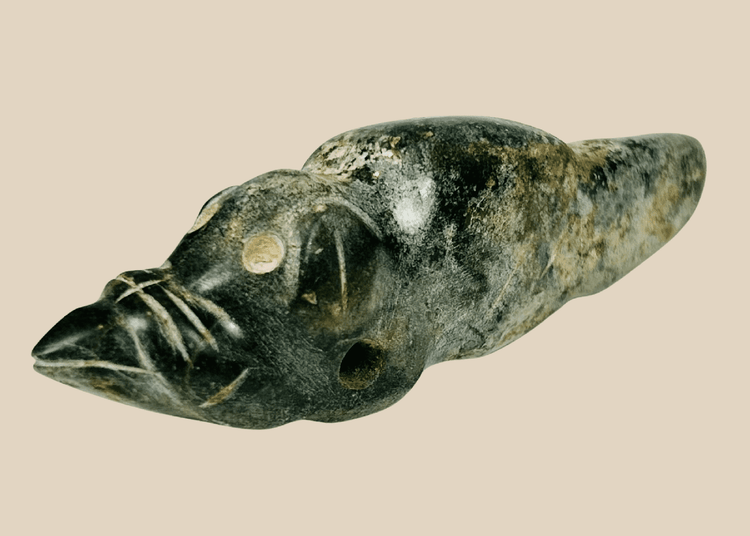
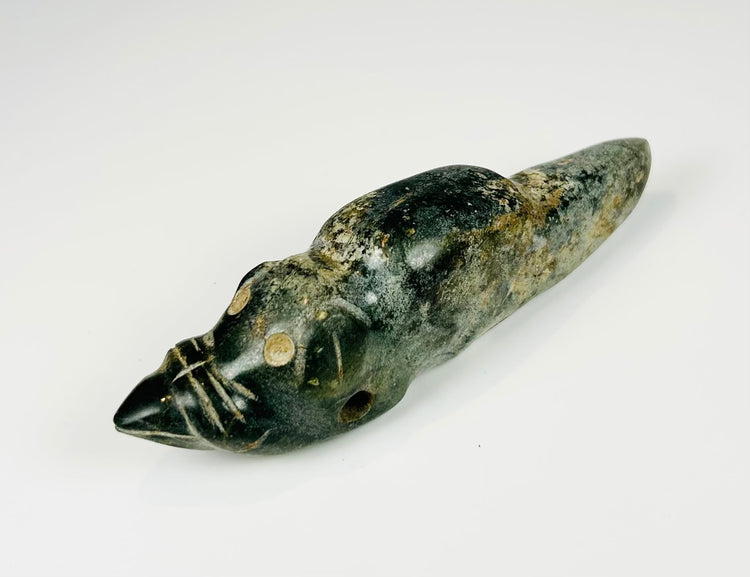
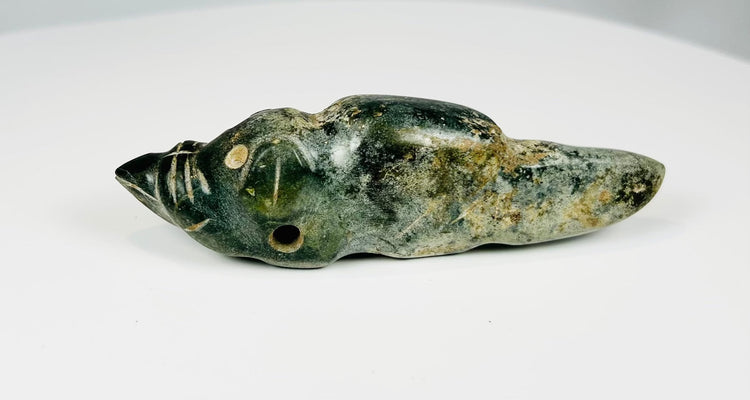
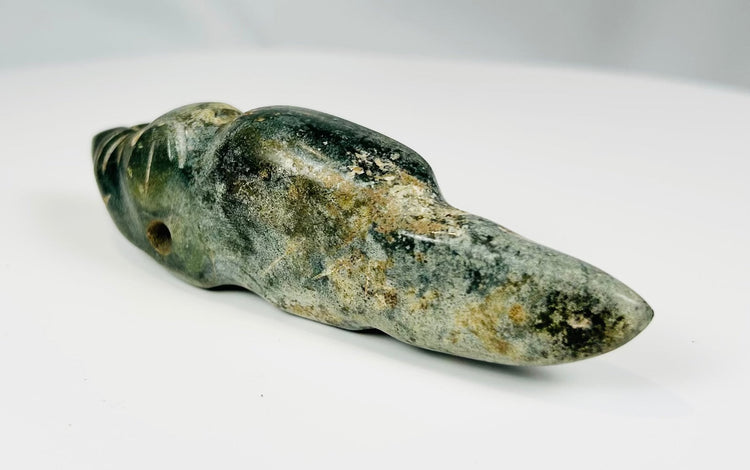
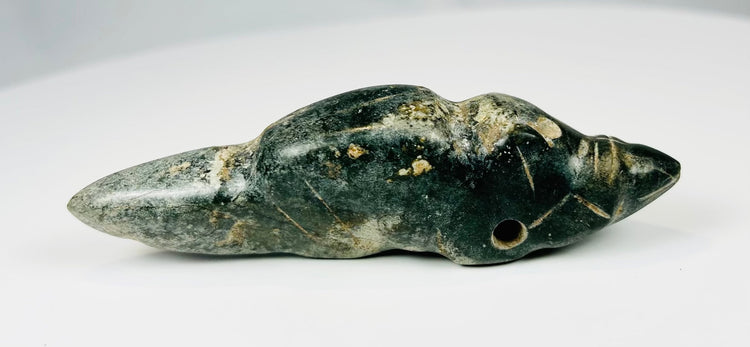
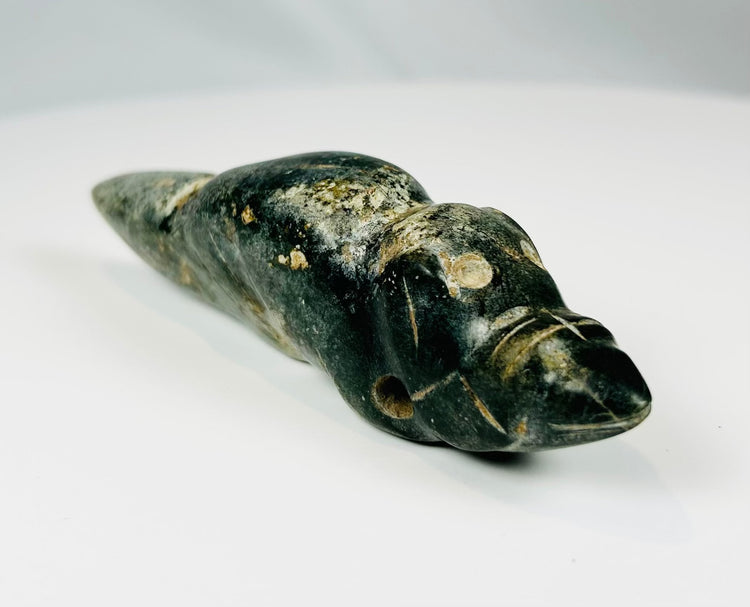
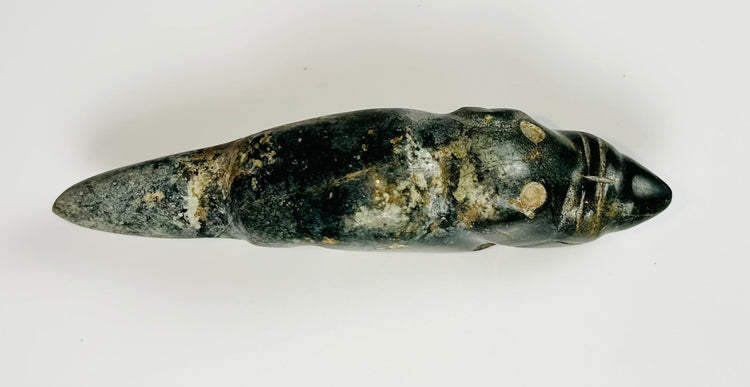
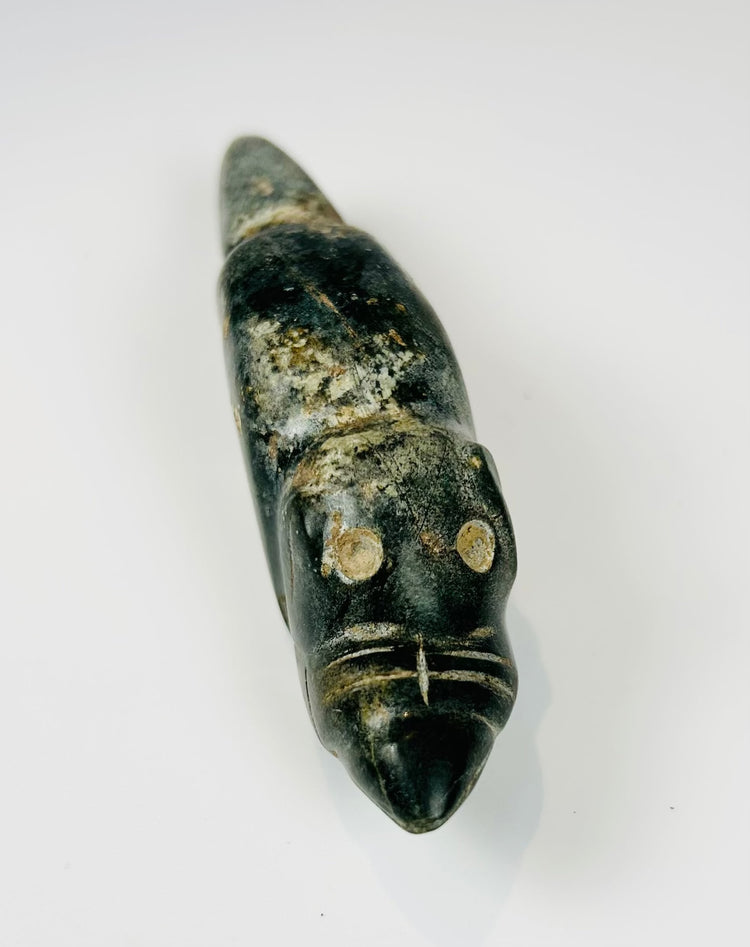
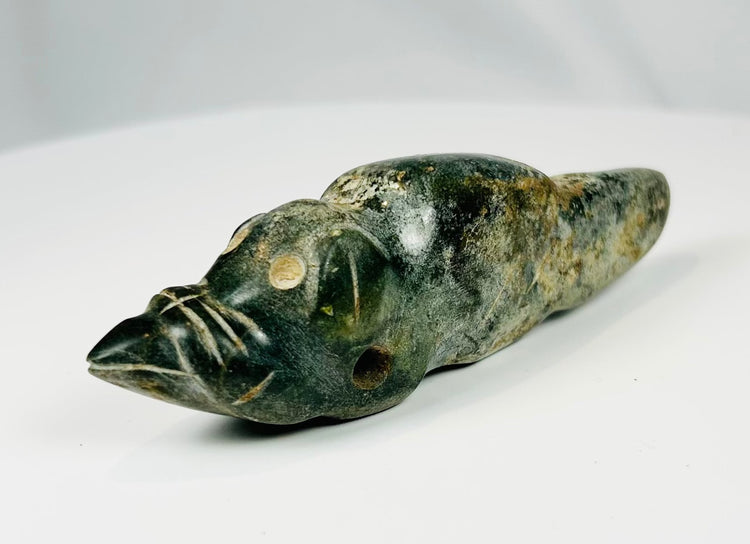
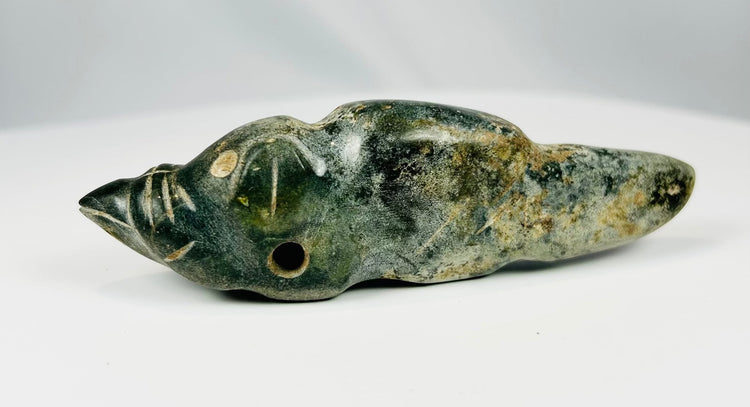
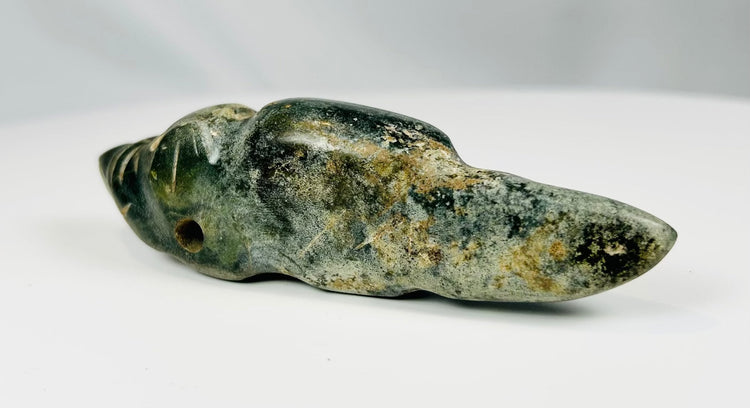
This intriguing Pre-Columbian carved greenstone effigy pendant represents a stylized animal figure, possibly a rodent, feline, or mythological creature rendered in a compact reclining form. Carefully shaped from a single piece of dark green stone, the figure features a rounded body, elongated tail, and a carved head displaying incised facial lines suggesting whiskers, mouth, and stylized features.
The eyes are indicated with circular drilled depressions, while shallow engraved lines across the face emphasize the snout and facial structure. The smooth, highly polished surface and natural mottled mineral patterning are characteristic of ancient worked greenstone, a material widely revered in Pre-Columbian cultures for its symbolic association with life, fertility, and spiritual power.
A lateral perforation drilled through the side of the figure suggests the object was intended to be suspended or attached, likely worn as a pendant, amulet, or ceremonial ornament. Such effigy carvings often held protective or spiritual meaning and may have represented animal guardians, clan symbols, or mythological beings.
Features
- Hand-carved Pre-Columbian greenstone effigy
- Stylized animal figure with engraved facial detailing
- Drilled suspension hole for use as a pendant or amulet
- Smooth polished surface with natural mineral mottling
- Compact sculptural form with elongated tail
- Fine example of portable Pre-Columbian ritual or personal ornament
Cultural Significance
Greenstone materials such as jadeite and serpentine held immense cultural importance across Pre-Columbian societies. Associated with fertility, life force, and sacred authority, these stones were often reserved for elite ornaments, ritual objects, and ceremonial offerings.
Animal effigies carried powerful symbolic meanings, frequently representing spirit guides, protective forces, or cosmological animals tied to mythological traditions. Portable effigy pendants such as this were likely worn by individuals of status or used within ritual contexts.
Condition
Excellent preserved condition for an ancient stone artifact. The surface displays natural mineral inclusions, areas of age-related patination, and minor wear consistent with antiquity. The drilled perforation remains intact.
Dimensions (Approximate)
Length: 4.5 in
Height: 1.25 in
Age (Approximate)
500–2,000 years old
Provenance
Formerly held in a private collection in Beverly Hills, California, USA. Subsequently acquired by a private collector in Sun Valley, California, USA.
Learn More
Discover recent discoveries in Aztec ritual offerings and sacred practices
Browse our Pre-Columbian Artifacts Collection
Description
Historical Context & Origin
Region: Mesoamerica (likely Central America or Southern Mexico)
Material: Greenstone (likely serpentine or jade-type stone)
Period: Pre-Columbian, circa 500 BCE – 1500 CE
Description
This intriguing Pre-Columbian carved greenstone effigy pendant represents a stylized animal figure, possibly a rodent, feline, or mythological creature rendered in a compact reclining form. Carefully shaped from a single piece of dark green stone, the figure features a rounded body, elongated tail, and a carved head displaying incised facial lines suggesting whiskers, mouth, and stylized features.
The eyes are indicated with circular drilled depressions, while shallow engraved lines across the face emphasize the snout and facial structure. The smooth, highly polished surface and natural mottled mineral patterning are characteristic of ancient worked greenstone, a material widely revered in Pre-Columbian cultures for its symbolic association with life, fertility, and spiritual power.
A lateral perforation drilled through the side of the figure suggests the object was intended to be suspended or attached, likely worn as a pendant, amulet, or ceremonial ornament. Such effigy carvings often held protective or spiritual meaning and may have represented animal guardians, clan symbols, or mythological beings.
Features
- Hand-carved Pre-Columbian greenstone effigy
- Stylized animal figure with engraved facial detailing
- Drilled suspension hole for use as a pendant or amulet
- Smooth polished surface with natural mineral mottling
- Compact sculptural form with elongated tail
- Fine example of portable Pre-Columbian ritual or personal ornament
Cultural Significance
Greenstone materials such as jadeite and serpentine held immense cultural importance across Pre-Columbian societies. Associated with fertility, life force, and sacred authority, these stones were often reserved for elite ornaments, ritual objects, and ceremonial offerings.
Animal effigies carried powerful symbolic meanings, frequently representing spirit guides, protective forces, or cosmological animals tied to mythological traditions. Portable effigy pendants such as this were likely worn by individuals of status or used within ritual contexts.
Condition
Excellent preserved condition for an ancient stone artifact. The surface displays natural mineral inclusions, areas of age-related patination, and minor wear consistent with antiquity. The drilled perforation remains intact.
Dimensions (Approximate)
Length: 4.5 in
Height: 1.25 in
Age (Approximate)
500–2,000 years old
Provenance
Formerly held in a private collection in Beverly Hills, California, USA. Subsequently acquired by a private collector in Sun Valley, California, USA.
Learn More
Discover recent discoveries in Aztec ritual offerings and sacred practices
Browse our Pre-Columbian Artifacts Collection
You May Also Like
