



Pre-Columbian | Modified Palm Seed Rattle Elements (Set of Three) | Circa 500–1500 CE
Couldn't load pickup availability


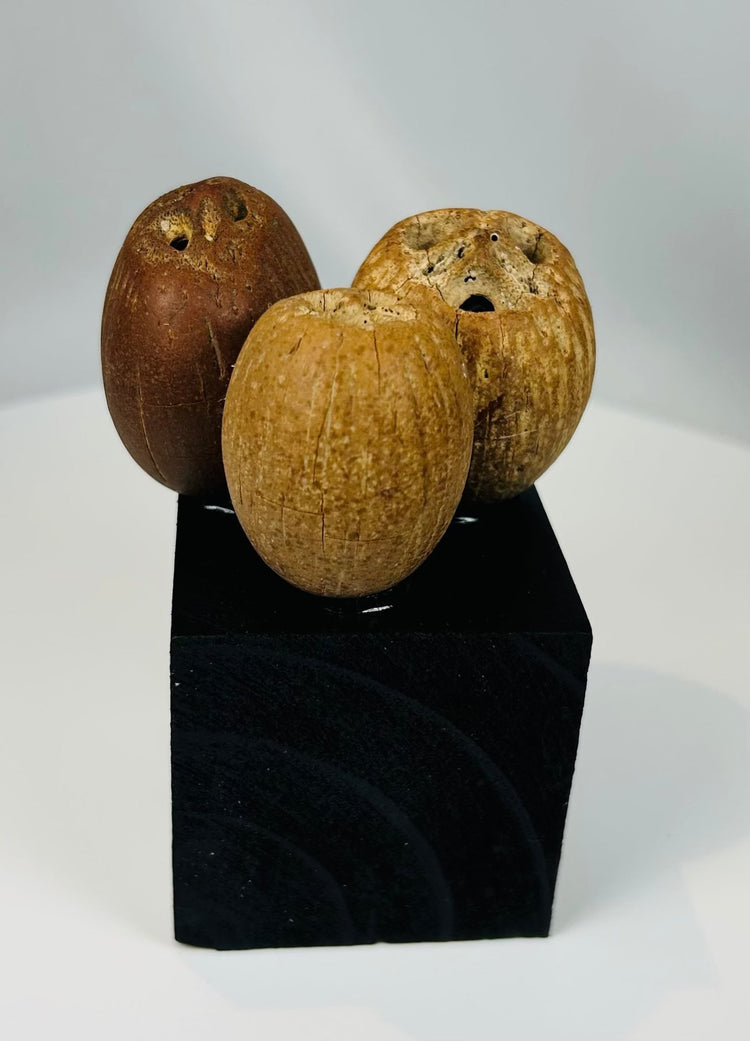
Pre-Columbian | Modified Palm Seed Rattle Elements (Set of Three) | Circa 500–1500 CE
Description
More
Less
Historical Context & Origin
Region: Central America / Northern South America
Material: Natural palm seed pods (modified organic material)
Period: Pre-Columbian Period, circa 500–1500 CE
Description
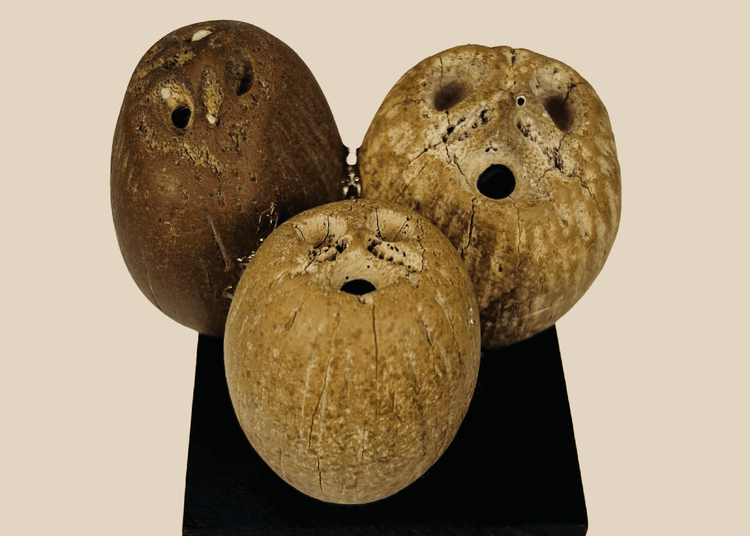
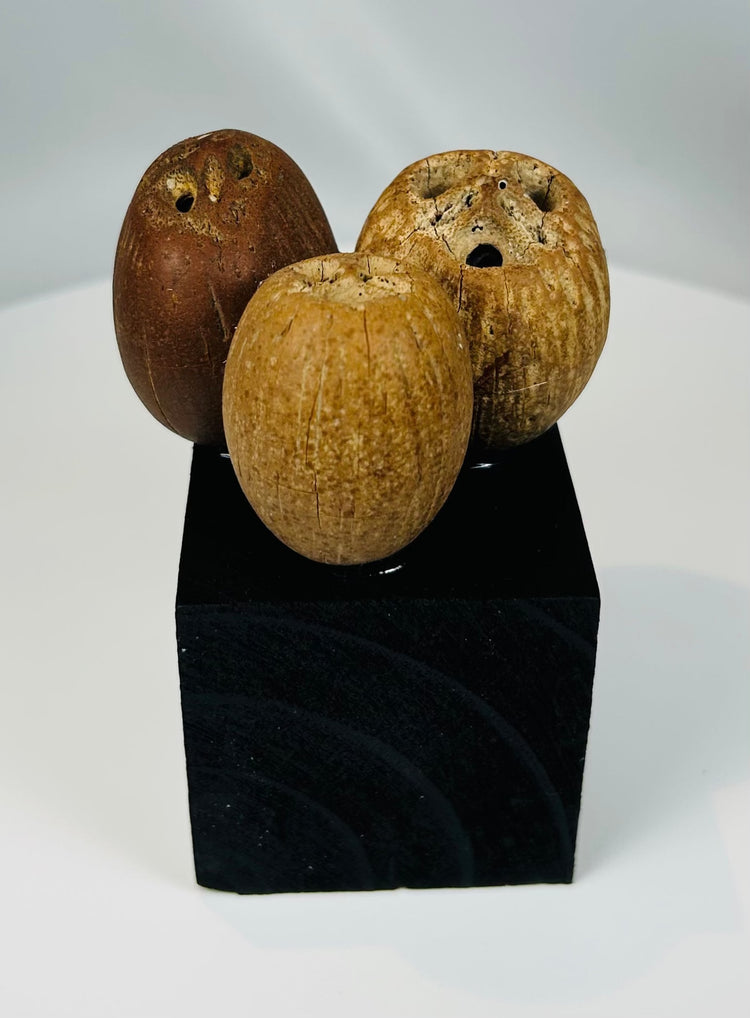
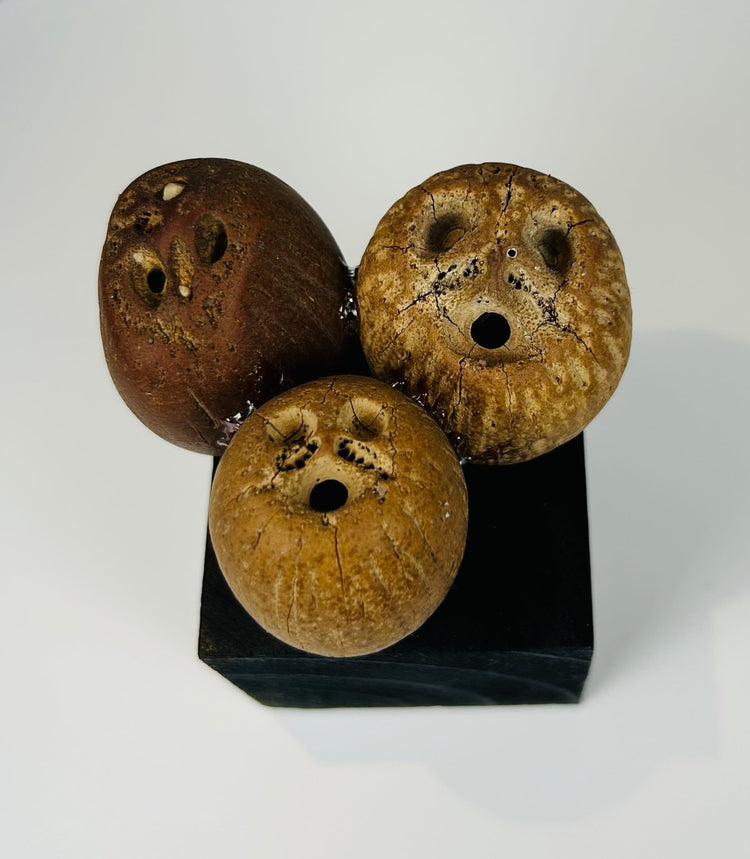
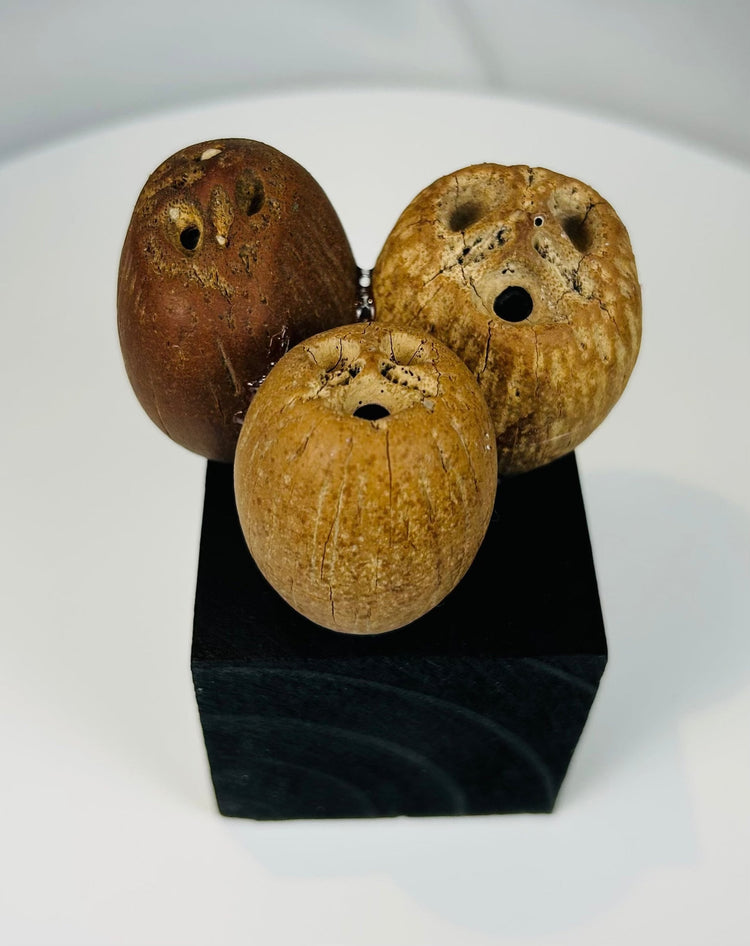
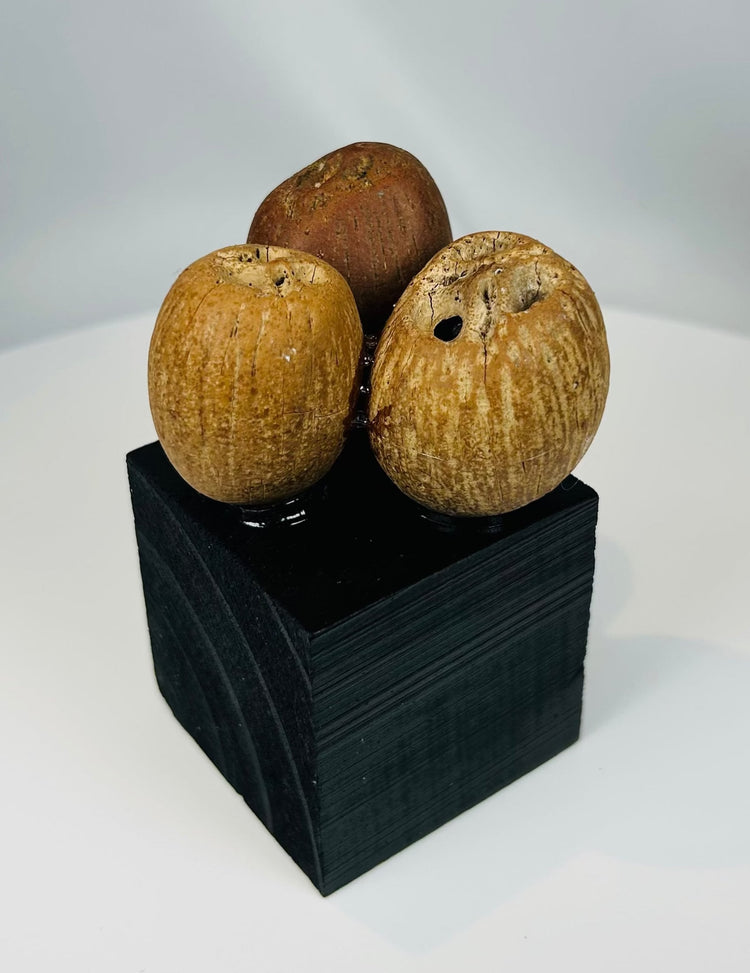
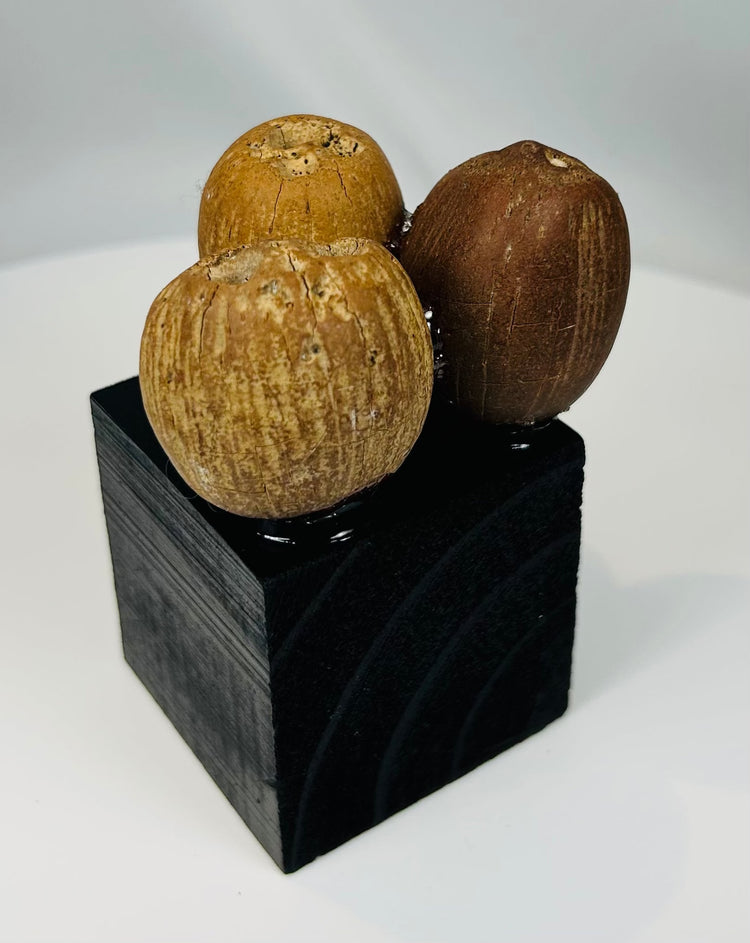
This intriguing group of three Pre-Columbian modified seed pods represents rare surviving examples of organic musical or ceremonial elements used in indigenous ritual traditions. Formed from naturally hardened tropical palm seeds or similar dense nut pods, each piece displays intentional perforations and shaping consistent with the construction of ancient rattles or sound-producing ritual instruments. The seeds have been carefully drilled and modified, with multiple openings visible across their surfaces that likely served functional purposes such as threading cords, attaching the pods to handles or garments, or inserting small pebbles or seeds to create sound when shaken.
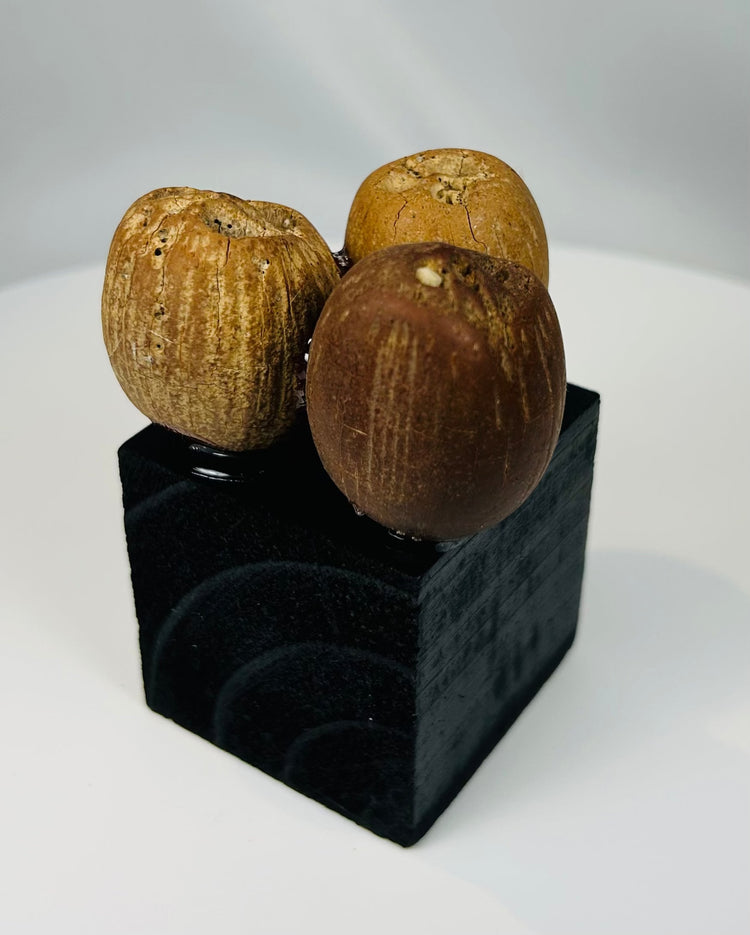
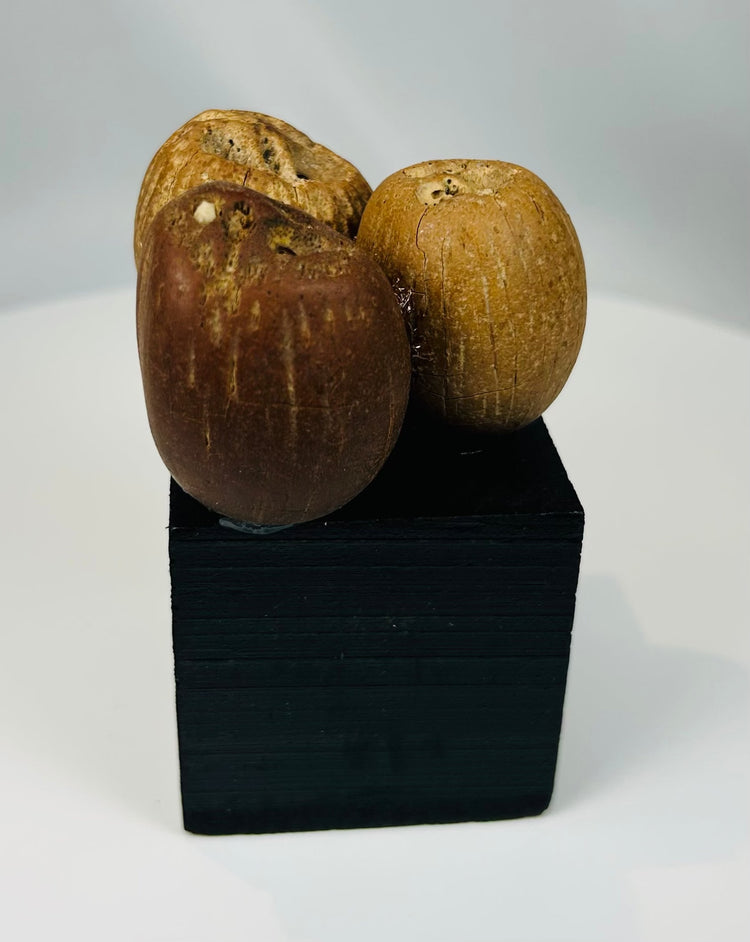
Organic materials such as these rarely survive for extended periods, making preserved examples particularly compelling within archaeological contexts. The surfaces show natural aging, patina, and cracking consistent with ancient dried seed pods, while subtle variations in color—from warm honey tones to darker brown—reflect both the natural character of the seeds and centuries of environmental aging. Their rounded, egg-like forms and dense organic structure are characteristic of tropical palm nuts historically used throughout the Americas in the construction of musical and ceremonial objects.
Objects of this type were commonly incorporated into hand rattles, ceremonial staffs, dance belts, or anklets, where their sound would accompany ritual movement and communal ceremonies. When filled with small stones or seeds, they produced rhythmic tones used in ritual dances, shamanic practices, and musical performances. Artifacts of this nature are known from several cultural regions including Central America, northern South America, Amazonian societies, and Caribbean contexts such as Taíno ceremonial traditions, reflecting a broader Pre-Columbian musical culture in which sound, rhythm, and movement played central roles in spiritual and social life.
Features
- Set of three modified tropical seed pods
- Hand-drilled perforations for attachment or sound production
- Natural palm seed construction with visible organic grain
- Rounded “egg” forms typical of tropical rattle elements
- Authentic aging, patina, and natural cracking
- Rare surviving organic ritual components
Cultural Significance
Sound-producing instruments held profound meaning in many Pre-Columbian cultures. Rattles and percussion objects were used to accompany ceremonial dances, religious rituals, and shamanic practices. The rhythmic sound created by seed rattles symbolized communication with spiritual forces and was often associated with transformation, healing, and communal celebration.
Seed pods such as these were especially valued because of their durability and natural acoustic properties. When combined with woven cords or wooden handles, they produced distinctive rattling tones that accompanied ritual movement and ceremonial music.
Condition
Very good ancient condition for organic artifacts. Surfaces show natural age-related cracking, patina, and minor surface wear consistent with long-term aging. Perforations remain clearly visible and stable.
Dimensions (Approximate)
Height: 3.5 in
Width: 2 in
Depth: 2 in
Age (Approximate)
500–1,500 years old
Provenance
Formerly held in a private collection in Pasadena, California, USA, from the 1970s through the 1990s. Subsequently acquired by a private collector in Brea, California, USA.
Learn More
Examine the cultural role of Pre-Columbian musical instruments and ritual sound objects
Description
Historical Context & Origin
Region: Central America / Northern South America
Material: Natural palm seed pods (modified organic material)
Period: Pre-Columbian Period, circa 500–1500 CE
Description
This intriguing group of three Pre-Columbian modified seed pods represents rare surviving examples of organic musical or ceremonial elements used in indigenous ritual traditions. Formed from naturally hardened tropical palm seeds or similar dense nut pods, each piece displays intentional perforations and shaping consistent with the construction of ancient rattles or sound-producing ritual instruments. The seeds have been carefully drilled and modified, with multiple openings visible across their surfaces that likely served functional purposes such as threading cords, attaching the pods to handles or garments, or inserting small pebbles or seeds to create sound when shaken.
Organic materials such as these rarely survive for extended periods, making preserved examples particularly compelling within archaeological contexts. The surfaces show natural aging, patina, and cracking consistent with ancient dried seed pods, while subtle variations in color—from warm honey tones to darker brown—reflect both the natural character of the seeds and centuries of environmental aging. Their rounded, egg-like forms and dense organic structure are characteristic of tropical palm nuts historically used throughout the Americas in the construction of musical and ceremonial objects.
Objects of this type were commonly incorporated into hand rattles, ceremonial staffs, dance belts, or anklets, where their sound would accompany ritual movement and communal ceremonies. When filled with small stones or seeds, they produced rhythmic tones used in ritual dances, shamanic practices, and musical performances. Artifacts of this nature are known from several cultural regions including Central America, northern South America, Amazonian societies, and Caribbean contexts such as Taíno ceremonial traditions, reflecting a broader Pre-Columbian musical culture in which sound, rhythm, and movement played central roles in spiritual and social life.
Features
- Set of three modified tropical seed pods
- Hand-drilled perforations for attachment or sound production
- Natural palm seed construction with visible organic grain
- Rounded “egg” forms typical of tropical rattle elements
- Authentic aging, patina, and natural cracking
- Rare surviving organic ritual components
Cultural Significance
Sound-producing instruments held profound meaning in many Pre-Columbian cultures. Rattles and percussion objects were used to accompany ceremonial dances, religious rituals, and shamanic practices. The rhythmic sound created by seed rattles symbolized communication with spiritual forces and was often associated with transformation, healing, and communal celebration.
Seed pods such as these were especially valued because of their durability and natural acoustic properties. When combined with woven cords or wooden handles, they produced distinctive rattling tones that accompanied ritual movement and ceremonial music.
Condition
Very good ancient condition for organic artifacts. Surfaces show natural age-related cracking, patina, and minor surface wear consistent with long-term aging. Perforations remain clearly visible and stable.
Dimensions (Approximate)
Height: 3.5 in
Width: 2 in
Depth: 2 in
Age (Approximate)
500–1,500 years old
Provenance
Formerly held in a private collection in Pasadena, California, USA, from the 1970s through the 1990s. Subsequently acquired by a private collector in Brea, California, USA.
Learn More
Examine the cultural role of Pre-Columbian musical instruments and ritual sound objects
You May Also Like
