



Pre-Columbian | Terracotta Idols, Stone Tools & Amulets | 13-Piece Display Set | Circa 300 BCE – 900 CE
Description
More
Less
Historical Context & Origin
Region: Greater Mesoamerica (Mexico, Guatemala, Costa Rica)
Material: Terracotta, stone, mineral beads, carved shell/stone fragments
Period: Circa 300 BCE – 900 CE (Pre-Classic to Classic Period)
Description
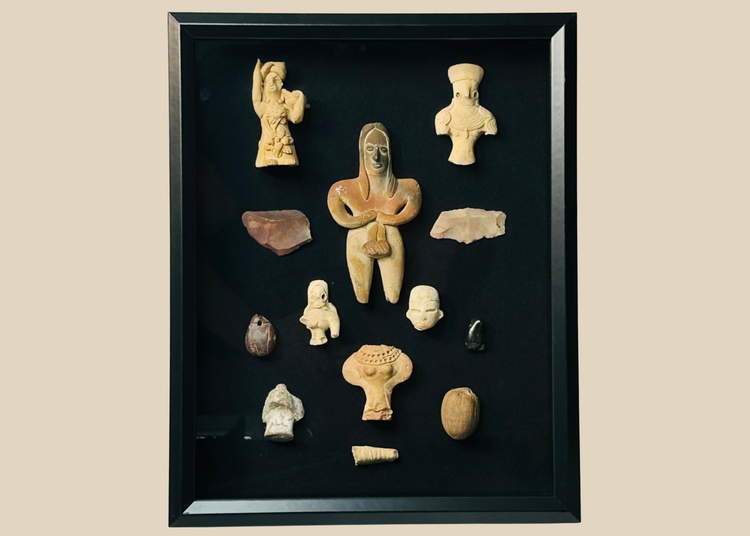
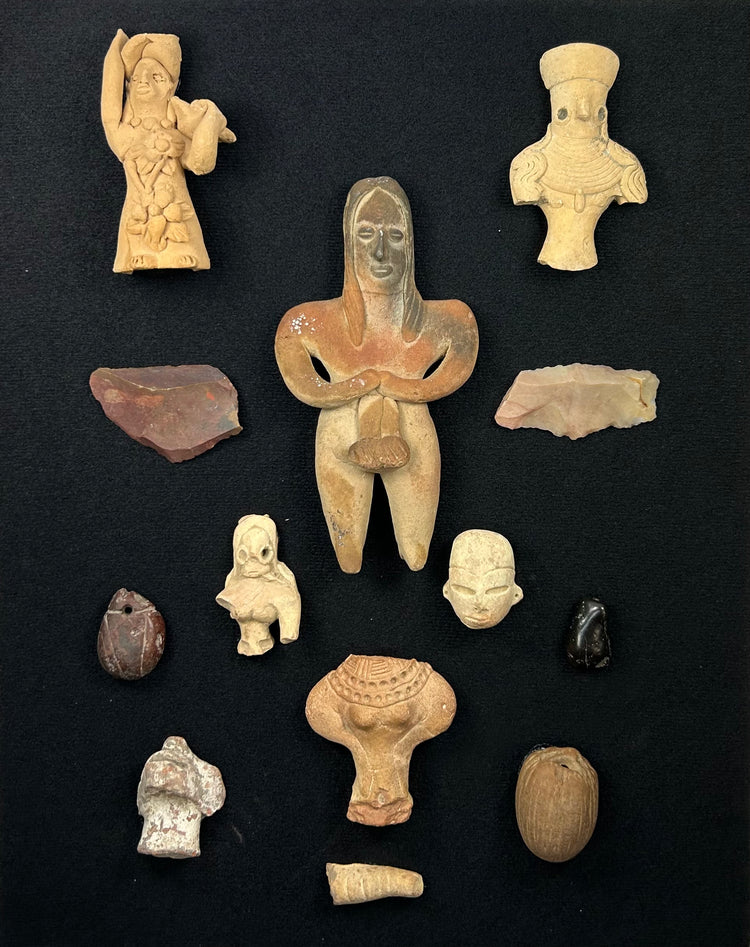
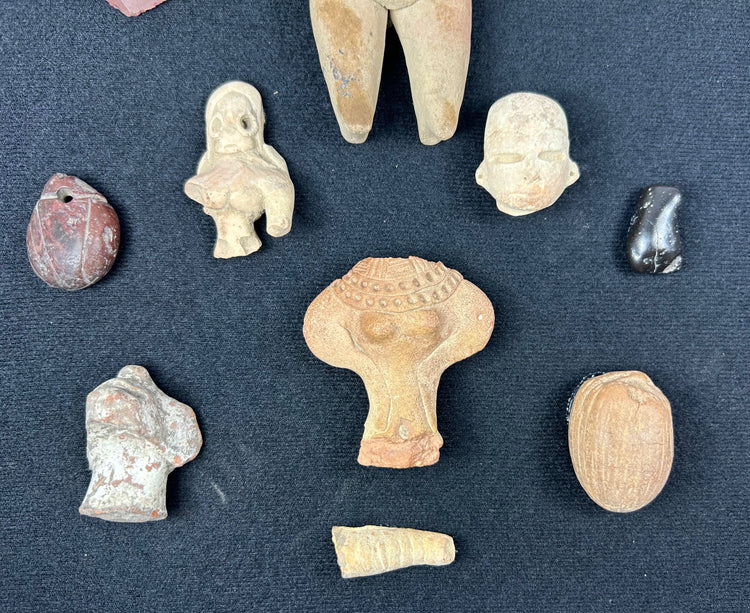
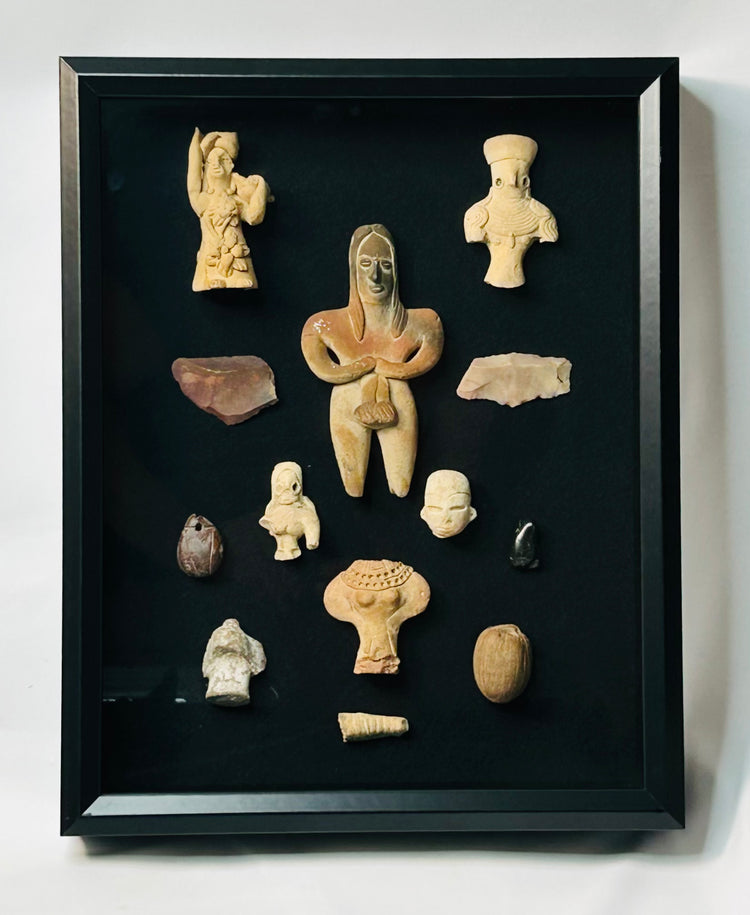
This is a curated collection of authentic Pre-Columbian artifacts, assembled into a single display grouping featuring thirteen distinct ancient objects, each representing a different cultural or ritual tradition from ancient Mesoamerica. Together, they form a rare educational and collector’s set showcasing the diversity of form, spiritual symbolism, and artistic expression of early American civilizations.
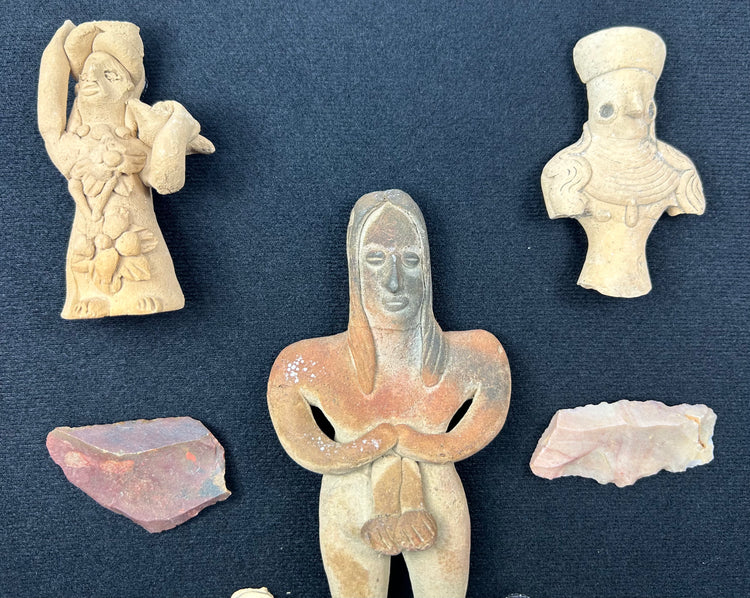
The centerpiece is a standing terracotta fertility figure, flanked by two additional fragmentary torso idols, each typical of West Mexican Shaft Tomb traditions. Surrounding these are miniature carvings, votive heads, stone tools, early beads, and ritual fragments—each shaped by hand over a millennium ago.
Features
Central Fertility Idol (Terracotta)
- Crossed-arm posture and elongated torso
- Typical of Jalisco/Colima Shaft Tomb figures
Terracotta Standing Female Idol (Upper Left)
- Raised arm, floral chest detailing
- Possibly Veracruz or Nayarit
Terracotta Torso Idol (Upper Right)
- Abstract face and flared headdress
- Early Classic figurine style
Miniature Terracotta Torso Idol (Center-Lower Left)
- Simplified facial features
- Early Classic period
Miniature Idol Head (Center-Lower Right)
- Almond-shaped eyes
- Maya-influenced features
Terracotta Female Bust (Bottom Center)
- Disc-like torso with necklace detail
- Likely Veracruz Remojadas
Small Zoomorphic or Spirit Fragment (Bottom Left)
- Possible ritual token
Hand-Shaped Bead or Spindle Whorl Fragment (Bottom Right)
- Could be textile-related or ritual
Two Stone Blades (Mid-Left & Mid-Right)
- Typical chipped stone cutting tools
Small Black Stone Amulet (Right)
- Possibly obsidian
- Used in offerings or personal protection
Terracotta Limb Fragment (Bottom Row)
- Likely from a separate figurine
Stone Pebble Offering (Bottom Right)
- Common in ritual contexts
Cultural Significance
Across ancient Mesoamerica, small figurines and ritual fragments served as offerings, fertility symbols, protective charms, and representations of ancestors. Terracotta idols were commonly placed in tombs, shrines, and domestic altars. Stone blades held ceremonial importance in rites connected to agriculture, life cycles, and spiritual renewal.
This set reflects the broad artistic vocabulary of Pre-Columbian civilizations, making it a valuable comparative and study group.
Condition
All artifacts are preserved in stable archaeological condition, displaying natural wear, mineral patination, minor losses, and surface encrustations consistent with age. No modern restoration.
Dimensions (Approximate)
Frame Height: 15.25 in
Frame Width: 12.25 in
Age (Approximate)
1,100–2,300 years old
Learn More
Explore comparable traditions through Pre-Columbian Antiquities – Sands of Time
Browse our curated Collection of Ancient Pre-Columbian Artifacts & Relics
Description
Historical Context & Origin
Region: Greater Mesoamerica (Mexico, Guatemala, Costa Rica)
Material: Terracotta, stone, mineral beads, carved shell/stone fragments
Period: Circa 300 BCE – 900 CE (Pre-Classic to Classic Period)
Description
This is a curated collection of authentic Pre-Columbian artifacts, assembled into a single display grouping featuring thirteen distinct ancient objects, each representing a different cultural or ritual tradition from ancient Mesoamerica. Together, they form a rare educational and collector’s set showcasing the diversity of form, spiritual symbolism, and artistic expression of early American civilizations.
The centerpiece is a standing terracotta fertility figure, flanked by two additional fragmentary torso idols, each typical of West Mexican Shaft Tomb traditions. Surrounding these are miniature carvings, votive heads, stone tools, early beads, and ritual fragments—each shaped by hand over a millennium ago.
Features
Central Fertility Idol (Terracotta)
- Crossed-arm posture and elongated torso
- Typical of Jalisco/Colima Shaft Tomb figures
Terracotta Standing Female Idol (Upper Left)
- Raised arm, floral chest detailing
- Possibly Veracruz or Nayarit
Terracotta Torso Idol (Upper Right)
- Abstract face and flared headdress
- Early Classic figurine style
Miniature Terracotta Torso Idol (Center-Lower Left)
- Simplified facial features
- Early Classic period
Miniature Idol Head (Center-Lower Right)
- Almond-shaped eyes
- Maya-influenced features
Terracotta Female Bust (Bottom Center)
- Disc-like torso with necklace detail
- Likely Veracruz Remojadas
Small Zoomorphic or Spirit Fragment (Bottom Left)
- Possible ritual token
Hand-Shaped Bead or Spindle Whorl Fragment (Bottom Right)
- Could be textile-related or ritual
Two Stone Blades (Mid-Left & Mid-Right)
- Typical chipped stone cutting tools
Small Black Stone Amulet (Right)
- Possibly obsidian
- Used in offerings or personal protection
Terracotta Limb Fragment (Bottom Row)
- Likely from a separate figurine
Stone Pebble Offering (Bottom Right)
- Common in ritual contexts
Cultural Significance
Across ancient Mesoamerica, small figurines and ritual fragments served as offerings, fertility symbols, protective charms, and representations of ancestors. Terracotta idols were commonly placed in tombs, shrines, and domestic altars. Stone blades held ceremonial importance in rites connected to agriculture, life cycles, and spiritual renewal.
This set reflects the broad artistic vocabulary of Pre-Columbian civilizations, making it a valuable comparative and study group.
Condition
All artifacts are preserved in stable archaeological condition, displaying natural wear, mineral patination, minor losses, and surface encrustations consistent with age. No modern restoration.
Dimensions (Approximate)
Frame Height: 15.25 in
Frame Width: 12.25 in
Age (Approximate)
1,100–2,300 years old
Learn More
Explore comparable traditions through Pre-Columbian Antiquities – Sands of Time
Browse our curated Collection of Ancient Pre-Columbian Artifacts & Relics
You May Also Like
