

Pre-Columbian | West Mexican Tripod Bowl with Painted Decoration | Circa 300 BCE – 700 CE
Couldn't load pickup availability




Pre-Columbian | West Mexican Tripod Bowl with Painted Decoration | Circa 300 BCE – 700 CE
Description
More
Less
Historical Context & Origin
Region: West Mexico / Mesoamerica
Material: Hand-formed terracotta clay with original painted slip decoration
Period: Circa 300 BCE – 700 CE
Description
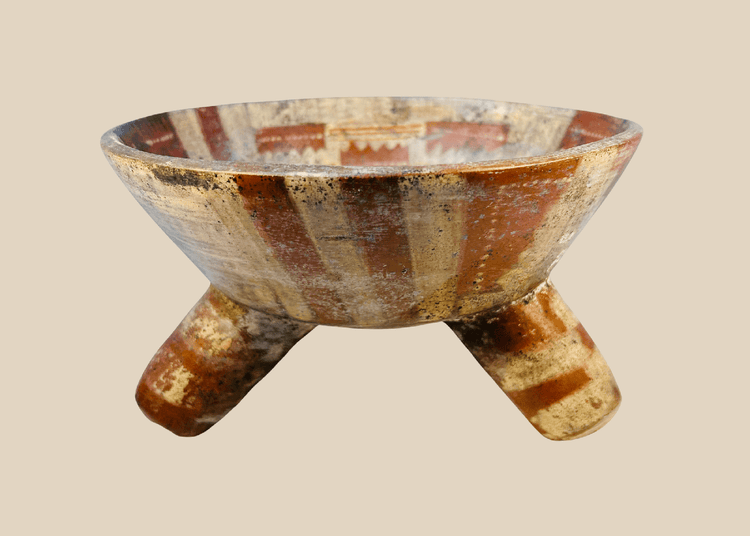
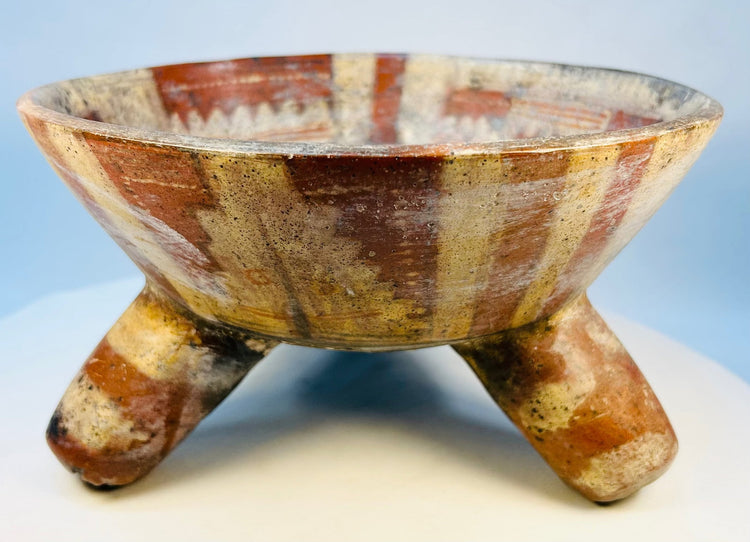
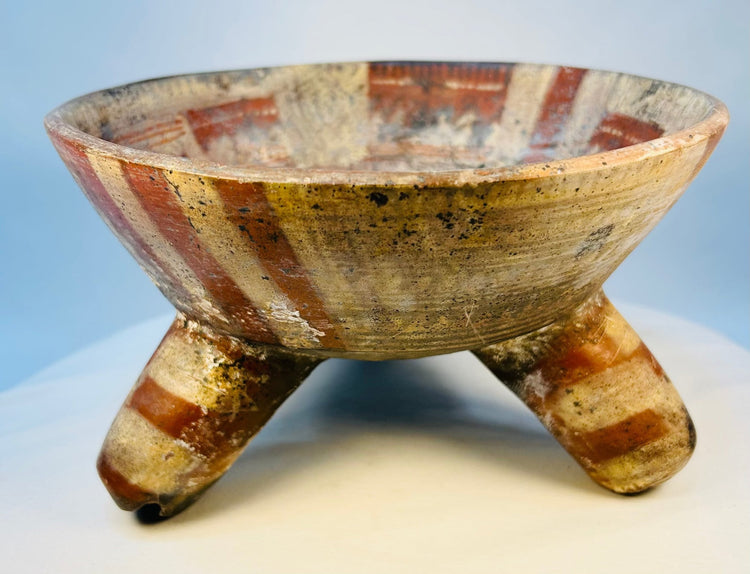
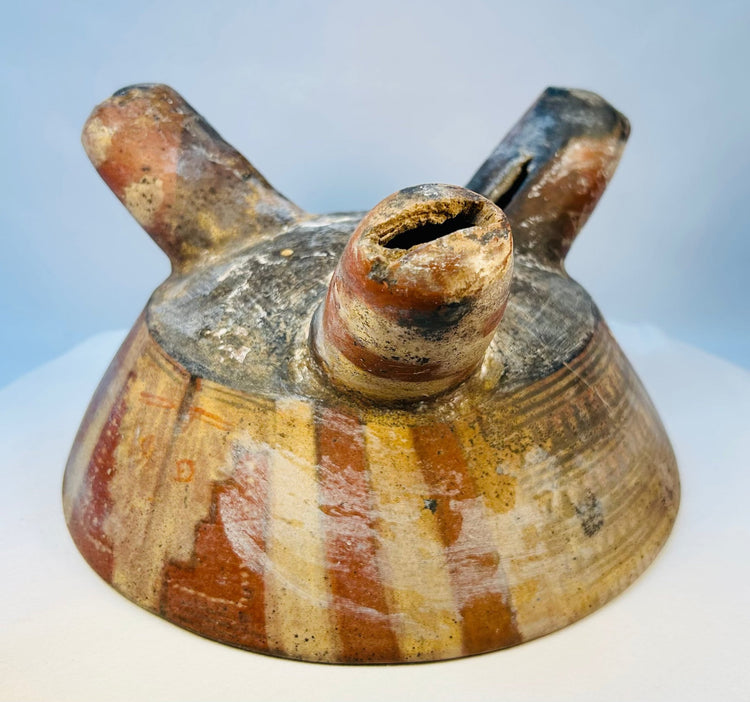
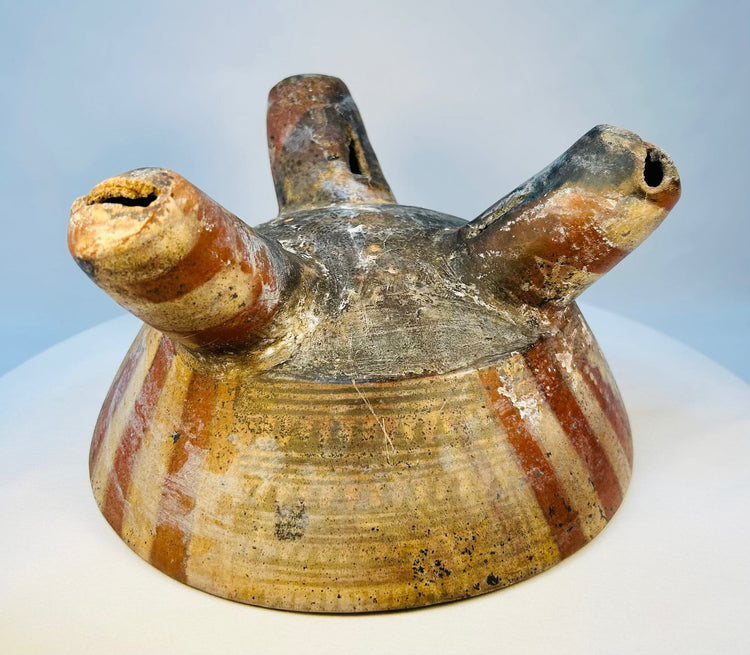
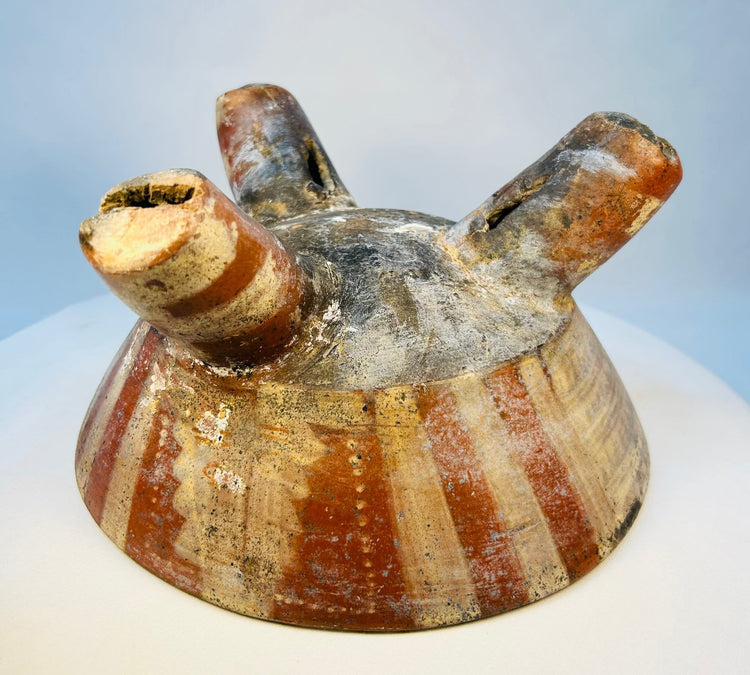
This striking ancient Pre-Columbian tripod bowl exemplifies classic Mesoamerican craftsmanship, featuring a wide open bowl supported on three hollow, tubular legs — a distinctive and culturally significant form associated with ceremonial function and elevated importance.
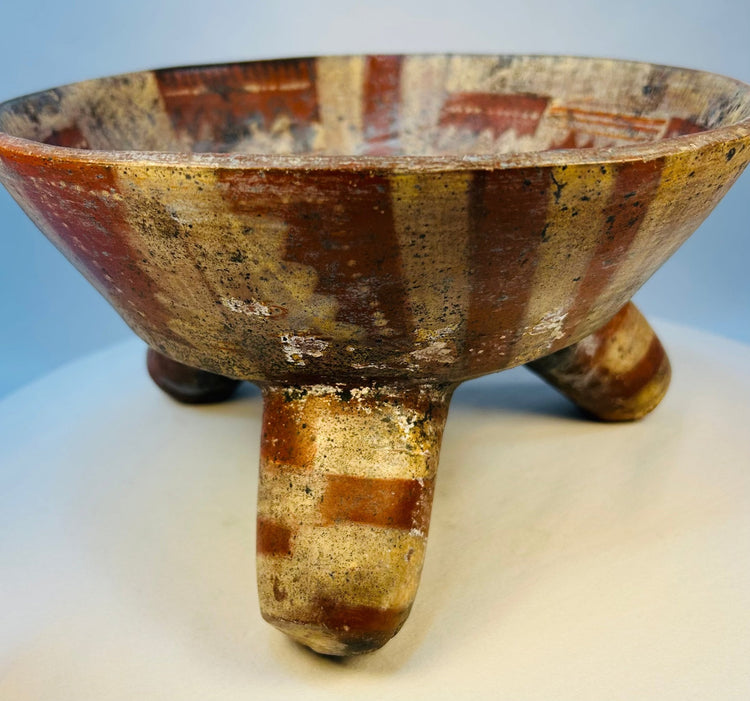
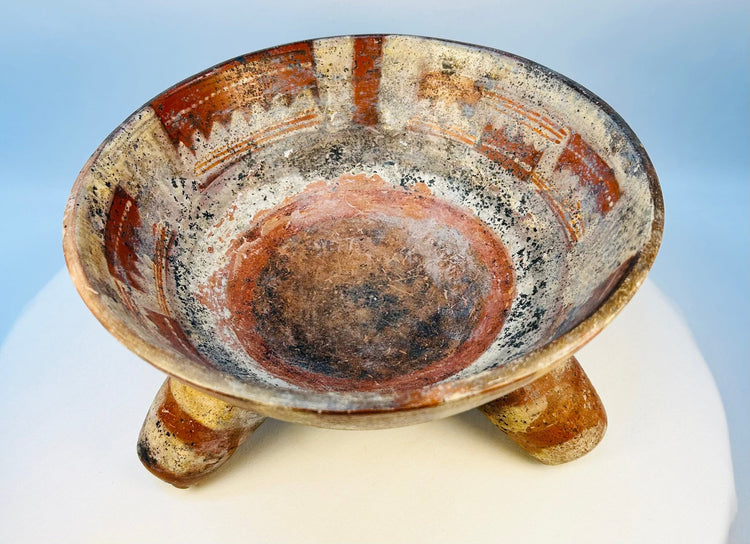
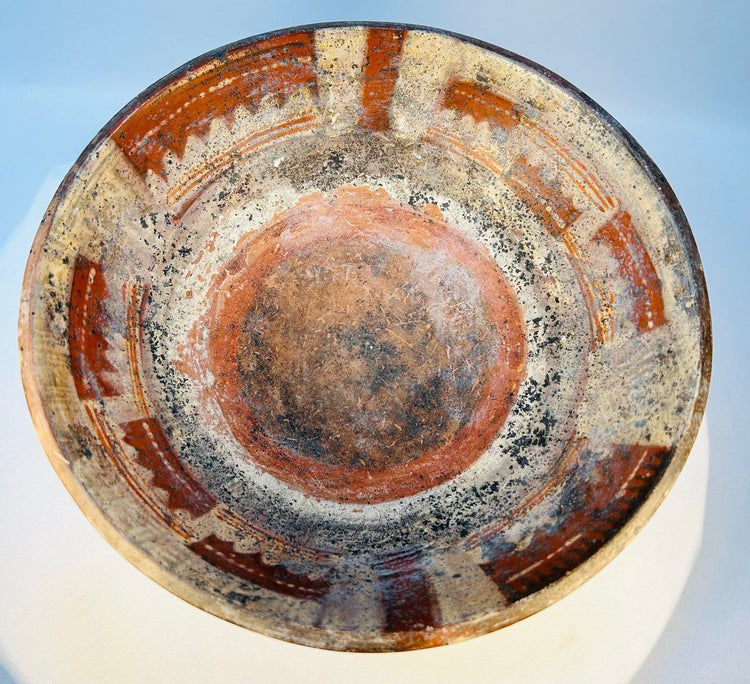
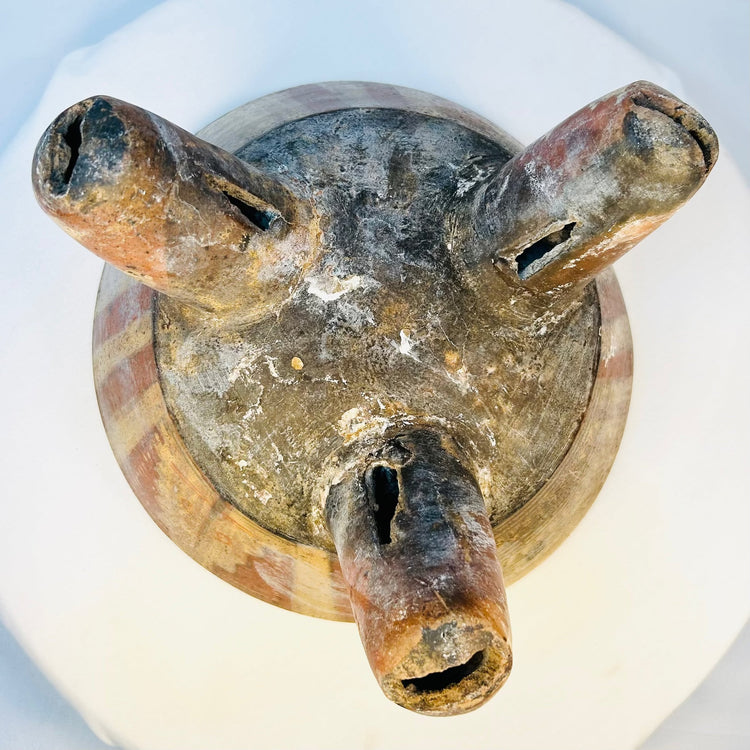
The exterior and interior are decorated with bold painted banding in warm red, cream, and earthy tones, creating strong vertical striping around the body and a patterned ceremonial border within the interior basin. The hollow legs include slotted openings, characteristic of tripod vessels that originally functioned as rattle or sound-chamber supports, frequently associated with ritual performance and ceremonial use.
The interior shows beautiful archaeological surface patina, mineral deposits, and ritual wear, contributing to its authenticity and presence. Even after centuries, this piece retains remarkable artistic character, balance, and visual impact.
Features
- Authentic Pre-Columbian ceramic tripod bowl
- Hollow tubular legs with slit vents, characteristic of ritual “rattle leg” vessels
- Bold hand-painted band decoration in classic Mesoamerican palette
- Deep culturally significant tripod support form
- Excellent sculptural presence and display quality
- Beautiful ancient surface patina and earthen toning
Cultural Significance
Tripod bowls held important ceremonial, ritual, and social functions throughout ancient Mesoamerica. Their elevated stance symbolized prestige, importance, and ritual purity, while rattle-legs are believed to have played roles in ceremony, movement, and sound symbolism. These vessels are frequently associated with offerings, elite households, feasting, burial deposits, and sacred ritual spaces.
Condition
Good authentic ancient condition with expected surface wear from age and archaeological burial. Encrustation deposits, pigment fading, and surface weathering throughout. Hollow tripod legs remain present, with slit openings intact and natural edge losses consistent with age. No modern repairs observed. Structurally stable and highly displayable.
Dimensions (Approximate)
Height: 5.25 in
Diameter: 9 in
Age (Approximate)
1,300–2,300 years old
Provenance
From a private collection in Ottawa, Ontario. The owner was a lifelong collector of Pre-Columbian art and artifacts who traveled extensively throughout South America.
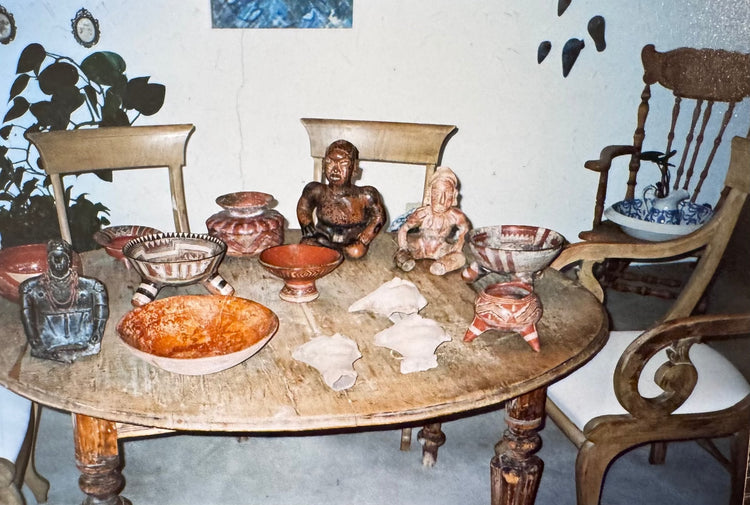
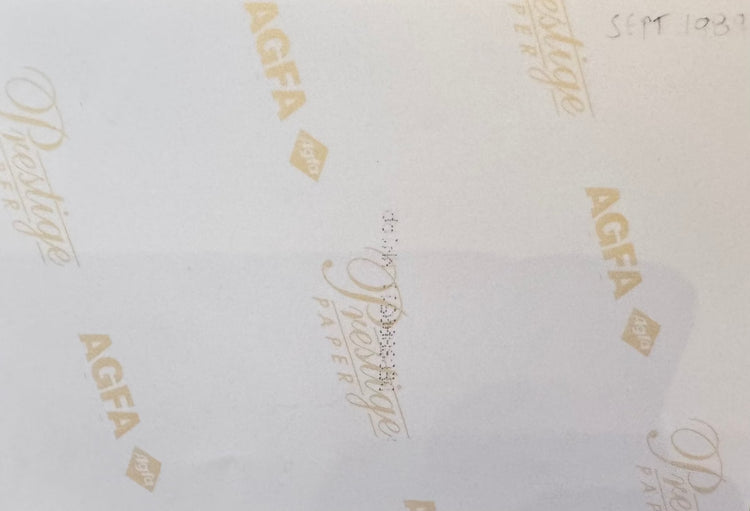
The collection is accompanied by an original colour photograph documenting a selection of artifacts (including this one) displayed in the collector’s home, inscribed “Sept 1989” on the reverse. The photograph is printed on AGFA Prestige photographic paper, a paper stock consistent with the inscribed period, providing additional documentation that the collection was established by at least the late 1980s. Following the owner’s passing, the collection was liquidated by the family.
Learn More
Explore West Mexican tripod bowl traditions at the Lam Museum of Anthropology
Discover our curated Ancient Pre-Columbian Artifacts & Relics Collection
Description
Historical Context & Origin
Region: West Mexico / Mesoamerica
Material: Hand-formed terracotta clay with original painted slip decoration
Period: Circa 300 BCE – 700 CE
Description
This striking ancient Pre-Columbian tripod bowl exemplifies classic Mesoamerican craftsmanship, featuring a wide open bowl supported on three hollow, tubular legs — a distinctive and culturally significant form associated with ceremonial function and elevated importance.
The exterior and interior are decorated with bold painted banding in warm red, cream, and earthy tones, creating strong vertical striping around the body and a patterned ceremonial border within the interior basin. The hollow legs include slotted openings, characteristic of tripod vessels that originally functioned as rattle or sound-chamber supports, frequently associated with ritual performance and ceremonial use.
The interior shows beautiful archaeological surface patina, mineral deposits, and ritual wear, contributing to its authenticity and presence. Even after centuries, this piece retains remarkable artistic character, balance, and visual impact.
Features
- Authentic Pre-Columbian ceramic tripod bowl
- Hollow tubular legs with slit vents, characteristic of ritual “rattle leg” vessels
- Bold hand-painted band decoration in classic Mesoamerican palette
- Deep culturally significant tripod support form
- Excellent sculptural presence and display quality
- Beautiful ancient surface patina and earthen toning
Cultural Significance
Tripod bowls held important ceremonial, ritual, and social functions throughout ancient Mesoamerica. Their elevated stance symbolized prestige, importance, and ritual purity, while rattle-legs are believed to have played roles in ceremony, movement, and sound symbolism. These vessels are frequently associated with offerings, elite households, feasting, burial deposits, and sacred ritual spaces.
Condition
Good authentic ancient condition with expected surface wear from age and archaeological burial. Encrustation deposits, pigment fading, and surface weathering throughout. Hollow tripod legs remain present, with slit openings intact and natural edge losses consistent with age. No modern repairs observed. Structurally stable and highly displayable.
Dimensions (Approximate)
Height: 5.25 in
Diameter: 9 in
Age (Approximate)
1,300–2,300 years old
Provenance
From a private collection in Ottawa, Ontario. The owner was a lifelong collector of Pre-Columbian art and artifacts who traveled extensively throughout South America.
The collection is accompanied by an original colour photograph documenting a selection of artifacts (including this one) displayed in the collector’s home, inscribed “Sept 1989” on the reverse. The photograph is printed on AGFA Prestige photographic paper, a paper stock consistent with the inscribed period, providing additional documentation that the collection was established by at least the late 1980s. Following the owner’s passing, the collection was liquidated by the family.
Learn More
Explore West Mexican tripod bowl traditions at the Lam Museum of Anthropology
Discover our curated Ancient Pre-Columbian Artifacts & Relics Collection
You May Also Like
