



Pre-Columbian | West Mexico Seated Terracotta Figure with Headdress | Circa 300 BCE – 300 CE
Couldn't load pickup availability


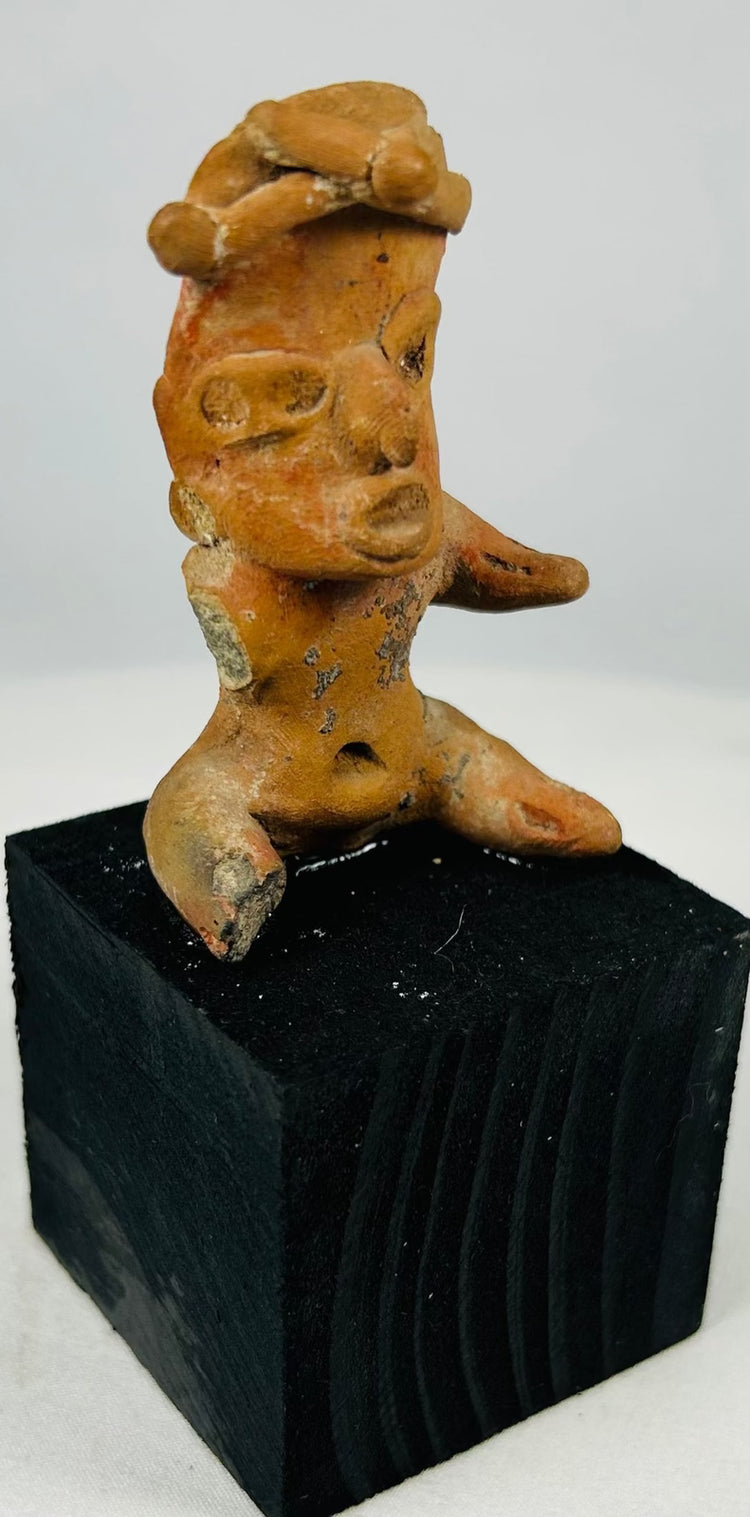
Pre-Columbian | West Mexico Seated Terracotta Figure with Headdress | Circa 300 BCE – 300 CE
Description
More
Less
Historical Context & Origin
Region: West Mexico, Pre-Columbian Mesoamerica
Material: Hand-modeled terracotta clay with traces of original pigment
Period: Circa 300 BCE – 300 CE
Description
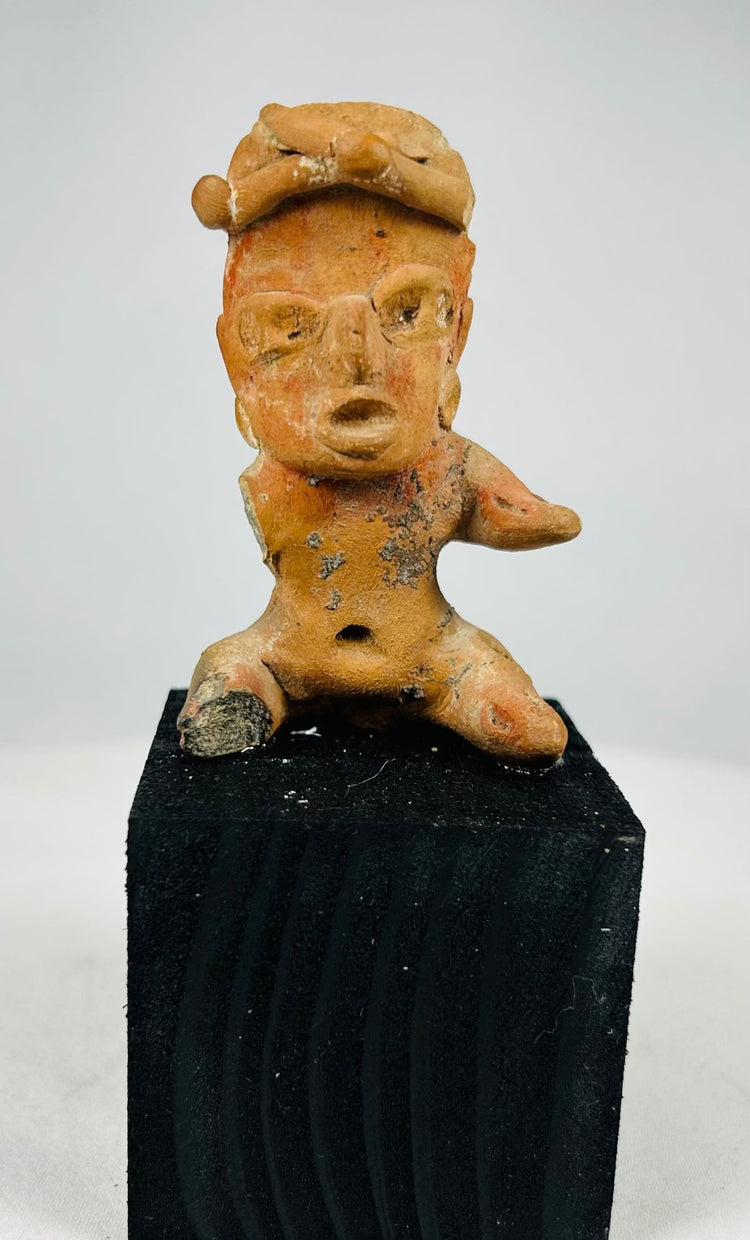
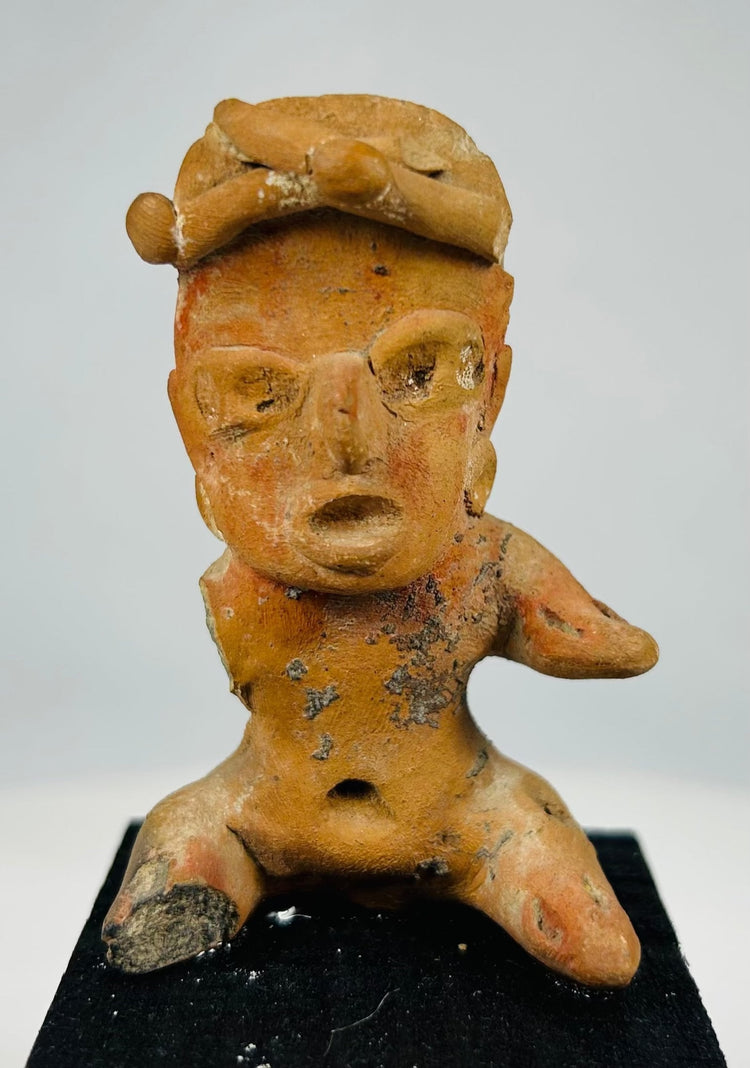
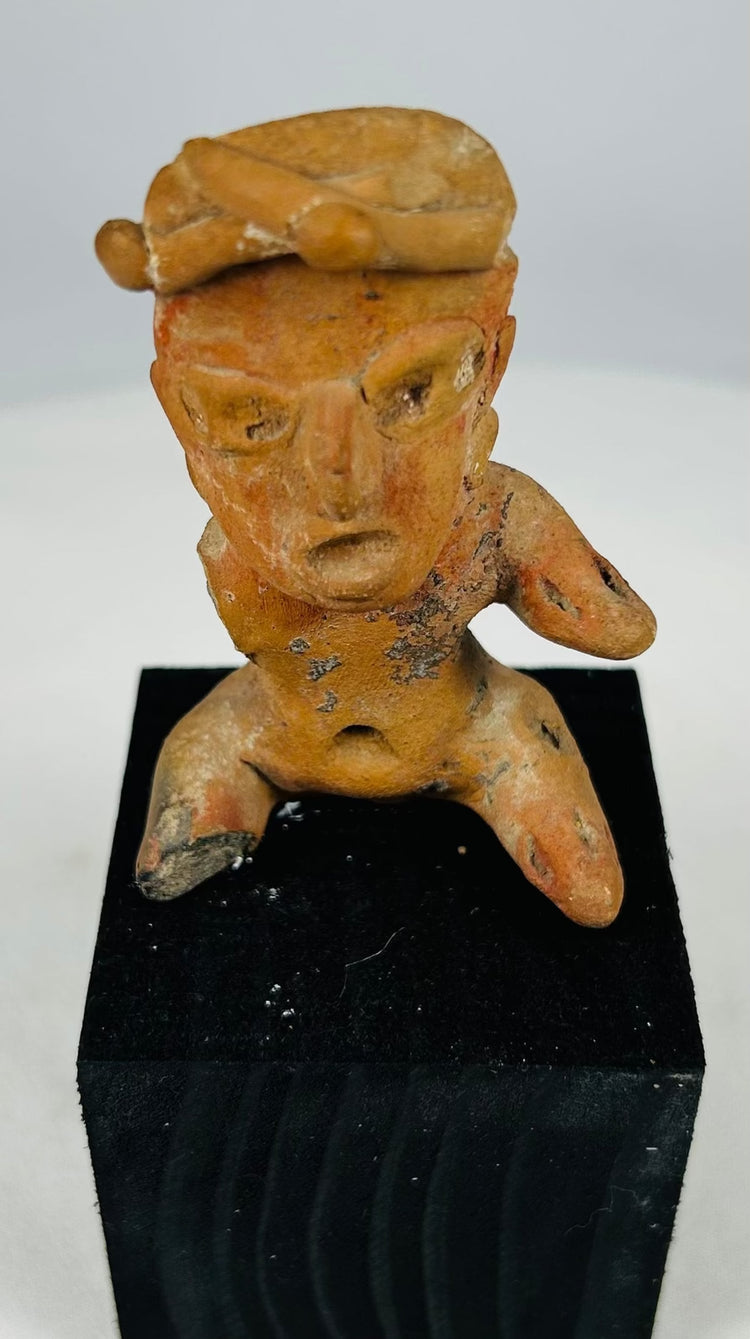
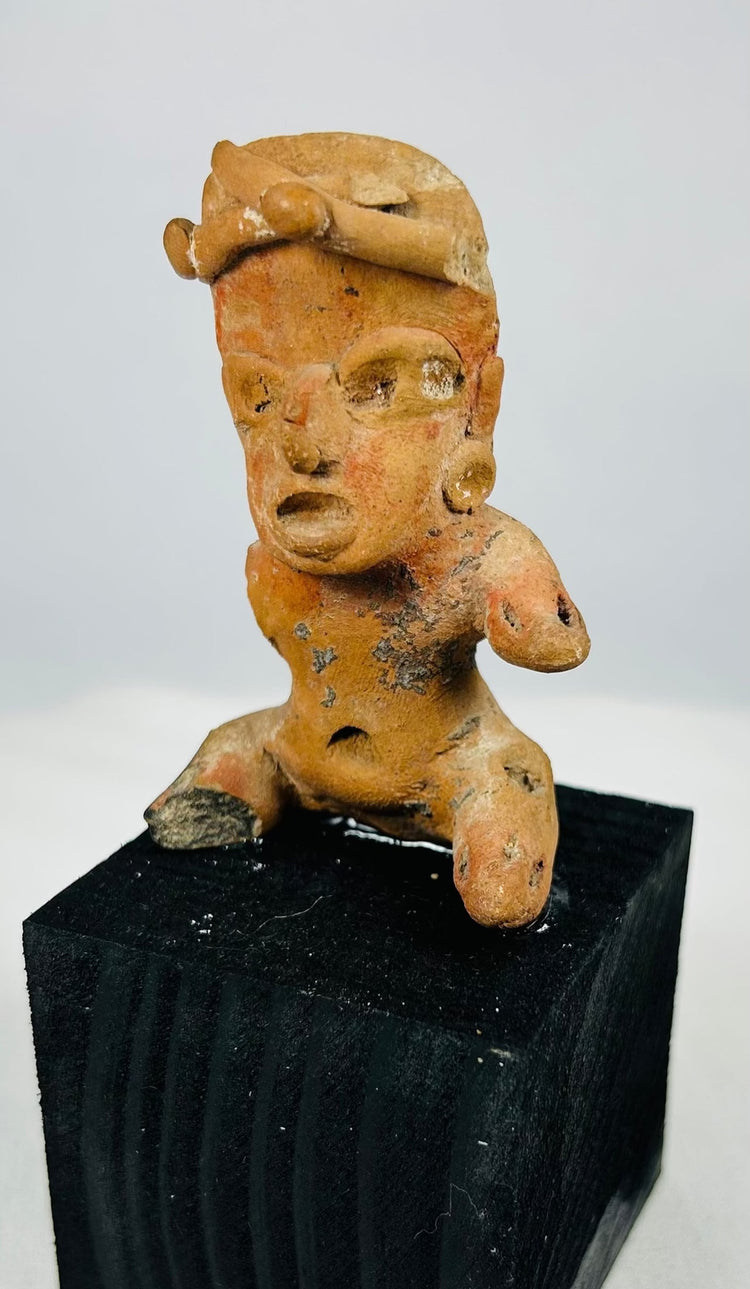
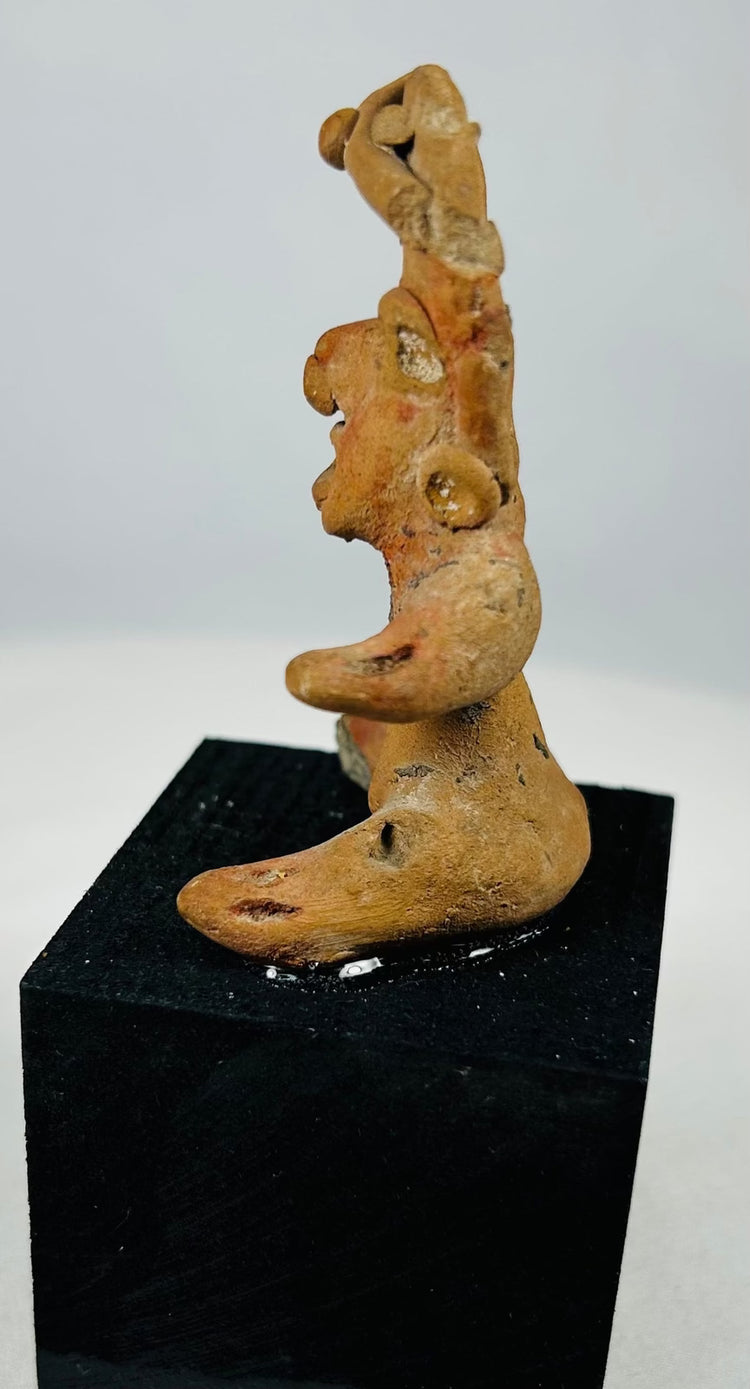
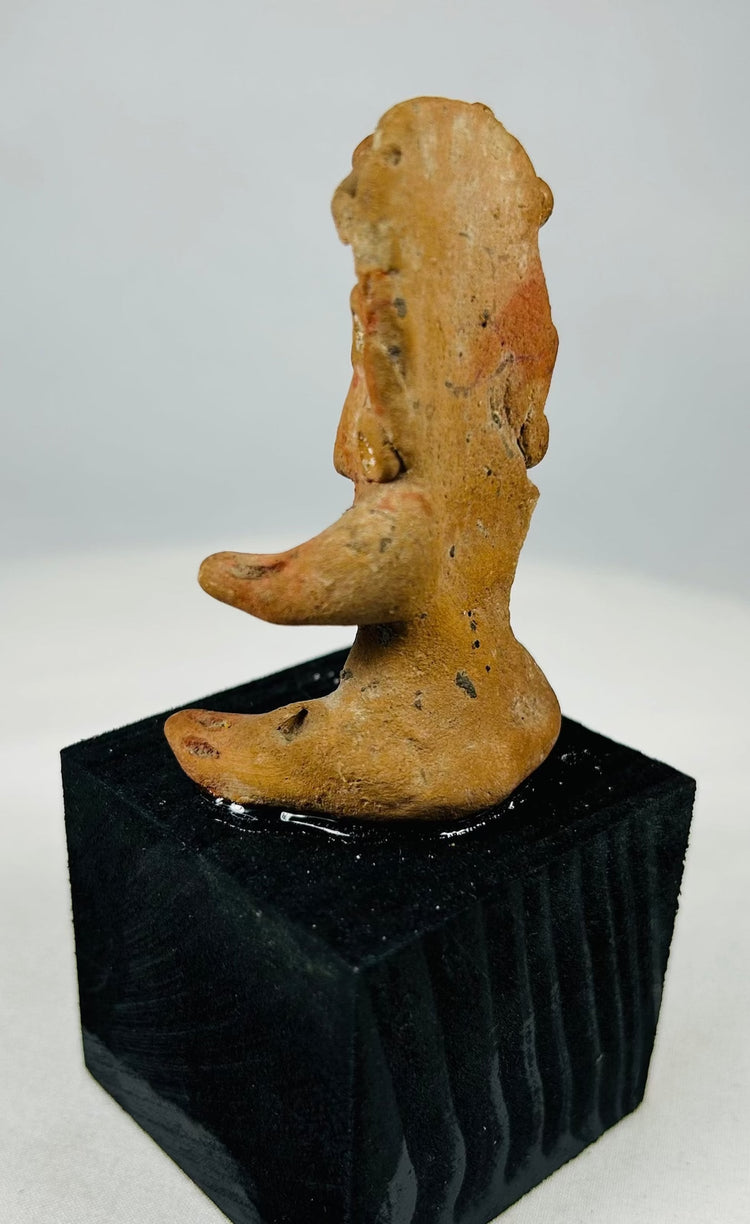
A finely sculpted seated terracotta figure from ancient West Mexico, depicting a stylized human form with expressive facial features and a prominent headpiece. The figure displays the characteristic bold modeling, pierced ears, and lively presence associated with shaft-tomb cultures such as Nayarit or Jalisco. Subtle remnants of ancient red/orange surface pigment remain visible, offering a glimpse into its original ceremonial vibrancy.
Features
- Distinct stylized face with open mouth and defined brows
- Prominent head adornment / headdress
- Traditional seated posture
- Pierced ear ornaments
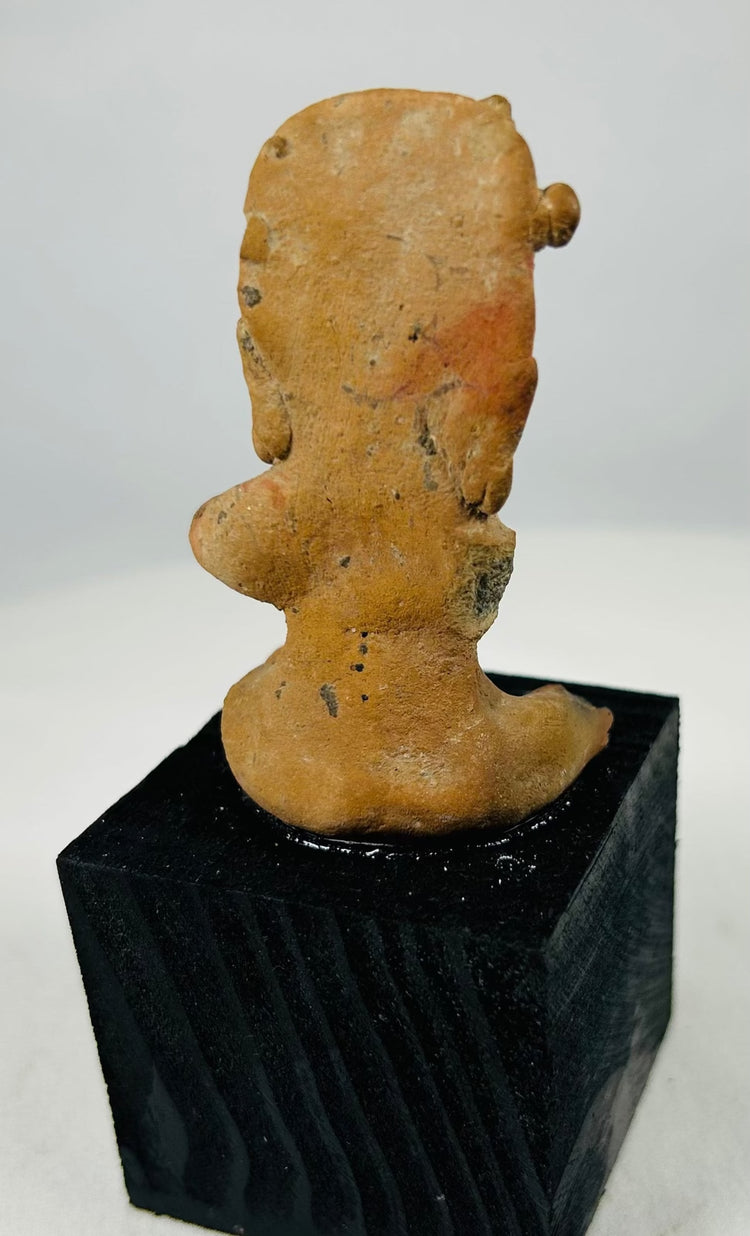
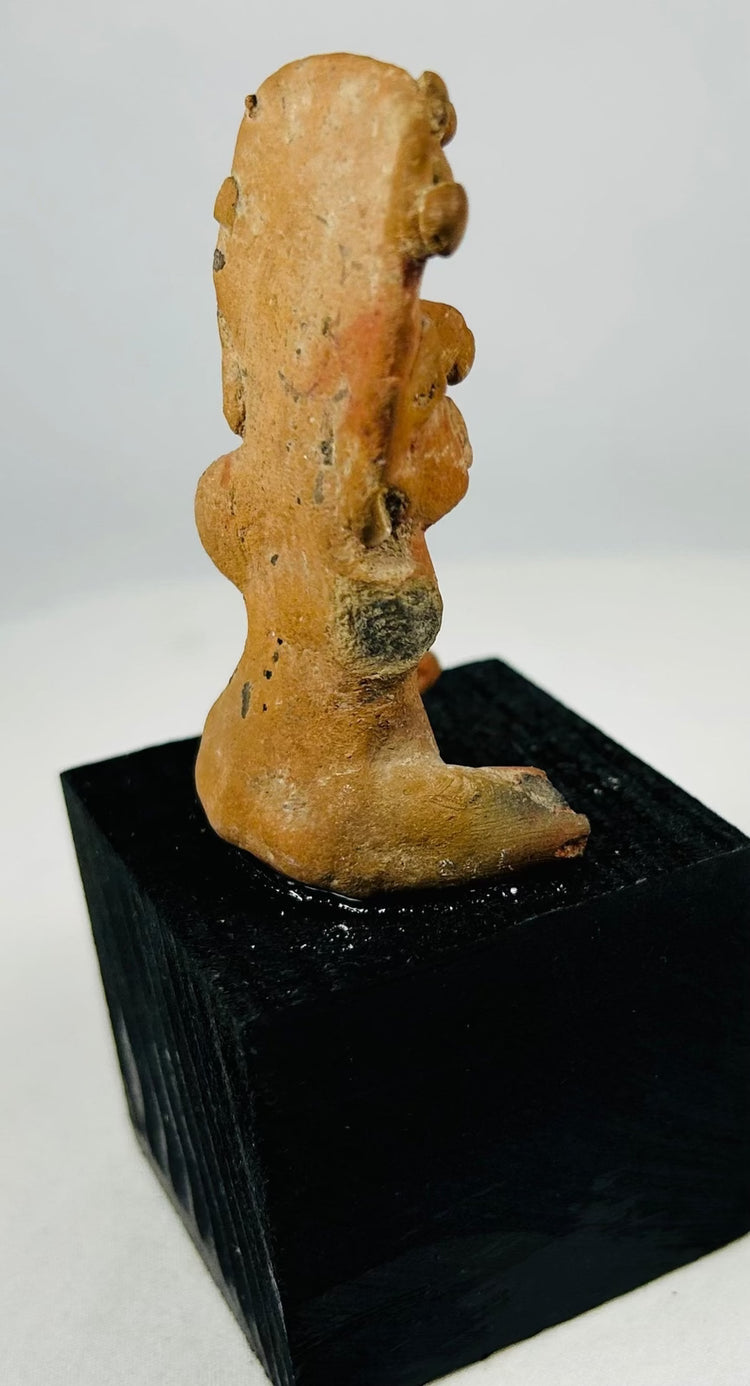
- Traces of original surface pigment and burial encrustations
Cultural Significance
Figures such as this were traditionally placed within elite burials, symbolizing status, ritual identity, ancestral presence, or spiritual guardianship. They stand today as powerful testaments to belief systems, community identity, and artistic expression in ancient West Mexico.
Condition
Expected archaeological wear consistent with age. Loss to one arm and leg, areas of surface chipping, minor encrustations and soil deposits from burial context. Stable and well-presented on a custom display base.
Dimensions (Approximate)
Height: 4.75 in
Age (Approximate)
1,700–2,300 years old
Provenance
From a private collection in Ottawa, Ontario. The owner was a lifelong collector of Pre-Columbian art and artifacts who traveled extensively throughout South America. Following their passing, the collection was liquidated by the family.
Learn More
Explore ancient West Mexican sculpture at the Metropolitan Museum of Art
Discover our curated Ancient Pre-Columbian Artifacts & Relics Collection
Description
Historical Context & Origin
Region: West Mexico, Pre-Columbian Mesoamerica
Material: Hand-modeled terracotta clay with traces of original pigment
Period: Circa 300 BCE – 300 CE
Description
A finely sculpted seated terracotta figure from ancient West Mexico, depicting a stylized human form with expressive facial features and a prominent headpiece. The figure displays the characteristic bold modeling, pierced ears, and lively presence associated with shaft-tomb cultures such as Nayarit or Jalisco. Subtle remnants of ancient red/orange surface pigment remain visible, offering a glimpse into its original ceremonial vibrancy.
Features
- Distinct stylized face with open mouth and defined brows
- Prominent head adornment / headdress
- Traditional seated posture
- Pierced ear ornaments
- Traces of original surface pigment and burial encrustations
Cultural Significance
Figures such as this were traditionally placed within elite burials, symbolizing status, ritual identity, ancestral presence, or spiritual guardianship. They stand today as powerful testaments to belief systems, community identity, and artistic expression in ancient West Mexico.
Condition
Expected archaeological wear consistent with age. Loss to one arm and leg, areas of surface chipping, minor encrustations and soil deposits from burial context. Stable and well-presented on a custom display base.
Dimensions (Approximate)
Height: 4.75 in
Age (Approximate)
1,700–2,300 years old
Provenance
From a private collection in Ottawa, Ontario. The owner was a lifelong collector of Pre-Columbian art and artifacts who traveled extensively throughout South America. Following their passing, the collection was liquidated by the family.
Learn More
Explore ancient West Mexican sculpture at the Metropolitan Museum of Art
Discover our curated Ancient Pre-Columbian Artifacts & Relics Collection
You May Also Like
