

Spanish-American War Era | U.S. Naval Officer Dress Shoulder Set | Circa Late 19th Century
Couldn't load pickup availability


Spanish-American War Era | U.S. Naval Officer Dress Shoulder Set | Circa Late 19th Century
Description
More
Less
Historical Context & Origin
Region: United States Navy (Retailer: London, England)
Material: Gold bullion wire, gilt brass fittings and buttons, textile foundation, velvet-lined metal storage case
Period: Late 19th Century, circa 1890–1905 (Spanish-American War / Turn-of-the-Century period)
Description
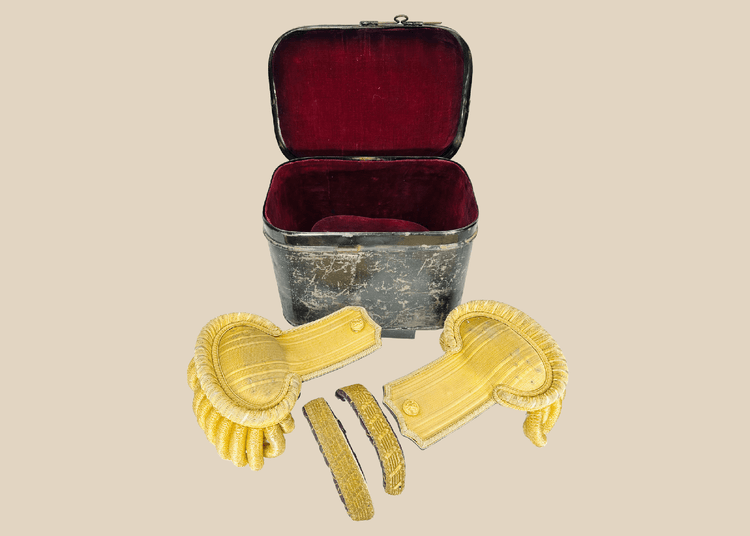
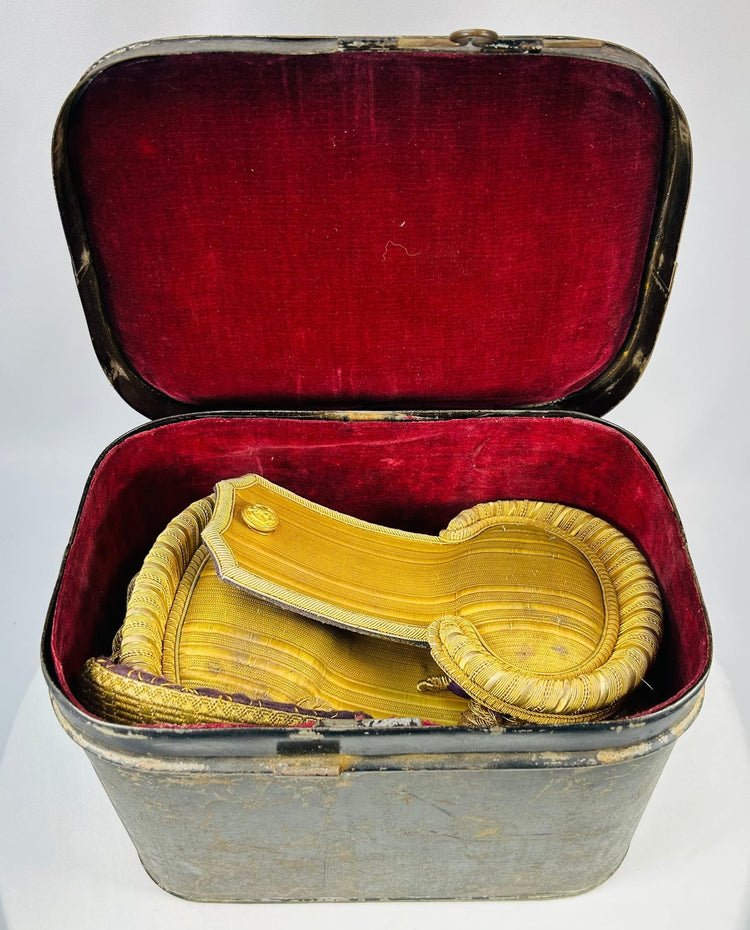
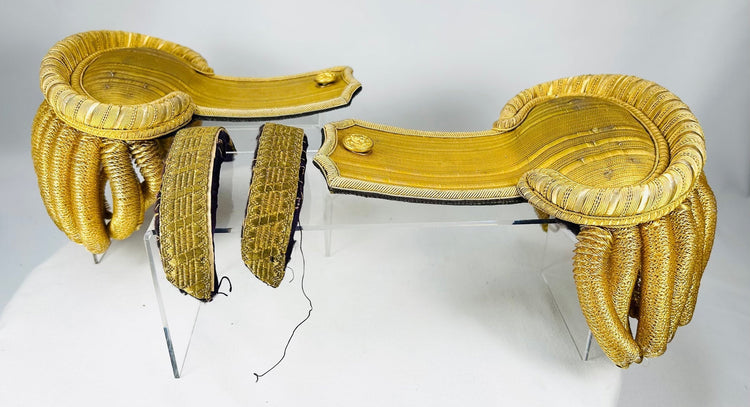
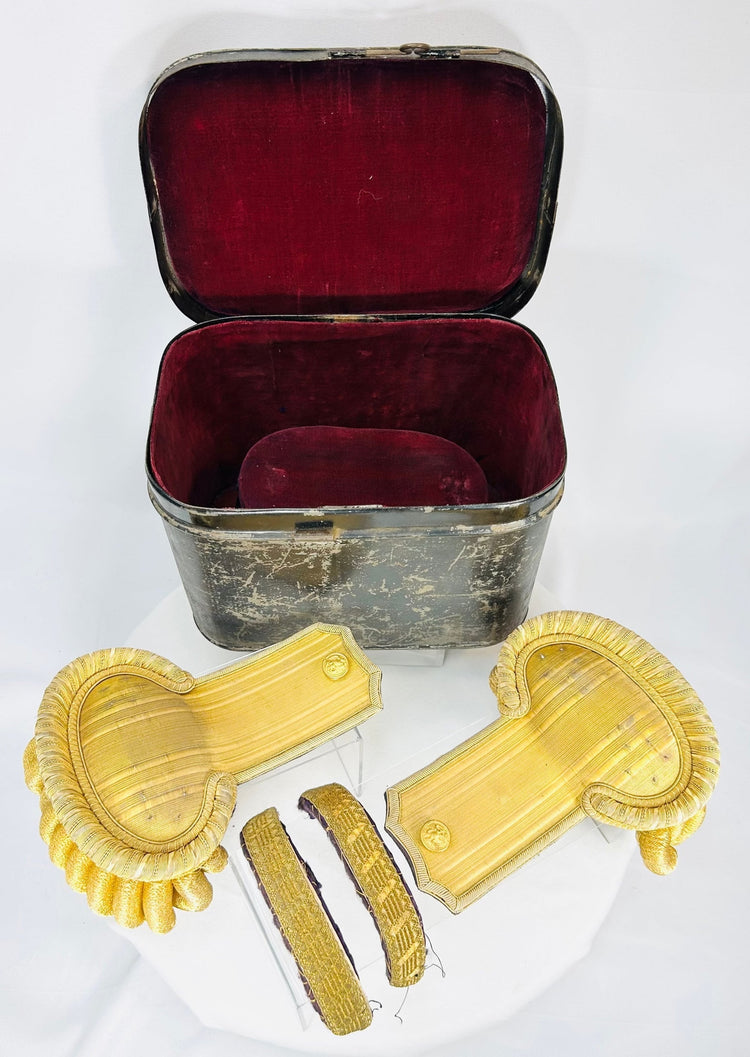
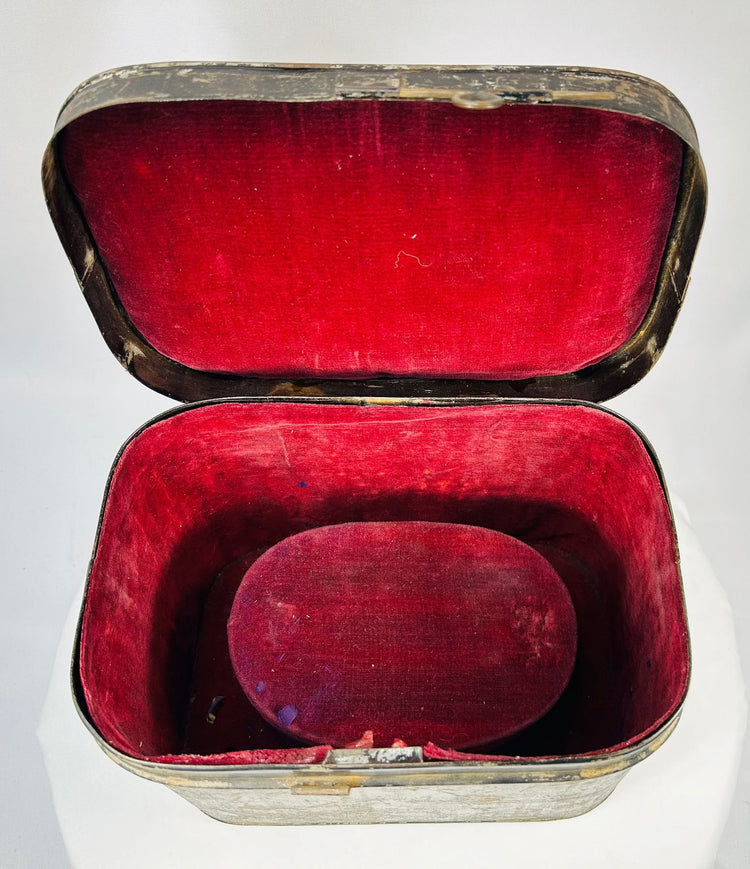
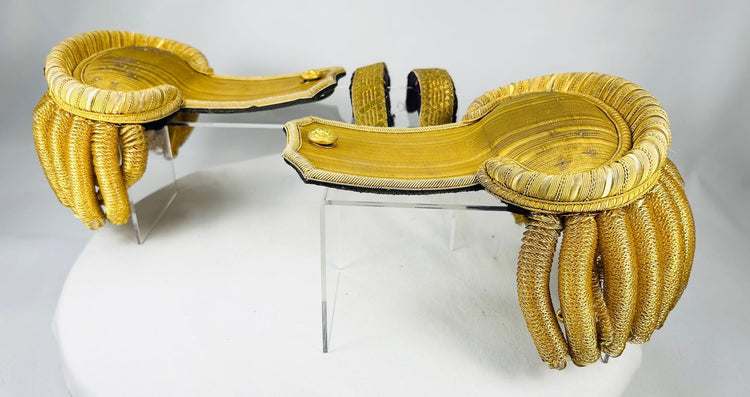
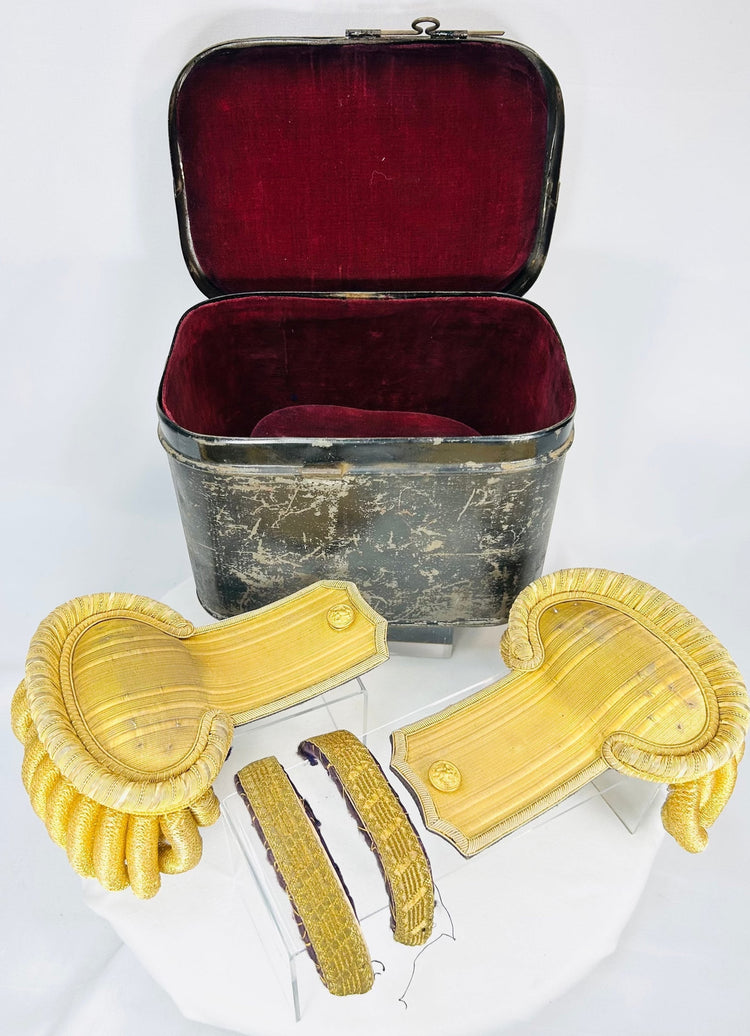
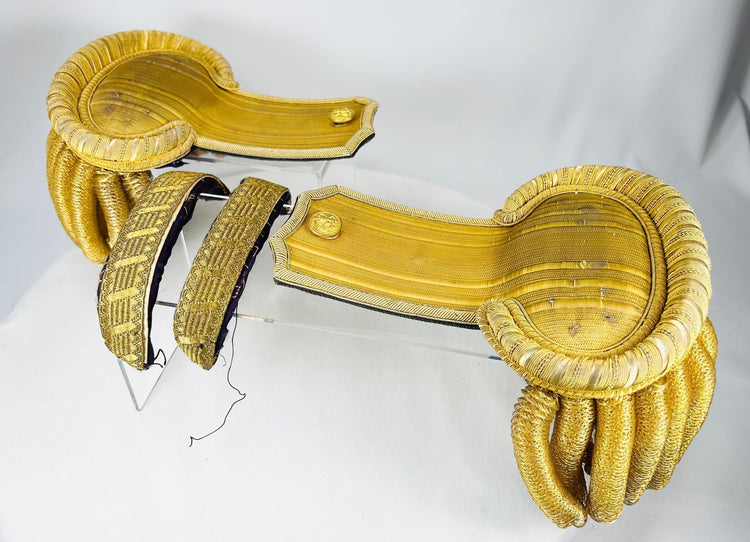
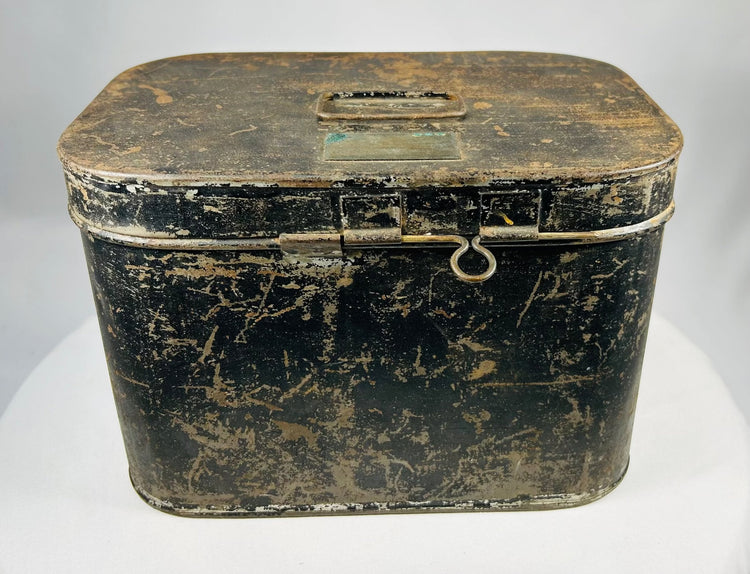
An exceptional surviving cased set of United States Naval officer dress epaulettes, housed in their original fitted metal storage case lined in rich crimson velvet. These ornate shoulder epaulettes were worn with full dress uniforms by commissioned U.S. Navy officers during formal ceremonies and official functions in the late Victorian and early Edwardian era.
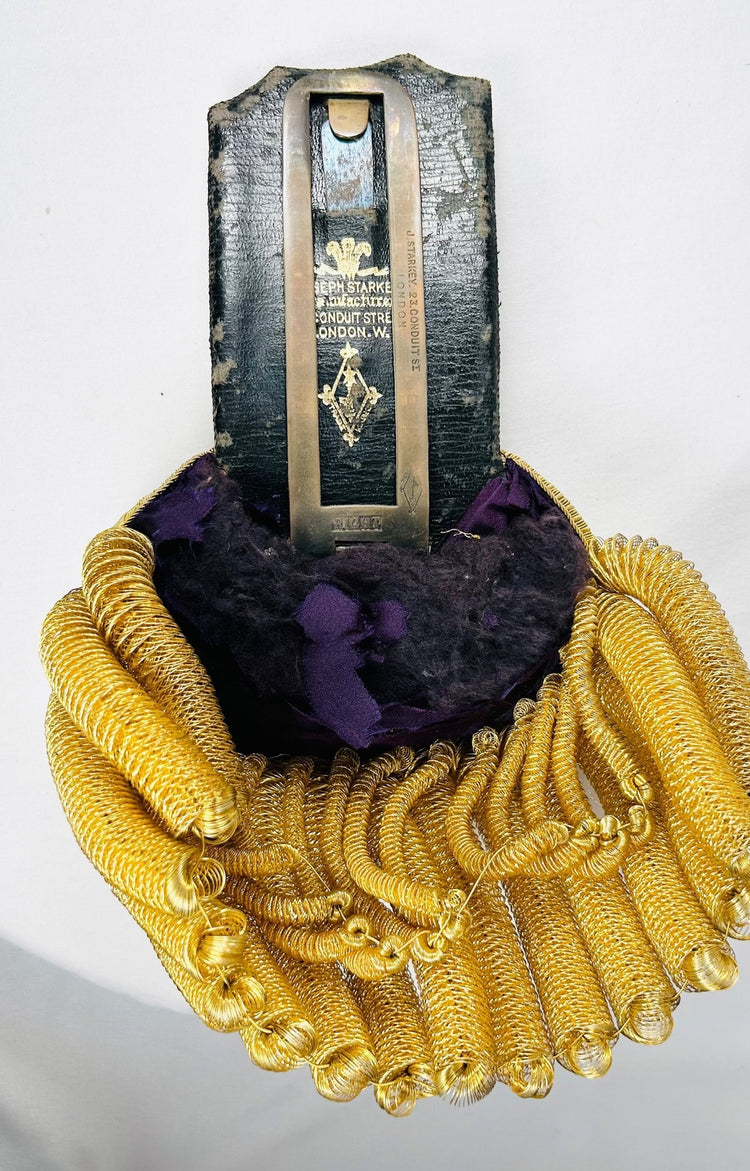
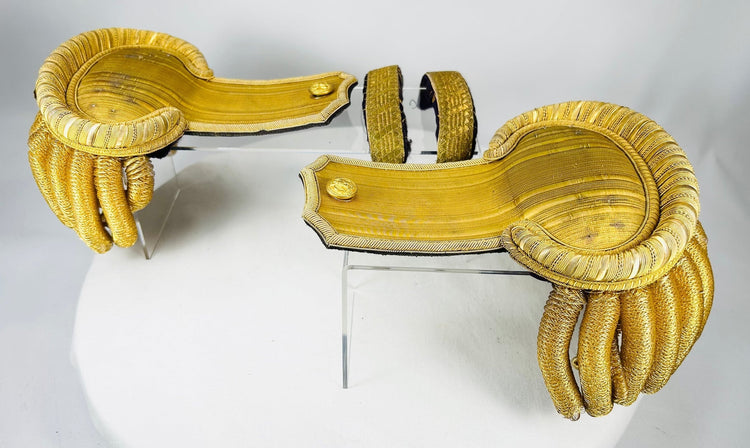
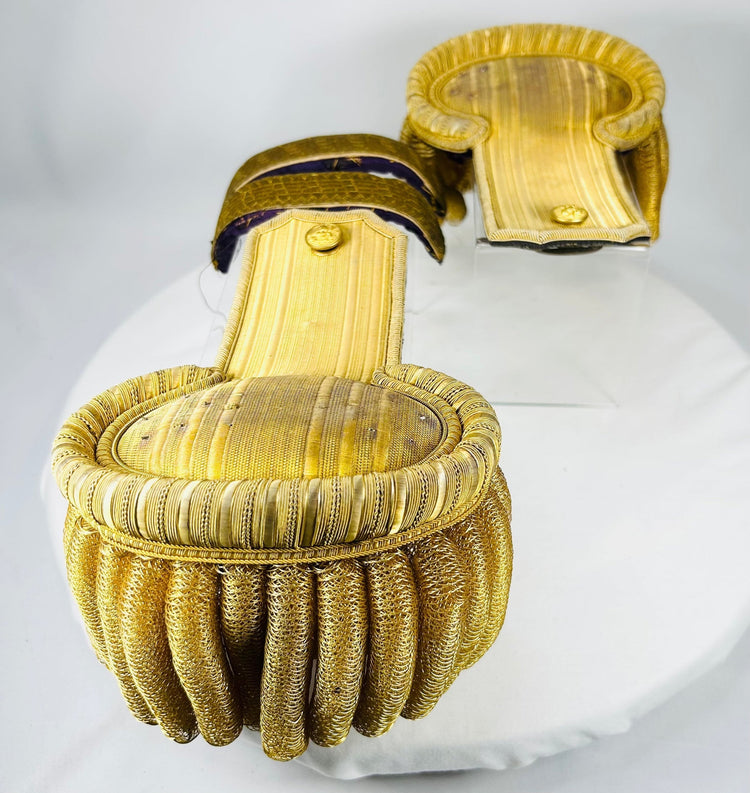
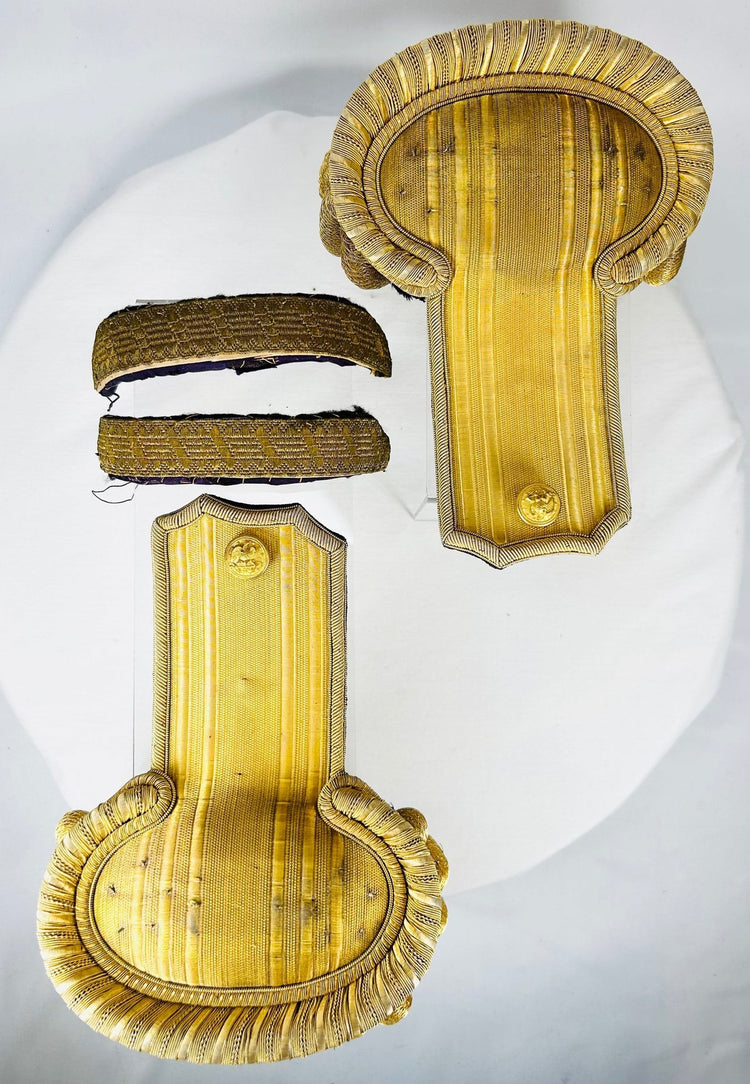
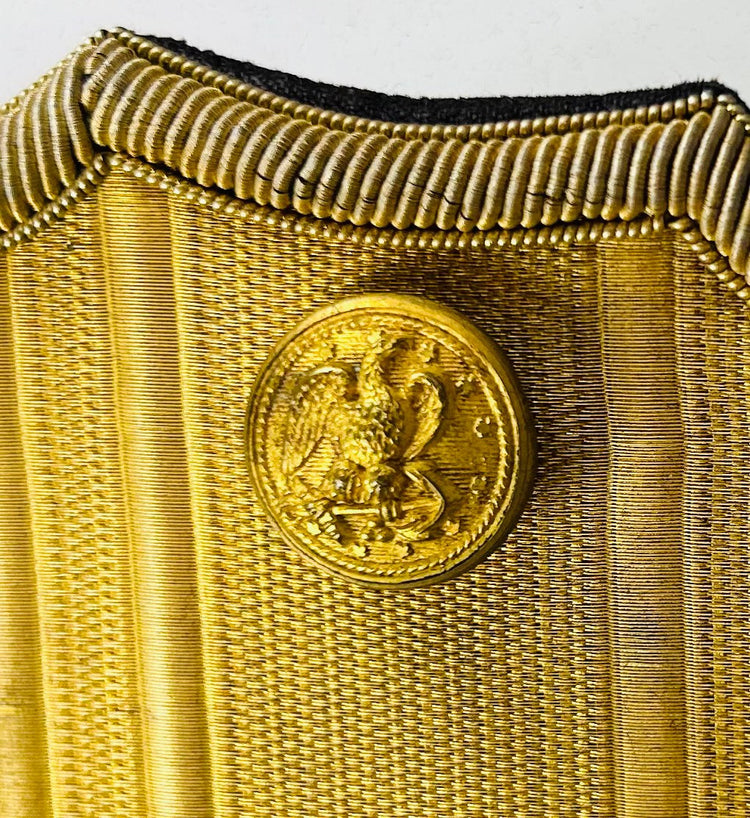
The epaulettes feature heavy gold bullion embroidery and finely constructed fringed bullion drops, with gilt buttons bearing the American eagle device. The construction reflects high-quality late 19th-century military tailoring, combining rigid foundation boards, dense bullion work, and silk and textile underlayers.
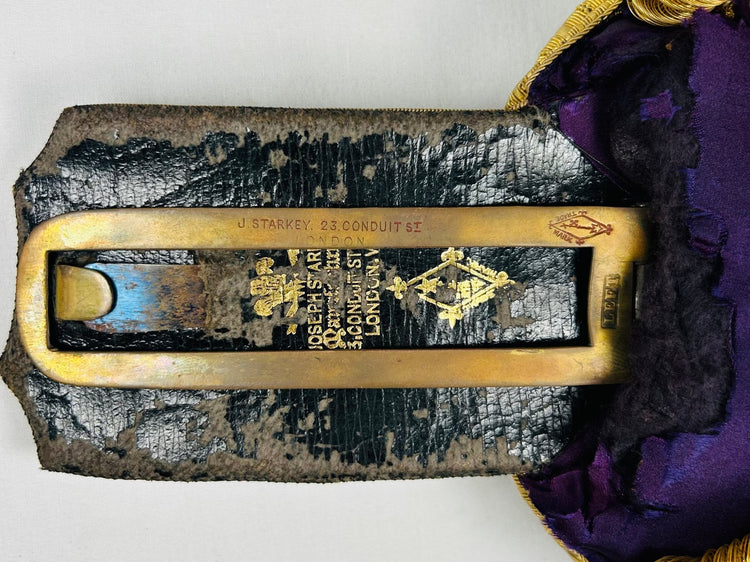
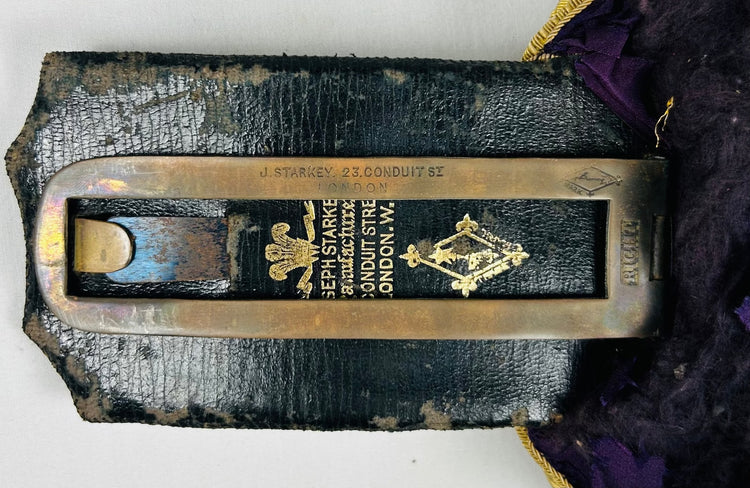
Notably, the interior fittings show retailer markings for J. Starkey, 23 Conduit Street, London, indicating acquisition through a prestigious London military outfitter. It was common for American officers traveling or stationed abroad to purchase uniform accoutrements from renowned British military tailors and outfitters known for superior craftsmanship.
The survival of both epaulettes together with the original fitted storage case makes this an increasingly scarce and desirable ensemble for collectors of naval history and military regalia.
Features
- Complete matched pair of officer’s bullion epaulettes
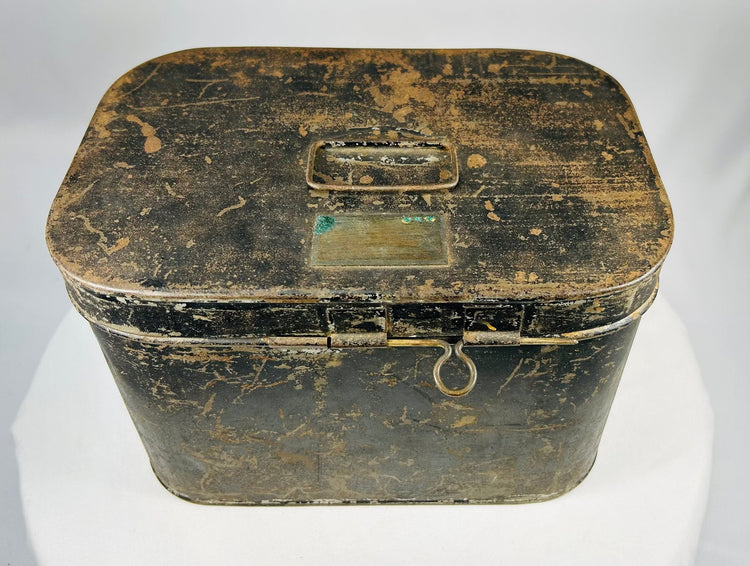
- Original fitted metal storage case with velvet interior
- Heavy gold bullion fringe and embroidered construction
- Gilt officer buttons with American eagle insignia
- London outfitter retailer marking: J. Starkey, Conduit Street
- Period silk and textile backing elements retained
- Fine example of late 19th-century naval dress uniform accoutrements
Cultural Significance
Epaulettes represented rank, authority, and prestige within 19th-century naval and military dress. Officers wore them during formal occasions, ceremonial duties, and high-profile naval events. By the late 19th century, such bullion epaulettes symbolized professional status in an expanding modern navy, particularly during the era surrounding the Spanish-American War and America’s emergence as a naval power.
Surviving cased sets are increasingly rare, as bullion components were often separated, damaged, or melted down over time.
Condition
Very good antique condition overall. Bullion remains largely intact with expected age toning and minor areas of wear consistent with period use. Textile backing shows typical age-related fraying and minor losses. Case exterior displays honest wear and paint loss from storage and service use, while interior velvet remains attractive and functional. An excellent preserved period example.
Dimensions (approximate)
Case Length: 9.25 in
Case Width: 6.25 in
Case Height: 6.25 in
Age (Approximate)
120–135 years old
Provenance
Formerly part of a private collection of military and naval artifacts in Willoughby, Ohio, United States. The collection included a range of historic militaria assembled over many years, including uniform accessories, insignia, edged weapons, and related service material.
Learn More
Discover A Similar Maritime Artifact at Royal Museums Greenwich .
Explore Our Ancient Combat Artifacts, Armor & Weapons Collection .
Description
Historical Context & Origin
Region: United States Navy (Retailer: London, England)
Material: Gold bullion wire, gilt brass fittings and buttons, textile foundation, velvet-lined metal storage case
Period: Late 19th Century, circa 1890–1905 (Spanish-American War / Turn-of-the-Century period)
Description
An exceptional surviving cased set of United States Naval officer dress epaulettes, housed in their original fitted metal storage case lined in rich crimson velvet. These ornate shoulder epaulettes were worn with full dress uniforms by commissioned U.S. Navy officers during formal ceremonies and official functions in the late Victorian and early Edwardian era.
The epaulettes feature heavy gold bullion embroidery and finely constructed fringed bullion drops, with gilt buttons bearing the American eagle device. The construction reflects high-quality late 19th-century military tailoring, combining rigid foundation boards, dense bullion work, and silk and textile underlayers.
Notably, the interior fittings show retailer markings for J. Starkey, 23 Conduit Street, London, indicating acquisition through a prestigious London military outfitter. It was common for American officers traveling or stationed abroad to purchase uniform accoutrements from renowned British military tailors and outfitters known for superior craftsmanship.
The survival of both epaulettes together with the original fitted storage case makes this an increasingly scarce and desirable ensemble for collectors of naval history and military regalia.
Features
- Complete matched pair of officer’s bullion epaulettes
- Original fitted metal storage case with velvet interior
- Heavy gold bullion fringe and embroidered construction
- Gilt officer buttons with American eagle insignia
- London outfitter retailer marking: J. Starkey, Conduit Street
- Period silk and textile backing elements retained
- Fine example of late 19th-century naval dress uniform accoutrements
Cultural Significance
Epaulettes represented rank, authority, and prestige within 19th-century naval and military dress. Officers wore them during formal occasions, ceremonial duties, and high-profile naval events. By the late 19th century, such bullion epaulettes symbolized professional status in an expanding modern navy, particularly during the era surrounding the Spanish-American War and America’s emergence as a naval power.
Surviving cased sets are increasingly rare, as bullion components were often separated, damaged, or melted down over time.
Condition
Very good antique condition overall. Bullion remains largely intact with expected age toning and minor areas of wear consistent with period use. Textile backing shows typical age-related fraying and minor losses. Case exterior displays honest wear and paint loss from storage and service use, while interior velvet remains attractive and functional. An excellent preserved period example.
Dimensions (approximate)
Case Length: 9.25 in
Case Width: 6.25 in
Case Height: 6.25 in
Age (Approximate)
120–135 years old
Provenance
Formerly part of a private collection of military and naval artifacts in Willoughby, Ohio, United States. The collection included a range of historic militaria assembled over many years, including uniform accessories, insignia, edged weapons, and related service material.
Learn More
Discover A Similar Maritime Artifact at Royal Museums Greenwich .
Explore Our Ancient Combat Artifacts, Armor & Weapons Collection .
You May Also Like
