


Pre-Columbian Andean Artifact | Notched Stone Axe for Daily Use | Circa 500 – 1500 CE
Couldn't load pickup availability


Pre-Columbian Andean Artifact | Notched Stone Axe for Daily Use | Circa 500 – 1500 CE
Description
More
Less
Historical Context & Origin
Region: Ecuador or Peru, Andean region
Material: Ground stone
Period: Pre-Columbian, circa 500–1500 CE
Description
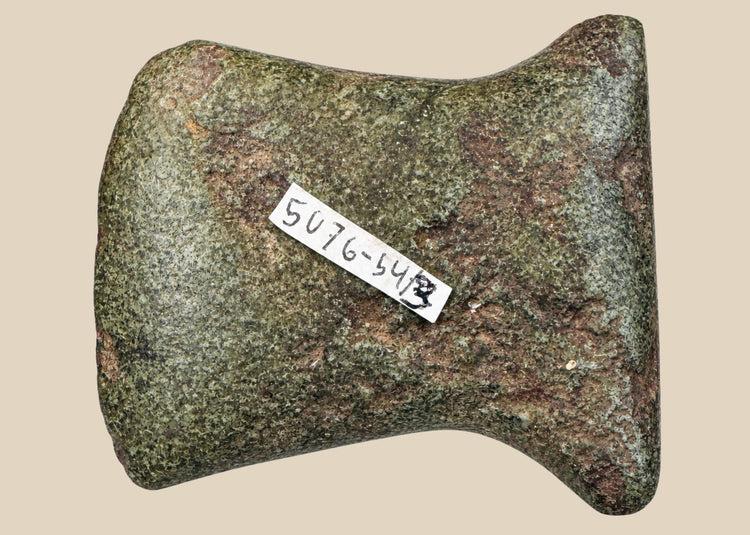
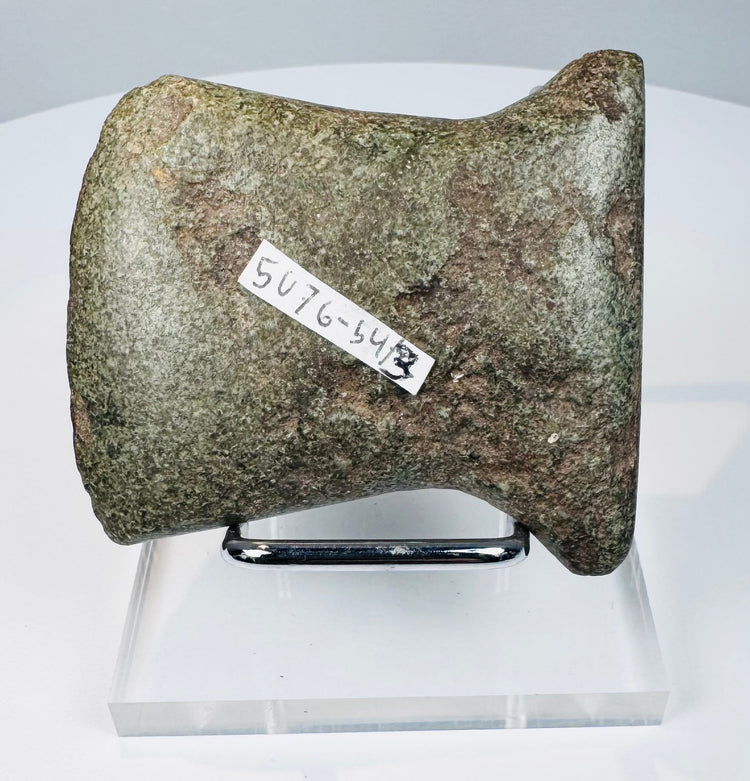
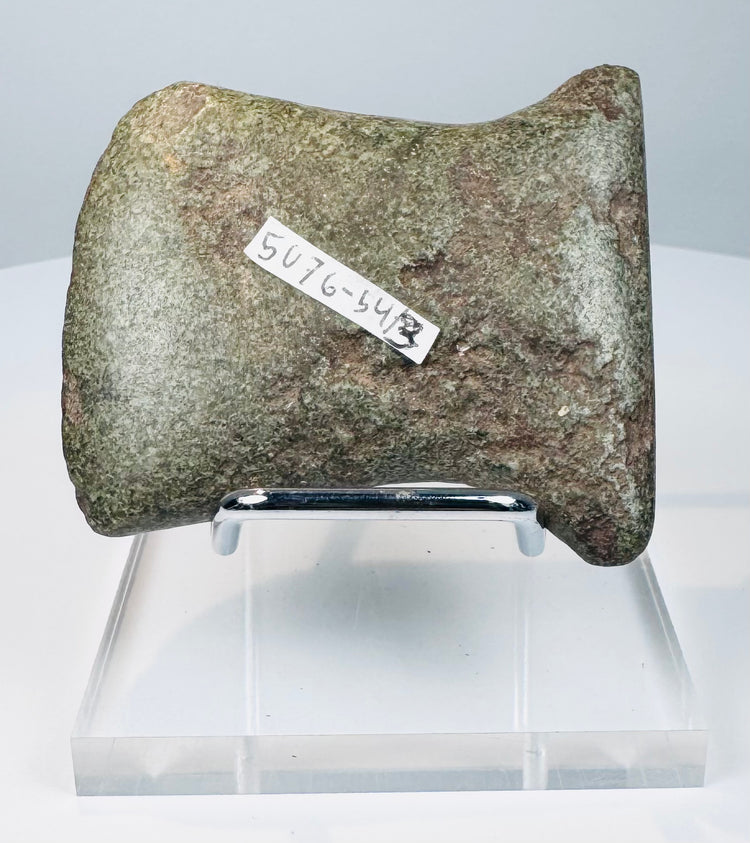
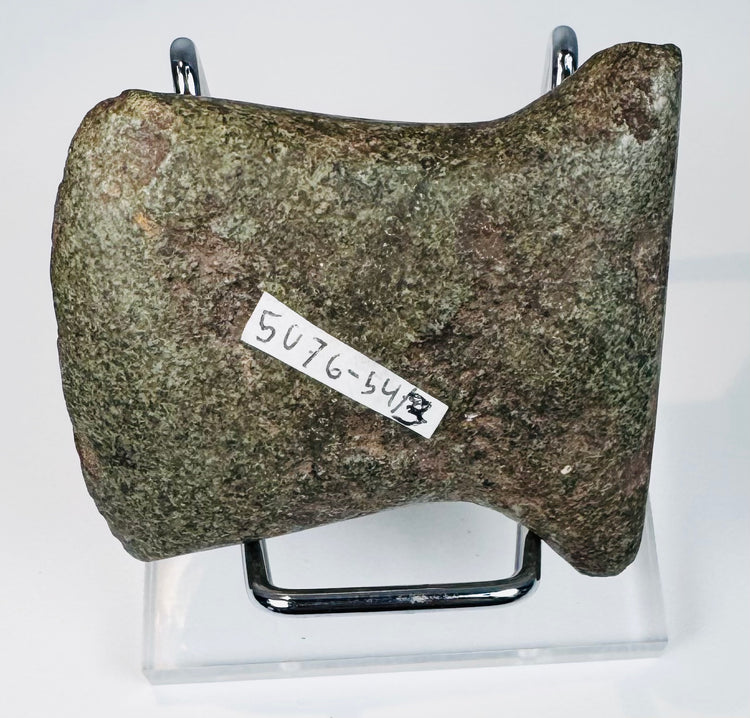
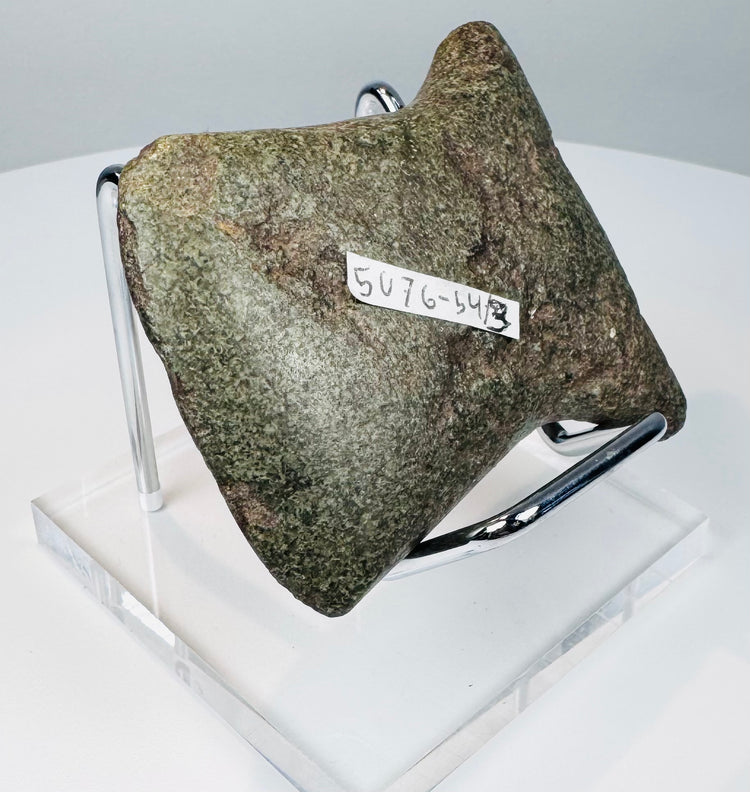
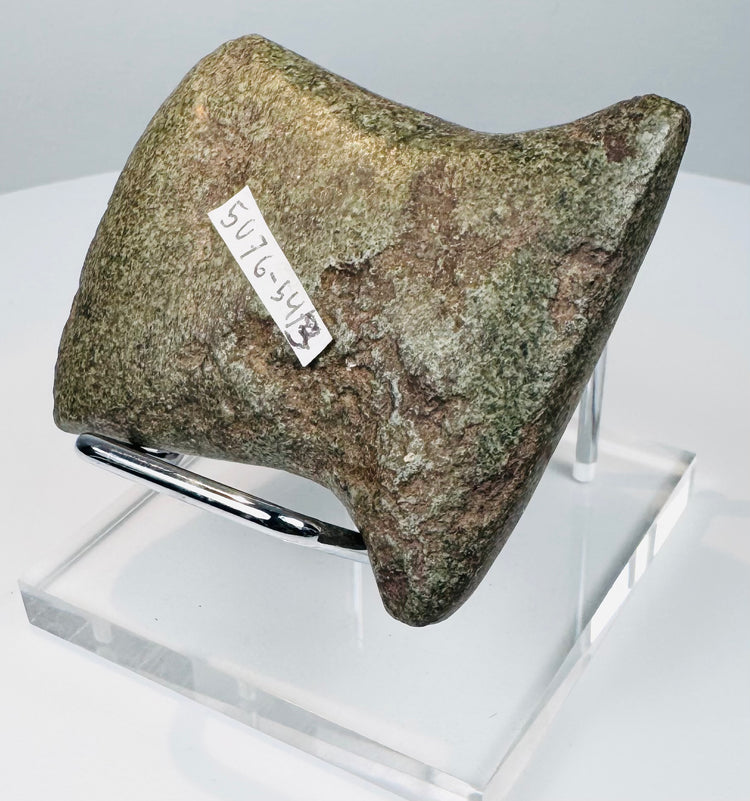
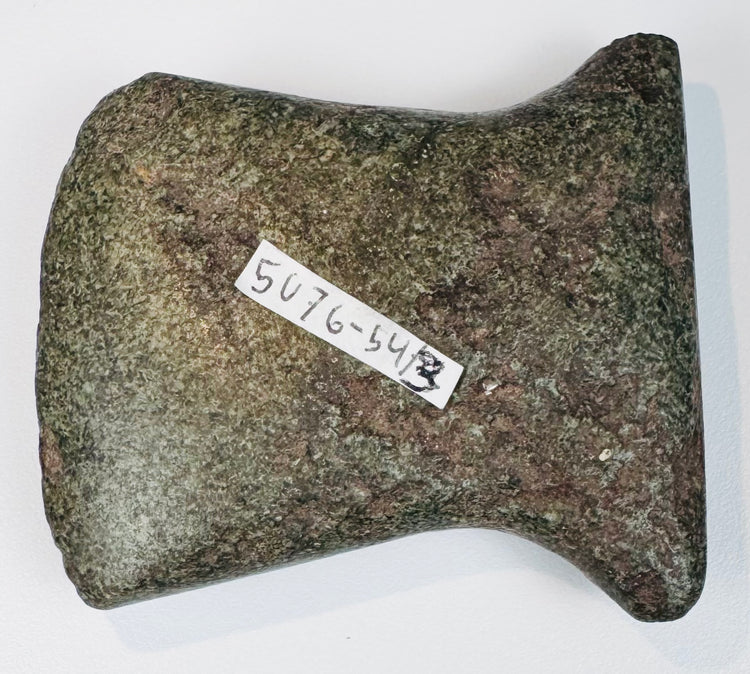
This small notched axe, measuring only 3 inches by 1.5 inches, is a utilitarian ground-stone tool from the ancient Andean world. Unlike ceremonial or prestige axes, this piece was designed for practical daily use. Its steep beveling and rounded cutting edge bear testimony to repeated sharpening and extended functional life. Distinctive side notches allowed the axe to be securely lashed to a wooden handle, ensuring both stability and efficiency in woodworking and agricultural tasks.
Features
- Fully ground surfaces, eliminating traces of rough shaping
- Steep beveled cutting edge with evidence of repeated sharpening
- Rounded edge showing extensive use-wear
- Side notches for secure hafting onto a handle
- Original archaeological tag and number, confirming provenance
Cultural Significance
In pre-Columbian Andean societies, stone axes were essential tools of daily life, used in woodworking, farming, and construction. While larger, ornate versions symbolized power and status, smaller examples like this represent the practical ingenuity of ancient laborers. Their craftsmanship demonstrates the advanced stone-working traditions of the Andes, reflecting a culture that valued both efficiency and durability in its tools.
Condition
This piece remains in very good condition for its age, with clear wear consistent with practical use. The original archaeological tag and number add scholarly and historical value, ensuring its authenticity.
Dimensions (Approximate)
Height: 3 in
Width: 1.5 in
Age (Approximate)
525–1,525 years old
Provenance
Acquired during the 1950s and formerly part of the private collection of David Sheridan, Branchburg, New Jersey, USA, a longtime collector whose holdings included antiquities, Pre-Columbian art, and ethnographic material. Subsequently held in the estate of Todd Solomon, whose collection included Asian art and antiques. Later handled by Palmyra Heritage Gallery, New York, New York, USA, before entering a private collection in Toronto, Ontario, Canada.
Learn More
Study the development of Ancient Stone Axes and Hafted Tools
Browse our Collection of Ancient Axes and Tools
Description
Historical Context & Origin
Region: Ecuador or Peru, Andean region
Material: Ground stone
Period: Pre-Columbian, circa 500–1500 CE
Description
This small notched axe, measuring only 3 inches by 1.5 inches, is a utilitarian ground-stone tool from the ancient Andean world. Unlike ceremonial or prestige axes, this piece was designed for practical daily use. Its steep beveling and rounded cutting edge bear testimony to repeated sharpening and extended functional life. Distinctive side notches allowed the axe to be securely lashed to a wooden handle, ensuring both stability and efficiency in woodworking and agricultural tasks.
Features
- Fully ground surfaces, eliminating traces of rough shaping
- Steep beveled cutting edge with evidence of repeated sharpening
- Rounded edge showing extensive use-wear
- Side notches for secure hafting onto a handle
- Original archaeological tag and number, confirming provenance
Cultural Significance
In pre-Columbian Andean societies, stone axes were essential tools of daily life, used in woodworking, farming, and construction. While larger, ornate versions symbolized power and status, smaller examples like this represent the practical ingenuity of ancient laborers. Their craftsmanship demonstrates the advanced stone-working traditions of the Andes, reflecting a culture that valued both efficiency and durability in its tools.
Condition
This piece remains in very good condition for its age, with clear wear consistent with practical use. The original archaeological tag and number add scholarly and historical value, ensuring its authenticity.
Dimensions (Approximate)
Height: 3 in
Width: 1.5 in
Age (Approximate)
525–1,525 years old
Provenance
Acquired during the 1950s and formerly part of the private collection of David Sheridan, Branchburg, New Jersey, USA, a longtime collector whose holdings included antiquities, Pre-Columbian art, and ethnographic material. Subsequently held in the estate of Todd Solomon, whose collection included Asian art and antiques. Later handled by Palmyra Heritage Gallery, New York, New York, USA, before entering a private collection in Toronto, Ontario, Canada.
Learn More
Study the development of Ancient Stone Axes and Hafted Tools
Browse our Collection of Ancient Axes and Tools
You May Also Like
