

Tribal Necklace with Real Skulls and Teeth | 19th – early 20th Century
Couldn't load pickup availability





Tribal Necklace with Real Skulls and Teeth | 19th – early 20th Century
Description
More
Less
Historical Context & Origin
Region: Indigenous/Tribal (exact cultural group unknown)
Material: Twine, wild dog cranium, rodent skulls, pig teeth
Period: Undetermined (likely 19th–early 20th century, ethnographic tradition)
Description
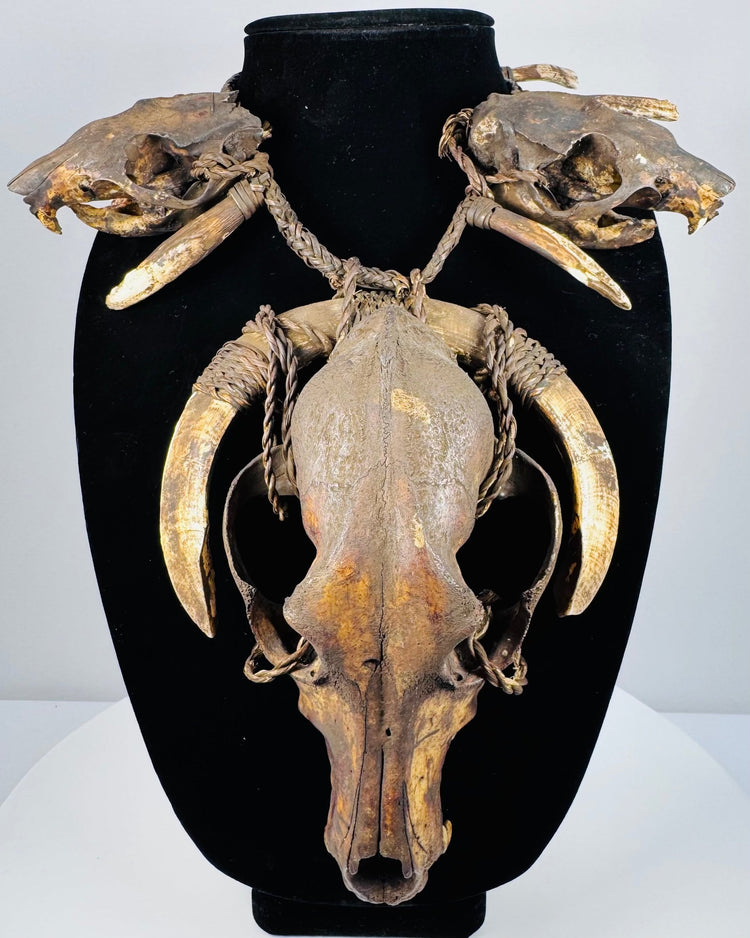
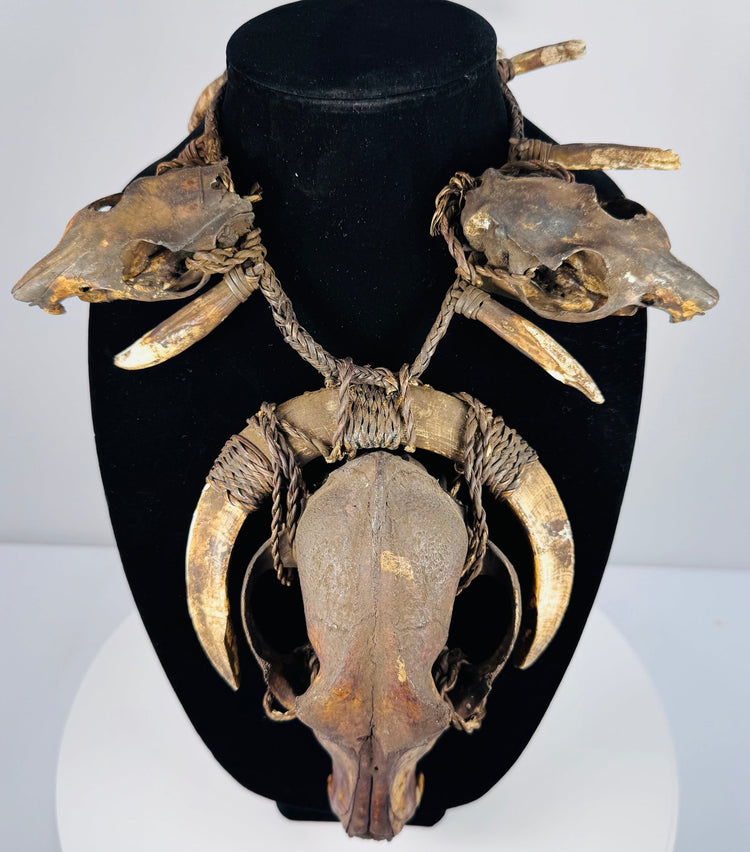
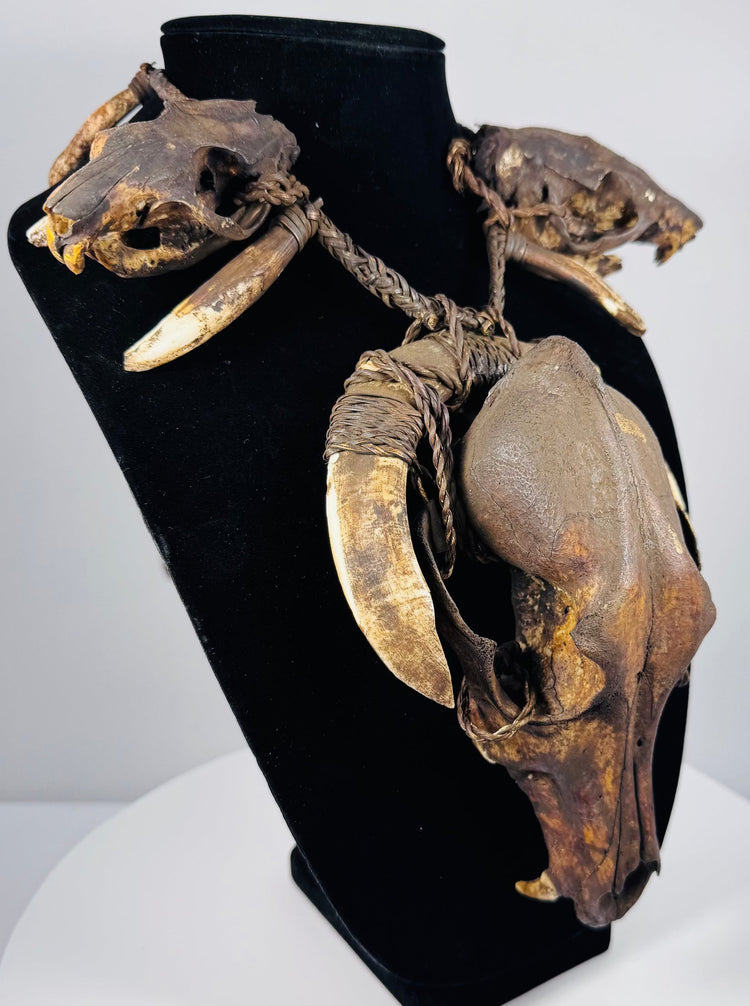
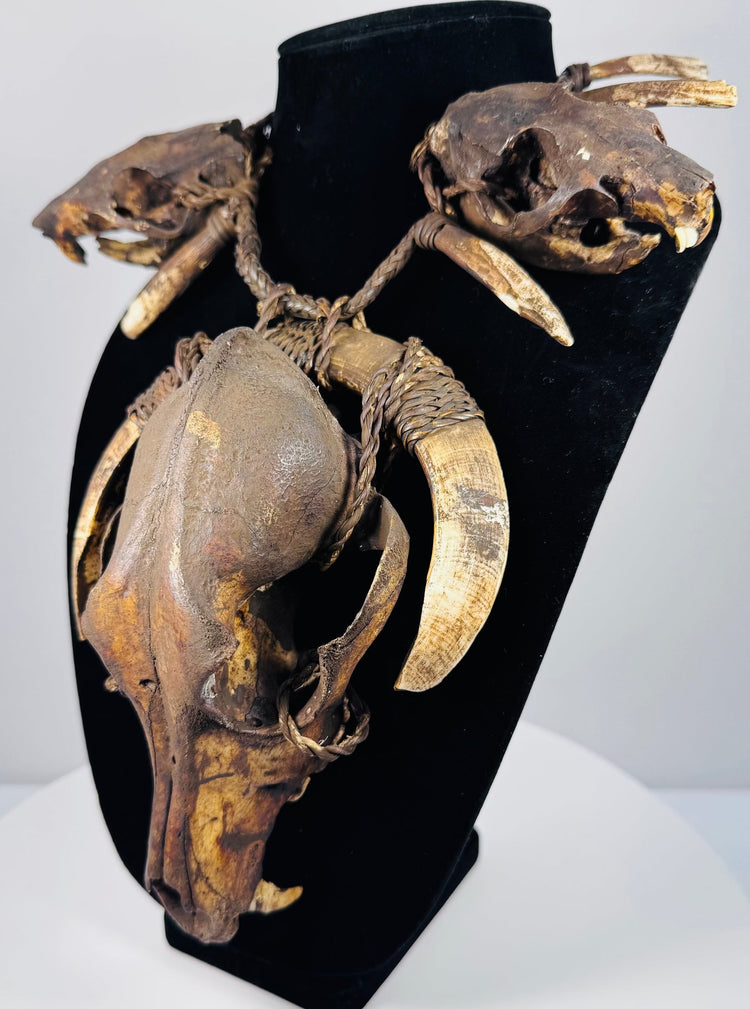
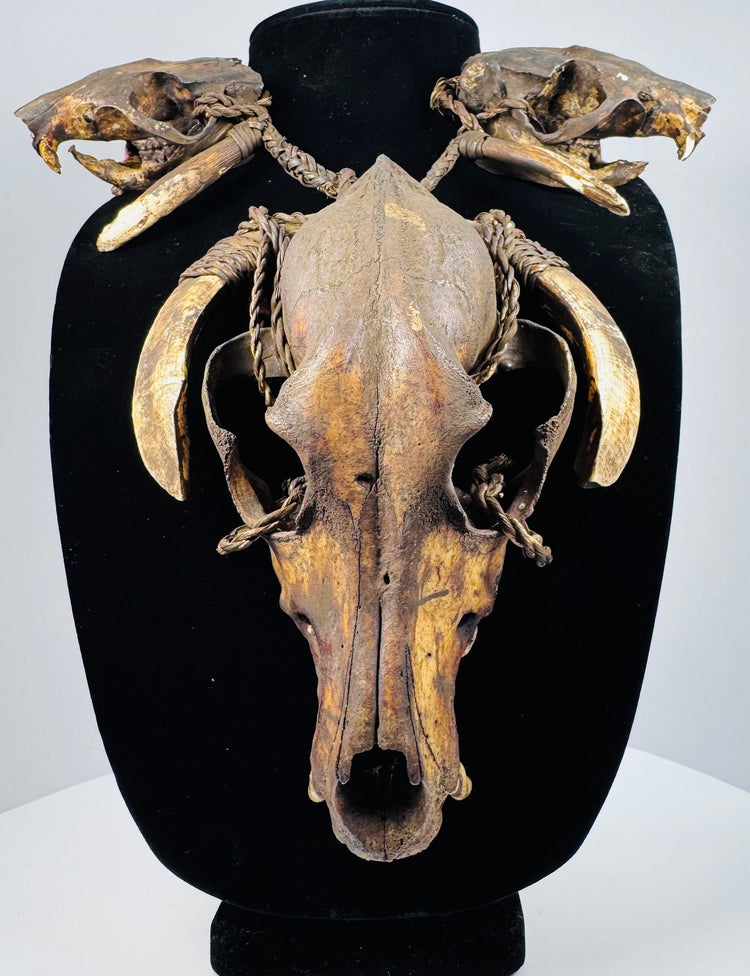
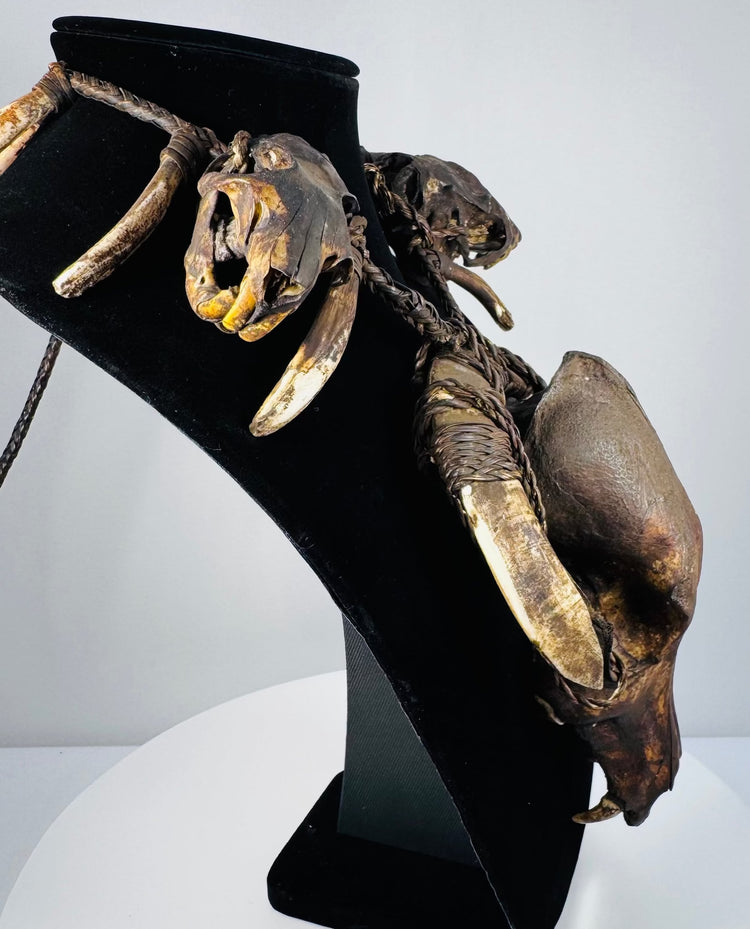
This striking ceremonial necklace embodies the fierce power and mysticism of tribal ritual objects. Constructed from woven twine, it incorporates a wild dog cranium as its central element, flanked by rodent skulls and framed by pig teeth. Such materials were chosen not merely for decoration but for their symbolic resonance, representing protection, ferocity, and the spiritual bond between human and animal realms. Its imposing presence underscores its likely use in shamanic or warrior ceremonies.
Features
- Central wild dog cranium symbolizing the spirit of the hunter and the wild
- Two smaller rodent skulls flanking the centerpiece
- Pig teeth radiating outward in protective and ferocious display
- Woven twine cord crafted with traditional hand techniques
- Powerful aesthetic blending functionality with ritual significance
Cultural Significance
Ceremonial necklaces of this type were worn by shamans, warriors, or tribal leaders as talismans of power and spiritual protection. The integration of animal remains reflects a worldview in which the life force of creatures could be harnessed for strength, guidance, or communion with ancestral spirits. Such objects served not only as adornment but as vital tools in ritual, embodying the unity of nature, spirituality, and human identity. This necklace stands as a rare surviving testament to indigenous craftsmanship and belief systems rooted in primal symbolism.
Condition
Preserved in ethnographic condition with natural age-related wear. Organic materials display expected patina and surface weathering consistent with ritual use and authenticity.
Dimensions (Approximate)
Height: 24 in
Width: 9 in
Age (Approximate)
75–200 years old
Provenance
Formerly held in a private collection in London, United Kingdom, for approximately 20 years. Subsequently offered by Burstow & Hewett Auctioneers & Valuers, East Sussex, United Kingdom, in its Natural History and Curiosities auction on March 15, 2024, as Lot 210. The specimen later entered a private collection in Toronto, Ontario, Canada.
Learn More
Explore research on Ritual Objects and Ethnomimetic Reproduction
Browse our Collection of Rare Oddities, Curiosities & Unique Relics
Description
Historical Context & Origin
Region: Indigenous/Tribal (exact cultural group unknown)
Material: Twine, wild dog cranium, rodent skulls, pig teeth
Period: Undetermined (likely 19th–early 20th century, ethnographic tradition)
Description
This striking ceremonial necklace embodies the fierce power and mysticism of tribal ritual objects. Constructed from woven twine, it incorporates a wild dog cranium as its central element, flanked by rodent skulls and framed by pig teeth. Such materials were chosen not merely for decoration but for their symbolic resonance, representing protection, ferocity, and the spiritual bond between human and animal realms. Its imposing presence underscores its likely use in shamanic or warrior ceremonies.
Features
- Central wild dog cranium symbolizing the spirit of the hunter and the wild
- Two smaller rodent skulls flanking the centerpiece
- Pig teeth radiating outward in protective and ferocious display
- Woven twine cord crafted with traditional hand techniques
- Powerful aesthetic blending functionality with ritual significance
Cultural Significance
Ceremonial necklaces of this type were worn by shamans, warriors, or tribal leaders as talismans of power and spiritual protection. The integration of animal remains reflects a worldview in which the life force of creatures could be harnessed for strength, guidance, or communion with ancestral spirits. Such objects served not only as adornment but as vital tools in ritual, embodying the unity of nature, spirituality, and human identity. This necklace stands as a rare surviving testament to indigenous craftsmanship and belief systems rooted in primal symbolism.
Condition
Preserved in ethnographic condition with natural age-related wear. Organic materials display expected patina and surface weathering consistent with ritual use and authenticity.
Dimensions (Approximate)
Height: 24 in
Width: 9 in
Age (Approximate)
75–200 years old
Provenance
Formerly held in a private collection in London, United Kingdom, for approximately 20 years. Subsequently offered by Burstow & Hewett Auctioneers & Valuers, East Sussex, United Kingdom, in its Natural History and Curiosities auction on March 15, 2024, as Lot 210. The specimen later entered a private collection in Toronto, Ontario, Canada.
Learn More
Explore research on Ritual Objects and Ethnomimetic Reproduction
Browse our Collection of Rare Oddities, Curiosities & Unique Relics
You May Also Like
