

Victorian Era | Doctor’s Medicine Chest with Glass Containers and Historic Prescriptions | Circa mid-19th Century
Couldn't load pickup availability


Victorian Era | Doctor’s Medicine Chest with Glass Containers and Historic Prescriptions | Circa mid-19th Century
Description
More
Less
Historical Context & Origin
Region: United States (Virginia)
Material: Mahogany wood, glass, paper labels, cork
Period: Mid-19th Century, circa 1860s
Description
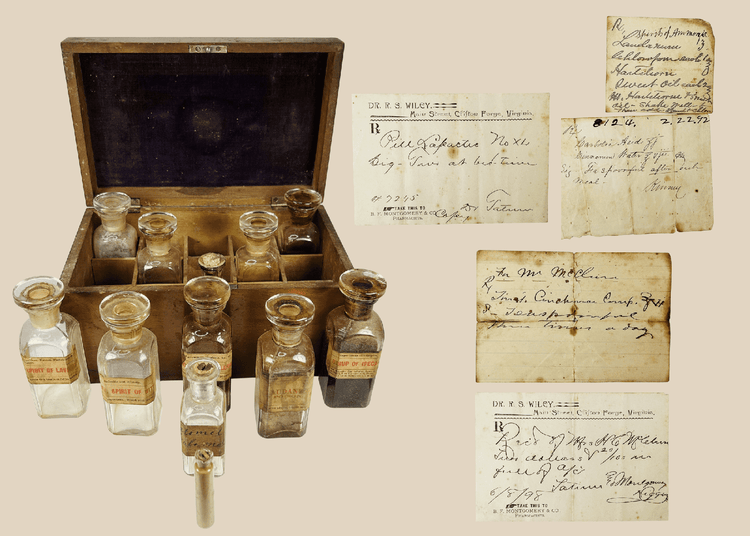
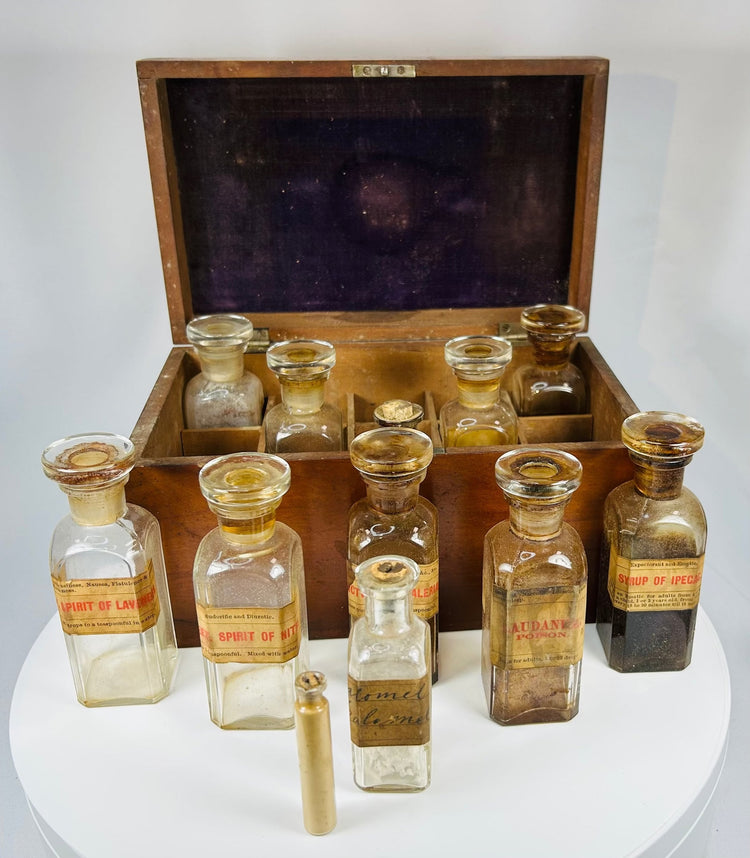
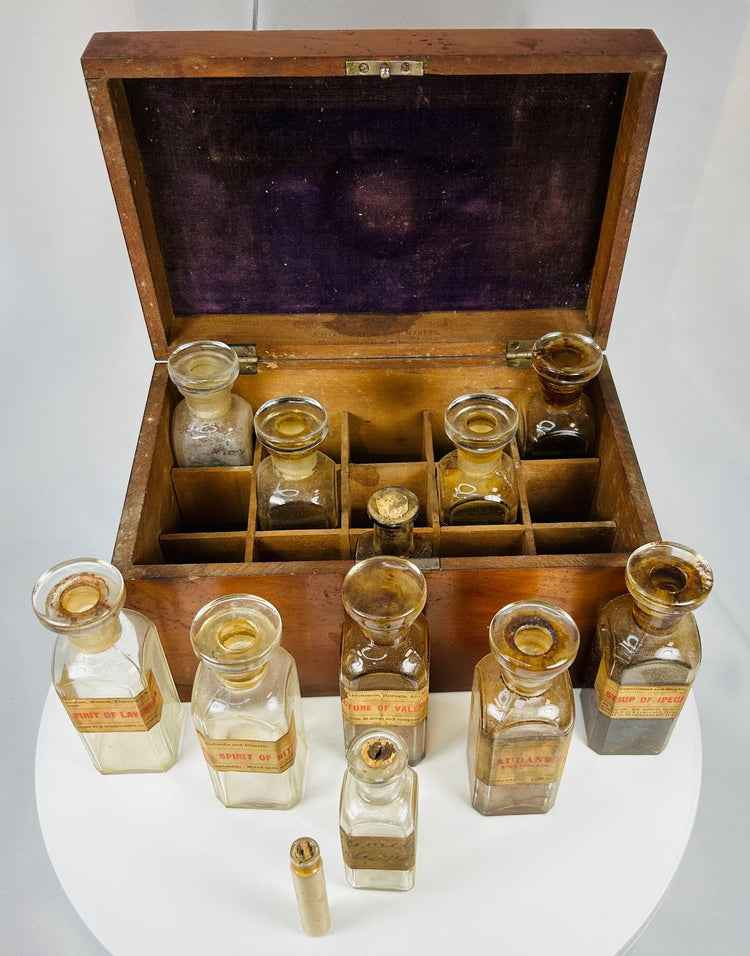
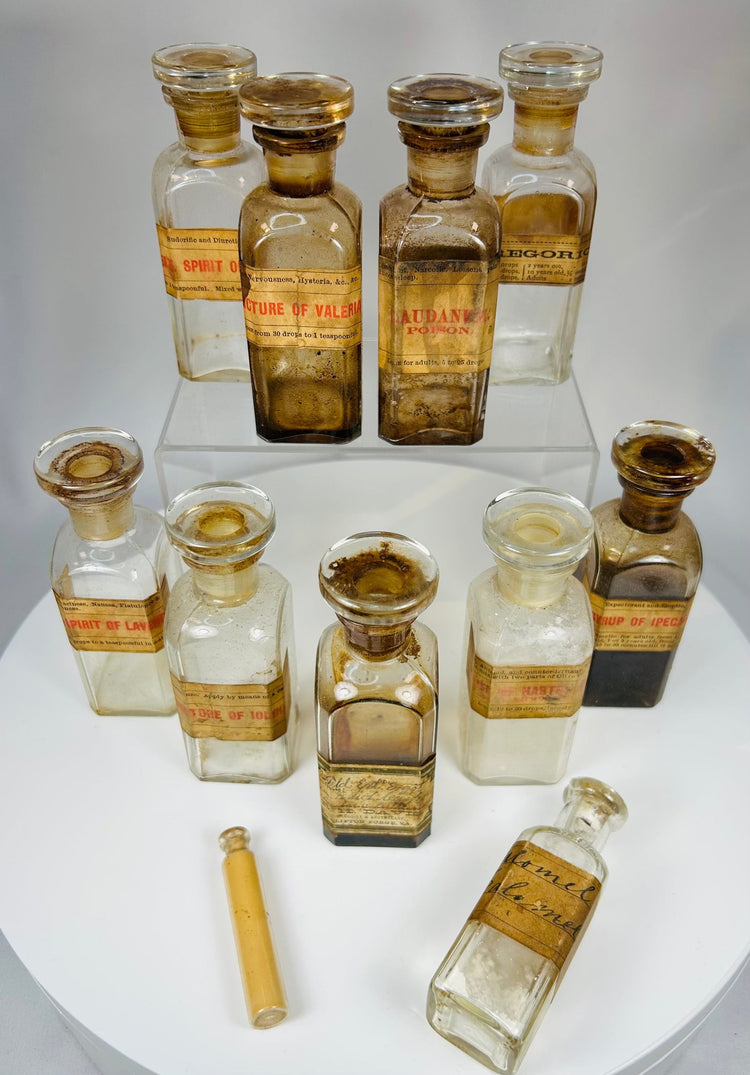
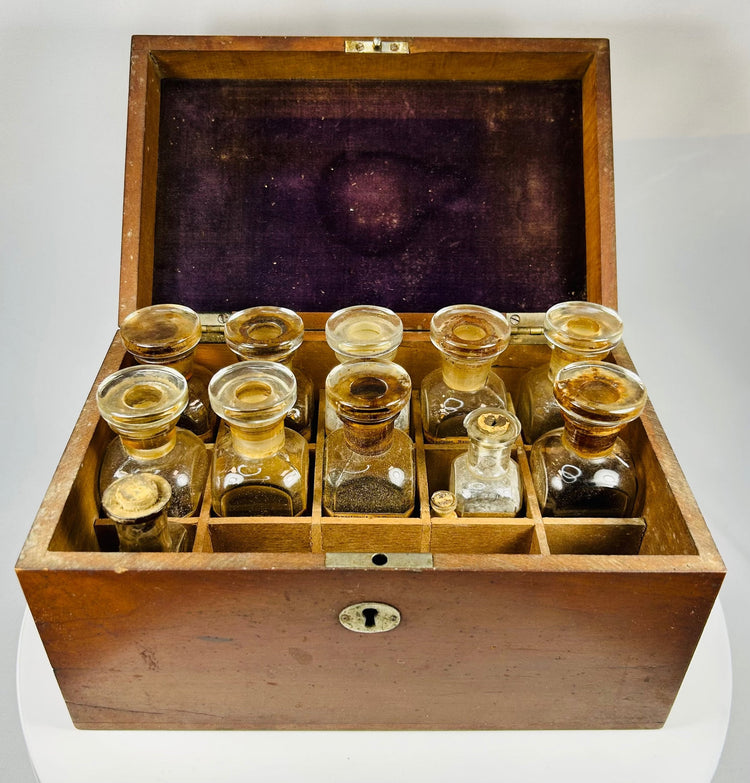
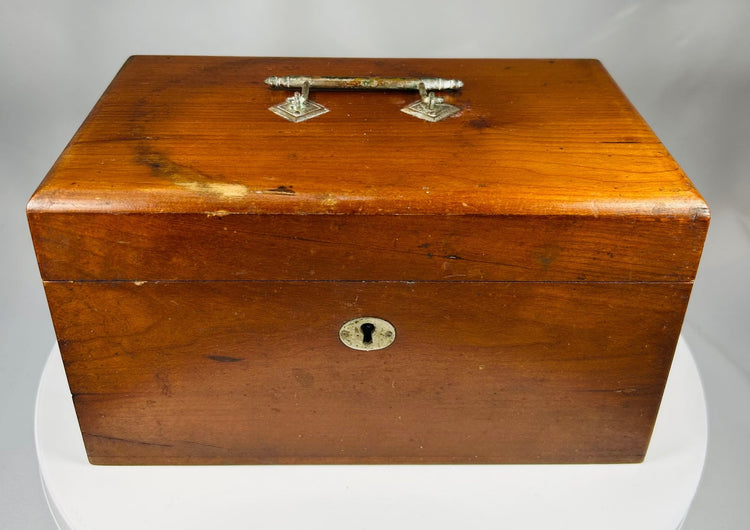
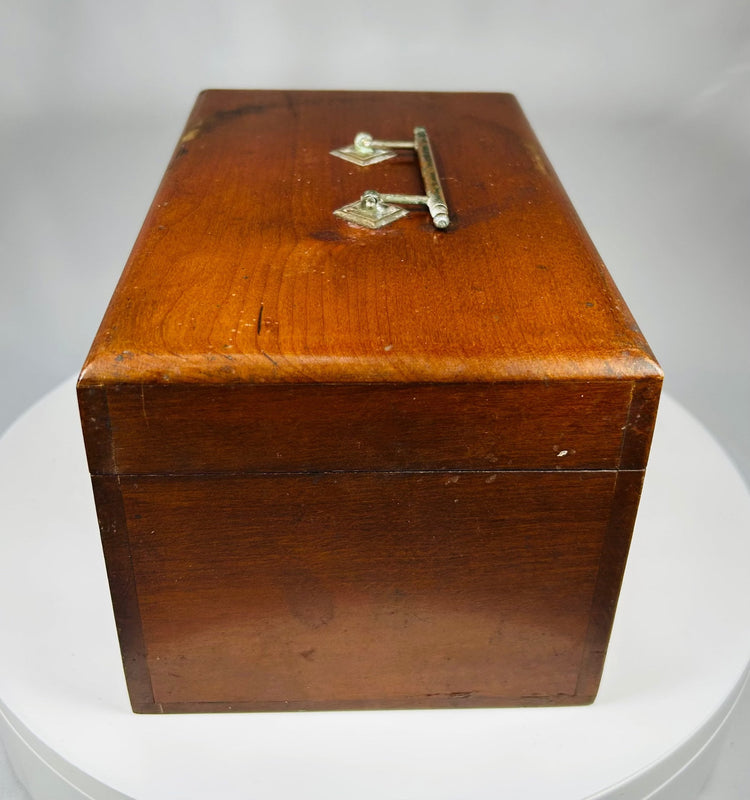
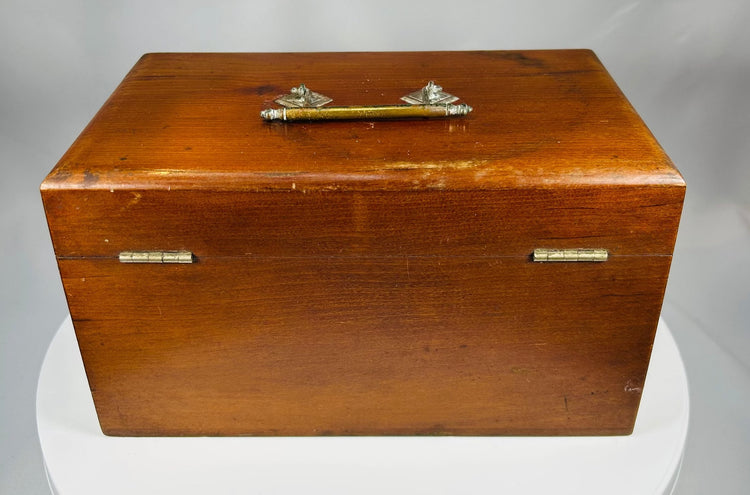
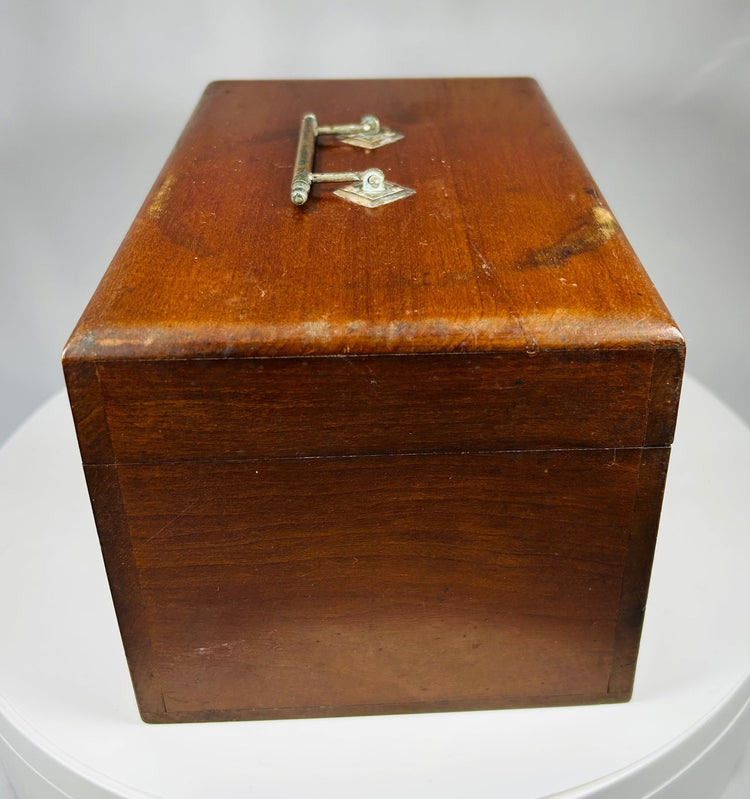
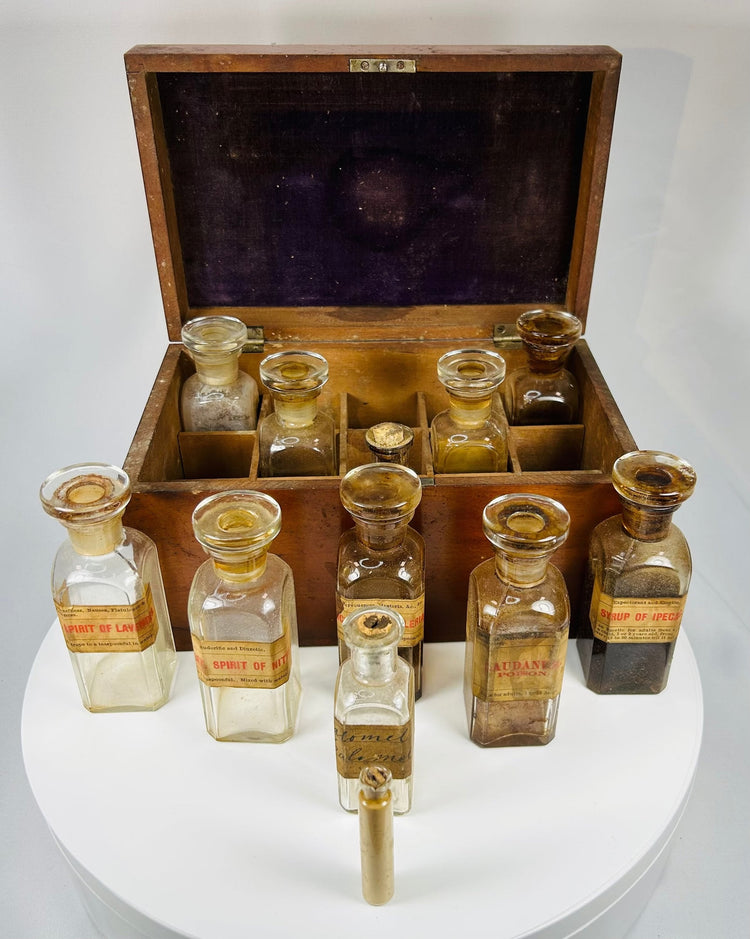
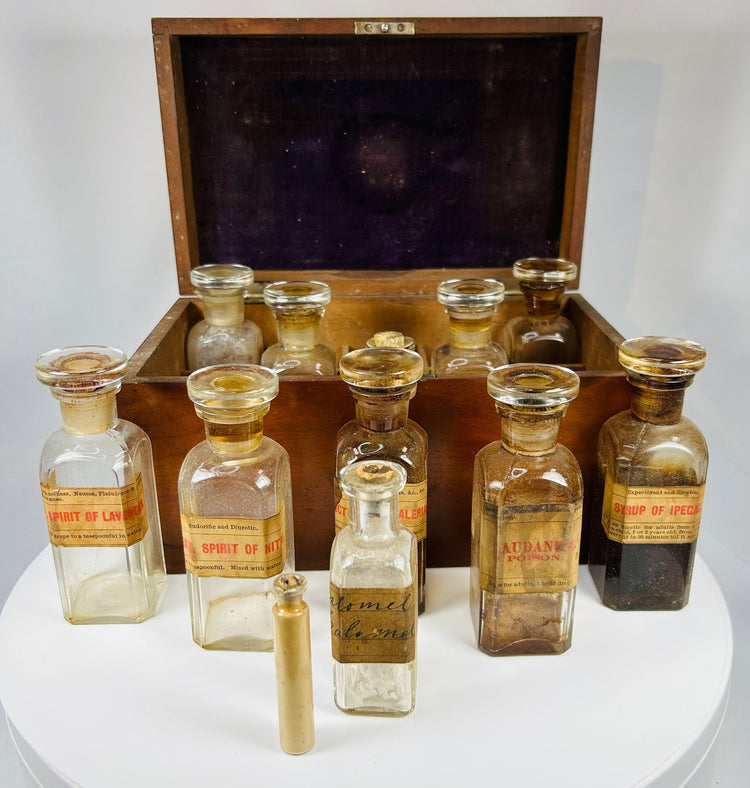
This remarkable mid-19th century mahogany apothecary box represents a compelling survival from the early days of American medical and pharmaceutical practice. The fitted wooden case houses eleven original glass apothecary bottles, many retaining their period paper labels and traces of the medicinal compounds they once contained.
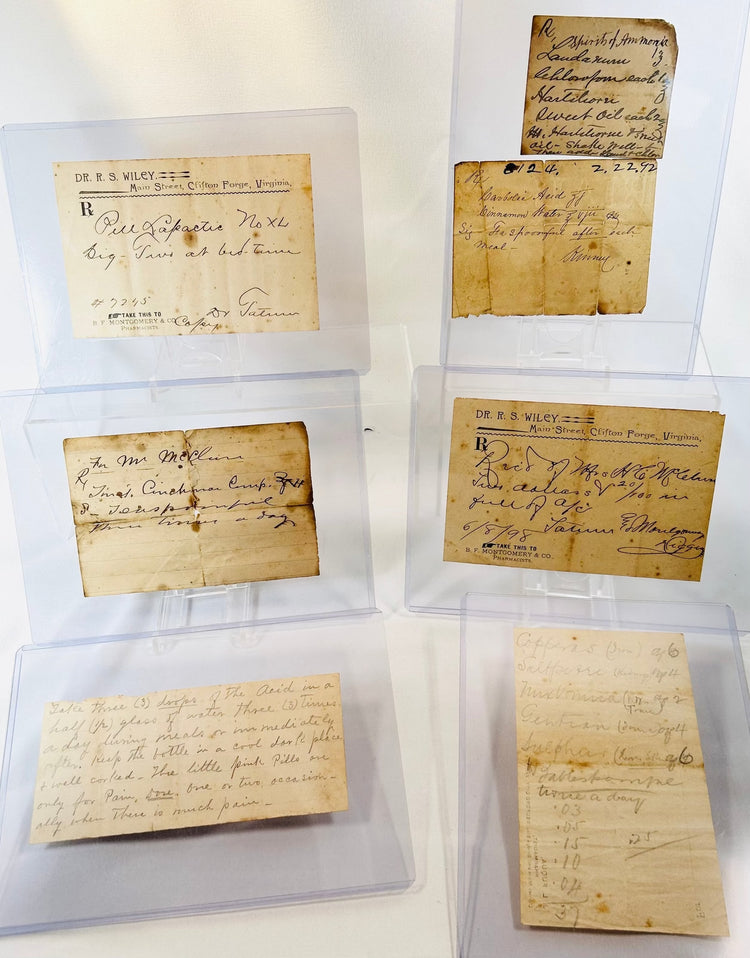
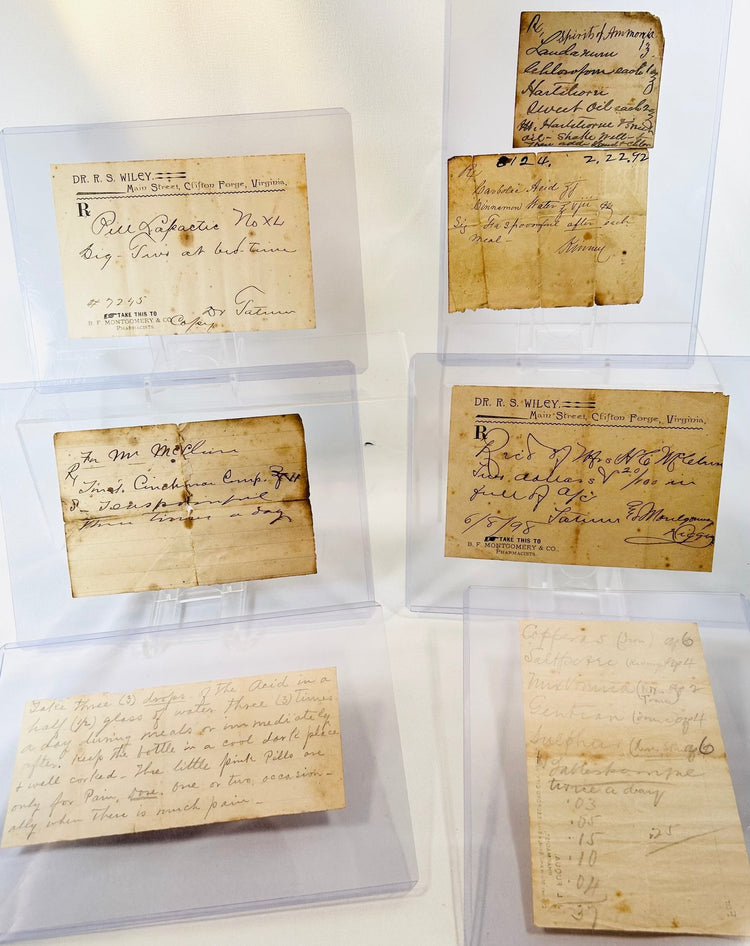
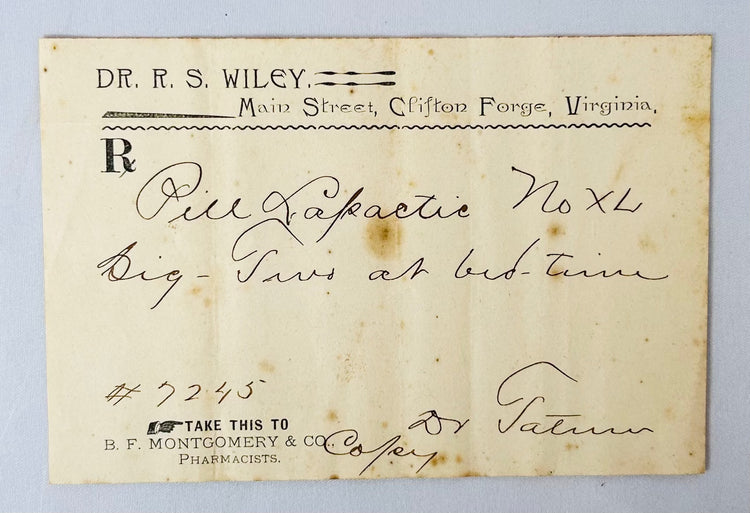
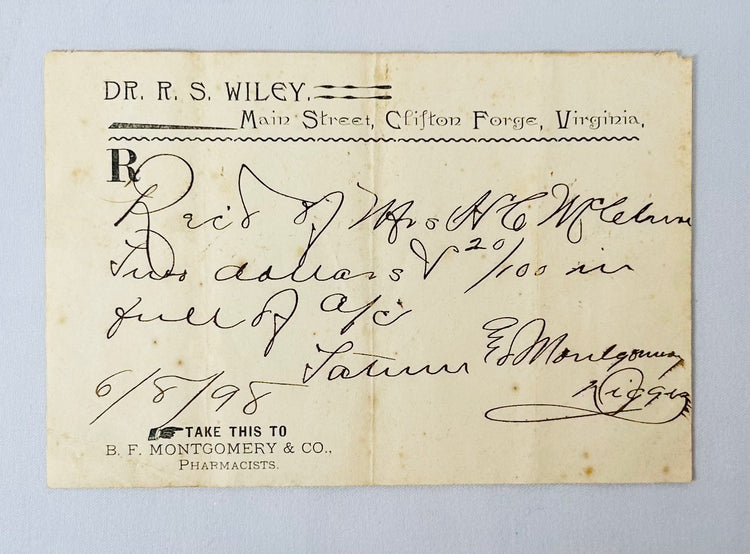
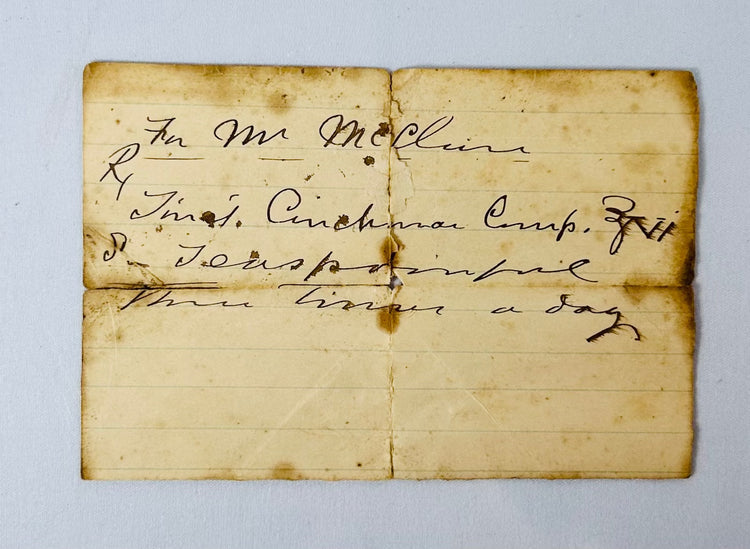
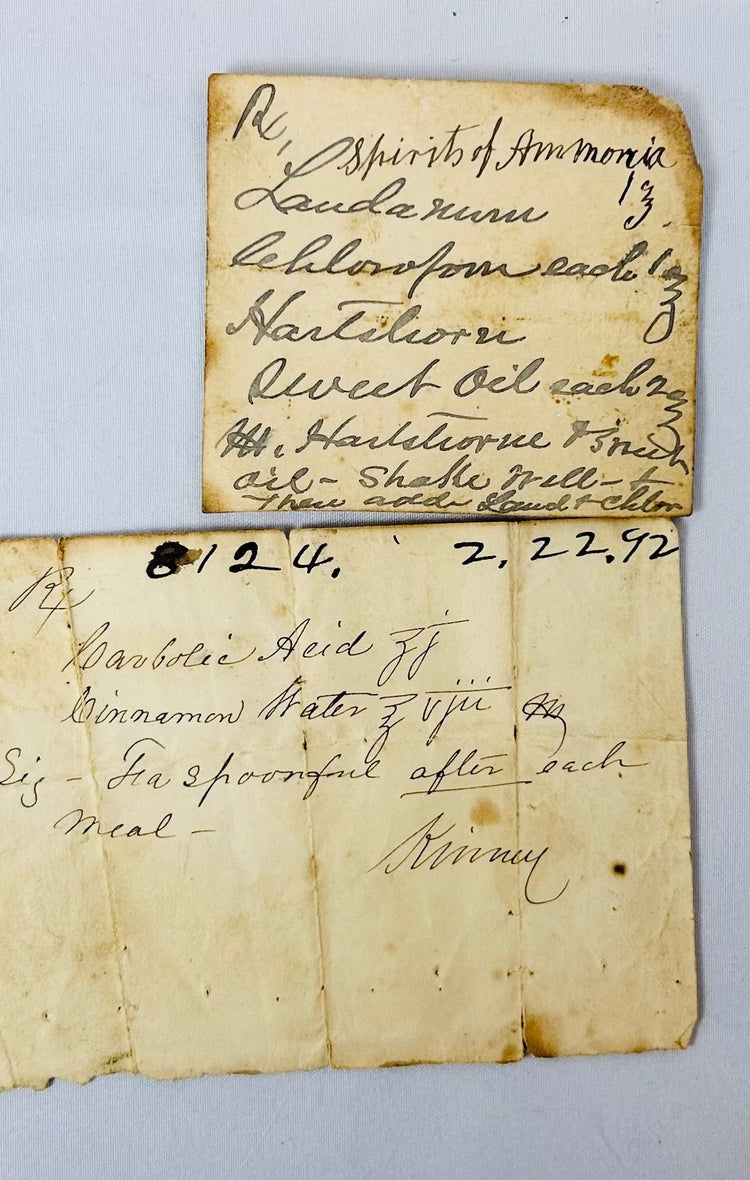
Designed for portability, the box would have been used by a physician or pharmacist to transport essential remedies and preparations for dispensing treatments. Included with the set are thirteen handwritten prescription slips and pharmaceutical notes, several bearing the printed heading of Dr. R. S. Wiley of Clifton Forge, Virginia, offering a rare and personal glimpse into 19th-century rural medical practice.
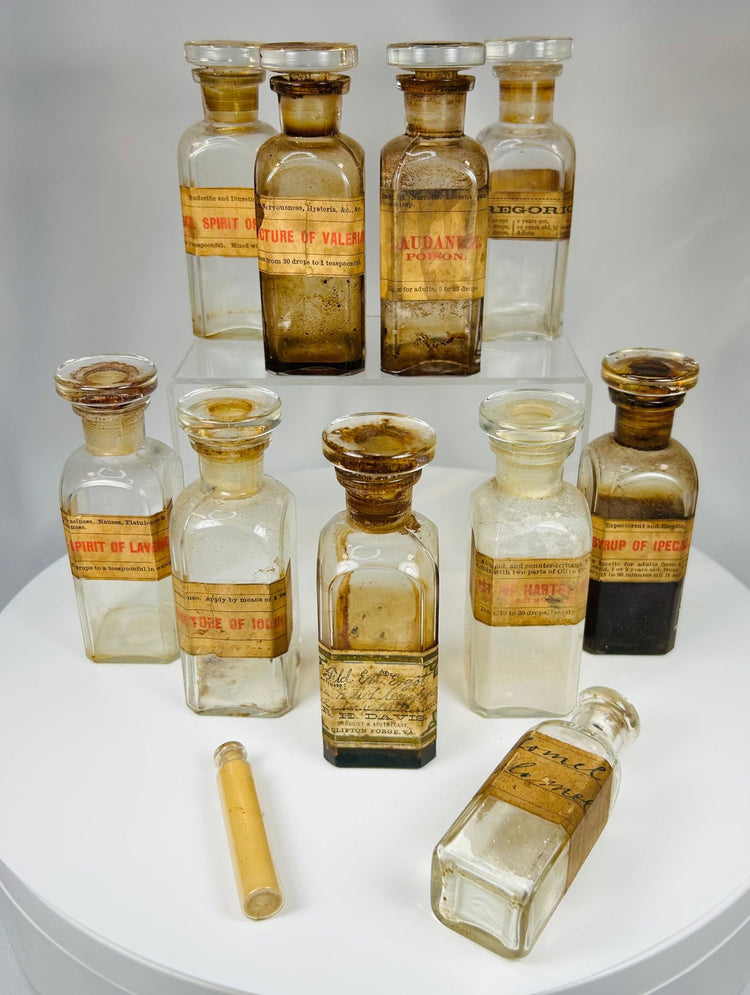
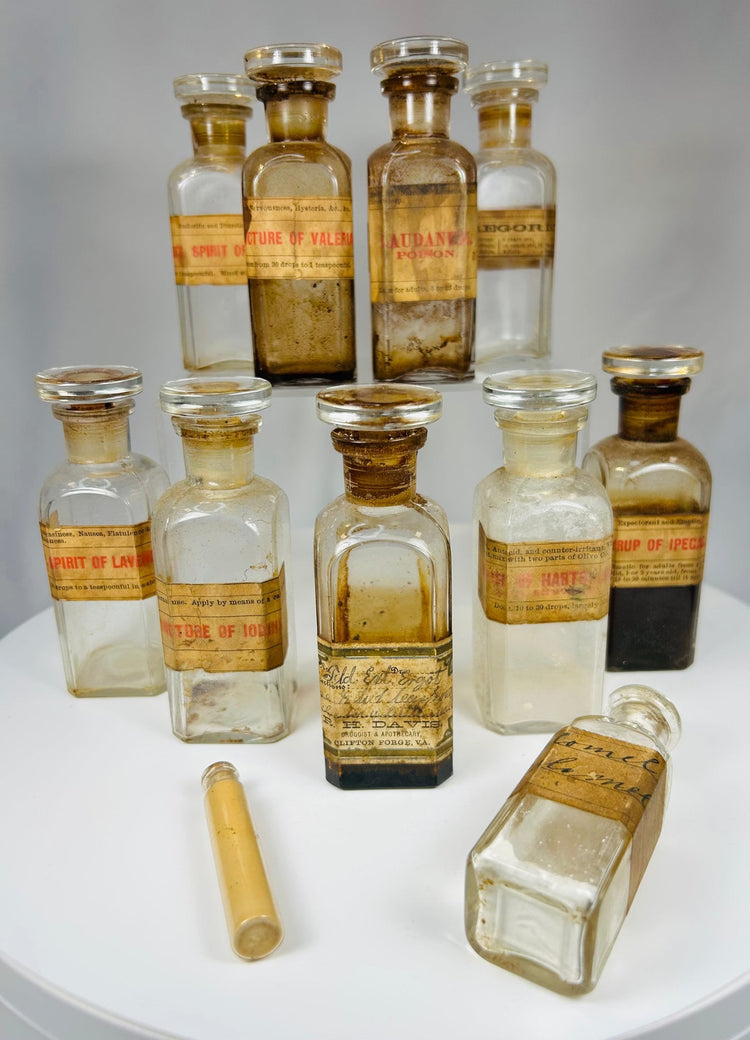
Additional elements include unused label fragments, dosage instructions, and a small corked glass vial. The bottles reference historical medicinal preparations such as laudanum, tincture of valerian, spirit of lavender, and syrup of ipecac—substances widely used in treatments for pain, nervous conditions, digestive issues, and respiratory ailments during the period.
Features
- Original mahogany apothecary box with fitted interior compartments
- Eleven glass apothecary bottles with period paper labels
- Includes one small corked glass vial
- Thirteen handwritten prescriptions and pharmaceutical notes
- References to Dr. R. S. Wiley of Clifton Forge, Virginia
- Period medicinal labels including laudanum, valerian, lavender, and ipecac
- Original cork remnants and chemical residues present
- Additional label fragments and dosage instructions included
Cultural Significance
Apothecary boxes such as this were essential tools for physicians and pharmacists throughout the 19th century, particularly in rural communities where medical professionals often traveled between patients. The presence of original labeled bottles alongside handwritten prescriptions provides a rare and tangible insight into the evolving science of medicine during the Victorian era.
Preparations such as laudanum and valerian reflect the therapeutic methods of the time, when treatments relied heavily on botanical extracts, tinctures, and opiate-based remedies. Complete sets that retain both dispensing containers and original written prescriptions are increasingly scarce, making this an important and evocative artifact of early American healthcare.
Condition
Fair condition overall consistent with age and use. The mahogany box shows marks, scratches, and interior staining, and the original key is no longer present. Several bottles retain residue and partial cork remnants, while the small vial remains corked. Paper labels exhibit age-related wear, and the handwritten prescriptions show staining, tears, and losses but remain legible and preserved in protective sleeves.
Dimensions (Approximate)
Box:
Height: 5 in
Width: 8.5 in
Depth: 5.75 in
Age (Approximate)
155–165 years old
Provenance
Associated with the medical practice of Dr. R. S. Wiley of Main Street, Clifton Forge, Virginia, who is documented as practising in the community during the late nineteenth century. The box and its surviving contents were subsequently preserved in a private collection in Savannah, Georgia, United States.
Learn More
Explore the history of 19th-century medical kits and traveling doctor’s chests, used by physicians during house calls
Browse our Medical & Quackery Artifacts Collection
Description
Historical Context & Origin
Region: United States (Virginia)
Material: Mahogany wood, glass, paper labels, cork
Period: Mid-19th Century, circa 1860s
Description
This remarkable mid-19th century mahogany apothecary box represents a compelling survival from the early days of American medical and pharmaceutical practice. The fitted wooden case houses eleven original glass apothecary bottles, many retaining their period paper labels and traces of the medicinal compounds they once contained.
Designed for portability, the box would have been used by a physician or pharmacist to transport essential remedies and preparations for dispensing treatments. Included with the set are thirteen handwritten prescription slips and pharmaceutical notes, several bearing the printed heading of Dr. R. S. Wiley of Clifton Forge, Virginia, offering a rare and personal glimpse into 19th-century rural medical practice.
Additional elements include unused label fragments, dosage instructions, and a small corked glass vial. The bottles reference historical medicinal preparations such as laudanum, tincture of valerian, spirit of lavender, and syrup of ipecac—substances widely used in treatments for pain, nervous conditions, digestive issues, and respiratory ailments during the period.
Features
- Original mahogany apothecary box with fitted interior compartments
- Eleven glass apothecary bottles with period paper labels
- Includes one small corked glass vial
- Thirteen handwritten prescriptions and pharmaceutical notes
- References to Dr. R. S. Wiley of Clifton Forge, Virginia
- Period medicinal labels including laudanum, valerian, lavender, and ipecac
- Original cork remnants and chemical residues present
- Additional label fragments and dosage instructions included
Cultural Significance
Apothecary boxes such as this were essential tools for physicians and pharmacists throughout the 19th century, particularly in rural communities where medical professionals often traveled between patients. The presence of original labeled bottles alongside handwritten prescriptions provides a rare and tangible insight into the evolving science of medicine during the Victorian era.
Preparations such as laudanum and valerian reflect the therapeutic methods of the time, when treatments relied heavily on botanical extracts, tinctures, and opiate-based remedies. Complete sets that retain both dispensing containers and original written prescriptions are increasingly scarce, making this an important and evocative artifact of early American healthcare.
Condition
Fair condition overall consistent with age and use. The mahogany box shows marks, scratches, and interior staining, and the original key is no longer present. Several bottles retain residue and partial cork remnants, while the small vial remains corked. Paper labels exhibit age-related wear, and the handwritten prescriptions show staining, tears, and losses but remain legible and preserved in protective sleeves.
Dimensions (Approximate)
Box:
Height: 5 in
Width: 8.5 in
Depth: 5.75 in
Age (Approximate)
155–165 years old
Provenance
Associated with the medical practice of Dr. R. S. Wiley of Main Street, Clifton Forge, Virginia, who is documented as practising in the community during the late nineteenth century. The box and its surviving contents were subsequently preserved in a private collection in Savannah, Georgia, United States.
Learn More
Explore the history of 19th-century medical kits and traveling doctor’s chests, used by physicians during house calls
Browse our Medical & Quackery Artifacts Collection
You May Also Like
