

Grand Tour | Bronze Rhyton with Centaur and Goat | Classical Mythology Vessel | Circa 1880–1920
Couldn't load pickup availability


Grand Tour | Bronze Rhyton with Centaur and Goat | Classical Mythology Vessel | Circa 1880–1920
Description
More
Less
Historical Context & Origin
Region: Europe (likely Italy or Mediterranean workshop)
Material: Cast bronze with natural aged patina
Period: Circa 1880–1920
Description
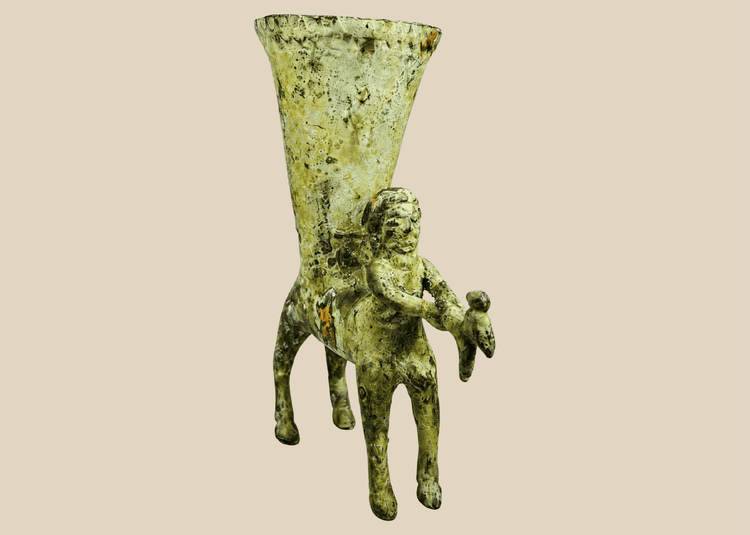
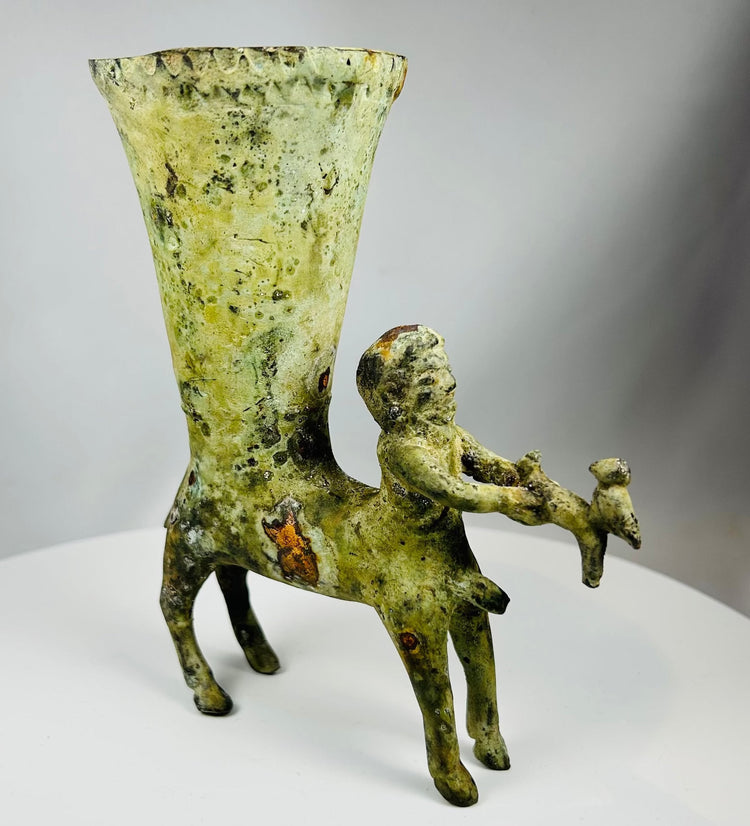
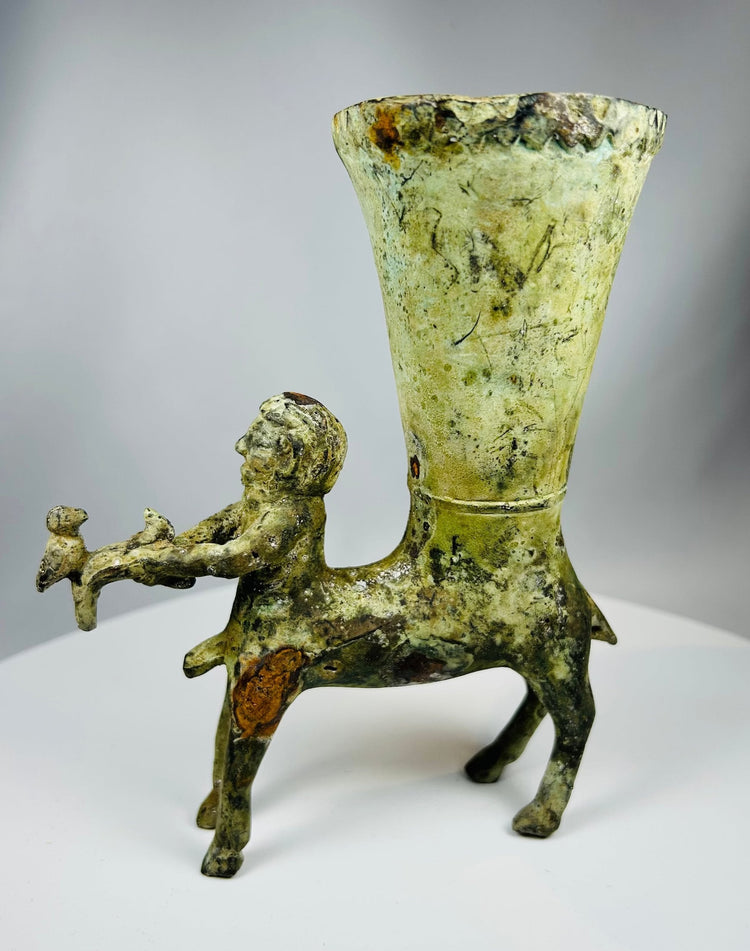
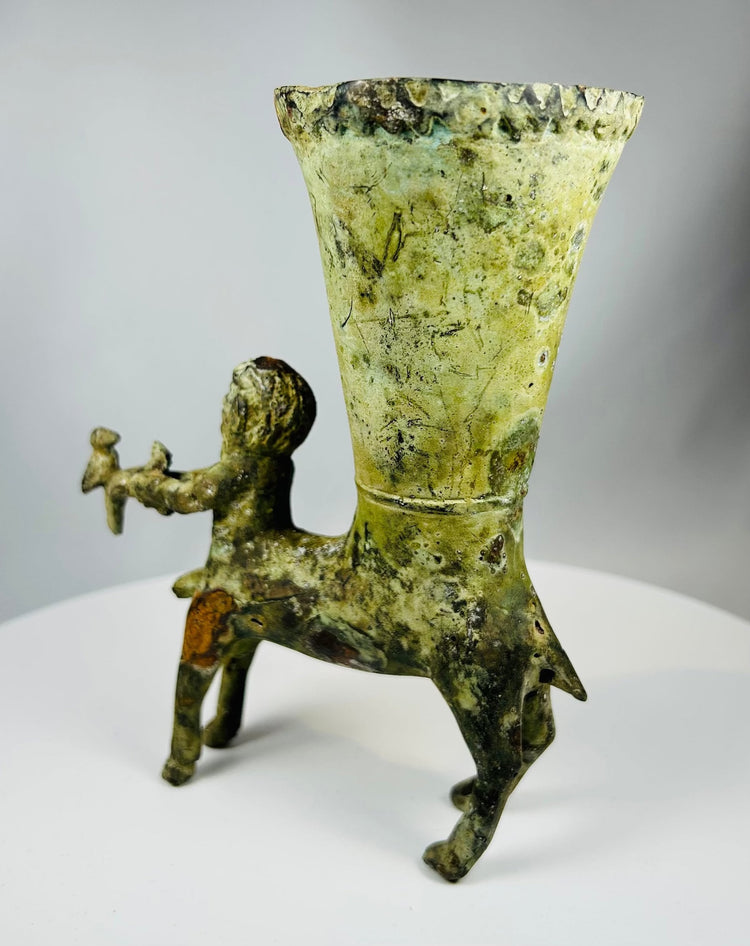
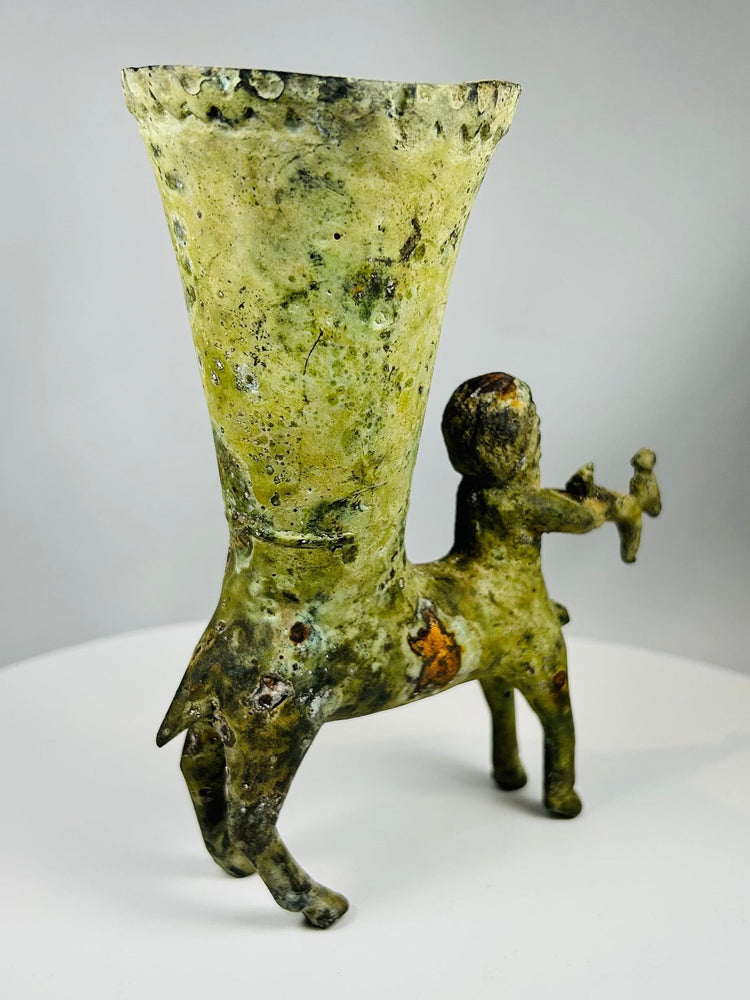
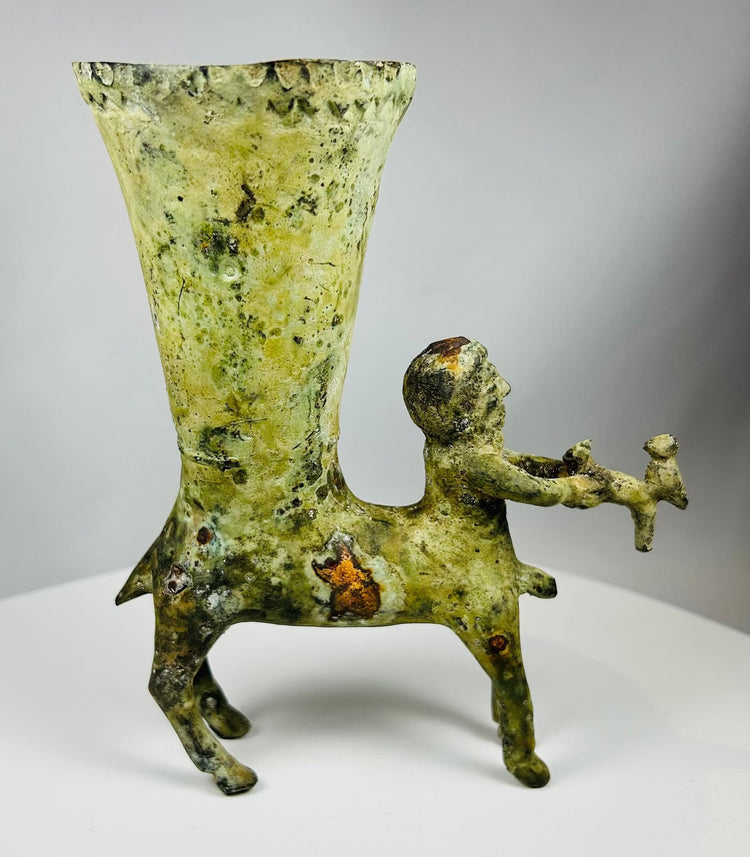
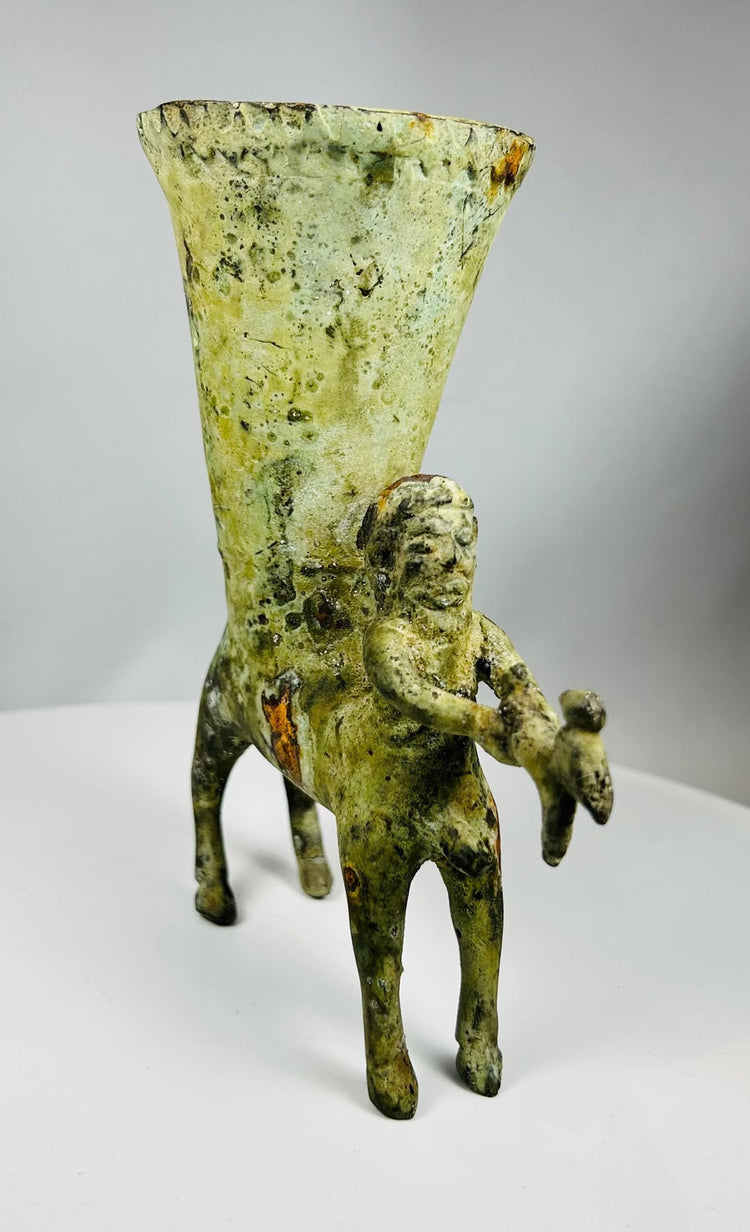
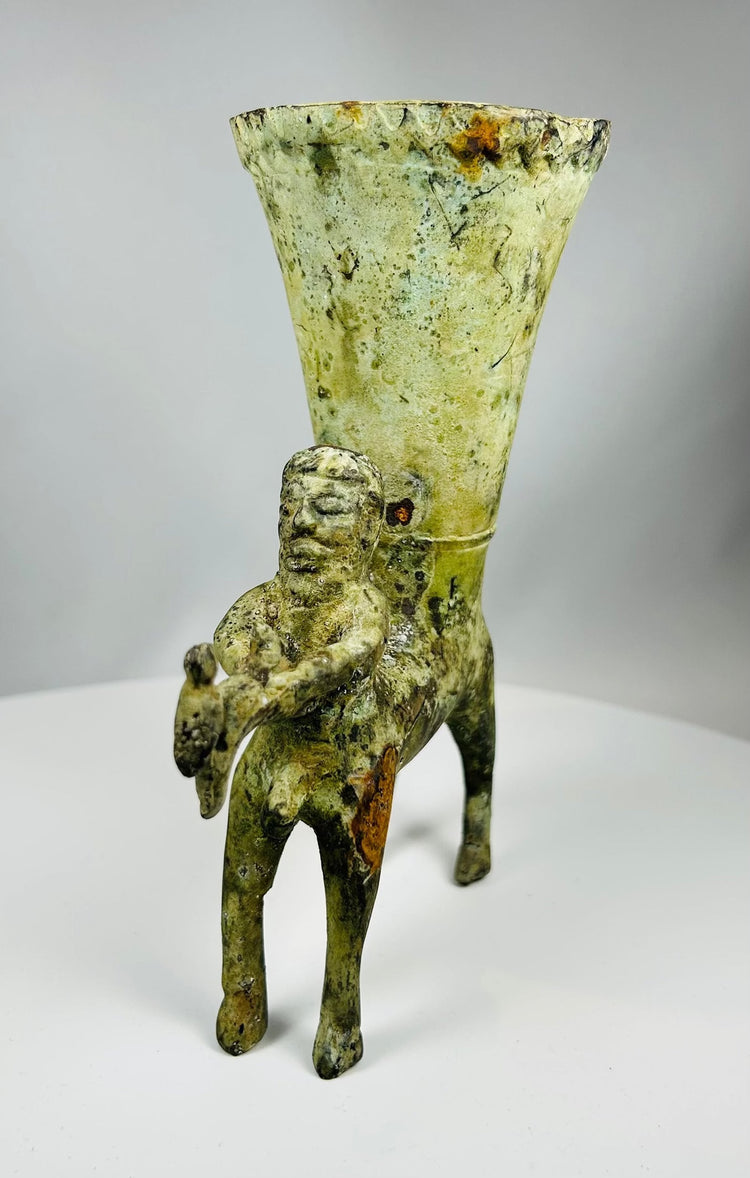
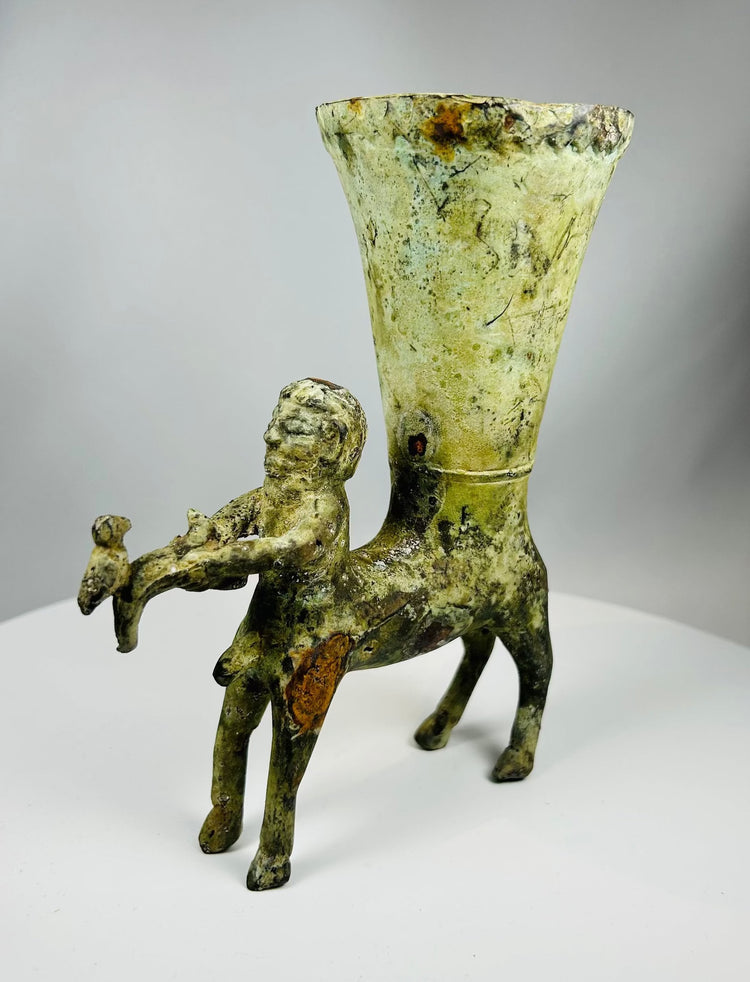
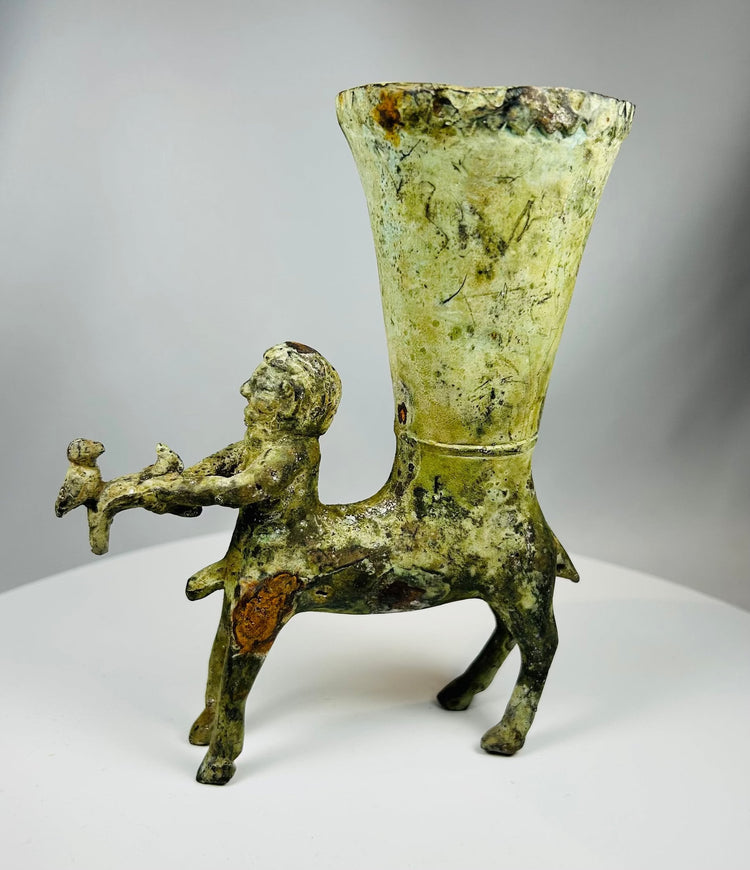
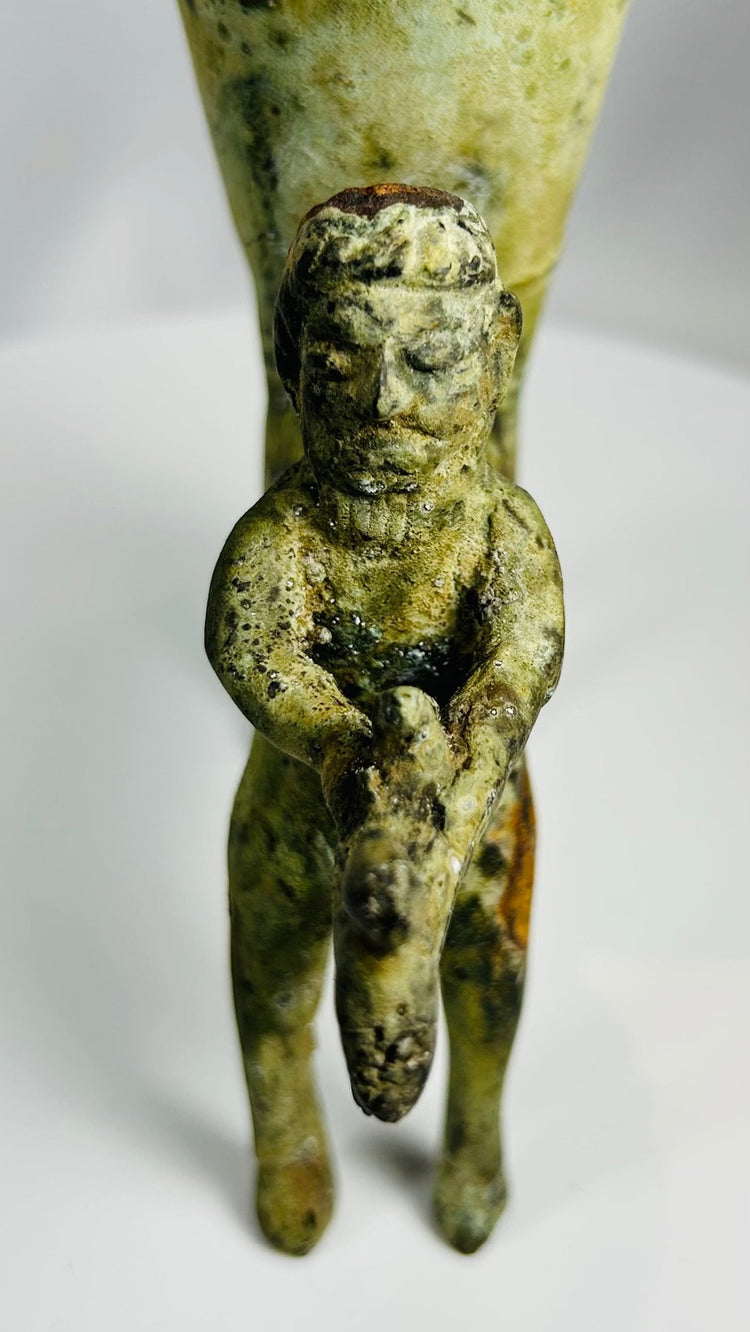
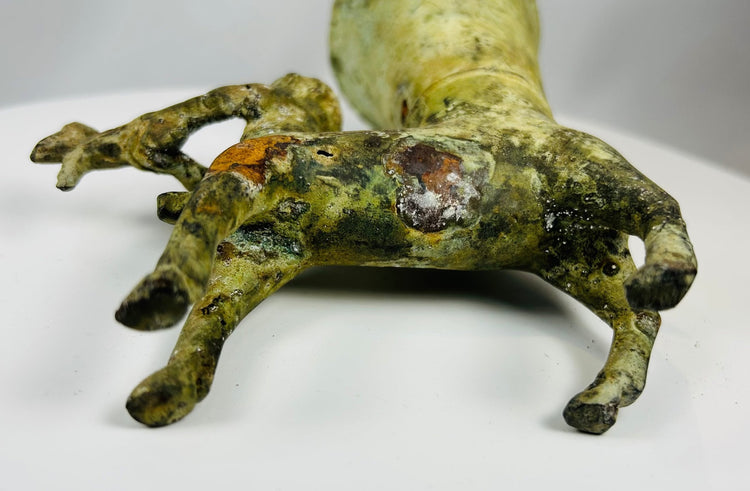
This striking bronze vessel is modeled after the ancient Greek rhyton, a ceremonial drinking horn used in ritual feasting and libation ceremonies throughout the Classical world. The piece features a sculptural centaur figure emerging from the body of the vessel, holding a small goat in its outstretched arms. The centaur stands atop a four-legged animal-form base that supports the flared rhyton cup above.
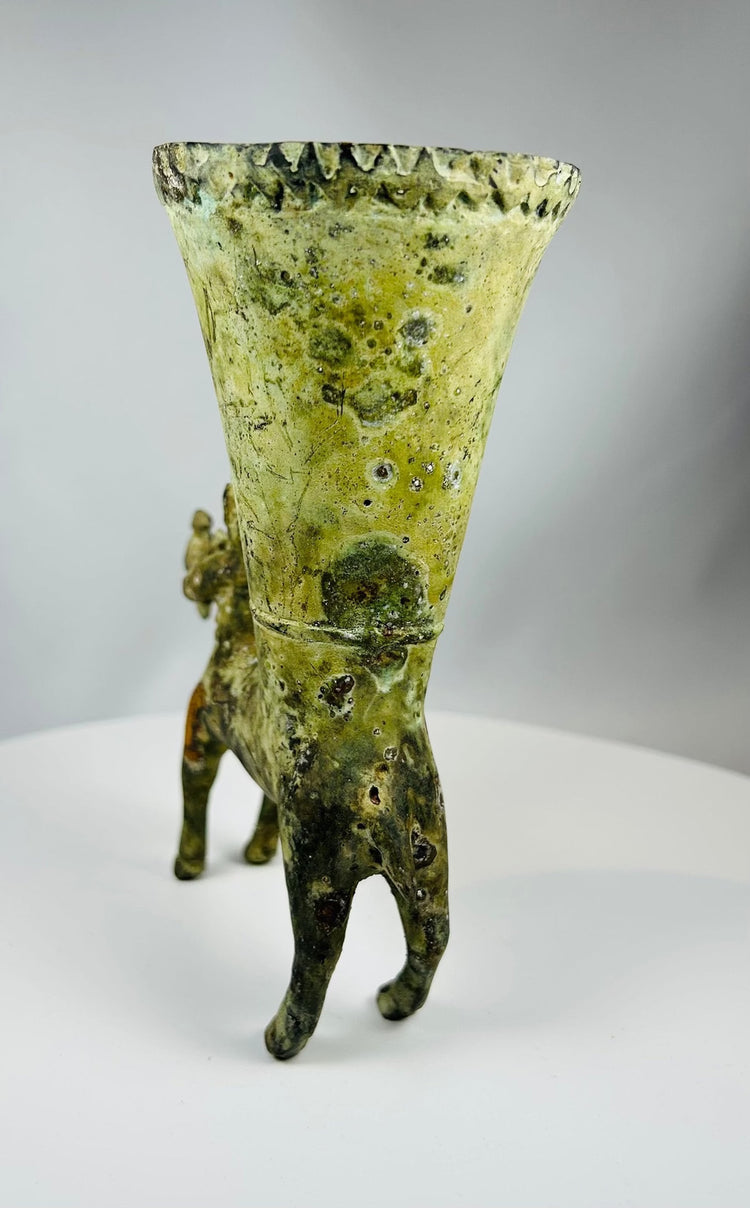
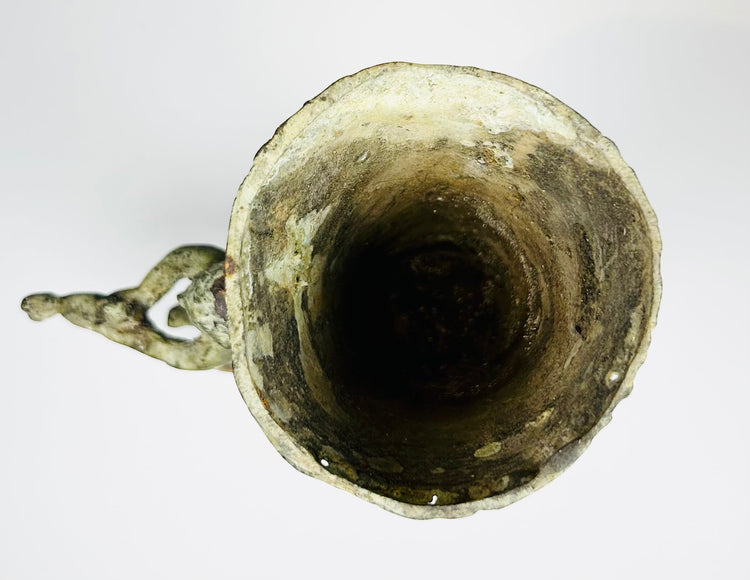
The vessel rises in a tall conical form with a wide flaring rim, echoing the shape of ancient ceremonial rhyta used for pouring wine or offerings. The sculptural composition combines mythological symbolism with decorative artistry, evoking scenes from Greek mythology in which centaurs—half man and half horse—played prominent roles in mythic battles, celebrations, and rituals.
The surface displays a rich mottled patina with tones of olive green, dark bronze, and areas of natural oxidation developed over more than a century. The modeling of the centaur’s figure, expressive facial features, and the dynamic pose of the small goat create a vivid narrative quality typical of Grand Tour revival bronzes inspired by classical antiquity.
Pieces such as this were often produced during the late 19th and early 20th centuries for collectors and travelers fascinated with ancient Mediterranean culture. These objects were intended to evoke the grandeur of classical antiquity while serving as decorative conversation pieces in European salons and cabinets of curiosities.
Features
- Sculptural centaur figure holding a goat in extended arms
- Four-legged animal-form base supporting the vessel body
- Tall flaring rhyton-style drinking horn vessel
- Rich aged bronze patina with varied natural oxidation
- Decorative classical revival piece inspired by ancient Greek ritual vessels
Cultural Significance
Rhyta were ceremonial vessels used throughout ancient Greece, Persia, and the broader Mediterranean world. Often fashioned in the form of animals or mythological creatures, they were used during ritual drinking ceremonies and religious libations dedicated to the gods.
During the 19th century, renewed fascination with classical antiquity led to the production of revival pieces inspired by ancient artifacts. Grand Tour travelers frequently acquired objects such as this as reminders of their journeys through Italy and Greece, where the ruins and artifacts of the ancient world captured the imagination of collectors and scholars alike.
Condition
Very good antique condition. The bronze surface shows age-appropriate wear, oxidation, and natural patina development consistent with age. Minor casting irregularities and surface pitting are present but consistent with historic decorative bronzes.
Dimensions (Approximate)
Height: 6.25 in
Width: 5.5 in
Age (Approximate)
100–140 years old
Provenance
Formerly part of the collection of a lifelong antiques collector in South Paris, Maine, United States. The collector assembled a broad and varied group of historical and decorative objects over many decades. Following the collector’s passing, the estate collection was dispersed in its entirety, and this piece subsequently entered the art market.
Learn More
Explore the form and function of ancient ceremonial vessels in this article from the Harvard Art Museums
Discover Our Collection of Statues, Figures & Carvings
Description
Historical Context & Origin
Region: Europe (likely Italy or Mediterranean workshop)
Material: Cast bronze with natural aged patina
Period: Circa 1880–1920
Description
This striking bronze vessel is modeled after the ancient Greek rhyton, a ceremonial drinking horn used in ritual feasting and libation ceremonies throughout the Classical world. The piece features a sculptural centaur figure emerging from the body of the vessel, holding a small goat in its outstretched arms. The centaur stands atop a four-legged animal-form base that supports the flared rhyton cup above.
The vessel rises in a tall conical form with a wide flaring rim, echoing the shape of ancient ceremonial rhyta used for pouring wine or offerings. The sculptural composition combines mythological symbolism with decorative artistry, evoking scenes from Greek mythology in which centaurs—half man and half horse—played prominent roles in mythic battles, celebrations, and rituals.
The surface displays a rich mottled patina with tones of olive green, dark bronze, and areas of natural oxidation developed over more than a century. The modeling of the centaur’s figure, expressive facial features, and the dynamic pose of the small goat create a vivid narrative quality typical of Grand Tour revival bronzes inspired by classical antiquity.
Pieces such as this were often produced during the late 19th and early 20th centuries for collectors and travelers fascinated with ancient Mediterranean culture. These objects were intended to evoke the grandeur of classical antiquity while serving as decorative conversation pieces in European salons and cabinets of curiosities.
Features
- Sculptural centaur figure holding a goat in extended arms
- Four-legged animal-form base supporting the vessel body
- Tall flaring rhyton-style drinking horn vessel
- Rich aged bronze patina with varied natural oxidation
- Decorative classical revival piece inspired by ancient Greek ritual vessels
Cultural Significance
Rhyta were ceremonial vessels used throughout ancient Greece, Persia, and the broader Mediterranean world. Often fashioned in the form of animals or mythological creatures, they were used during ritual drinking ceremonies and religious libations dedicated to the gods.
During the 19th century, renewed fascination with classical antiquity led to the production of revival pieces inspired by ancient artifacts. Grand Tour travelers frequently acquired objects such as this as reminders of their journeys through Italy and Greece, where the ruins and artifacts of the ancient world captured the imagination of collectors and scholars alike.
Condition
Very good antique condition. The bronze surface shows age-appropriate wear, oxidation, and natural patina development consistent with age. Minor casting irregularities and surface pitting are present but consistent with historic decorative bronzes.
Dimensions (Approximate)
Height: 6.25 in
Width: 5.5 in
Age (Approximate)
100–140 years old
Provenance
Formerly part of the collection of a lifelong antiques collector in South Paris, Maine, United States. The collector assembled a broad and varied group of historical and decorative objects over many decades. Following the collector’s passing, the estate collection was dispersed in its entirety, and this piece subsequently entered the art market.
Learn More
Explore the form and function of ancient ceremonial vessels in this article from the Harvard Art Museums
Discover Our Collection of Statues, Figures & Carvings
You May Also Like
