
Hand-Carved Spanish Colonial Saint Figure | Aged Polychrome Sculpture | Circa 18th–19th Century
Couldn't load pickup availability


Hand-Carved Spanish Colonial Saint Figure | Aged Polychrome Sculpture | Circa 18th–19th Century
Description
More
Less
Historical Context & Origin
Region: Latin America (Spanish Colonial – likely Mexico or Andean region)
Material: Hand-carved wood with traces of polychrome pigment
Period: Circa 18th–19th century
Description
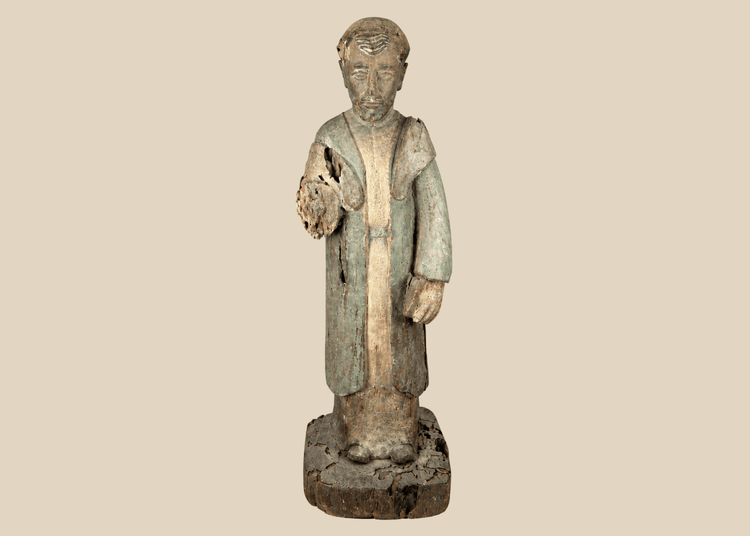
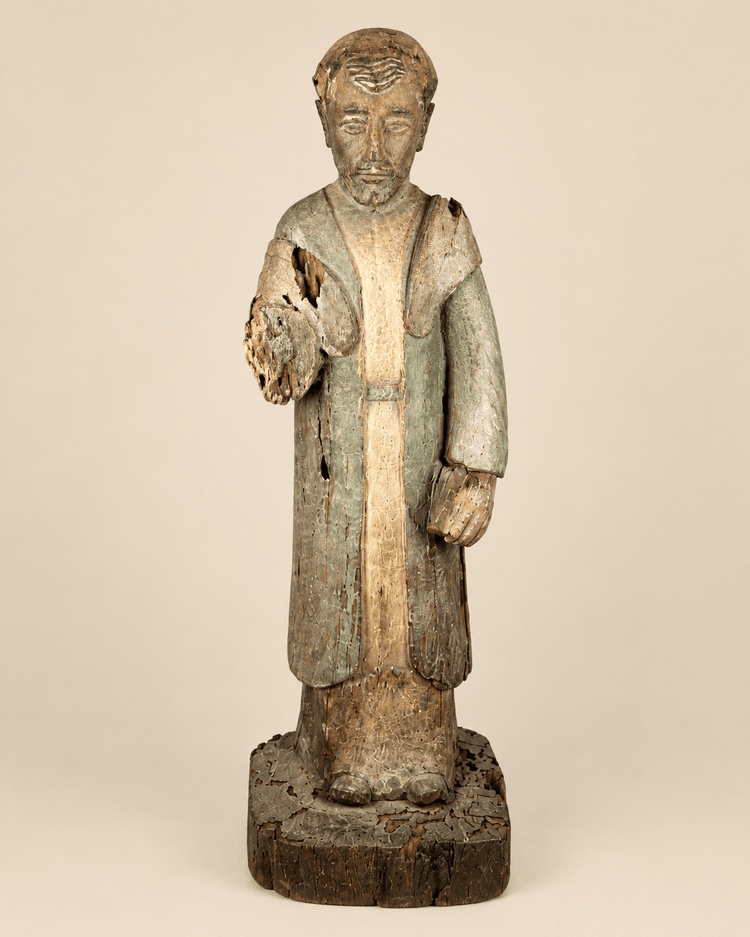
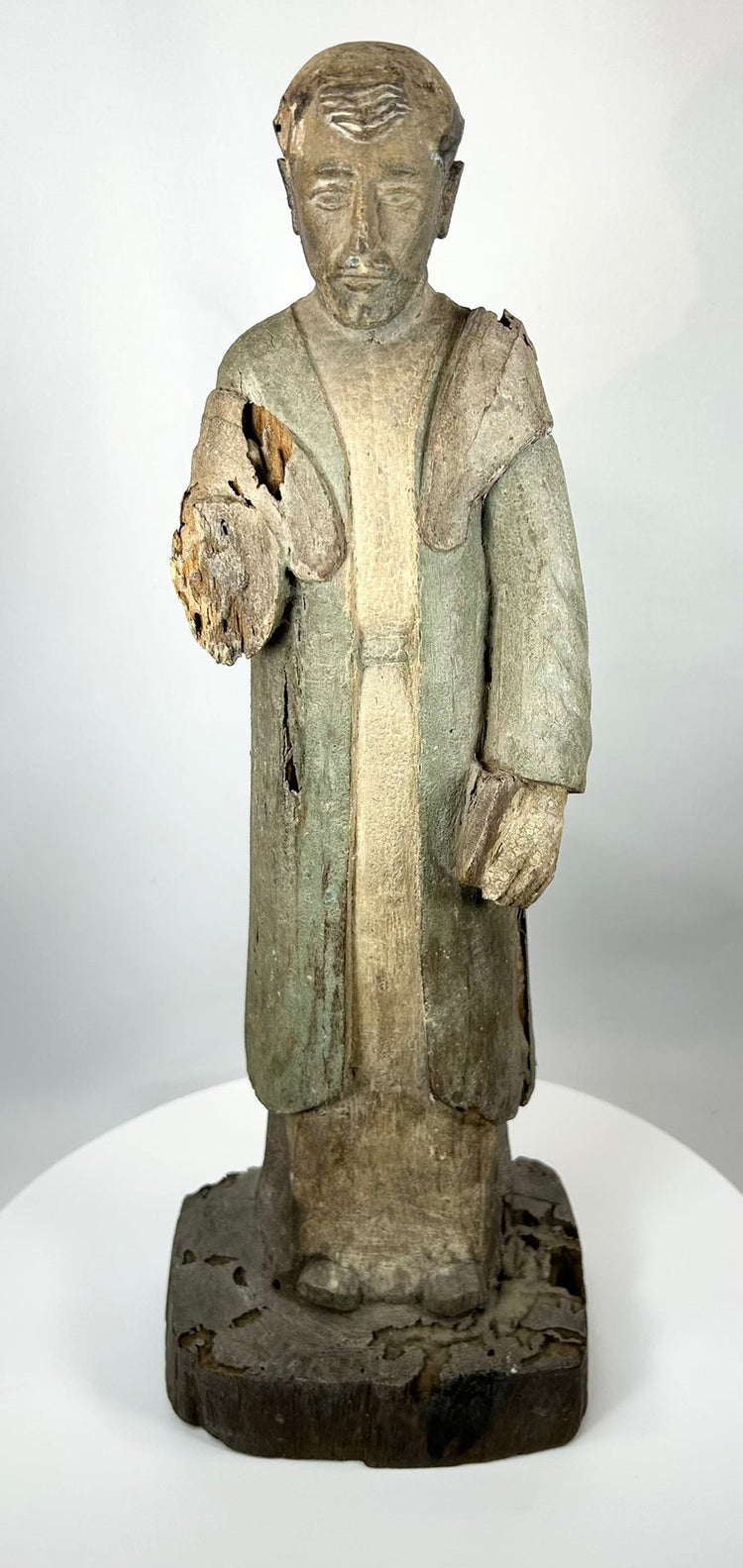
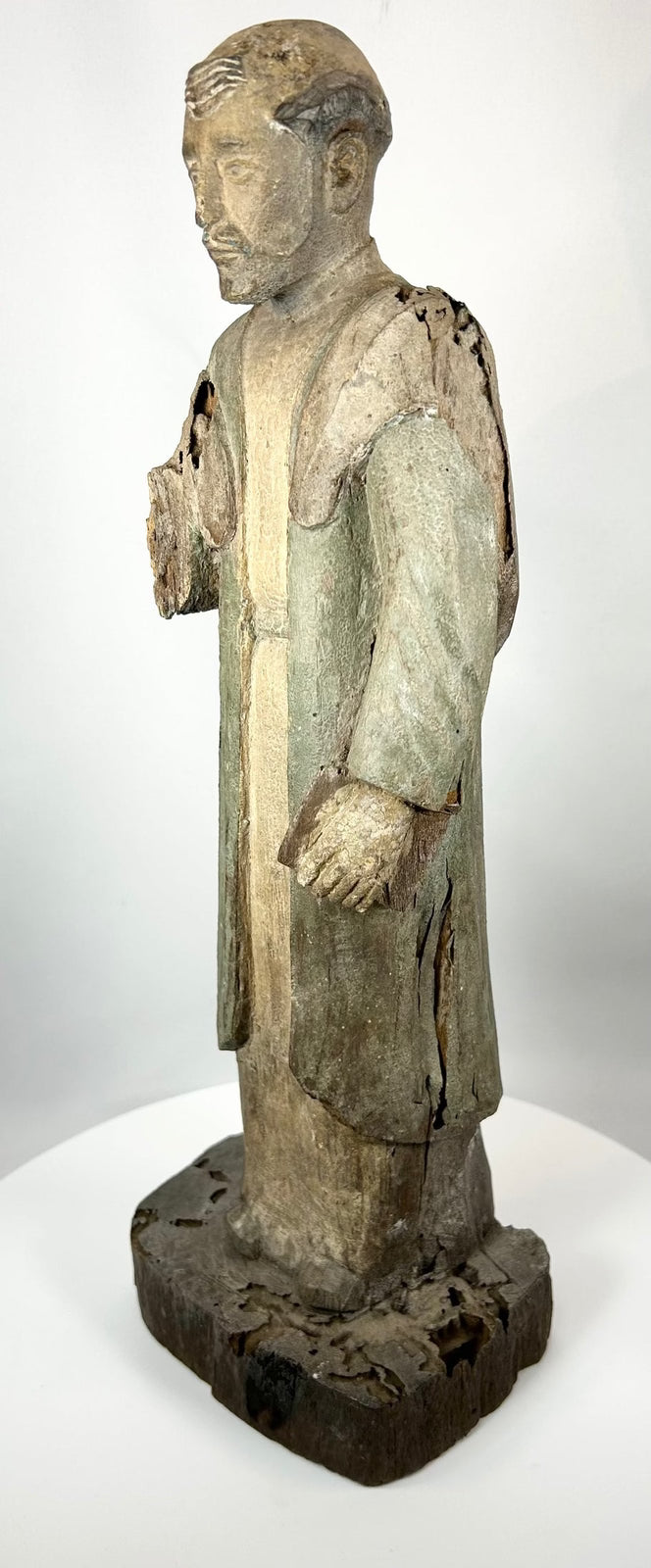
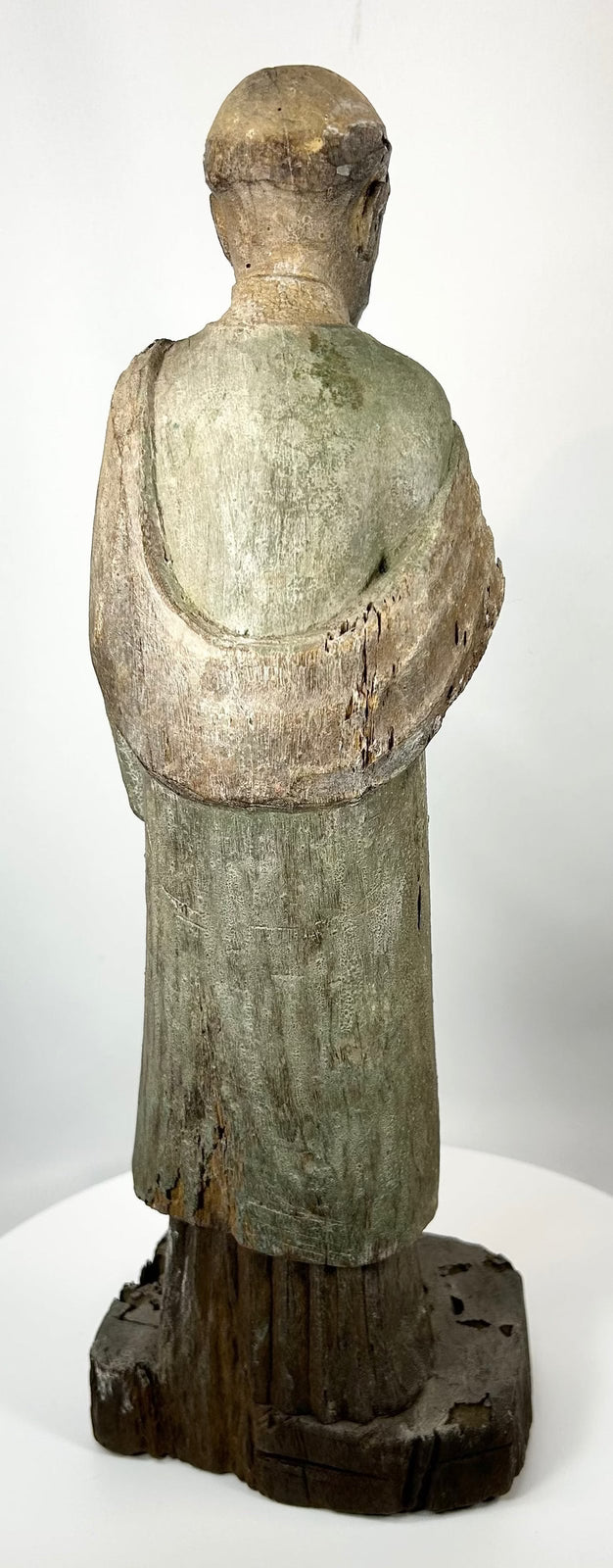
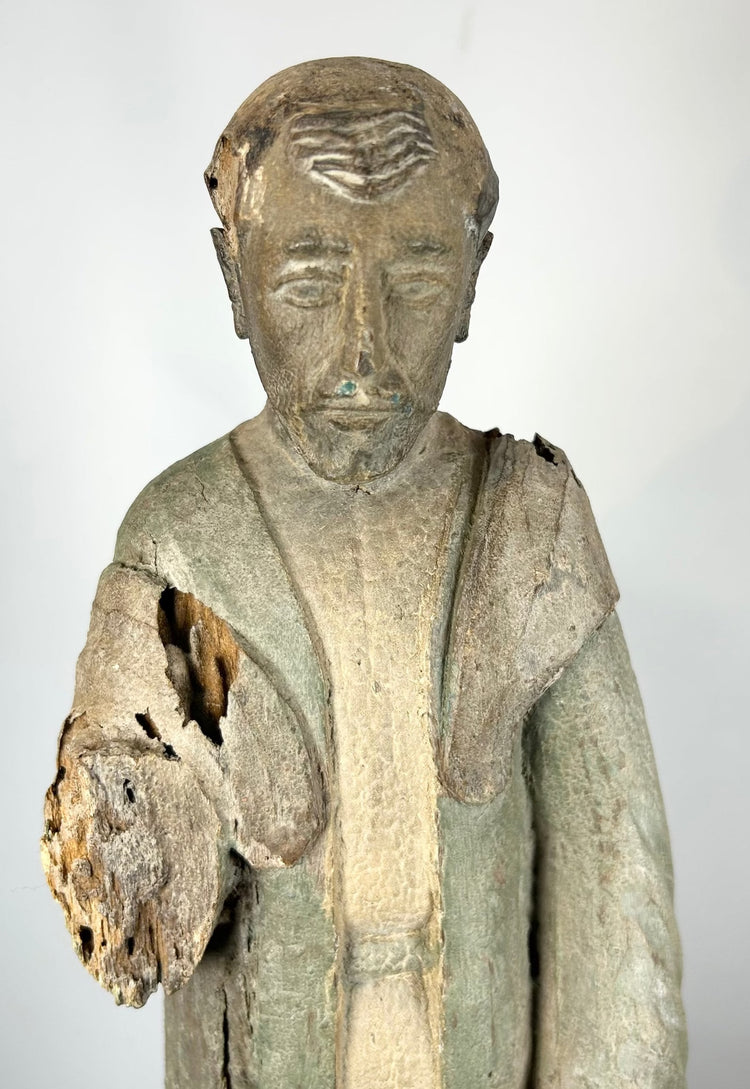
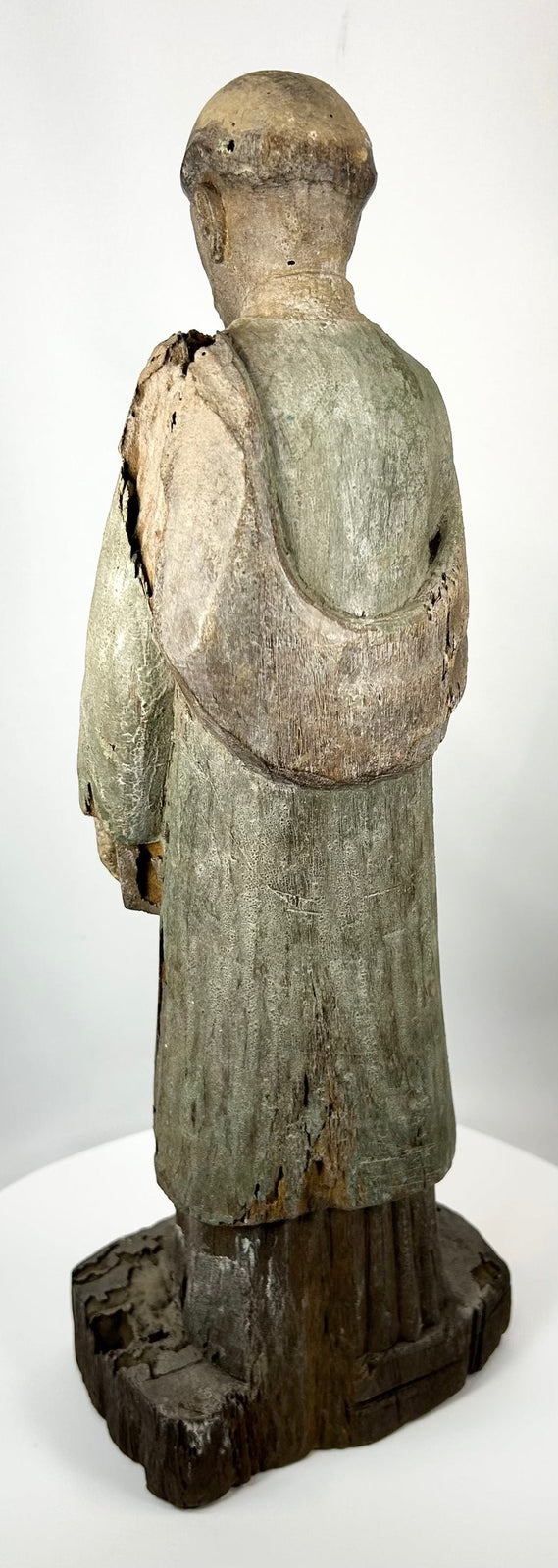
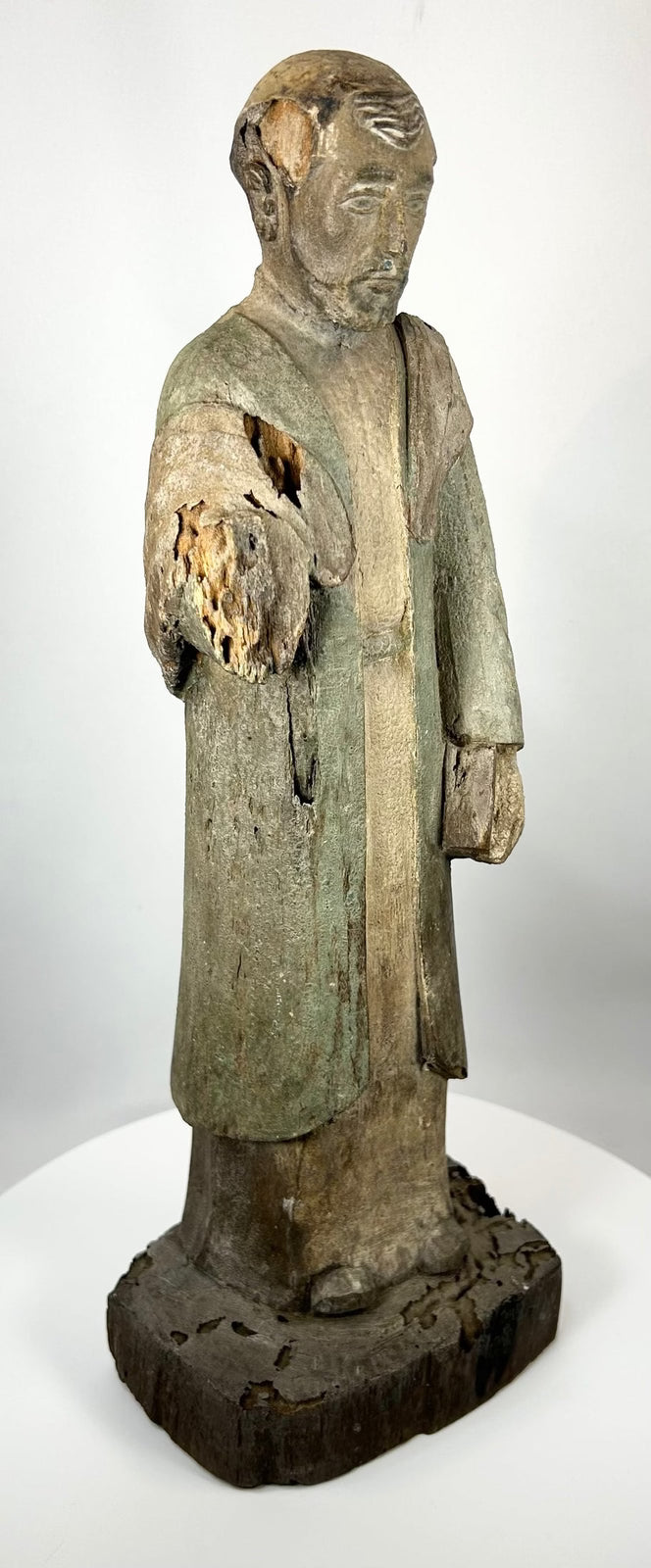
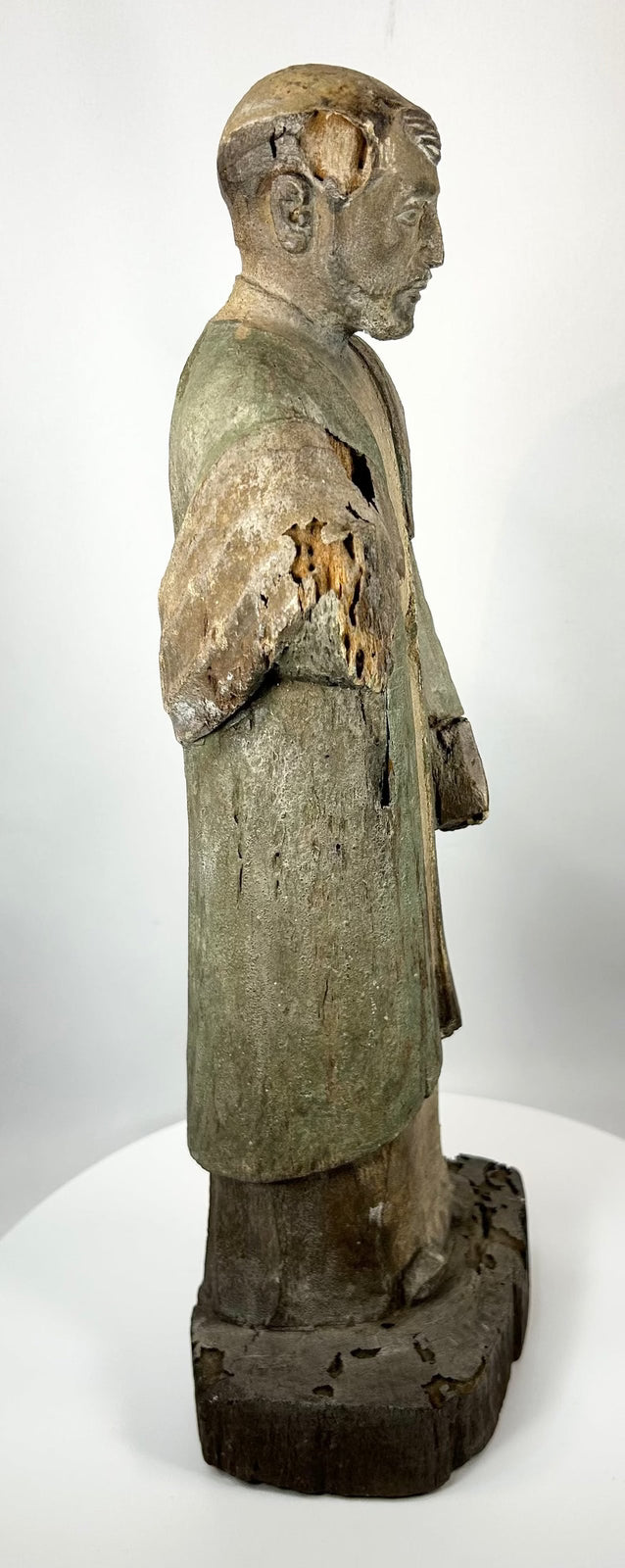
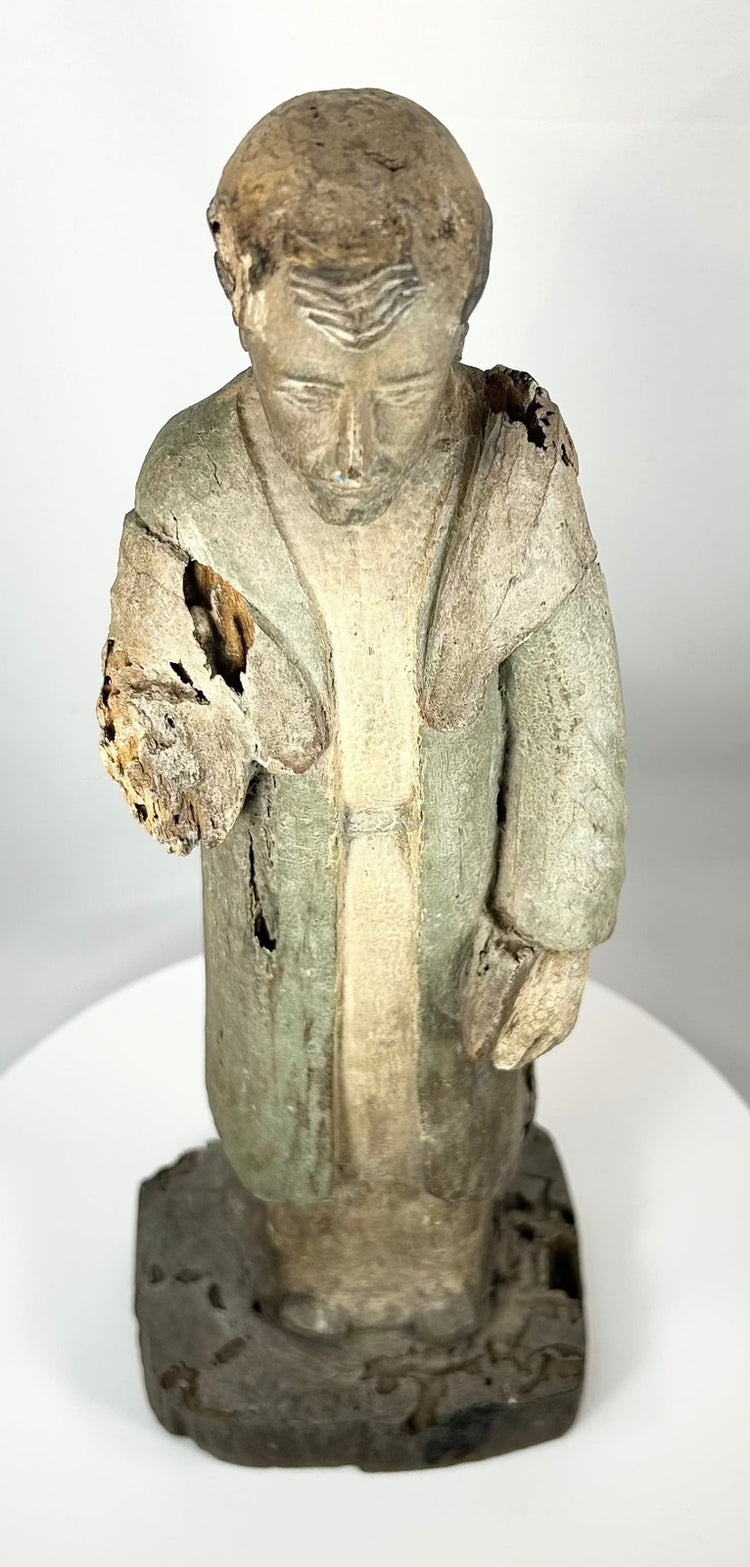
This expressive hand-carved wooden figure represents a traditional Spanish Colonial Santo, depicting a robed male religious figure—likely a saint, monk, or evangelist—rendered in a devotional folk style. The figure stands upright upon an integral base and is shown wearing a long flowing robe with a draped outer garment, characteristic of ecclesiastical attire from the colonial period.
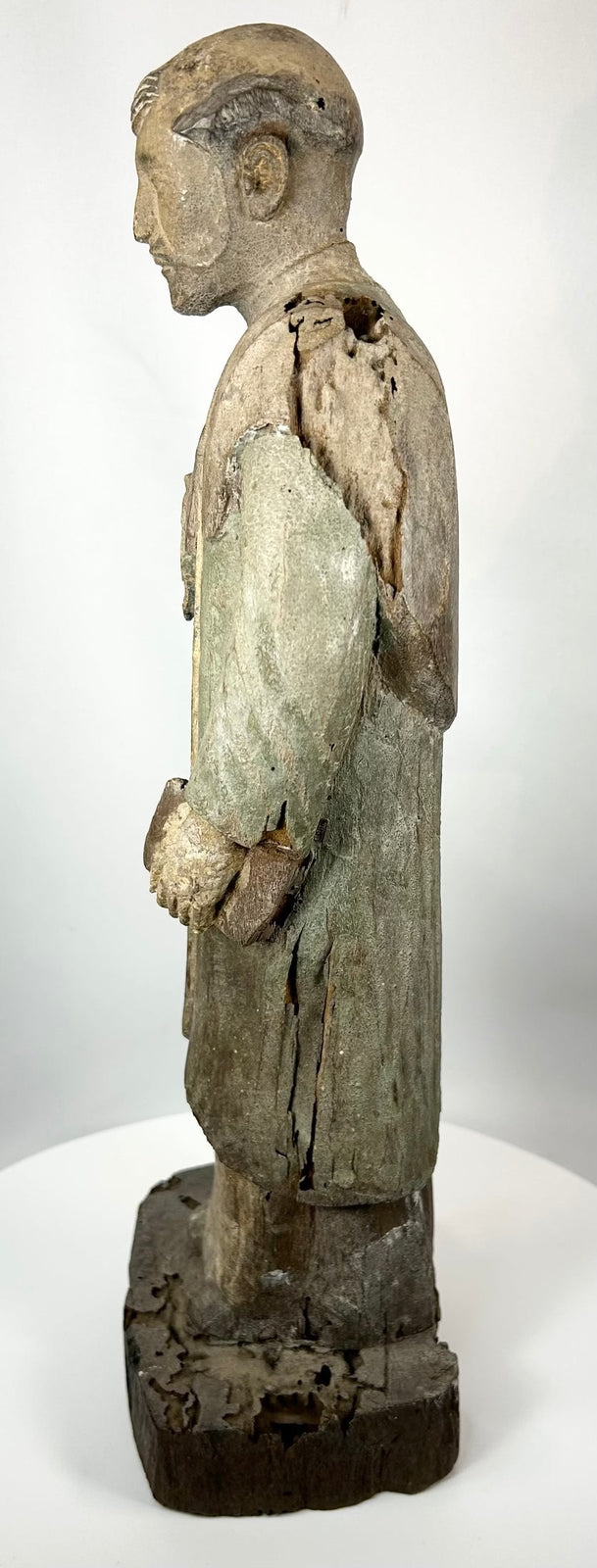
The figure holds a book in one hand, symbolizing scripture, teaching, or spiritual authority, while the opposite arm extends outward, possibly once grasping an attribute or posed in a gesture of blessing or instruction. The facial features are simply yet effectively carved, with a contemplative expression, defined beard, and stylized hair, reflecting the vernacular craftsmanship typical of regional devotional sculpture.
Remnants of original polychrome paint survive across the surface, including muted green and cream tones, indicating the figure was once more vividly decorated. The sculpture has developed a deeply aged surface with visible wear, cracking, and areas of loss, all consistent with long-term devotional use and natural aging.
Santos such as this were commonly placed in home altars, chapels, or small churches, serving as important focal points for personal devotion and religious practice throughout the Spanish Colonial world.
Features
- Hand-carved Spanish Colonial Santo figure
- Retains traces of original polychrome decoration
- Depicts a robed religious figure holding a book
- Extended arm gesture suggesting blessing or instruction
- Expressive carved facial features with beard and stylized hair
- Mounted on integral base
- Strong aged patina with authentic surface wear
Cultural Significance
Spanish Colonial Santos played a central role in religious life across Latin America from the 17th through 19th centuries. Often produced by local artisans, these figures blended European iconography with regional carving traditions, resulting in highly distinctive devotional objects.
The inclusion of a book suggests association with scripture, learning, or evangelism, reinforcing the figure’s role as a spiritual guide and teacher within the Christian tradition.
Condition
Heavily aged condition with significant wear throughout. Extensive surface cracking, woodworm activity, and losses are present, particularly to the arms, shoulders, and base. Areas of paint loss are visible, with only traces of original polychrome remaining. Despite these condition issues, the figure retains strong presence and authenticity, with wear that enhances its historical character.
Dimensions (Approximate)
Height: 15.5 in
Width: 4.25 in
Depth: 5 in
Age (Approximate)
150–300 years old
Provenance
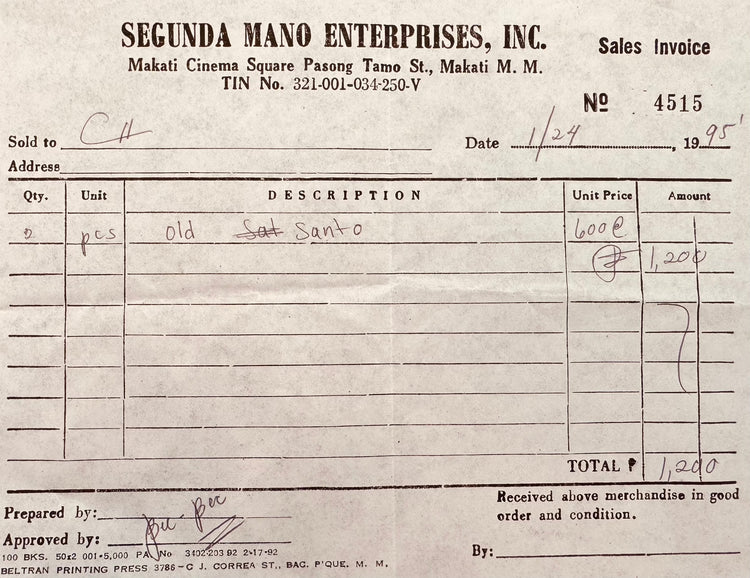
From a private collection in Norfolk, Virginia, USA. Accompanied by an original sales invoice from Segunda Mano Enterprises, Inc., Makati, Philippines (Invoice No. 4515), dated January 24, 1995, documenting the acquisition of two antique Santo figures. The document provides early ownership history and supports the object's presence in the international antiques market by the mid-1990s.
Learn More
Explore the historical role of mission-era religious art and devotion through the National Park Service
Browse our curated Collection of Artifacts of Worship, Devotion & Sacred Relics
Description
Historical Context & Origin
Region: Latin America (Spanish Colonial – likely Mexico or Andean region)
Material: Hand-carved wood with traces of polychrome pigment
Period: Circa 18th–19th century
Description
This expressive hand-carved wooden figure represents a traditional Spanish Colonial Santo, depicting a robed male religious figure—likely a saint, monk, or evangelist—rendered in a devotional folk style. The figure stands upright upon an integral base and is shown wearing a long flowing robe with a draped outer garment, characteristic of ecclesiastical attire from the colonial period.
The figure holds a book in one hand, symbolizing scripture, teaching, or spiritual authority, while the opposite arm extends outward, possibly once grasping an attribute or posed in a gesture of blessing or instruction. The facial features are simply yet effectively carved, with a contemplative expression, defined beard, and stylized hair, reflecting the vernacular craftsmanship typical of regional devotional sculpture.
Remnants of original polychrome paint survive across the surface, including muted green and cream tones, indicating the figure was once more vividly decorated. The sculpture has developed a deeply aged surface with visible wear, cracking, and areas of loss, all consistent with long-term devotional use and natural aging.
Santos such as this were commonly placed in home altars, chapels, or small churches, serving as important focal points for personal devotion and religious practice throughout the Spanish Colonial world.
Features
- Hand-carved Spanish Colonial Santo figure
- Retains traces of original polychrome decoration
- Depicts a robed religious figure holding a book
- Extended arm gesture suggesting blessing or instruction
- Expressive carved facial features with beard and stylized hair
- Mounted on integral base
- Strong aged patina with authentic surface wear
Cultural Significance
Spanish Colonial Santos played a central role in religious life across Latin America from the 17th through 19th centuries. Often produced by local artisans, these figures blended European iconography with regional carving traditions, resulting in highly distinctive devotional objects.
The inclusion of a book suggests association with scripture, learning, or evangelism, reinforcing the figure’s role as a spiritual guide and teacher within the Christian tradition.
Condition
Heavily aged condition with significant wear throughout. Extensive surface cracking, woodworm activity, and losses are present, particularly to the arms, shoulders, and base. Areas of paint loss are visible, with only traces of original polychrome remaining. Despite these condition issues, the figure retains strong presence and authenticity, with wear that enhances its historical character.
Dimensions (Approximate)
Height: 15.5 in
Width: 4.25 in
Depth: 5 in
Age (Approximate)
150–300 years old
Provenance
From a private collection in Norfolk, Virginia, USA. Accompanied by an original sales invoice from Segunda Mano Enterprises, Inc., Makati, Philippines (Invoice No. 4515), dated January 24, 1995, documenting the acquisition of two antique Santo figures. The document provides early ownership history and supports the object's presence in the international antiques market by the mid-1990s.
Learn More
Explore the historical role of mission-era religious art and devotion through the National Park Service
Browse our curated Collection of Artifacts of Worship, Devotion & Sacred Relics
You May Also Like
