
Very Large Antique Spanish Colonial Folk Art | Corpus Christi Wood Sculpture | Circa 17th–19th Century
Couldn't load pickup availability


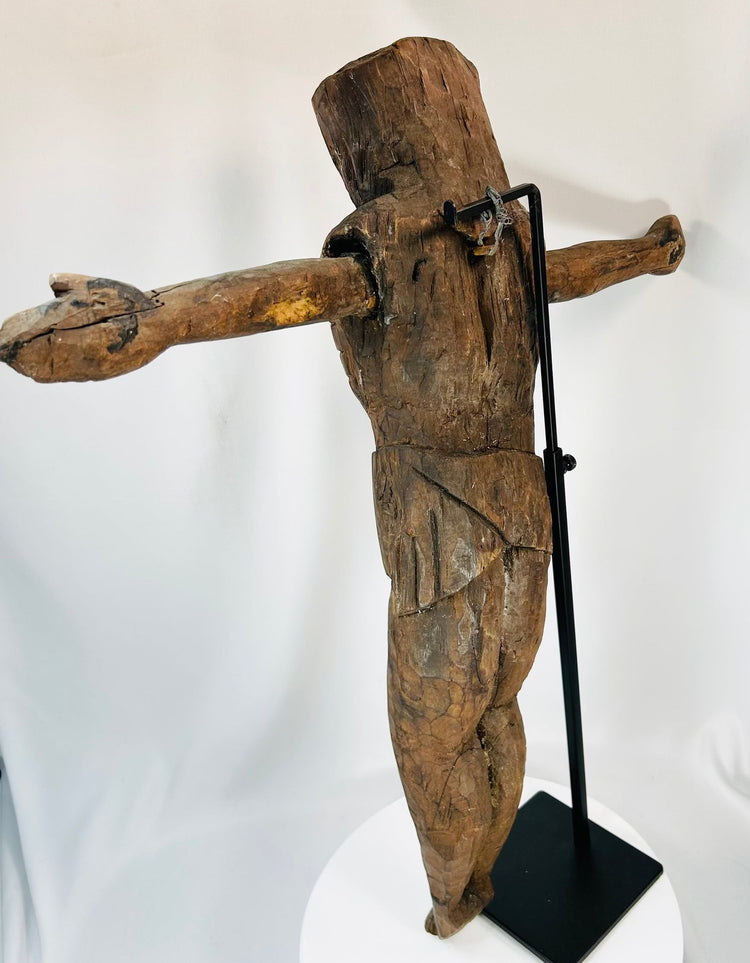
Very Large Antique Spanish Colonial Folk Art | Corpus Christi Wood Sculpture | Circa 17th–19th Century
Description
More
Less
Historical Context & Origin
Region: Latin America (likely Mexico, Guatemala, or Andean Spanish Colonial sphere)
Material: Hand-carved hardwood
Period: Spanish Colonial Period, circa 17th–19th century
Description
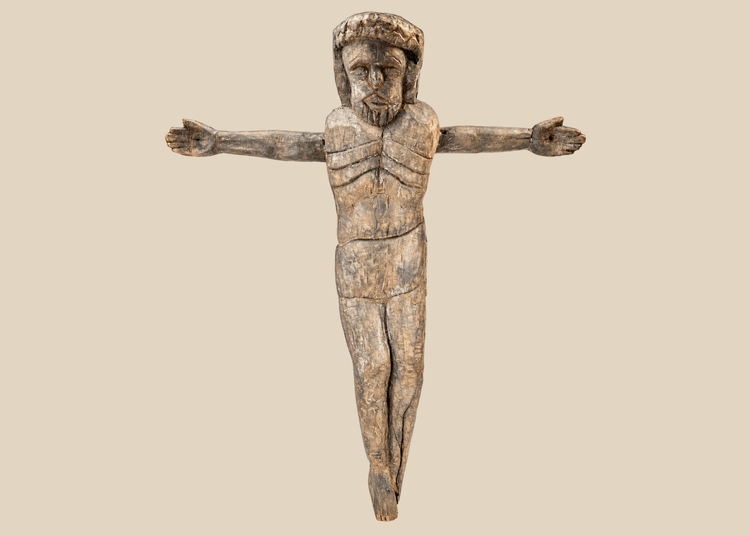
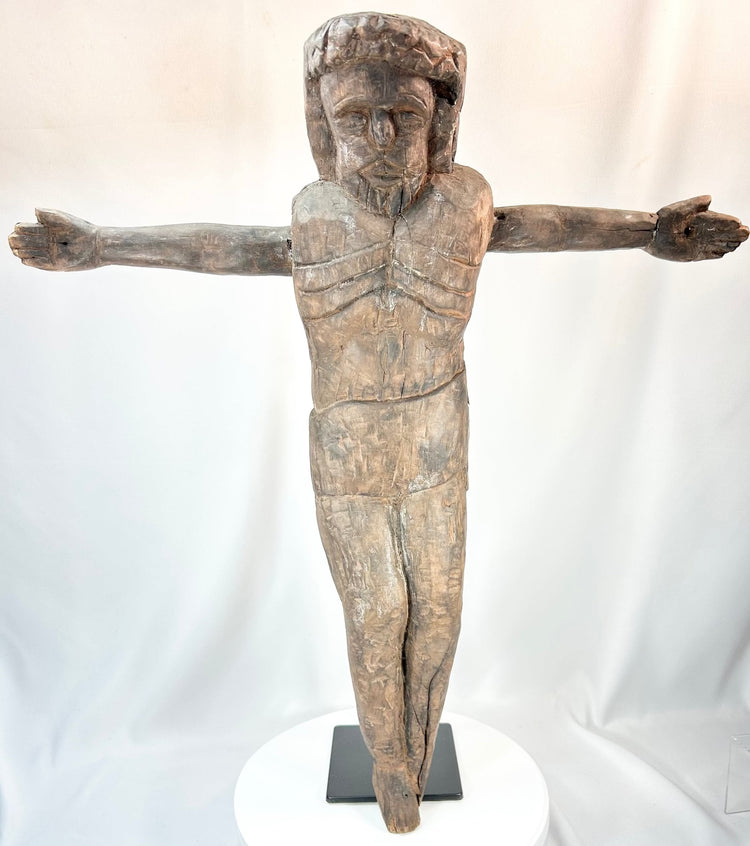
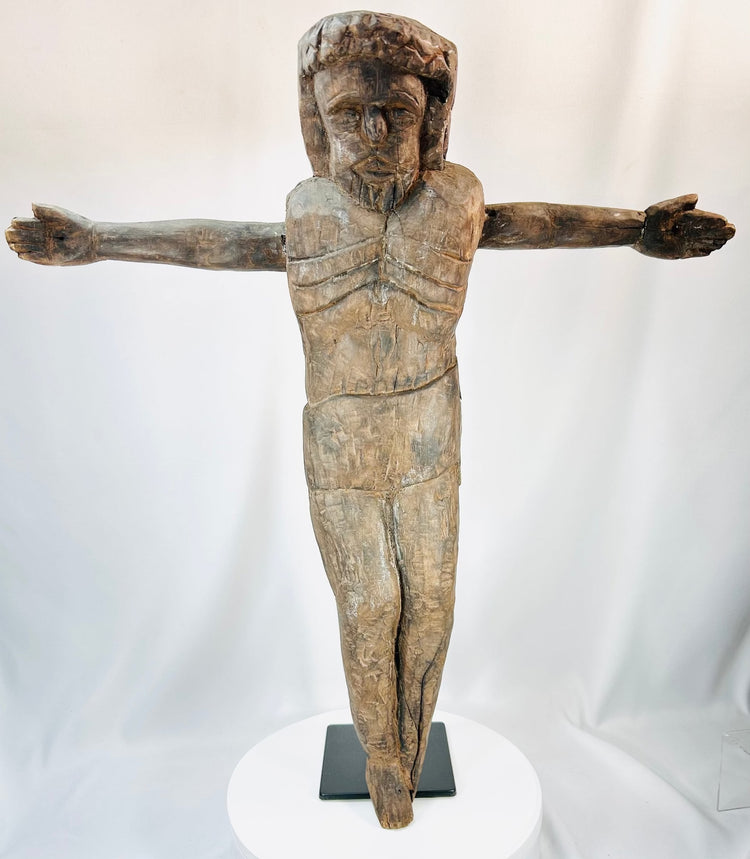
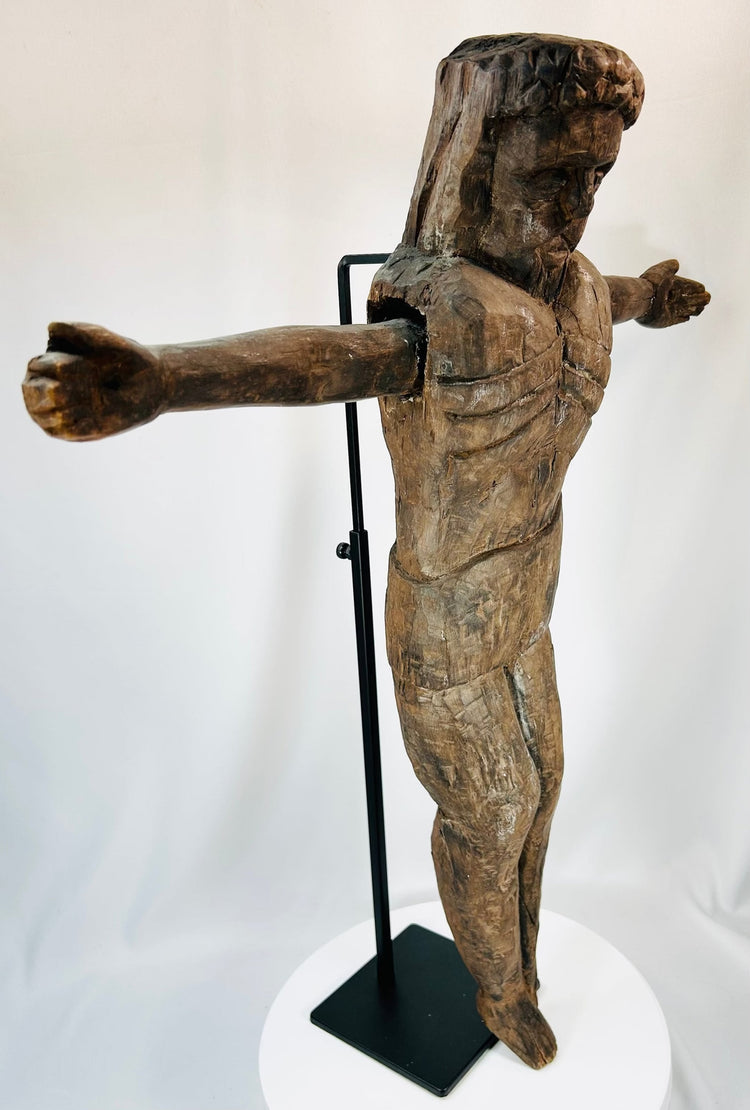
This evocative carved wooden corpus of Christ reflects the deeply rooted devotional traditions of the Spanish Colonial world, where religious imagery was often rendered in expressive, vernacular styles by local artisans. The figure is depicted in cruciform posture with outstretched arms, originally intended for mounting to a cross as part of a larger crucifix.
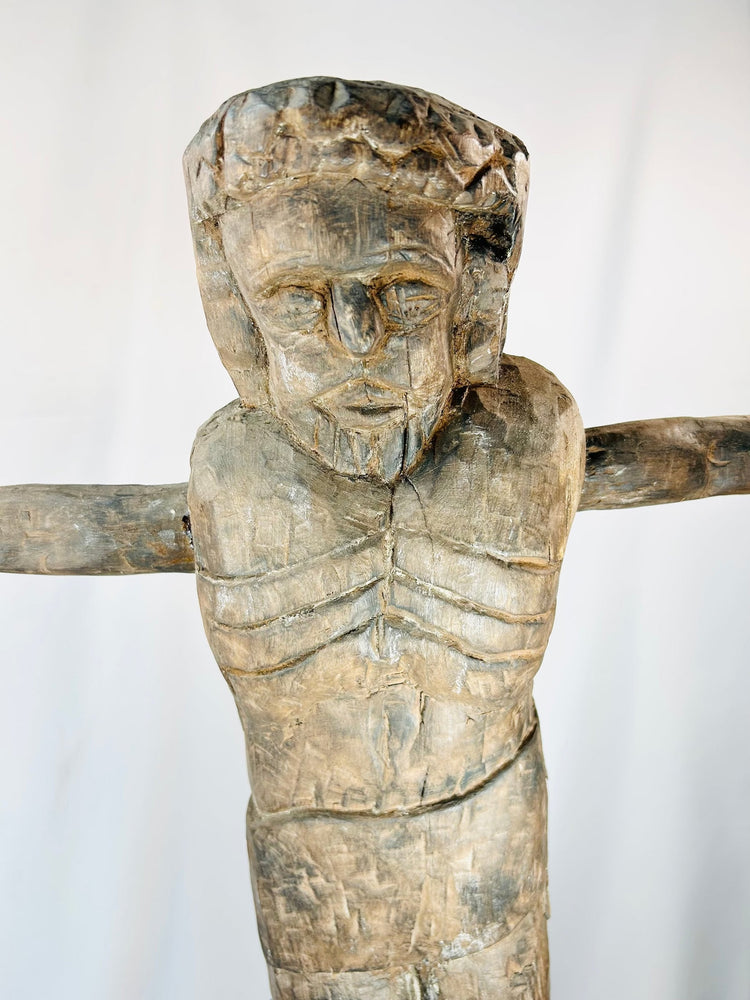
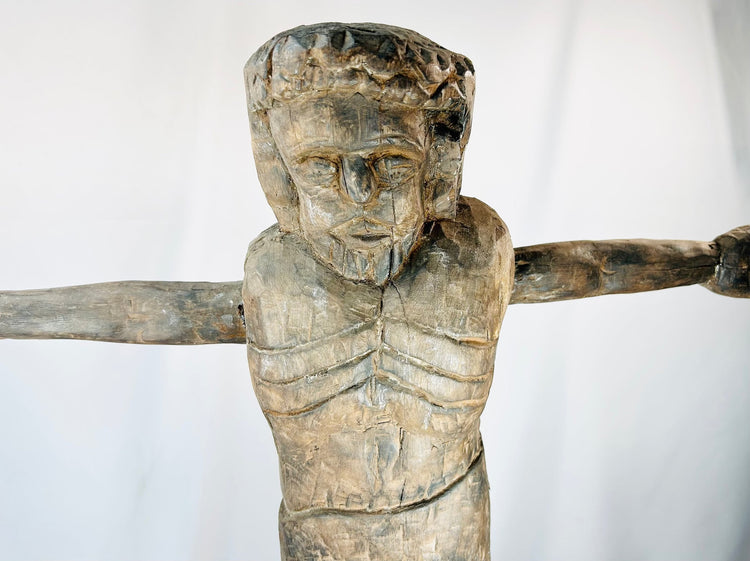
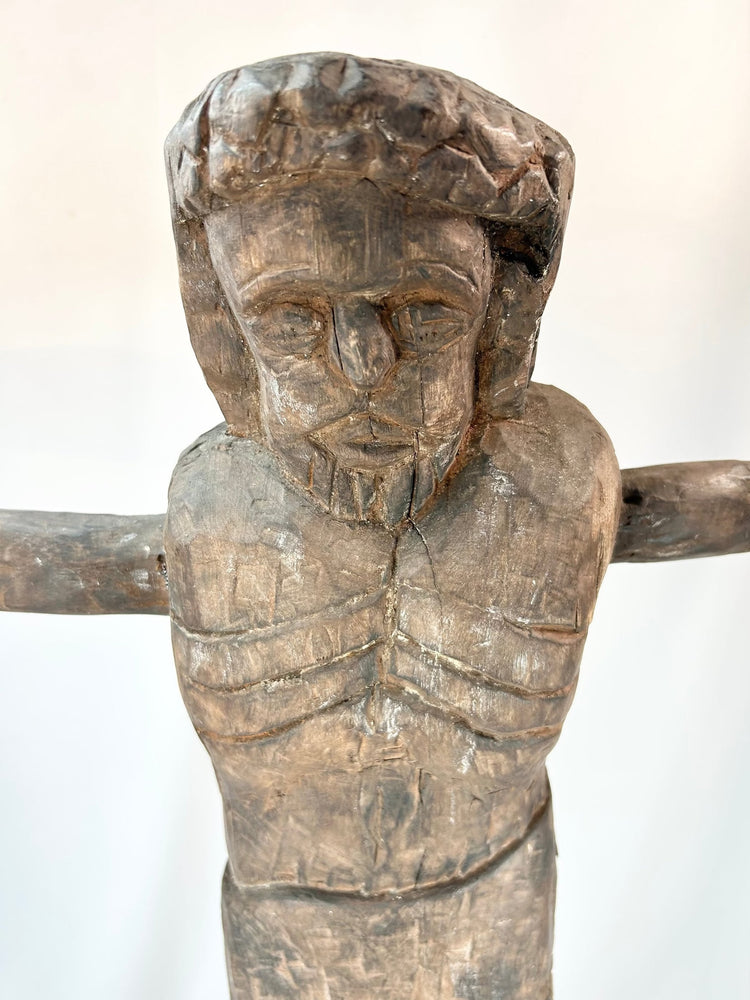
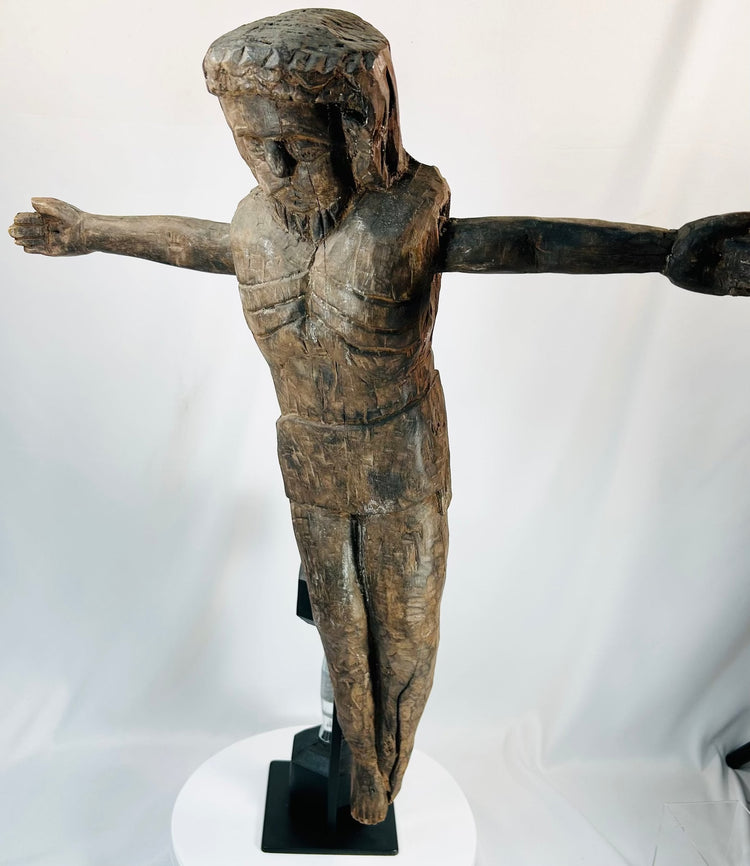
Hand-carved from a dense hardwood, the sculpture displays a strikingly primitive yet powerful aesthetic, with simplified facial features, a pronounced nose, and a stylized beard beneath a carved crown of thorns. The torso is defined by deeply incised linear ribs, emphasizing both suffering and physicality in a manner characteristic of folk devotional carving.
The figure wears a minimally rendered perizoma (loincloth), carved directly into the form with angular, geometric folds. Across the surface, visible tool marks, age-related cracking, and a naturally developed patina contribute to its authentic, time-worn presence.
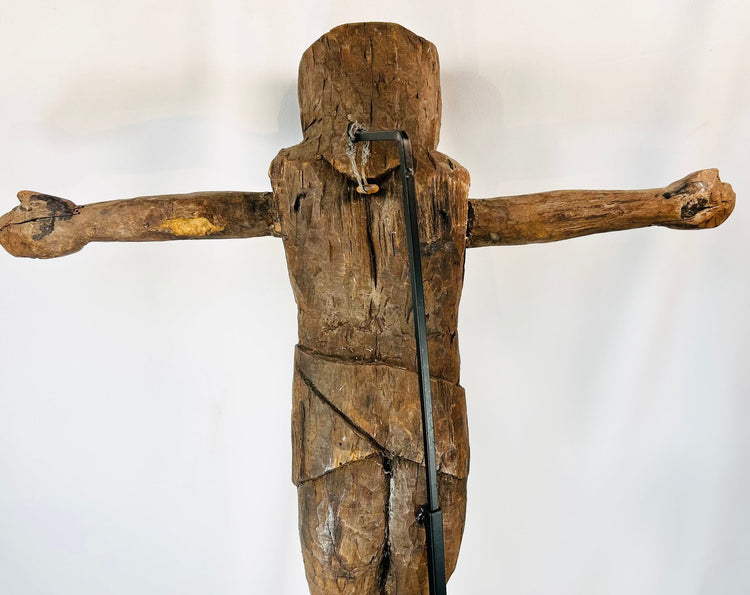
The reverse remains roughly hewn, consistent with wall-mounted devotional figures and indicating long-term display in a religious or domestic setting. Small perforations in the palms suggest previous attachment to a cross, while one arm shows evidence of an old repair, typical of objects that were actively used and preserved over generations.
Features
- Hand-carved Spanish Colonial devotional sculpture
- Expressive folk-art interpretation of Christ
- Deeply incised ribcage and stylized anatomy
- Carved crown of thorns and beard detailing
- Original mounting holes present in the palms
- Aged surface with visible tool marks and patina
Cultural Significance
Corpus figures such as this were central to Catholic devotional practice throughout the Spanish Colonial world, serving as focal points for prayer, reflection, and ritual. Unlike formal European ecclesiastical sculpture, many Colonial examples were produced by local artisans, blending European iconography with indigenous carving traditions.
This fusion of artistic influences resulted in highly individualized and emotionally resonant works, reflecting both religious devotion and regional craftsmanship.
Condition
Good overall condition for its age. Visible age-related wear including surface cracking, patina, and tool marks throughout. One arm shows an old repair. Minor losses and wear are consistent with long-term devotional use. Mounting holes are present in the palms.
Dimensions (Approximate)
Height: 26 in
Width: 22.5 in
Age (Approximate)
200–400 years old
Provenance
Formerly part of a private collection in Hollywood, Florida, United States, where the artifact was preserved as a devotional work of Spanish Colonial character. The collection included historical decorative and religious objects reflecting European and Latin American artistic traditions.
Learn More
Understand the artistic and devotional traditions of Spanish Colonial Religious Sculpture
Browse our curated Collection of Religious & Spiritual Relics
Description
Historical Context & Origin
Region: Latin America (likely Mexico, Guatemala, or Andean Spanish Colonial sphere)
Material: Hand-carved hardwood
Period: Spanish Colonial Period, circa 17th–19th century
Description
This evocative carved wooden corpus of Christ reflects the deeply rooted devotional traditions of the Spanish Colonial world, where religious imagery was often rendered in expressive, vernacular styles by local artisans. The figure is depicted in cruciform posture with outstretched arms, originally intended for mounting to a cross as part of a larger crucifix.
Hand-carved from a dense hardwood, the sculpture displays a strikingly primitive yet powerful aesthetic, with simplified facial features, a pronounced nose, and a stylized beard beneath a carved crown of thorns. The torso is defined by deeply incised linear ribs, emphasizing both suffering and physicality in a manner characteristic of folk devotional carving.
The figure wears a minimally rendered perizoma (loincloth), carved directly into the form with angular, geometric folds. Across the surface, visible tool marks, age-related cracking, and a naturally developed patina contribute to its authentic, time-worn presence.
The reverse remains roughly hewn, consistent with wall-mounted devotional figures and indicating long-term display in a religious or domestic setting. Small perforations in the palms suggest previous attachment to a cross, while one arm shows evidence of an old repair, typical of objects that were actively used and preserved over generations.
Features
- Hand-carved Spanish Colonial devotional sculpture
- Expressive folk-art interpretation of Christ
- Deeply incised ribcage and stylized anatomy
- Carved crown of thorns and beard detailing
- Original mounting holes present in the palms
- Aged surface with visible tool marks and patina
Cultural Significance
Corpus figures such as this were central to Catholic devotional practice throughout the Spanish Colonial world, serving as focal points for prayer, reflection, and ritual. Unlike formal European ecclesiastical sculpture, many Colonial examples were produced by local artisans, blending European iconography with indigenous carving traditions.
This fusion of artistic influences resulted in highly individualized and emotionally resonant works, reflecting both religious devotion and regional craftsmanship.
Condition
Good overall condition for its age. Visible age-related wear including surface cracking, patina, and tool marks throughout. One arm shows an old repair. Minor losses and wear are consistent with long-term devotional use. Mounting holes are present in the palms.
Dimensions (Approximate)
Height: 26 in
Width: 22.5 in
Age (Approximate)
200–400 years old
Provenance
Formerly part of a private collection in Hollywood, Florida, United States, where the artifact was preserved as a devotional work of Spanish Colonial character. The collection included historical decorative and religious objects reflecting European and Latin American artistic traditions.
Learn More
Understand the artistic and devotional traditions of Spanish Colonial Religious Sculpture
Browse our curated Collection of Religious & Spiritual Relics
You May Also Like
