



Lot of 16 | Ancient Roman & Byzantine | Bronze Coins | Circa 3rd-7th Century AD
Couldn't load pickup availability


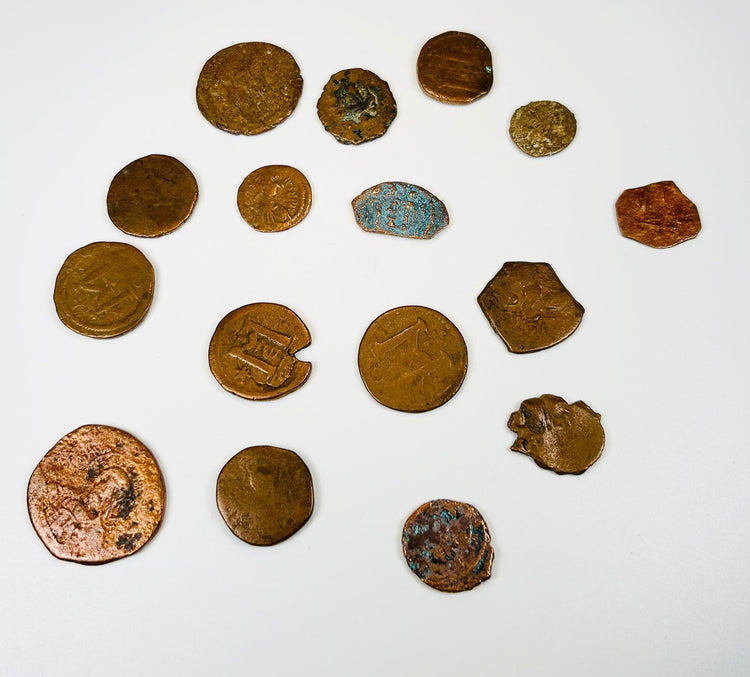
Lot of 16 | Ancient Roman & Byzantine | Bronze Coins | Circa 3rd-7th Century AD
Description
More
Less
Historical Context & Origin
Region: Mediterranean World (Roman and Byzantine Empires)
Material: Bronze alloy with natural burial patina
Period: 3rd–7th Century AD
Description
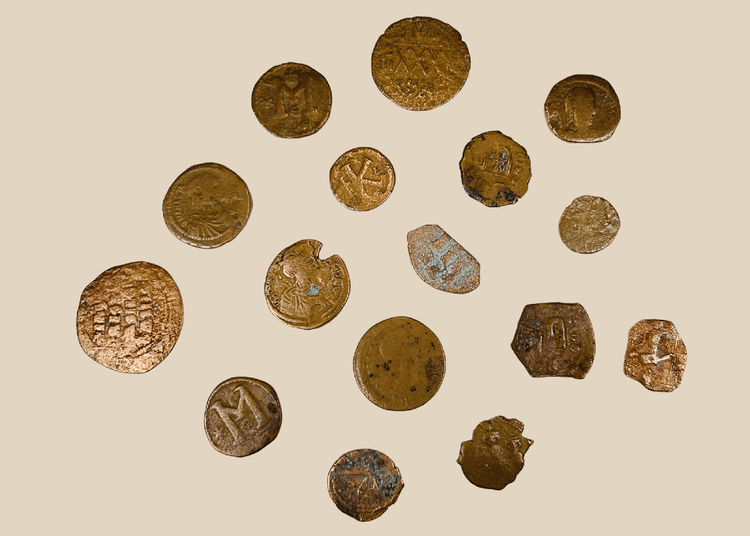
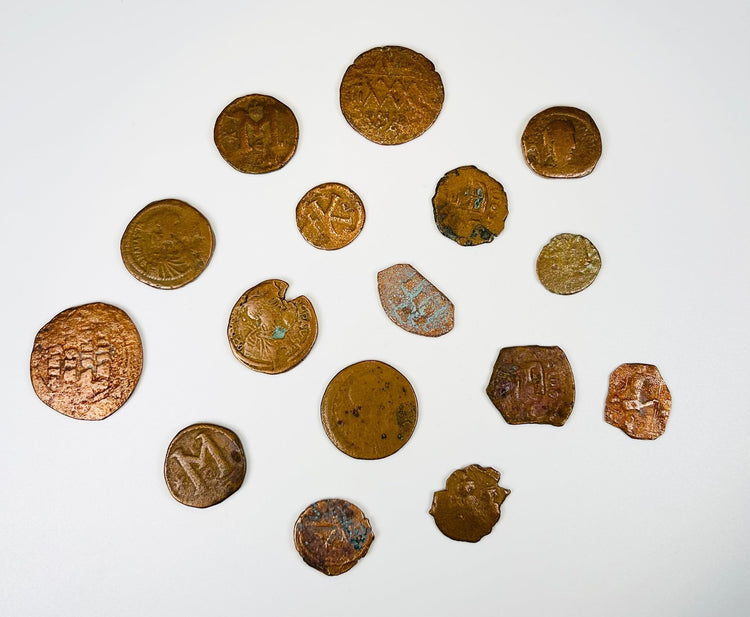
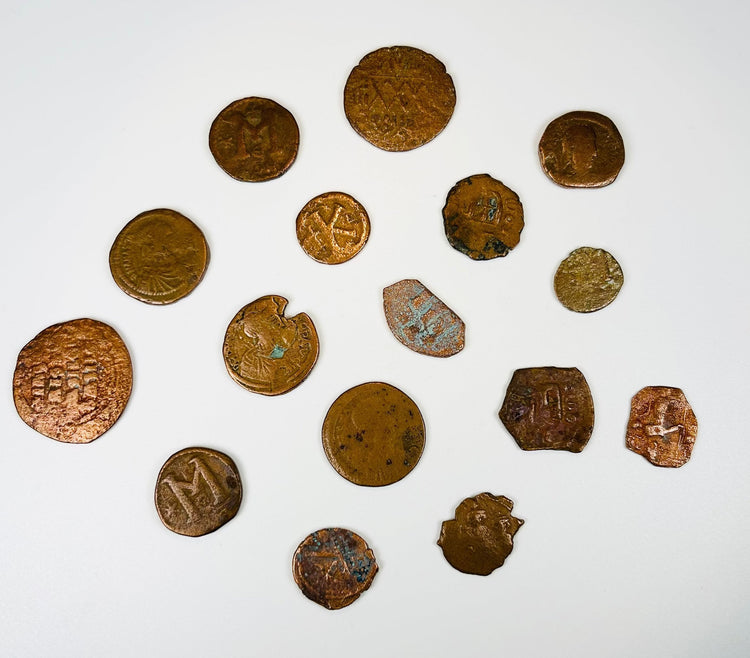
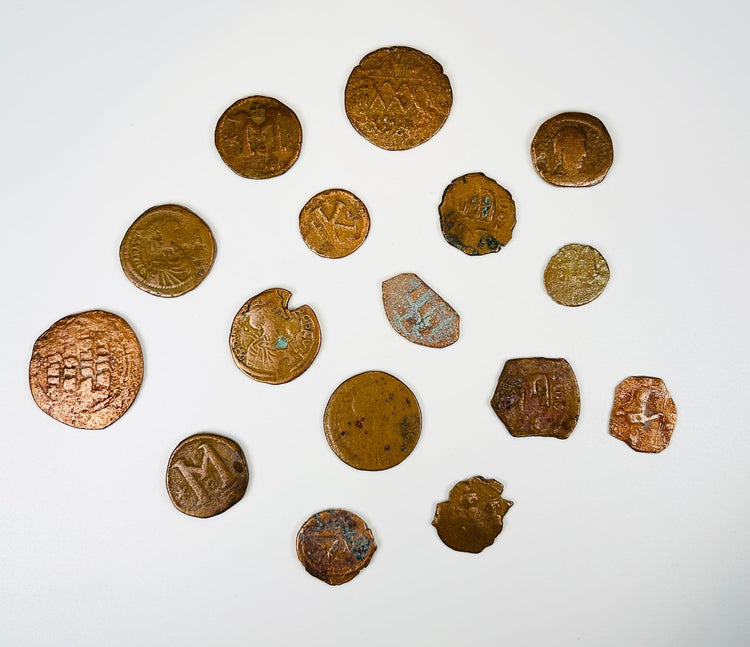
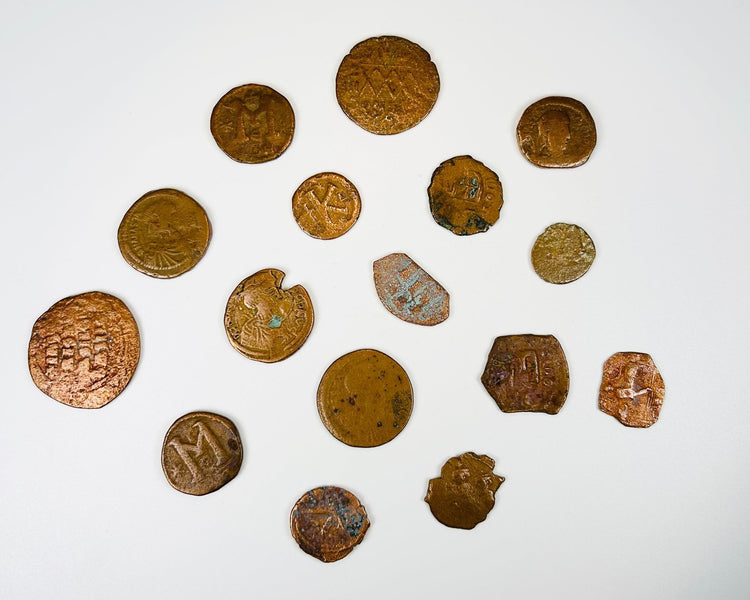
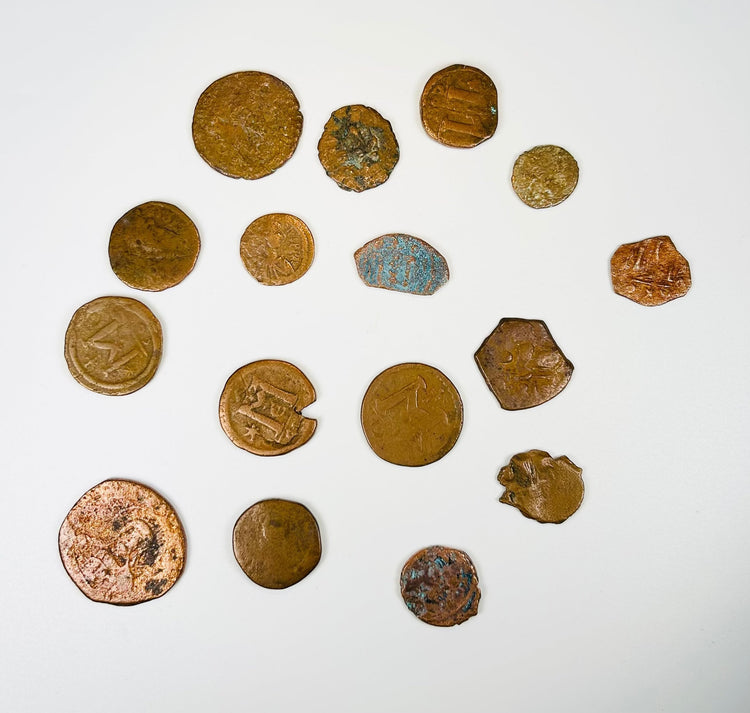
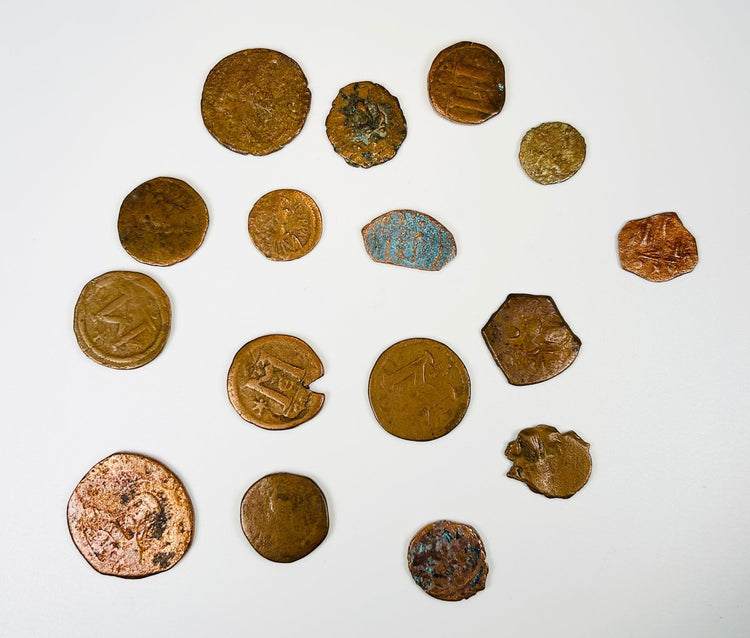
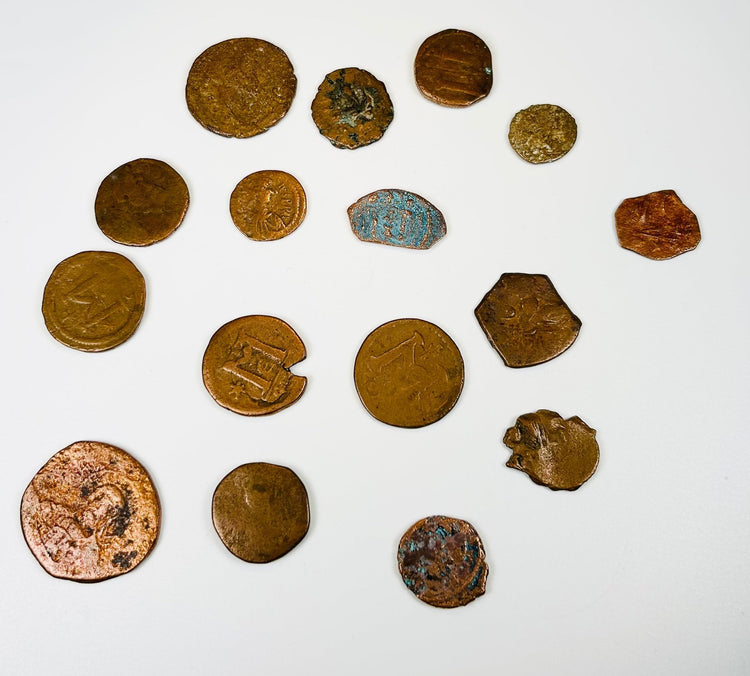
This curated lot of sixteen ancient bronze coins spans the transitional centuries between the late Roman Empire and the rise of the Byzantine world. Struck between the 3rd and 7th centuries AD, these coins circulated across the vast Mediterranean territories controlled by Roman and later Byzantine authorities. They would have passed through the hands of soldiers, merchants, and everyday citizens in markets, ports, and frontier towns.
The coins display a diverse range of iconography typical of late antiquity, including imperial portraits, Christian monograms, crosses, and denomination marks. Several examples show large numerals such as “M” or “K,” representing Byzantine follis denominations introduced during the monetary reforms of the early Byzantine period. The group illustrates the transformation of imperial imagery—from classical Roman portraiture to the increasingly symbolic Christian imagery of the Byzantine Empire.
Each coin bears the distinctive surfaces of long burial, with varied mineral patinas ranging from earthy brown to green and blue oxidation. Differences in flan shape, strike quality, and wear reflect the varied minting practices and circulation patterns of the era.
Features
- Collection of 16 authentic bronze coins from the late Roman and early Byzantine periods
- Mixed iconography including imperial busts, Christian symbols, crosses, and monograms
- Several coins displaying denomination marks such as “M” or “K” from Byzantine follis coinage
- Natural archaeological patinas ranging from brown to green and blue mineralization
- Varied flan shapes, sizes, and strike characteristics typical of late antique minting
Cultural Significance
Bronze coinage served as the backbone of daily commerce throughout the Roman and Byzantine worlds. These small denominations facilitated trade, paid soldiers, and circulated across an empire spanning three continents. Beyond their monetary value, coins acted as tools of political communication—carrying the images of emperors and the symbols of imperial authority across vast distances.
This group reflects one of the most significant transitions in world history: the transformation of the Roman Empire into the Christian Byzantine state. The shift in imagery—from pagan imperial portraiture to crosses and Christian monograms—illustrates the changing religious and political identity of the Mediterranean world.
Condition
Coins are presented in excavated condition with varying degrees of wear and surface encrustation. Some examples display partially legible imagery or inscriptions, while others retain more defined details. Natural burial patinas and mineral deposits are present across the surfaces. No modern cleaning or restoration has been applied.
Dimensions (Approximate)
Diameter range: 0.5 in – 1.5 in
Age (Approximate)
1,300 – 1,700 years old
Learn More
Learn how ancient Roman coins were crafted and struck at Warwick Classics Network
View Our Collection of Historic Coins
Description
Historical Context & Origin
Region: Mediterranean World (Roman and Byzantine Empires)
Material: Bronze alloy with natural burial patina
Period: 3rd–7th Century AD
Description
This curated lot of sixteen ancient bronze coins spans the transitional centuries between the late Roman Empire and the rise of the Byzantine world. Struck between the 3rd and 7th centuries AD, these coins circulated across the vast Mediterranean territories controlled by Roman and later Byzantine authorities. They would have passed through the hands of soldiers, merchants, and everyday citizens in markets, ports, and frontier towns.
The coins display a diverse range of iconography typical of late antiquity, including imperial portraits, Christian monograms, crosses, and denomination marks. Several examples show large numerals such as “M” or “K,” representing Byzantine follis denominations introduced during the monetary reforms of the early Byzantine period. The group illustrates the transformation of imperial imagery—from classical Roman portraiture to the increasingly symbolic Christian imagery of the Byzantine Empire.
Each coin bears the distinctive surfaces of long burial, with varied mineral patinas ranging from earthy brown to green and blue oxidation. Differences in flan shape, strike quality, and wear reflect the varied minting practices and circulation patterns of the era.
Features
- Collection of 16 authentic bronze coins from the late Roman and early Byzantine periods
- Mixed iconography including imperial busts, Christian symbols, crosses, and monograms
- Several coins displaying denomination marks such as “M” or “K” from Byzantine follis coinage
- Natural archaeological patinas ranging from brown to green and blue mineralization
- Varied flan shapes, sizes, and strike characteristics typical of late antique minting
Cultural Significance
Bronze coinage served as the backbone of daily commerce throughout the Roman and Byzantine worlds. These small denominations facilitated trade, paid soldiers, and circulated across an empire spanning three continents. Beyond their monetary value, coins acted as tools of political communication—carrying the images of emperors and the symbols of imperial authority across vast distances.
This group reflects one of the most significant transitions in world history: the transformation of the Roman Empire into the Christian Byzantine state. The shift in imagery—from pagan imperial portraiture to crosses and Christian monograms—illustrates the changing religious and political identity of the Mediterranean world.
Condition
Coins are presented in excavated condition with varying degrees of wear and surface encrustation. Some examples display partially legible imagery or inscriptions, while others retain more defined details. Natural burial patinas and mineral deposits are present across the surfaces. No modern cleaning or restoration has been applied.
Dimensions (Approximate)
Diameter range: 0.5 in – 1.5 in
Age (Approximate)
1,300 – 1,700 years old
Learn More
Learn how ancient Roman coins were crafted and struck at Warwick Classics Network
View Our Collection of Historic Coins
You May Also Like
