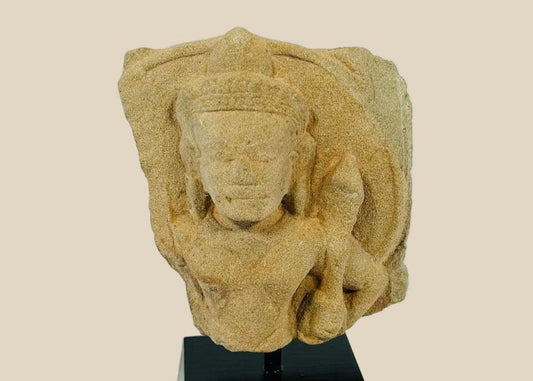

Collection: Roman & Greek Ancient Artifacts: Classical Relics
Roman and Greek artifacts represent some of the most influential civilizations in history, shaping art, warfare, governance, and daily life across the ancient world. Each piece reflects the craftsmanship and cultural identity of ancient Mediterranean societies.
- Roman & Greek Rings and Jewelry
- Engraved Seals and Signet Rings
- Ancient Glassware and Vessels
- Coins and Everyday Artifacts
To explore more historical treasures from different civilizations, continue your journey through All Collections.

Why Collect Roman & Greek Artifacts?
Authentic relics from the classical world, valued for their craftsmanship, rarity, and enduring historical significance.
-
Roman Imperial | Turquoise Glass Perfume Bottle with Spiral Rings | Circa 1st–3rd Century CE
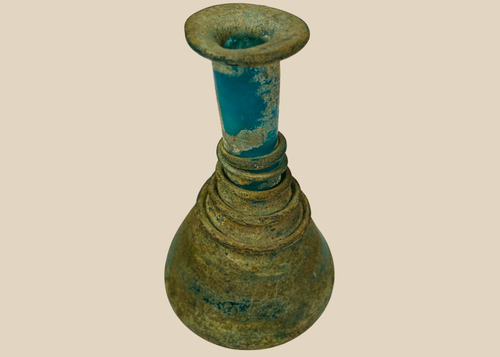
Roman Imperial | Turquoise Glass Perfume Bottle with Spiral Rings | Circa 1st–3rd Century CE
- Regular price
- $800.00
- Sale price
- $800.00
- Regular price
-
Ancient Greek | Geometric Horse Votive Figure| Circa 8th Century B.C.
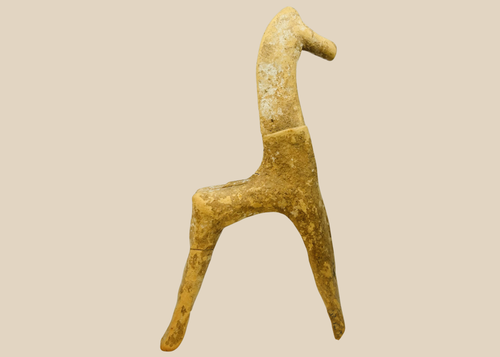
Ancient Greek | Geometric Horse Votive Figure| Circa 8th Century B.C.
- Regular price
- $750.00
- Sale price
- $750.00
- Regular price
-
Ancient Mediterranean | Theatrical Mask Fragment | Classical Antiquity Sculpture | Circa 8th Century B.C. – 2nd Century A.D.
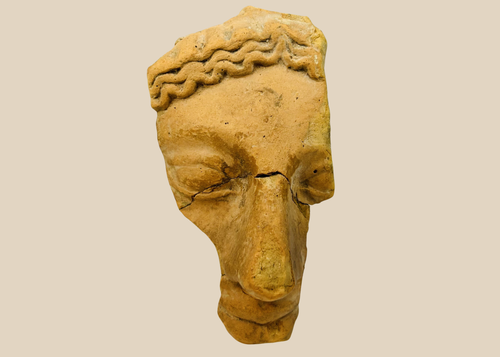
Ancient Mediterranean | Theatrical Mask Fragment | Classical Antiquity Sculpture | Circa 8th Century B.C. – 2nd Century A.D.
- Regular price
- $500.00
- Sale price
- $500.00
- Regular price
-
Ancient Terracotta Theater Mask Fragment | Hellenistic / Roman Period | Circa 2nd Century BCE – 2nd Century CE
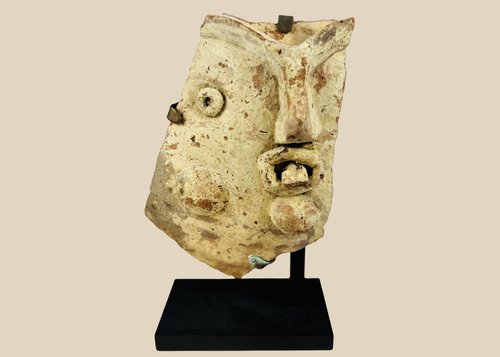
Ancient Terracotta Theater Mask Fragment | Hellenistic / Roman Period | Circa 2nd Century BCE – 2nd Century CE
- Regular price
- $500.00
- Sale price
- $500.00
- Regular price
-
Ancient Roman & Late Antique Bronze Artifact Collection | Circa Circa 1st – 4th Century CE
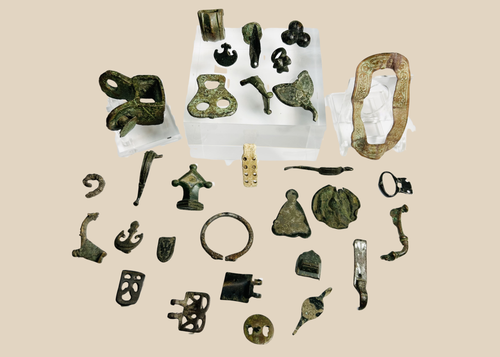
Ancient Roman & Late Antique Bronze Artifact Collection | Circa Circa 1st – 4th Century CE
- Regular price
- $500.00
- Sale price
- $500.00
- Regular price
-
Collection of Three Ancient Bronze Rings | Signet, Shield & Wide Band | Circa 1st – 14th Century AD
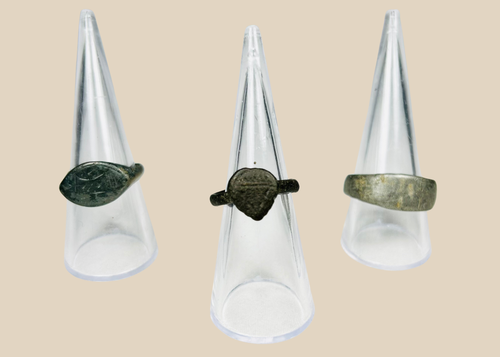
Collection of Three Ancient Bronze Rings | Signet, Shield & Wide Band | Circa 1st – 14th Century AD
- Regular price
- $500.00
- Sale price
- $500.00
- Regular price
-
Ancient Mediterranean | Sculptural Portrait Fragment | Terracotta Head Section | Circa 3rd Century BCE – 2nd Century CE
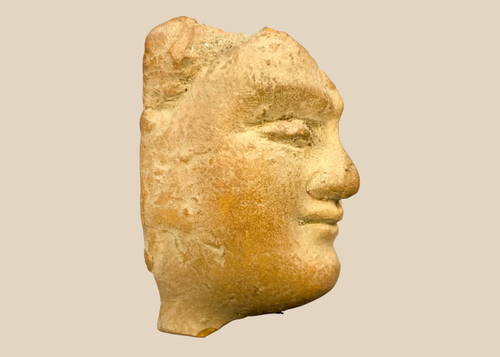
Ancient Mediterranean | Sculptural Portrait Fragment | Terracotta Head Section | Circa 3rd Century BCE – 2nd Century CE
- Regular price
- $500.00
- Sale price
- $500.00
- Regular price
-
Ancient Carved | Stone Amulet Flask with Double-Sided Motifs | Circa 1st millennium BC – early 1st millennium AD
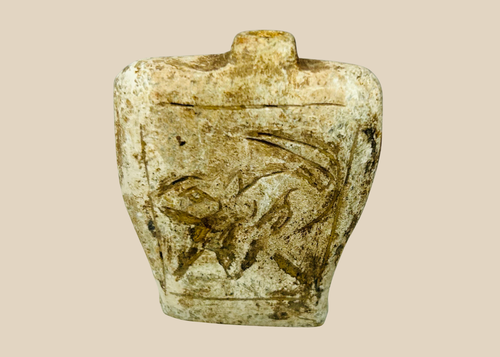
Ancient Carved | Stone Amulet Flask with Double-Sided Motifs | Circa 1st millennium BC – early 1st millennium AD
- Regular price
- $500.00
- Sale price
- $500.00
- Regular price
-
Ancient Roman | Cosmetic Glass Perfume/Oil Bottle | Circa 1st–3rd Century AD
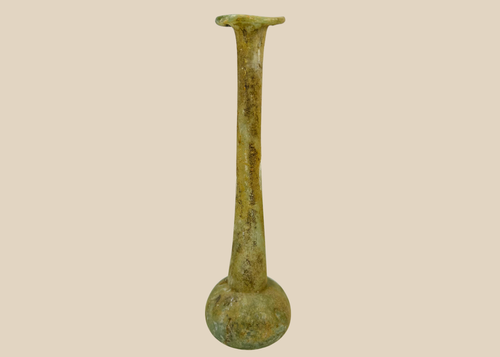
Ancient Roman | Cosmetic Glass Perfume/Oil Bottle | Circa 1st–3rd Century AD
- Regular price
- $500.00
- Sale price
- $500.00
- Regular price
-
Roman Pale Turquoise Glass Candlestick Balsamarium | Circa 2nd-3rd AD
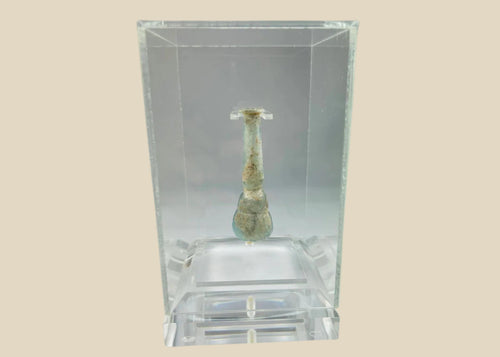
Roman Pale Turquoise Glass Candlestick Balsamarium | Circa 2nd-3rd AD
- Regular price
- $500.00
- Sale price
- $500.00
- Regular price
-
Ancient Terracotta Figure Fragment | West Mexico (Nayarit/Jalisco) or Iberian Peninsula | Circa 200 BCE–300 CE

Ancient Terracotta Figure Fragment | West Mexico (Nayarit/Jalisco) or Iberian Peninsula | Circa 200 BCE–300 CE
- Regular price
- $500.00
- Sale price
- $500.00
- Regular price
-
Byzantine Pectoral Cross | Carved Christian Devotional Pendant | 9th–12th C AD

Byzantine Pectoral Cross | Carved Christian Devotional Pendant | 9th–12th C AD
- Regular price
- $500.00
- Sale price
- $500.00
- Regular price
-
Ancient Roman | Fertility Pottery Figure | Circa 1st-3rd Century CE
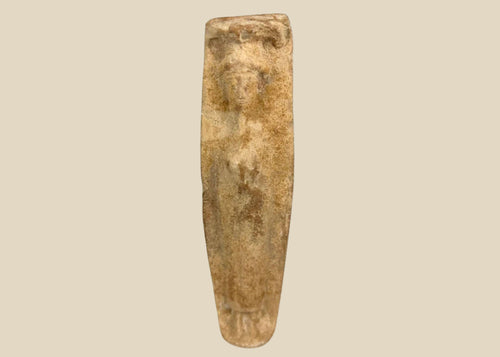
Ancient Roman | Fertility Pottery Figure | Circa 1st-3rd Century CE
- Regular price
- $500.00
- Sale price
- $500.00
- Regular price
-
Ancient Roman | Bronze Pendant with Soldier Motif | Circa 1st - 4th Century CE
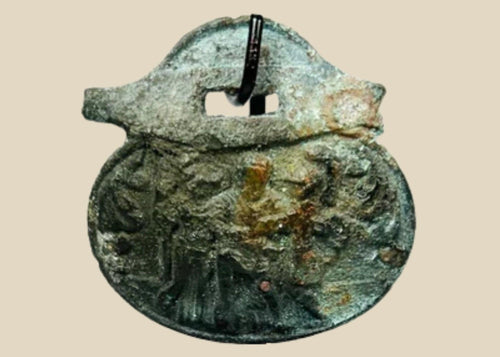
Ancient Roman | Bronze Pendant with Soldier Motif | Circa 1st - 4th Century CE
- Regular price
- $500.00
- Sale price
- $500.00
- Regular price
-
Ancient Roman | Bronze Ring with Red Glass Intaglio | Circa 2nd Century AD
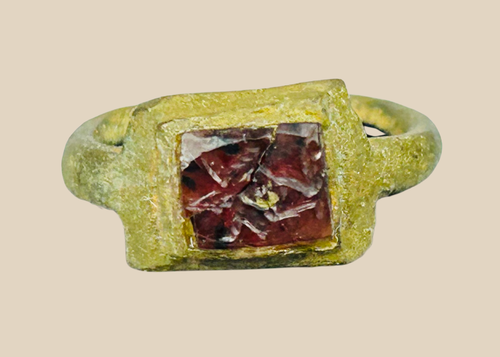
Ancient Roman | Bronze Ring with Red Glass Intaglio | Circa 2nd Century AD
- Regular price
- $450.00
- Sale price
- $450.00
- Regular price
-
Roman Provincial | Terracotta Perfume Vessel with Elongated Neck | Circa 1st–3rd Century CE
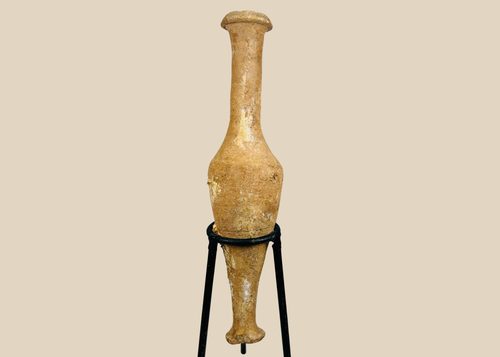
Roman Provincial | Terracotta Perfume Vessel with Elongated Neck | Circa 1st–3rd Century CE
- Regular price
- $450.00
- Sale price
- $450.00
- Regular price
-
Roman Imperial | Terracotta Vessel with Flared Rim | Circa 1st–4th Century CE
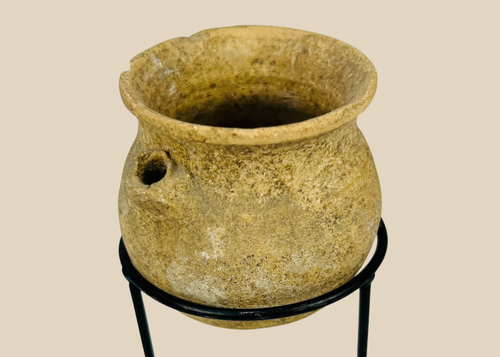
Roman Imperial | Terracotta Vessel with Flared Rim | Circa 1st–4th Century CE
- Regular price
- $450.00
- Sale price
- $450.00
- Regular price
-
Classical Mediterranean Terracotta Head | Greek or Roman Fragment with Headdress | Circa 1st Millennium BCE–1st Millennium CE
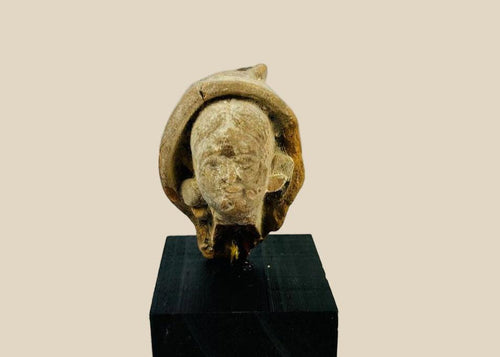
Classical Mediterranean Terracotta Head | Greek or Roman Fragment with Headdress | Circa 1st Millennium BCE–1st Millennium CE
- Regular price
- $450.00
- Sale price
- $450.00
- Regular price
-
Roman Imperial | Bronze Ring with Deep Red Garnet Stone | Circa 2nd Century AD
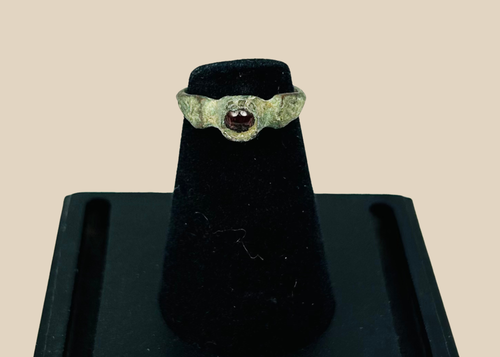
Roman Imperial | Bronze Ring with Deep Red Garnet Stone | Circa 2nd Century AD
- Regular price
- $425.00
- Sale price
- $425.00
- Regular price
-
Roman Imperial | Terracotta Perfume/Oil Vessel | Circa 1st–3rd Century AD
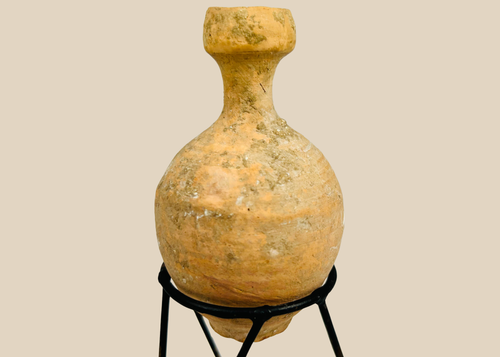
Roman Imperial | Terracotta Perfume/Oil Vessel | Circa 1st–3rd Century AD
- Regular price
- $425.00
- Sale price
- $425.00
- Regular price
-
Hand-Forged Spoon with Twisted Handle | Circa 2nd Century AD

Hand-Forged Spoon with Twisted Handle | Circa 2nd Century AD
- Regular price
- $400.00
- Sale price
- $400.00
- Regular price
-
Greco-Roman | Abydos Ware | Terracotta Jug | Circa 1st–3rd Century CE
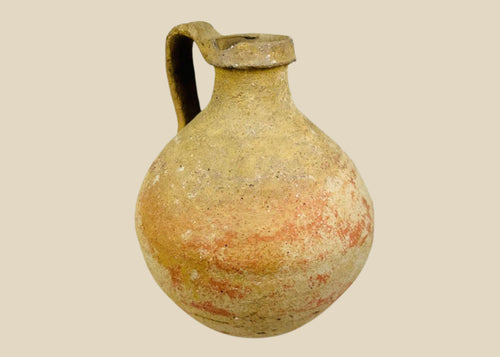
Greco-Roman | Abydos Ware | Terracotta Jug | Circa 1st–3rd Century CE
- Regular price
- $400.00
- Sale price
- $400.00
- Regular price
-
Greco Roman Pottery Head of a Boy | 2nd Century BC | 1st Century AD

Greco Roman Pottery Head of a Boy | 2nd Century BC | 1st Century AD
- Regular price
- $400.00
- Sale price
- $400.00
- Regular price
-
Ancient Terracotta Head Figurine Fragment | Roman/Mediterranean Artifact | 1st-2nd Century
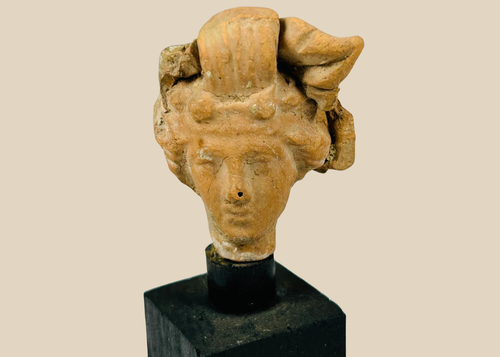
Ancient Terracotta Head Figurine Fragment | Roman/Mediterranean Artifact | 1st-2nd Century
- Regular price
- $400.00
- Sale price
- $400.00
- Regular price
-
Ancient Roman Bronze Ring | Flat Bezel with Ring-and-Dot Solar Motifs | 1st–3rd Century CE
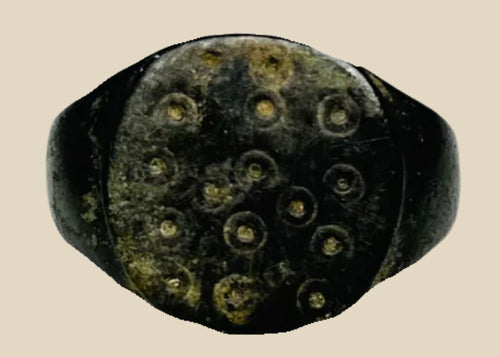
Ancient Roman Bronze Ring | Flat Bezel with Ring-and-Dot Solar Motifs | 1st–3rd Century CE
- Regular price
- $400.00
- Sale price
- $400.00
- Regular price
-
Ancient Roman Bronze Ring | Early Christian Christogram (Chi-Rho) Engraving | 1st–4th Century CE
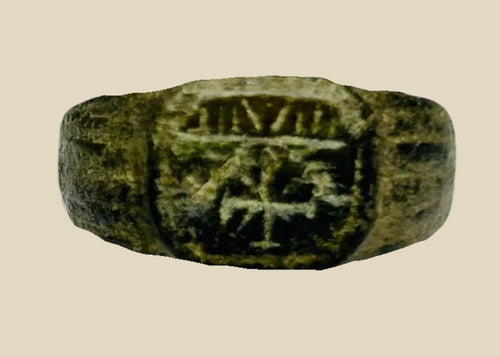
Ancient Roman Bronze Ring | Early Christian Christogram (Chi-Rho) Engraving | 1st–4th Century CE
- Regular price
- $400.00
- Sale price
- $400.00
- Regular price
-
Antique Roman Glass Vessel | Hand-Blown Perfume or Cosmetic Container | 1st–4th Century CE

Antique Roman Glass Vessel | Hand-Blown Perfume or Cosmetic Container | 1st–4th Century CE
- Regular price
- $400.00
- Sale price
- $400.00
- Regular price
-
Ancient Roman | Bronze Bell | Circa 1st-4th Century CE

Ancient Roman | Bronze Bell | Circa 1st-4th Century CE
- Regular price
- $400.00
- Sale price
- $400.00
- Regular price
-
Ancient Roman | Bronze Ring with Mouse Motif | Circa 1st–4th Century CE

Ancient Roman | Bronze Ring with Mouse Motif | Circa 1st–4th Century CE
- Regular price
- $350.00
- Sale price
- $350.00
- Regular price
-
Roman Glass Bottle | Pale Green Patina | Circa 1st–3rd Century AD
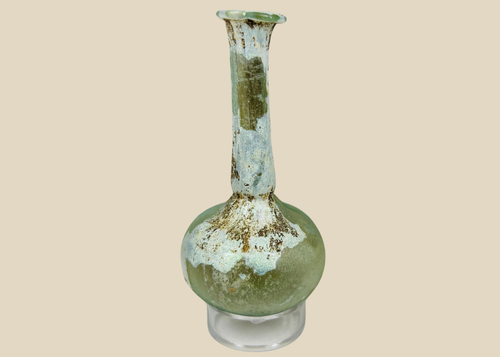
Roman Glass Bottle | Pale Green Patina | Circa 1st–3rd Century AD
- Regular price
- $350.00
- Sale price
- $350.00
- Regular price
-
Classical Antiquity Head Fragment | Expressive Facial Detail | Circa 1st Millennium BCE–CE
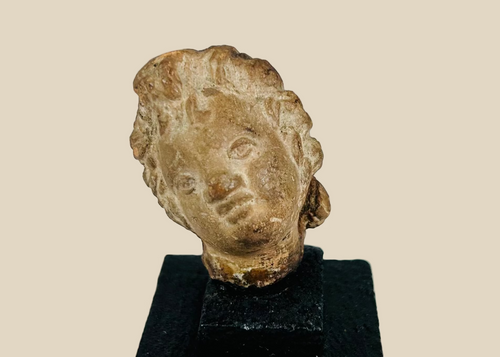
Classical Antiquity Head Fragment | Expressive Facial Detail | Circa 1st Millennium BCE–CE
- Regular price
- $350.00
- Sale price
- $350.00
- Regular price
-
Greco-Roman | Terracotta Figurine of a Goddess | Circa 1st-3rd Century CE
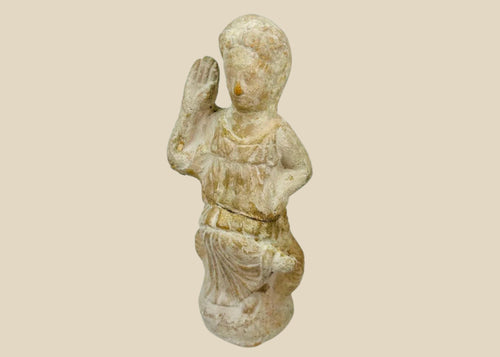
Greco-Roman | Terracotta Figurine of a Goddess | Circa 1st-3rd Century CE
- Regular price
- $350.00
- Sale price
- $350.00
- Regular price
-
Greco-Roman | Terracotta | Storage Amphora | Circa 1st–3rd Century CE
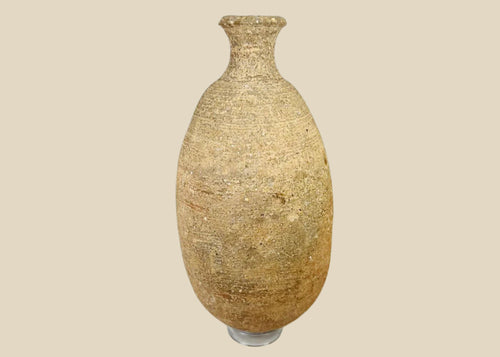
Greco-Roman | Terracotta | Storage Amphora | Circa 1st–3rd Century CE
- Regular price
- $350.00
- Sale price
- $350.00
- Regular price
-
Ancient Roman Band Ring | 1st - 4th Century

Ancient Roman Band Ring | 1st - 4th Century
- Regular price
- $350.00
- Sale price
- $350.00
- Regular price
-
Ancient Greco-Roman | Terracotta Pitcher with Handle | 1st–3rd Century CE
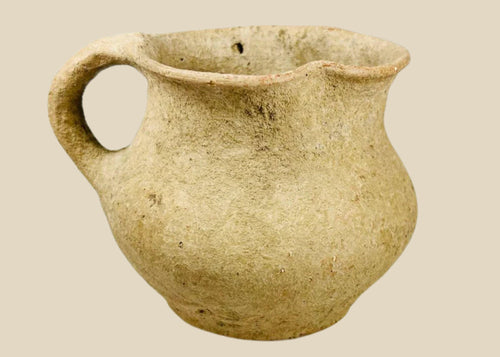
Ancient Greco-Roman | Terracotta Pitcher with Handle | 1st–3rd Century CE
- Regular price
- $350.00
- Sale price
- $350.00
- Regular price
-
Lot of 10 Ancient Roman Coins | Constantine the Great Era | Circa 307–337 A.D.

Lot of 10 Ancient Roman Coins | Constantine the Great Era | Circa 307–337 A.D.
- Regular price
- $300.00
- Sale price
- $300.00
- Regular price
-
Lot of 13 Ancient Roman Bronze Coins | Mixed Emperors | Circa 3rd–4th Century CE
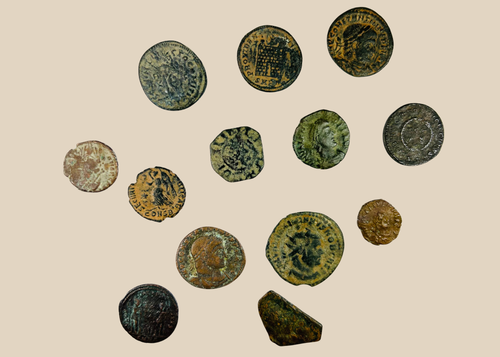
Lot of 13 Ancient Roman Bronze Coins | Mixed Emperors | Circa 3rd–4th Century CE
- Regular price
- $300.00
- Sale price
- $300.00
- Regular price
-
Roman Twisted Glass Bracelet | Deep Blue Hue | Circa 1st–4th Century AD
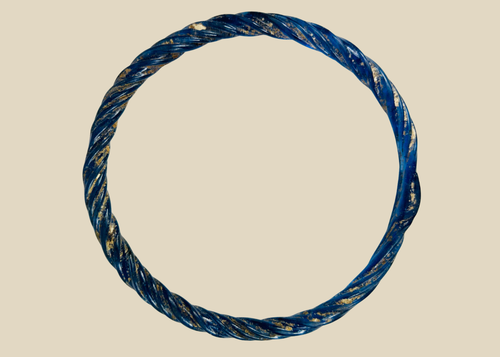
Roman Twisted Glass Bracelet | Deep Blue Hue | Circa 1st–4th Century AD
- Regular price
- $300.00
- Sale price
- $300.00
- Regular price
-
Lot of 16 | Ancient Roman & Byzantine | Bronze Coins | Circa 2nd-7th Century AD
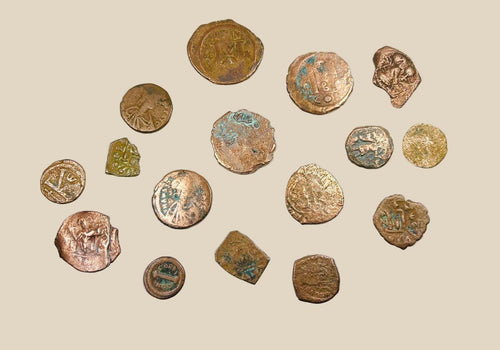
Lot of 16 | Ancient Roman & Byzantine | Bronze Coins | Circa 2nd-7th Century AD
- Regular price
- $300.00
- Sale price
- $300.00
- Regular price
-
Byzantine Terracotta Oil Lamp with Anthropomorphic Face Design | Circa 5th–7thC CE
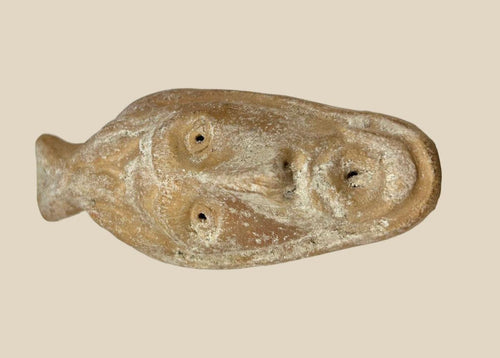
Byzantine Terracotta Oil Lamp with Anthropomorphic Face Design | Circa 5th–7thC CE
- Regular price
- $300.00
- Sale price
- $300.00
- Regular price
-
Collection of 12 Ancient Roman Coins | Bronze & Billon with Imperial Portraits & Deities | 2nd–4th Century AD
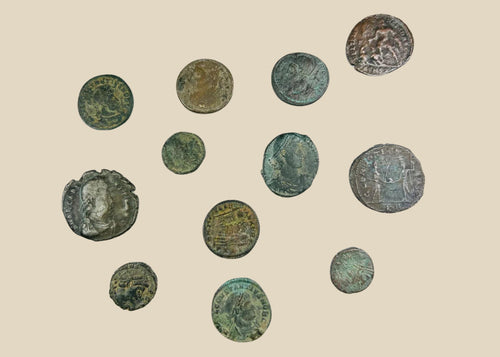
Collection of 12 Ancient Roman Coins | Bronze & Billon with Imperial Portraits & Deities | 2nd–4th Century AD
- Regular price
- $300.00
- Sale price
- $300.00
- Regular price
-
Ancient Roman | Bronze Artifacts | Pendant & Bell | Circa 1st - 4th Century CE

Ancient Roman | Bronze Artifacts | Pendant & Bell | Circa 1st - 4th Century CE
- Regular price
- $300.00
- Sale price
- $300.00
- Regular price
-
Bronze Age Spearhead | Ancient Mediterranean or Near Eastern Weapon | Circa 2000–1000 BCE

Bronze Age Spearhead | Ancient Mediterranean or Near Eastern Weapon | Circa 2000–1000 BCE
- Regular price
- $300.00
- Sale price
- $300.00
- Regular price
-
Roman Empire Terracotta Juglet | Flared-Rim Domestic Vessel | Circa 1st–3rd Century CE

Roman Empire Terracotta Juglet | Flared-Rim Domestic Vessel | Circa 1st–3rd Century CE
- Regular price
- $250.00
- Sale price
- $250.00
- Regular price
-
Ancient Roman Bronze Coin of Valens | AE3 Nummus | NGC Certified | 364–378 AD
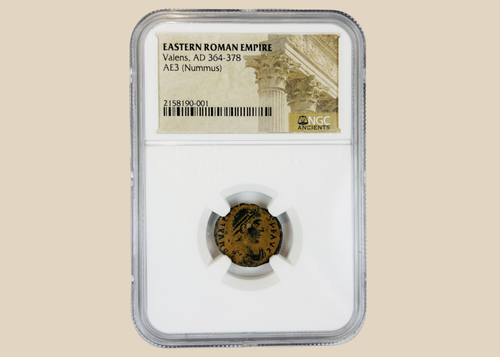
Ancient Roman Bronze Coin of Valens | AE3 Nummus | NGC Certified | 364–378 AD
- Regular price
- $200.00
- Sale price
- $200.00
- Regular price
-
Ancient Roman Bronze Coin of Constans | NGC Certified | AE4 Nummus | 337–350 AD
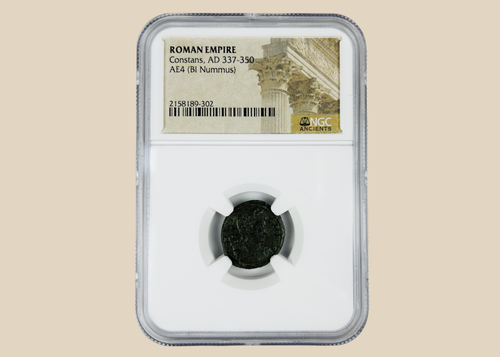
Ancient Roman Bronze Coin of Constans | NGC Certified | AE4 Nummus | 337–350 AD
- Regular price
- $200.00
- Sale price
- $200.00
- Regular price
-
Ancient Roman Terracotta Oil Lamp | Mediterranean Daily Life Artifact | 1st–3rd Century CE
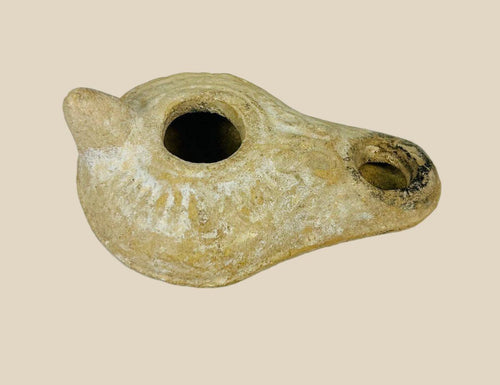
Ancient Roman Terracotta Oil Lamp | Mediterranean Daily Life Artifact | 1st–3rd Century CE
- Regular price
- $200.00
- Sale price
- $200.00
- Regular price
-
Imperial Roman | Bronze Ring Featuring Incised Linework Circa 2nd–4th Century AD
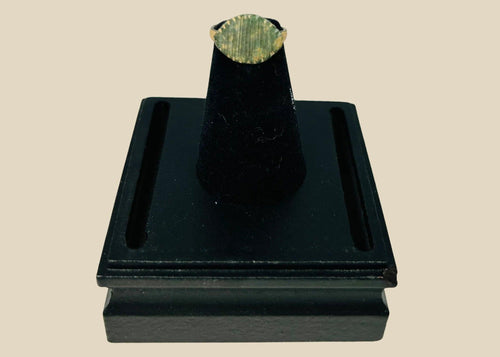
Imperial Roman | Bronze Ring Featuring Incised Linework Circa 2nd–4th Century AD
- Regular price
- $200.00
- Sale price
- $200.00
- Regular price
-
Engraved Roman Empire | Bronze Ring | Personal Seal | Circa 2nd Century AD

Engraved Roman Empire | Bronze Ring | Personal Seal | Circa 2nd Century AD
- Regular price
- $200.00
- Sale price
- $200.00
- Regular price
-
Ancient Roman Artifact Fragments | 1st - 12th Century AD
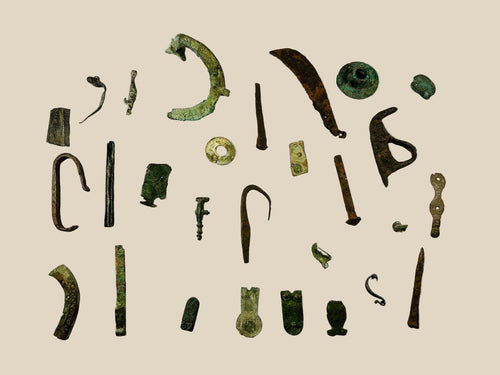
Ancient Roman Artifact Fragments | 1st - 12th Century AD
- Regular price
- $200.00
- Sale price
- $200.00
- Regular price
-
Historic Leaf-Blade Iron Arrow Tip | Roman–Medieval European Weapon Artifact | Circa 1st Century CE – 12th Century CE
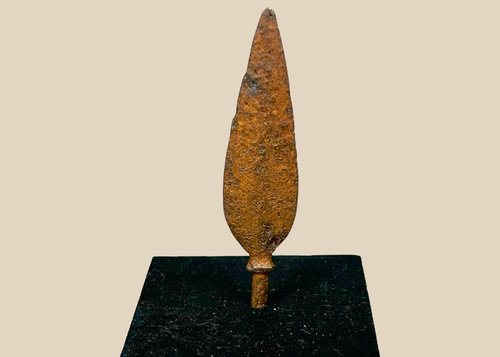
Historic Leaf-Blade Iron Arrow Tip | Roman–Medieval European Weapon Artifact | Circa 1st Century CE – 12th Century CE
- Regular price
- $175.00
- Sale price
- $175.00
- Regular price
-
Roman to Early Medieval Iron Arrow / Javelin Point | Mounted Artifact | 1st–12th Century CE
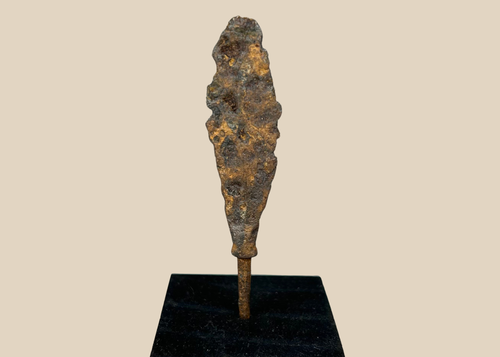
Roman to Early Medieval Iron Arrow / Javelin Point | Mounted Artifact | 1st–12th Century CE
- Regular price
- $175.00
- Sale price
- $175.00
- Regular price
-
Imperial Roman | Bronze Ring with Flat Bezel | Circa 2nd–3rd Century AD
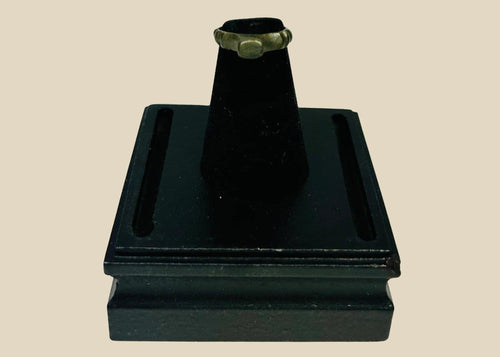
Imperial Roman | Bronze Ring with Flat Bezel | Circa 2nd–3rd Century AD
- Regular price
- $175.00
- Sale price
- $175.00
- Regular price
-
Geometric Intaglio Ring | Ancient Roman Bronze | Circa 2nd–3rd Century CE
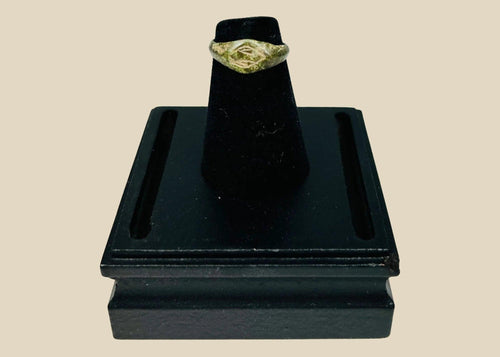
Geometric Intaglio Ring | Ancient Roman Bronze | Circa 2nd–3rd Century CE
- Regular price
- $175.00
- Sale price
- $175.00
- Regular price
-
Ancient Roman Bronze Seal Ring | Circa 150-250AD
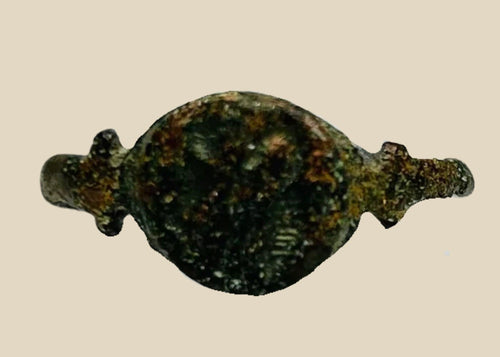
Ancient Roman Bronze Seal Ring | Circa 150-250AD
- Regular price
- $150.00
- Sale price
- $150.00
- Regular price


Collector Insights
How much are Roman coins worth?
The value of Roman coins varies widely depending on rarity, condition, metal, and historical significance. Common bronze coins may sell for as little as $10–$50, while rare gold or silver coins associated with notable emperors can reach thousands of dollars. In antiquity, coins such as the denarius carried real purchasing power, often equivalent to several days’ wages for a Roman soldier.
Why did the Roman Empire produce more coins?
The Roman Empire produced large quantities of coins to support its expanding economy, military expenses, and trade network. As Rome grew, standardized coinage made it easier to pay soldiers, collect taxes, and unify commerce across vast territories. Coins also served as propaganda tools, spreading the image and authority of emperors throughout the empire.
What is the difference between Greek and Roman sculpture?
Greek sculpture focused on ideal beauty, balance, and perfection, often depicting gods and athletes in harmonious forms. Roman sculpture, by contrast, emphasized realism and individuality, especially in portraiture, capturing wrinkles, age, and personality. Romans also developed narrative reliefs that told historical events, such as victories and imperial achievements.
What are some famous Roman sculptures?
Some of the most famous Roman sculptures include:
- The Ara Pacis (Altar of Peace): symbolizing imperial stability
- Trajan’s Column reliefs: telling the story of military campaigns
- Portrait busts of emperors like Augustus and Marcus Aurelius
These works highlight Rome’s focus on political messaging, realism, and historical storytelling in art.
How did Greek art influence Roman sculpture?
Roman sculpture was heavily influenced by Greek art. Romans often copied or adapted Greek statues, adopting their proportions and styles but adding more realism. This blend created the Greco-Roman style, combining Greek idealism with Roman practicality and political messaging.
Discover @relicandraritygallery on Instagram